
Craft & Making · Traditional Weaving
Before a piece of cotton could become a bedsheet, a shirt or a household wrapping cloth, someone first had to turn soft fibres into thread.
And before that thread could become fabric, it had to be drawn, twisted, wound, arranged and guided through a loom.
Today we rarely see those stages. Yet for generations of Chinese households, a length of cloth was the result of many different skills.
This is the story of Tubu (土布) — traditional Chinese homespun and handwoven cloth. It begins with cotton, not with the finished pattern.
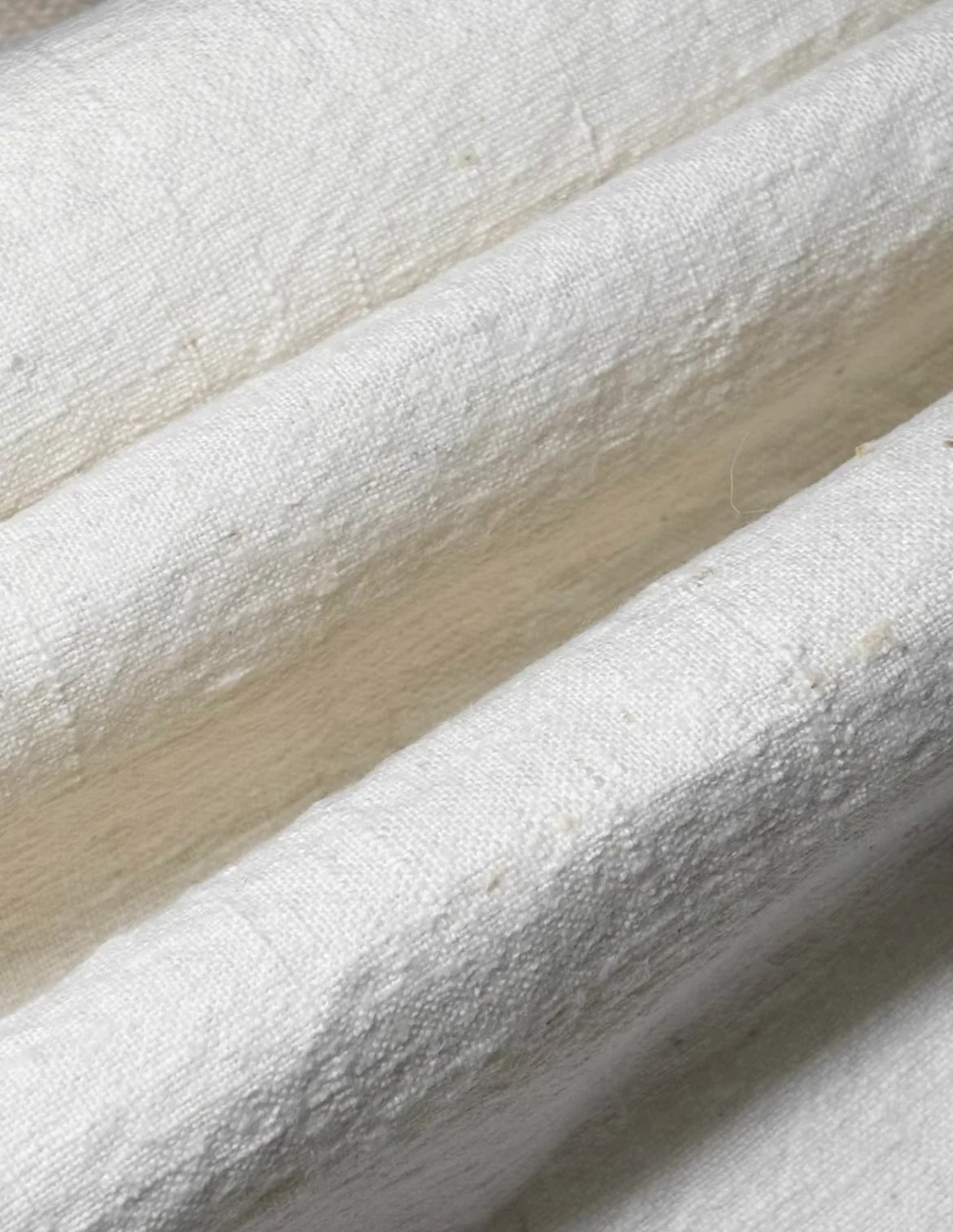
What Does “Homespun” Really Mean?
The word tubu (土布) describes traditional locally produced cloth, especially the older cotton textile practices associated with household and regional production. It is not a guarantee of one single fibre, loom, motif or manufacturing method.
Handspun
Fibres are drawn out and twisted into yarn by hand, often using a spindle or spinning wheel.
Handwoven
Warp and weft threads are interlaced with a hand-operated loom. The yarn may itself be handspun or machine-spun.
Hand-printed
Decoration is applied to an already formed cloth. Printing is a separate craft from weaving the ground.
One old textile might combine all three processes, but one does not automatically establish the others. This distinction matters whenever we describe a surviving piece.
Making Fabric Takes More Than Weaving
The spinning wheel and loom are the best-known tools, but they represent only part of the work. A study of traditional Nantong colour-woven cotton describes a long sequence of operations based on regional craft research and reconstruction.
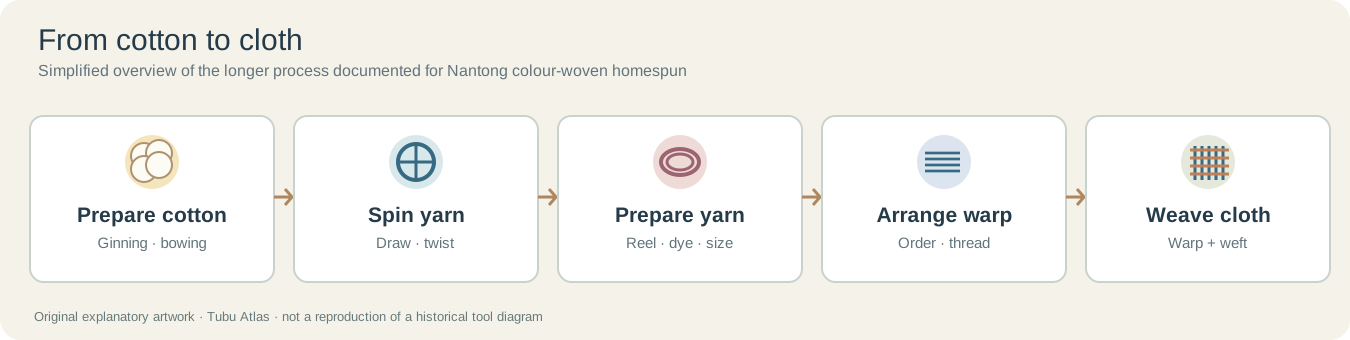
Cotton: Ginning, Bowing and Spinning
Cotton first had to be prepared. Ginning (轧花) separated seed from fibre. Cotton bowing (弹花) loosened compacted cotton, making it more manageable for spinning.
In the documented Nantong process, the opened cotton was formed into manageable slivers before spinning. The spinner drew out fibres and controlled the twist, turning loose cotton into thread. Irregularity in a finished yarn may be visible — but uneven texture alone cannot authenticate hand-spinning.
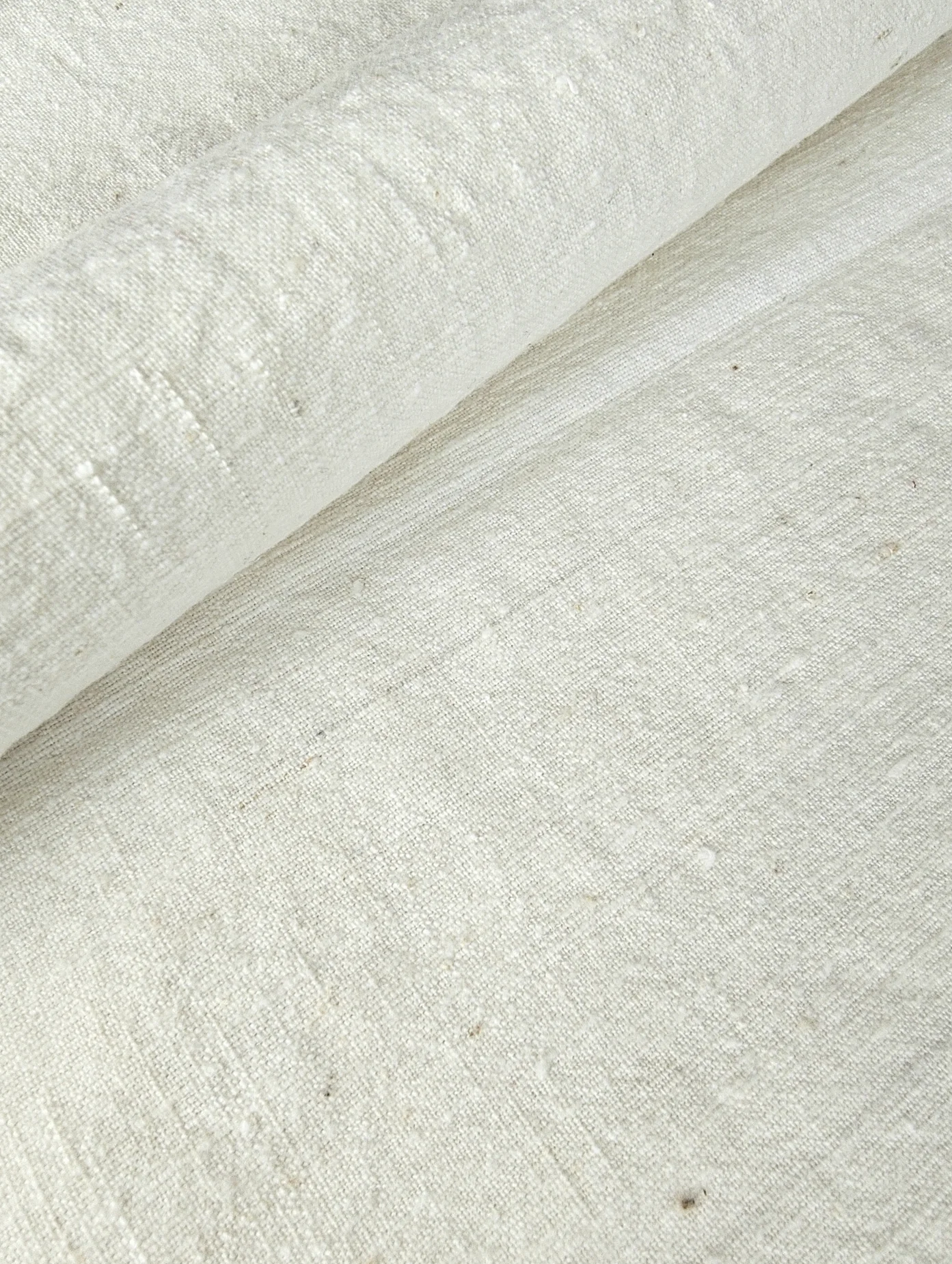
The Work Between Spinning and Weaving
Once a thread existed, the preparation continued. Yarn was reeled and wound. In coloured cloth, some yarns were dyed before weaving. Sizing could help yarn better endure the tension and friction of the loom. Then the warp threads had to be counted, arranged and threaded in the planned sequence.
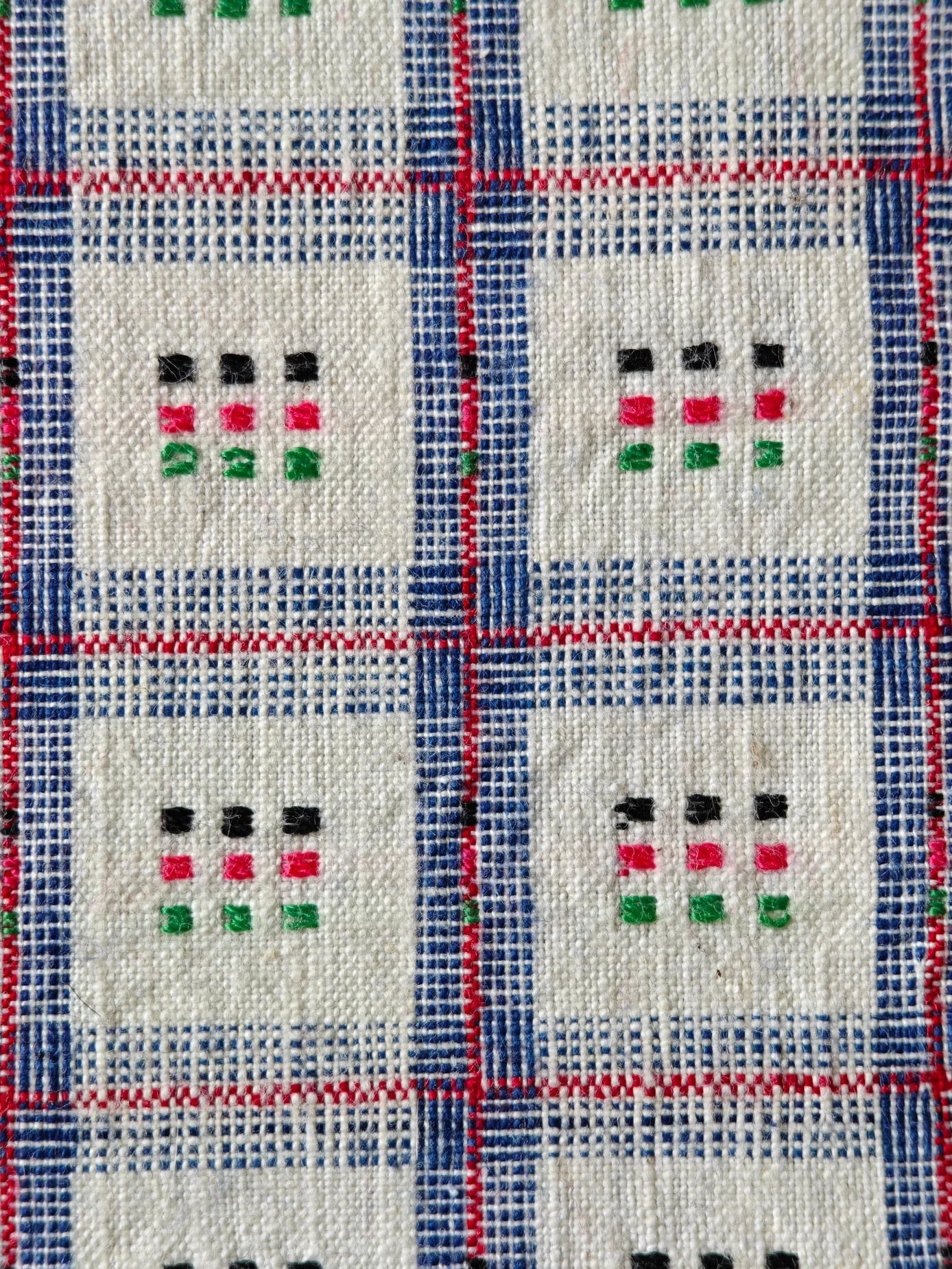
For a simple checked cloth, the order of coloured yarns can be central to the final design. A misplaced group of threads changes the visual pattern, even before the weaver begins to work.
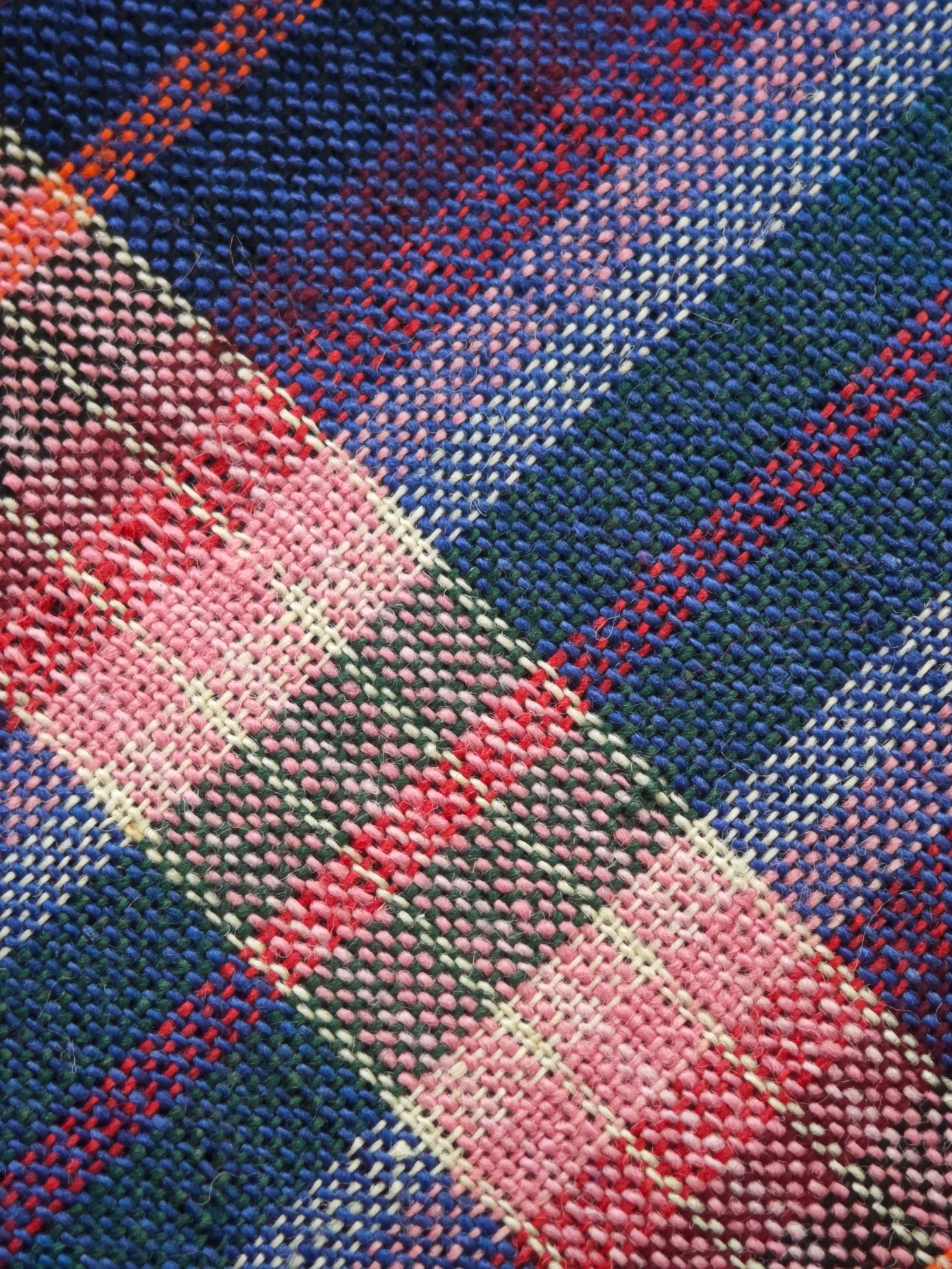
Warp, Weft and the Making of a Woven Surface
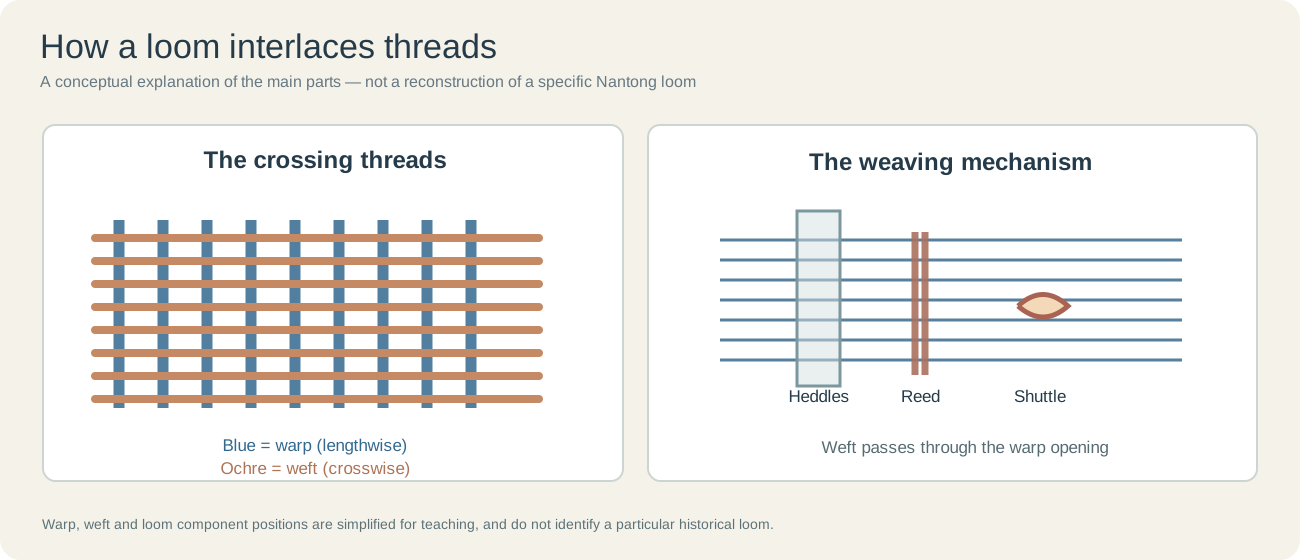
All woven cloth is built from crossing sets of yarn. The warp (经线) runs along its length. The weft (纬线) travels across it.
In a handloom, heddles raise or separate groups of warp threads. The weft passes through the opening, frequently carried by a shuttle, while the reed helps beat it into position. Repeating this movement turns separate yarns into one continuous surface.
Thirteen Operations in a Documented Nantong Tradition
The book Handcraft and Recovery of Chinese Traditional Homespun records a thirteen-operation sequence in the reconstruction of Nantong colour-woven cotton techniques. The list below follows that regional example. It is not a claim that every historical Chinese weaving household used the same tools or followed an identical set of steps.
Roll loosened cotton fibres into manageable strands for spinning.
Draw out fibres and add twist to form continuous yarn.
Arrange spun yarn into skeins for further handling.
Colour selected yarns before weaving a colour-woven design.
Prepare yarns to better withstand friction and tension.
Transfer yarn to a suitable package for weaving preparation.
Arrange lengthwise yarns in the required number, order and colours.
Pass yarns through the reed spaces in their planned order.
Separate and arrange warp threads for a more orderly setup.
Place warp threads through the mechanisms that open the shed.
Wind the crosswise yarn for insertion during weaving.
Mount and adjust the prepared warp and other weaving elements.
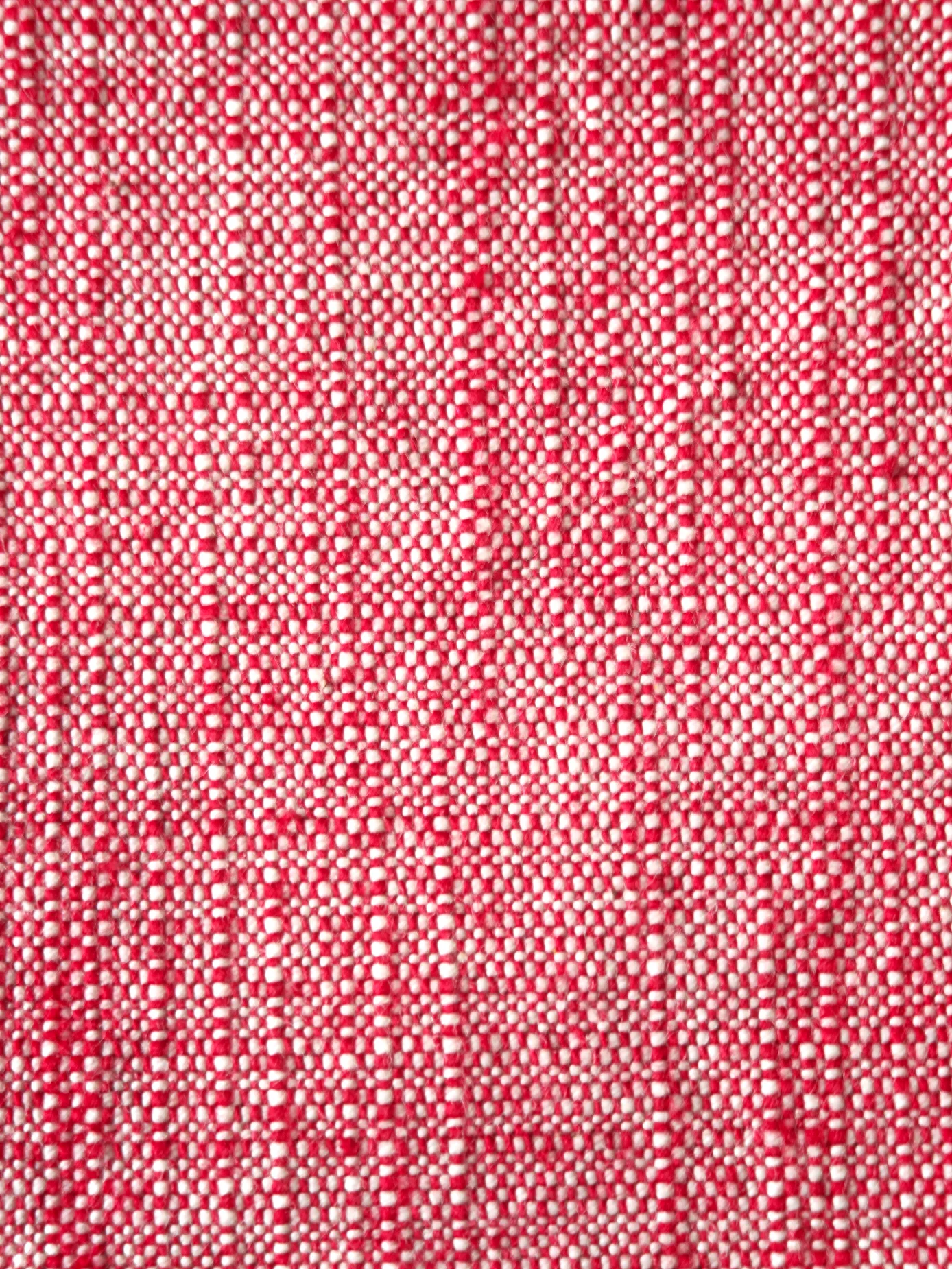
Interlace warp and weft repeatedly into a length of cloth.
In this regional sequence, cotton ginning and bowing take place before the thirteen weaving-related operations. Other weaving traditions, especially undyed or differently structured cloth, may omit, combine or reorder particular stages.
Woven in the Cloth, or Printed on Top?
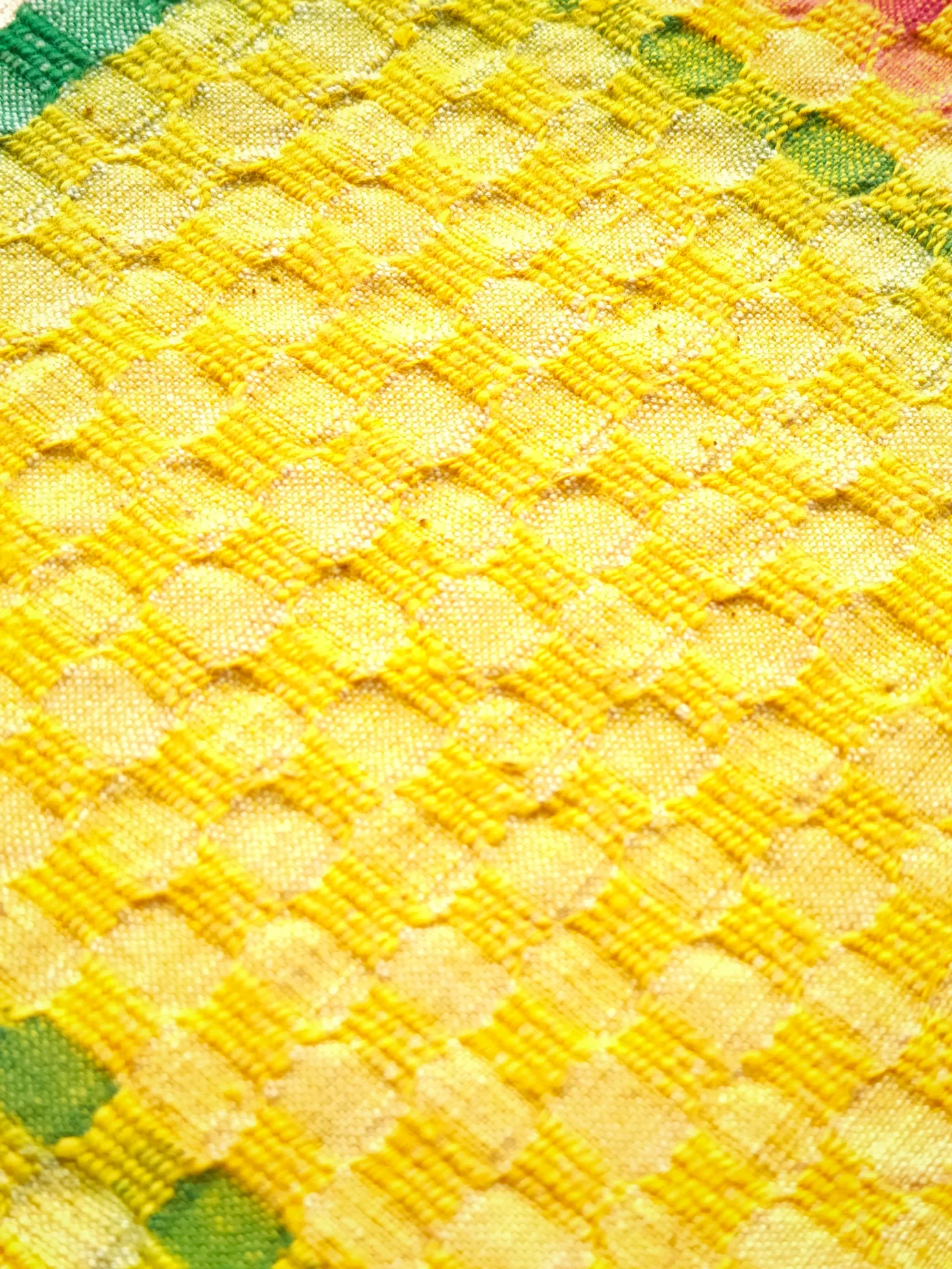
A small check or stripe can be formed using differently coloured warp and weft threads. The design exists within the woven structure itself.
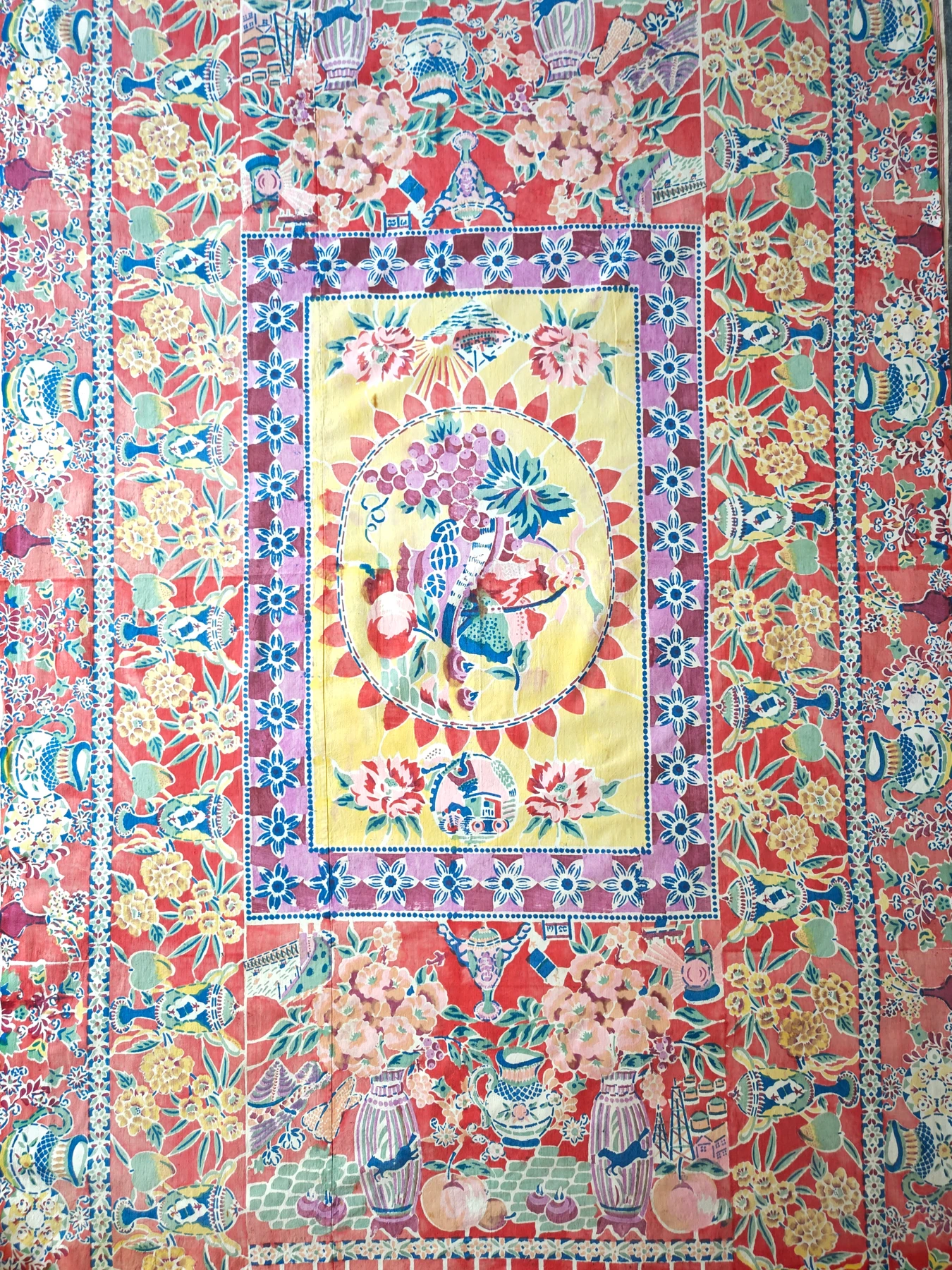
A separately printed pattern is different: the cotton ground is woven first, and the decorative marks are then applied. Blue resist printing and multicolour surface printing are related to, but distinct from, weaving. The precise printing tool cannot always be confirmed from a surviving fabric alone.

Edges, Joining Seams and Later Repairs
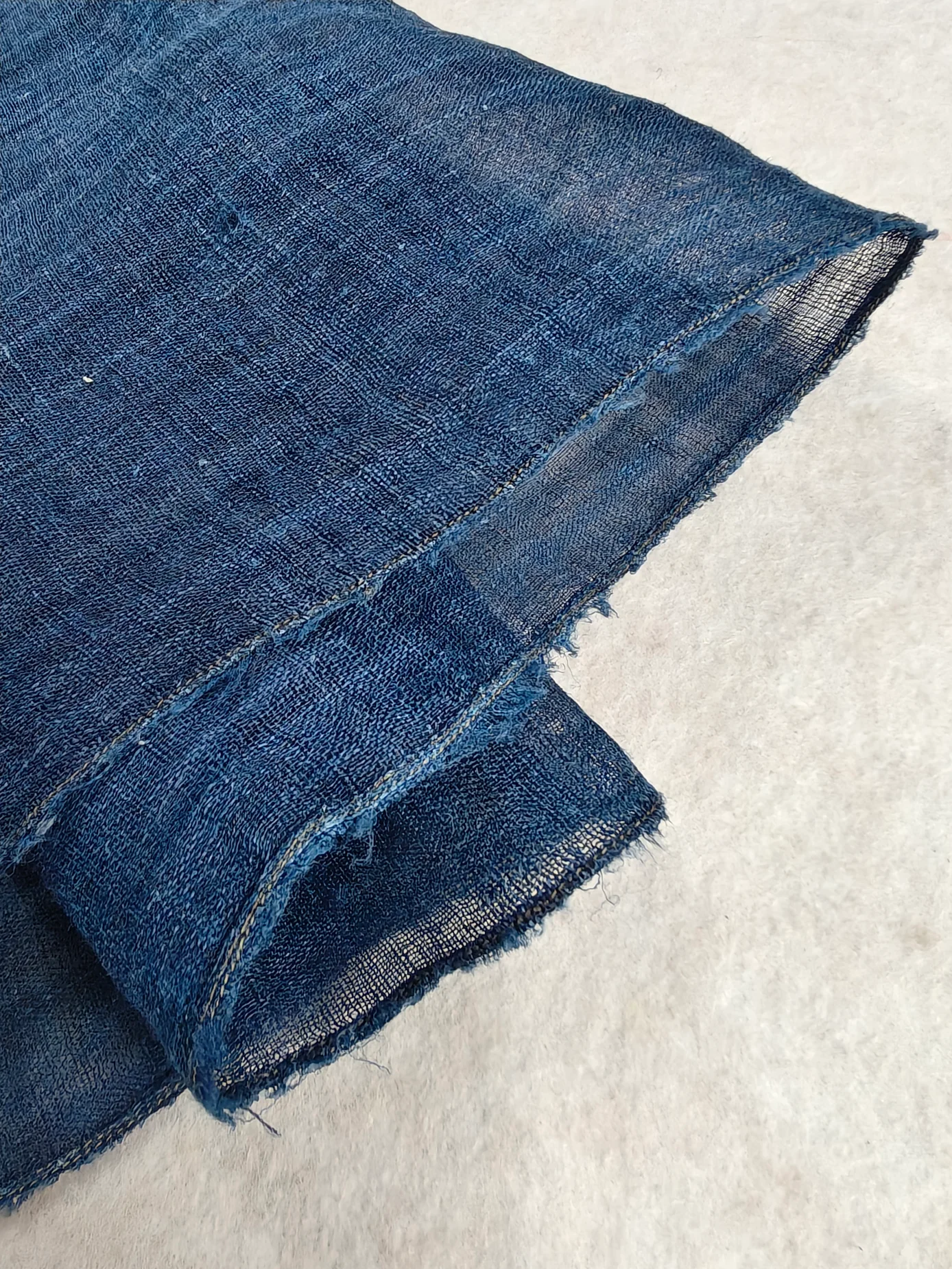
Older household looms could produce narrow widths. Large bedsheets or coverings were sometimes assembled by sewing several pieces together. Those construction seams are not necessarily repairs.
Other stitches may have been added after damage. In both cases, fabric construction and old repairs tell us something about an object's history, but they represent different events in its life.
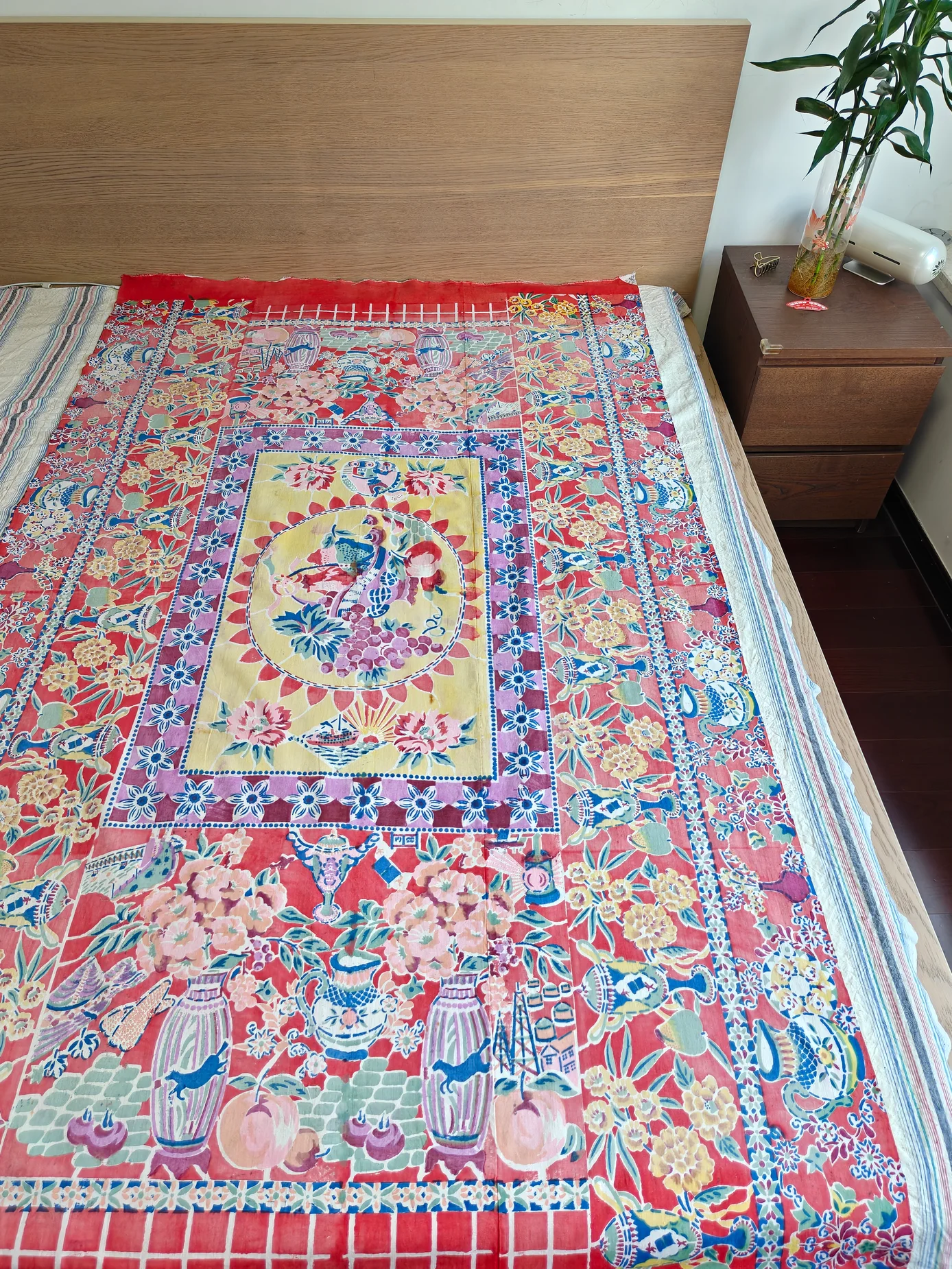
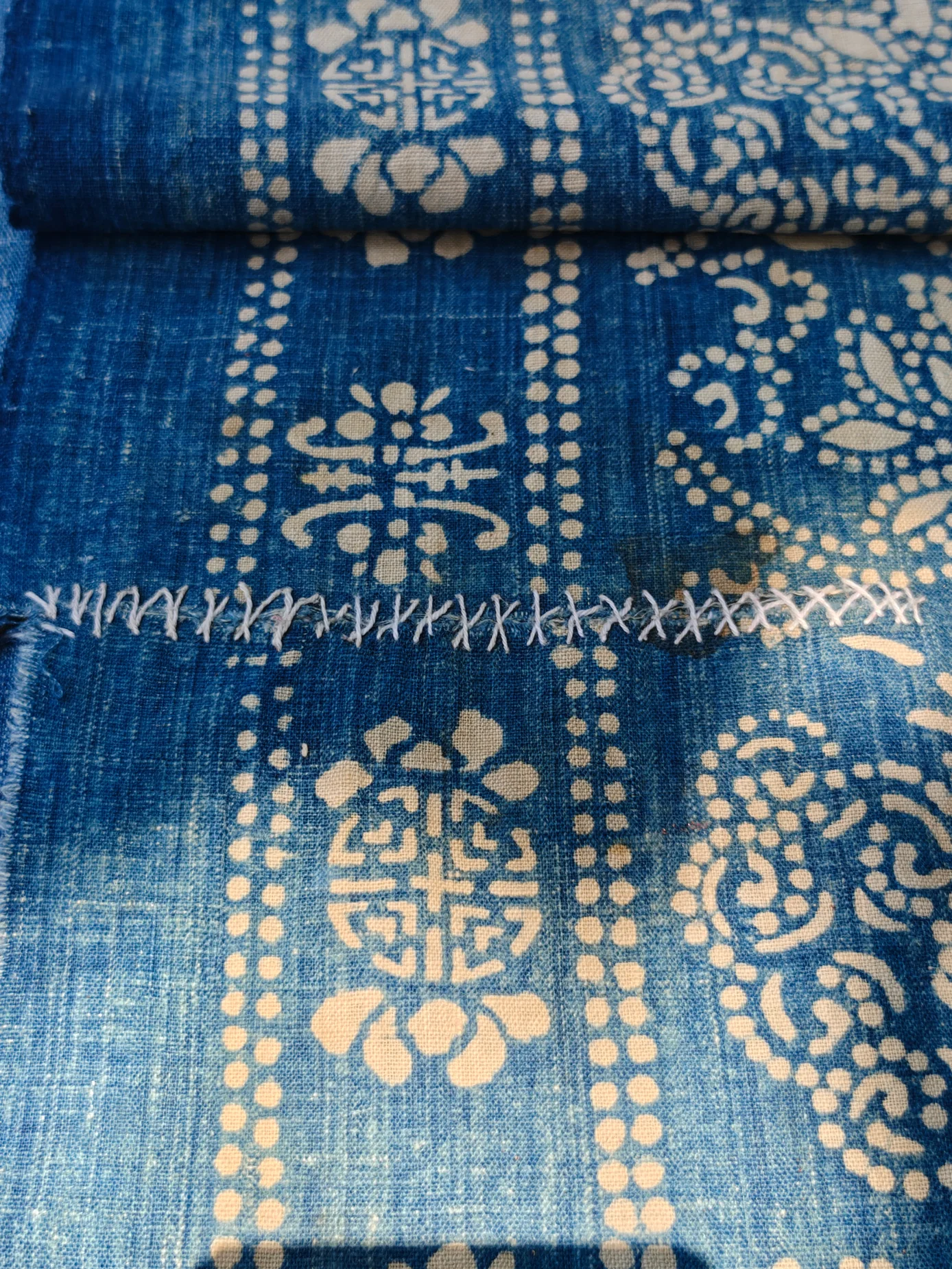
Even the most revealing close-up is not a complete authentication. Thread thickness, weave, edges, printing, age-related wear and provenance must be considered together.
Before There Was a Pattern, There Was a Thread
The skills behind homespun were not contained entirely in written instructions. They also lived in the coordination of hands and tools — drawing out cotton, setting tension, keeping threads in order and recognising when the loom needed adjustment.
Today, Tubu Atlas preserves different examples of those traditions: unpatterned cotton, colour-woven checks, hand-joined bedsheets and printed ground cloth. Each is a material record, not an interchangeable label.
A piece of cloth may look simple. Its making rarely was.
Source & Editorial Notes
Principal historical reference: Wang Hongfu (王宏付), Ke Ying (柯莹) and Bai Yanhui (白艳惠), 《中国传统土织布手工技艺与复原》 (Handcraft and Recovery of Chinese Traditional Homespun), Donghua University Press, 2022, Chapter 3, “南通传统色织土布的技艺复原”, especially pp. 89–101.
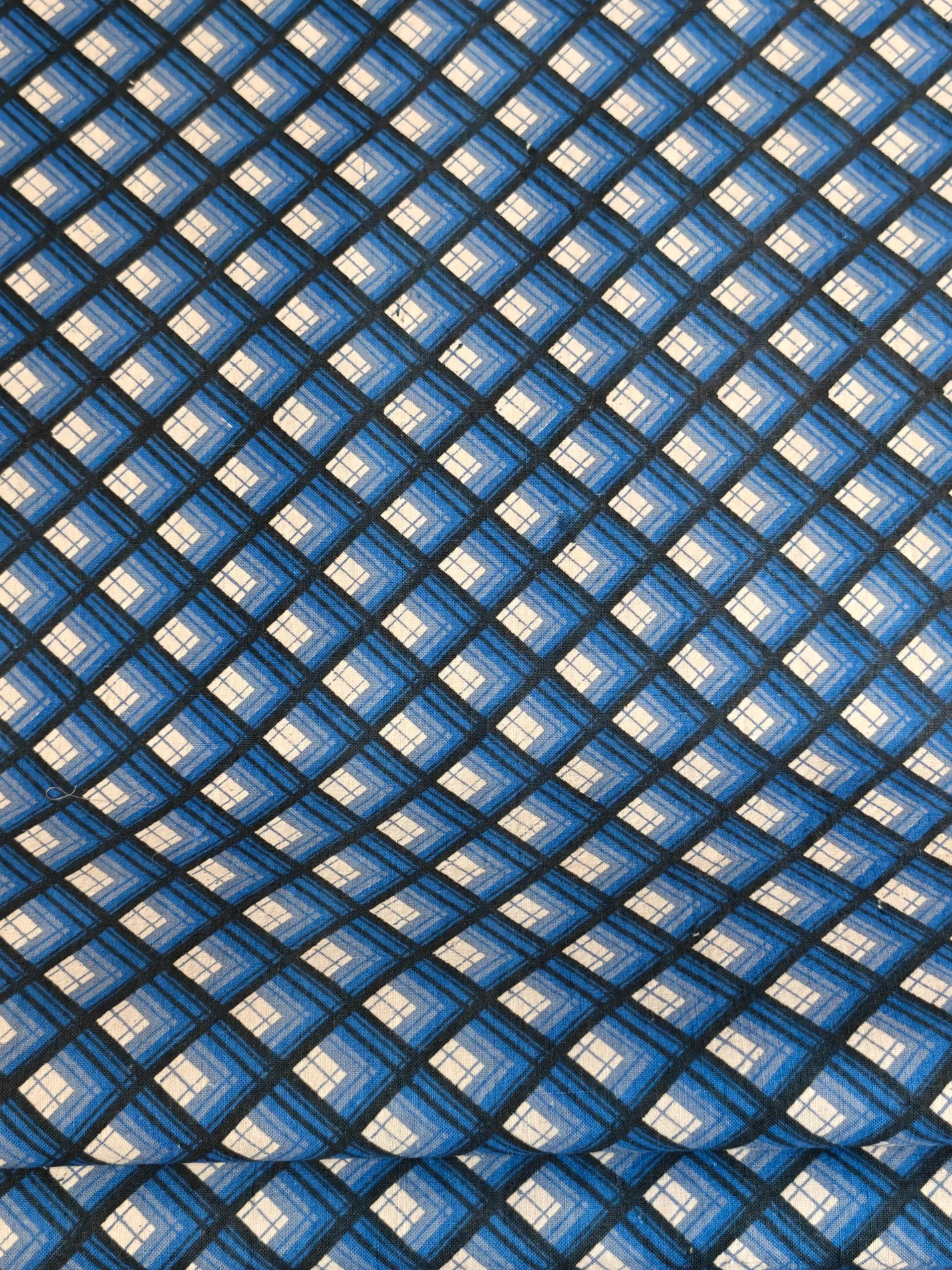
The thirteen stages above follow the book's Nantong colour-woven reconstruction. The diagrams are original explanatory artwork, not illustrations copied from the source. All fabric photographs on this page are original Tubu Atlas inventory photography; no photographed cloth is presented as direct evidence of the spinning or loom motions themselves.
Claims of handspun yarn, handwoven construction, printing technique and exact dating for individual old cloths remain subject to their own evidence and attribution. No protected book photographs are reproduced here.