
Four Seasons Weave — One Continuous Jiangnan Textile
c. 1960s–1970s · Cotton
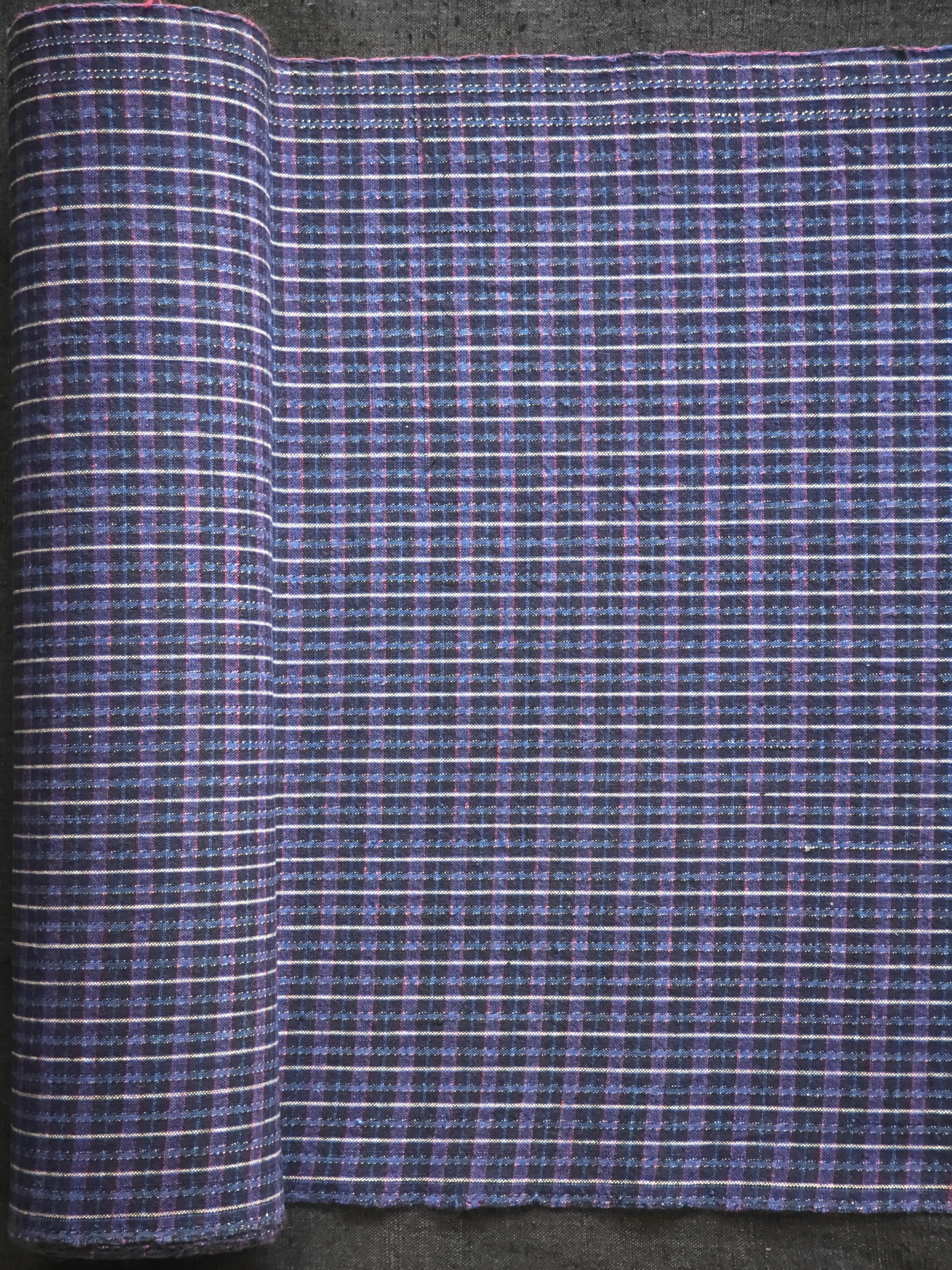
One uncut, 6.5-metre Jiangnan cotton textile changes from indigo stripes to red-blue checks and denser plaid, with no joining seams between its woven sections.
Browse the cloth, read its record, and follow the linked Etsy listing to check current availability and purchase.
c. 1960s–1970s · Cotton
One uncut, 6.5-metre Jiangnan cotton textile changes from indigo stripes to red-blue checks and denser plaid, with no joining seams between its woven sections.
c. 1940s–1960s · Cotton
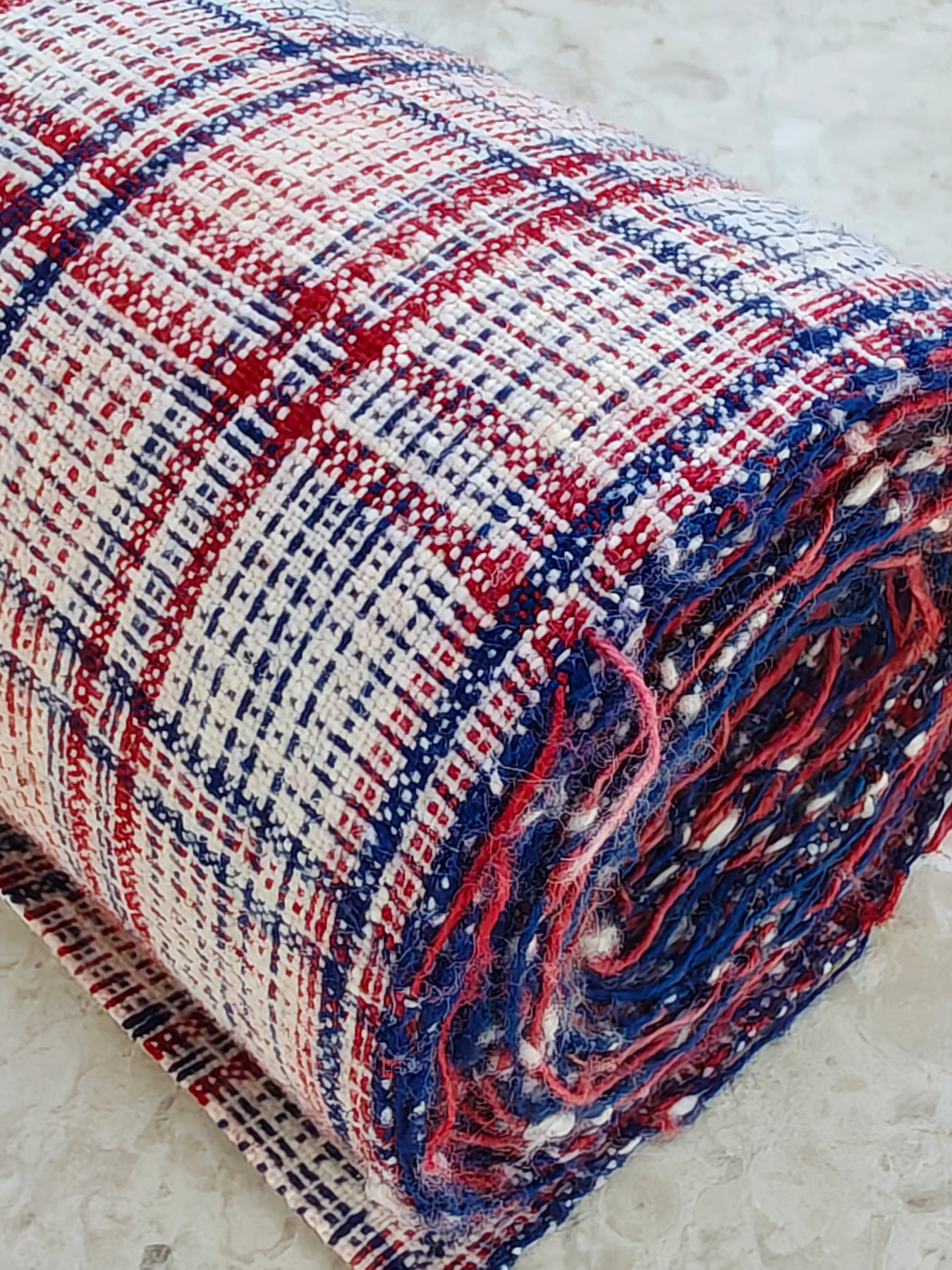
Soft red and indigo lines form a large square grid around fine comb-like inner stripes in this substantial, softly structured Jiangnan homespun cotton.
c. 1940s–1960s · Cotton
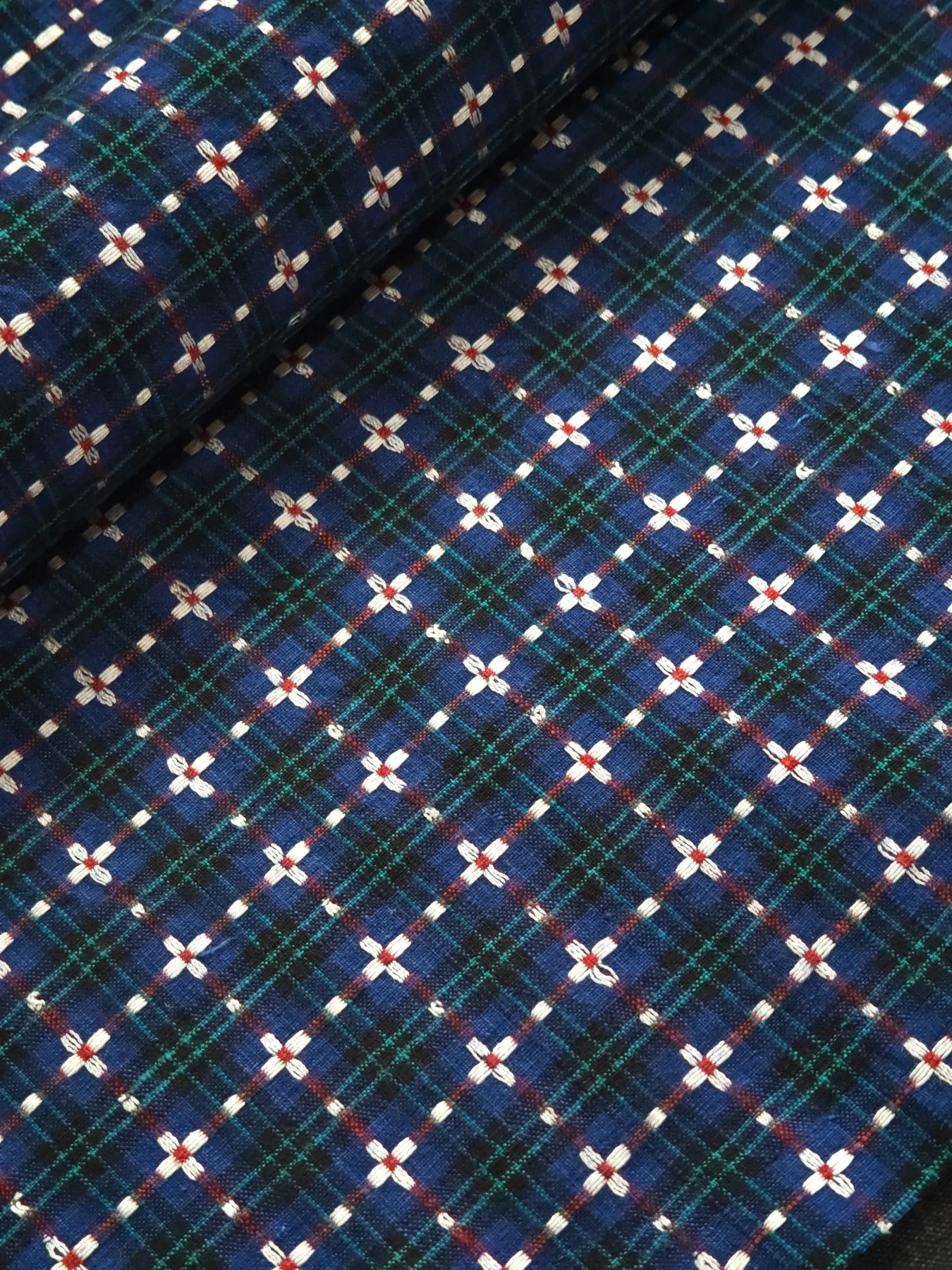
A rare Shanghai-area tiaohua cloth in which tiny four-petal flowers are woven directly into a deep blue checked ground rather than printed or embroidered on the surface.
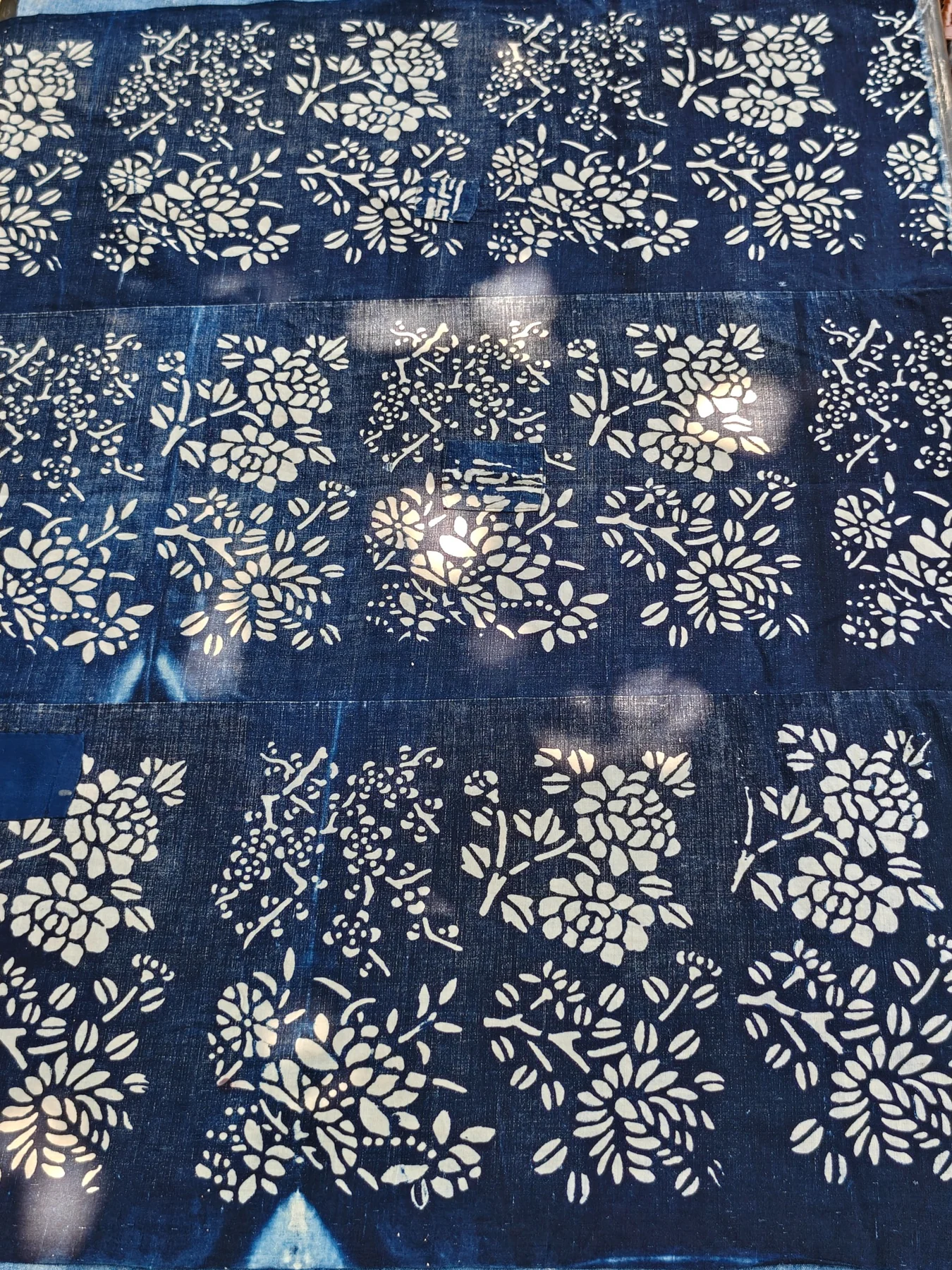
c. 1950s–1960s · Homespun cotton
A large three-panel household quilt cover whose resist-printed Four Seasons flowers and historic patch repair preserve both auspicious symbolism and the evidence of long domestic use.
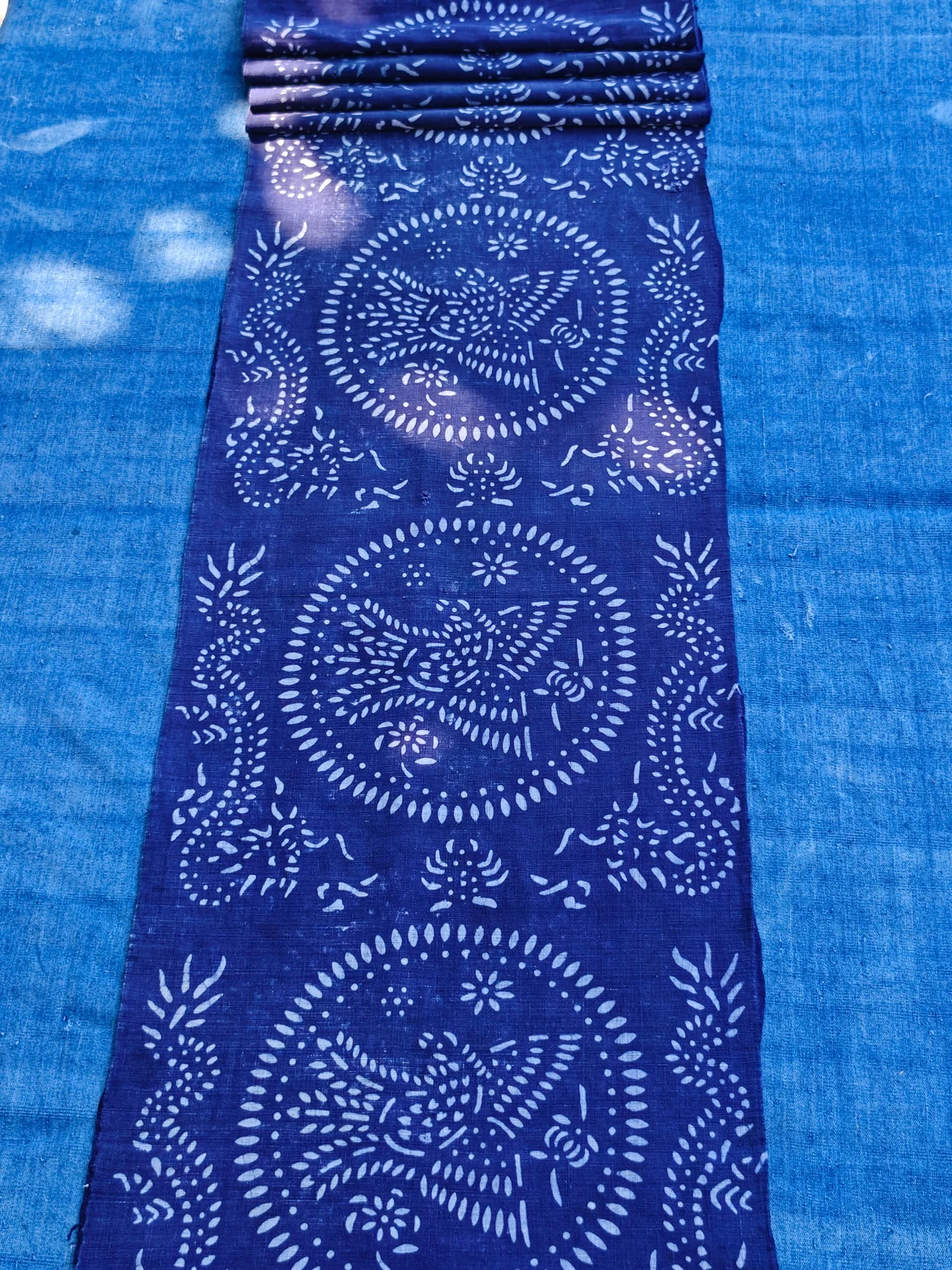
c. 1950s–1960s · Homespun / handspun-style cotton
A long narrow blue-and-white panel carrying dragons, phoenixes, floral vines and pearl imagery — motifs historically suited to wedding and household textiles.
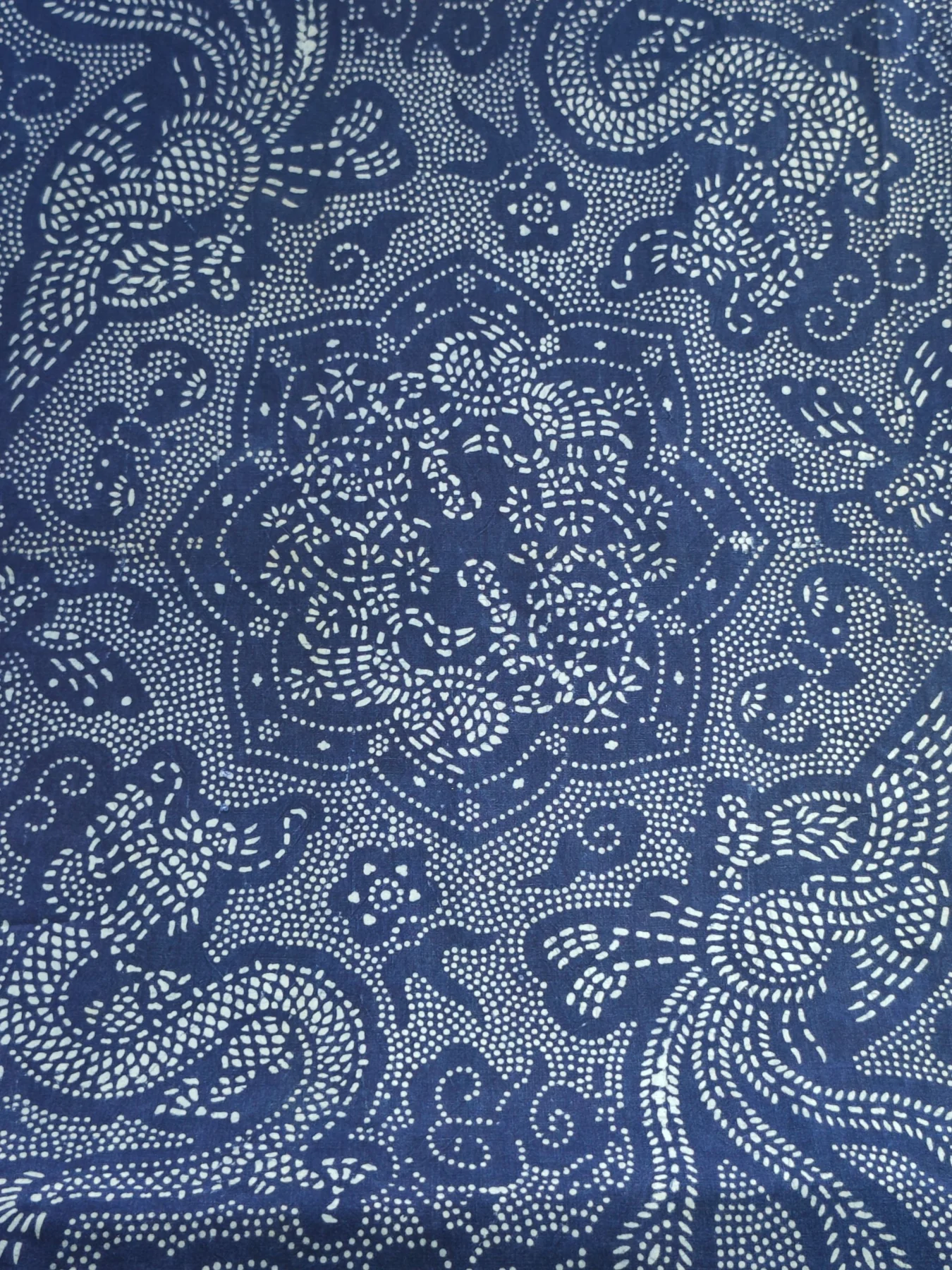
c. 1960s–1970s · Cotton
A large complete phoenix-and-peony composition whose blue resist print turns household cloth into a field of marital and domestic blessing.
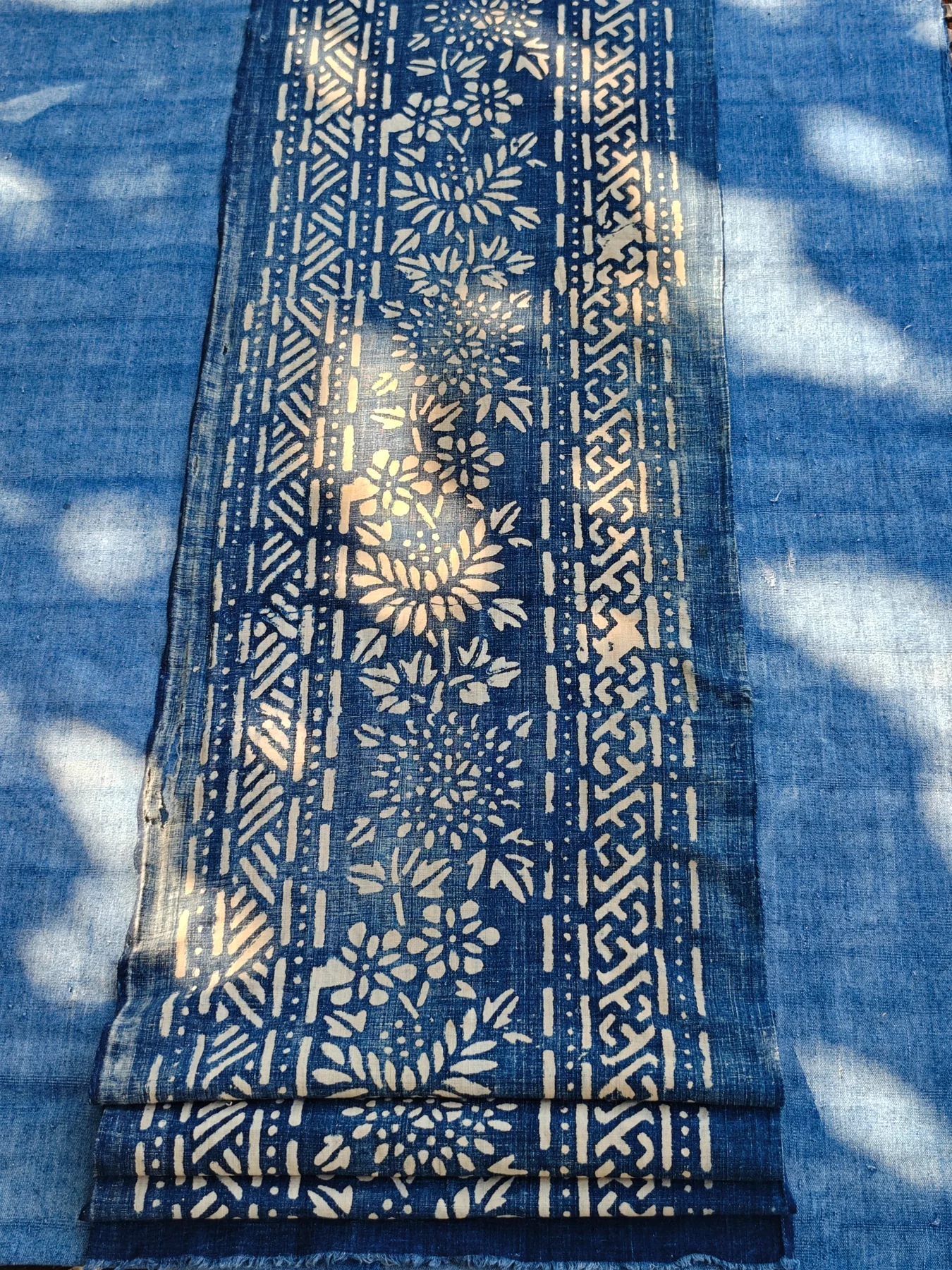
c. 1950s · Homespun / handspun-style cotton
A narrow chrysanthemum panel framed by geometric borders, combining the quiet cultural language of the flower with the practical format of an old household textile.
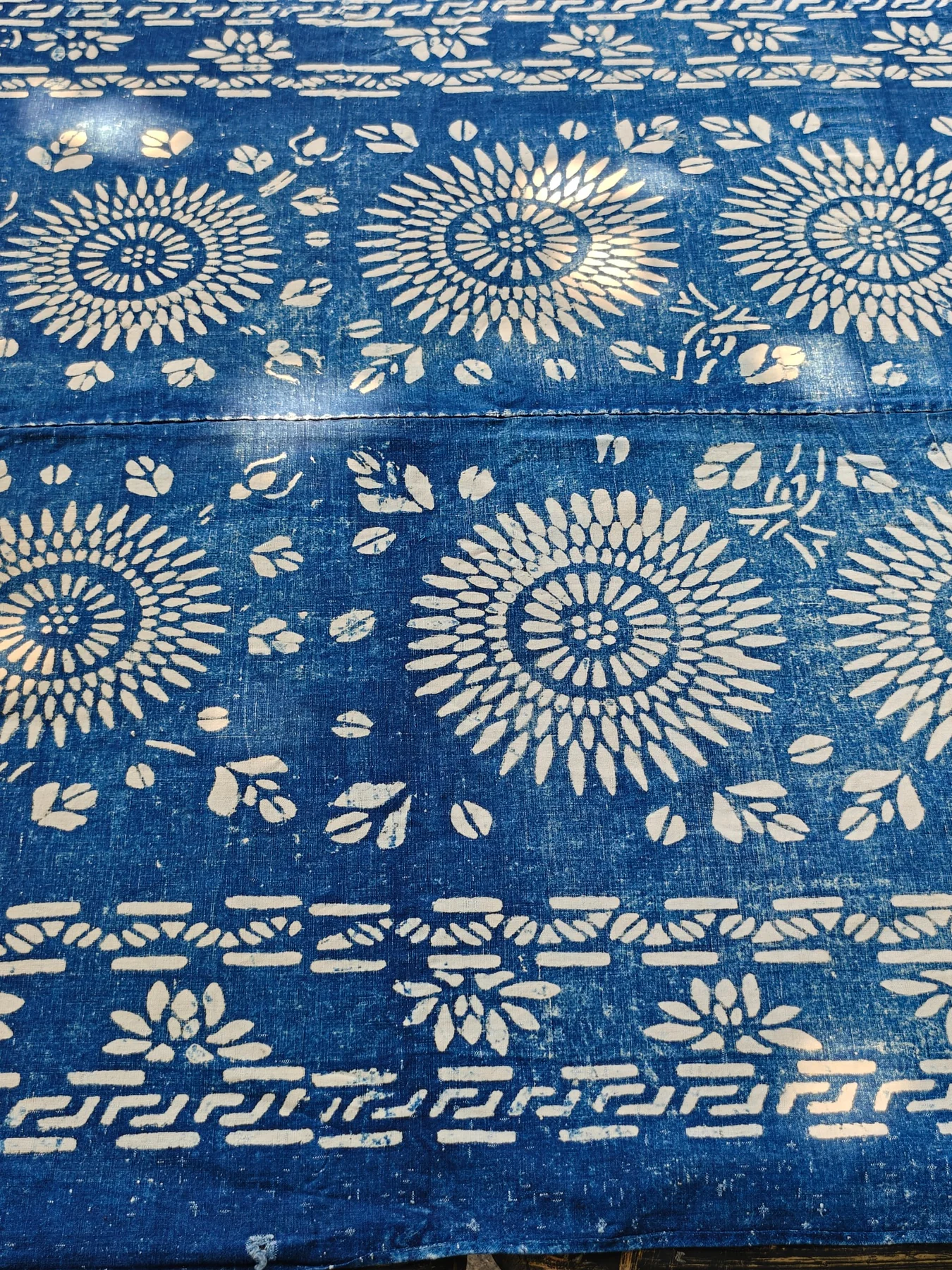
c. 1950s–1960s · Homespun cotton
A square-format household textile built from two narrow panels, with radiating chrysanthemum medallions that combine longevity, inward independence and the round symbolism of reunion.
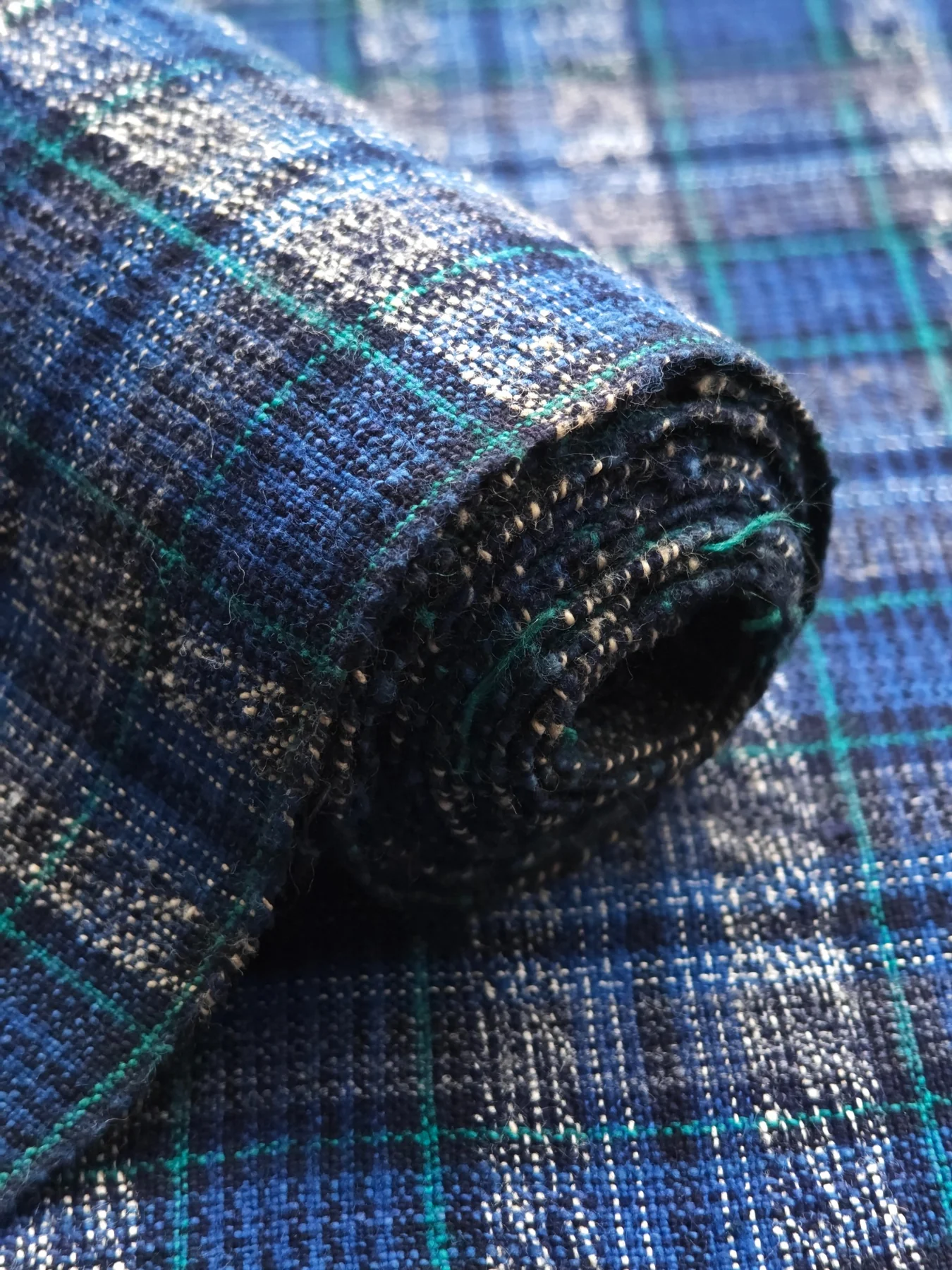
c. 1940s–1950s · Handspun cotton
A narrow Jiangnan plaid whose mottled grey “snowflake” yarn turns a quiet blue-green grid into a close study of handspun fibre, domestic weaving and traditional yarn preparation.
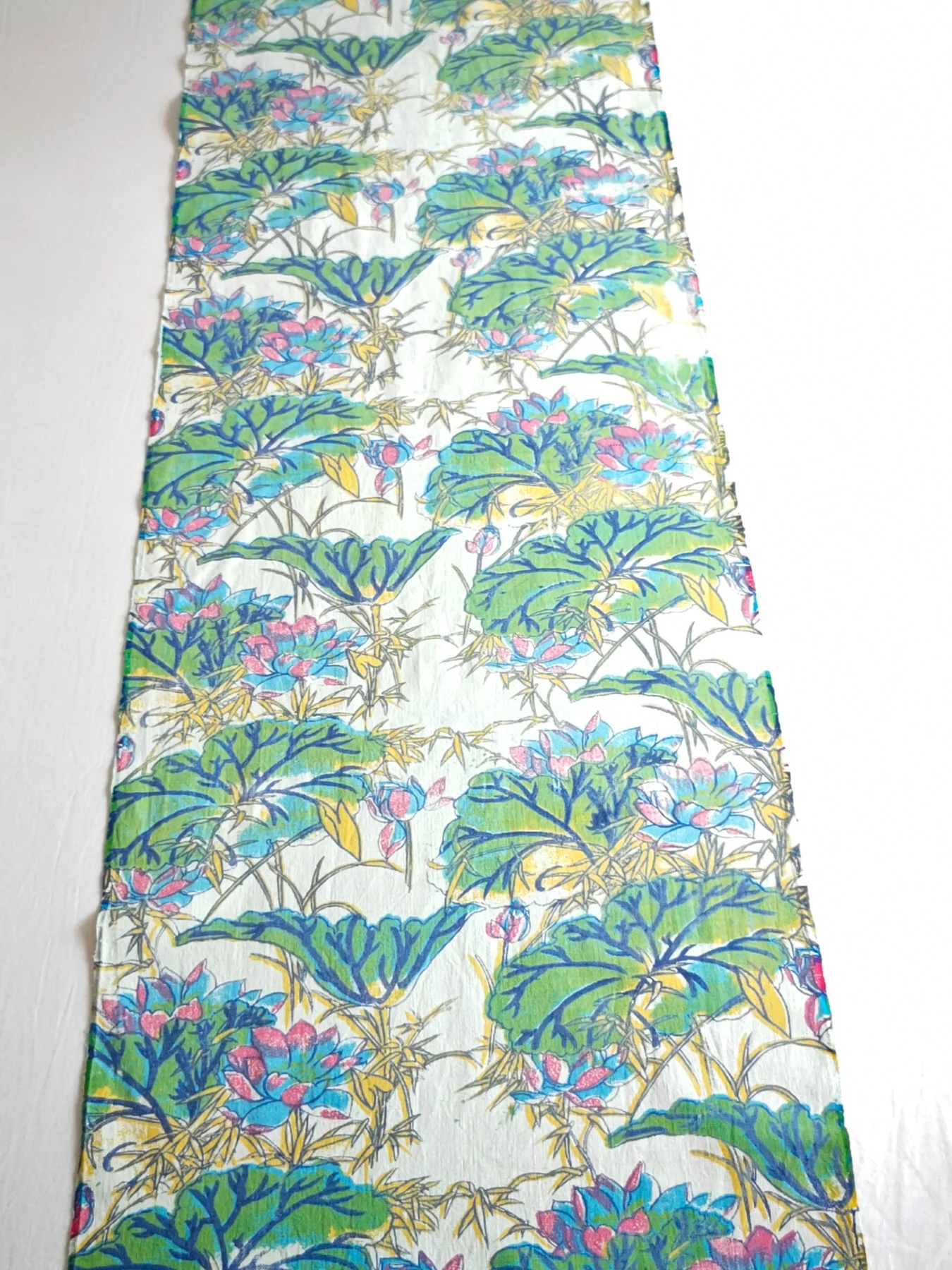
c. late 1960s–1970s · Handspun cotton
A bright lotus-pond print on substantial handwoven cotton, combining the texture of older Jiangnan homespun with a multicolour domestic print associated with harmony, rootedness and continued blooming.
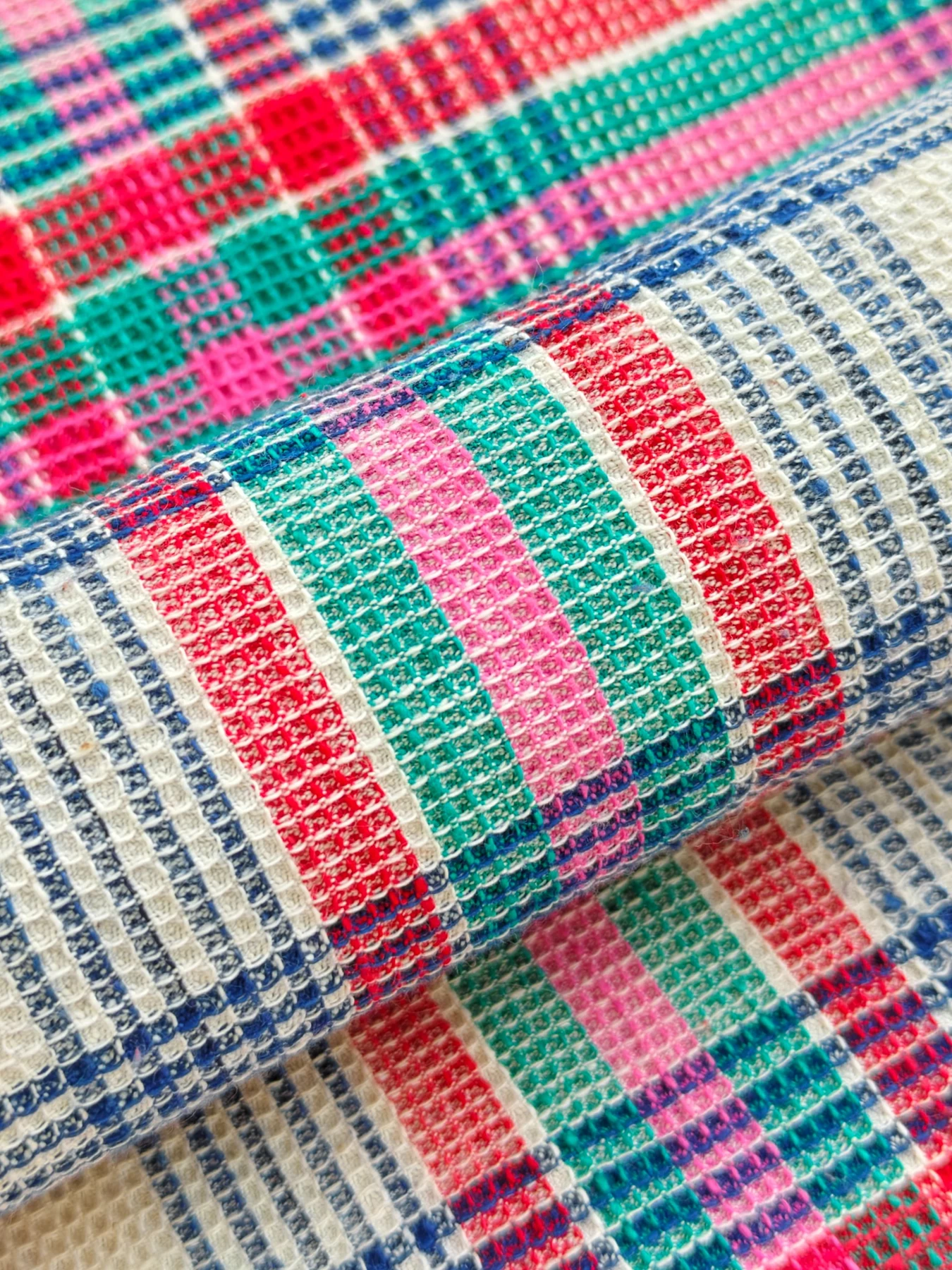
c. 1960s–1970s · Homespun cotton
A thick, soft homespun cloth whose colour and raised square texture are woven directly into the fabric, creating a nubby waffle-like surface rather than a printed design.
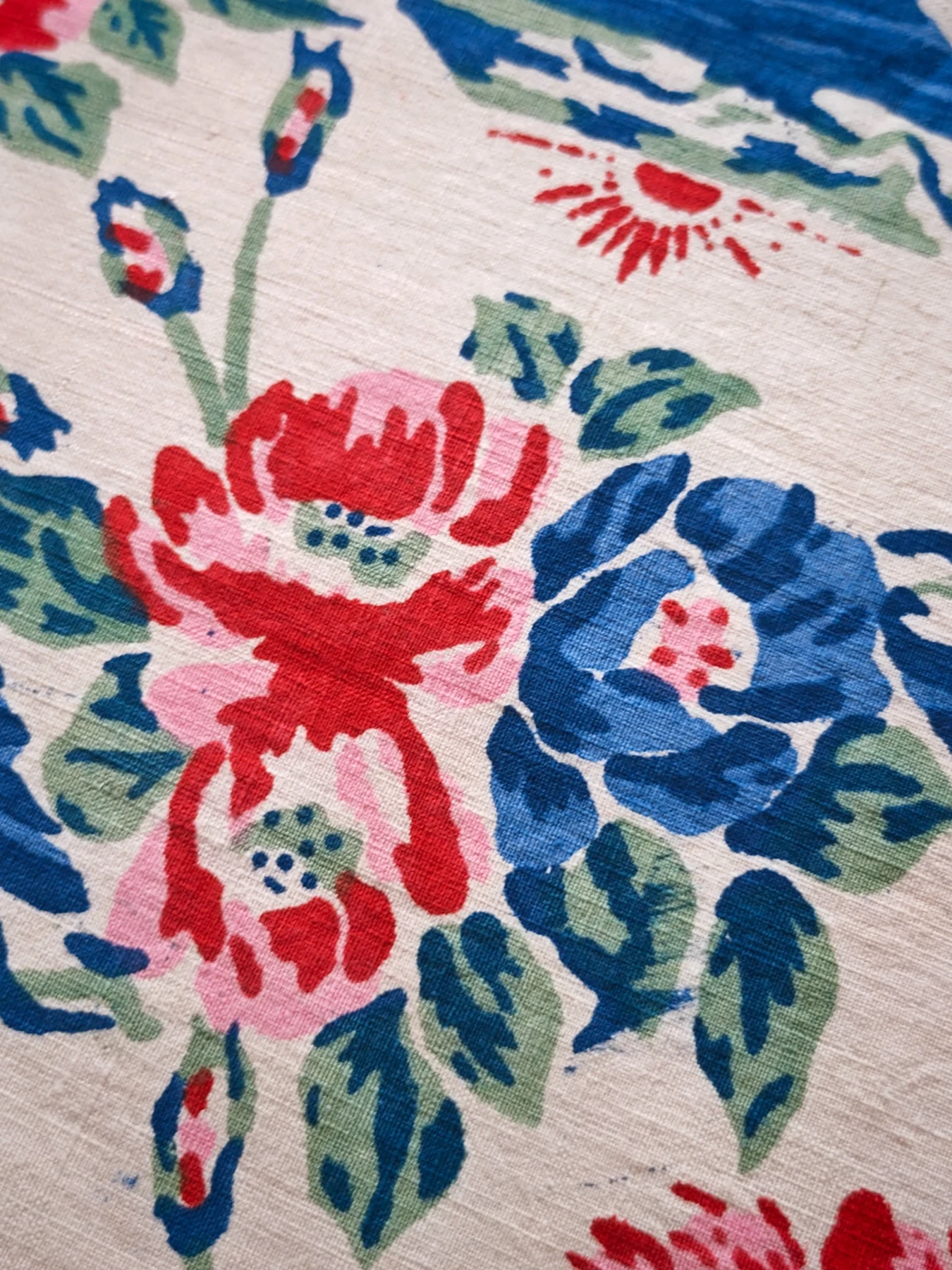
c. 1960s–1970s · Handspun cotton
A cheerful mid-century folk print combining red and blue flowers, green leaves, blue mountain-like forms and small rising-sun motifs over a substantial handwoven cotton ground.
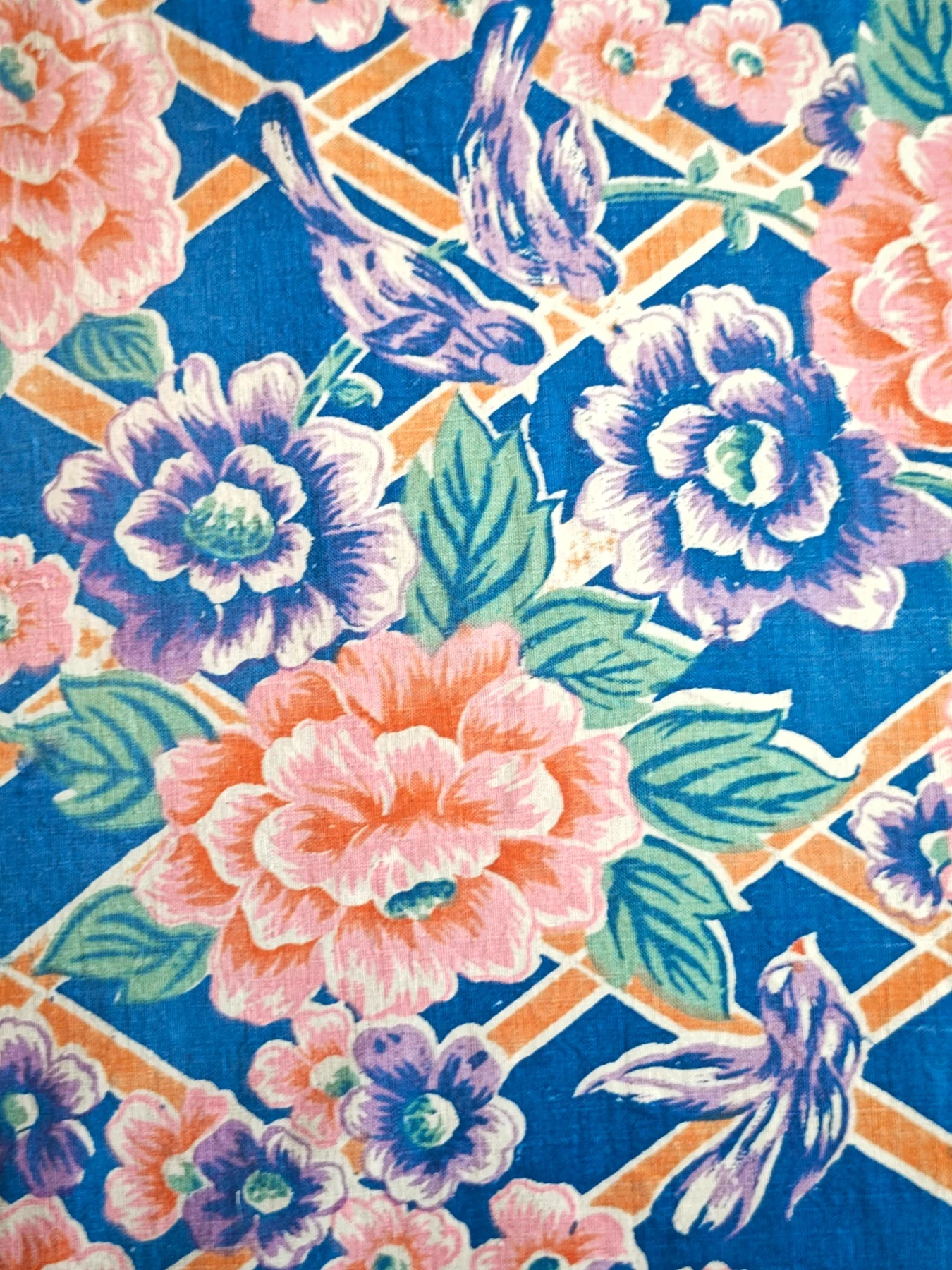
c. 1960s–1970s · Handspun cotton
A vivid bird-and-flower folk print on a bright blue ground, structured by warm orange lattice lines and printed over a thick old handwoven cotton base.
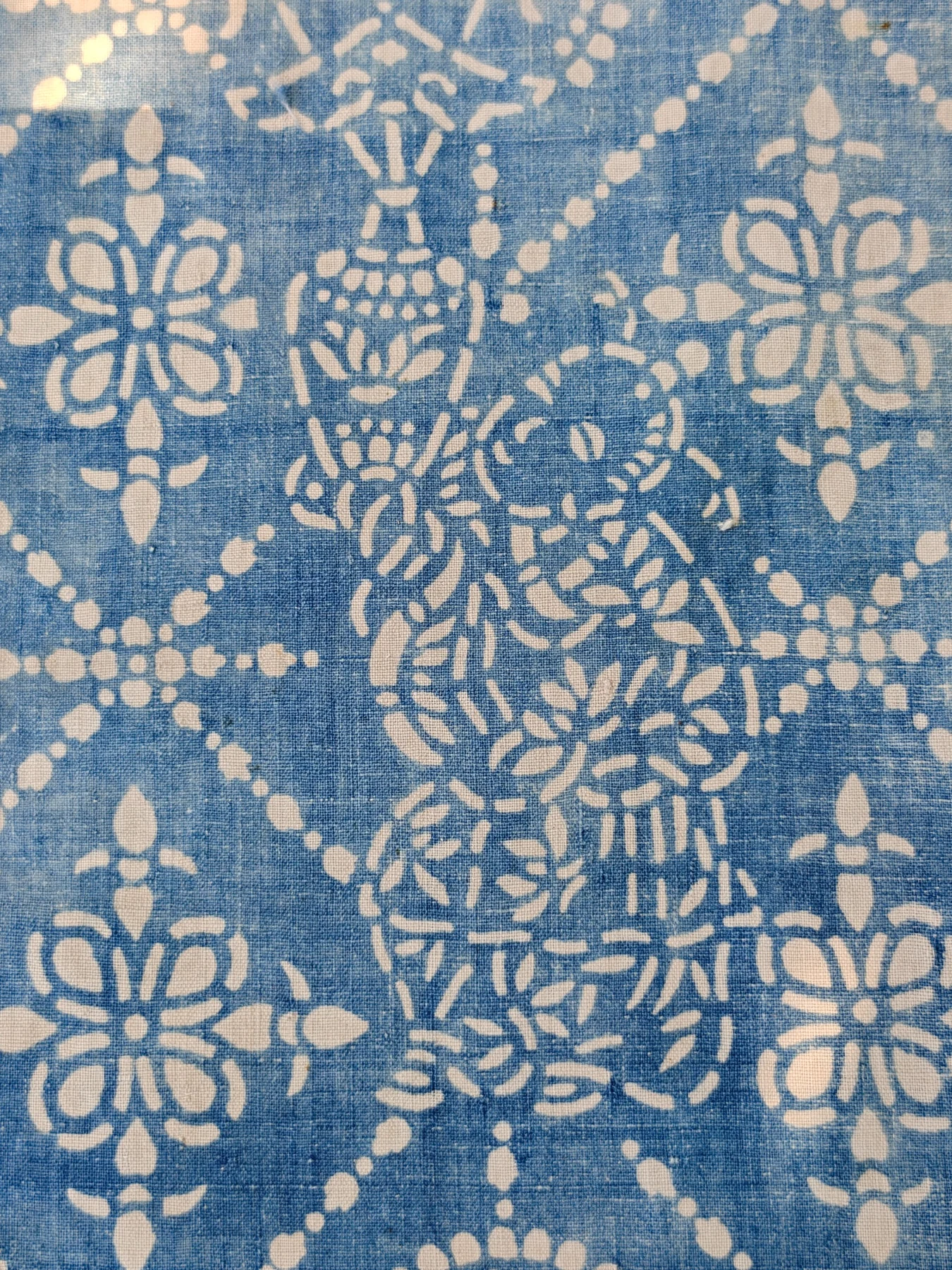
c. late 1940s–early 1950s · Handwoven cotton
A softly timeworn blue-and-white folk textile with a rare child-and-vase composition, surrounded by floral medallions and dotted geometric forms.
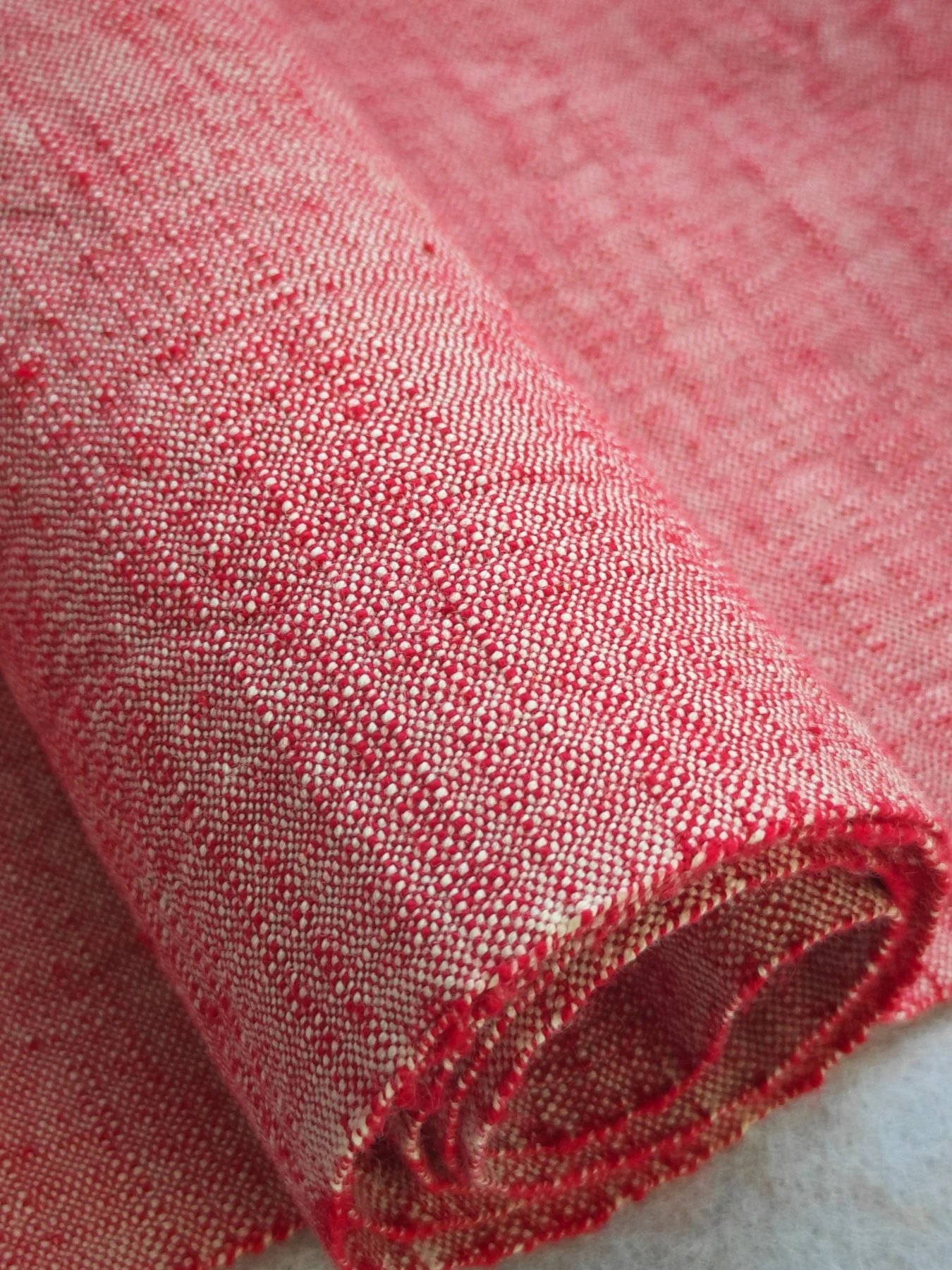
c. 1960s–1970s · Homespun cotton
A warm red homespun cloth whose tiny natural-white dots, red flecks and uneven handspun yarn create a soft star-like field across the woven surface.
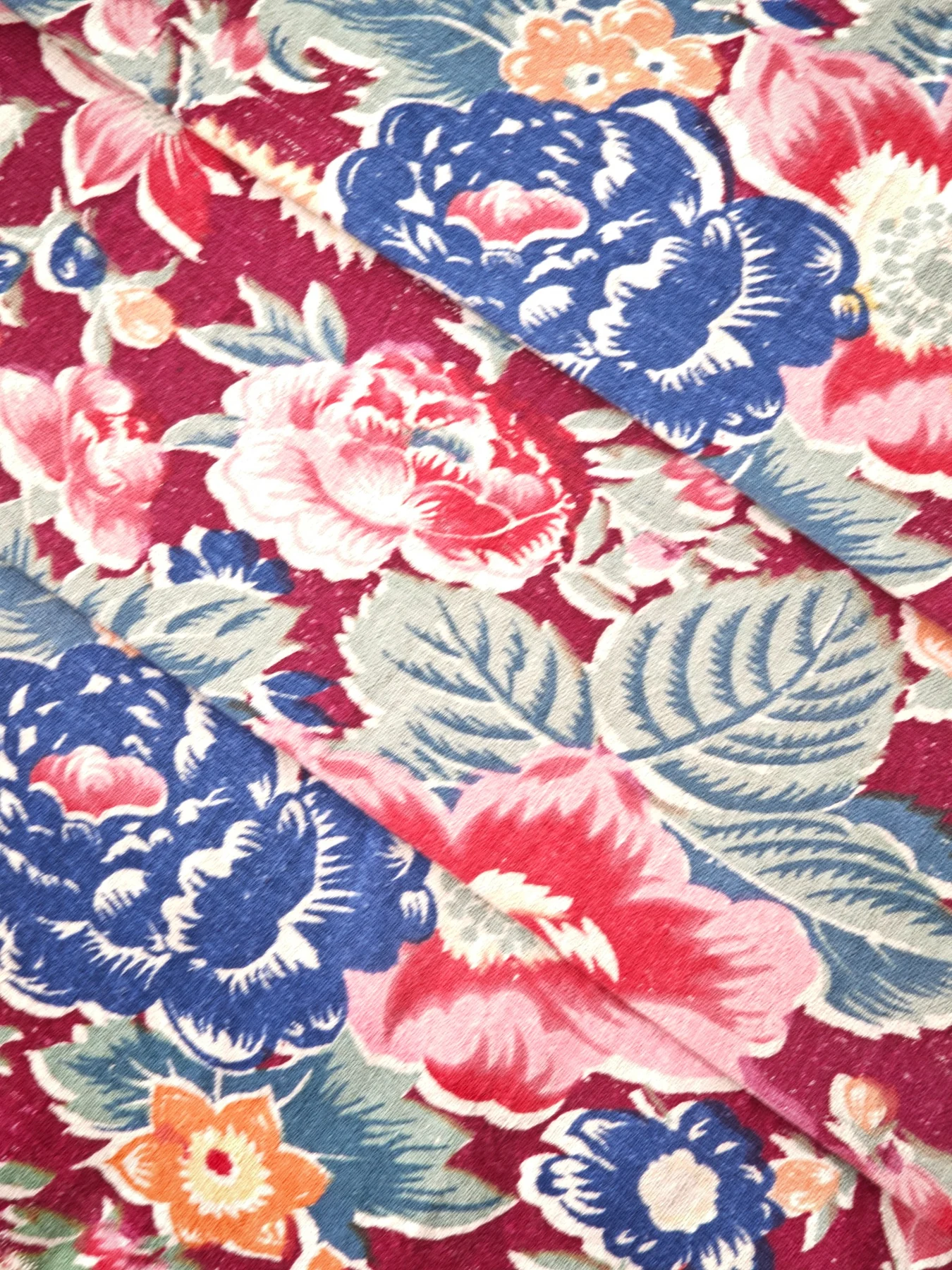
Mid-20th century · Handspun cotton
Two matching cuts of handwoven cotton carrying large blue and pink peonies across a wine-dark burgundy ground, with hand-print variation still visible across the surface.
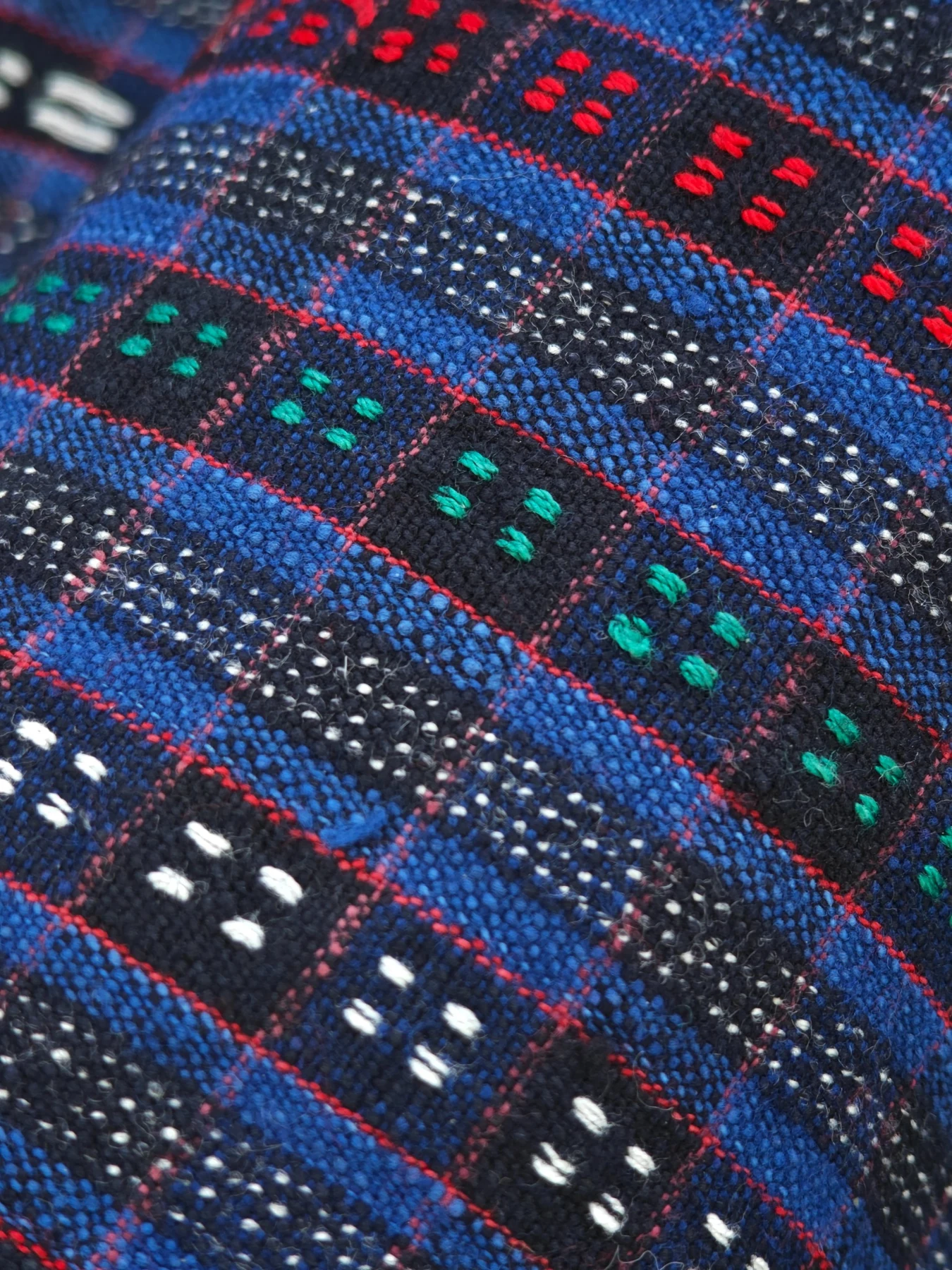
c. 1960s–1970s · Handspun cotton
A dark indigo checked homespun animated by tiny red, green and white picked details, creating a dense field of small handmade marks across a firm old woven ground.
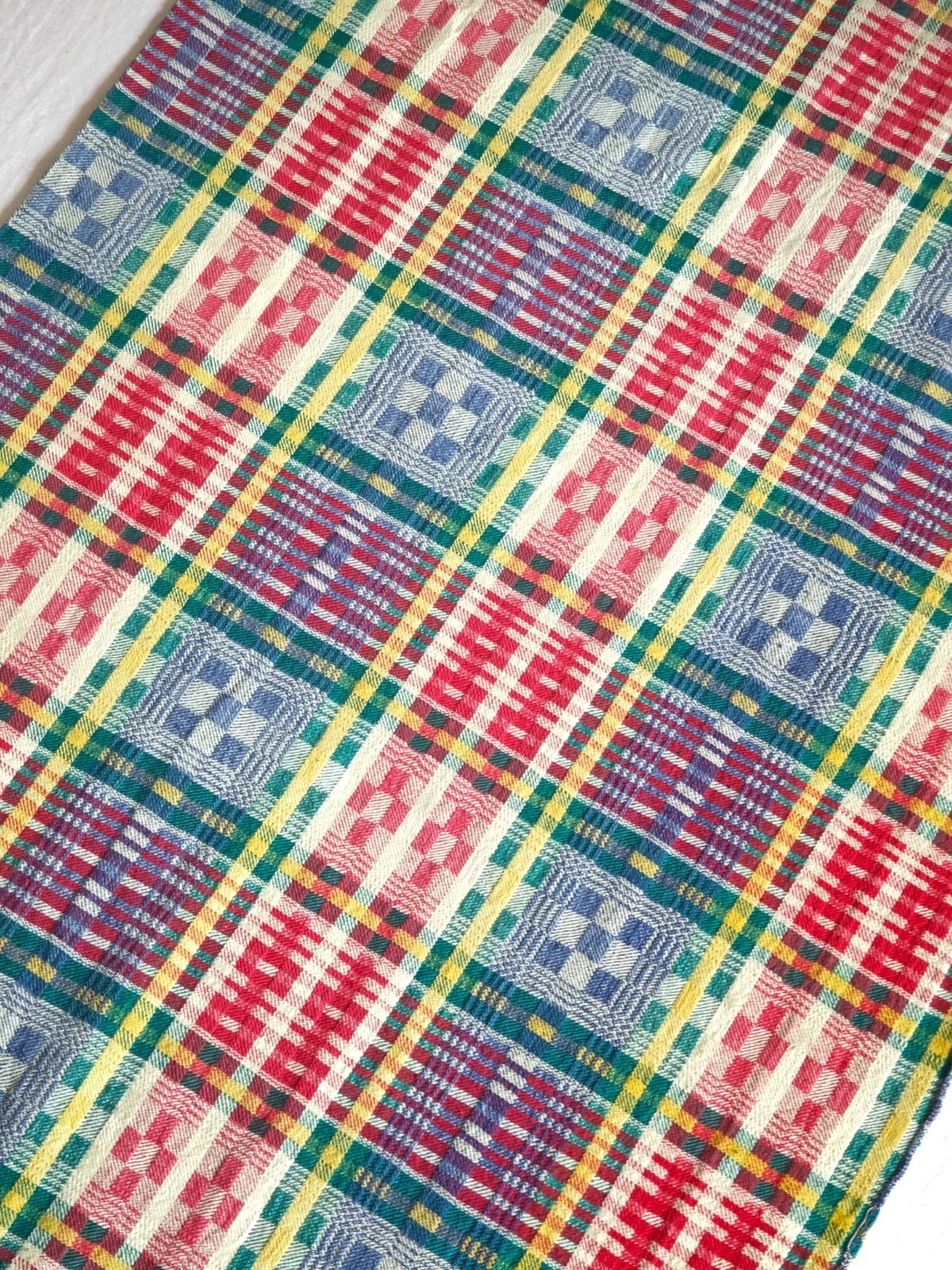
c. 1960s–1970s · Handwoven cotton
A vivid pair of reclaimed Shandong-style Lu brocade panels in which colourful checks and character-like figured blocks are woven directly into the cloth.
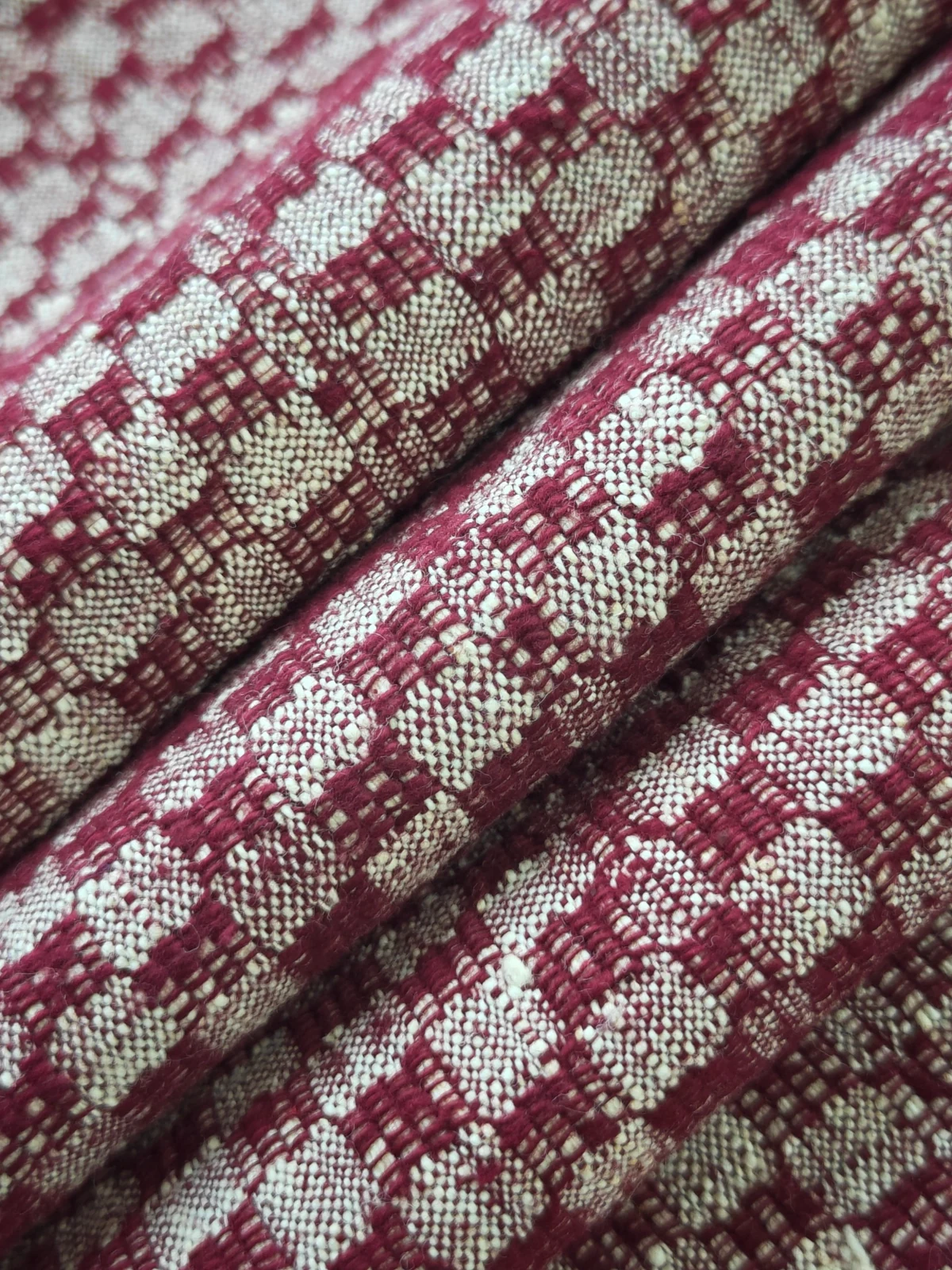
Mid-20th century · Handspun cotton
A wine-red and natural-white figured cloth whose raised linked cells are catalogued as a dragon-scale grid, giving the surface a dense, tactile relief.
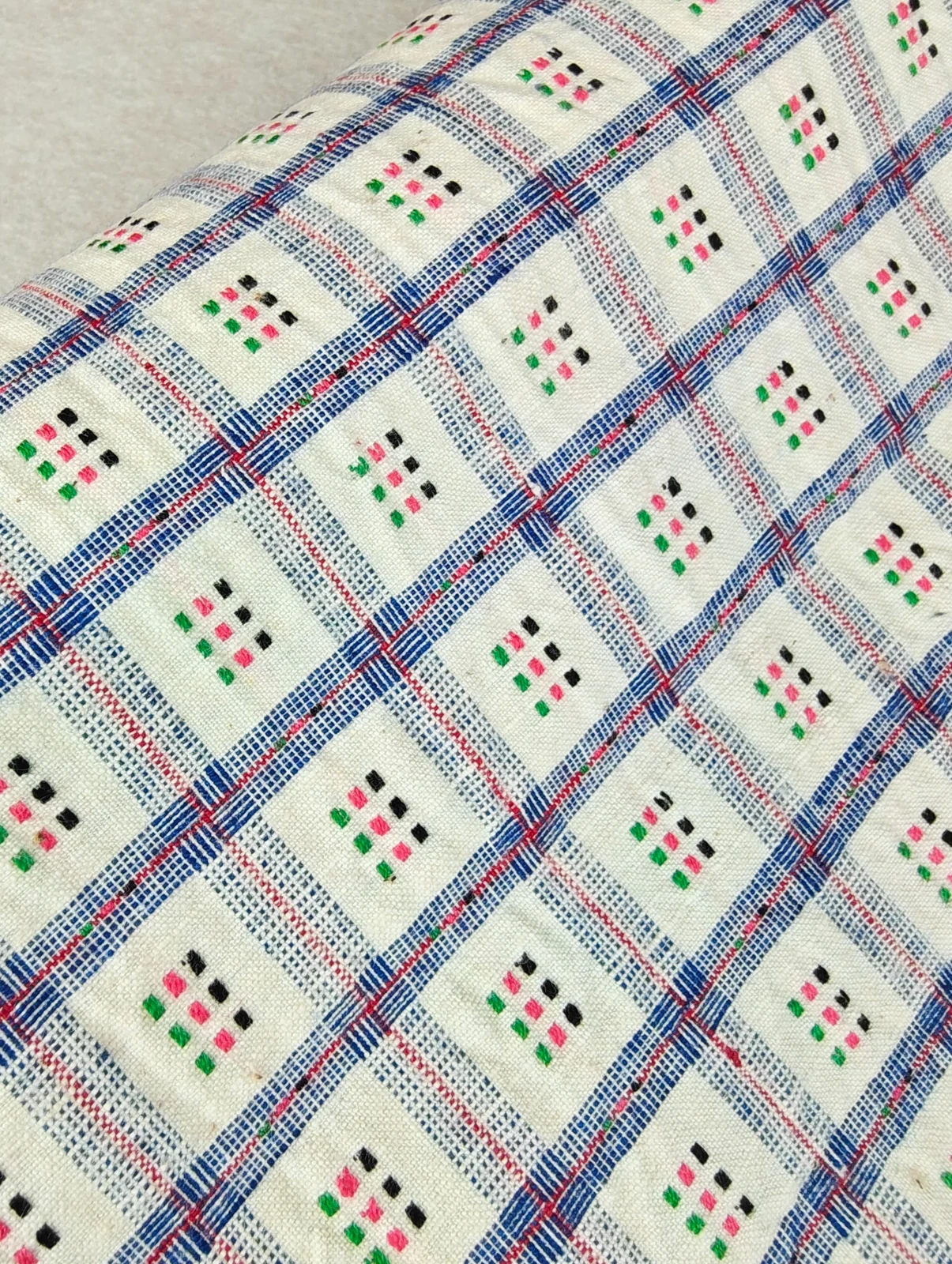
Mid-20th century · Handwoven cotton
A bright narrow homespun with blue and red checked lines and tiny raised colour-dot blossoms woven into a white cotton ground.
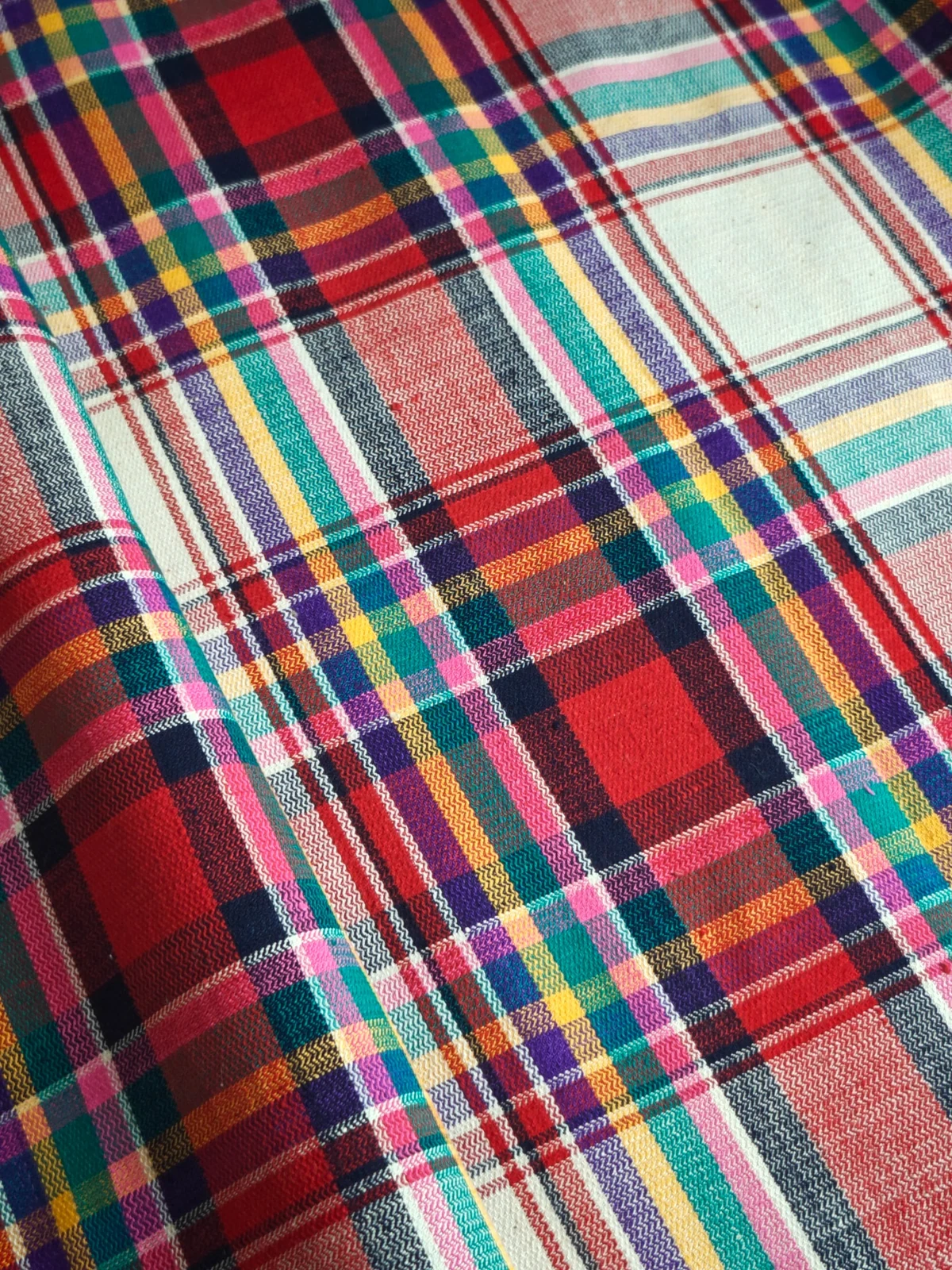
Early PRC to c. 1960s–1970s · Handspun cotton
A vivid Chongming homespun in which a multicolour plaid is enriched by a fine raised ripple texture running through the colour blocks.
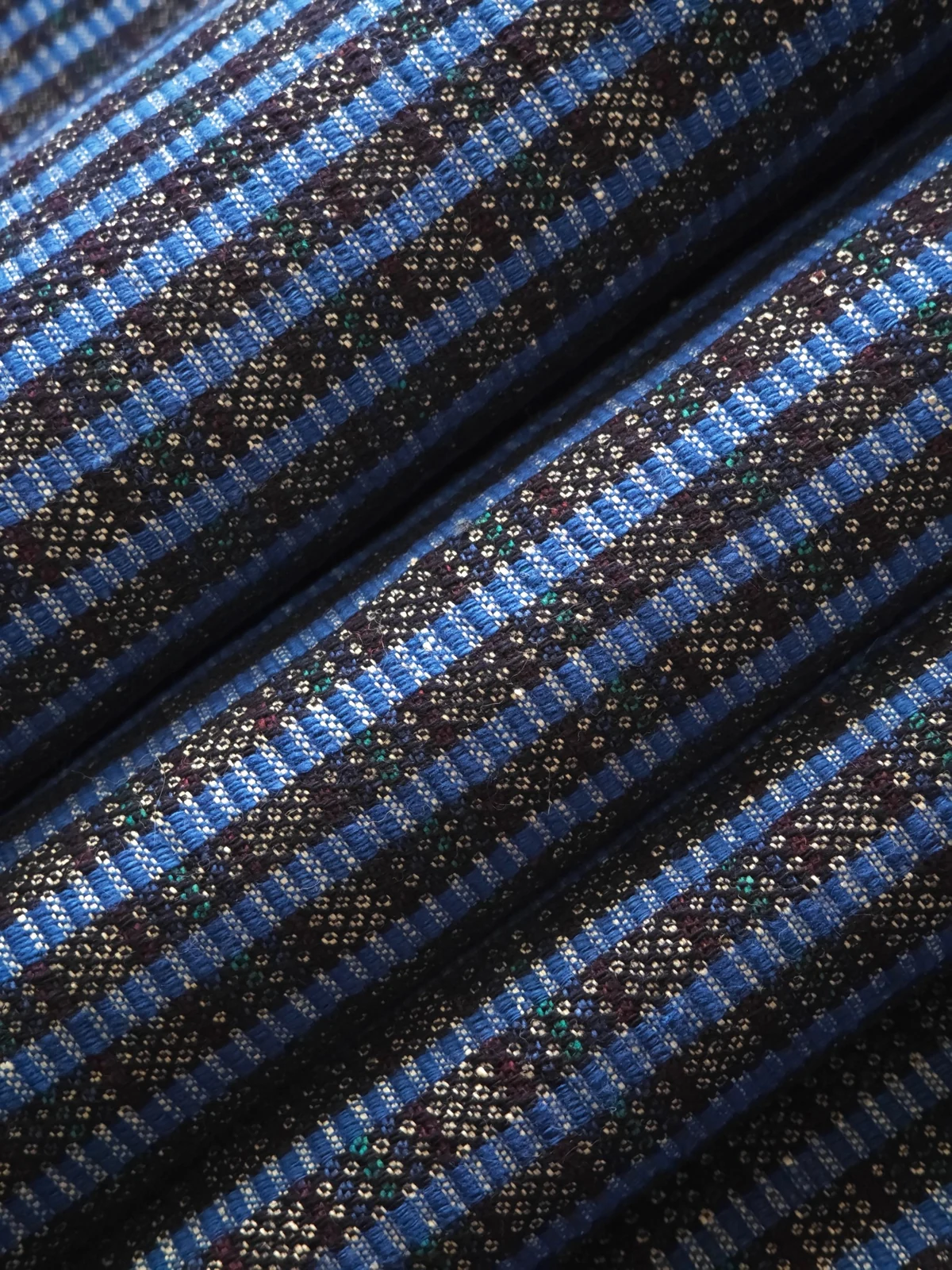
c. 1940s–1950s · Handspun cotton
A narrow, substantial Jiangnan homespun whose tiny off-white woven points create the regional “pepper-eye” effect across a dark yarn-dyed check.
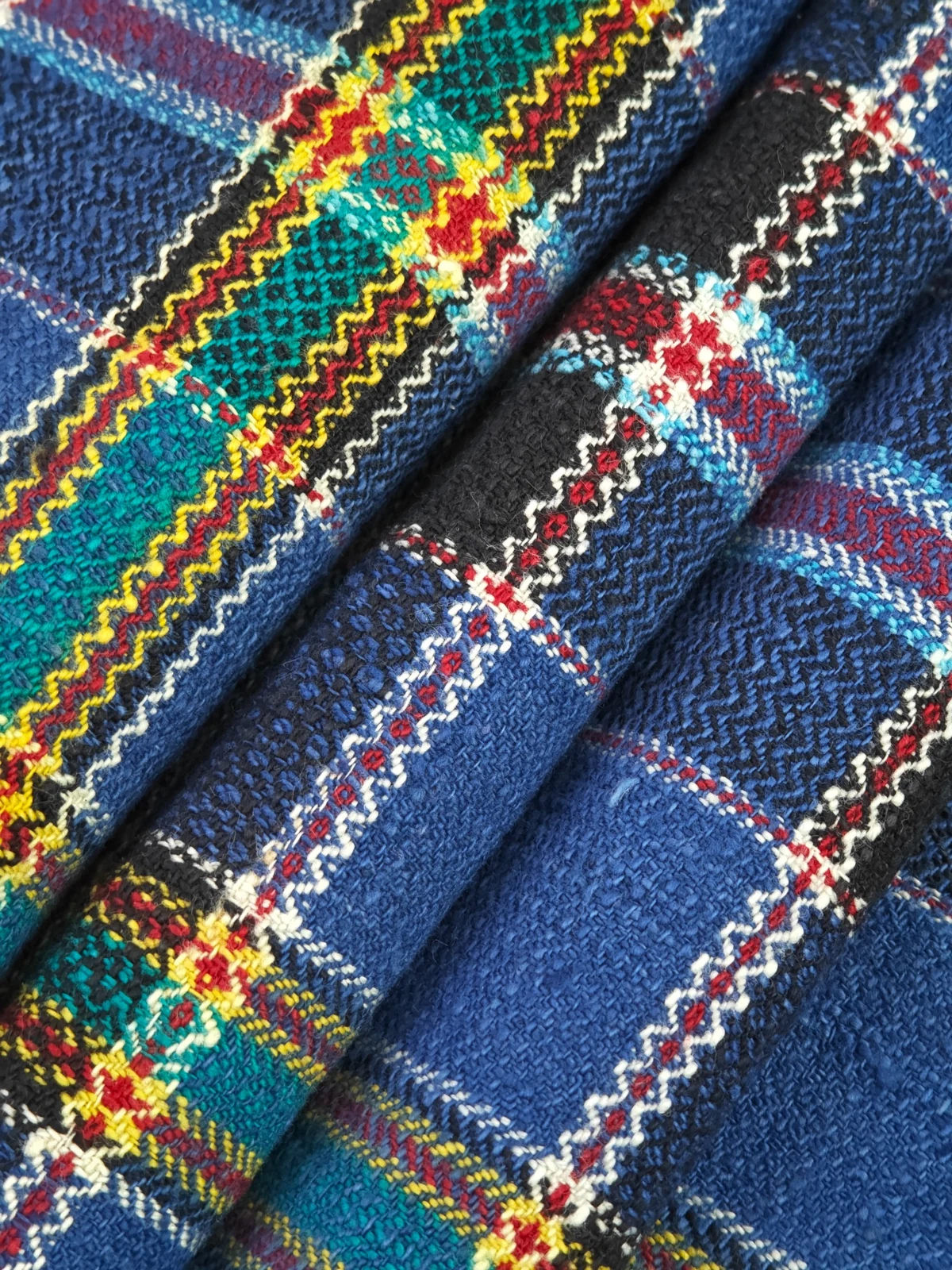
c. 1950s–1970s · Handspun cotton
A dense Nantong / Tonghai treadle-woven cloth in which dark lattice blocks, bright borders, curving-dragon lines and pepper-seed details create a highly layered surface.
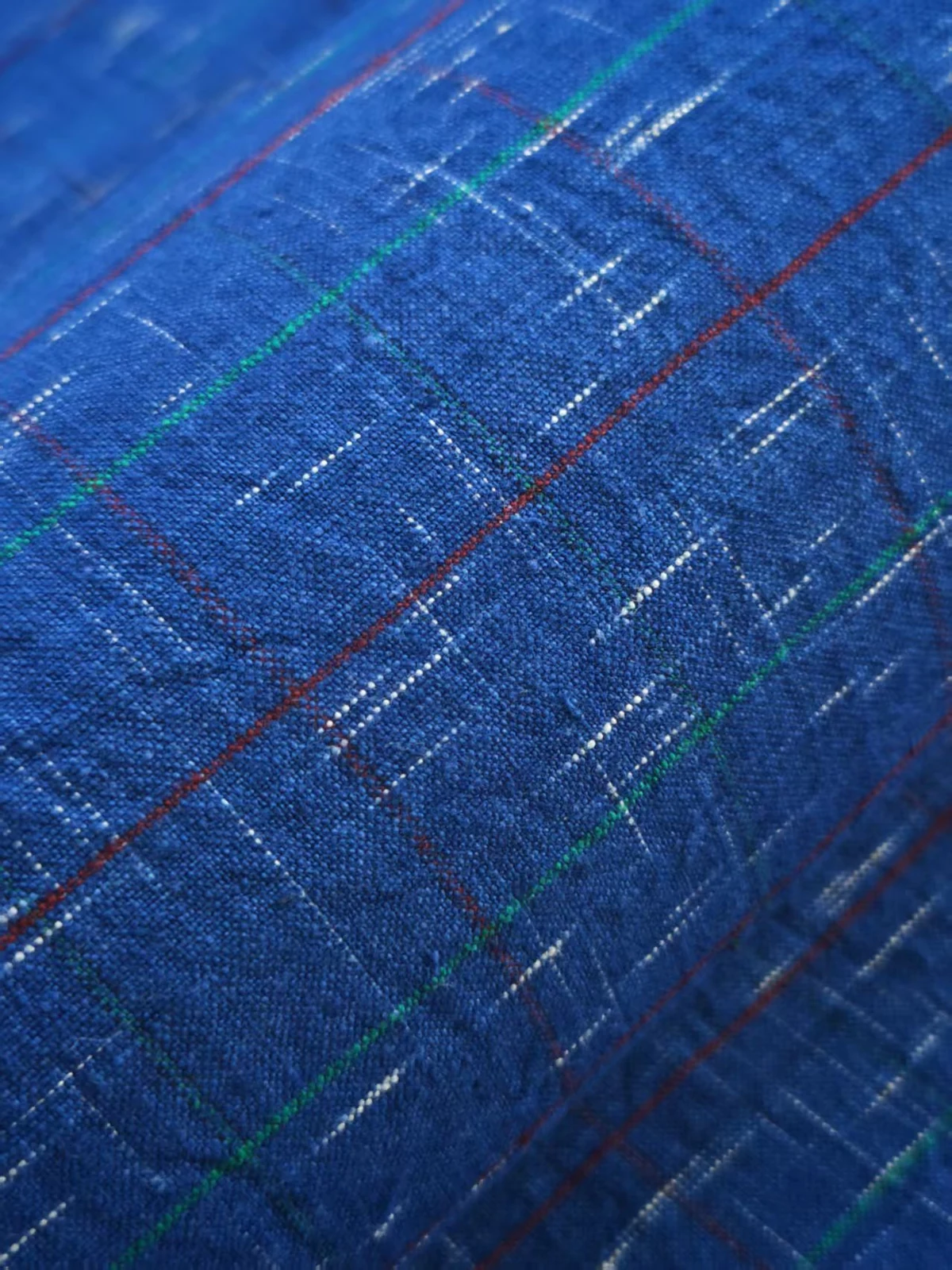
Mid-20th century · Handspun cotton
A long indigo homespun with a red-and-green outer grid and fine broken white marks that read like lightning flashes or meteor trails crossing a night-blue field.
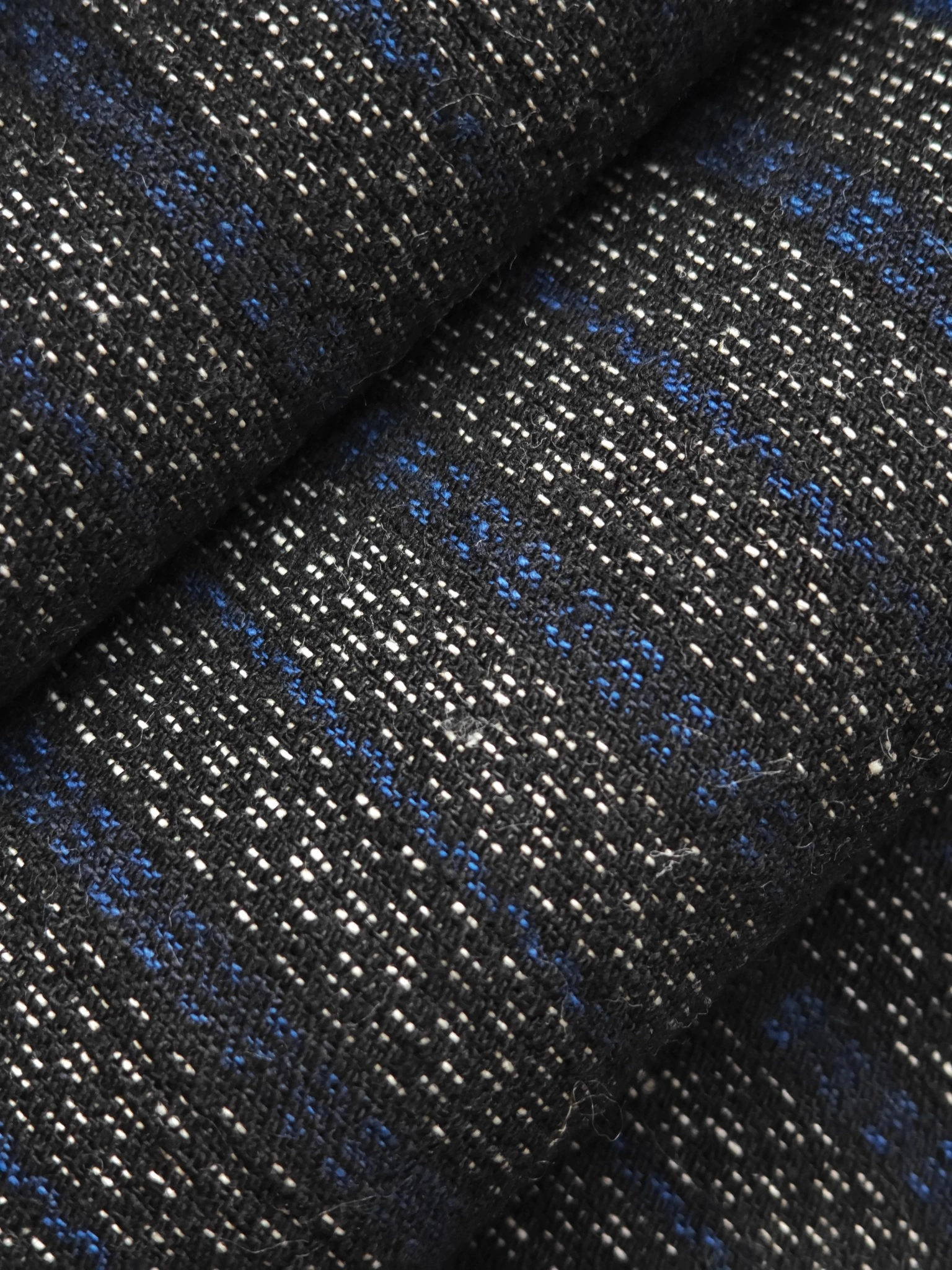
c. 1940s–1960s · 100% handspun cotton
A narrow black-ground Jiangnan homespun with blue-and-white supplementary-weft details: substantial, soft and quietly patterned, with original sizing still present.
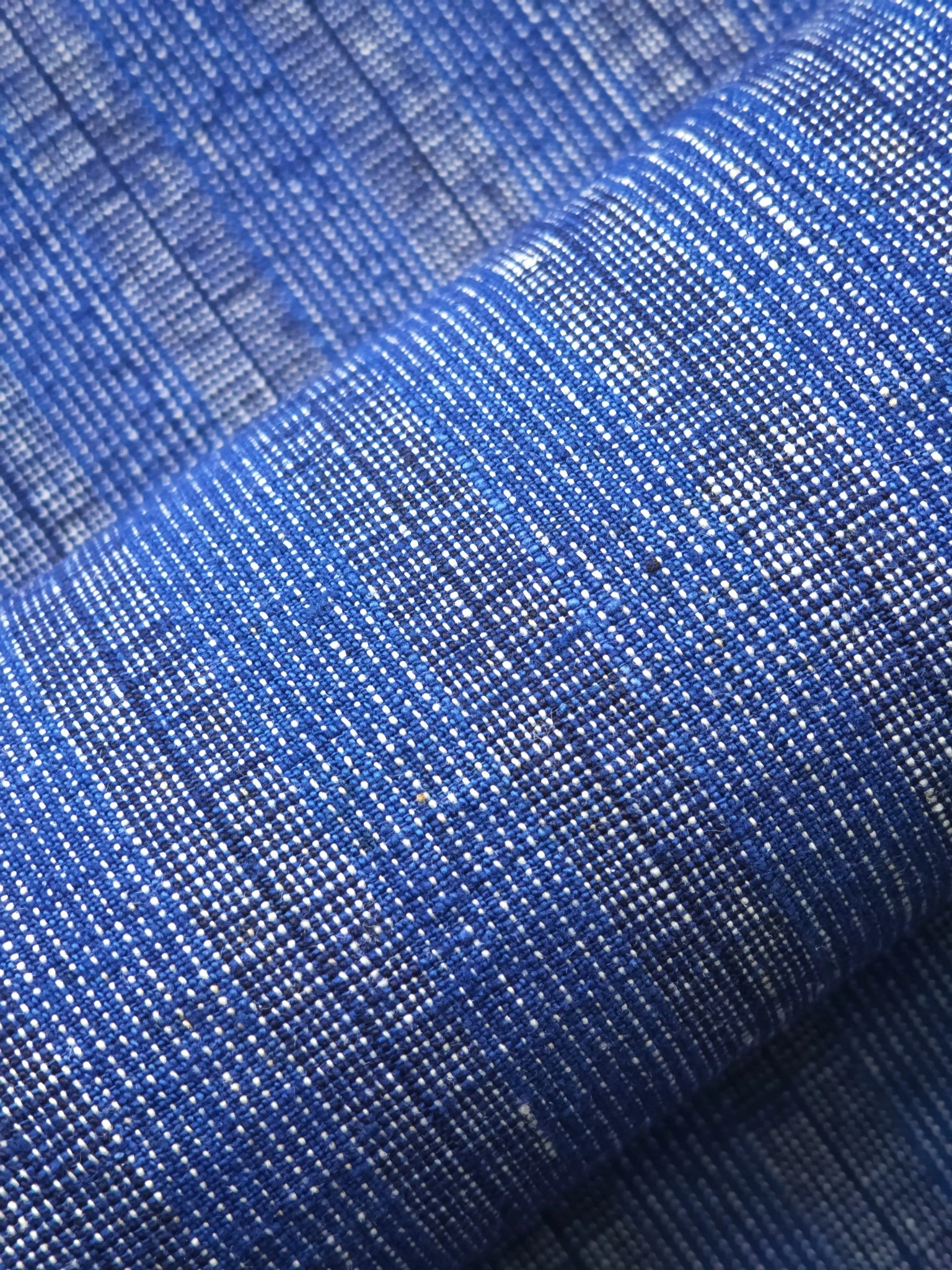
c. 1940s–1950s · Handspun cotton
A lightweight Jiangnan cotton in indigo blue and natural white, with fine rice-grain-like marks woven through a soft, breathable ground.
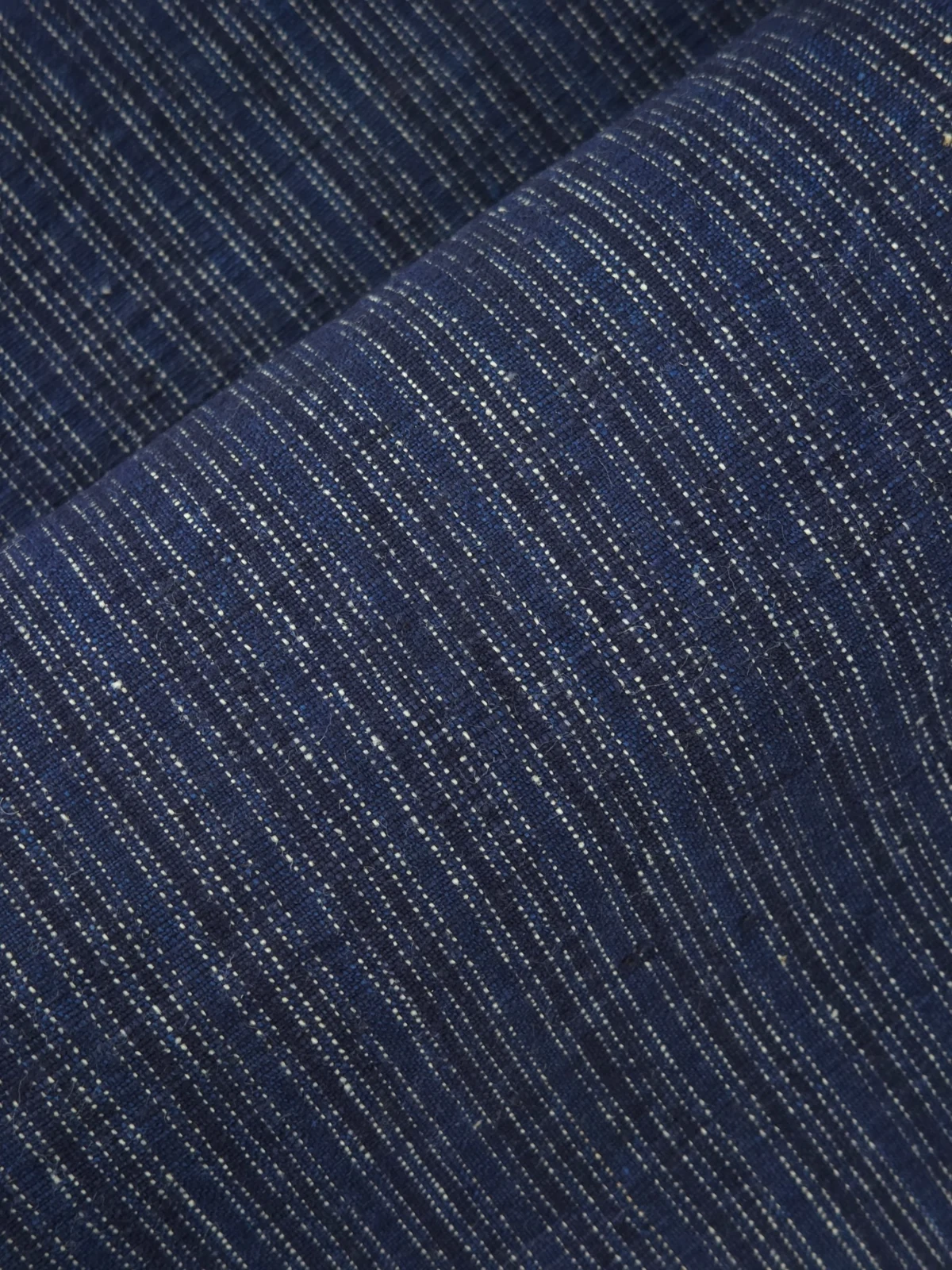
c. 1950s–1970s · Handspun-style cotton
A quiet Chongming handwoven cotton with a deep indigo ground and fine pale dotted stripes, named Starlit Tide for the way its woven points seem to move across dark water.
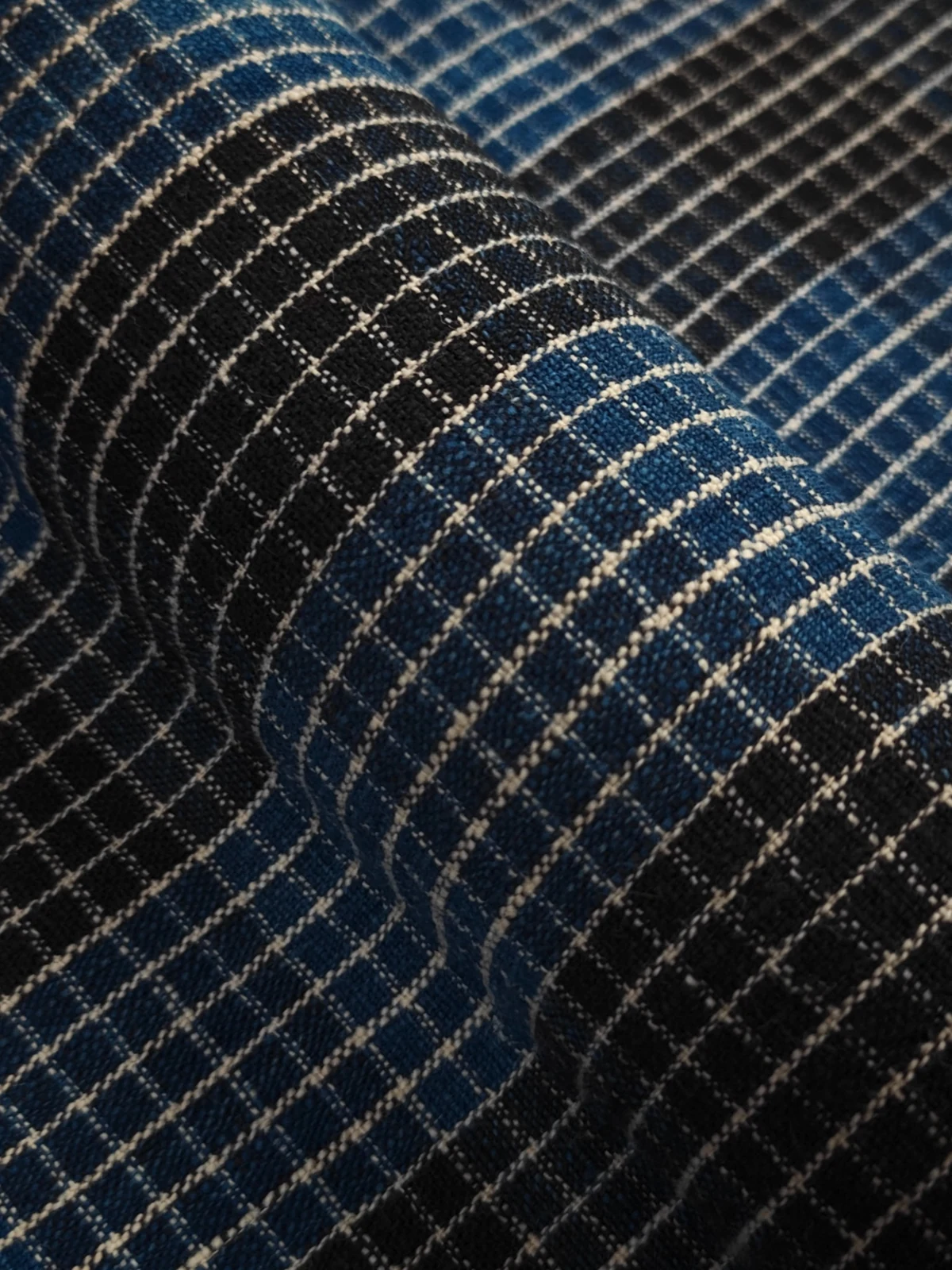
c. 1960s · Handspun cotton
A soft, light-to-medium-weight Chongming check in indigo, black and ivory, woven in plain weave with yarn-dyed cotton rather than printed on the surface.
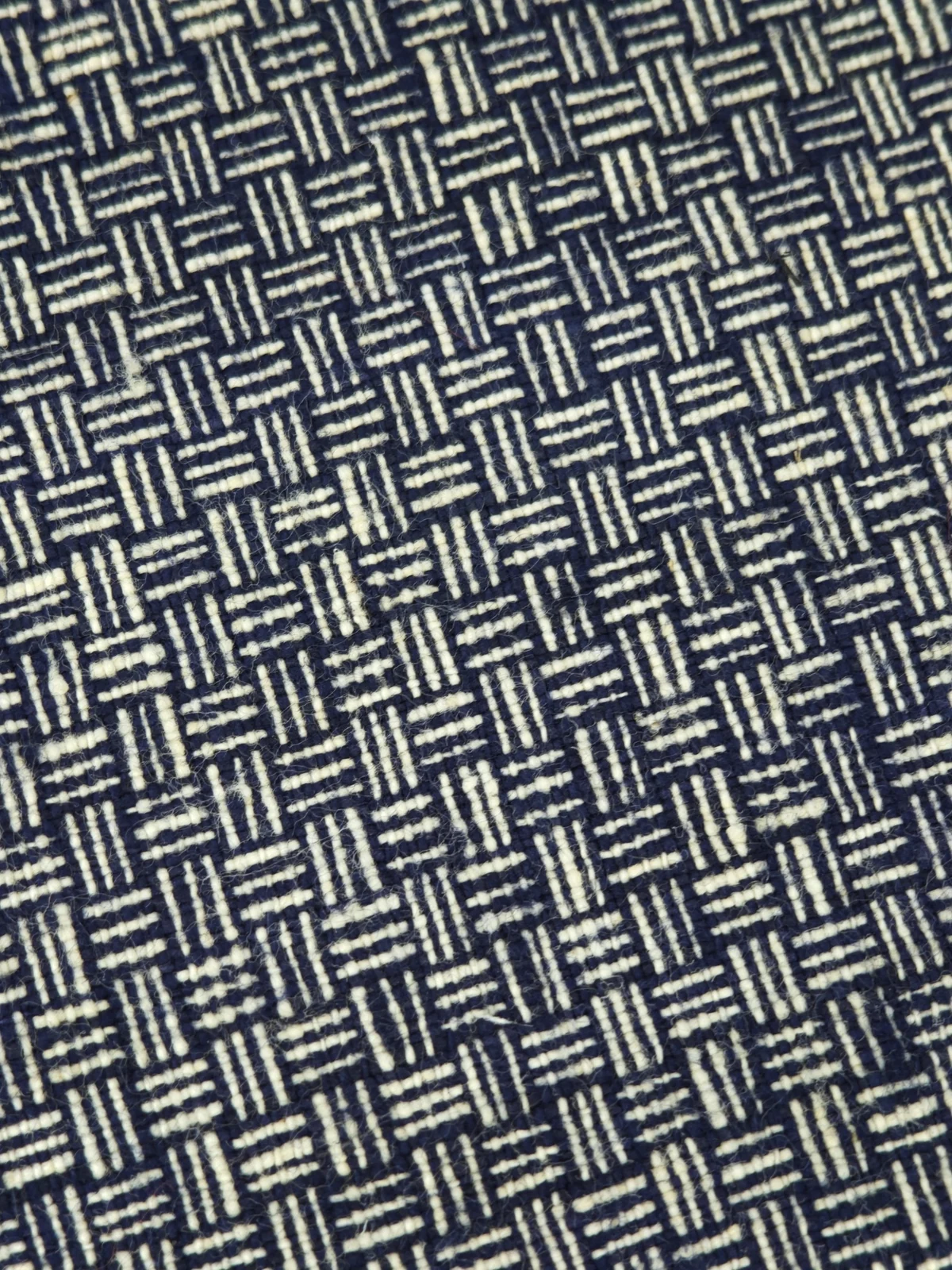
c. 1950s–1960s · Handspun cotton
A substantial Jiangnan handwoven cotton with a fine indigo-and-cream reed-mat pattern: tiny interlocking blocks create a dense basket-like surface with real depth.
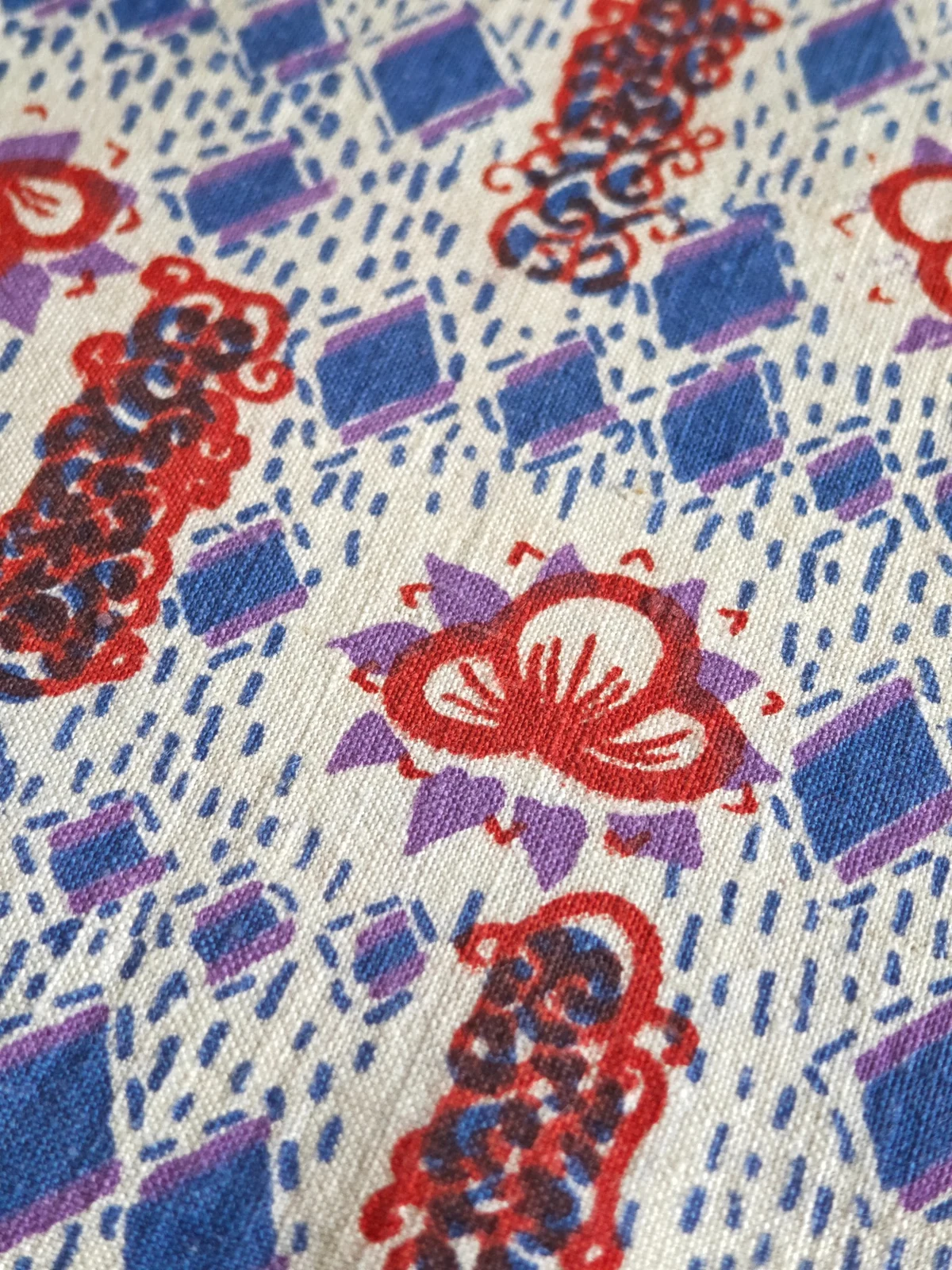
c. 1950s–1960s · Handwoven cotton
Unused narrow-width Nantong homespun with layered red, blue and purple printing over warm ivory cotton, retaining the small shifts and overlaps of older multicolour production.
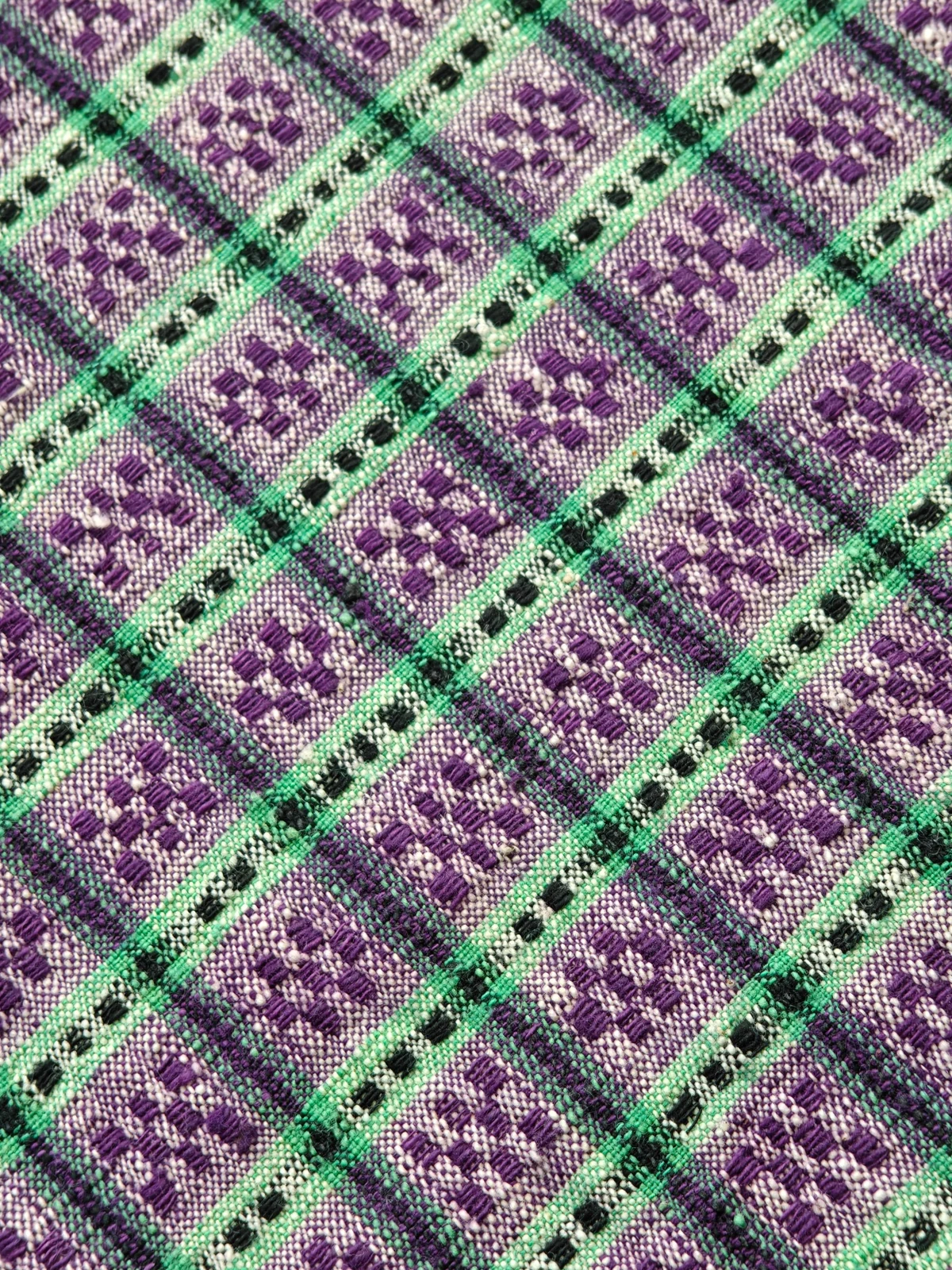
c. 1970s–early 1980s · Cotton
A dense purple, mint-green, black and ivory figured cloth attributed to southwestern Shandong Lu brocade, with raised flower-like motifs woven directly into the checked structure.
c. 1960s–1970s · Handwoven cotton
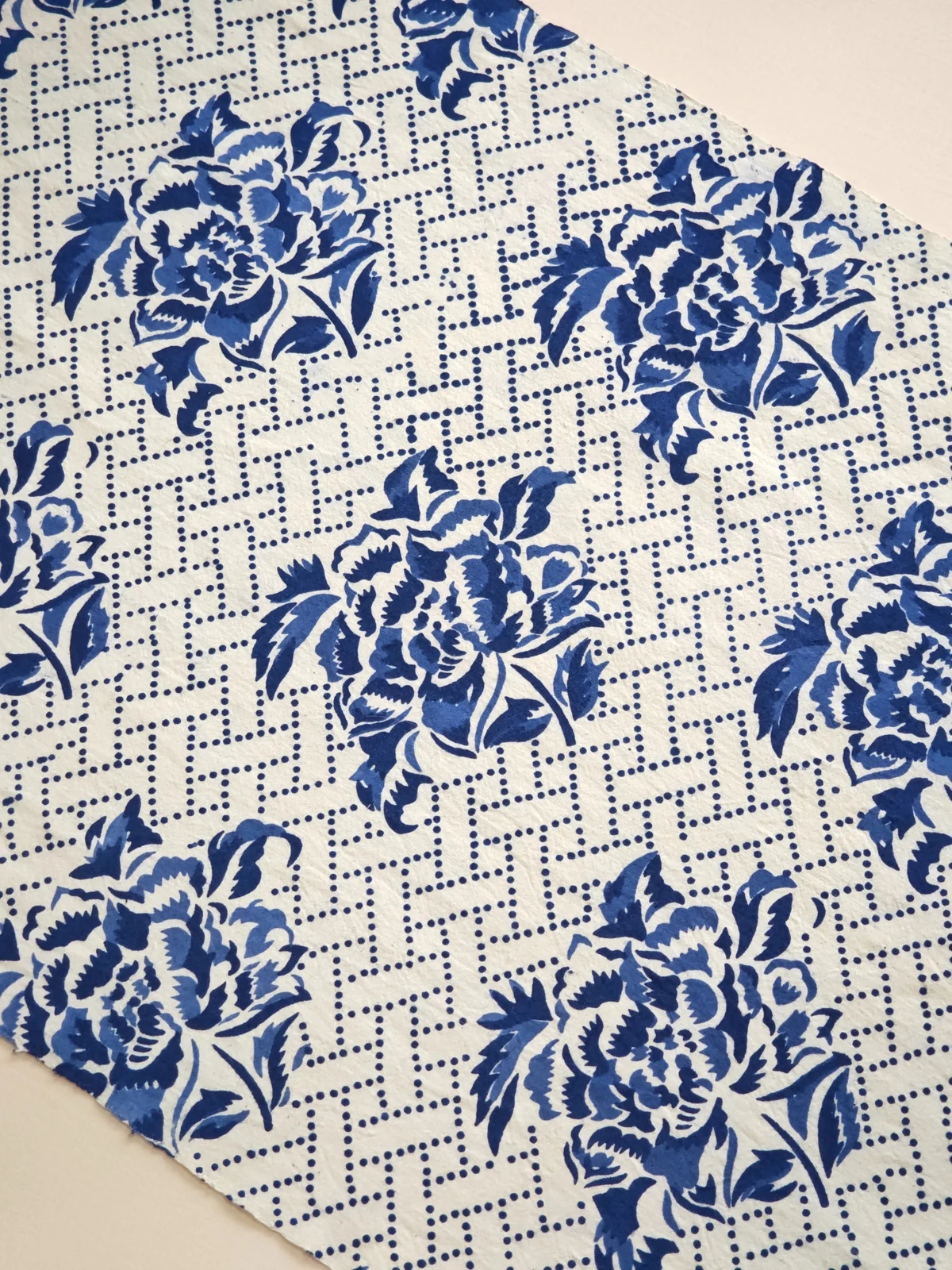
A long unused Nantong-style handwoven cotton roll with large blue peony bouquets over a dotted geometric lattice on warm ivory ground.
c. 1950s–1970s · 100% cotton
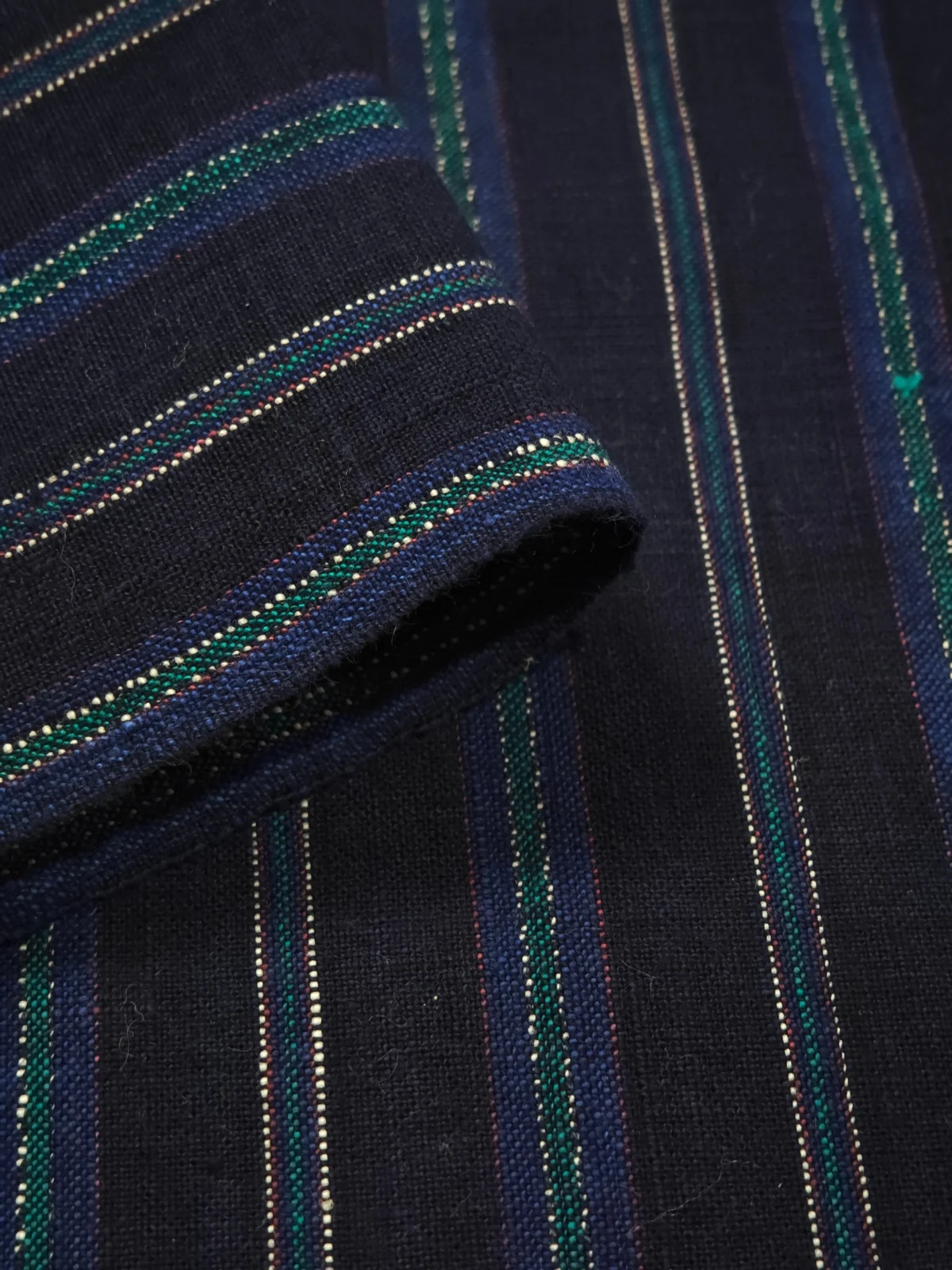
A one-metre Nantong homespun with an almost-black ground and slender navy, emerald, muted-red and cream dotted stripes that reveal themselves gradually at close range.
c. 1940s–1960s · Handspun cotton
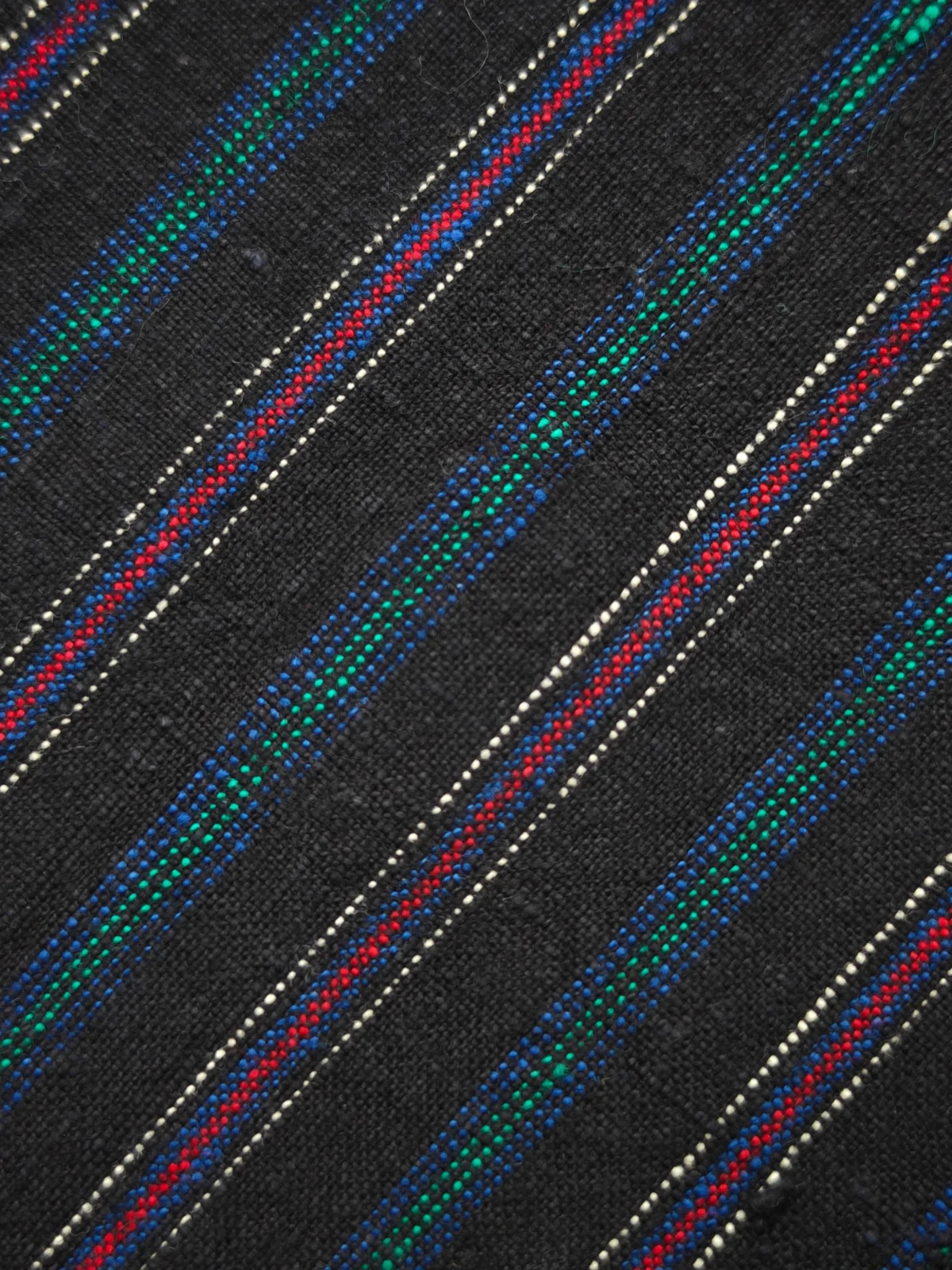
A long Chongming handwoven cotton that reads almost black from a distance, then reveals quiet blue, green, red and ivory stripes like small lights in the night.
c. 1960s–1970s · Handspun cotton
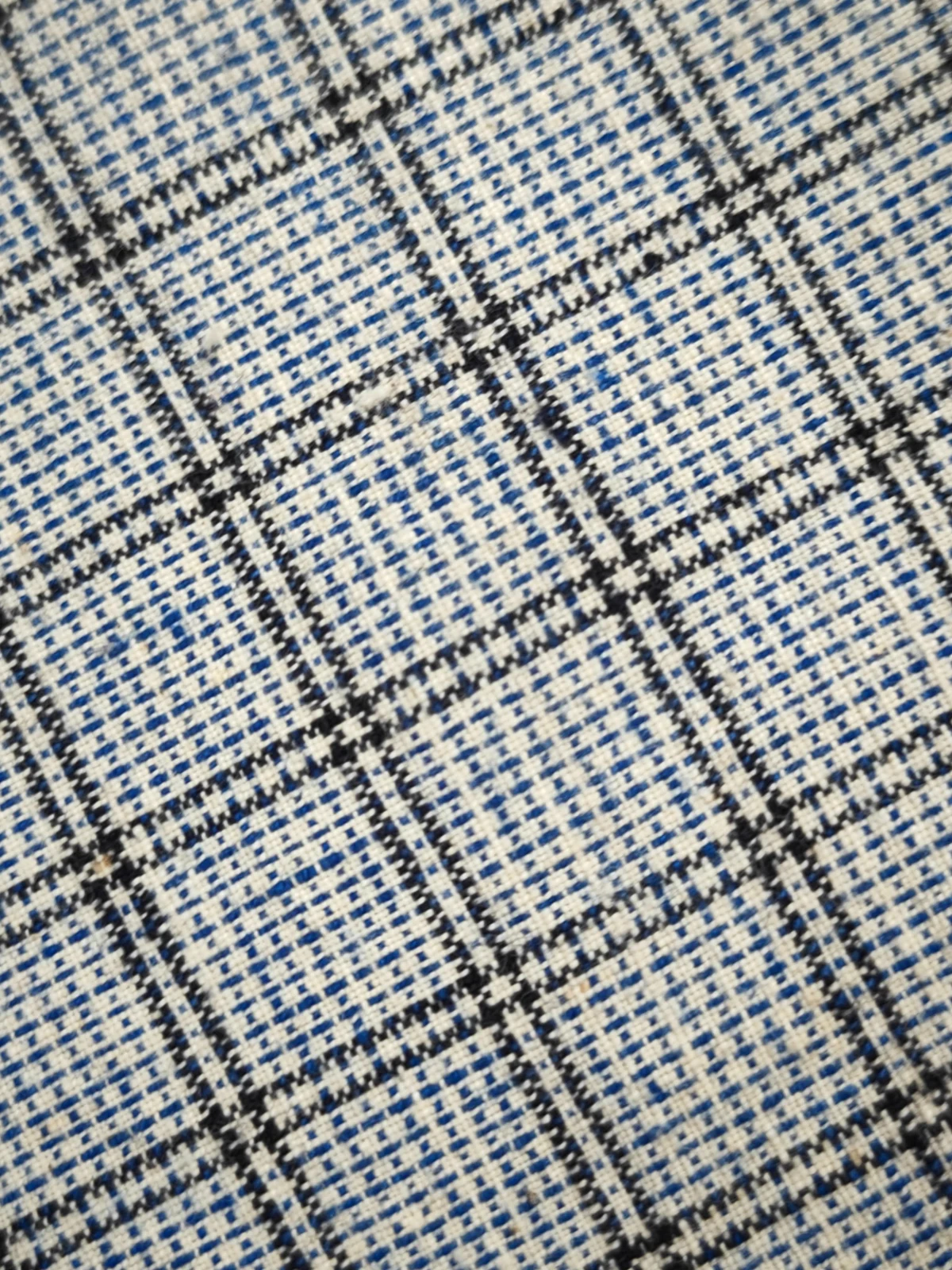
A narrow, firm Chongming-style handwoven cotton with a layered blue, black and ivory grid: fine small checks sit underneath larger crossing lines.
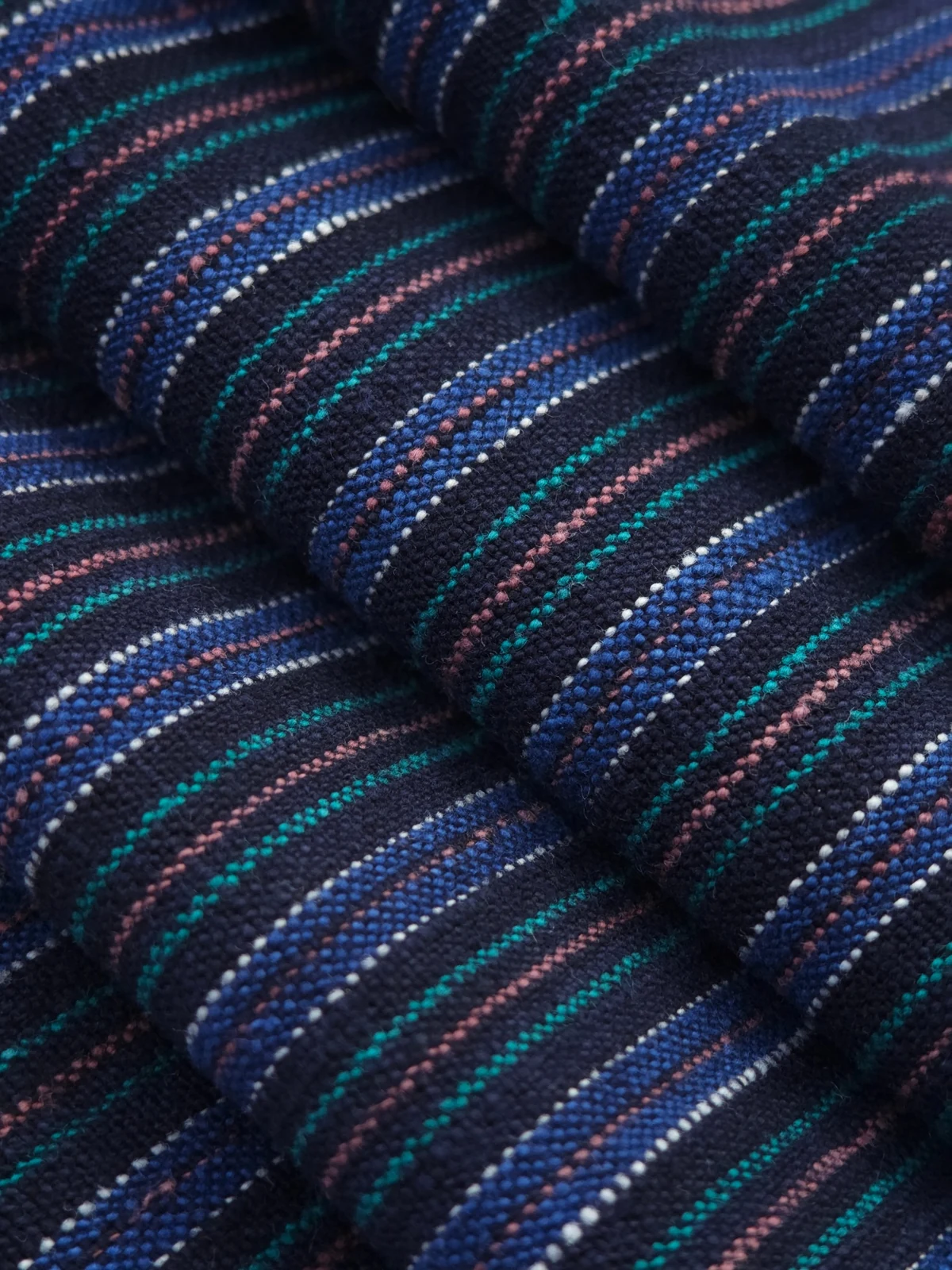
c. 1950s–1960s · Handspun cotton
A soft Nantong / Haimen dark-blue homespun whose fine teal, rose, ivory and red yarns appear as restrained lines of colour within the cloth.