Four Phoenixes, Twin Cranes & Butterflies – Vintage Chinese Indigo Longevity Garden
About this piece
Four Phoenixes, Twin Cranes & Butterflies – Vintage Chinese Indigo Longevity Garden
Sold as one complete piece, uncut.
Size: Approx. 99 × 99 cm / 39 × 39 inches.
Construction: Three joined panels of traditional handwoven cotton, each approximately 33 cm wide.
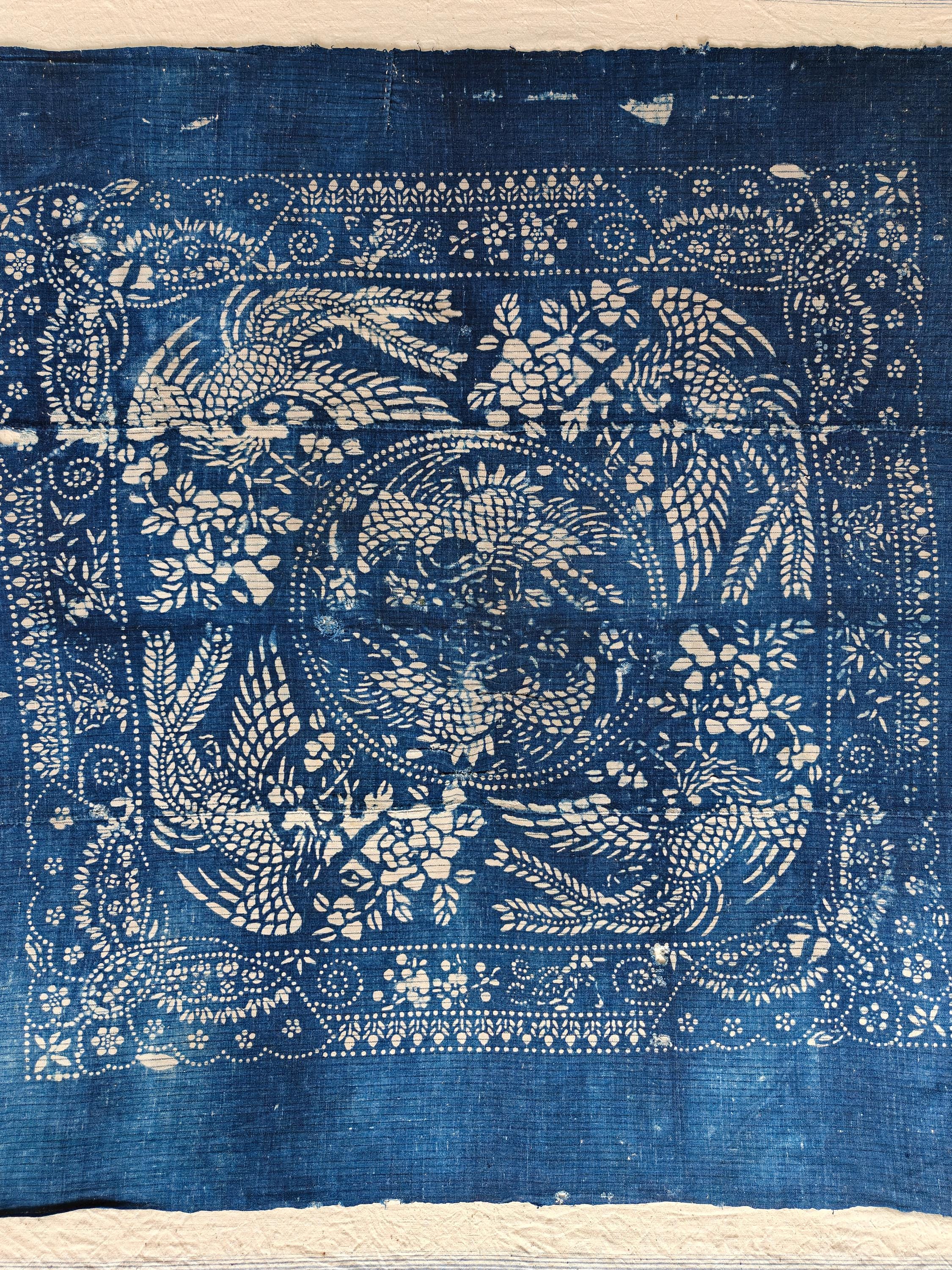
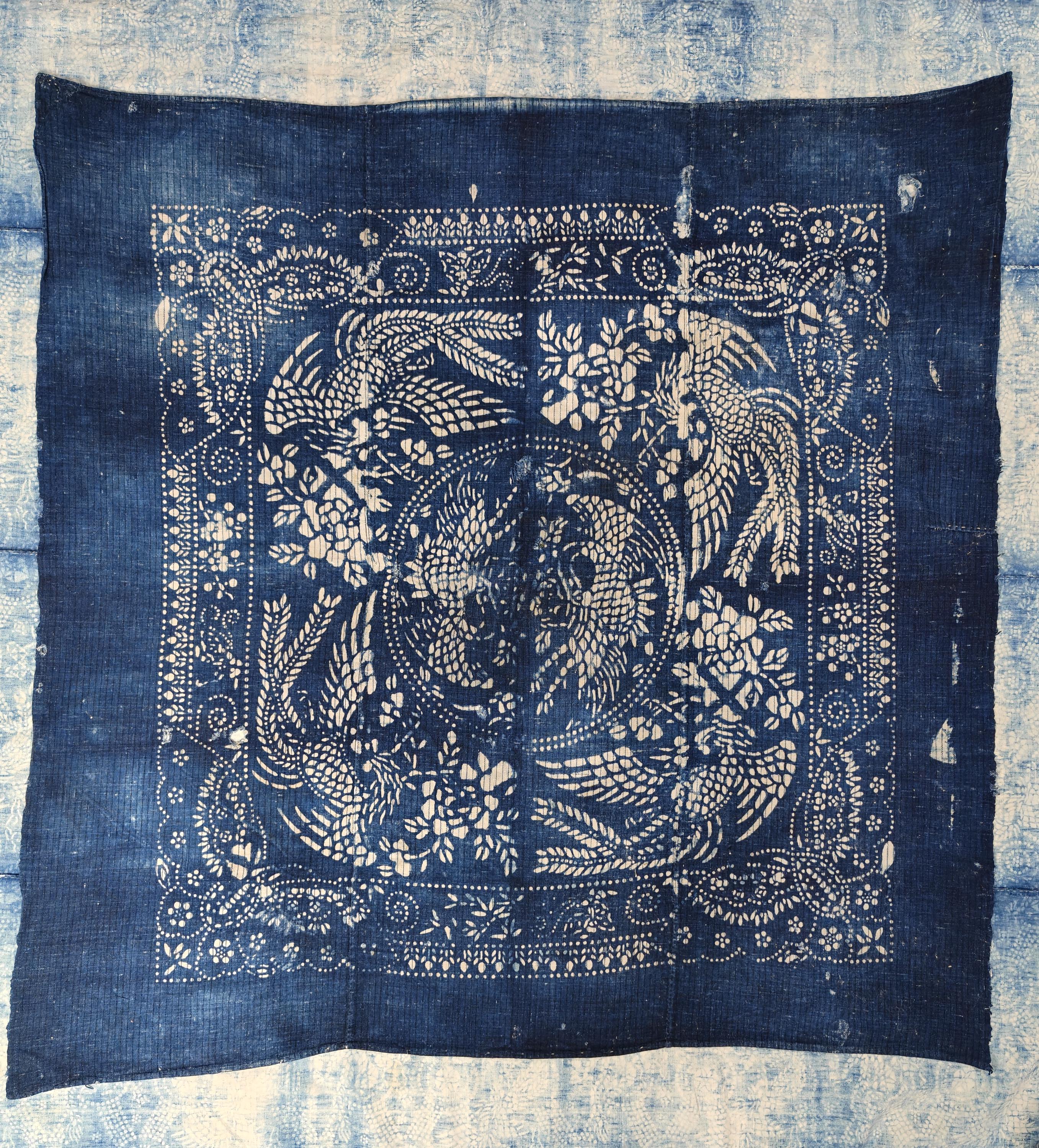
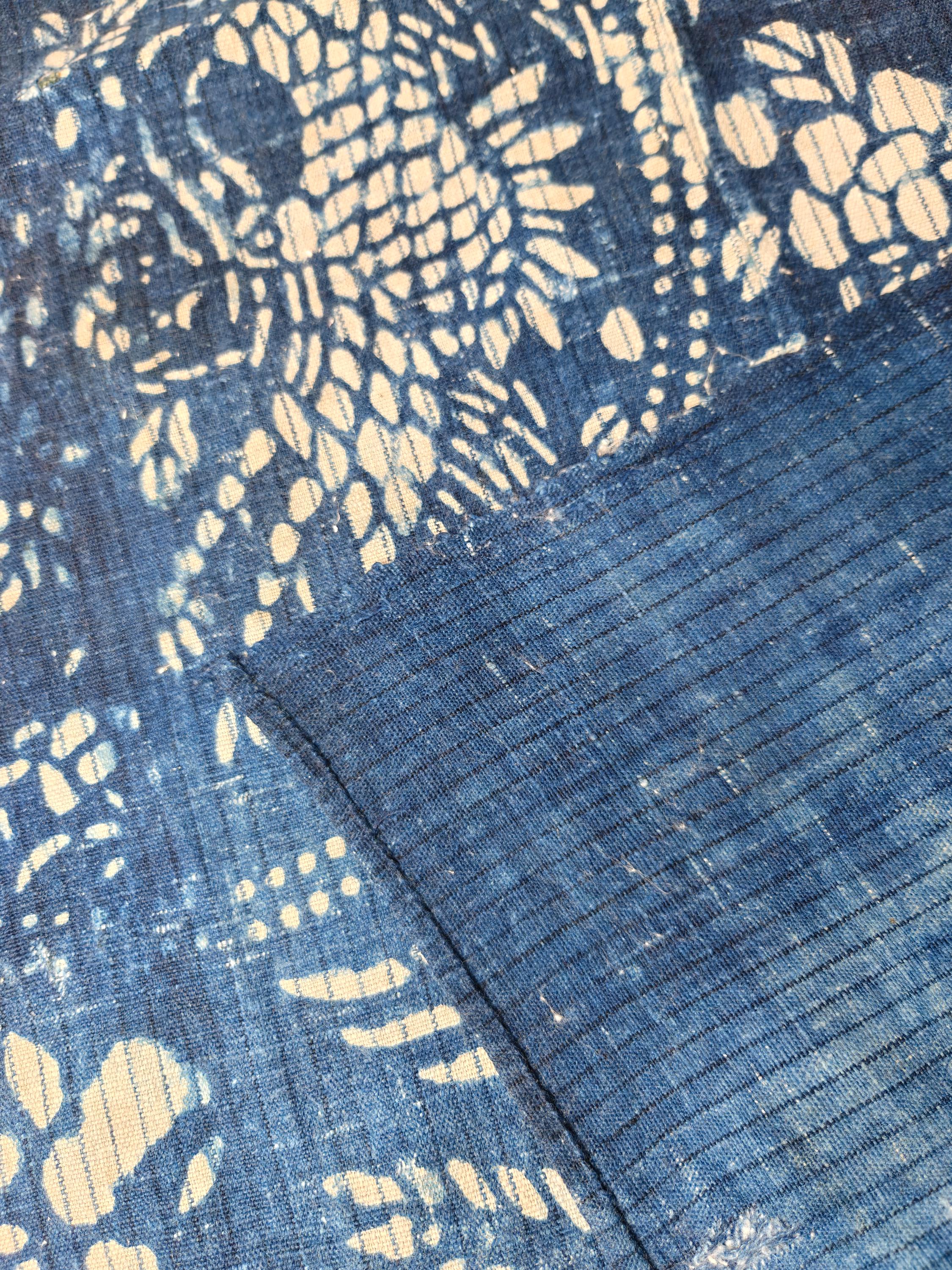
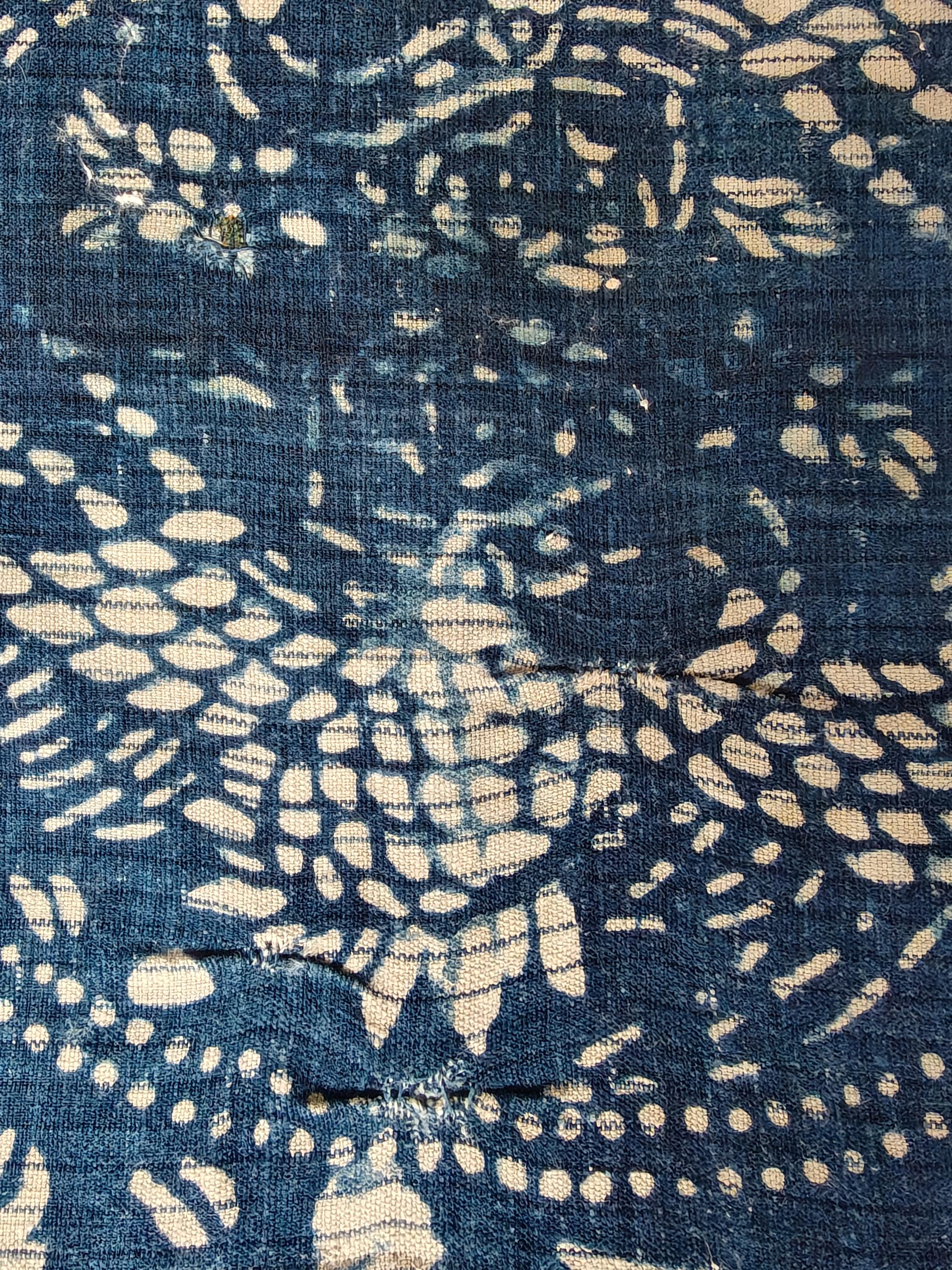
A beautifully elaborate vintage Chinese indigo resist-printed wrapping cloth featuring **four magnificent phoenixes, a central pair of cranes, auspicious butterflies, peony blossoms and intricate floral borders**.
The entire composition celebrates some of the most cherished wishes in traditional Chinese culture: longevity, prosperity, happiness, marital harmony and blessings for the family.
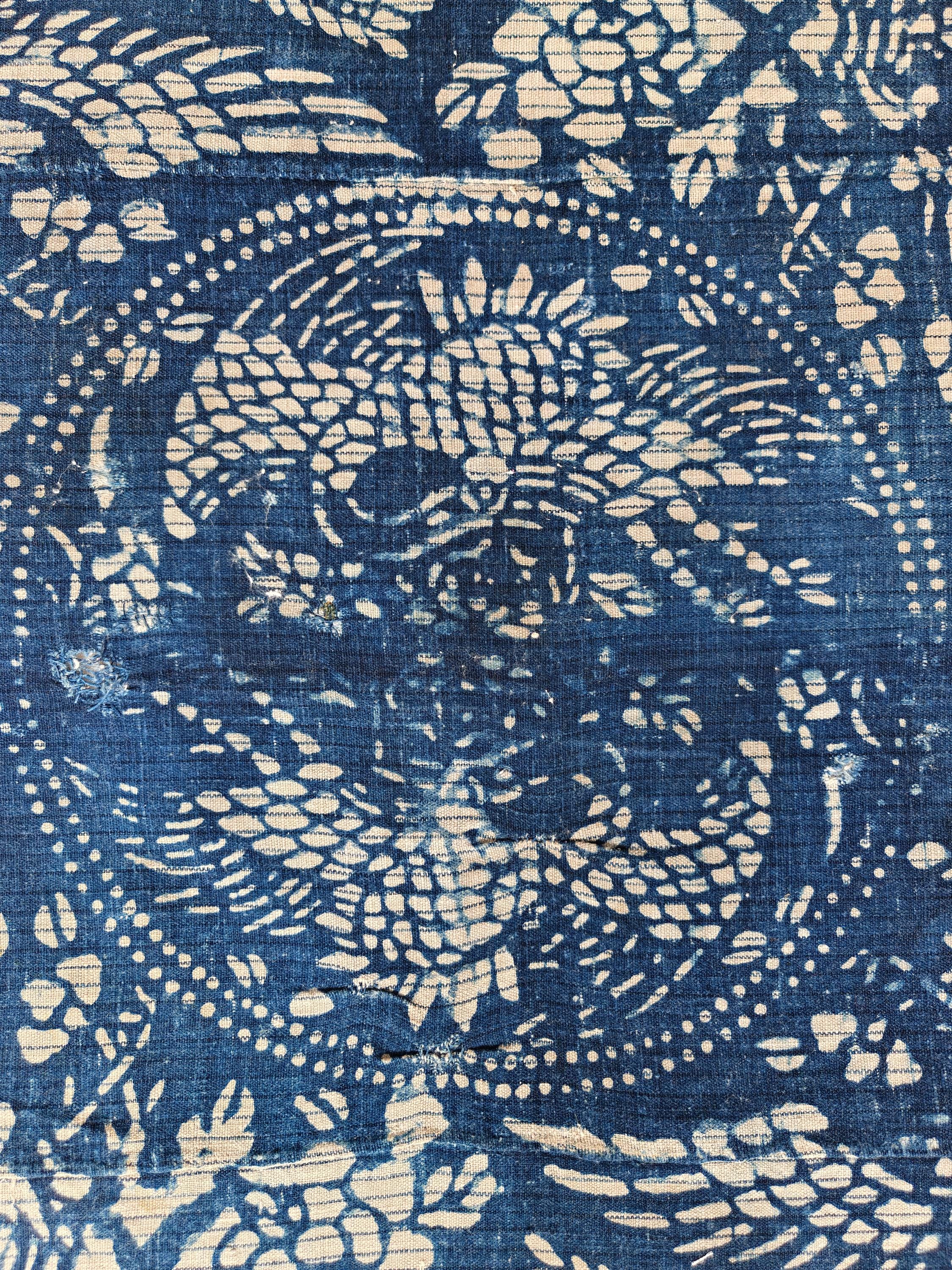
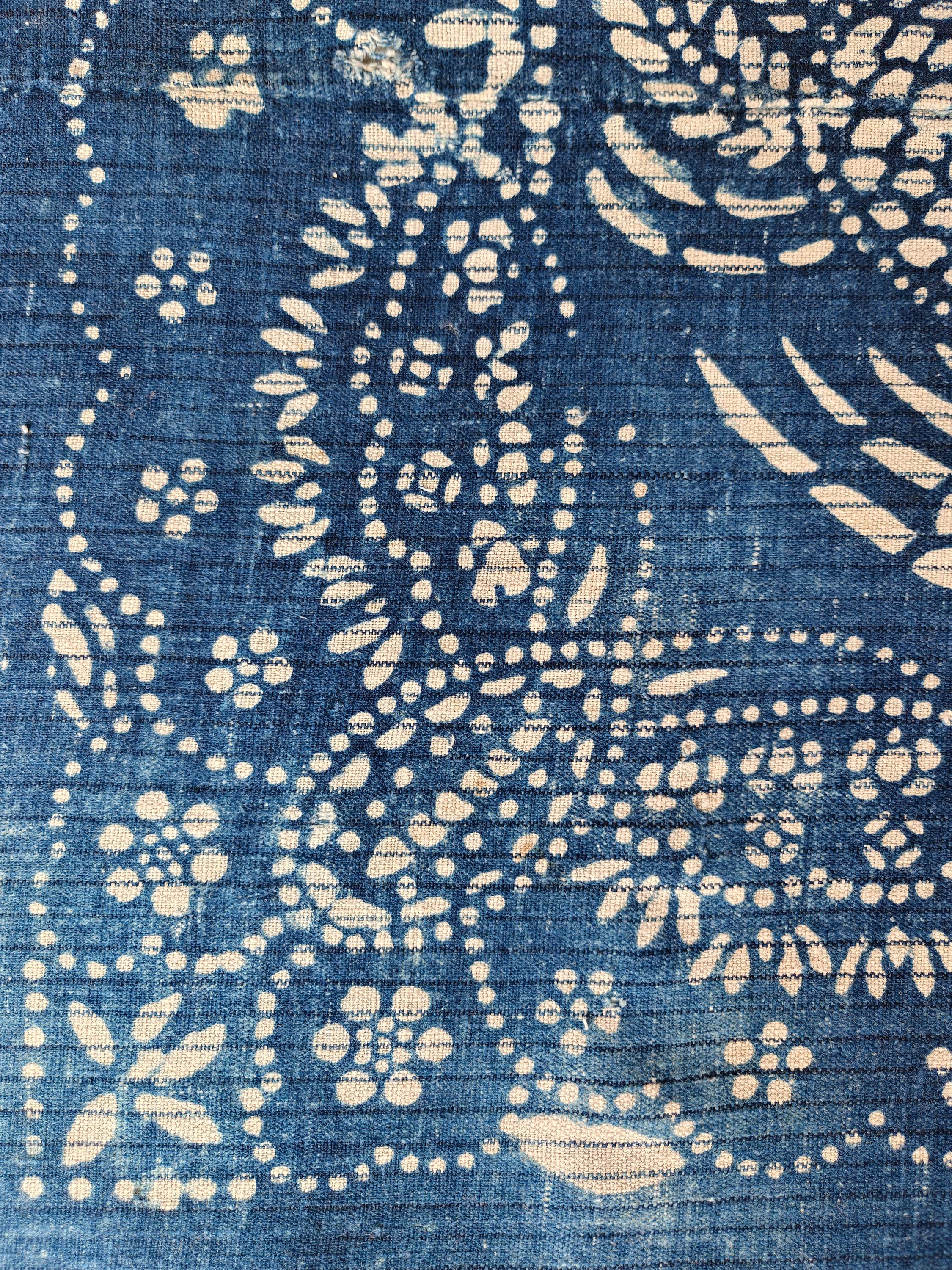
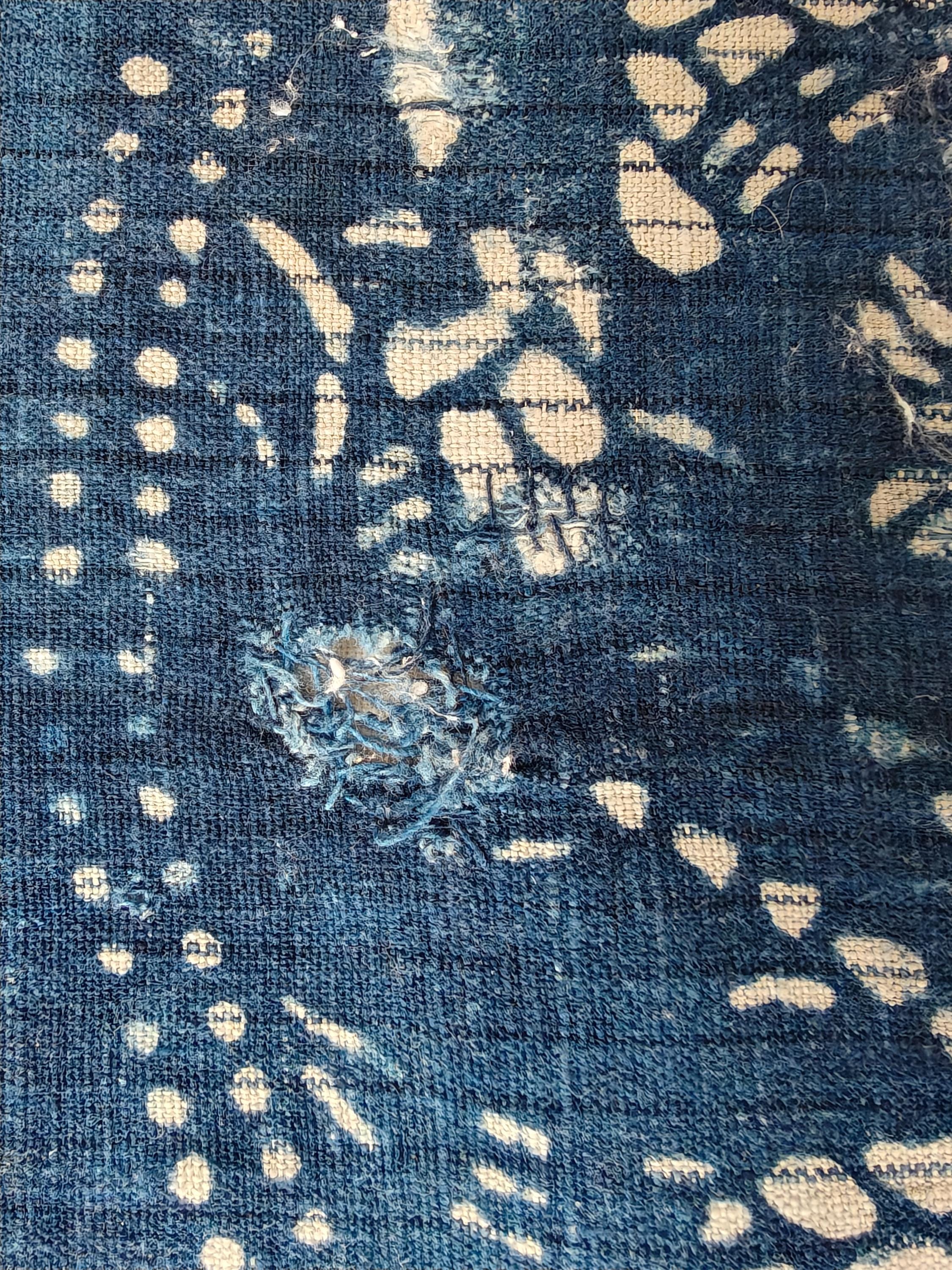
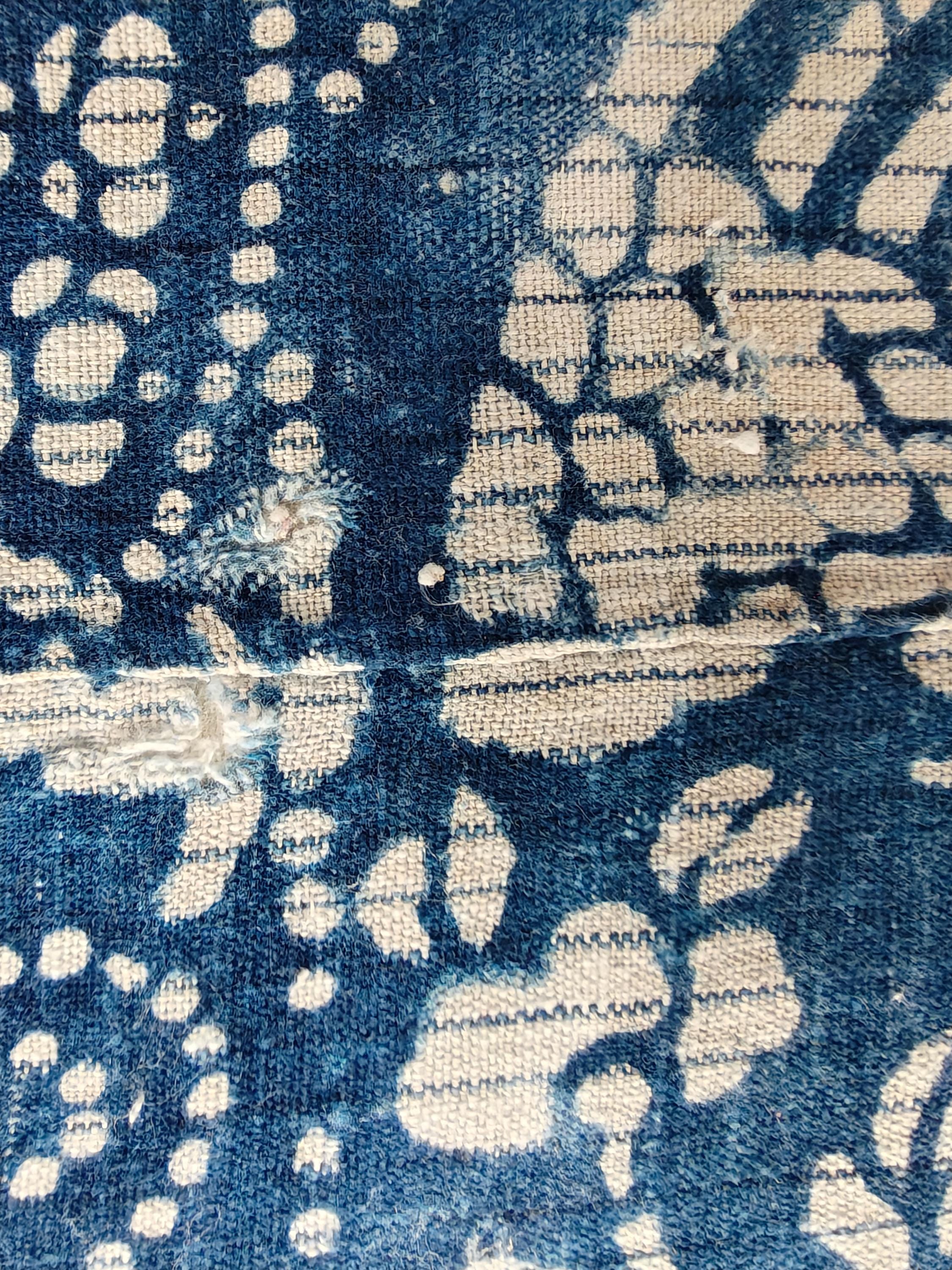
Made from thick yet wonderfully soft hand-spun cotton, this piece is especially interesting for its unusual blue-striped woven ground, visible beneath the intricate resist-printed decoration.
Believed to originate from the Nantong region of Jiangsu Province, China, this square textile reflects the extraordinary richness of Chinese rural textile traditions.
❤ The Pattern – A Garden of Auspicious Symbols ❤
This is not simply a decorative floral fabric. Its birds, butterflies and flowers carry multiple layers of traditional Chinese symbolism.
❤ Four Phoenixes – Si Feng 四凤
Four large, elaborately decorated phoenixes surround the central circular composition.
The Chinese phoenix, known as *Fenghuang* (凤凰), is one of the most revered auspicious creatures in Chinese art.
Traditionally associated with peace, harmony, prosperity and noble virtue, the phoenix is also connected with marital happiness and the flourishing of family life.
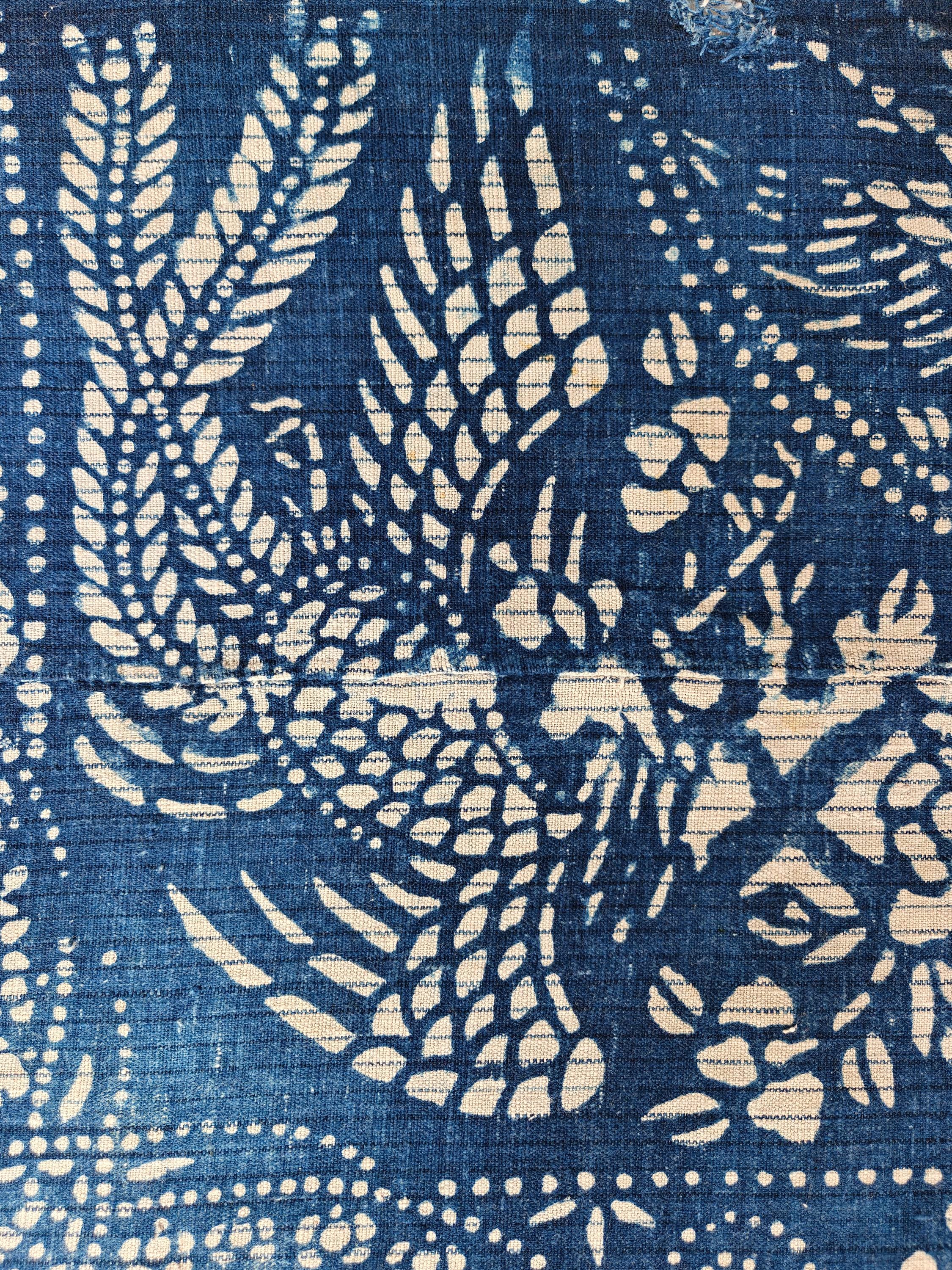
Its magnificent wings and flowing tail feathers make it a particularly striking subject in traditional textile decoration.
The four phoenixes arranged around the centre create a balanced composition that can be interpreted as good fortune arriving from all four directions.
Together, they convey wishes for a prosperous, harmonious and happy household.
❤ Twin Cranes – Shuang He 双鹤
At the heart of the design is a circular medallion featuring a pair of stylised cranes.
In Chinese culture, cranes are among the most important symbols of longevity.
Their graceful forms also suggest purity, dignity, wisdom and noble character.
A pair of cranes represents companionship and harmony, reinforcing the wish for a long and peaceful life shared with loved ones.
The traditional expression *He Shou Yan Nian* (鹤寿延年) conveys a blessing for extended life and enduring health.
The combination of cranes and phoenixes is especially auspicious, bringing together longevity, prosperity, harmony and good fortune.
❤ Butterflies – Hu Die 蝴蝶
Butterflies are another important element of this richly decorated textile.
In Chinese folk symbolism, butterflies carry several beautiful and sometimes overlapping meanings.
❤ Longevity – Die 耋
The Chinese word for butterfly, *die* (蝶), is pronounced the same as *die* (耋), a character associated with advanced old age.
The expression *Mao Die* (耄耋) refers to venerable old age and is frequently associated with wishes for longevity.
Butterflies can therefore symbolise the hope for a long and fulfilling life.
❤ Love and Marital Happiness
Butterflies are also associated with affection, romance, beauty and harmonious relationships.
Their association with flowers and springtime makes them natural symbols of love and happiness.
❤ Repeated Blessings – Fu Qi Die Zhi 福气迭至
The pronunciation of *die* also recalls *die* (迭), meaning successive or repeated.
This provides a poetic association with blessings arriving again and again.
The butterflies therefore contribute another layer of meaning to the textile: longevity, love, happiness and continuing good fortune.
❤ Peonies – Mudan 牡丹
The large, decorative flowers are reminiscent of peonies, one of the most beloved subjects in traditional Chinese art.
The peony is often called the King of Flowers and symbolises wealth, honour, beauty and abundance.
Its full, layered blossoms represent the flourishing of a household and the enjoyment of a prosperous life.
The combination of peonies and cranes evokes *Fu Gui Chang Shou* (富贵长寿) — prosperity and longevity.
Alongside the phoenixes and butterflies, these flowers help create a richly layered composition of auspicious wishes.
❤ Floral Vines & Pearl-Dot Borders
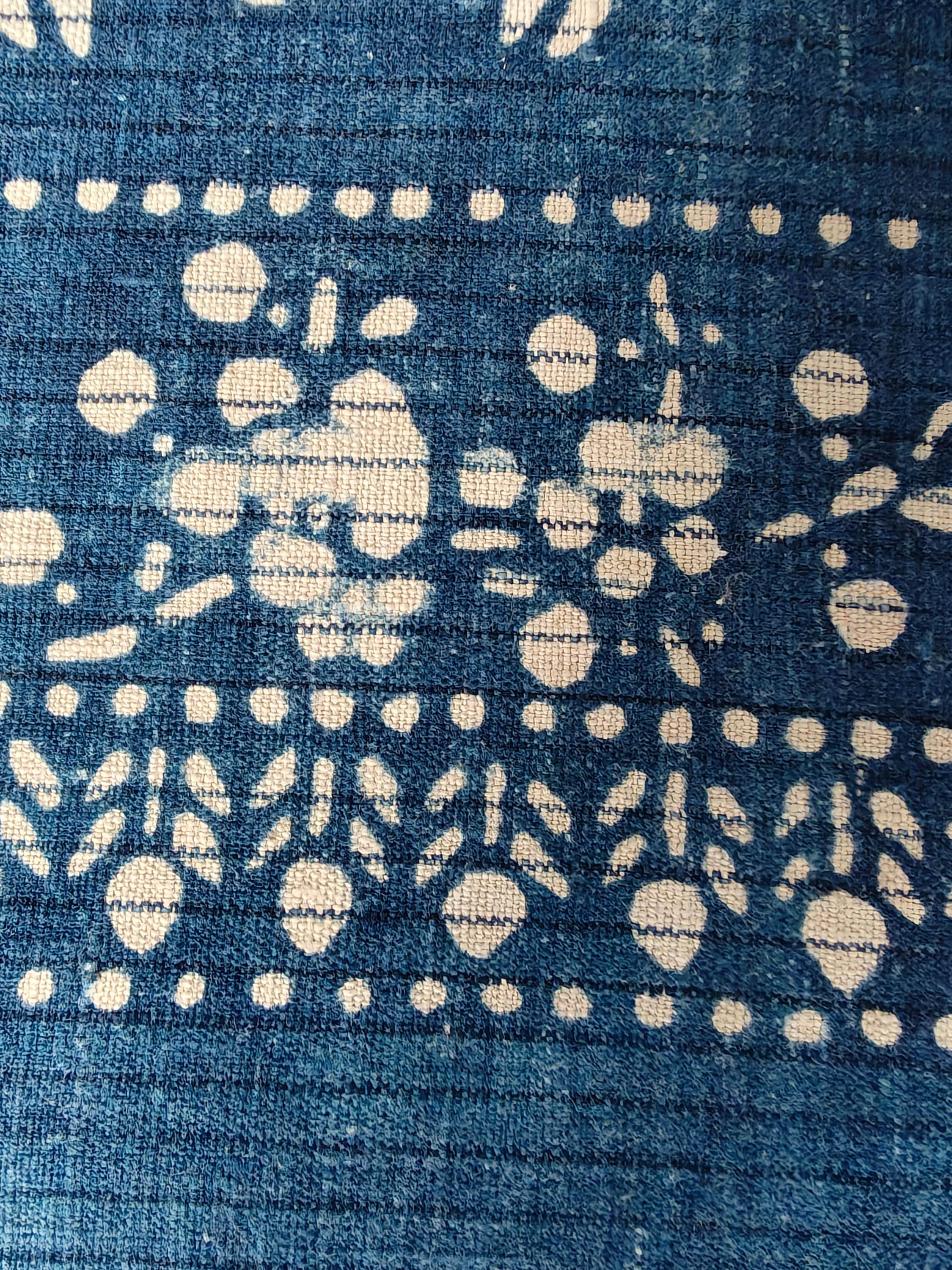
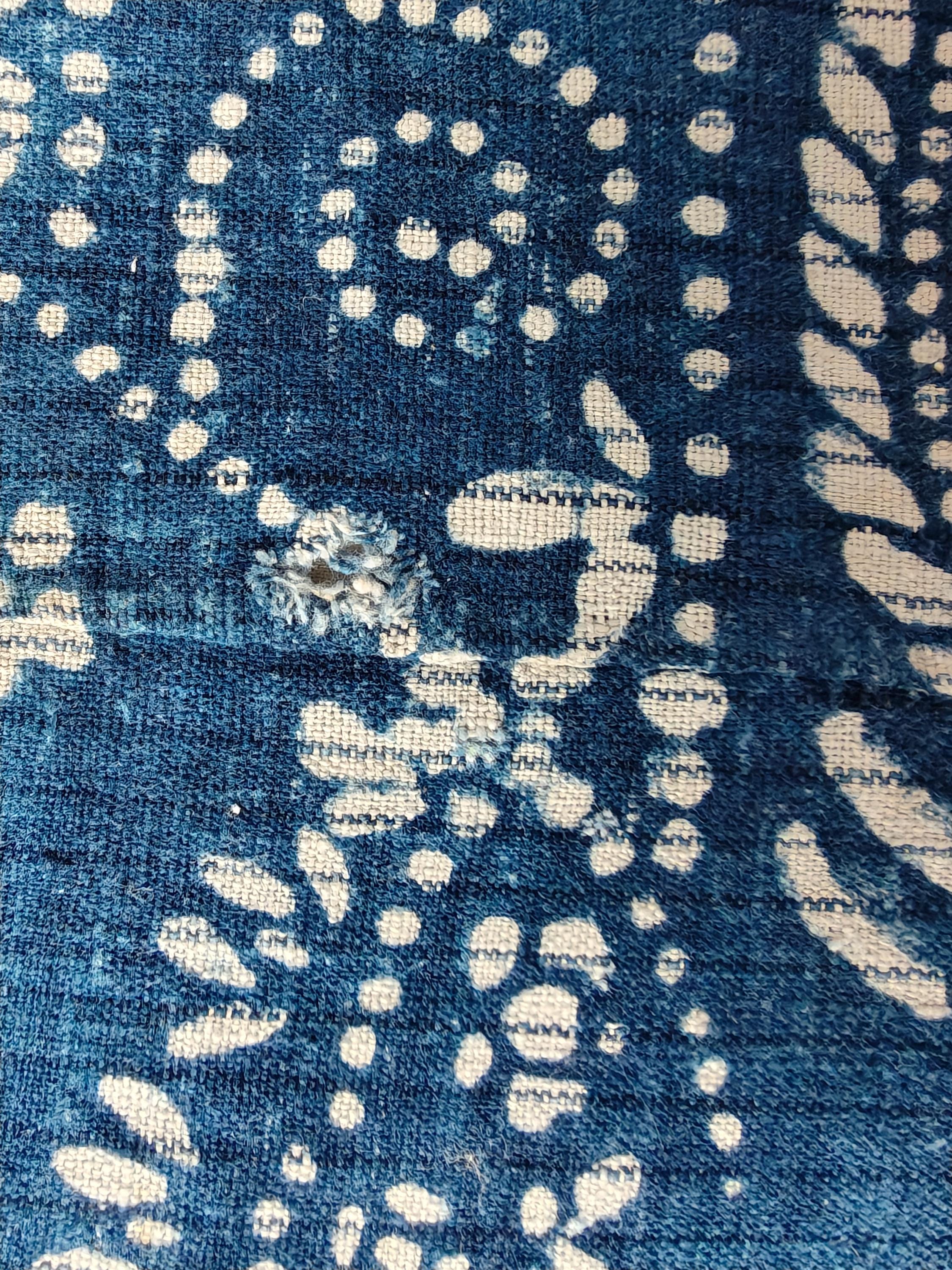
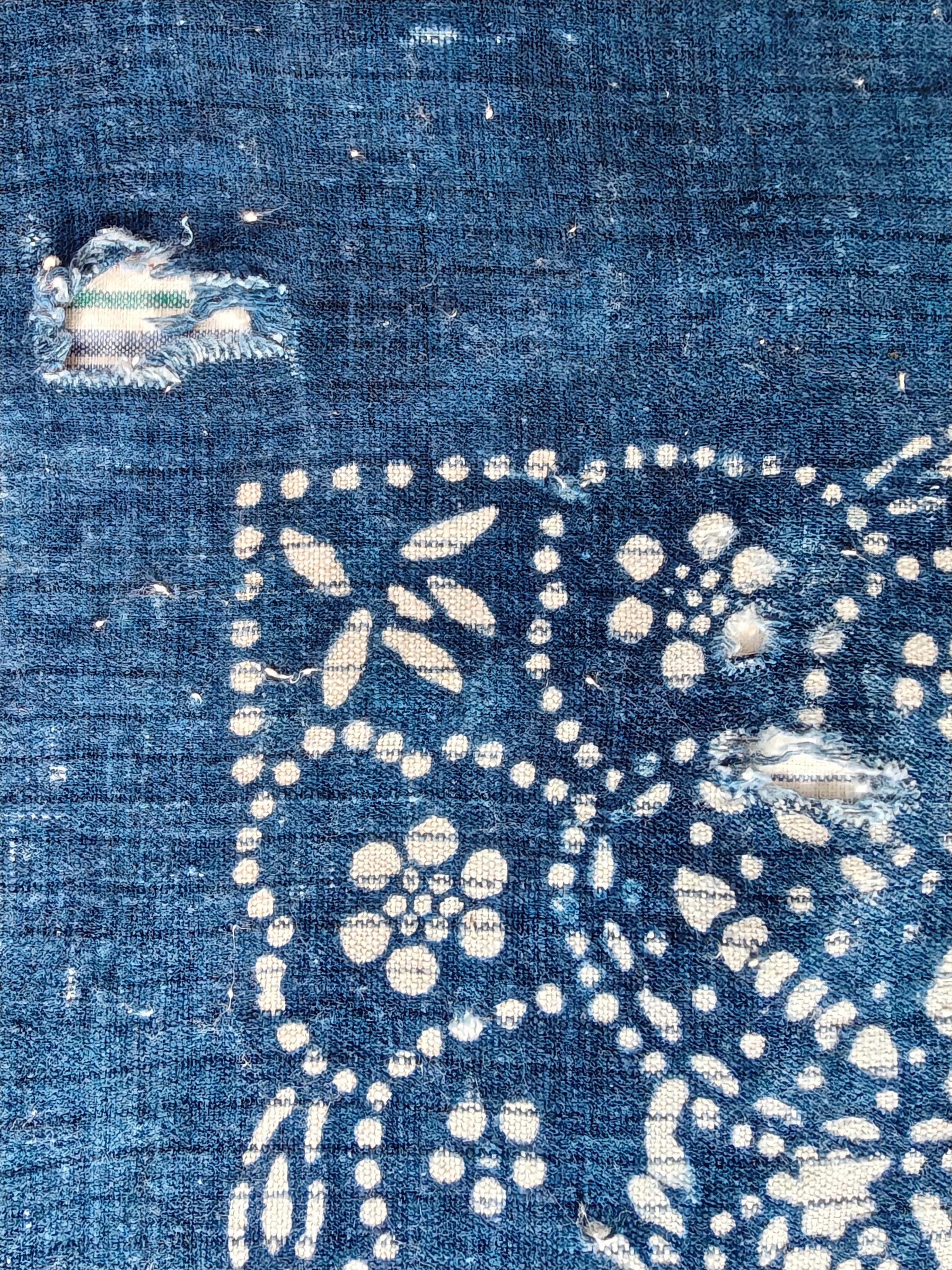
The main figures are surrounded by delicate flowering branches, scrolling vines and intricate borders made from tiny white dots.
The flowing vines suggest growth, renewal and the continuity of family life.
The pearl-like dotted ornaments create a sense of rhythm and intricacy, reflecting the fine detail possible in traditional Chinese resist-printing stencils.
These decorative elements bring the entire composition together, uniting birds, butterflies and flowers in an abundant symbolic garden.
❤ The Overall Meaning – Prosperity, Longevity & Happiness
The symbolism of this textile is particularly rich because several traditional auspicious motifs appear together.
- Four Phoenixes:Peace, harmony, prosperity and good fortune.
- Twin Cranes: Longevity, dignity and enduring companionship.
- Butterflies: Long life, love, happiness and repeated blessings.
- Peonies:Wealth, honour, beauty and abundance.
- Flowing Floral Vines: Renewal, growth and family continuity.
Together, these motifs convey wishes for a prosperous household, a long and healthy life, lasting relationships and happiness across generations.
❤ A Rarely Seen Detail – The Blue-Striped Woven Ground
One of the most fascinating features of this piece is the fabric beneath the printed design.
Many traditional Chinese blue resist-printed textiles were made using relatively plain, undyed cotton cloth.
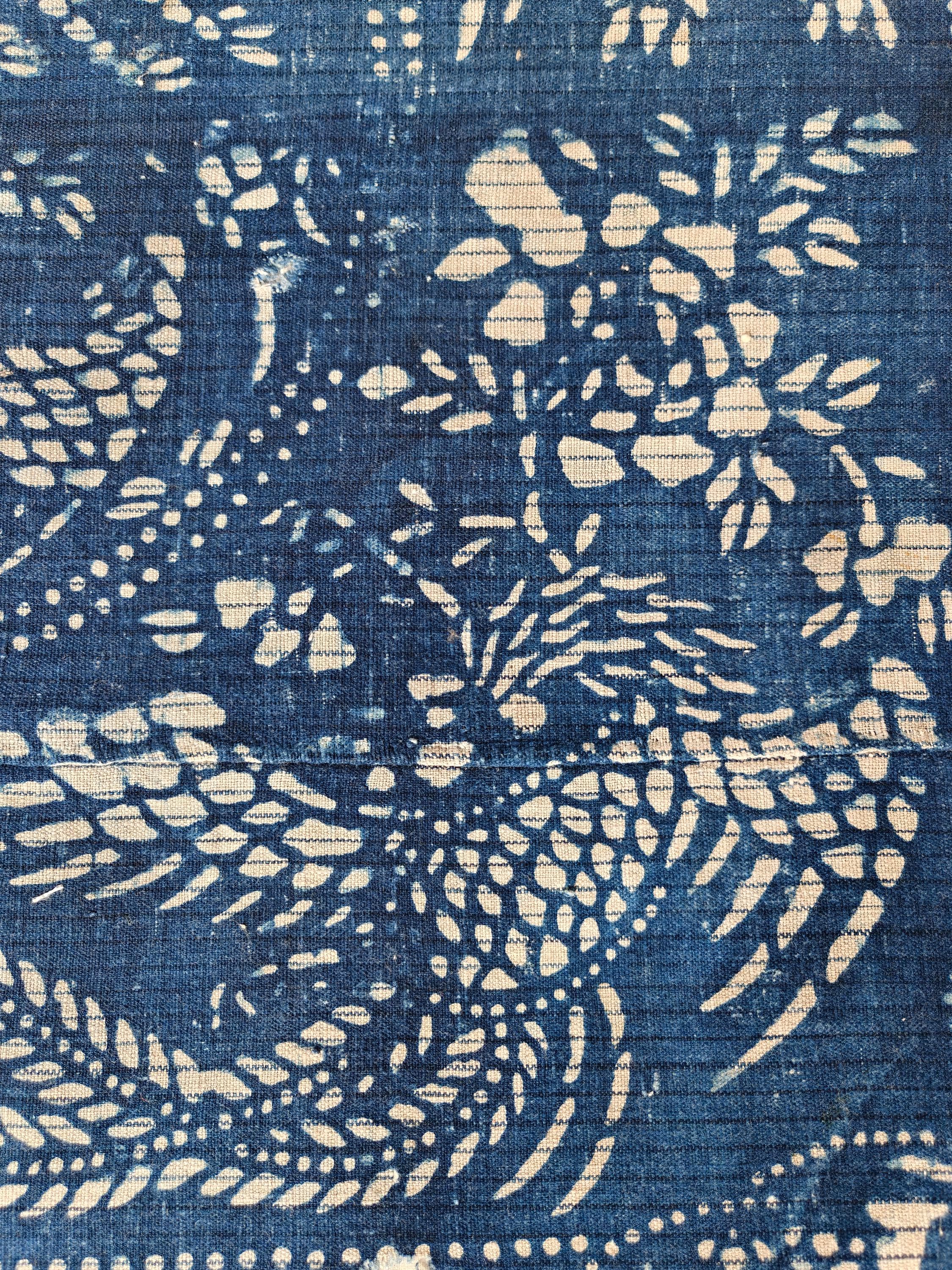
This particular piece, however, has a distinctive striped appearance, with variations in deep and lighter blue running through the woven ground.
The textile has been identified in its provenance information as a traditional handwoven cotton with a yarn-dyed striped base.
Rather than appearing completely uniform, the blue ground reveals subtle bands, tonal variations and the natural irregularities of hand-spun yarn.
These woven details remain visible beneath the printed white motifs.
The result is a beautifully textured surface in which the weave itself contributes to the visual character of the pattern.
This distinctive ground is an important part of the textile's appeal and sets it apart from the appearance of more conventional blue printed cotton.
The fabric feels **substantial, soft and supple**, with the characteristic texture of traditional homespun cotton.
❤ Traditional Nantong Blue Resist Printing
The textile is attributed to the Nantong and wider Jianghai region of Jiangsu Province, China, historically associated with traditional blue resist-printed cotton.
Known as *Lan Yin Hua Bu* (蓝印花布), Chinese blue printed cloth is traditionally produced through a resist-dyeing process.
Craftspeople cut elaborate designs into specially prepared stencils, often made from paper treated for durability.
A resist paste, traditionally incorporating ingredients such as soybean flour and lime, is applied through the stencil.
During indigo dyeing, the protected areas resist the dye. Once the paste is removed, lighter motifs are revealed against the blue ground.
This differs from simply printing white ink onto blue fabric.
The fine feathers of the phoenixes and cranes, the delicate butterflies, the flowering branches and the intricate dotted borders demonstrate the decorative possibilities of this traditional technique.
The precise original sequence of yarn dyeing, weaving and resist printing for this particular textile has not been independently documented.
❤ Three Handwoven Panels – Traditional Rural Construction
The complete square cloth measures approximately 99 × 99 cm.
It was made by joining **three narrow panels of handwoven cotton**, each measuring approximately 33 cm across.
This construction reflects the narrower weaving widths associated with traditional rural handlooms.
Rather than being manufactured as a single wide sheet of fabric, three separate lengths were joined to create one larger household textile.
The seams are part of its original construction and historical character.
Despite its age and wear, the overall square composition, central medallion and principal decorative motifs remain recognisable.
❤ A Traditional Chinese Wrapping Cloth – Baofu Bu 包袱布
Cloths of this type were traditionally used in Chinese households for wrapping, storing and transporting clothing, bedding and other valued belongings.
Decorative wrapping cloths could also have a place in wedding and dowry traditions.
The selection of auspicious motifs was therefore meaningful.
Phoenixes expressed wishes for harmony and prosperity.
Cranes conveyed longevity.
Butterflies suggested love, happiness and long life.
Peonies represented wealth and abundance.
Together, these motifs transformed an everyday household object into something carrying wishes for a happy and prosperous family life.
❤ Age & Provenance
Origin: Attributed to the Nantong region of Jiangsu Province, China, including the wider Jianghai textile area.
Estimated period: Approximately 1940s–1960s, based on its reported provenance, handwoven construction and traditional decorative style.
Material: Traditional hand-spun and handwoven cotton.
Technique: Indigo resist printing on a distinctive blue-striped woven ground.
The precise date and individual production history have not been independently authenticated.
❤ Vintage Condition – Please Read Carefully
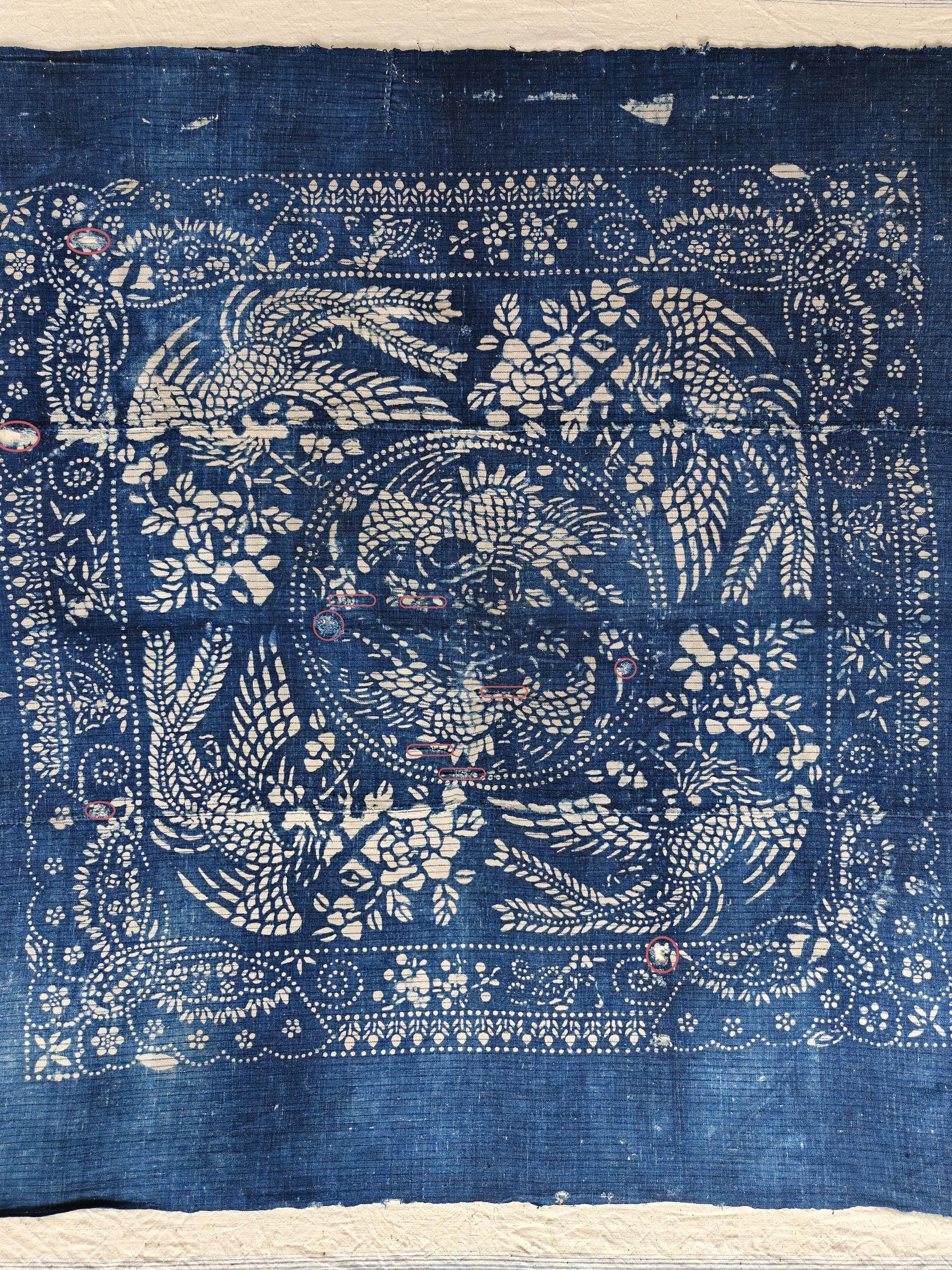
This is a genuinely old textile showing clear signs of previous use and considerable age.
The fabric has been washed and ironed.
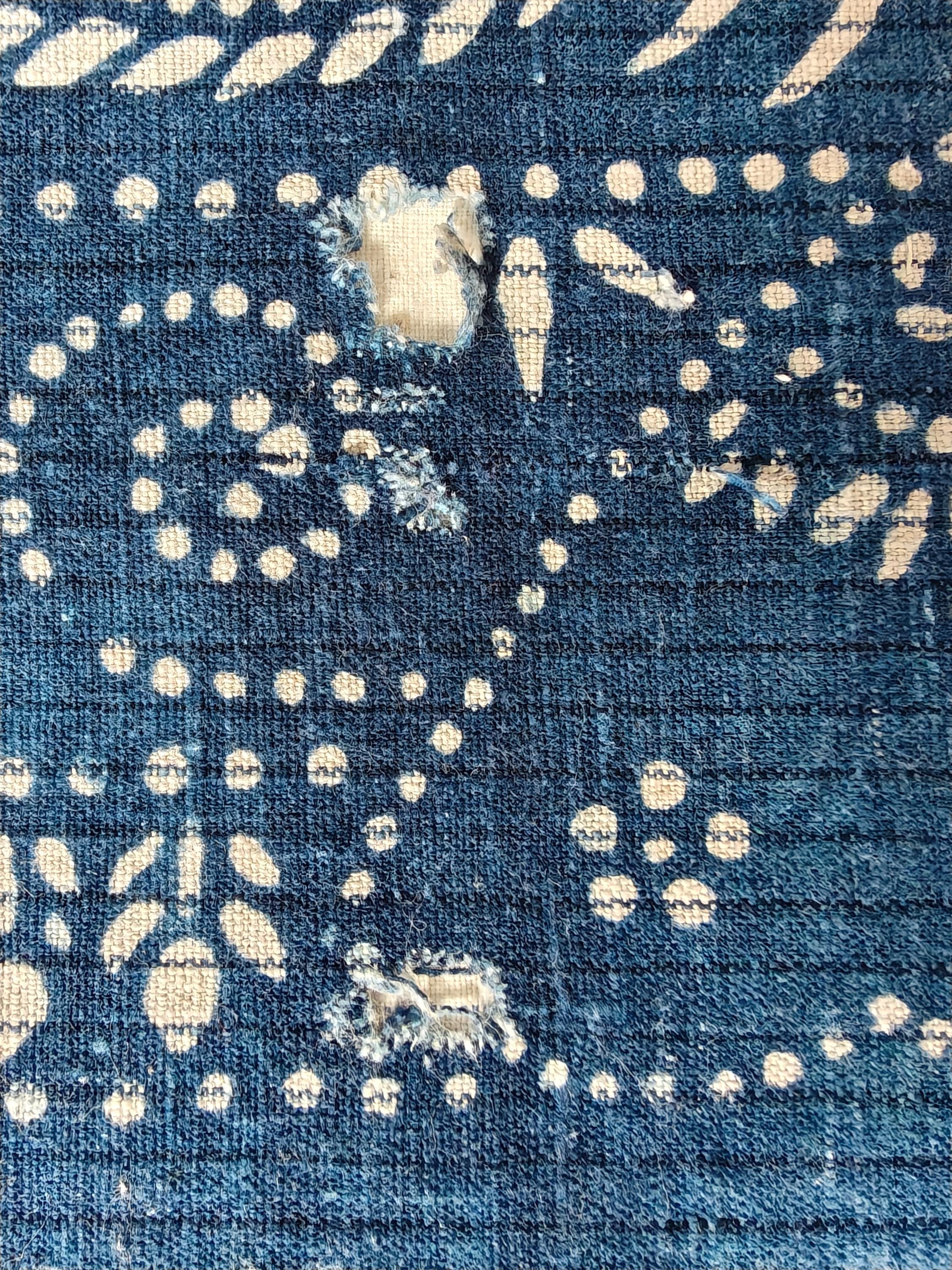
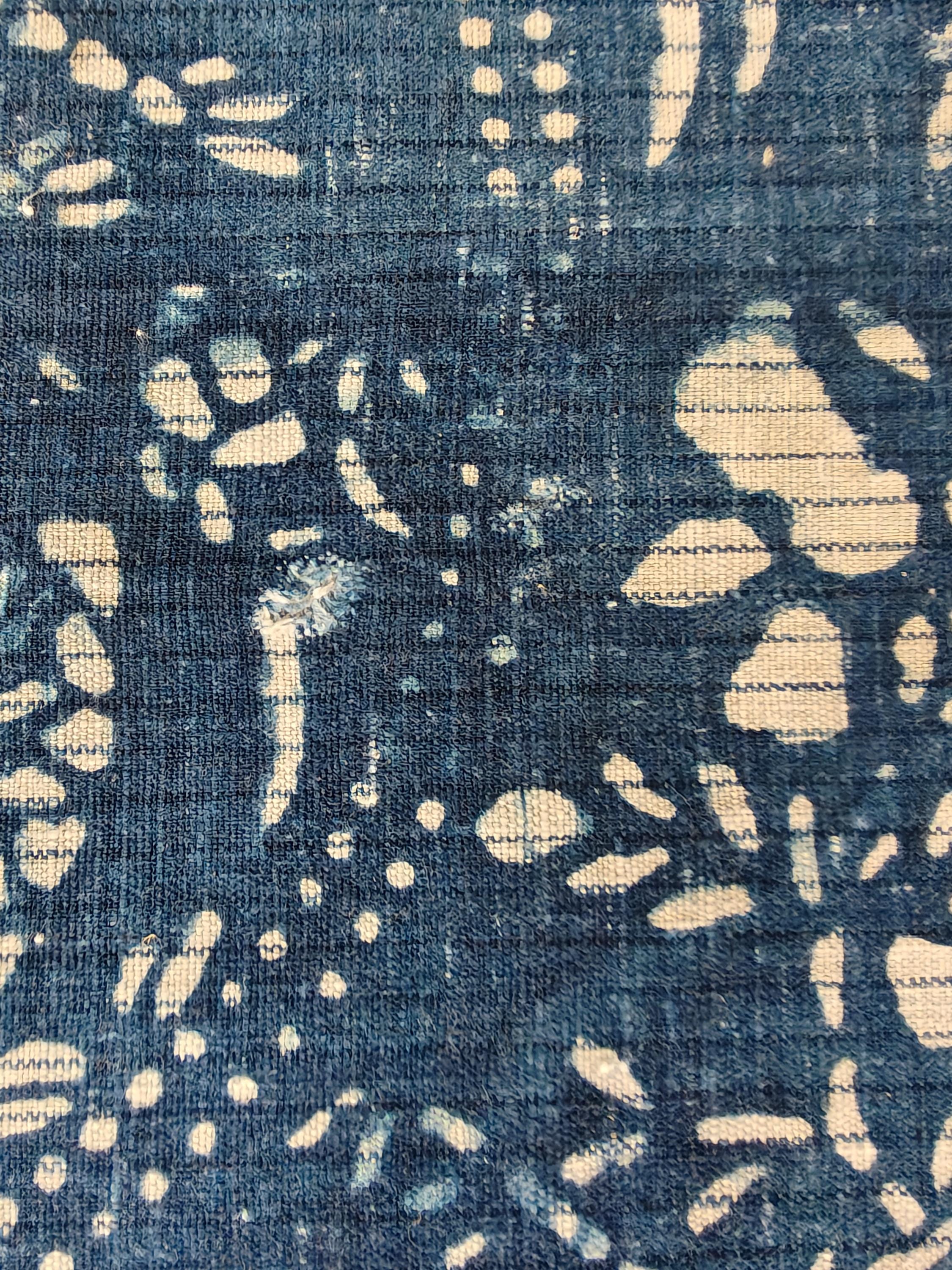
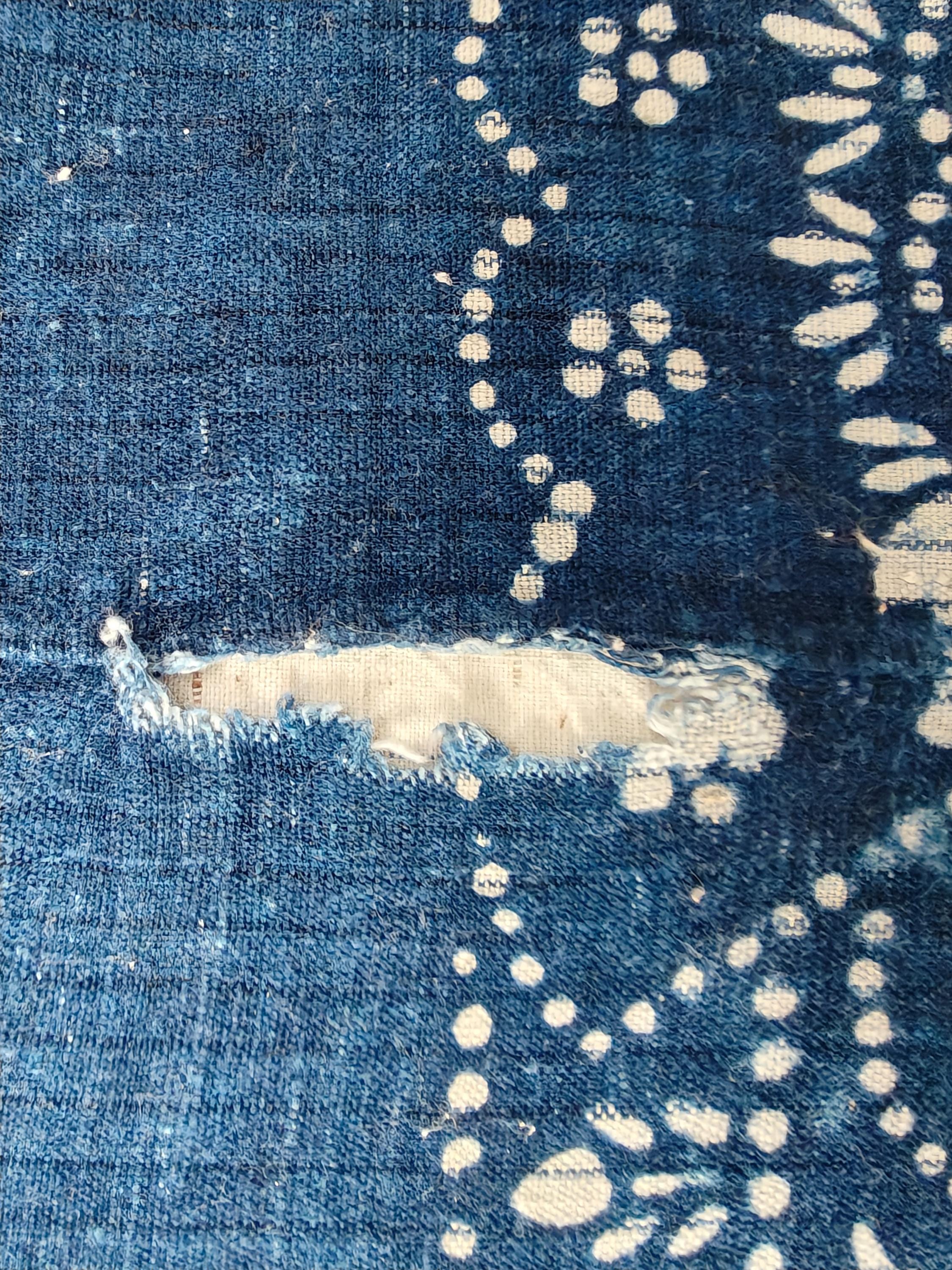
It remains substantial and soft, but there are multiple small holes, worn and frayed areas, localised fabric losses and a larger horizontal tear.
The indigo surface also shows variations in colour, areas of fading and age-related wear.
The three-panel construction and principal decorative composition remain present, including the central cranes, surrounding phoenixes, butterflies and floral ornaments.
Please study all photographs carefully, particularly the detailed close-ups of the worn and damaged sections.
The condition has been reflected in the presentation of this piece.
Because of its age, we recommend it primarily for collecting, careful decorative display, textile study or sensitive restoration rather than heavy everyday use.
❤ Suggested Uses
This complete square composition would make a beautiful piece of wall-mounted folk textile art.
It is particularly suitable for collectors of historic Chinese textiles, vintage indigo, handwoven cotton, traditional resist printing and Asian decorative arts.
The richly detailed phoenixes, cranes, butterflies, peonies and smaller floral motifs offer beautiful possibilities for patchwork, small zipper pouches, textile collage, needle books, framed fabric art and slow-stitching projects.
Its handwoven indigo cotton and naturally aged surface make it especially appealing for visible mending and Boro-inspired textile work.
Please note that some areas have holes and weakened fibres. Reinforcement, lining or careful repair may be needed before sewing.
The fabric is sold as one complete 99 × 99 cm piece, allowing the buyer to decide whether to preserve the original composition or repurpose selected sections.
A Piece of Chinese Textile Heritage
What makes this textile special is not only its visual complexity but also the stories represented by its motifs.
The phoenixes celebrate harmony and prosperity.
The cranes wish for a long and dignified life.
The butterflies speak of love, longevity and continuing happiness.
The peonies bring abundance and good fortune.
Together, they form a beautifully expressive example of the auspicious imagery that once surrounded everyday life in rural China.
The handwoven cotton, three-panel construction, distinctive striped ground and intricate indigo resist printing preserve an important connection to traditional textile craftsmanship.
Although marked by decades of wear, the cloth retains the beauty of its decorative composition and the cultural meaning of its design.
The exact vintage textile shown in the photographs is the piece you will receive. Sold as one complete square cloth.
From Tubu Atlas, preserving the craftsmanship, beauty and stories of traditional Chinese textiles.
ABOUT TRADITIONAL HOMESPUN COTTON
Traditionally woven on household wooden looms, Chinese homespun cotton has hand-spun yarns that vary naturally in thickness, giving the cloth a textured, individual surface. This piece has already been washed; its current hand and any remaining marks are described in the condition notes. Warp yarns were sometimes sized before weaving, so unused vintage cloth can feel firm at first and gradually soften with use and gentle washing. Each household’s yarns, loom width and weaving choices differ, making an identical replacement difficult to find.
Description and original photographs from the TubuAtlas Etsy listing. Historical dates, origins and craft descriptions are the seller’s attributions. Purchases are completed on Etsy.