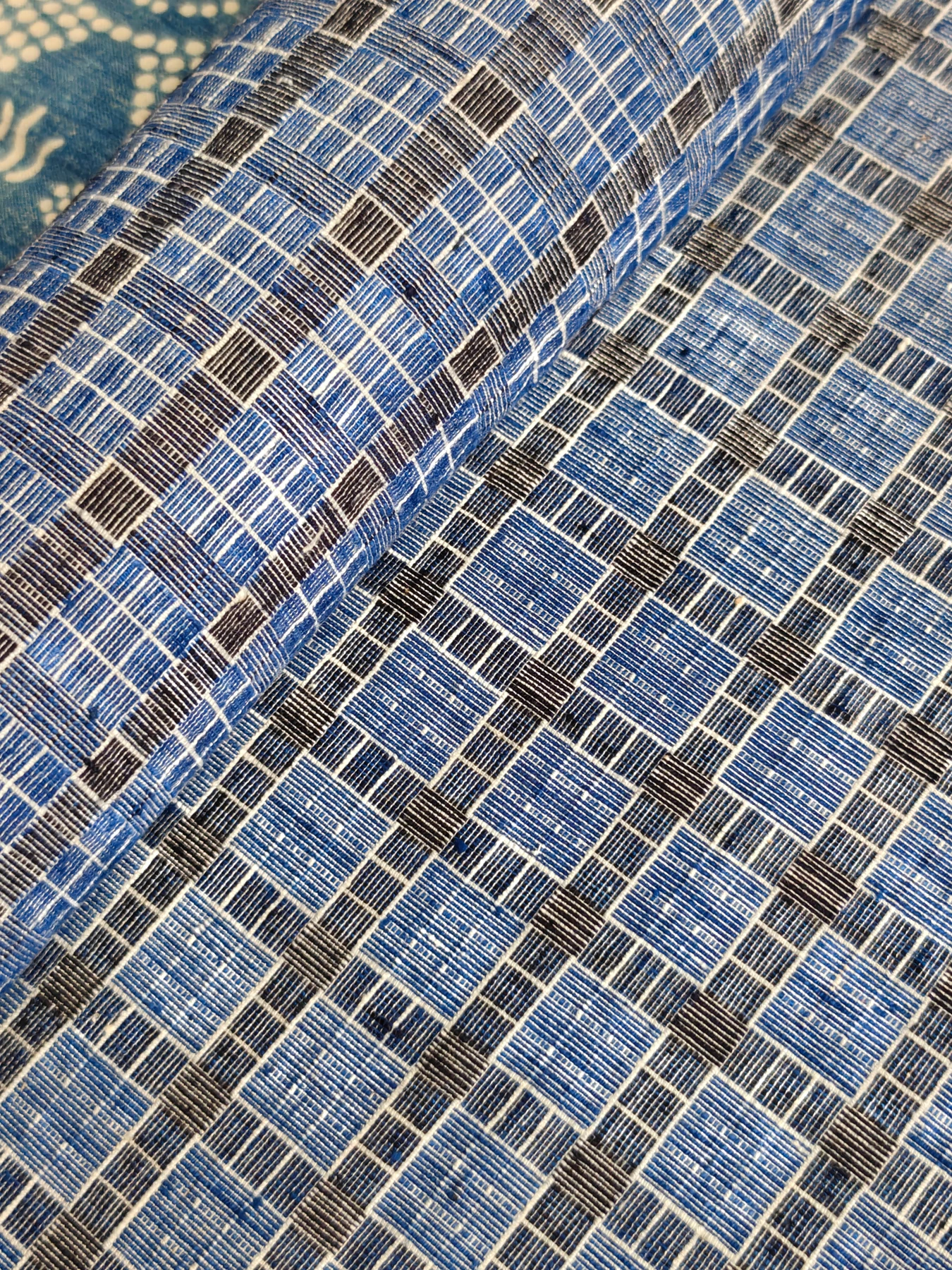
Two Sides of Harmony — Vintage Double-Sided Handwoven Cotton
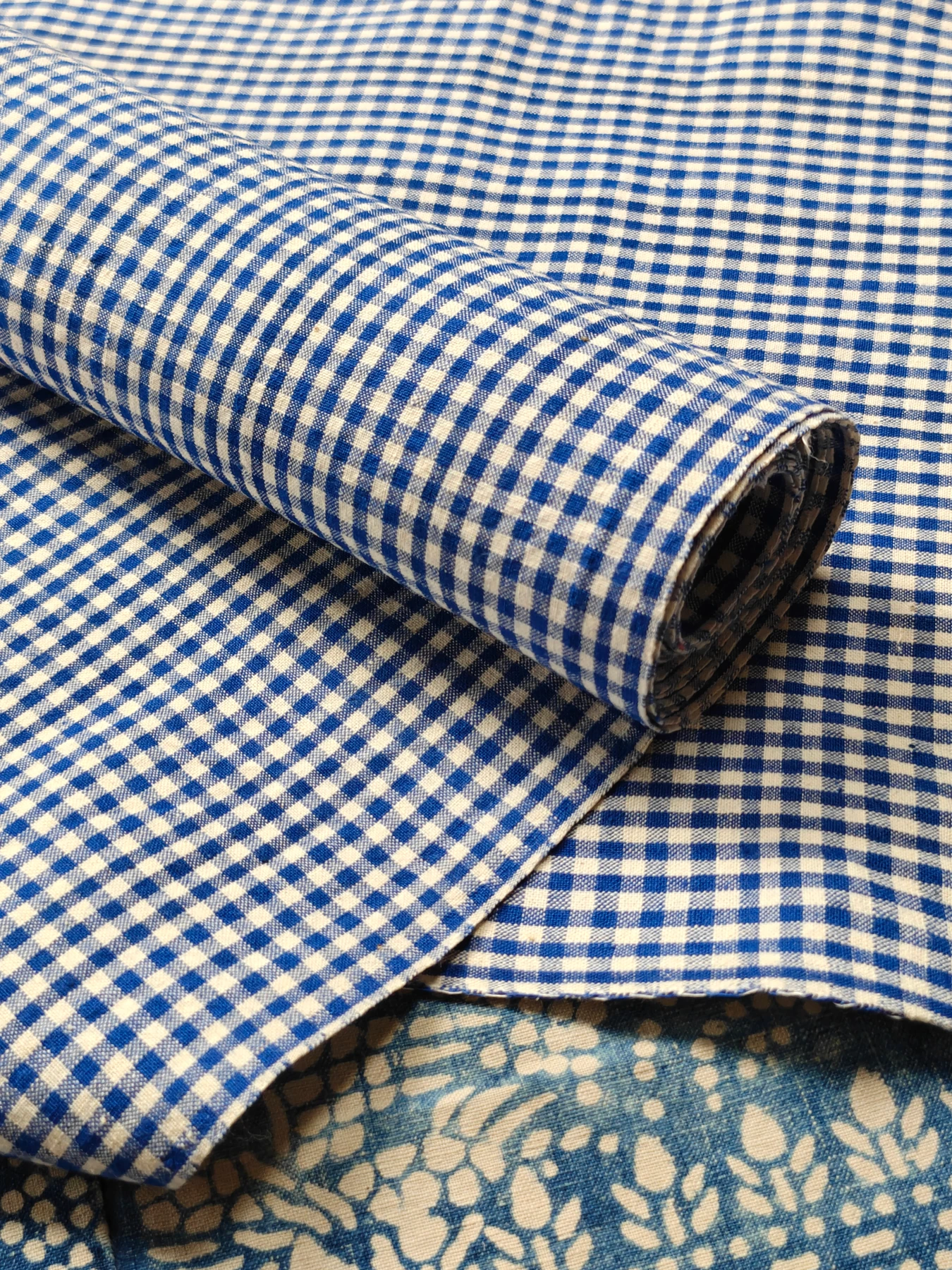
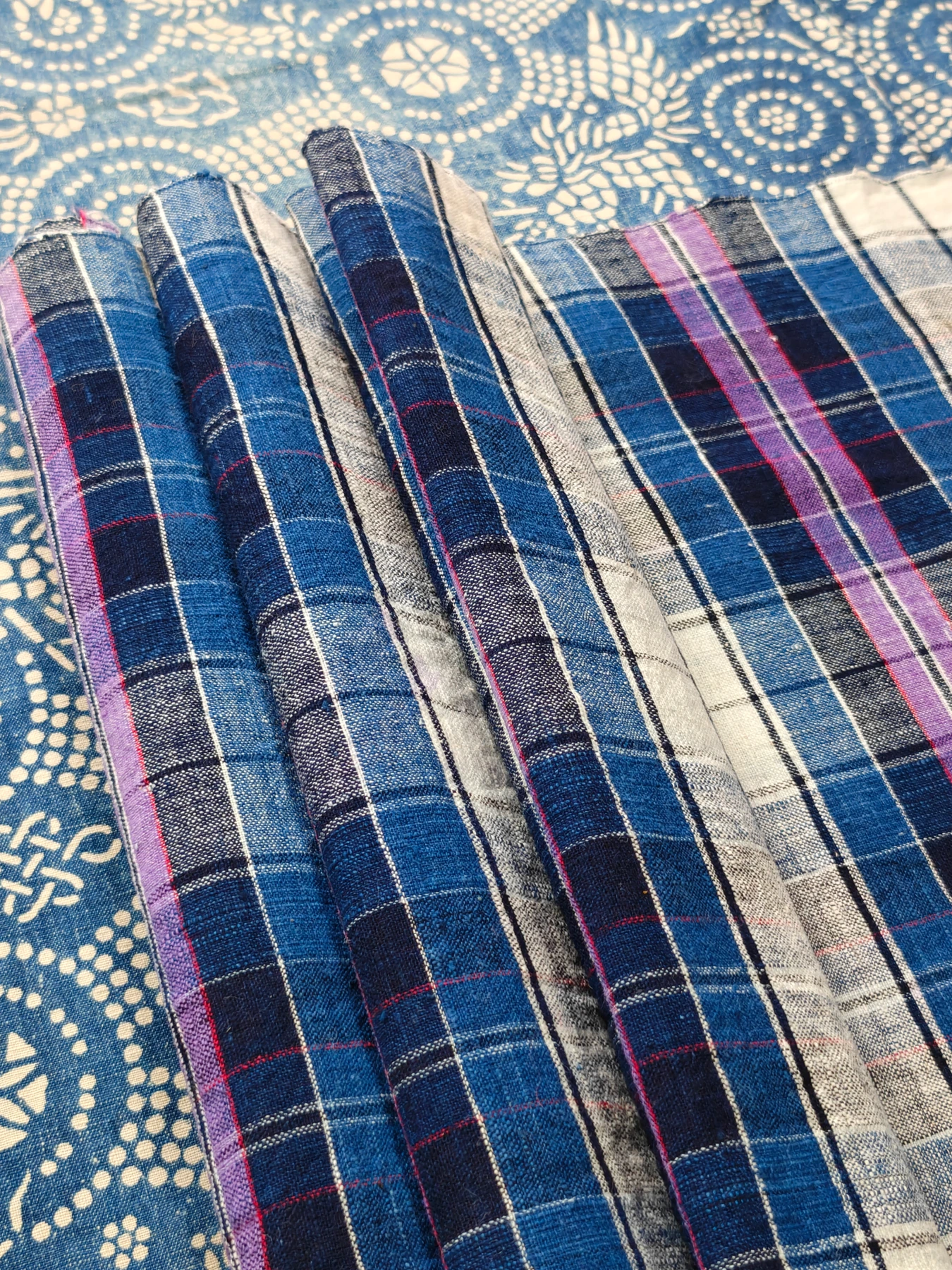
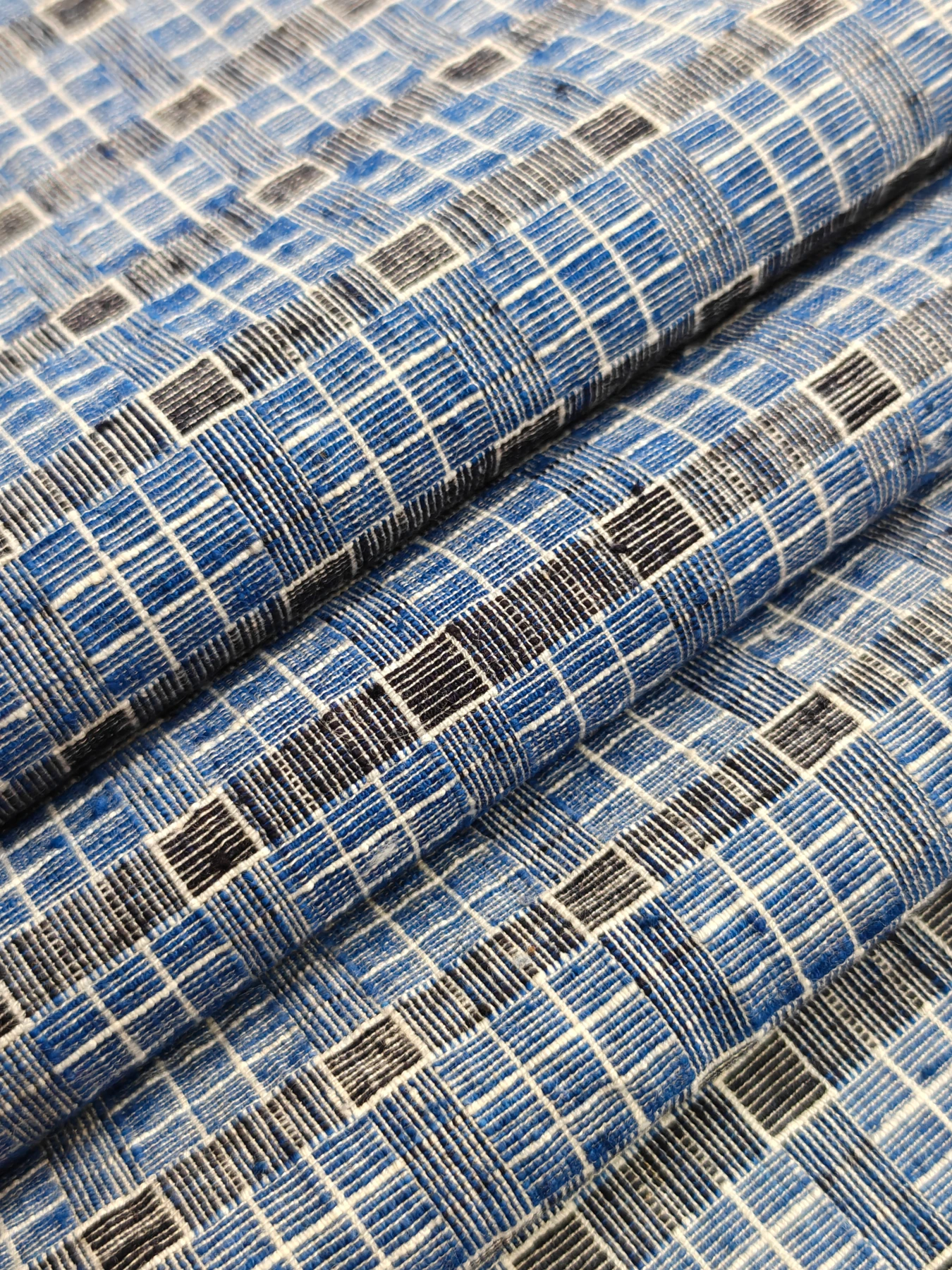
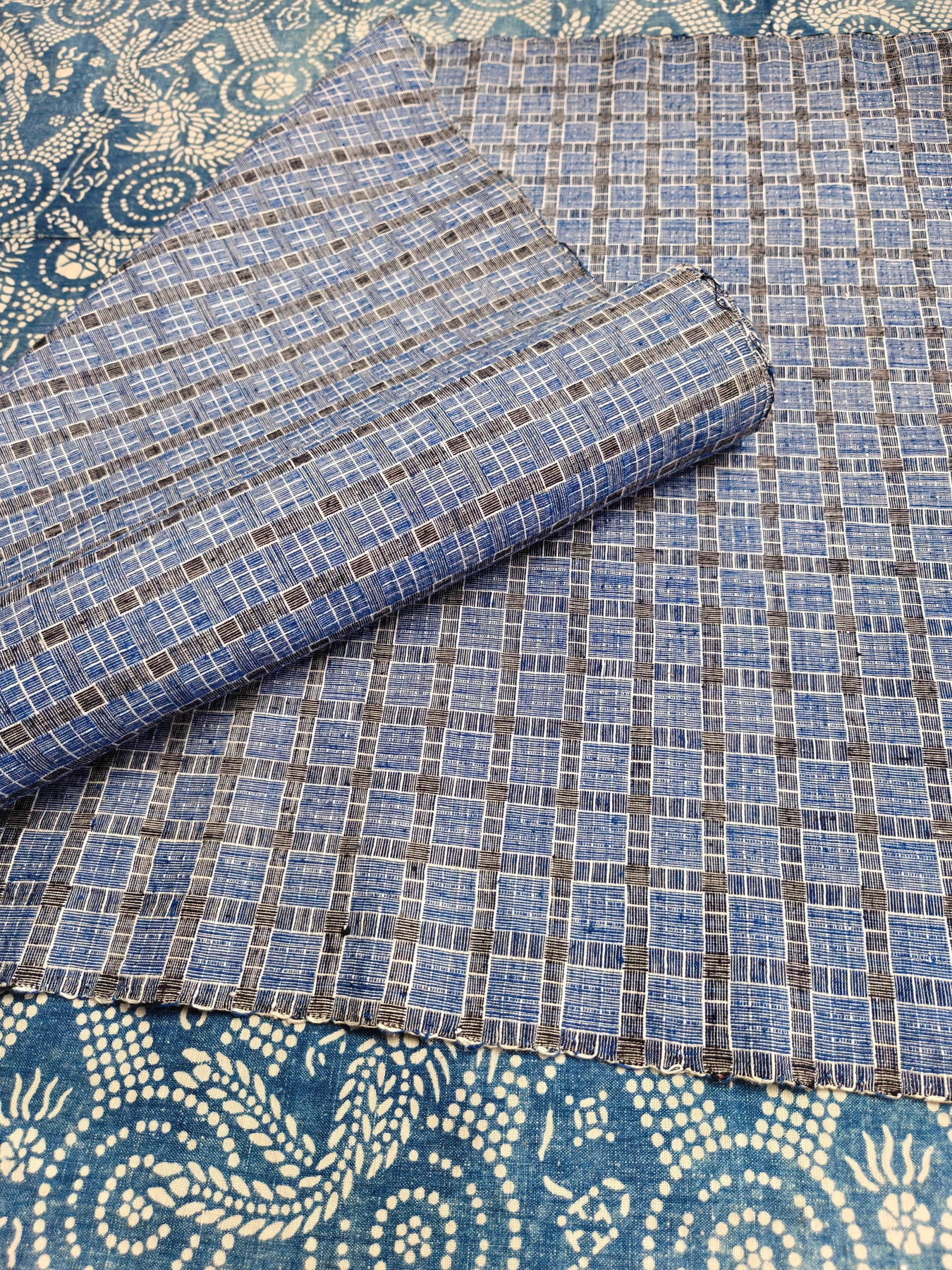
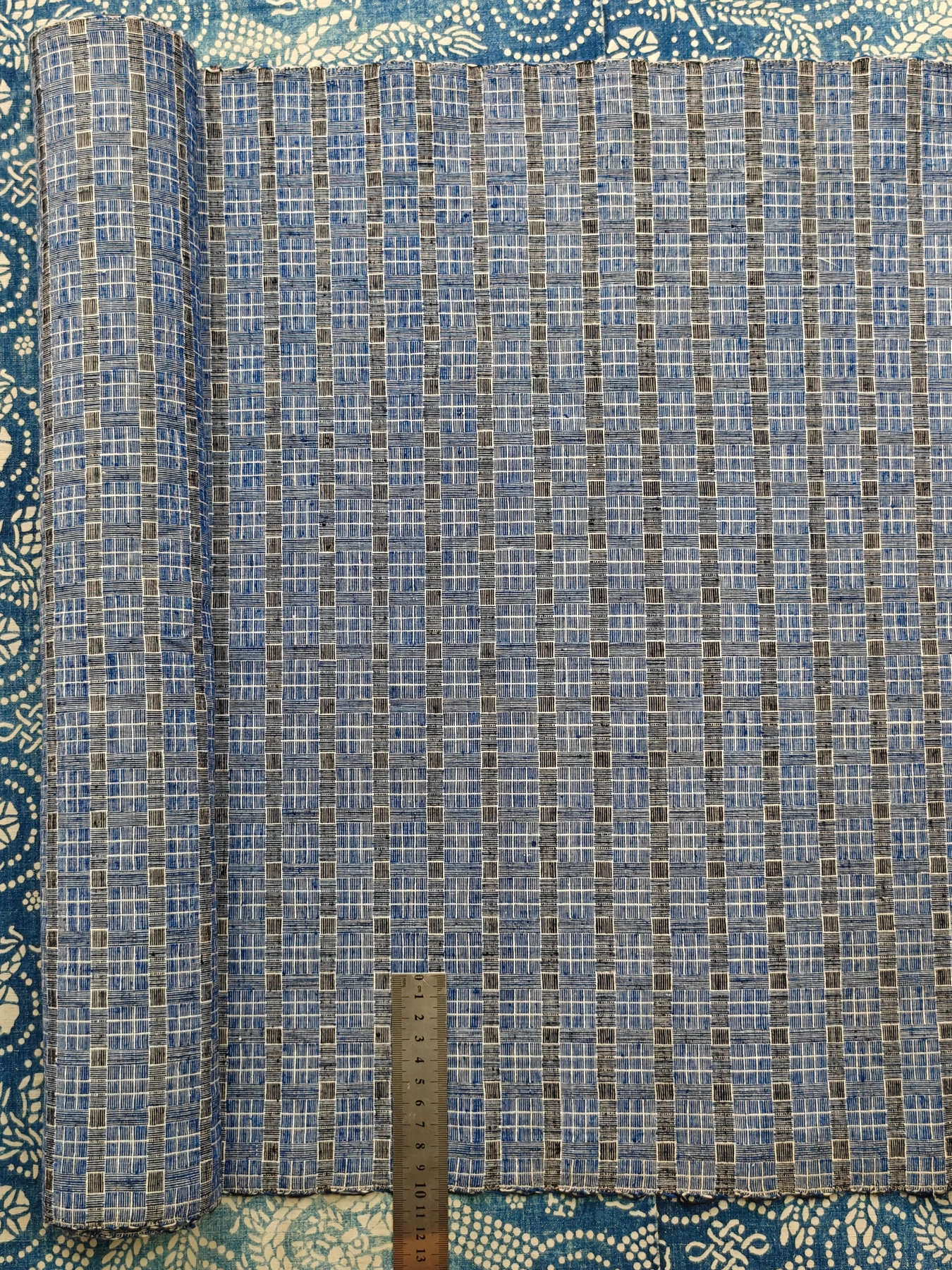
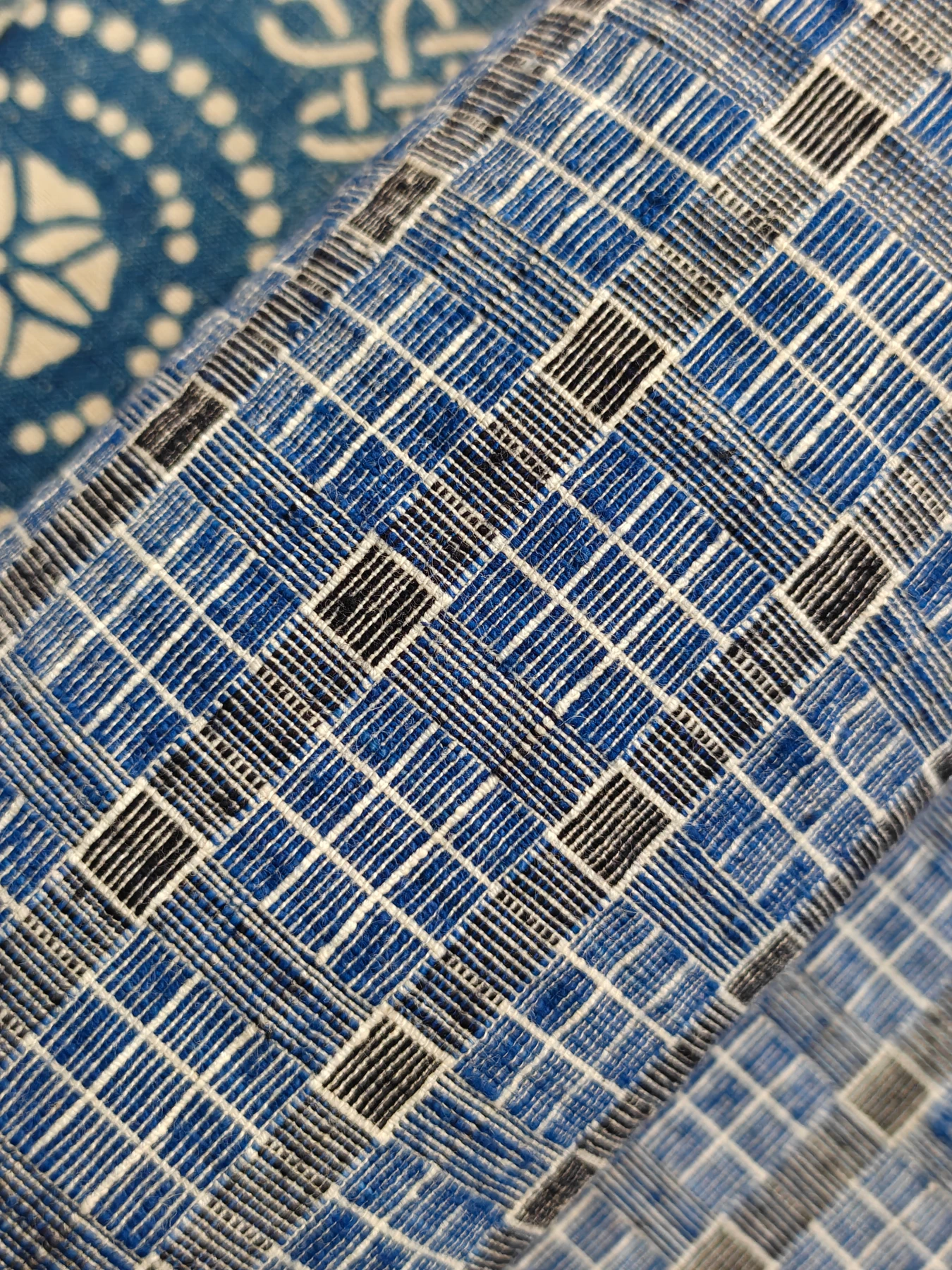
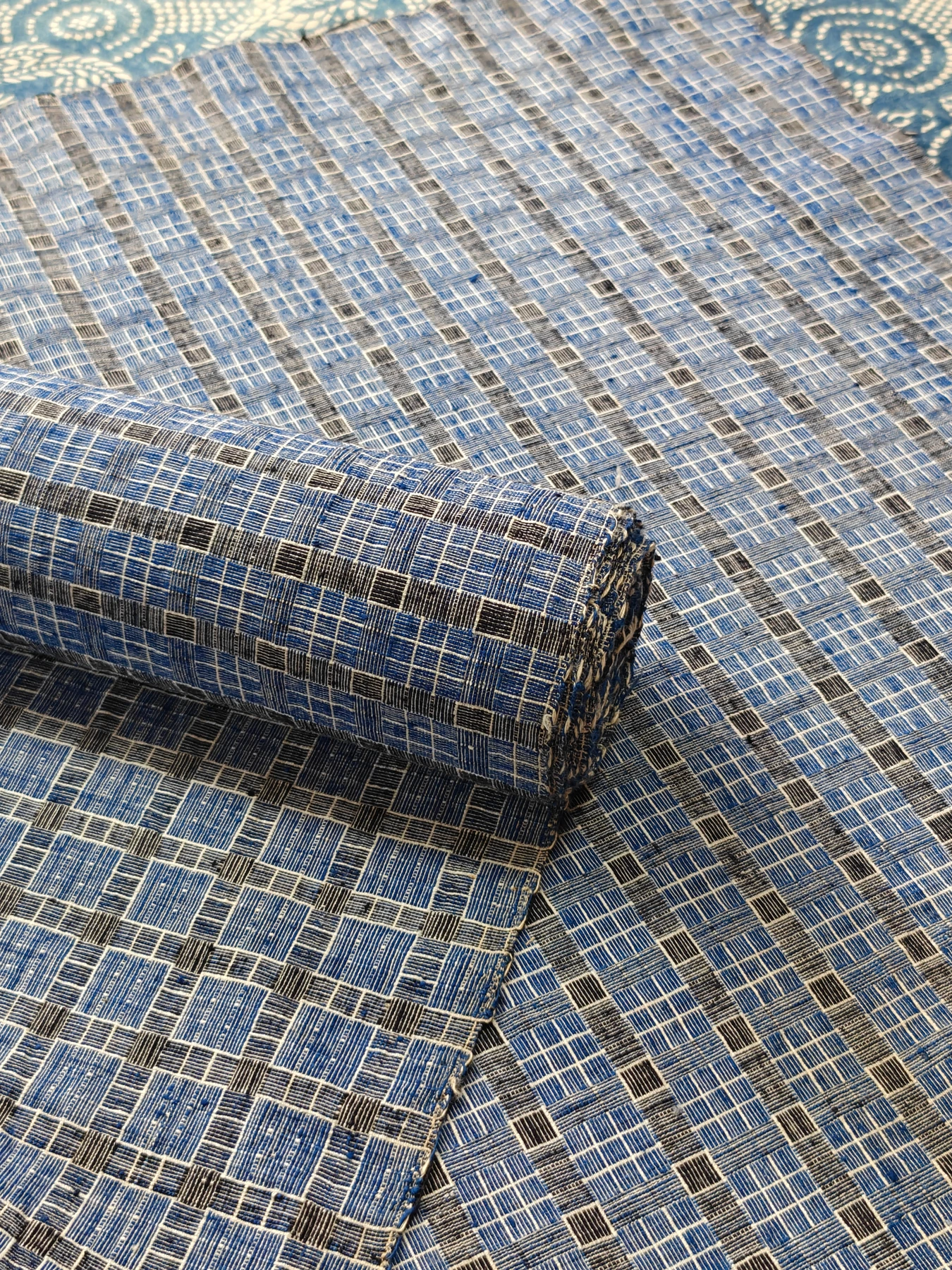
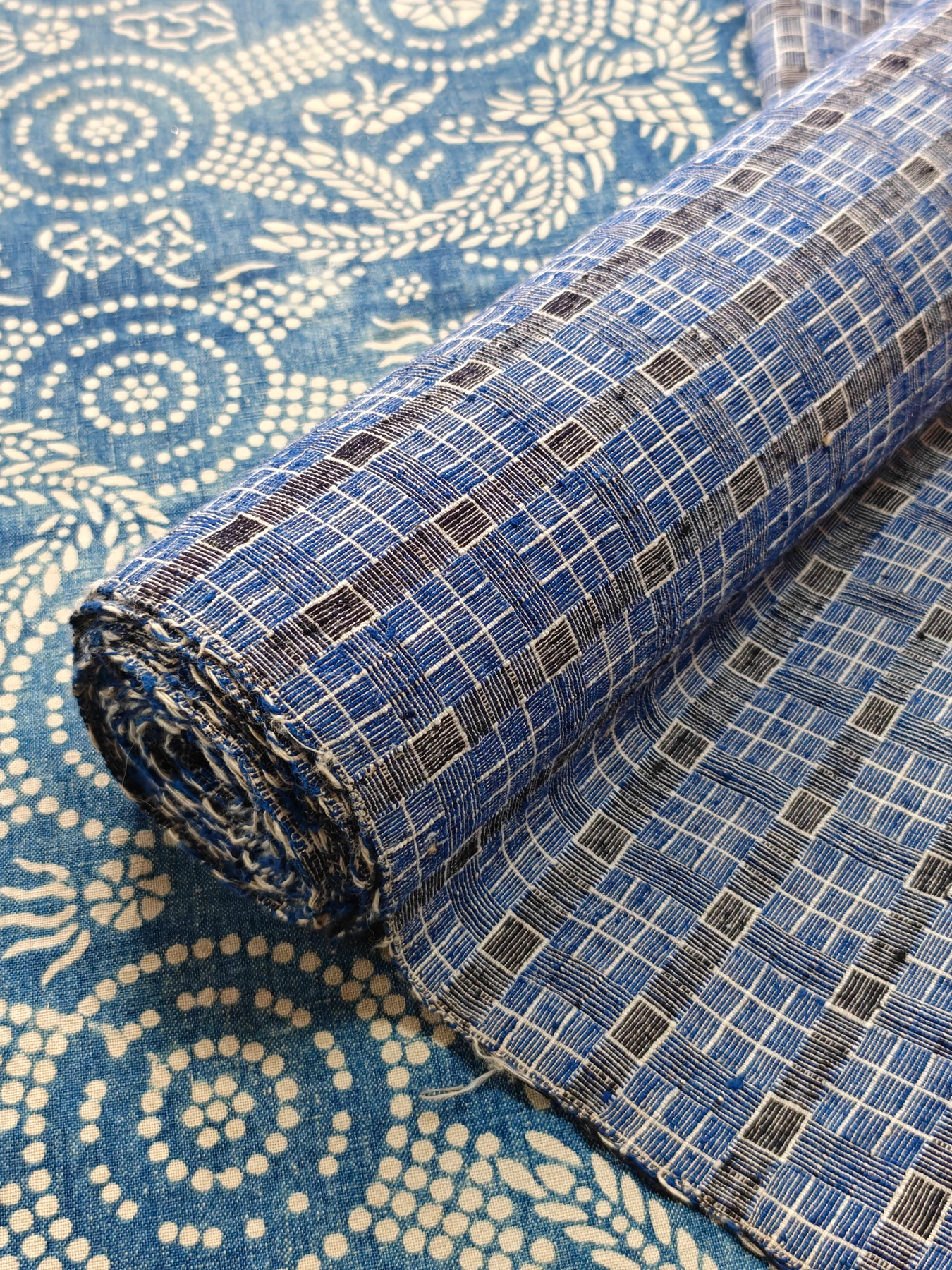
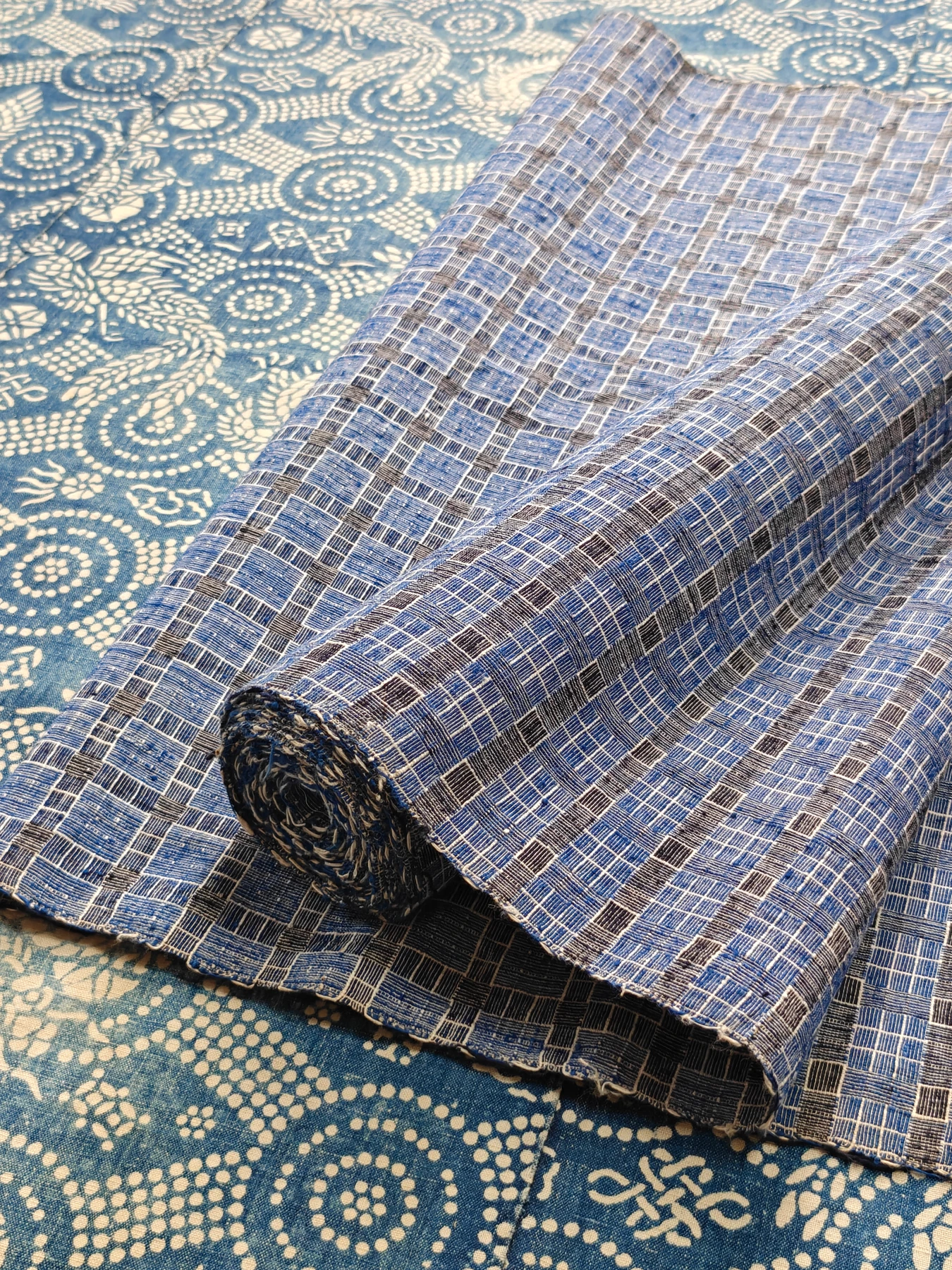
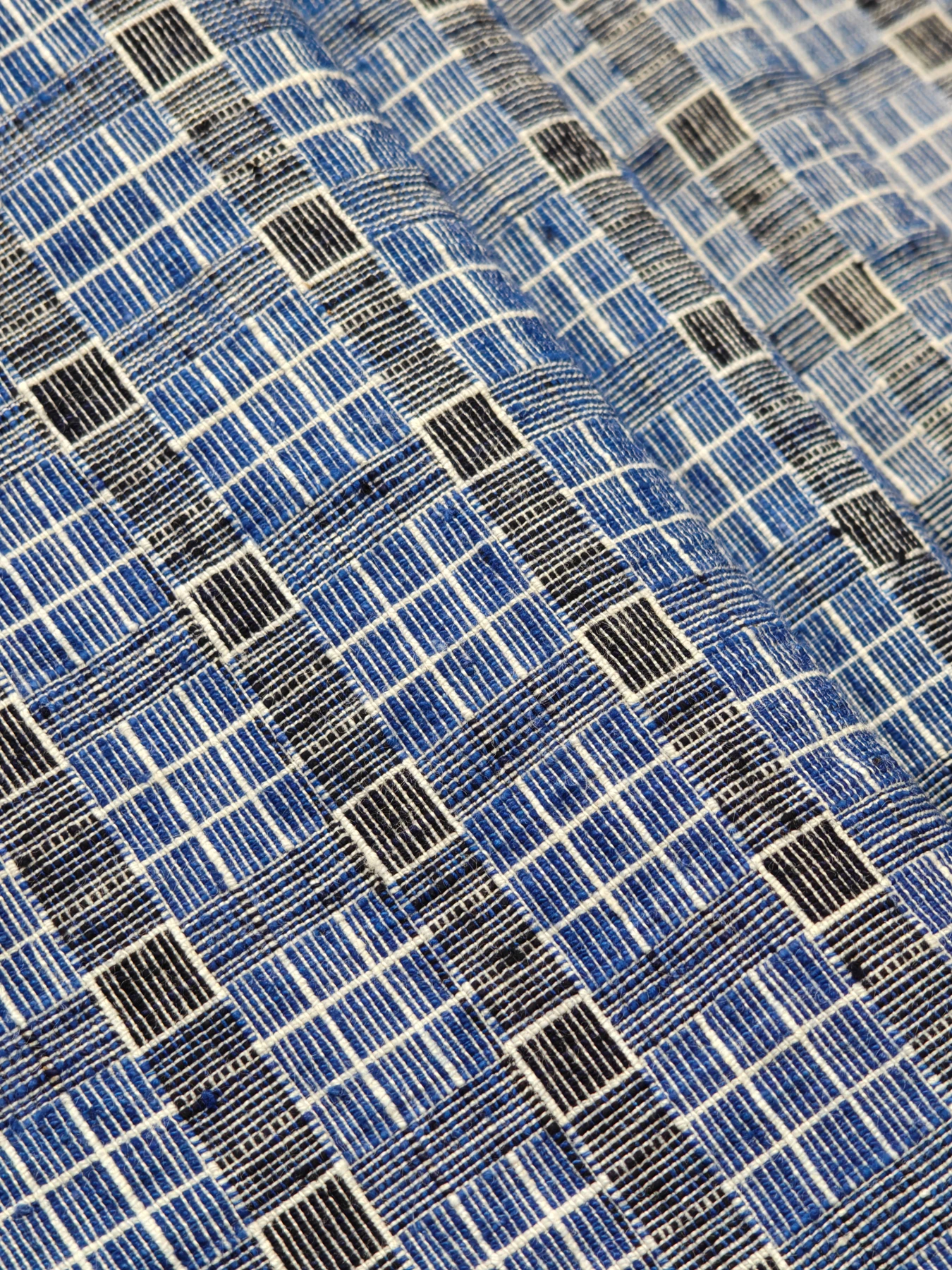
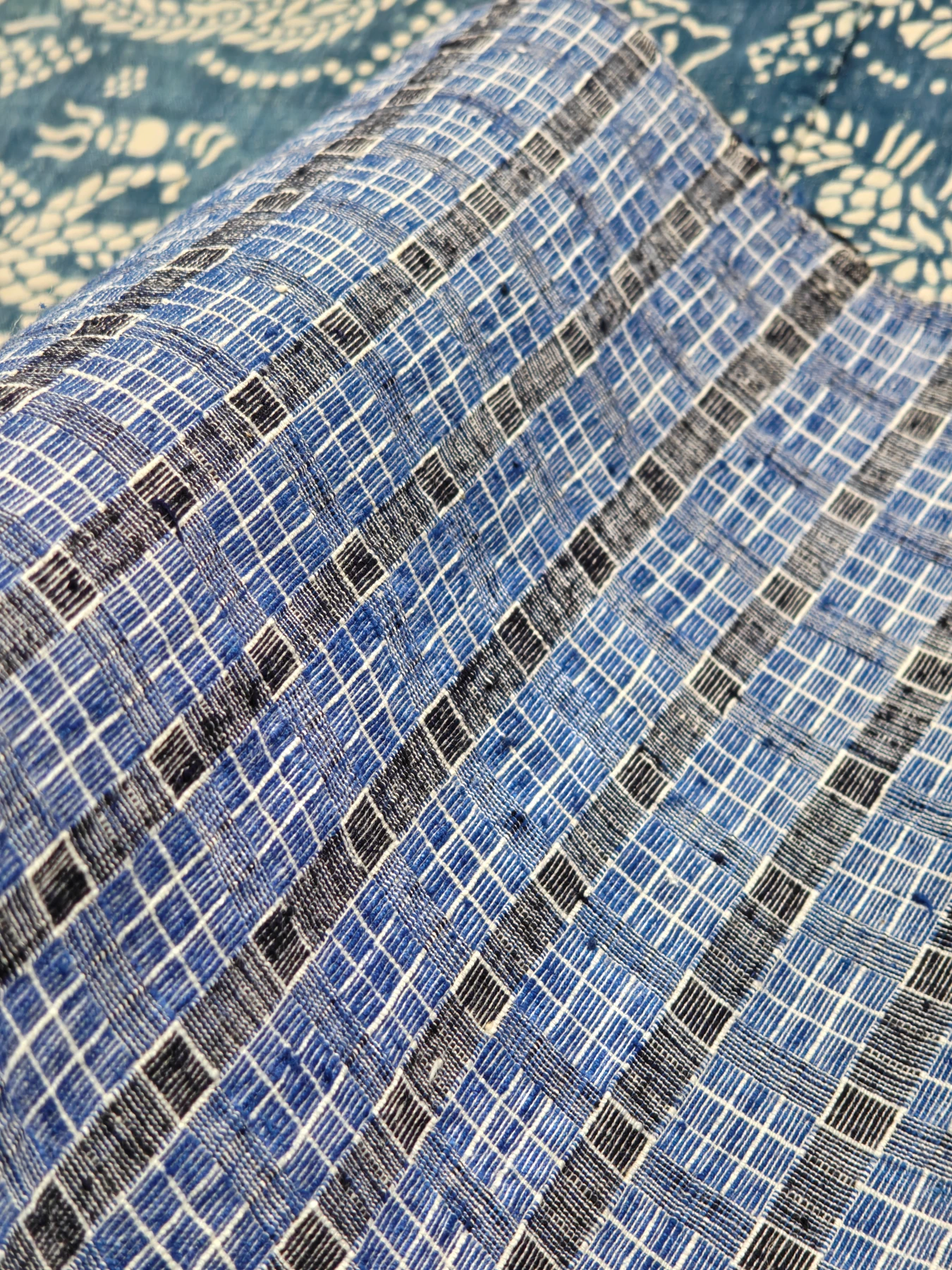
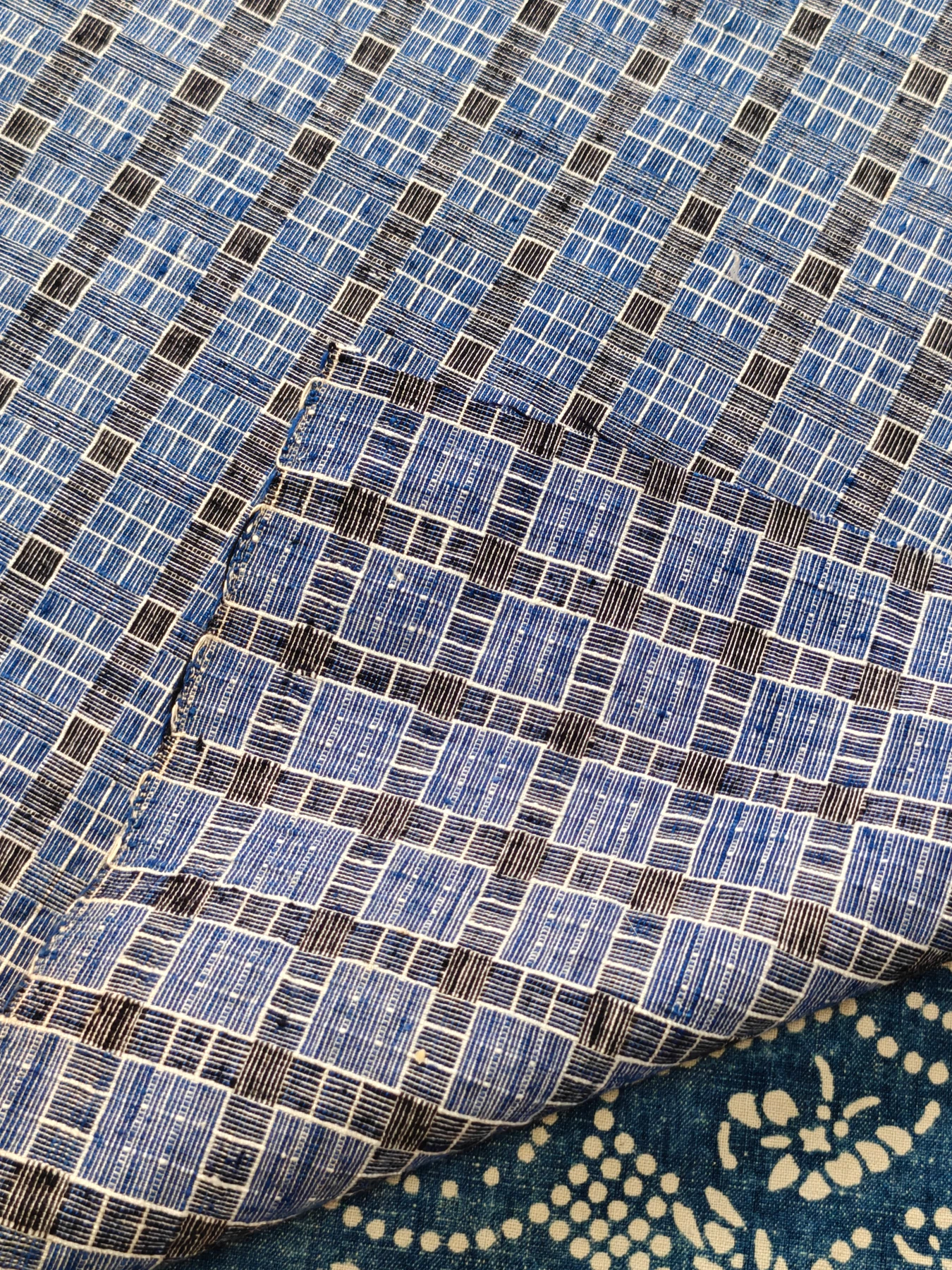
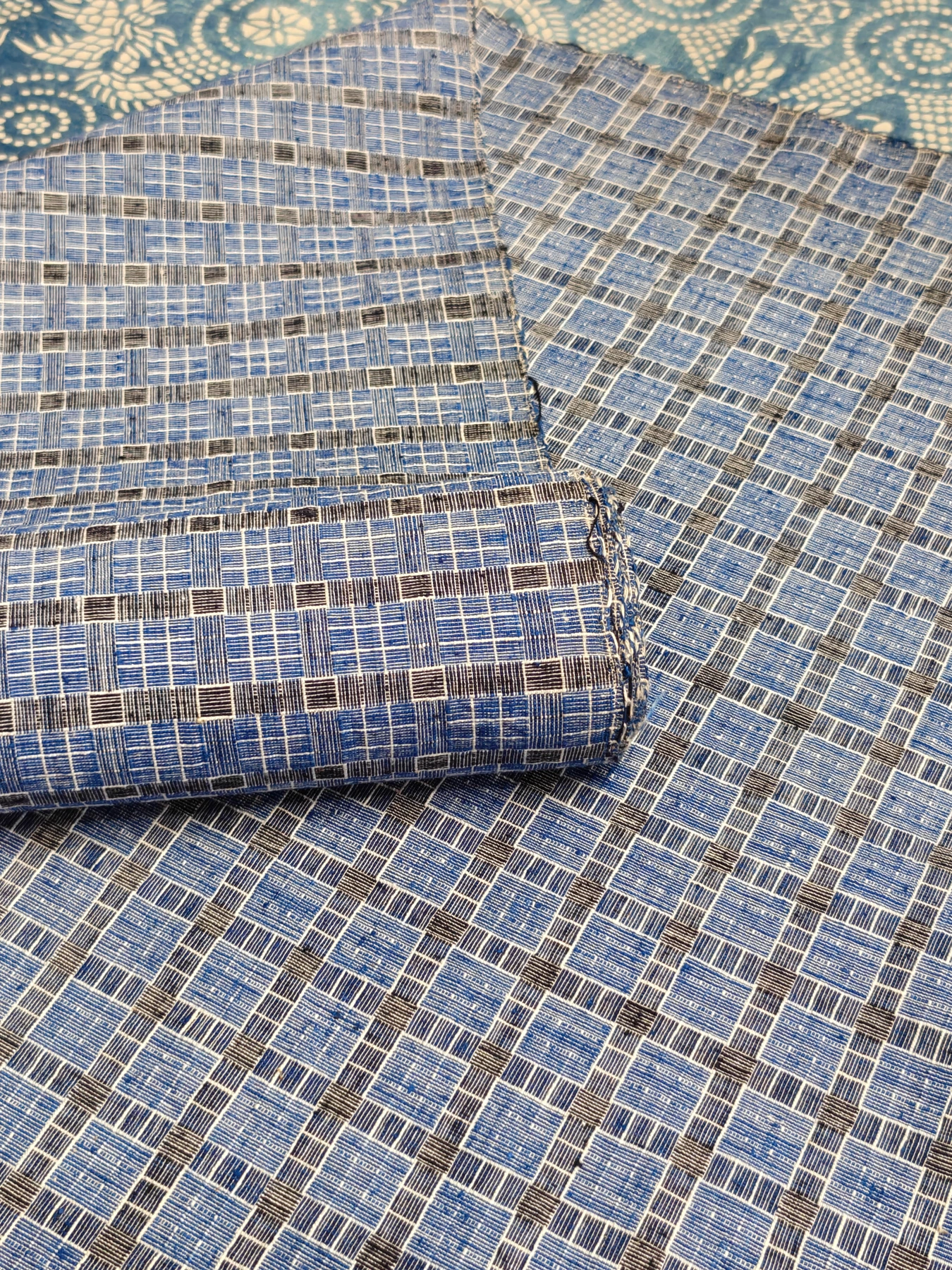
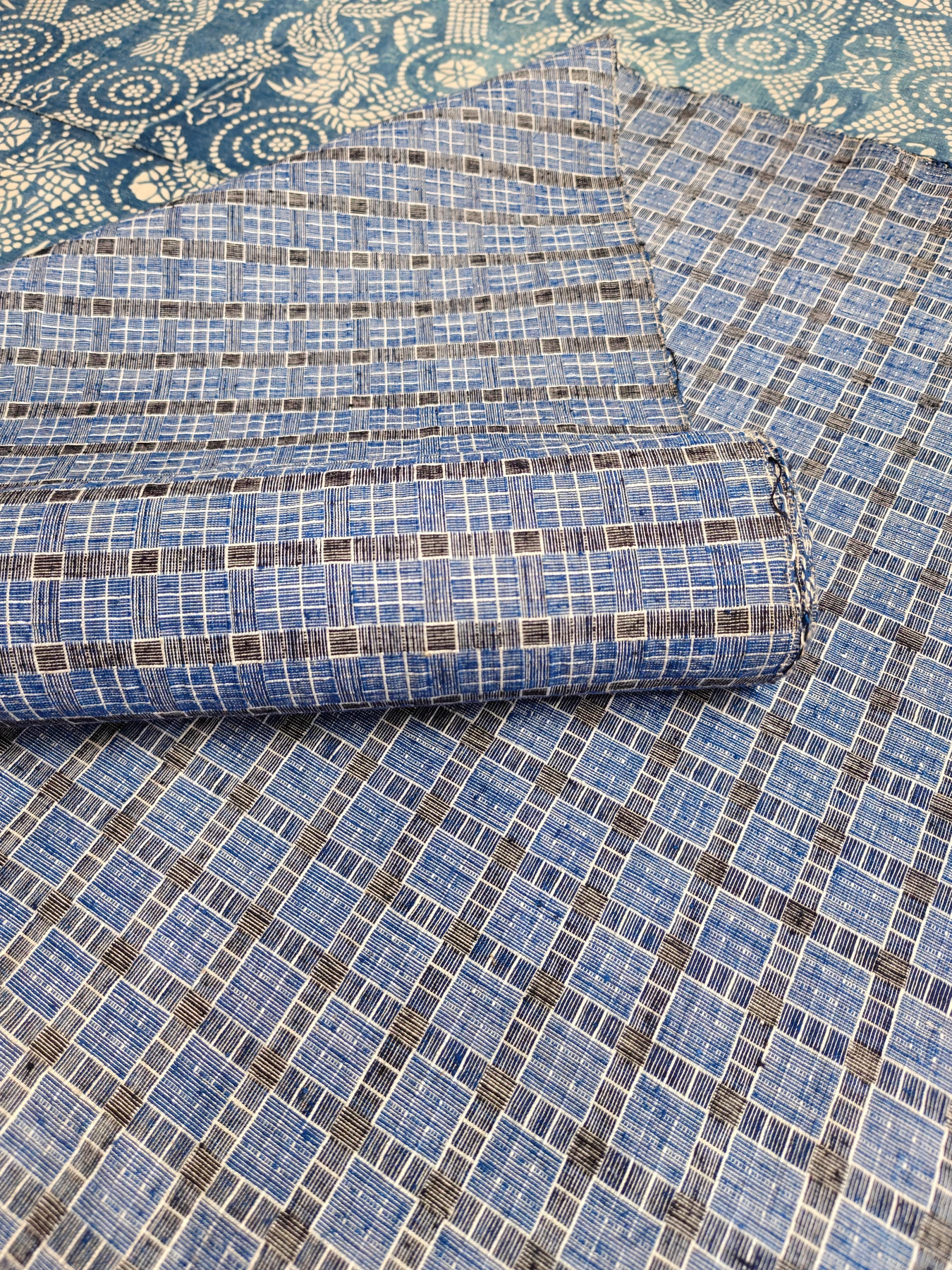
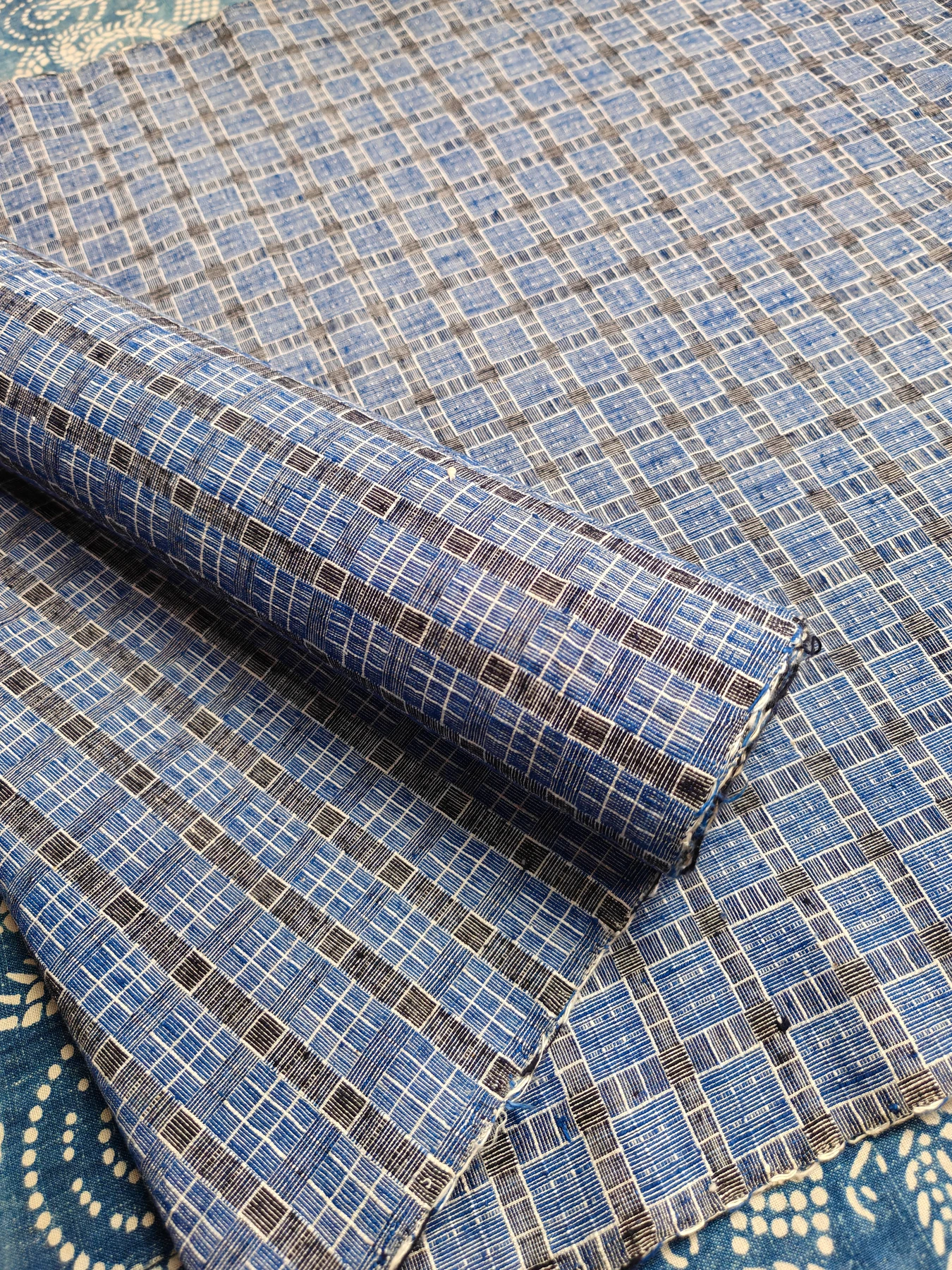
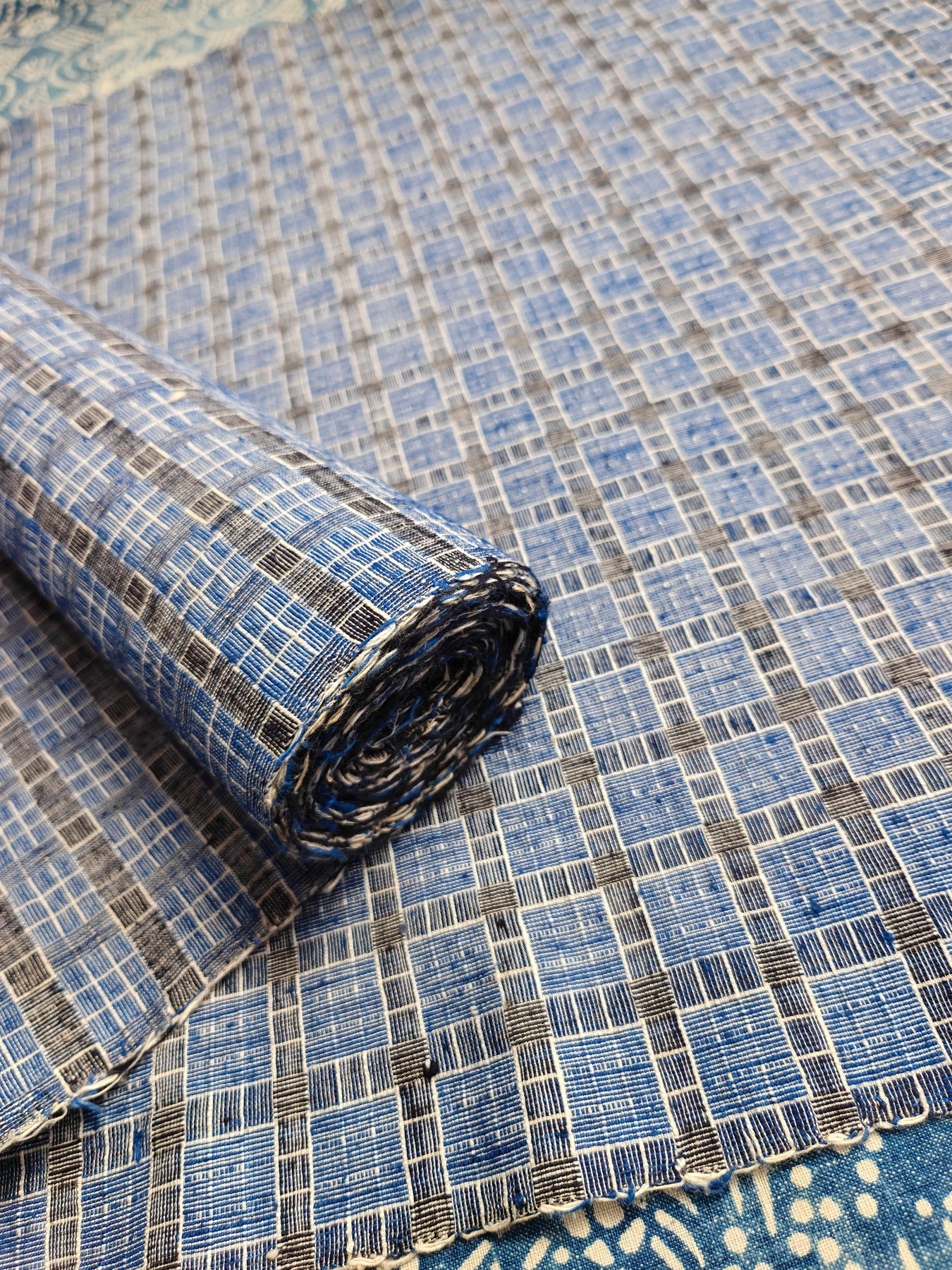
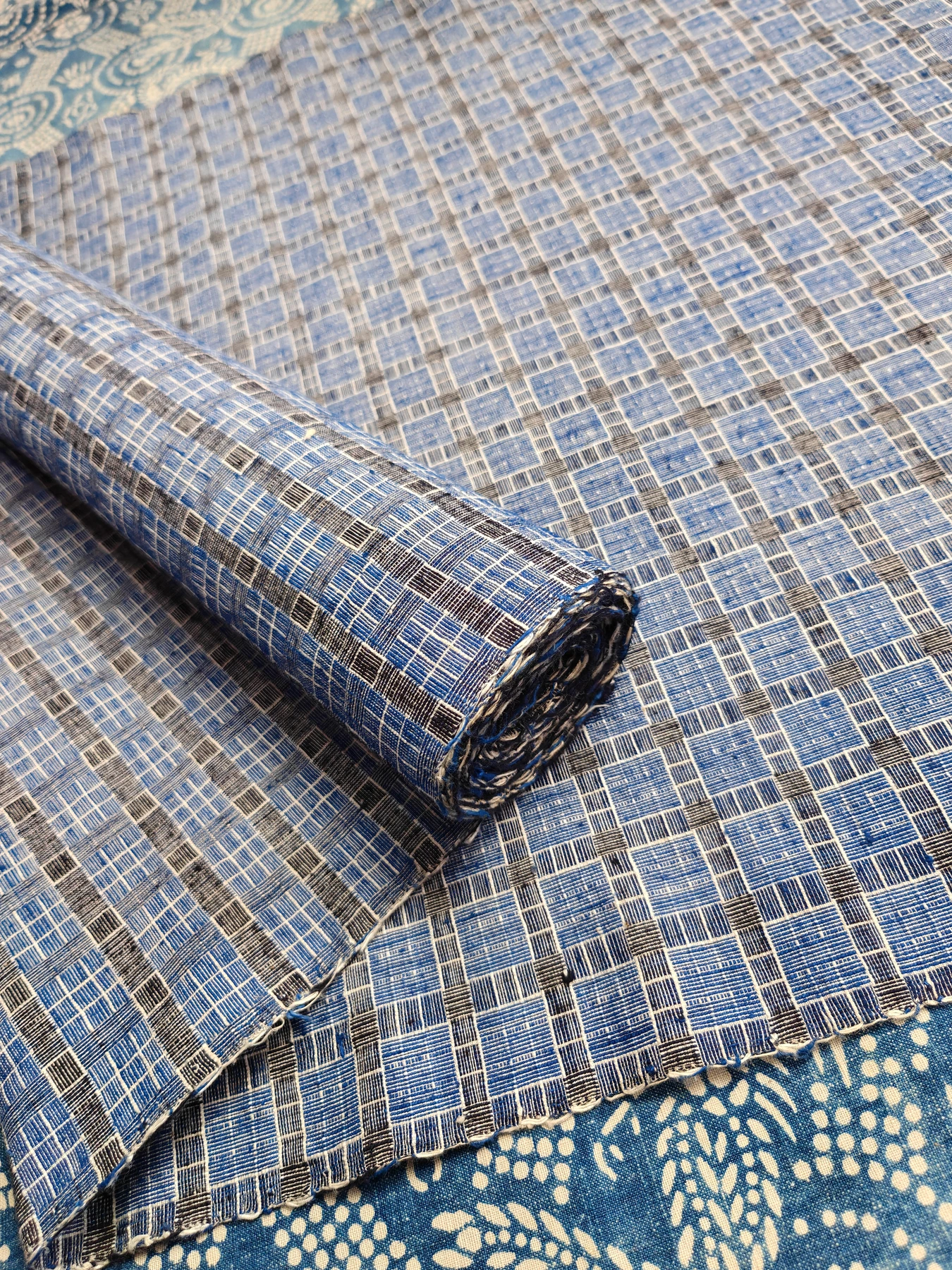
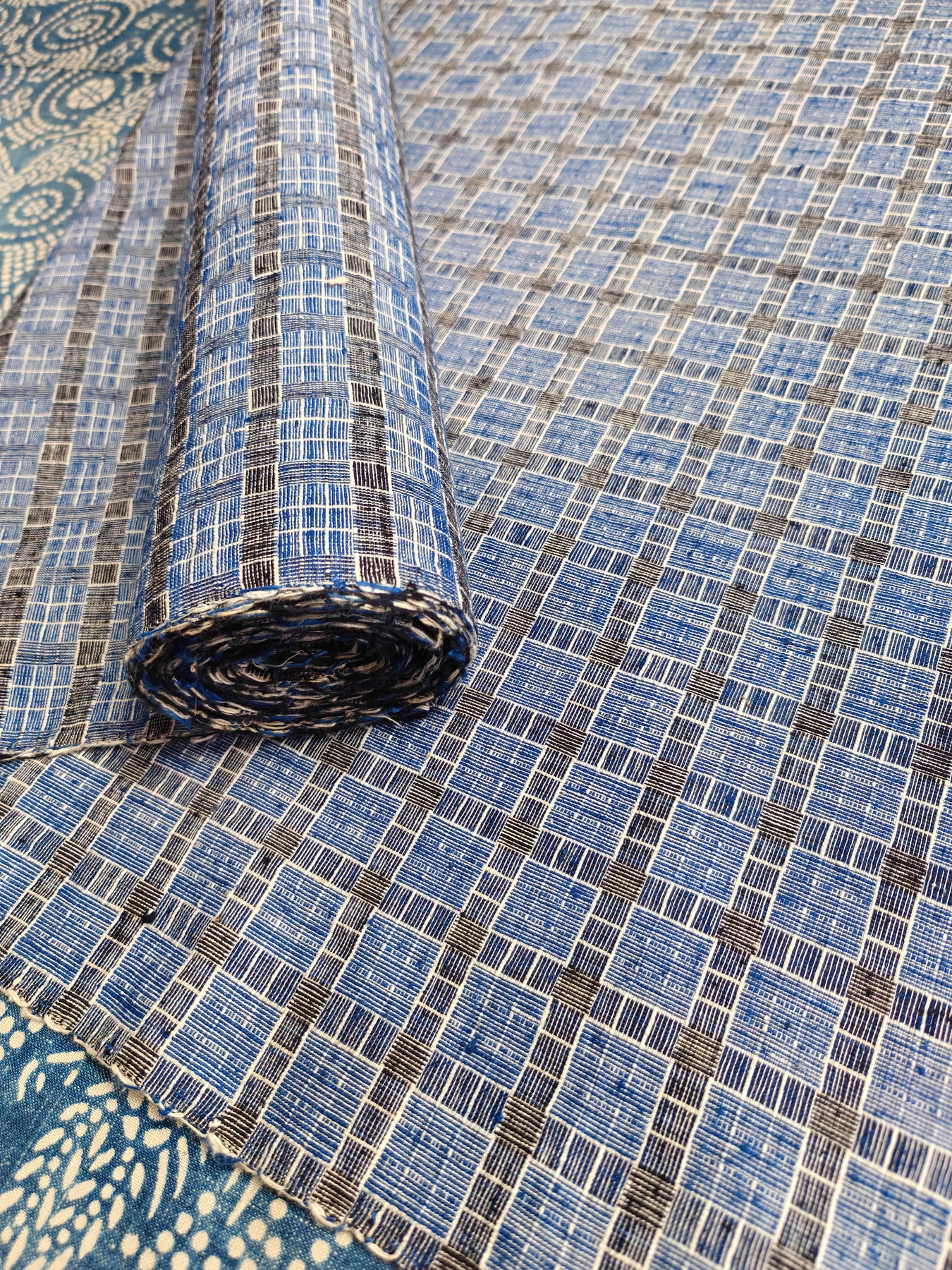
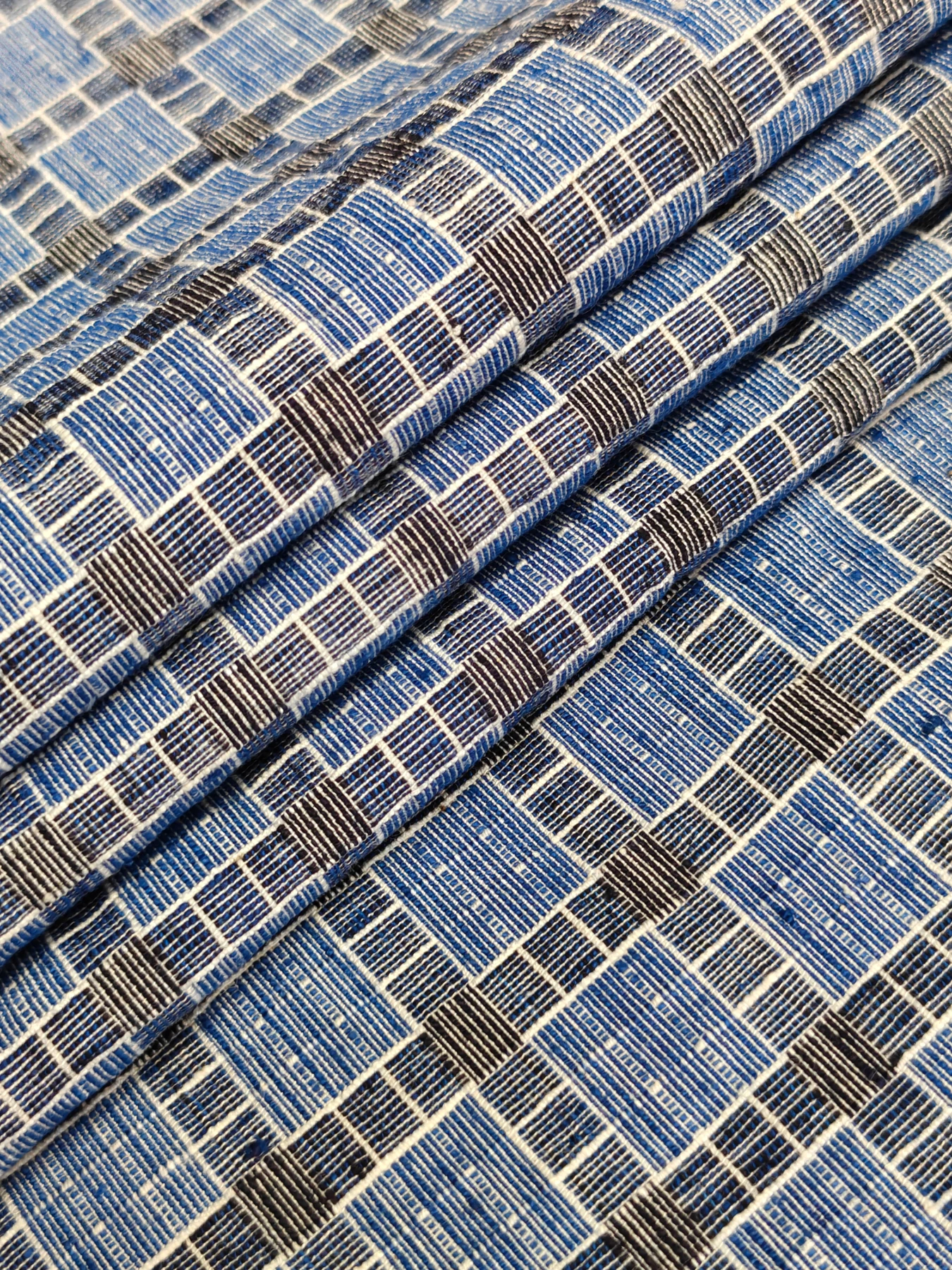
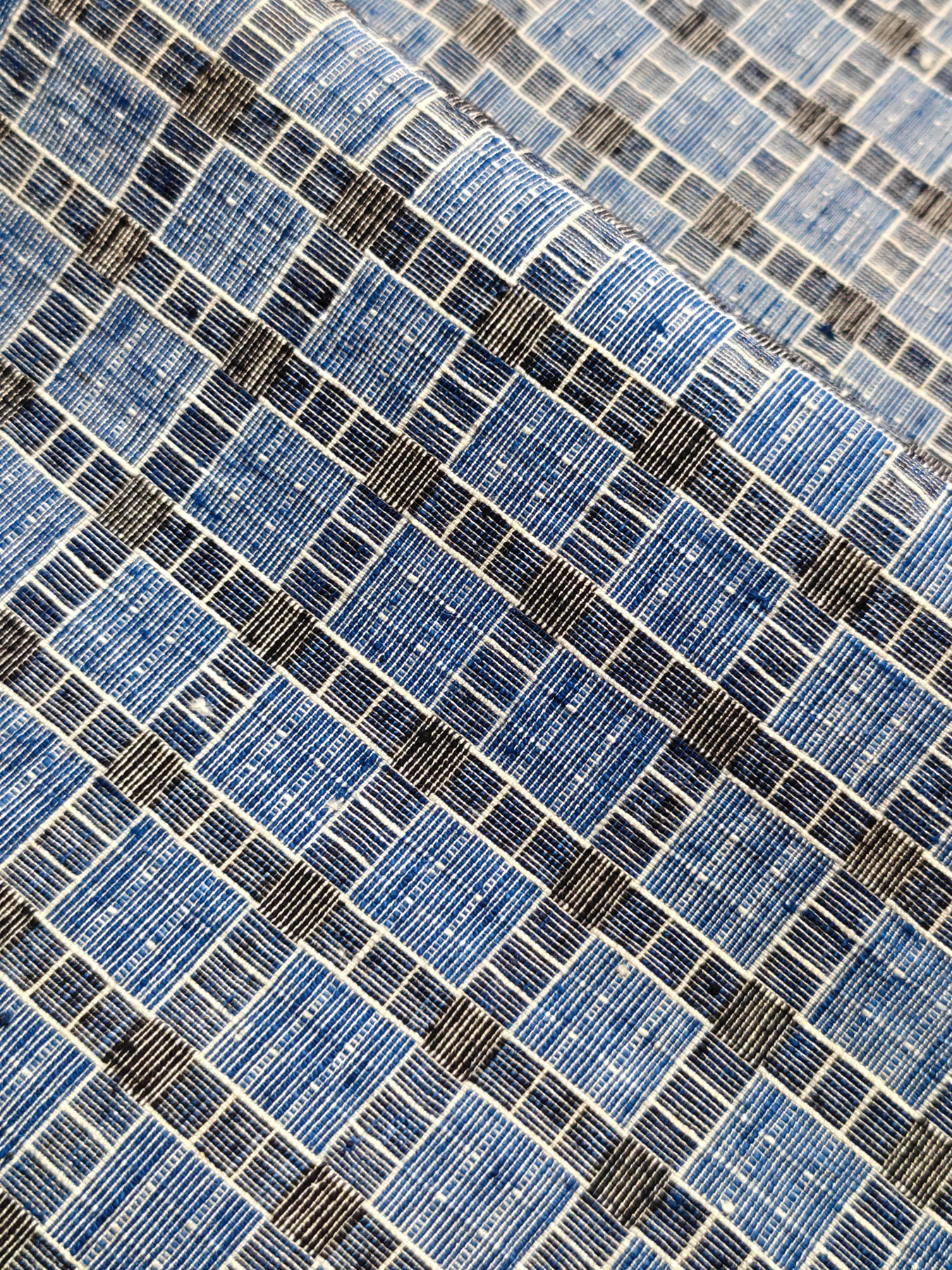
Soft blue, charcoal and natural cotton form two distinct reed-mat-inspired faces: interlocking squares and a well-ordered grid. Thick, soft handwoven cotton sold in 50 × 55 cm units.
Sold in 50 cm increments
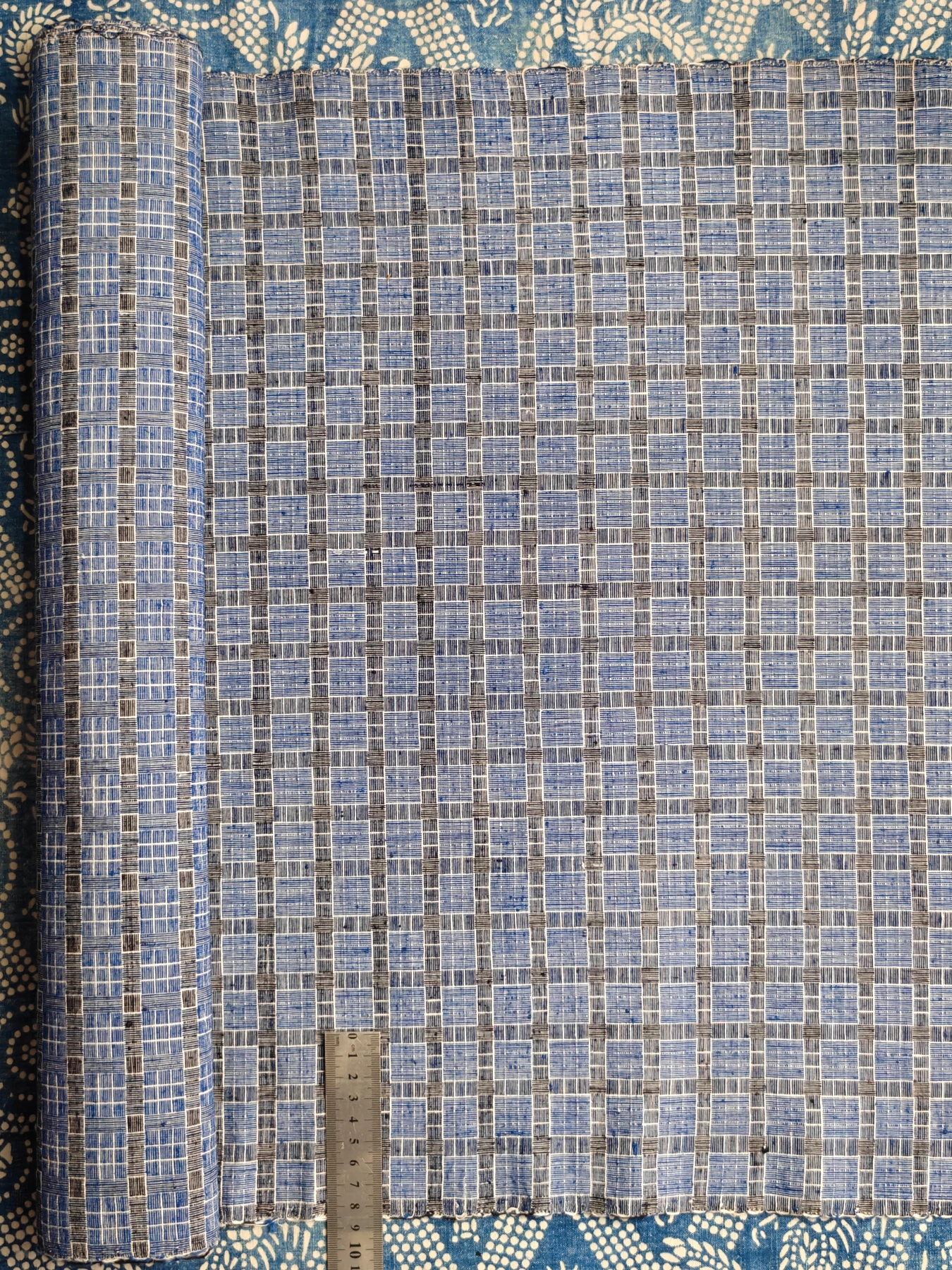
Width: approx. 55 cm · Recorded total: approx. 490 cm
- Quantity 1
- 50 × 55 cm / 19.7 × 21.7 inches
- Quantity 2
- 100 × 55 cm / 39.4 × 21.7 inches
Multiple quantities will be supplied as one continuous piece whenever possible. Recorded total length: 490 cm / 192.9 inches. Check Etsy for current availability and pricing.
- Object ID
- TA-JN-0044
- Origin
- Jiangnan · Eastern China; household-weaving attribution supplied by the owner
- Period
- Estimated Republican era–early People’s Republic period
- Dating confidence
- estimated
- Material
- Thick, substantial yet soft traditional hand-spun cotton (owner attribution)
- Dimensions
- Approx. 55 cm wide; sold in 50 cm increments, with a recorded total length of 490 cm
- Technique
- Hand-spun, handloom-woven cotton (owner attribution) · Yarn-dyed woven pattern
- Pattern
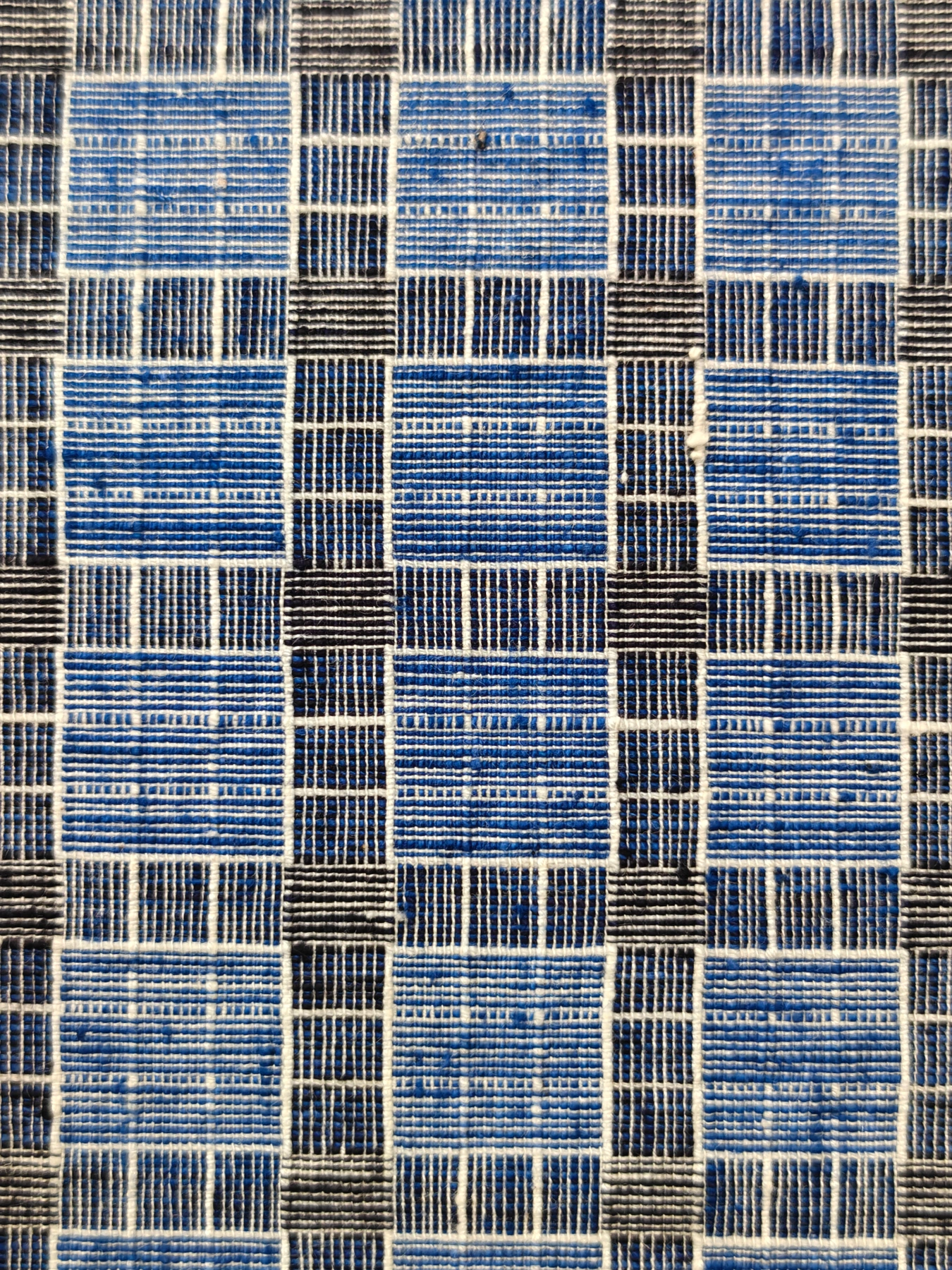
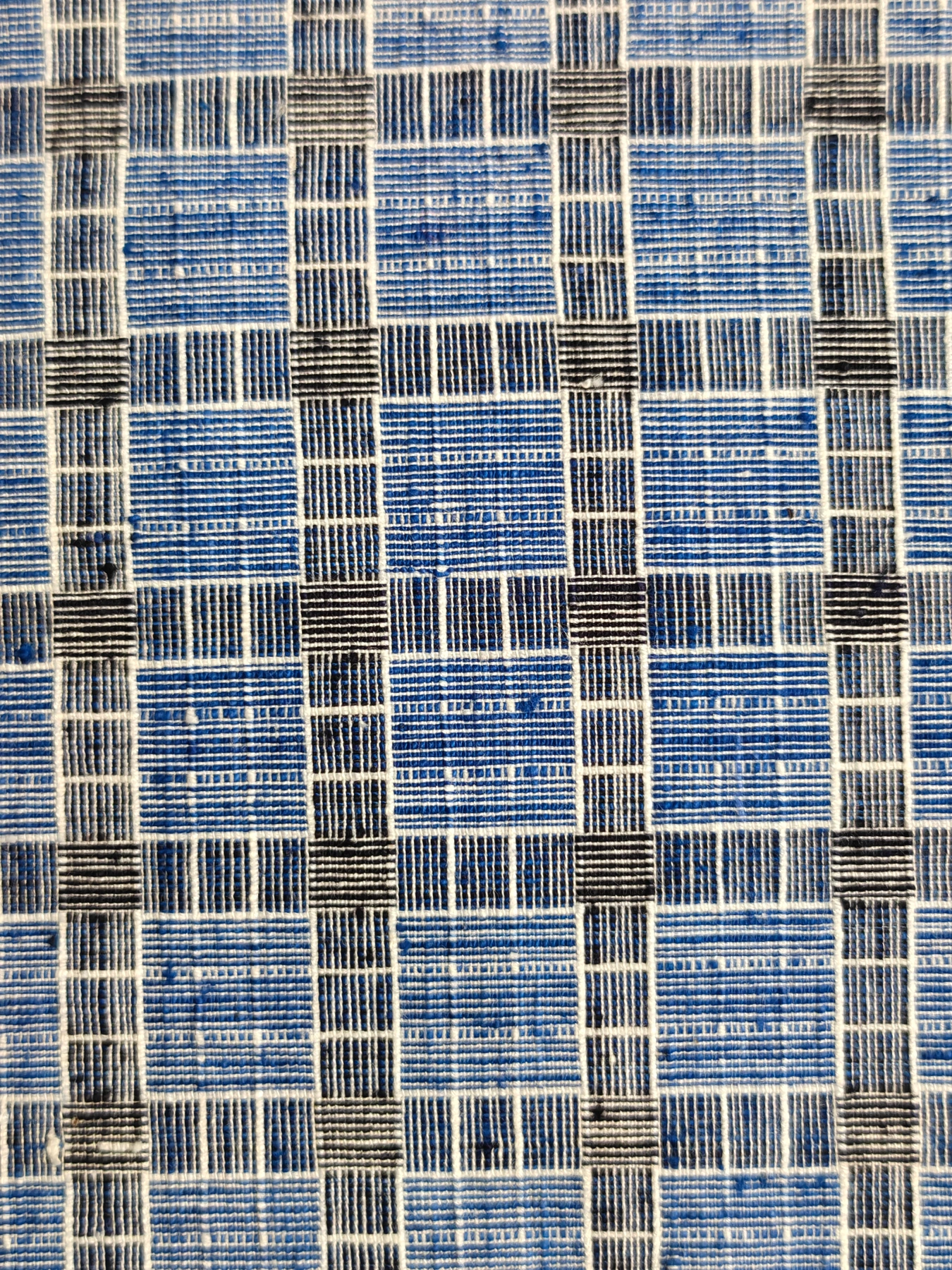
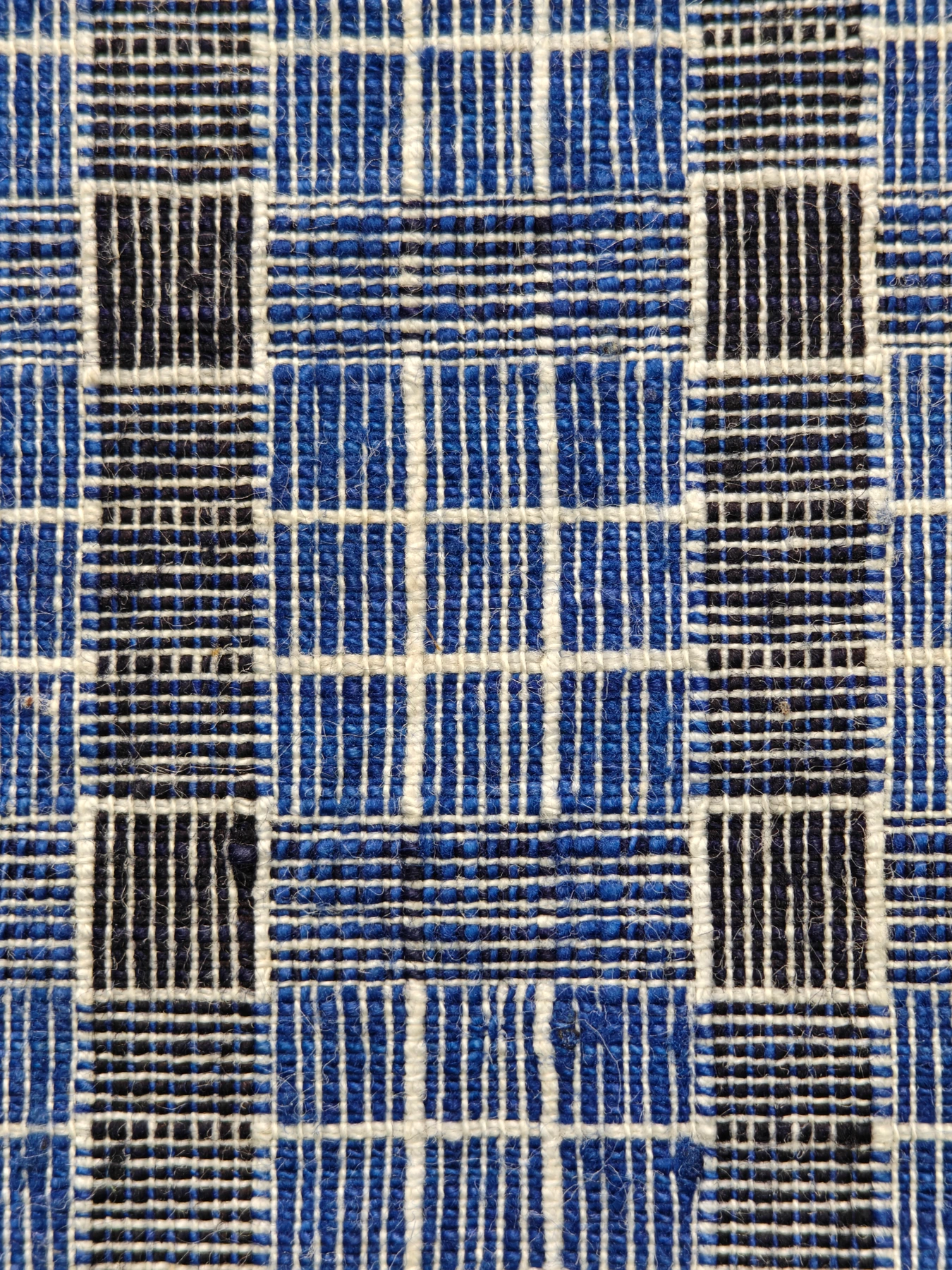
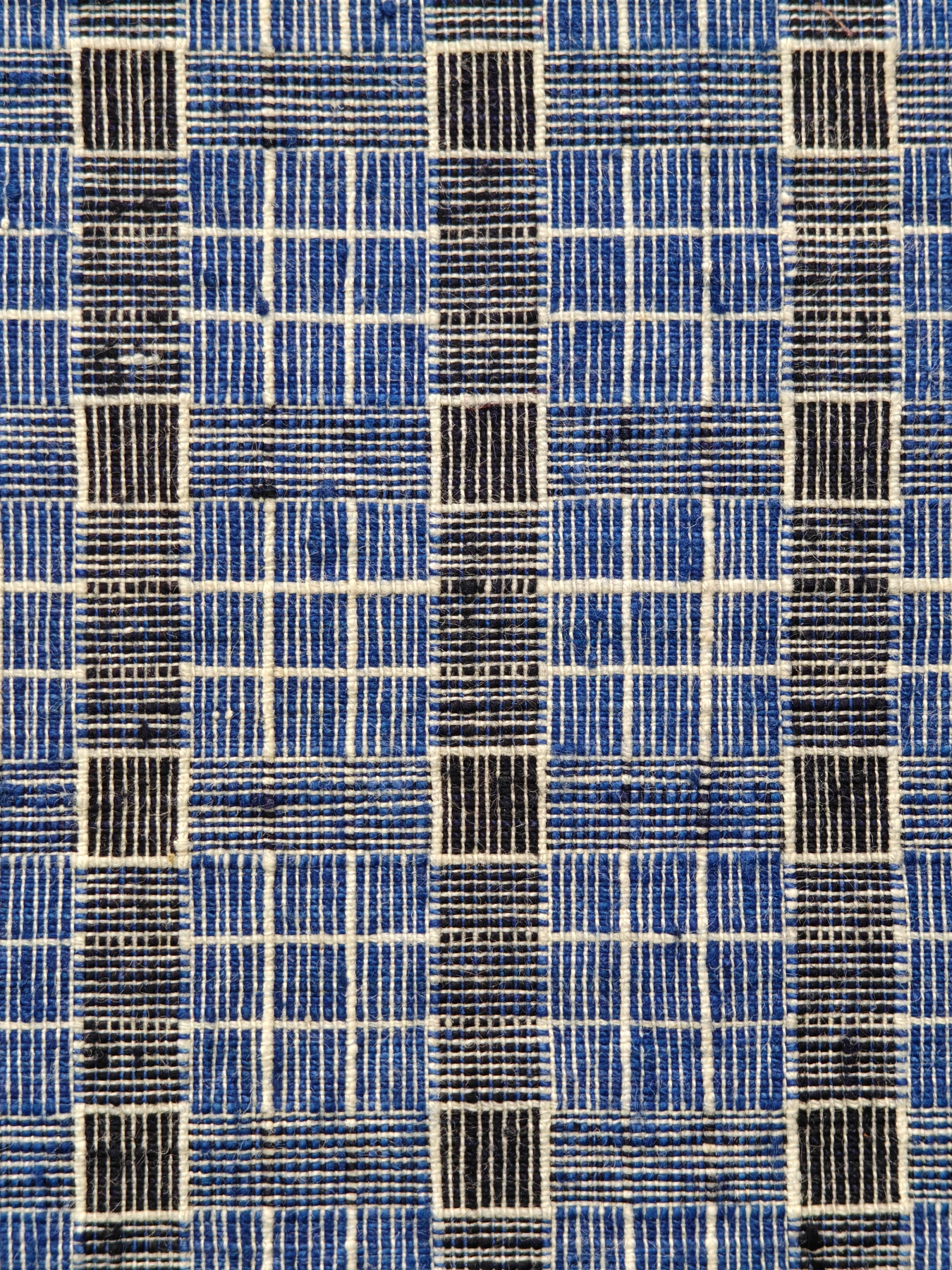
- Kou Zi Lu Xi 口字芦席 — interlocking squares · Jing Zi Lu Xi 井字芦席 — well-grid reverse
- Colours
- Soft indigo blue · Charcoal grey · Natural cotton ivory
- Washed
- Yes
Object condition
Old handwoven cotton, carefully washed and ironed. Thick and substantial yet soft, with raised and recessed woven texture on two distinct-looking faces. Natural hand-spun yarn irregularities and possible minor age-related variations remain visible. Examine photographs of both sides. Background textiles are not included.
Identification notes
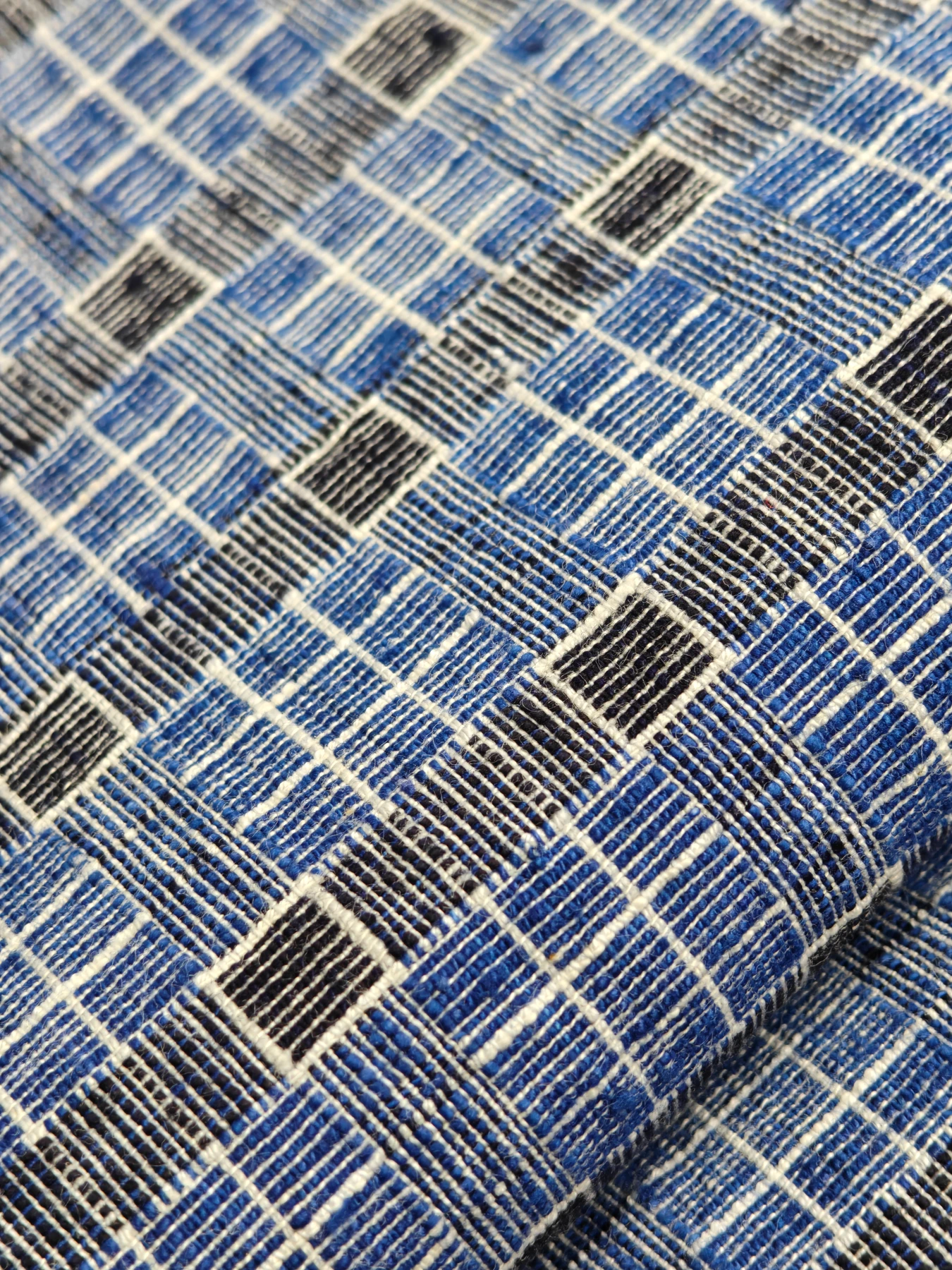
Raised and recessed texture is created through the interlacing of cotton threads, not by printing or embossing. Thick, substantial cotton is described as wonderfully soft, with a tactile structure that rewards a closer look.
One face is described as Kou Zi Lu Xi (口字芦席), an interlocking-square pattern; the other as Jing Zi Lu Xi (井字芦席), a well-ordered grid. Both are placed in the owner’s Lu Fei Hua (芦菲花), or reed-mat-inspired weaving account. Photographs retain the distinct blue-and-charcoal square face and the paler, finer grid face of this same textile.
Attributed to Jiangnan, China, and estimated to date from the Republican era to the early People’s Republic period. The source describes hand-spun cotton yarn, traditional handloom weaving and a yarn-dyed geometric pattern in soft indigo blue, charcoal grey and natural cotton. Exact place, maker, dye composition and loom construction are not independently documented.
The patterns are woven directly into the cloth using dyed yarns. Natural variations in hand-spun cotton contribute to the ridges, uneven threads and distinctive feel of each face.
The supplied cultural interpretation recalls reed mats as familiar objects of rural household comfort, everyday work and steady livelihood. Square and well-grid structures suggest stability, harmony and abundance: may the home remain peaceful, and life continue in comfort and plenty. This records a cultural interpretation rather than documented maker intent.
Sold in 50 cm increments, approximately 55 cm / 21.7 inches wide. Quantity 1 = 50 × 55 cm / 19.7 × 21.7 inches; quantity 2 = 100 × 55 cm / 39.4 × 21.7 inches. Recorded total length is 490 cm / 192.9 inches. Multiple quantities are supplied as one continuous piece whenever possible.
Carefully washed and ironed. Thick, soft cotton retains tactile woven texture, natural hand-spun yarn irregularities and possible minor age-related variations. Please examine photographs of both faces.
Suitable for tea mats and table runners, handcrafted bags and pouches, slow stitching, patchwork, cushion covers, rustic home décor, textile art and creative sewing.
Two woven faces, thread by thread, / Soft blue and grey together spread. / One cloth, two patterns gently shine, / Old hands remembered in each line.
From Tubu Atlas, with love: every little ridge, uneven thread and carefully woven pattern carries the touch of its maker. Some textile stories are best told through your fingertips.
One cloth, two woven expressions
The supplied account links familiar reed mats with household comfort, everyday work and a steady livelihood. Square and well-grid patterns suggest stability, harmony and abundance: a peaceful home and life continuing in comfort and plenty.