
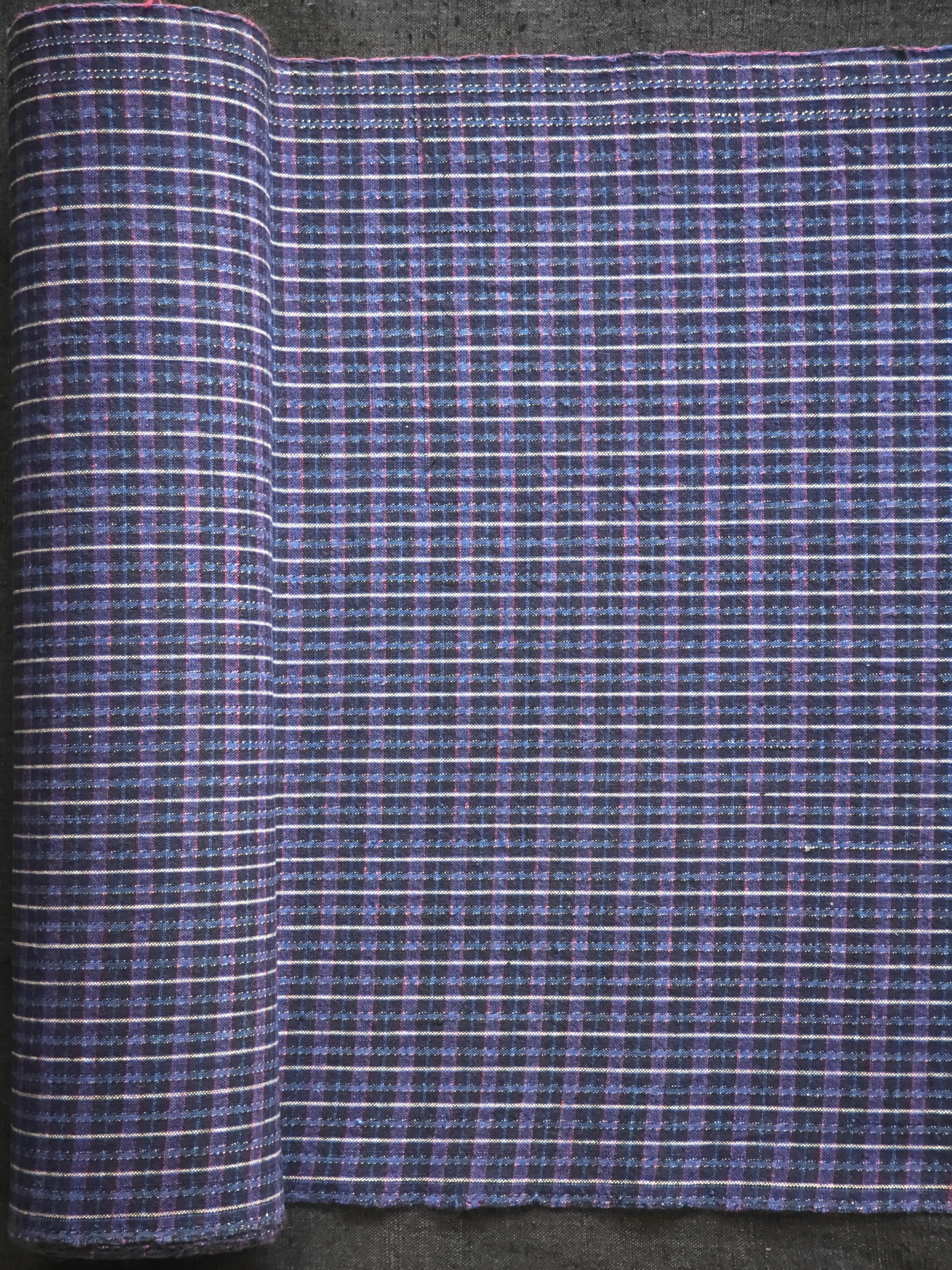
Four Seasons Weave — One Continuous Jiangnan Textile
c. 1960s–1970s · Cotton
One uncut, 6.5-metre Jiangnan cotton textile changes from indigo stripes to red-blue checks and denser plaid, with no joining seams between its woven sections.
Checked and plaid structures used as the underlying geometry for woven decoration.
c. 1960s–1970s · Cotton
One uncut, 6.5-metre Jiangnan cotton textile changes from indigo stripes to red-blue checks and denser plaid, with no joining seams between its woven sections.
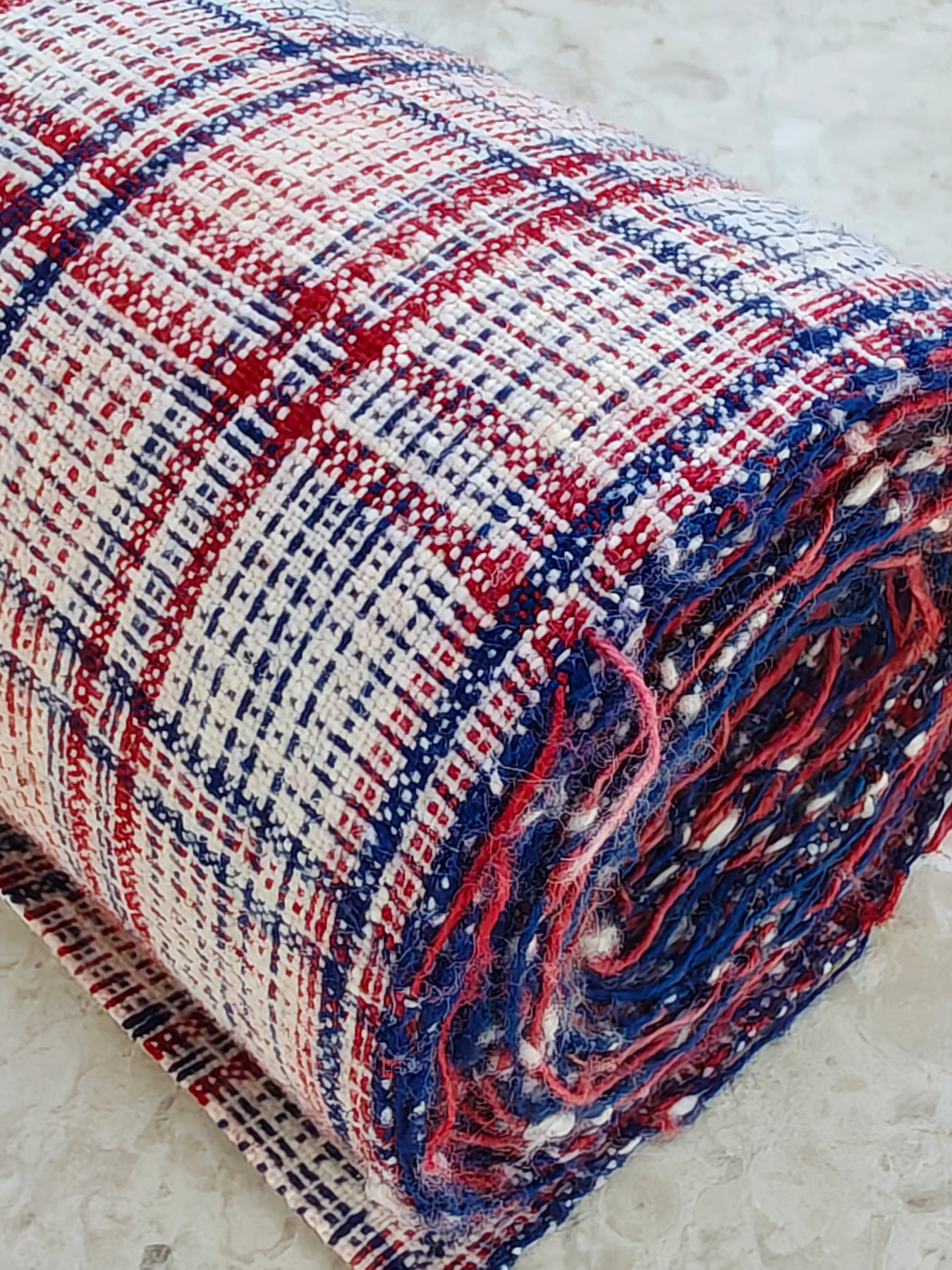
c. 1940s–1960s · Cotton
Soft red and indigo lines form a large square grid around fine comb-like inner stripes in this substantial, softly structured Jiangnan homespun cotton.
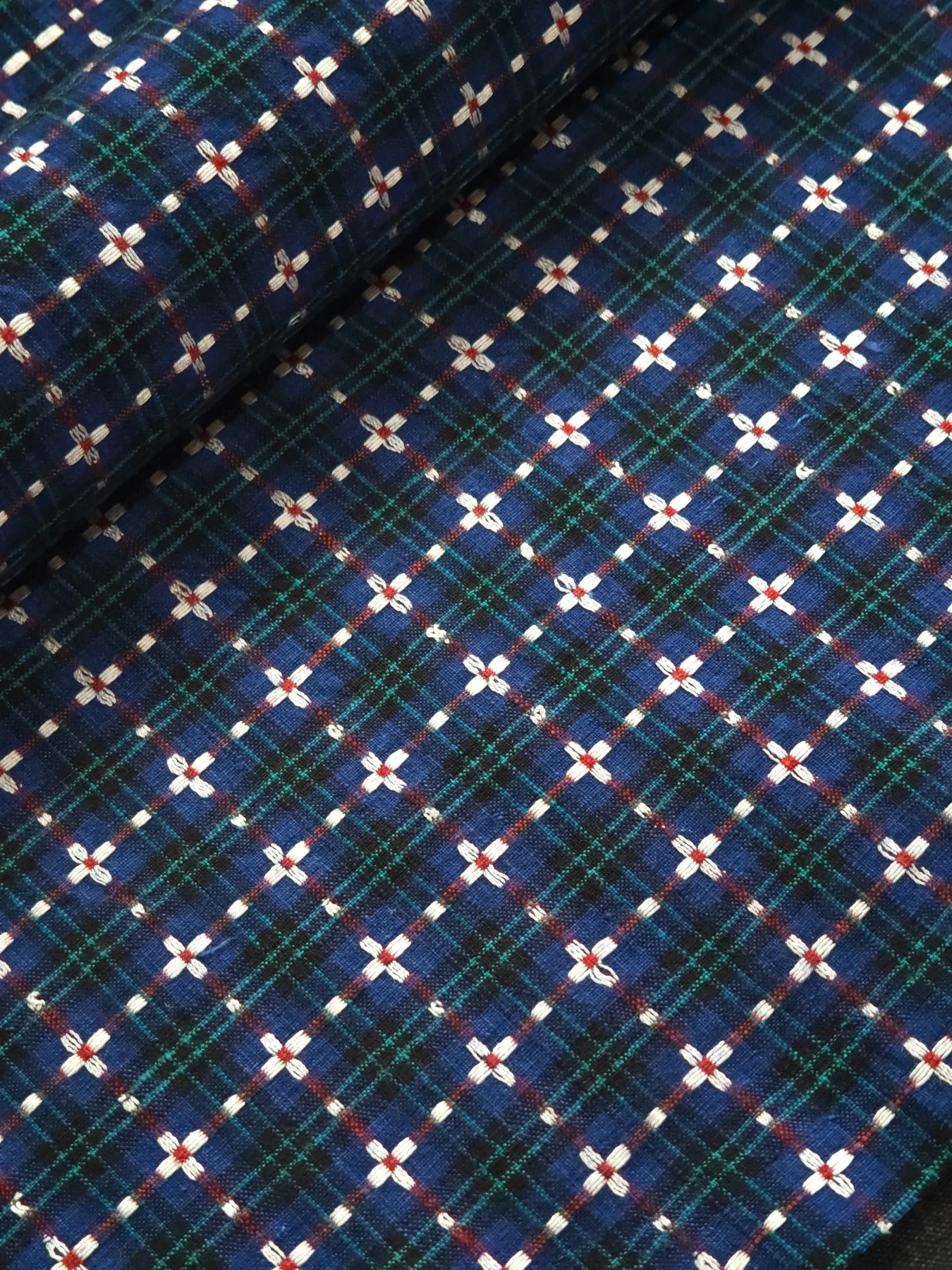
c. 1940s–1960s · Cotton
A rare Shanghai-area tiaohua cloth in which tiny four-petal flowers are woven directly into a deep blue checked ground rather than printed or embroidered on the surface.
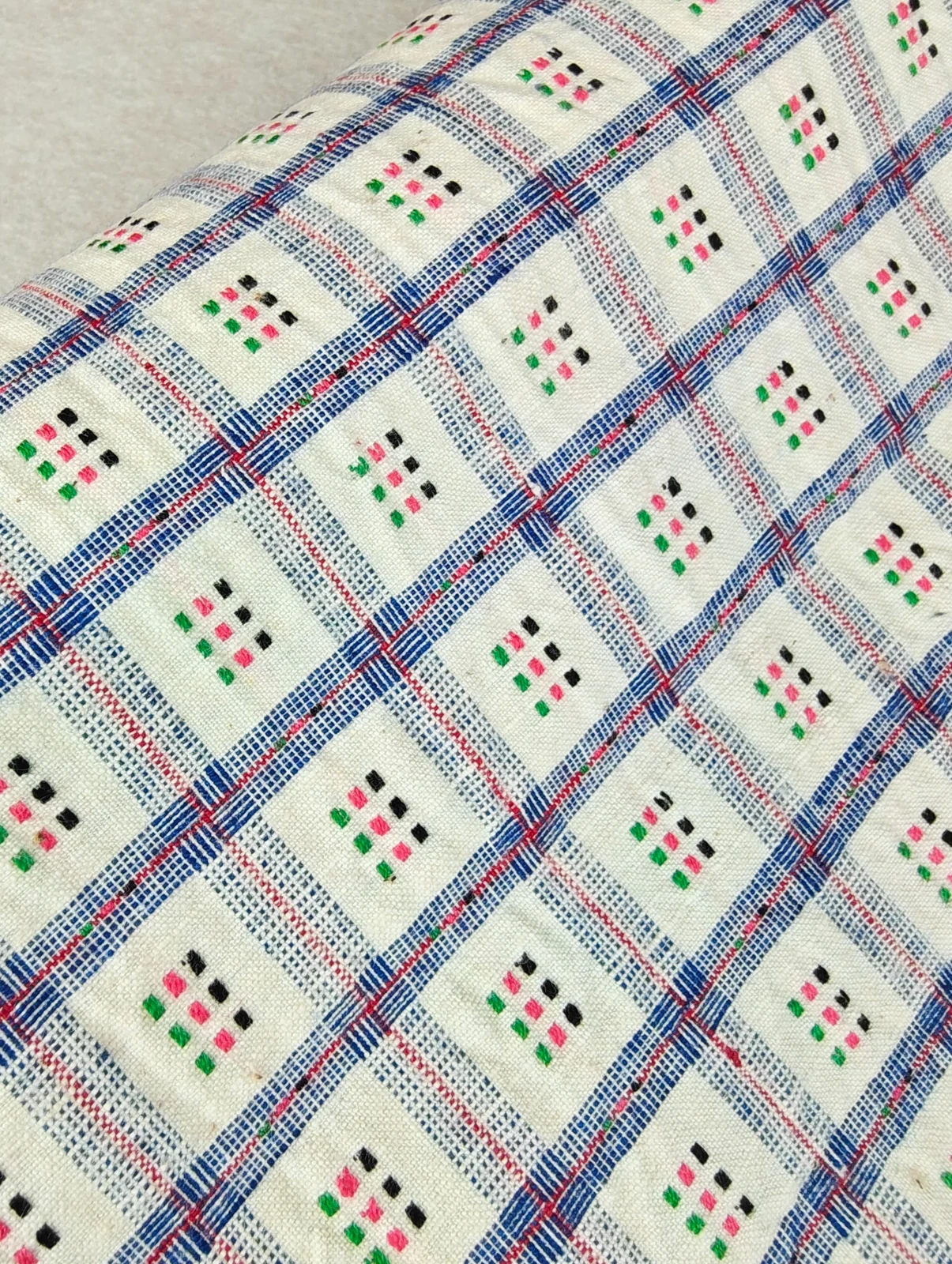
Mid-20th century · Handwoven cotton
A bright narrow homespun with blue and red checked lines and tiny raised colour-dot blossoms woven into a white cotton ground.
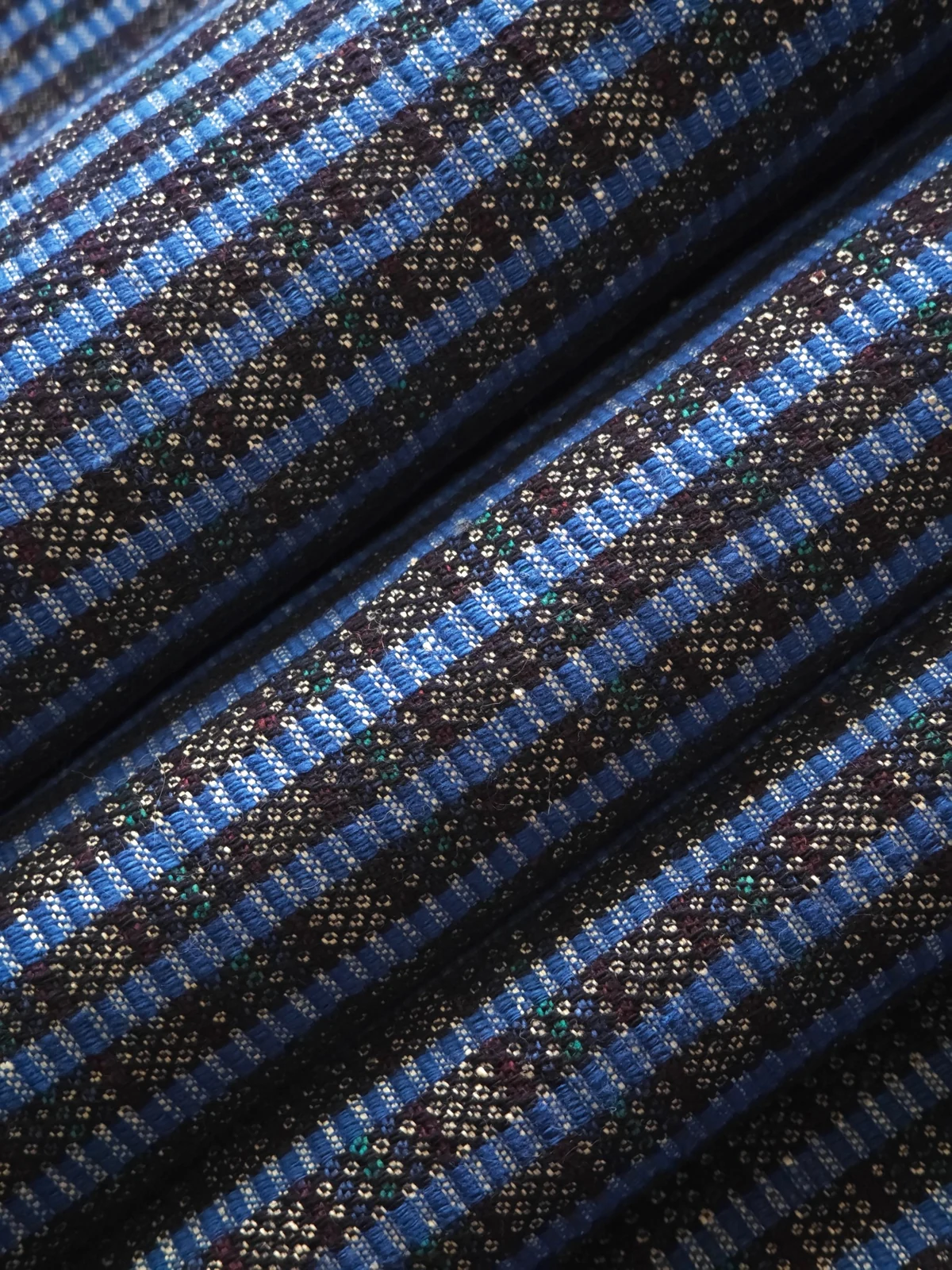
c. 1940s–1950s · Handspun cotton
A narrow, substantial Jiangnan homespun whose tiny off-white woven points create the regional “pepper-eye” effect across a dark yarn-dyed check.
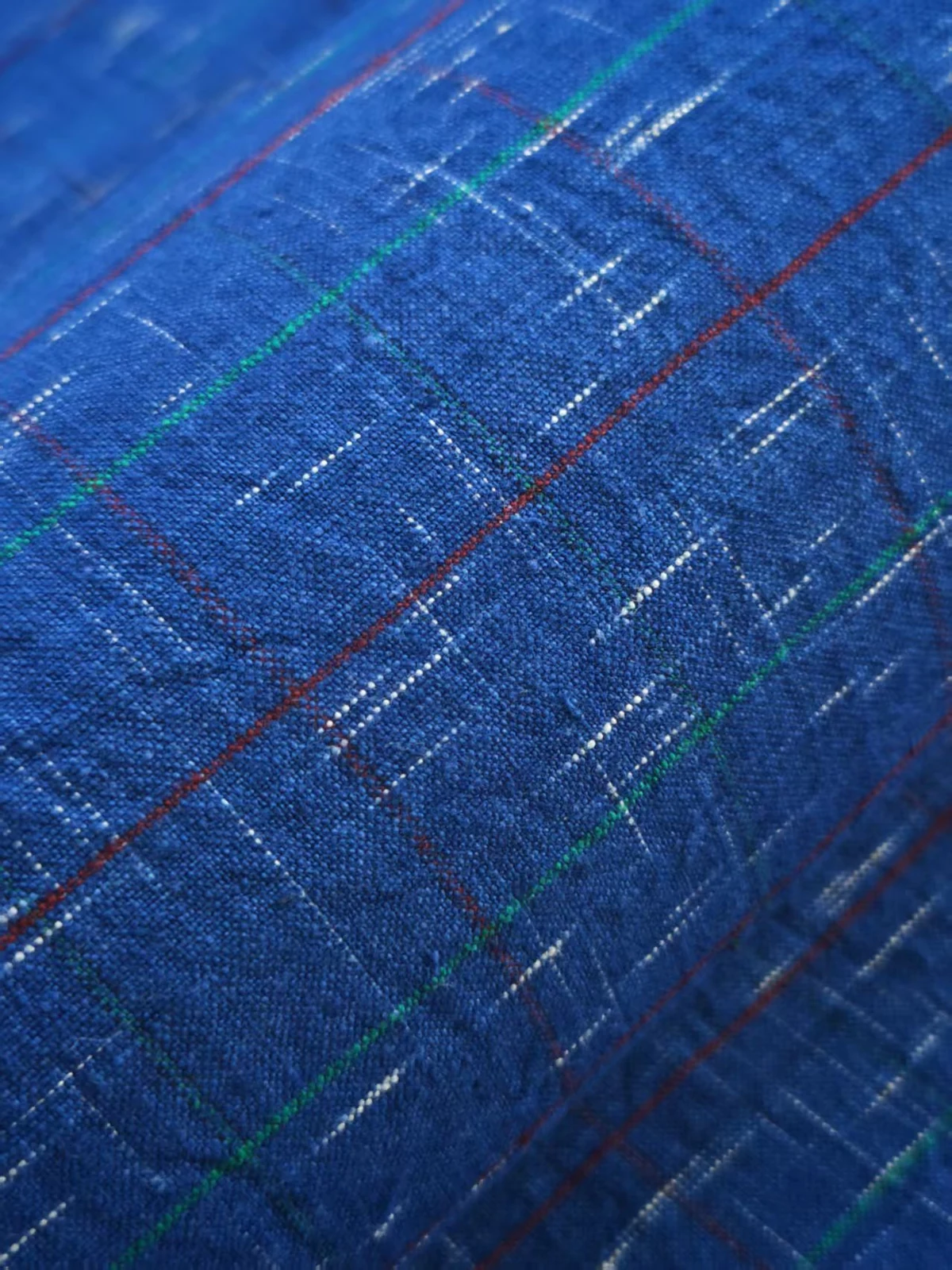
Mid-20th century · Handspun cotton
A long indigo homespun with a red-and-green outer grid and fine broken white marks that read like lightning flashes or meteor trails crossing a night-blue field.
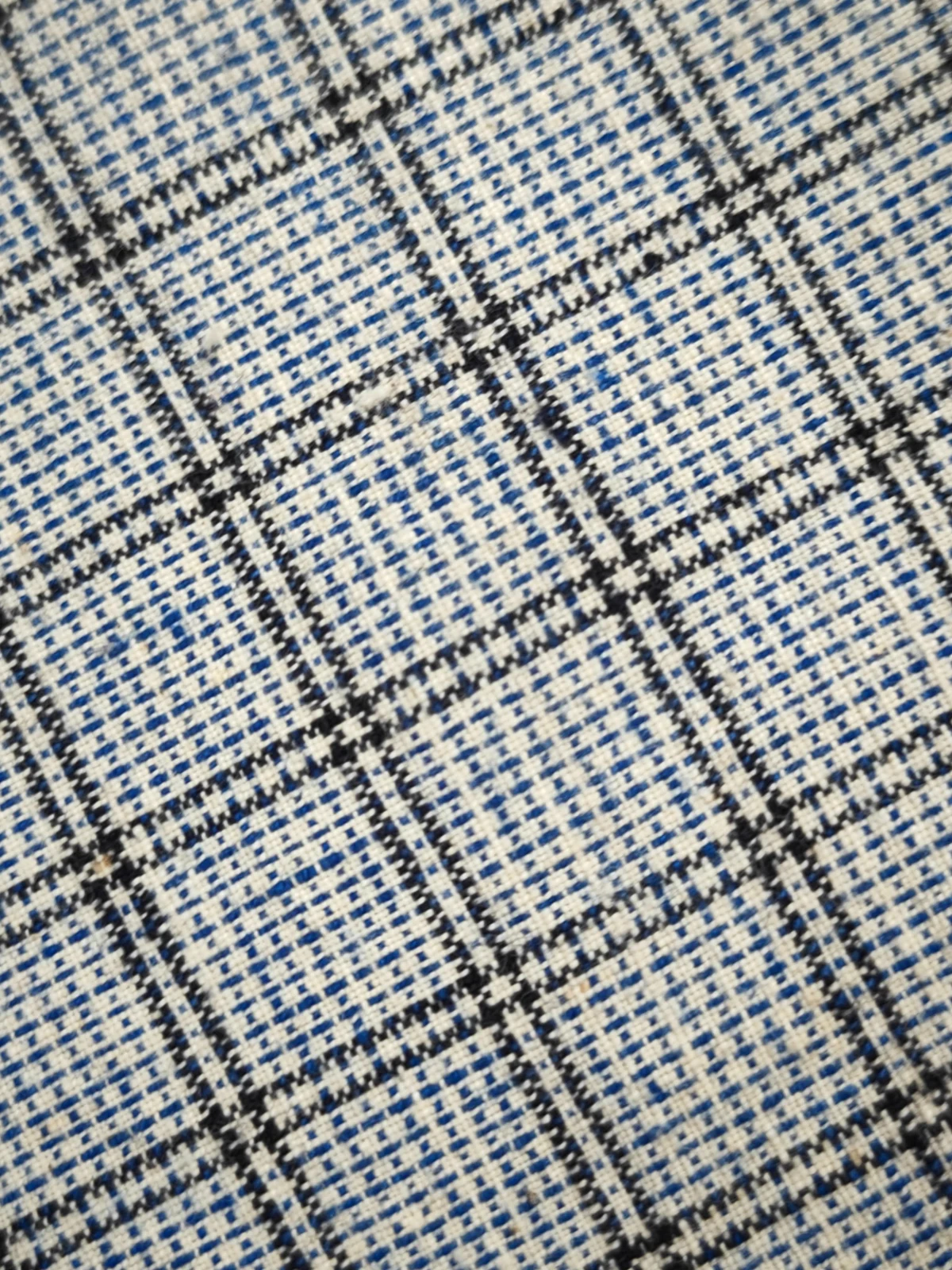
c. 1960s–1970s · Handspun cotton
A narrow, firm Chongming-style handwoven cotton with a layered blue, black and ivory grid: fine small checks sit underneath larger crossing lines.
These groups bring together descriptions from the textile records. Regional attributions and technical identifications may be provisional; open an individual record for its evidence and attribution notes.