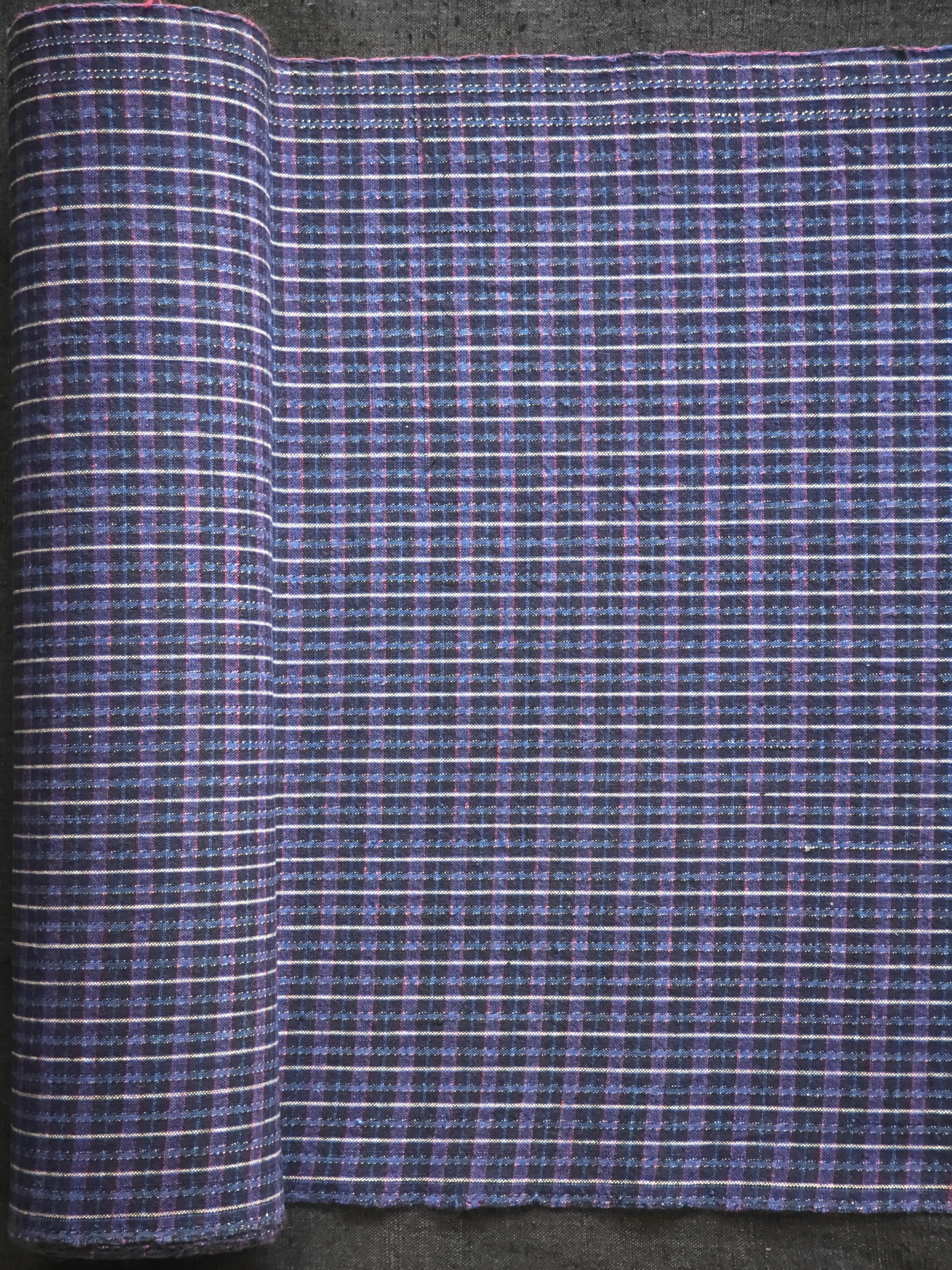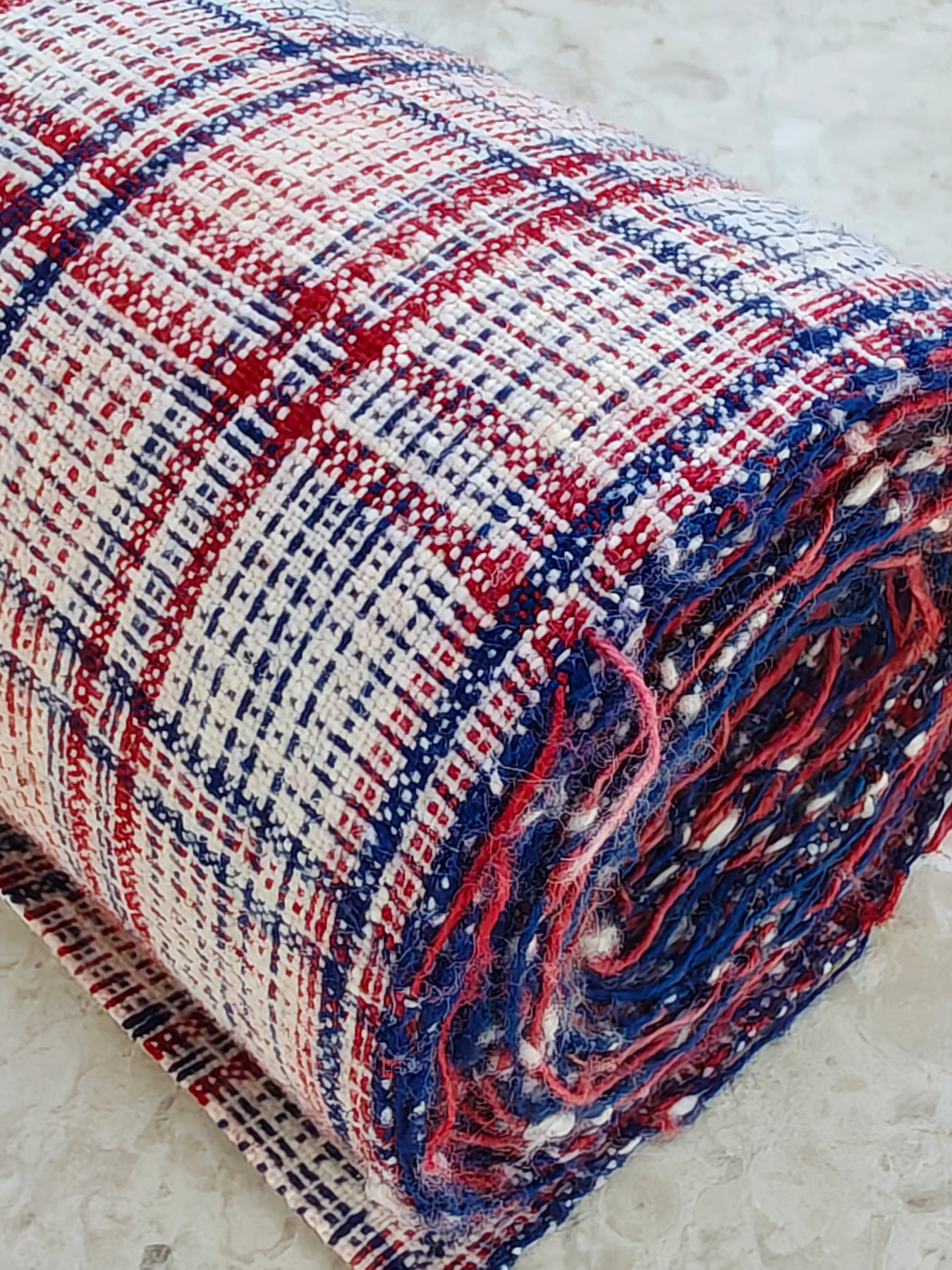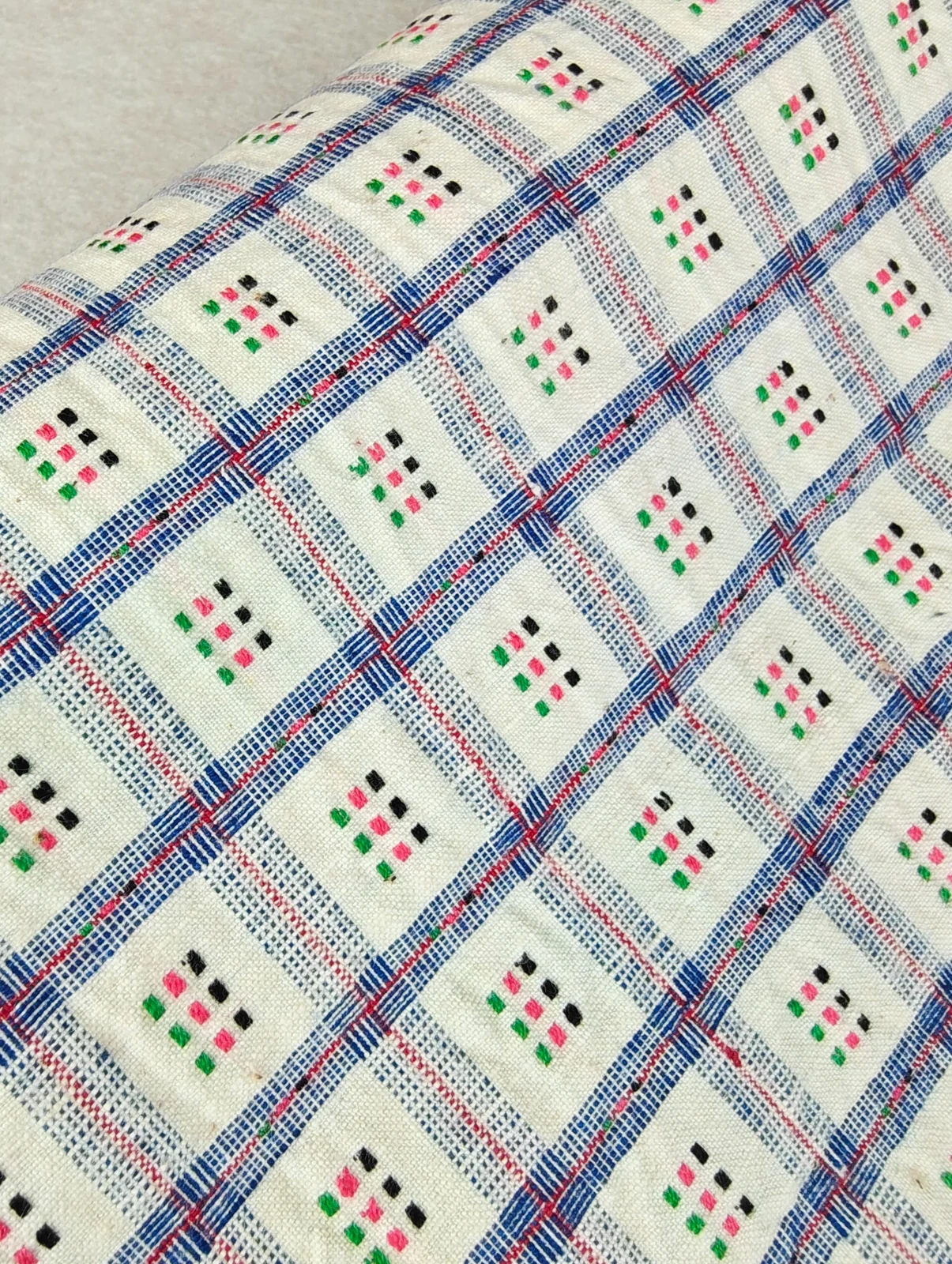
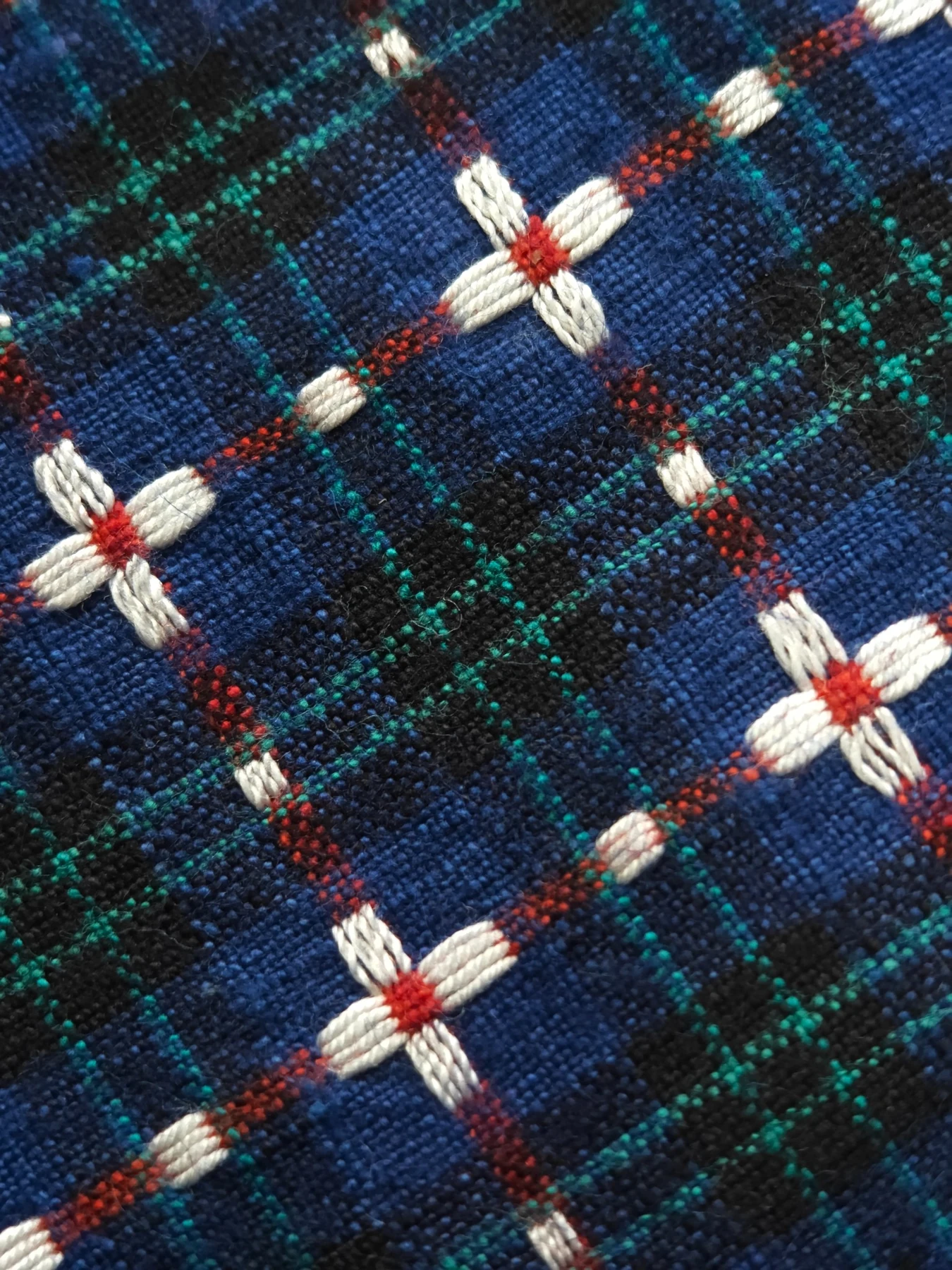
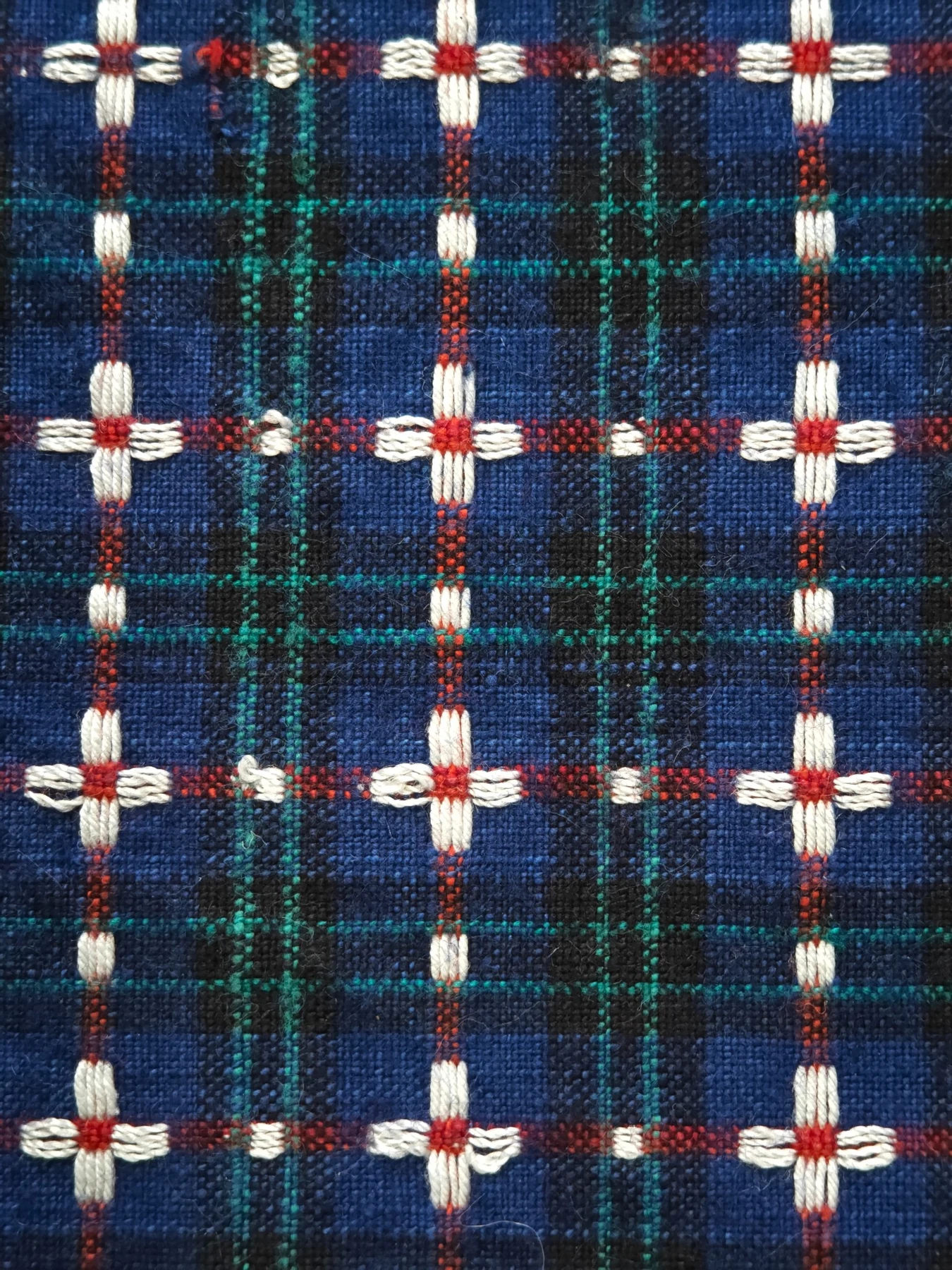
Hai Shang Ji Hua — Shanghai Shepherd’s Purse Picked-Weave Textile
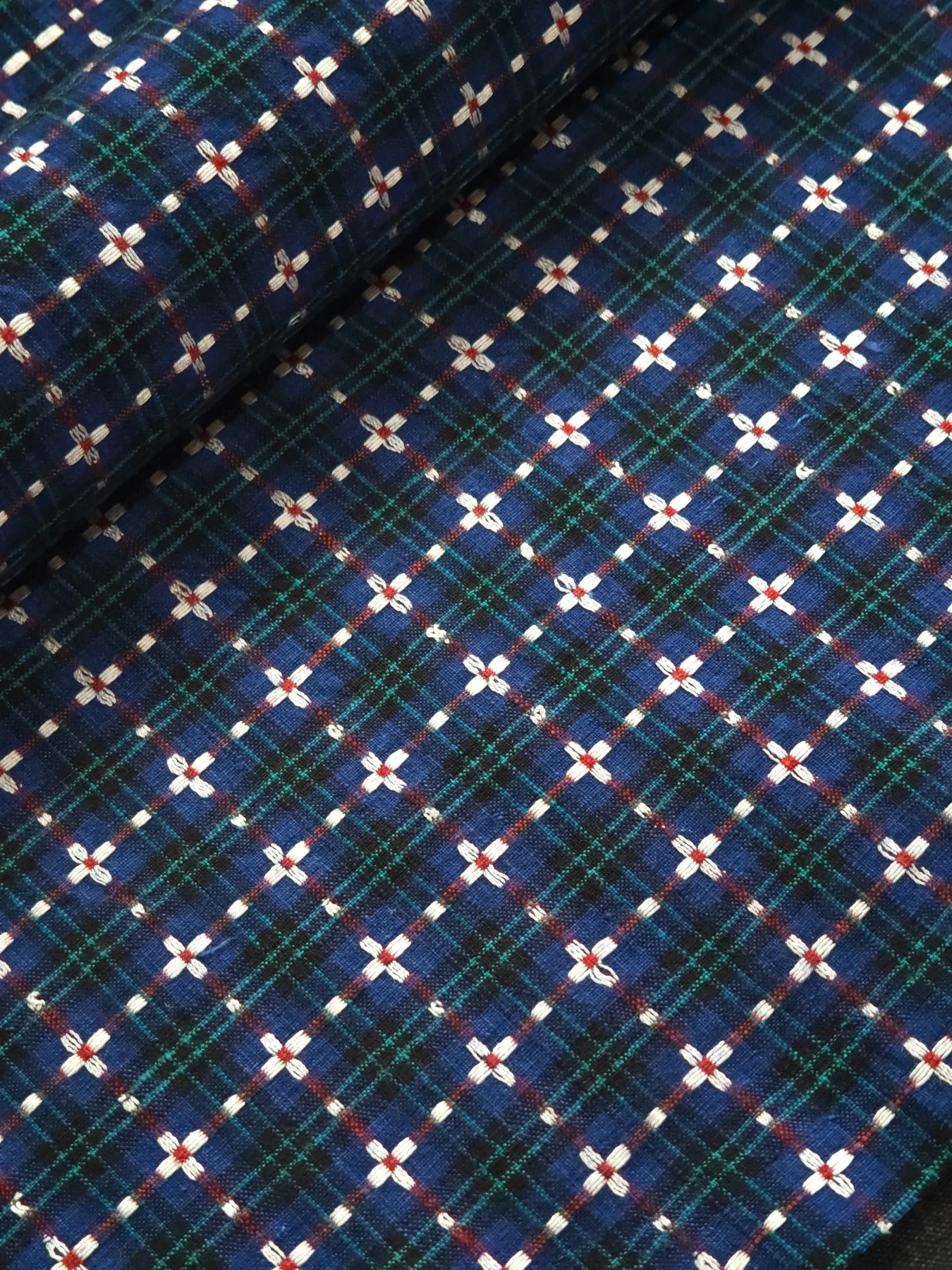
A rare Shanghai-area tiaohua cloth in which tiny four-petal flowers are woven directly into a deep blue checked ground rather than printed or embroidered on the surface.
- Object ID
- TA-SH-0001
- Origin
- Shanghai · Pudong / Chongming area
- Period
- c. 1940s–1960s
- Dating confidence
- probable
- Material
- Cotton
- Dimensions
- Approx. 200 × 41 cm
- Technique
- Handwoven homespun · Picked weave / tiaohua (挑花)
- Pattern
- Shepherd’s purse flower · Geometric plaid
- Colours
- Deep blue · Black · Green · Muted red · Natural white
- Washed
- No
Object condition
Original vintage cloth, unwashed, with its original texture and sizing still present. The surface retains the small irregularities, knots and handwoven variation characteristic of older domestic cotton cloth.
Identification notes
The small white four-petal motifs are structurally woven into the cloth with supplementary-weft detailing. Their tiny red centres create a second rhythm across the blue, black, green and muted-red plaid.
The motif is associated with the 荠菜花 — shepherd’s purse flower — a familiar spring flower in the Jiangnan region. A traditional saying, “荠菜花,赛牡丹”, compares the humble flower to the peony.
The approximately 41 cm width is consistent with the narrow widths of domestic wooden looms used for traditional homespun cloth.
Regional and dating attribution are catalogued as probable and can be refined as further comparative examples enter the Atlas.
Why this piece matters
Within specialist collecting circles, tiaohua cloth of this complexity is often regarded as a higher-grade form of homespun because the pattern is created during weaving rather than added afterward.
More elaborate tiaohua work depends on a specialised loom setup and highly skilled control of supplementary threads. On complex traditional setups, production could involve coordinated work by more than one person; practitioners capable of this work were comparatively few, helping explain why such pieces command a premium in the collecting market.
The cloth is especially valuable as a teaching object because a distant view reads as a graphic plaid while close inspection reveals the woven floral structure and hand-made irregularity.