
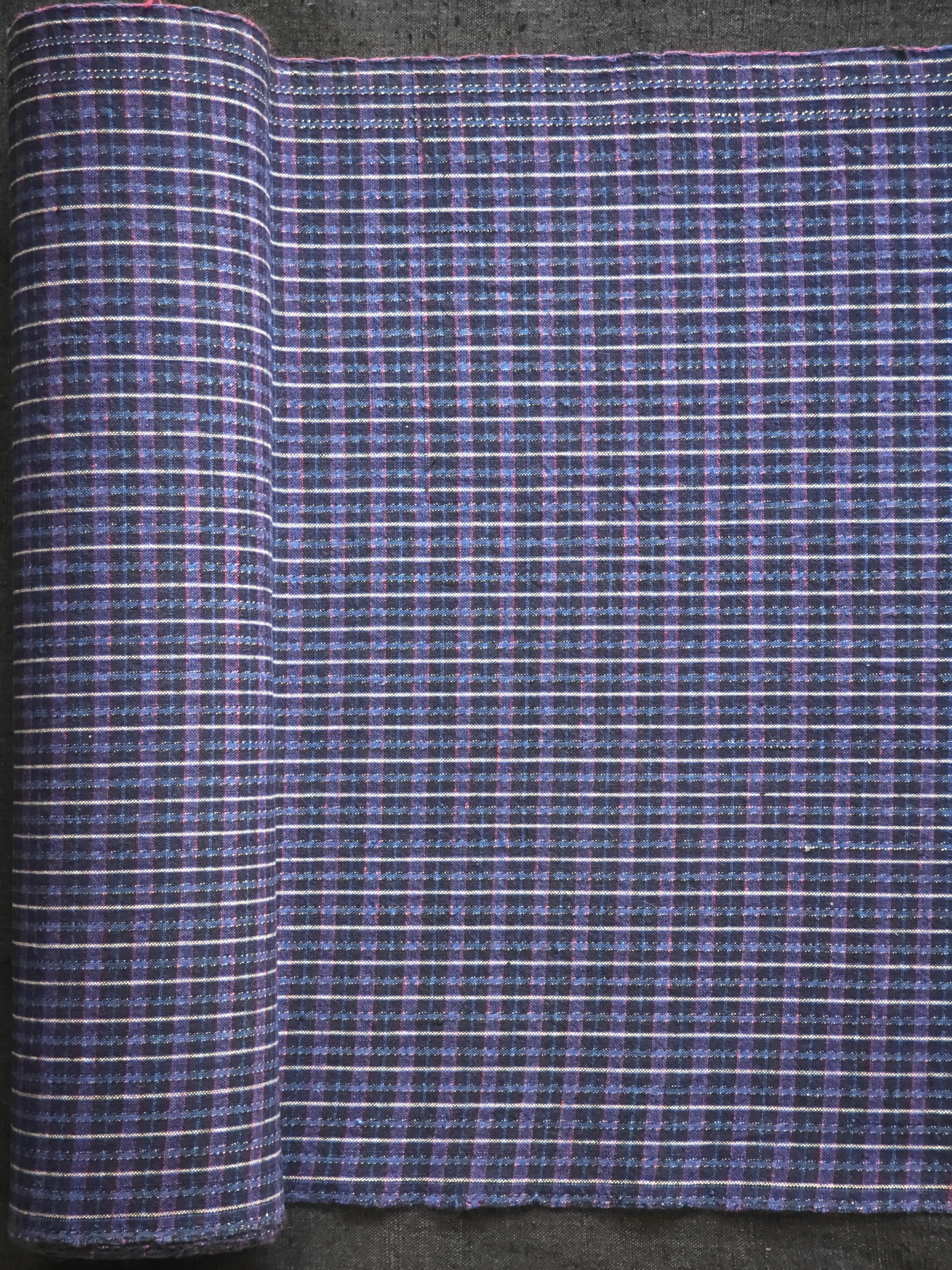
Four Seasons Weave — One Continuous Jiangnan Textile
c. 1960s–1970s · Cotton
One uncut, 6.5-metre Jiangnan cotton textile changes from indigo stripes to red-blue checks and denser plaid, with no joining seams between its woven sections.
Cloth whose colour pattern is created by arranging dyed warp and weft yarns before and during weaving.
c. 1960s–1970s · Cotton
One uncut, 6.5-metre Jiangnan cotton textile changes from indigo stripes to red-blue checks and denser plaid, with no joining seams between its woven sections.
c. 1940s–1960s · Cotton
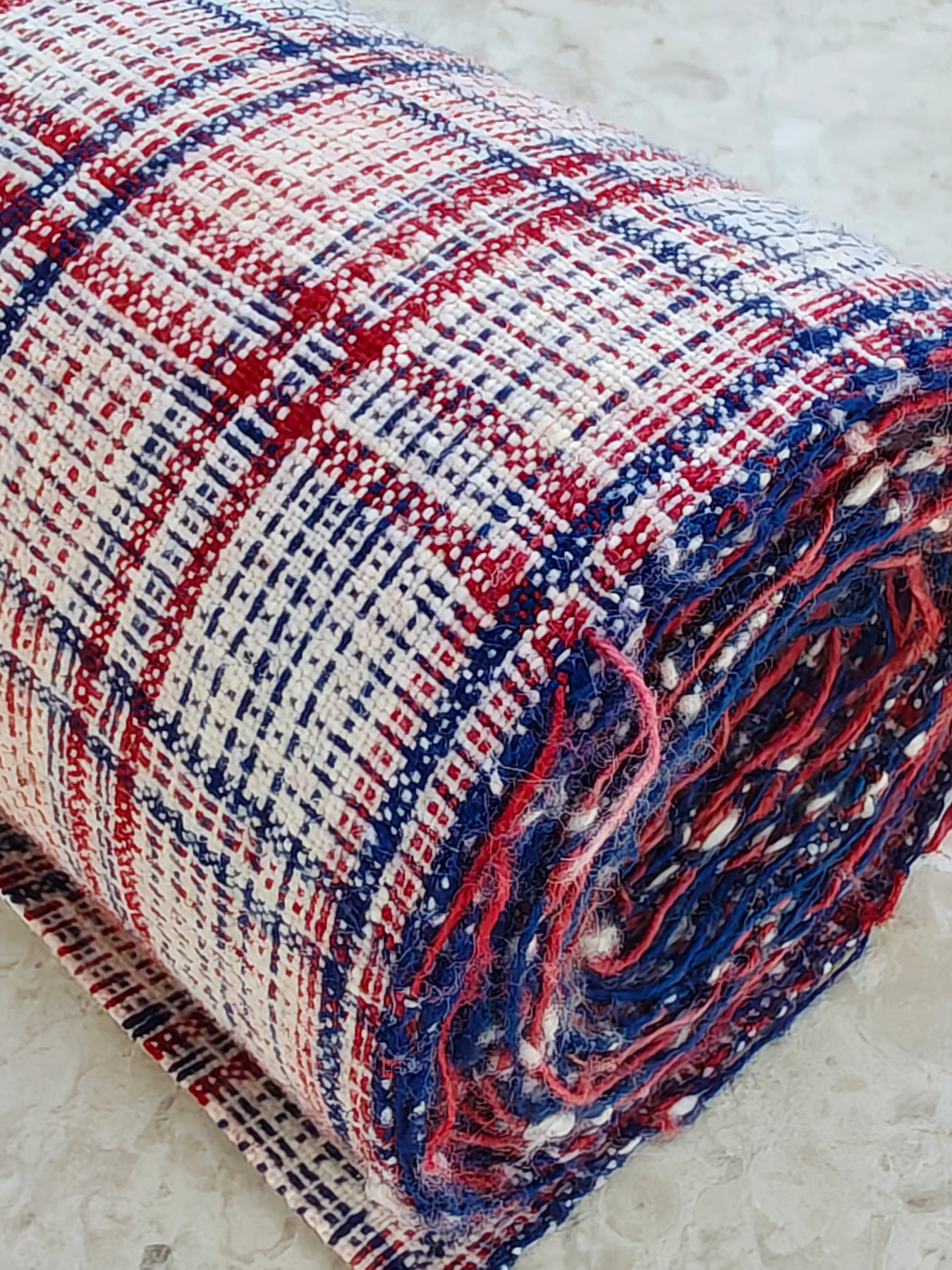
Soft red and indigo lines form a large square grid around fine comb-like inner stripes in this substantial, softly structured Jiangnan homespun cotton.
c. 1940s–1950s · Handspun cotton
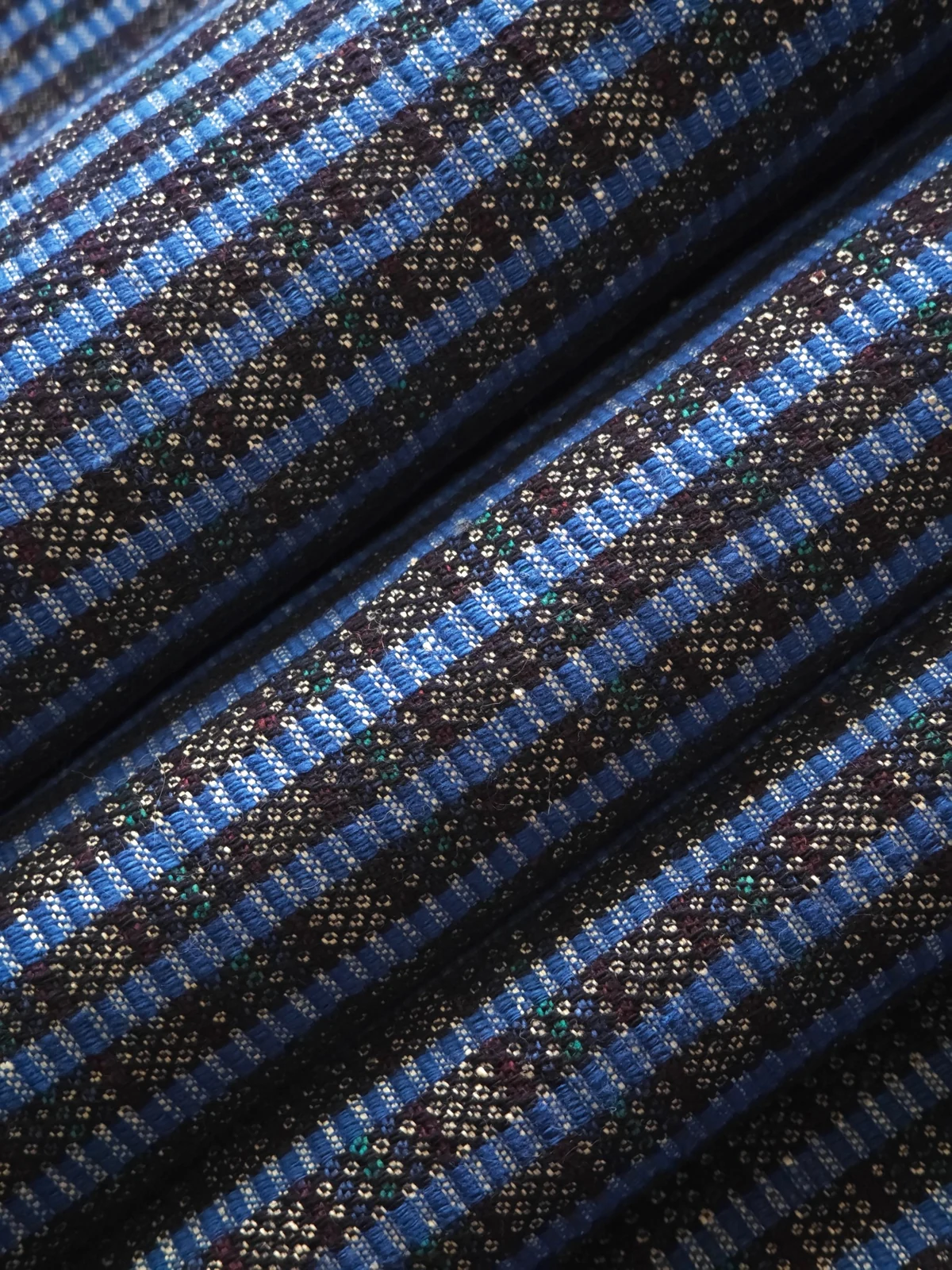
A narrow, substantial Jiangnan homespun whose tiny off-white woven points create the regional “pepper-eye” effect across a dark yarn-dyed check.
c. 1950s–1970s · Handspun cotton
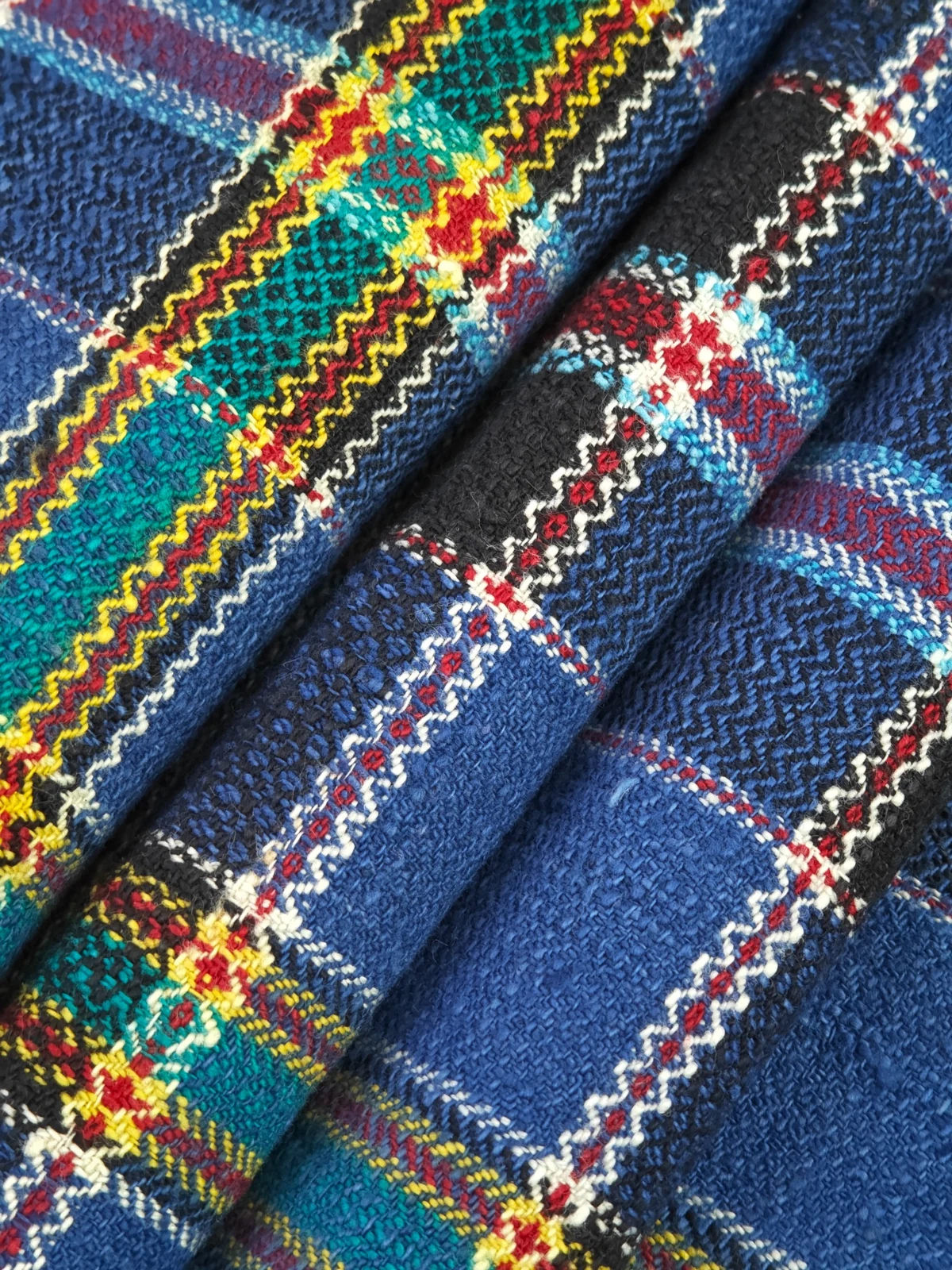
A dense Nantong / Tonghai treadle-woven cloth in which dark lattice blocks, bright borders, curving-dragon lines and pepper-seed details create a highly layered surface.
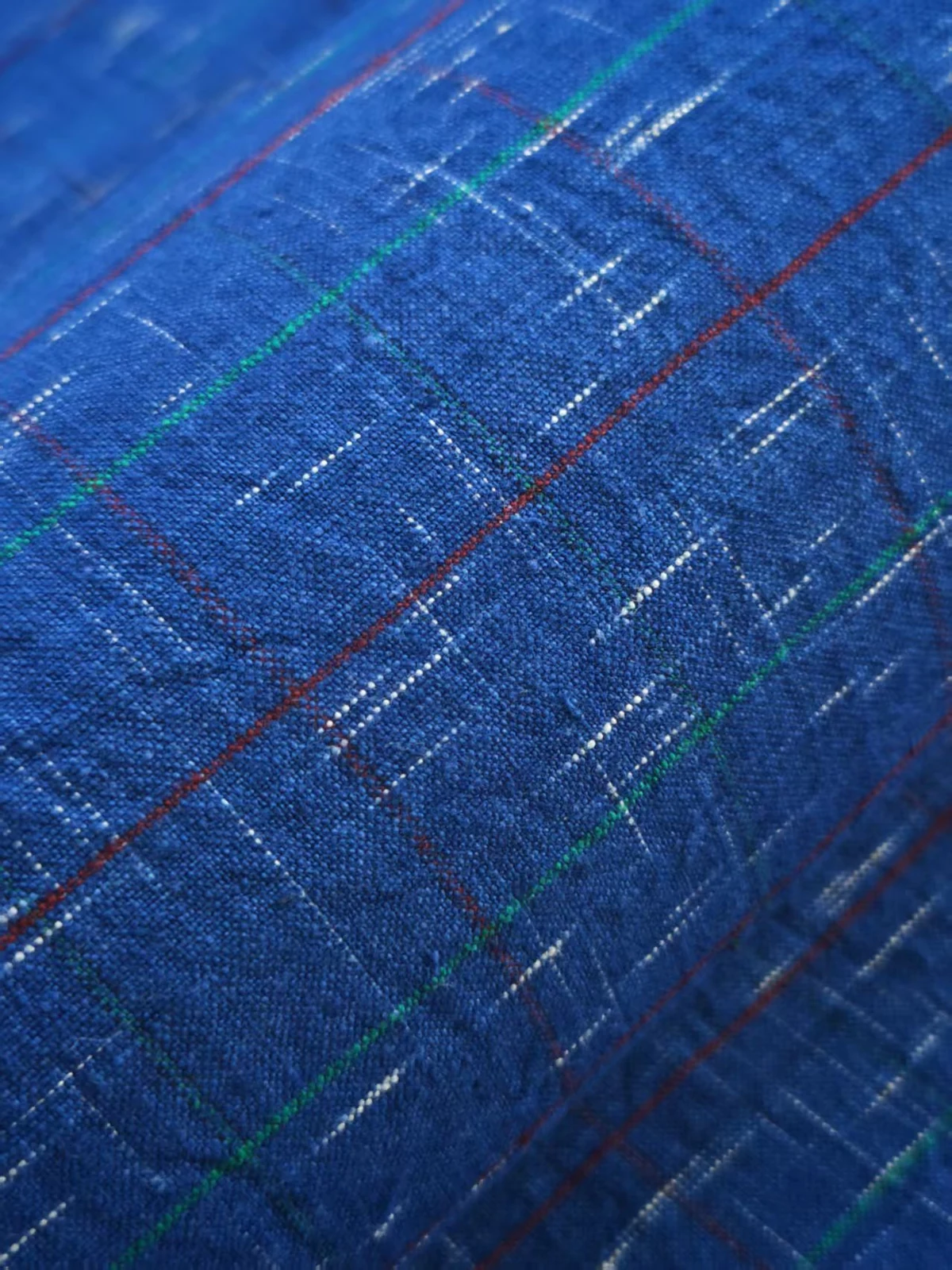
Mid-20th century · Handspun cotton
A long indigo homespun with a red-and-green outer grid and fine broken white marks that read like lightning flashes or meteor trails crossing a night-blue field.
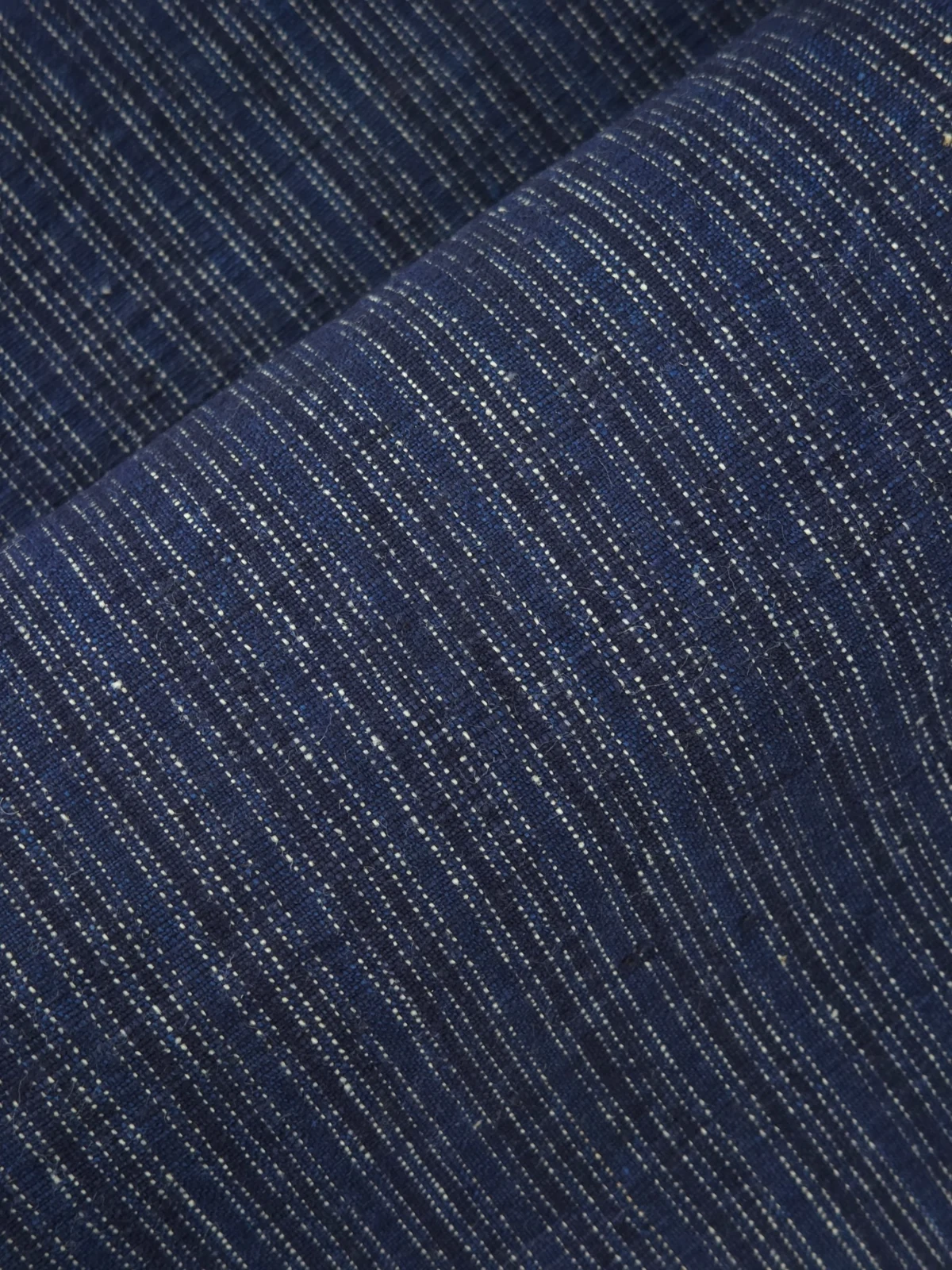
c. 1950s–1970s · Handspun-style cotton
A quiet Chongming handwoven cotton with a deep indigo ground and fine pale dotted stripes, named Starlit Tide for the way its woven points seem to move across dark water.
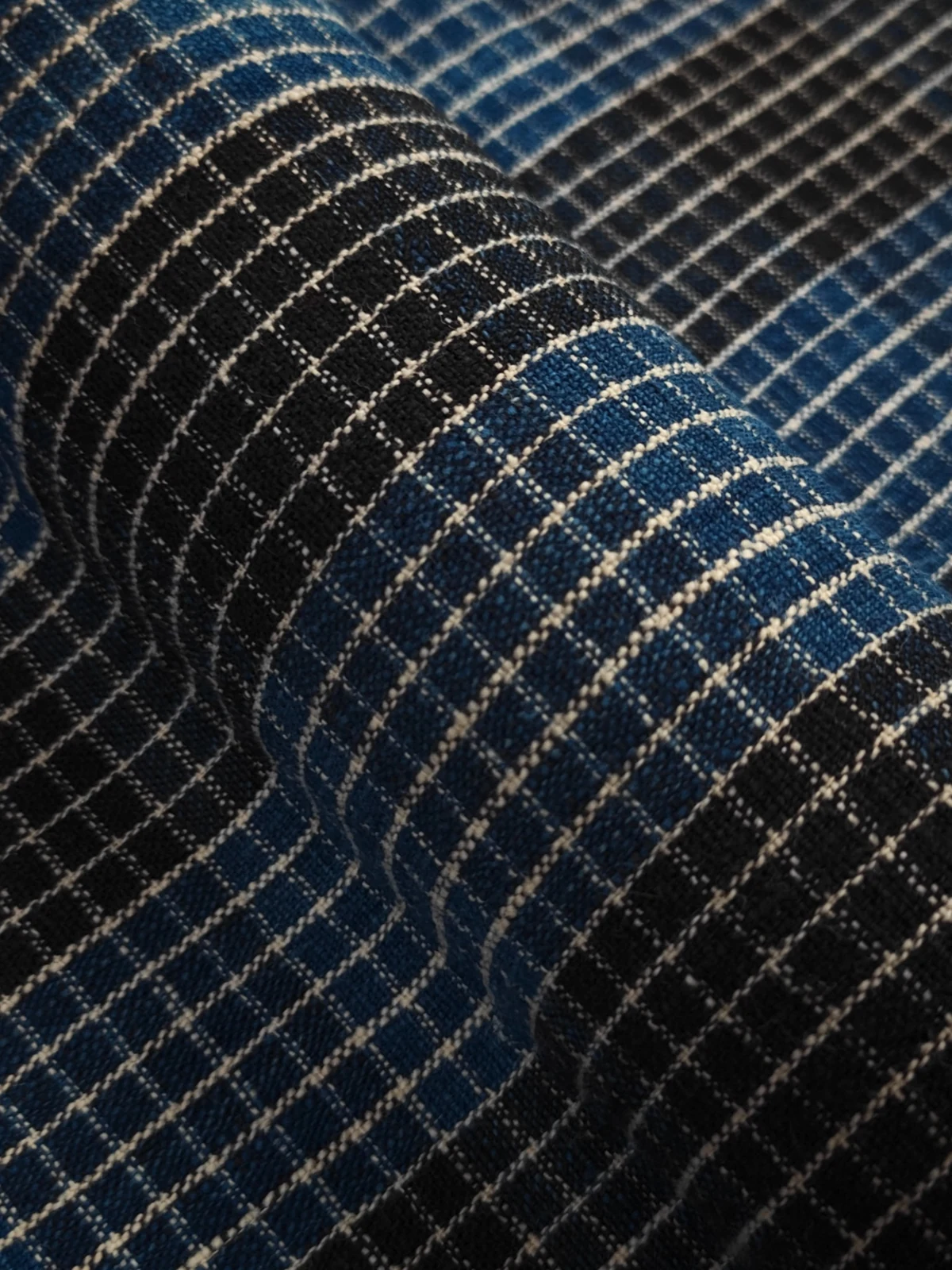
c. 1960s · Handspun cotton
A soft, light-to-medium-weight Chongming check in indigo, black and ivory, woven in plain weave with yarn-dyed cotton rather than printed on the surface.
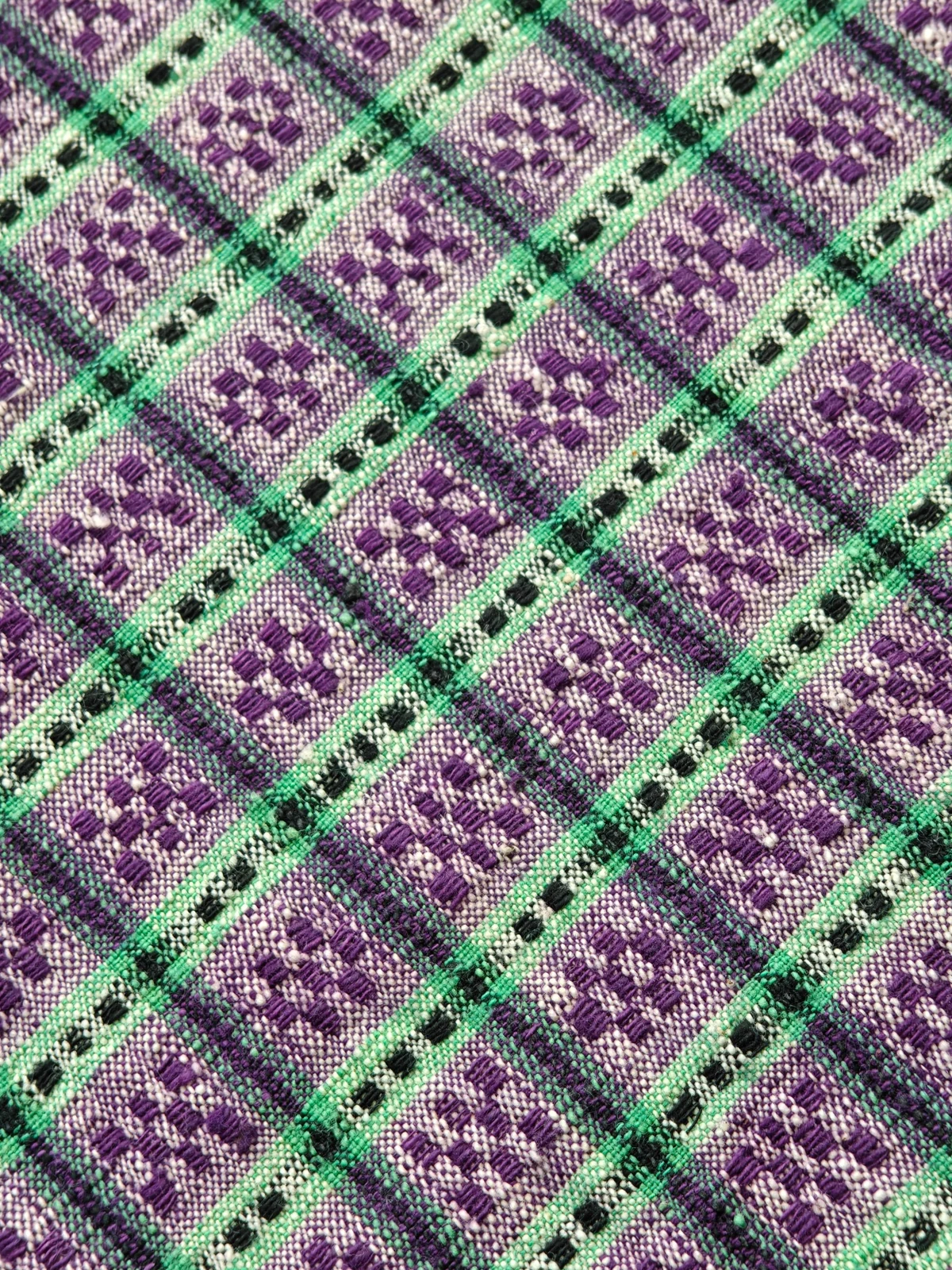
c. 1970s–early 1980s · Cotton
A dense purple, mint-green, black and ivory figured cloth attributed to southwestern Shandong Lu brocade, with raised flower-like motifs woven directly into the checked structure.
c. 1950s–1970s · 100% cotton
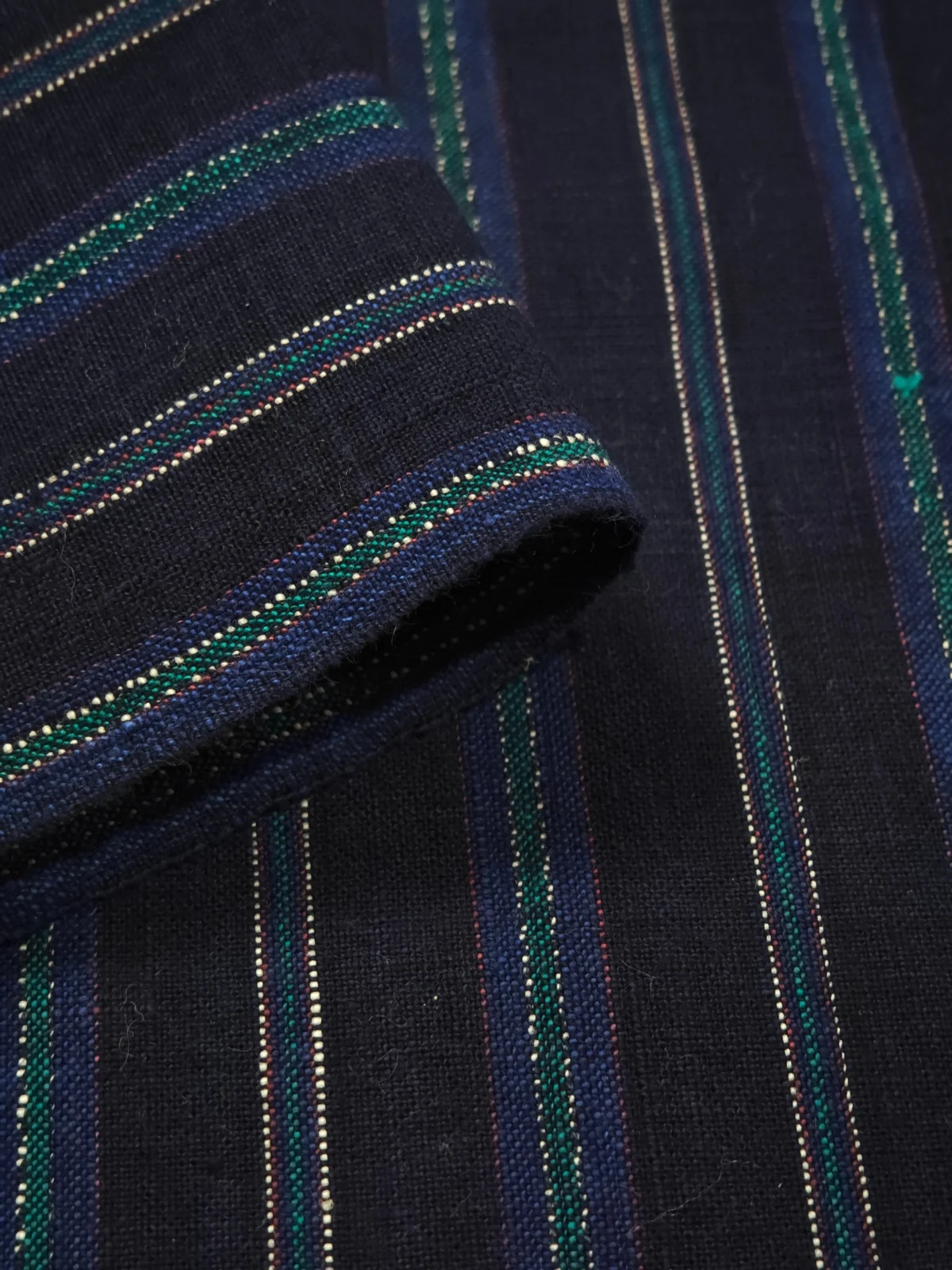
A one-metre Nantong homespun with an almost-black ground and slender navy, emerald, muted-red and cream dotted stripes that reveal themselves gradually at close range.
c. 1940s–1960s · Handspun cotton
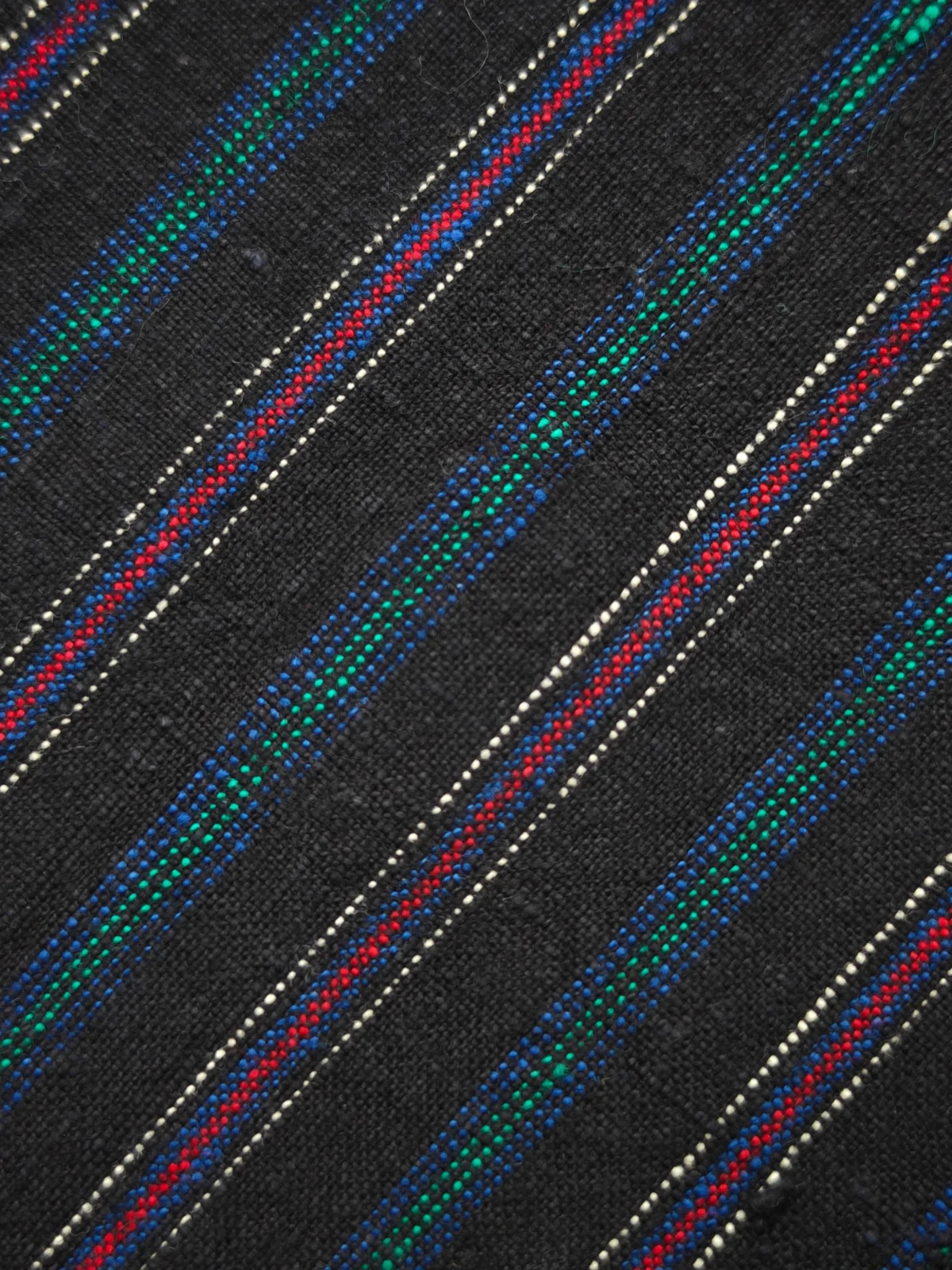
A long Chongming handwoven cotton that reads almost black from a distance, then reveals quiet blue, green, red and ivory stripes like small lights in the night.
c. 1960s–1970s · Handspun cotton
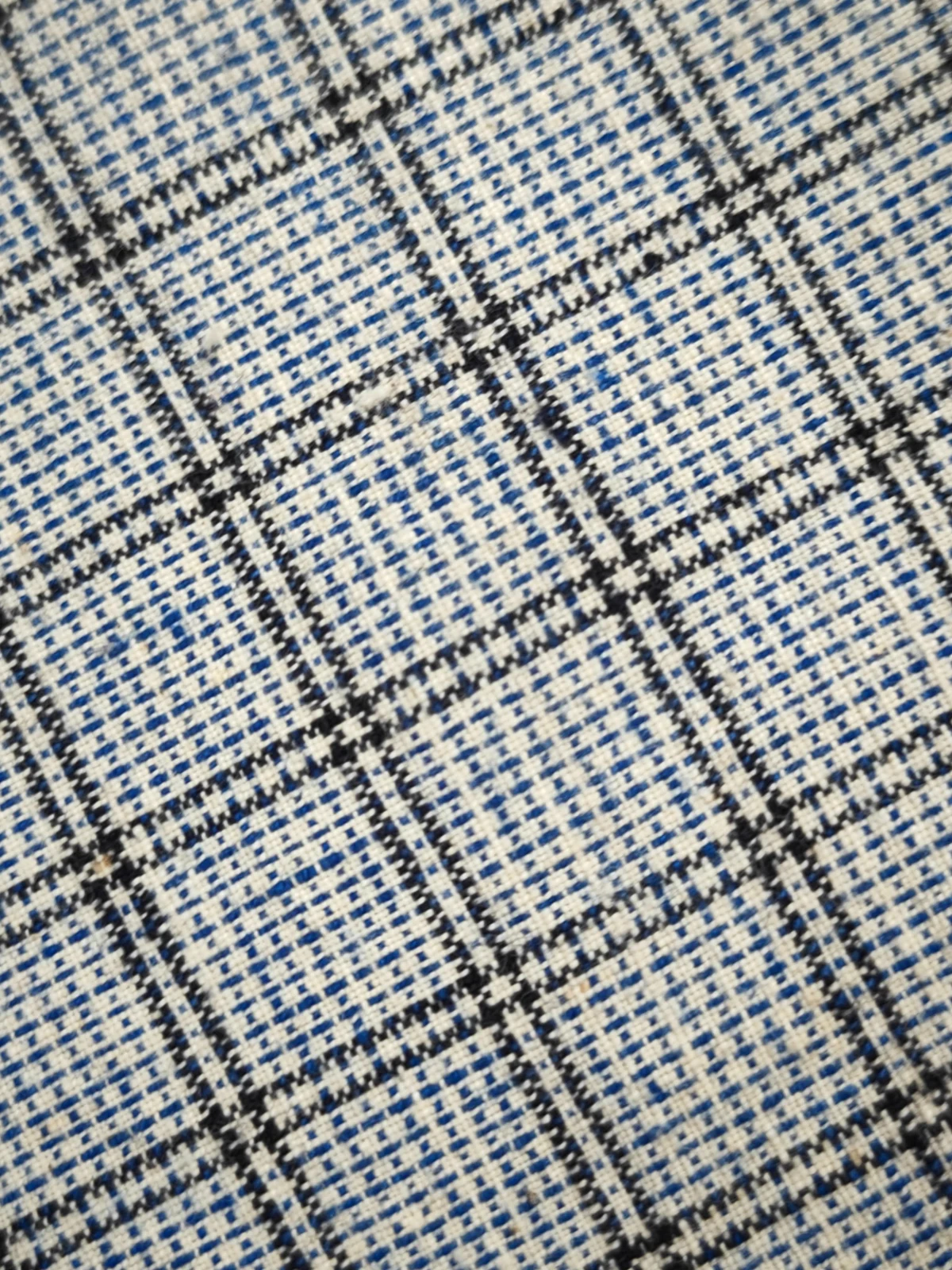
A narrow, firm Chongming-style handwoven cotton with a layered blue, black and ivory grid: fine small checks sit underneath larger crossing lines.
c. 1950s–1960s · Handspun cotton
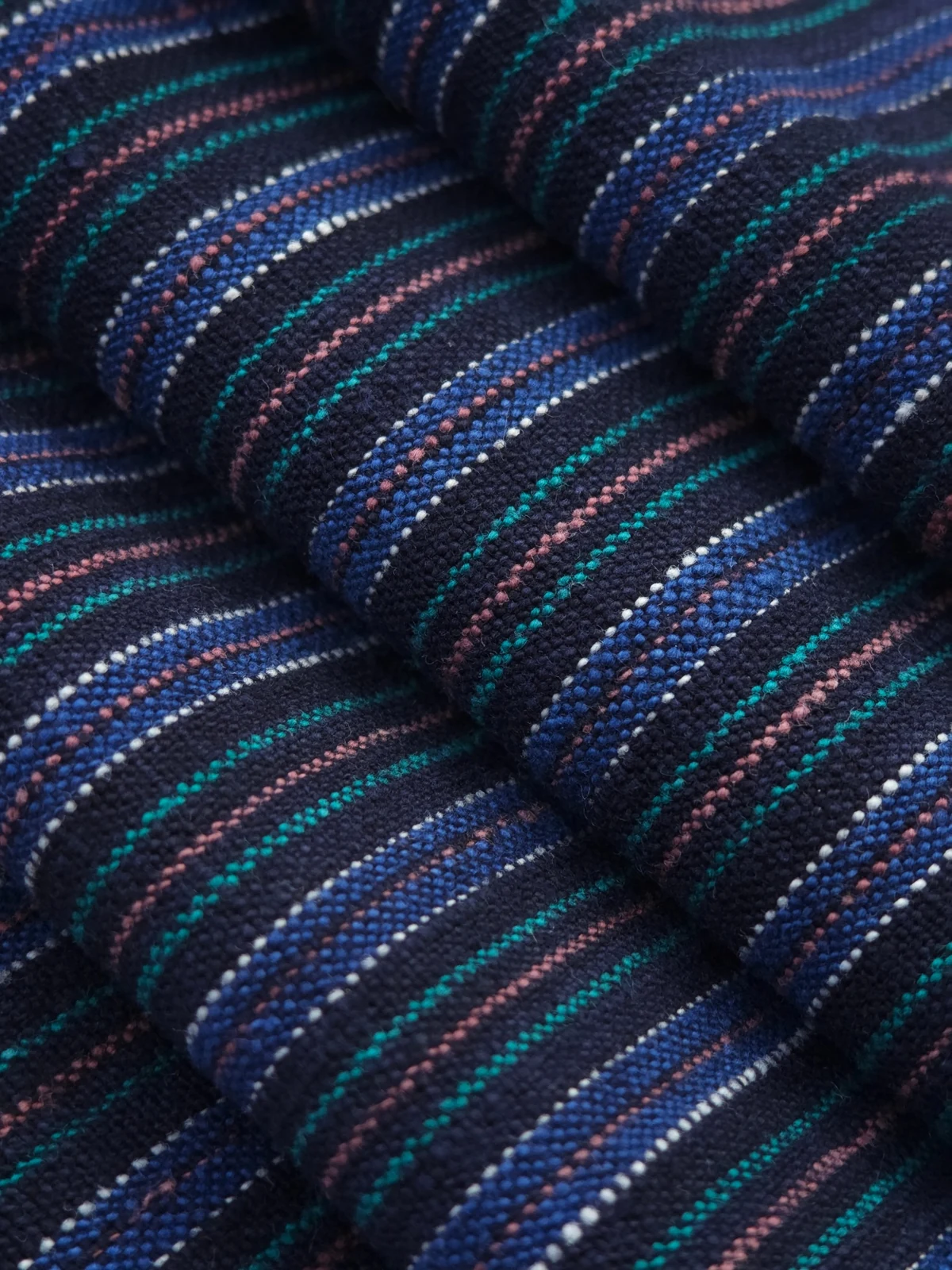
A soft Nantong / Haimen dark-blue homespun whose fine teal, rose, ivory and red yarns appear as restrained lines of colour within the cloth.
These groups bring together descriptions from the textile records. Regional attributions and technical identifications may be provisional; open an individual record for its evidence and attribution notes.