
Open several old Chinese textiles and the butterfly keeps changing.
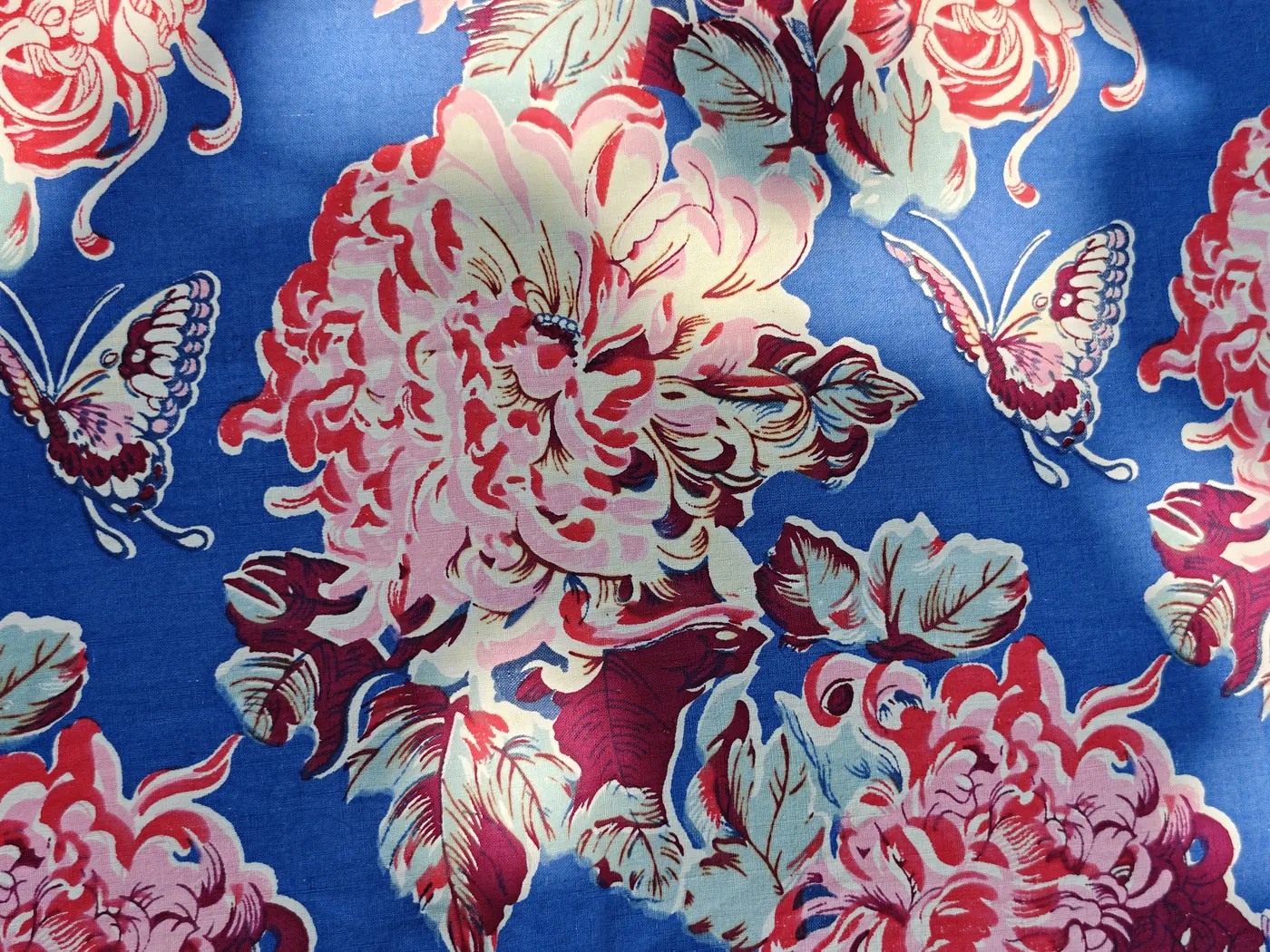
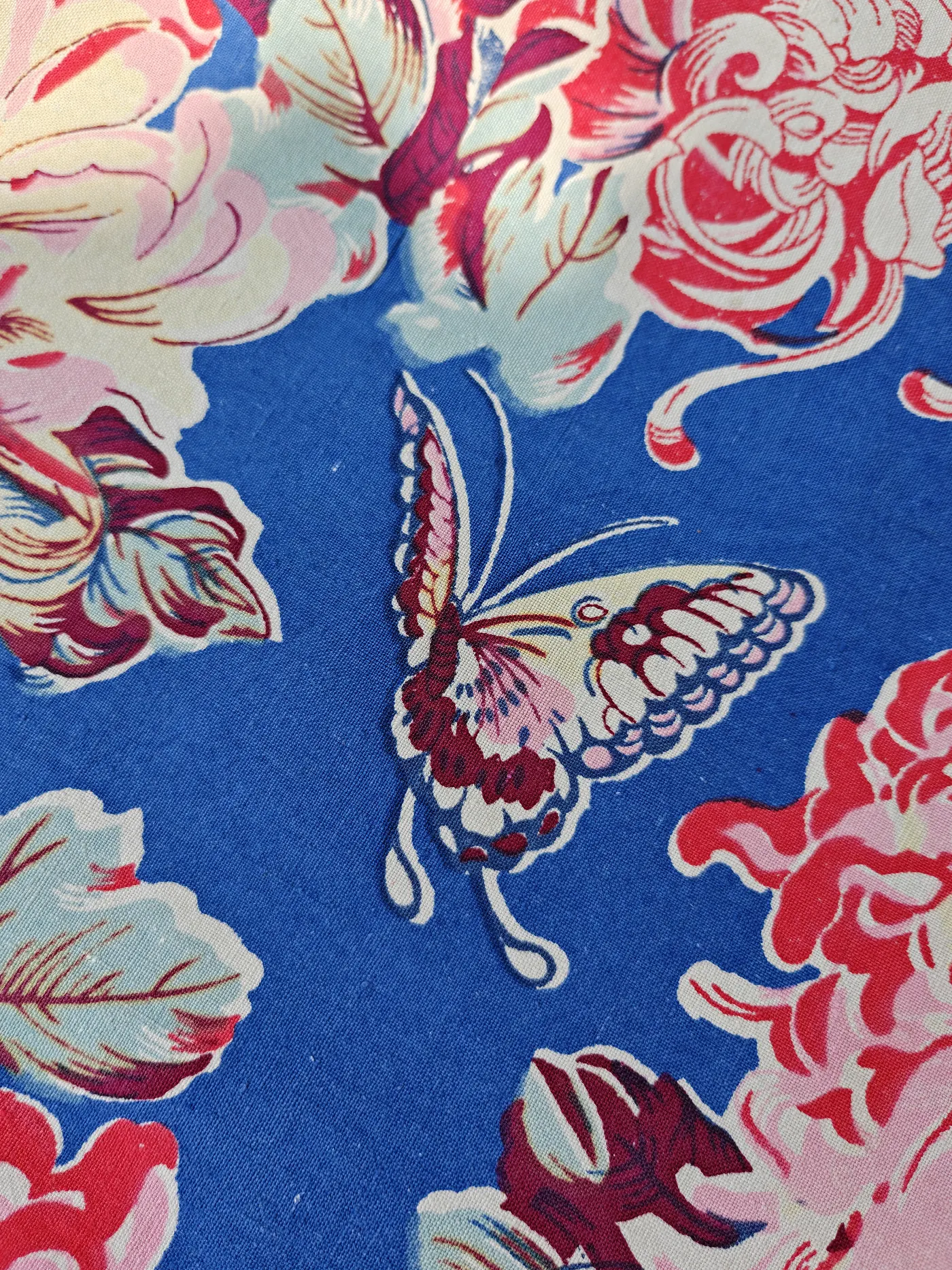
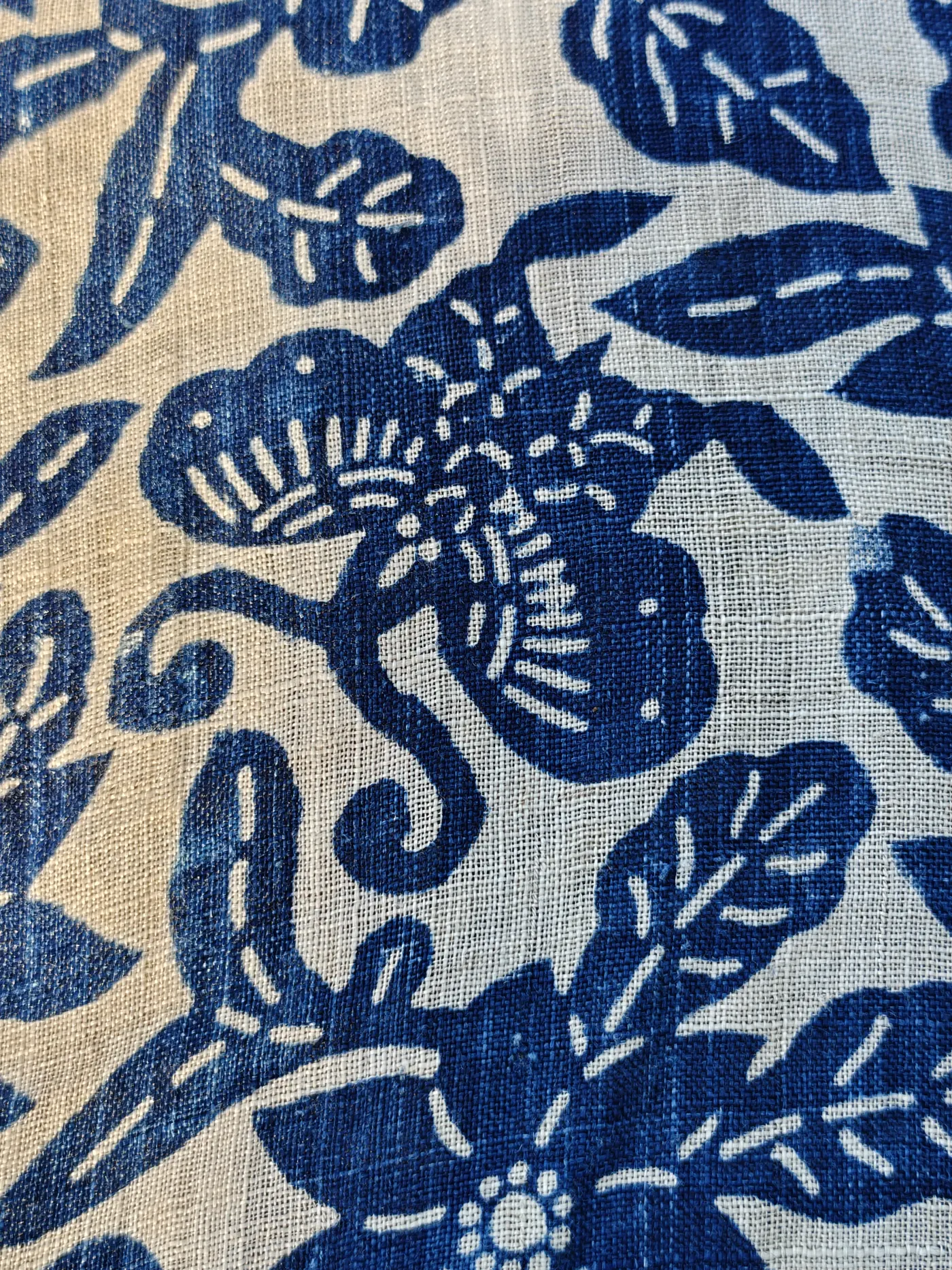
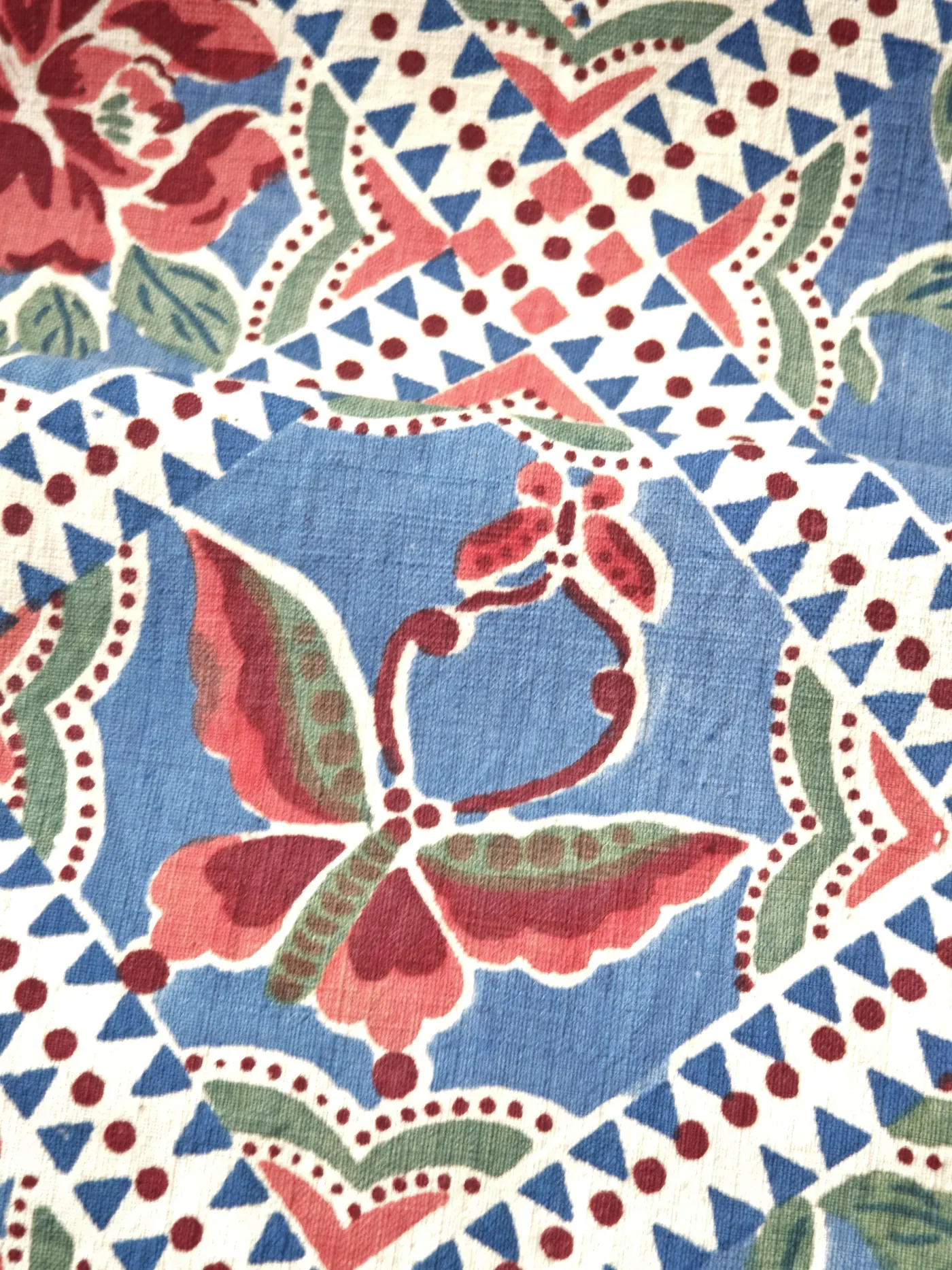
On one cloth it is almost naturalistic: layered wings, fine antennae and soft colour moving between oversized flowers. On another it has been reduced to a bold blue-and-white silhouette cut for resist printing. Elsewhere, butterfly and flower alternate across a geometric repeat, or the butterfly shrinks into one element inside a much denser auspicious composition.
These are not one fixed stencil. They belong to a broader visual idea often described as 蝶恋花 Die Lian Hua — the butterfly among, beside, or in relation to flowers.
The pattern changes. The relationship remains.
Not One Butterfly, but a Motif Family
For Tubu Atlas, Die Lian Hua is most useful as a motif family rather than a claim that every butterfly-and-flower textile shares one workshop, one date, or one symbolic meaning.
The visual relationship can be created in several ways: a butterfly may hover next to a flower; butterfly and flower may alternate across a repeat; several insects may move through an all-over floral field; or a small butterfly may sit inside a much larger household composition.
That distinction matters because technique transforms the image. A multicolour printed butterfly can preserve delicate internal drawing. A resist-printed butterfly has to survive the logic of stencil, paste, dye and negative space.
A Literary Image Before It Became Our Textile Category
The phrase itself has a long literary life. In a poem attributed to Liang Jianwen Emperor Xiao Gang, the line “翻阶蛱蝶恋花情” describes butterflies over the steps as if they possessed a feeling for flowers.1
Later poetry repeatedly binds butterflies to spring flowers and the act of looking. Du Fu writes, “穿花蛱蝶深深见” — butterflies are seen deep among the flowers.2 Yang Wanli’s child chases a yellow butterfly until it vanishes into yellow rapeseed blossoms.3
These lines do not prove the origin of any particular textile pattern. They do show that butterfly, flower, spring and human feeling had been linked in Chinese literary imagination long before the twentieth-century cloths documented here.
Butterfly and Flower in the Tubu Atlas Collection
The current archive already contains several objects that show very different uses of butterfly imagery.
When Colour Disappears, Shape Takes Over
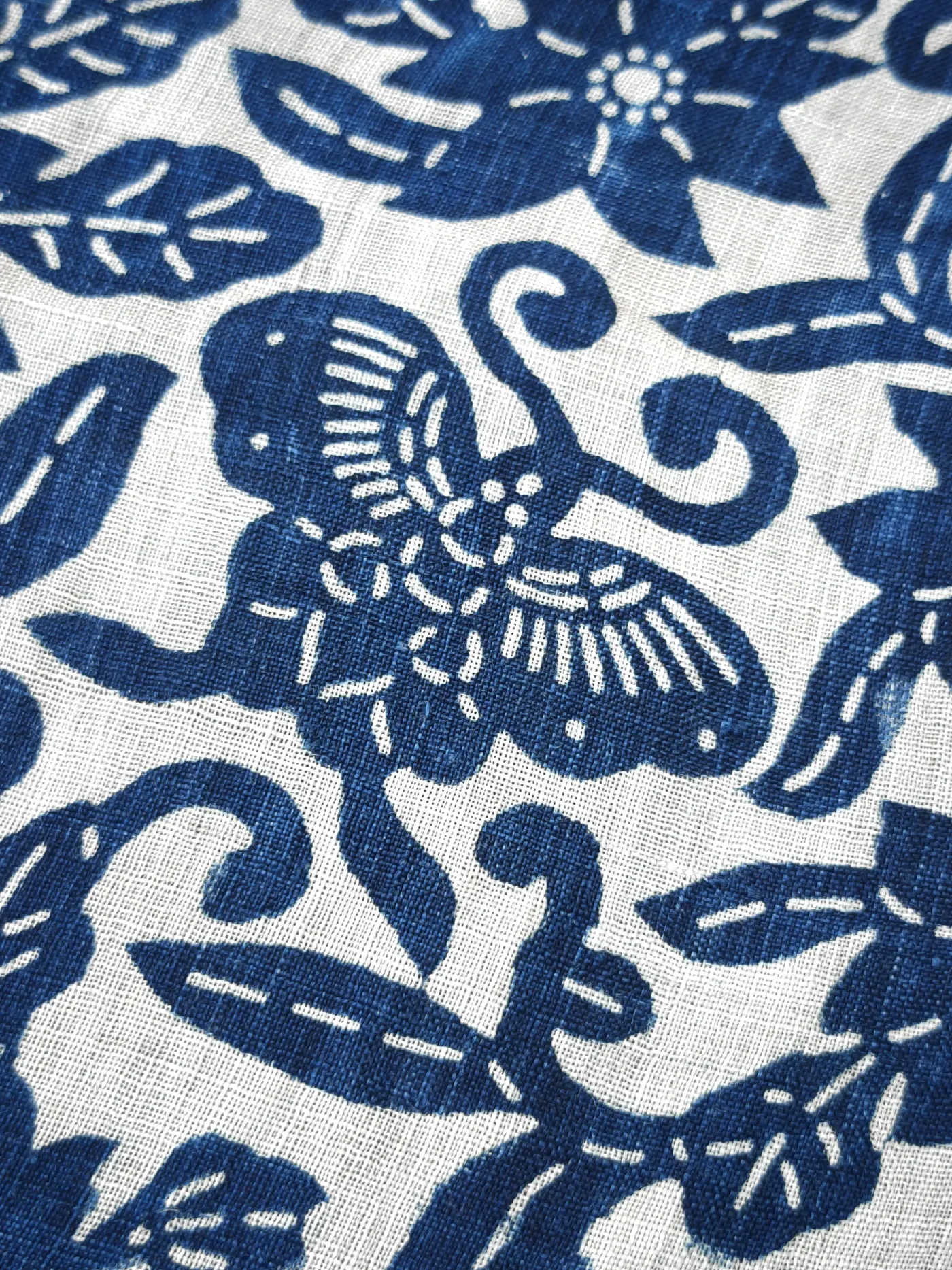
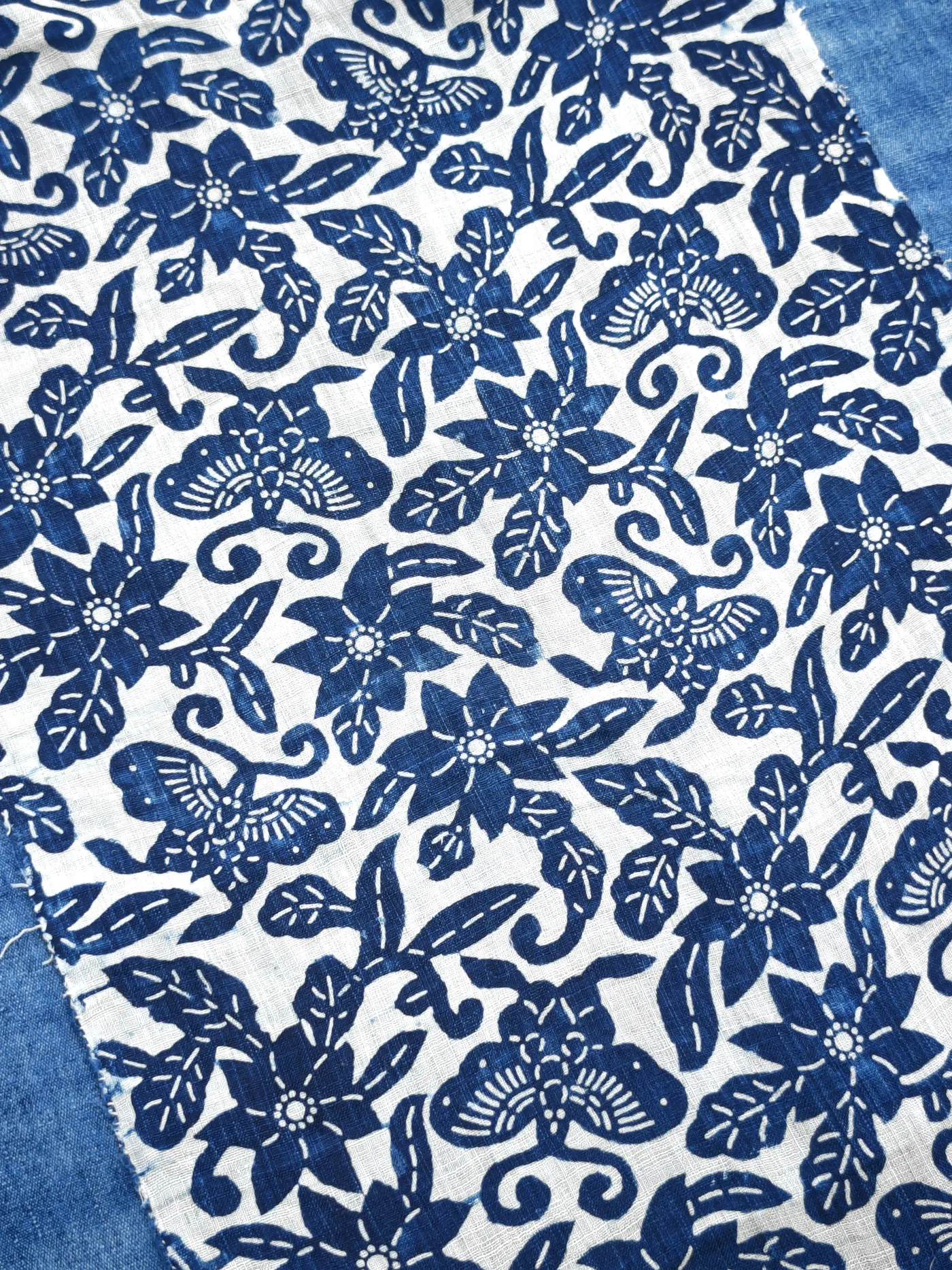
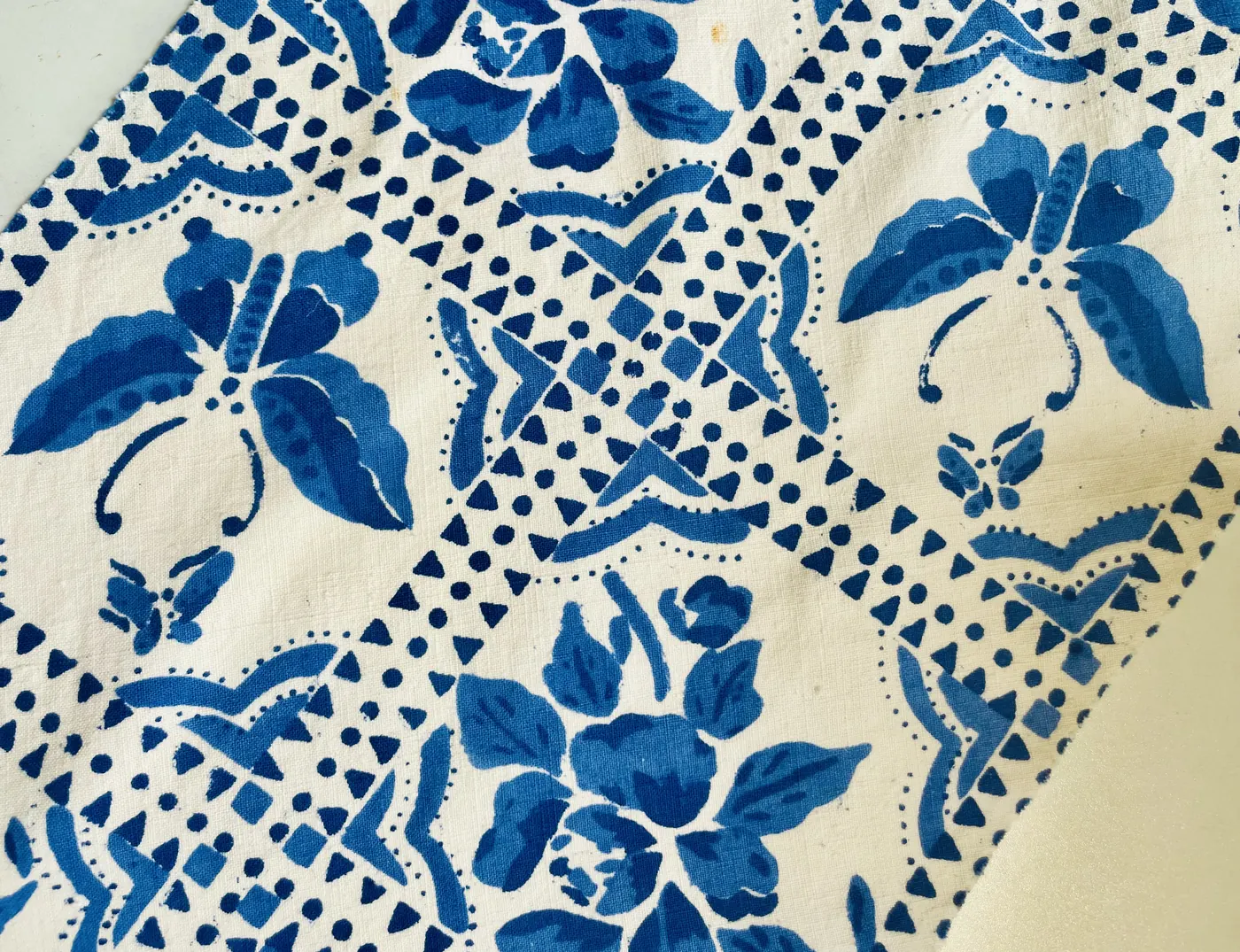
Nantong historical documentation describes traditional blue calico as cloth patterned through stencil-applied resist before dyeing, and notes that hand-cut motifs are shaped by the practical demands of stencil cutting.4 This helps explain why indigo-resist butterflies can become bold, broken and rhythmic rather than finely drawn.
“Colourful Butterflies Loving Flowers” in Nantong Blue Calico
There is also direct regional evidence that the theme was part of blue-calico pattern culture. A Nantong local-history account lists “彩蝶恋花” alongside other auspicious blue-calico subjects such as Five Bats Holding Longevity, Auspicious Celebration with Fish, and the Eight Immortals.5
The theme is not merely a label applied retrospectively by collectors. It continues to be used in contemporary heritage practice. In 2025, a Nantong blue-calico work titled 《蝶恋花》 was exhibited at Expo 2025 Osaka; its composition paired blooming peonies with butterflies and combined Nantong blue-calico printing with tie-dye techniques.6
The Relationship Can Live Across the Repeat
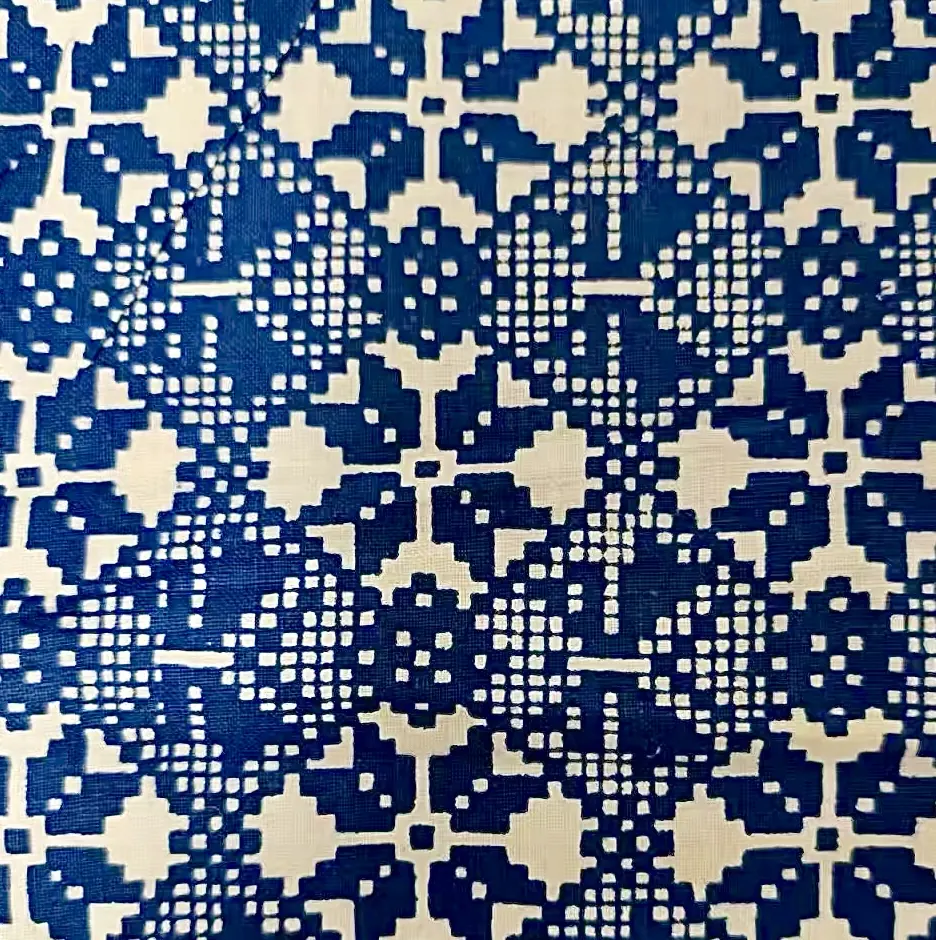
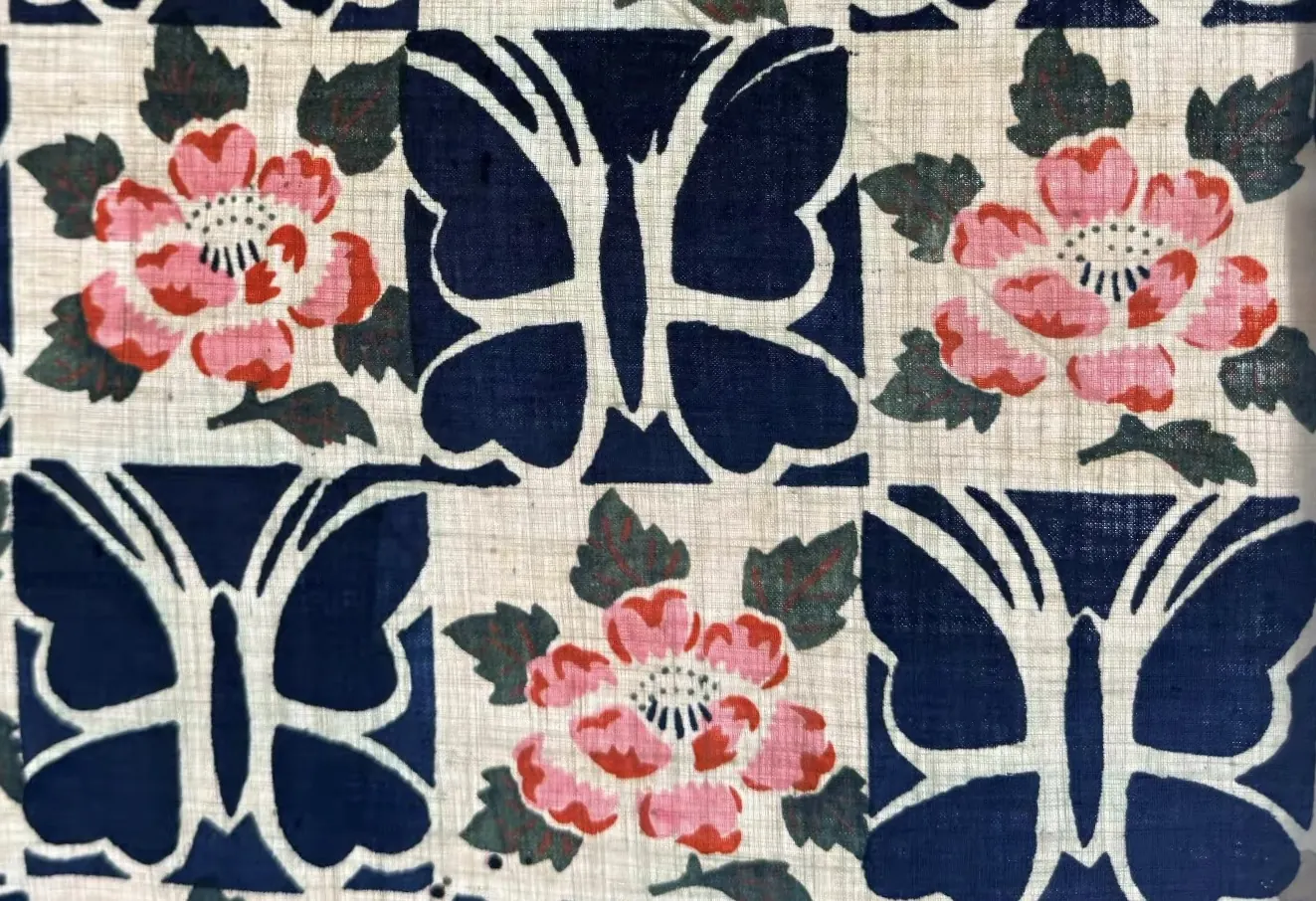
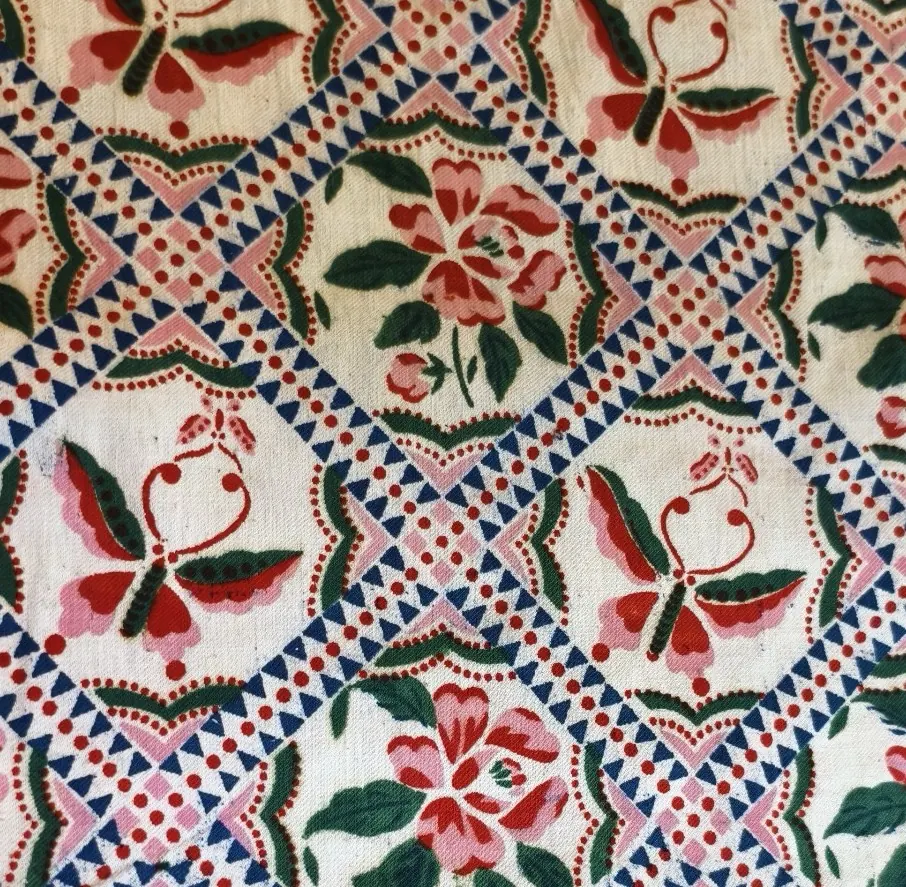
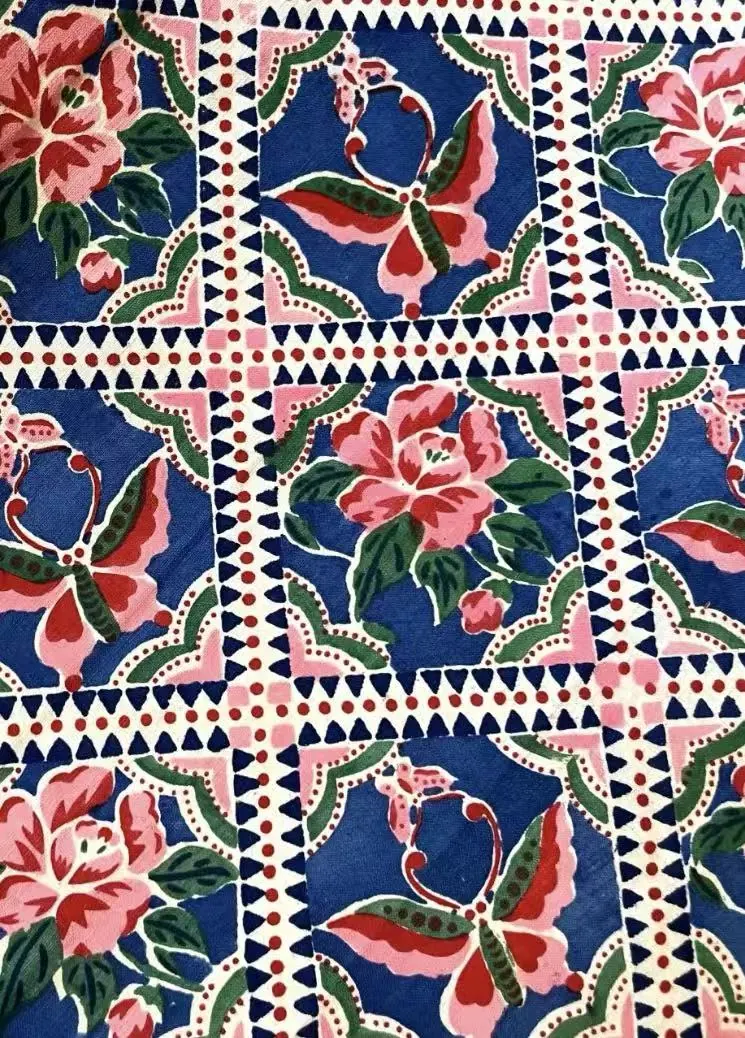
Butterfly and flower do not have to occupy the same motif unit. In several study pieces in the Tubu Atlas collection, the relationship is produced across the repeat itself.
A framed butterfly is followed by a framed flower; the eye moves from one to the other. The cloth becomes a field of alternating encounters.
How Far Can a Butterfly Be Simplified?
Pattern design is an exercise in recognition. How much can be removed before a butterfly stops reading as a butterfly?
Across the pieces gathered here, recognisability can survive with surprisingly little: bilateral symmetry, a narrow body, four wing masses, and one or two internal marks. Other examples preserve antennae and wing veins; some enlarge the butterfly until it becomes an architectural unit in the repeat.
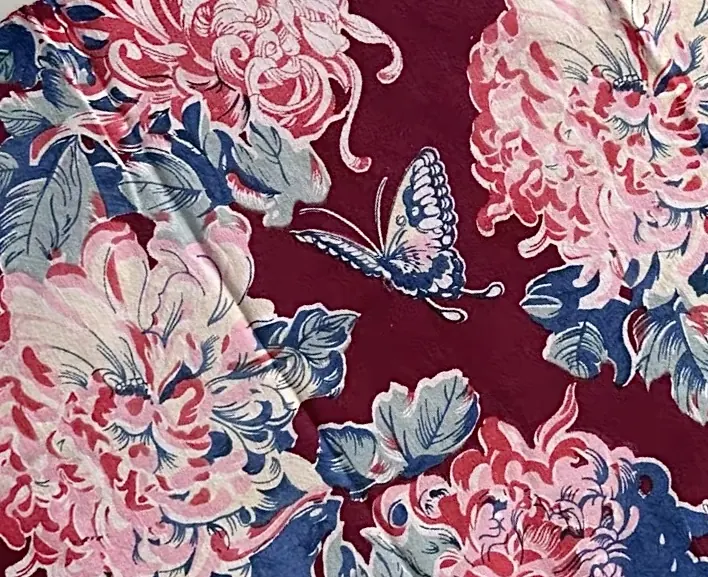
This is one reason Tubu Atlas records motif and technique separately. Two cloths may both contain butterflies while demanding very different visual solutions because they were made through different processes.
Study Fragments: Evidence Before Attribution
Not every piece in a research collection needs to become a sale listing before it can be useful.
The following fragments are retained as study material. Some are small, some have not yet been formally catalogued, and some still need better photography or provenance work. They are shown here for visual comparison only. No precise date, region or workshop is assigned until supporting evidence is recorded.
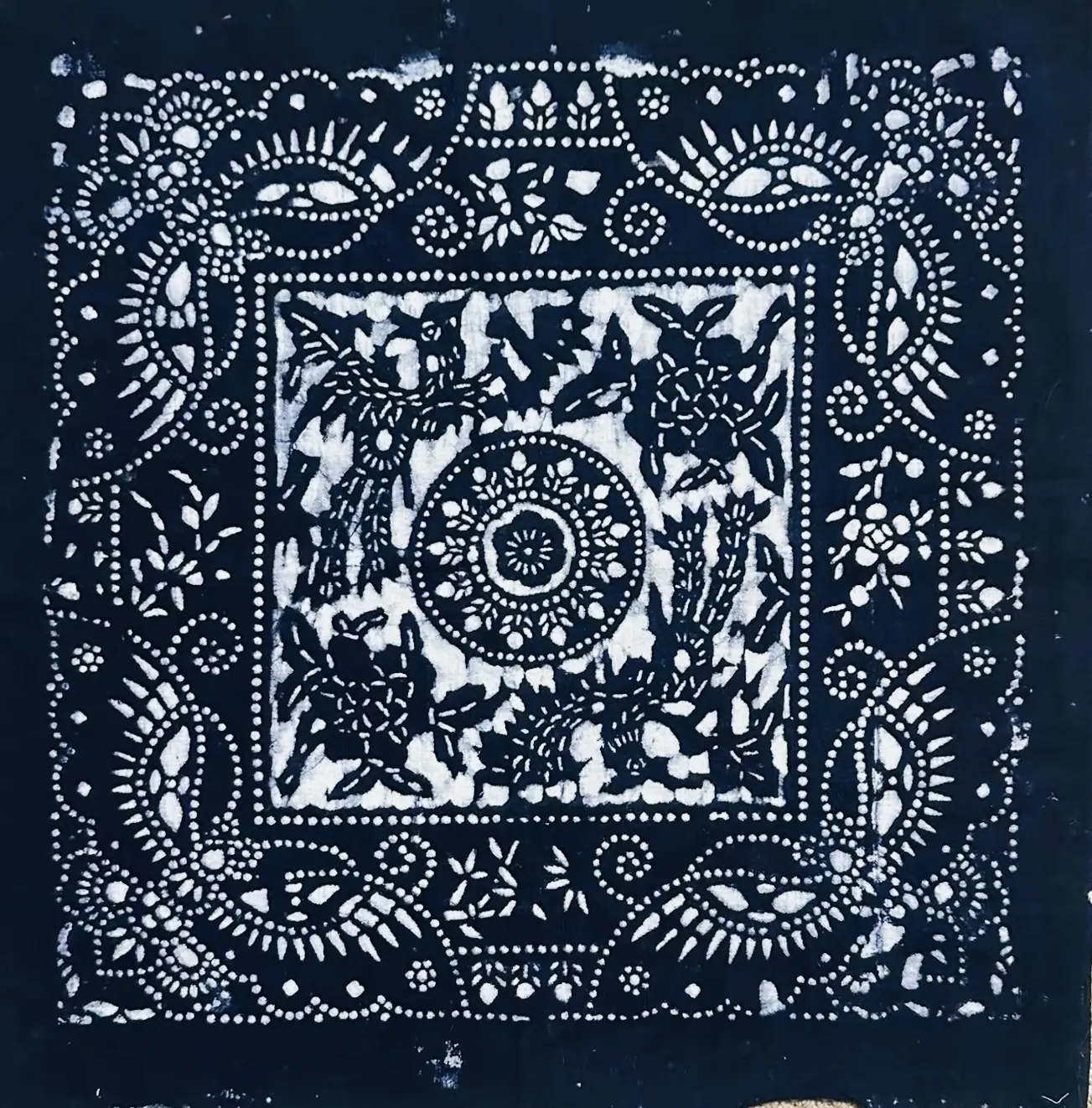
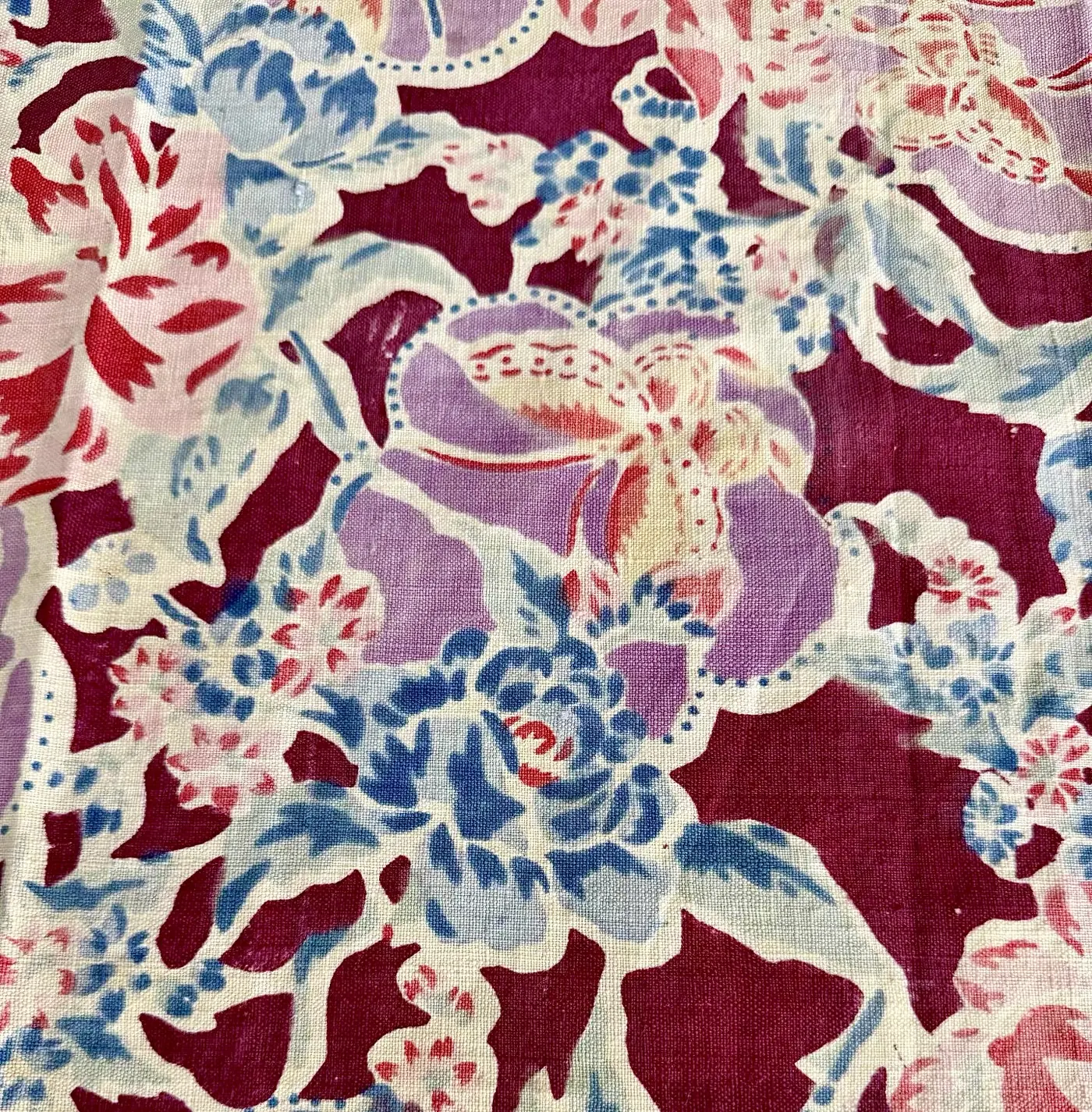
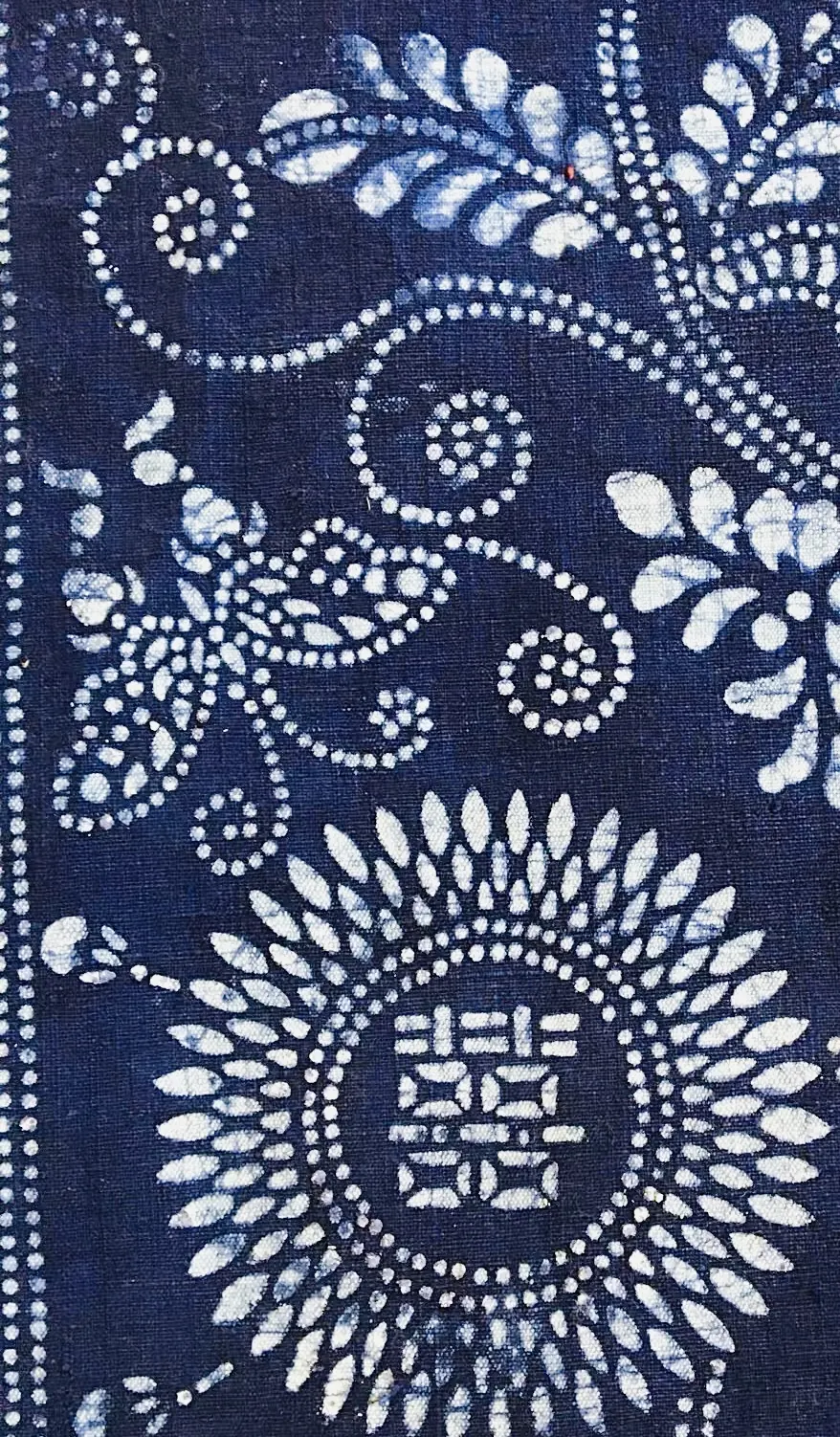
Editorial rule: presence in this visual study does not authenticate a date or place of origin. Object-level claims are added only when the archive has supporting documentation or a clearly labelled attribution.
Butterfly as Main Motif, Butterfly as Supporting Motif
The butterfly does not always need to dominate the cloth. In the sold Qilin Bringing a Child — Nantong Indigo Textile, a small butterfly appears among a much larger vocabulary that includes a child on a qilin, a phoenix medallion, gourds and scrolling flowers.
That object remains in the archive after sale because it documents another role for the butterfly: not the subject of the whole cloth, but one element within a larger household composition.
This is important for future cataloguing. Searching only for textiles called “Butterfly” would miss many examples in which butterflies survive as secondary motifs.
What Does Die Lian Hua Mean?
There is no single meaning that should be imposed on every butterfly-and-flower textile.
Nature & season
The most immediate reading is observational: flowers bloom, butterflies arrive. Poetry repeatedly treats the two as part of spring scenery.
Affection & companionship
The language of “butterfly loving flower” gives the natural relationship an emotional tone, and later dress and decorative arts use Die Lian Hua explicitly as a pattern name.
Auspicious context
In household textiles, butterfly-and-flower imagery can sit beside other auspicious subjects. The specific reading depends on the accompanying flower, object and regional context.
Not a universal code
A butterfly should not automatically be translated as “love”, “longevity” or any other single concept without context. Maker intention is rarely preserved for anonymous folk cloth.
Did Die Lian Hua Come from the Butterfly Lovers?
The story of Liang Shanbo and Zhu Yingtai gives the butterfly a powerful later association with romantic devotion and transformation. But the evidence used for this article does not support treating the Butterfly Lovers story as the single origin of the Die Lian Hua textile motif.
The literary image of butterflies “loving” flowers is already present in Xiao Gang’s verse, while later textile and dress collections use butterfly-and-flower combinations in several different arrangements. It is safer to understand the motif as a long-lived visual and literary theme whose meanings accumulated over time.
Beyond Folk Cloth: Museum References
The butterfly-and-flower relationship also appears beyond tubu. A Republican-period horse-face skirt in the collection of the Museum of Ethnic Costumes, Beijing Institute of Fashion Technology, is catalogued with embroidered and cutwork Die Lian Hua motifs combining butterflies with plum blossom, moon and peach blossom.7
A Yongqing Costume Museum introduction likewise lists a Daoguang-period red satin robe described as carrying eight roundels of Die Lian Hua embroidery.8
These museum references are included as textual comparison. Their photographs are not reproduced here; the images on this page are from the Tubu Atlas collection and study archive.
A Pattern That Keeps Moving
On a multicolour print, a butterfly can carry tiny wing markings and soft pinks. In a blue-and-white resist textile, it may become a broken silhouette. In a framed repeat, butterfly and flower can occupy separate compartments. In a dense auspicious composition, the butterfly may shrink into a supporting sign.
What survives is not one immutable drawing.
It is a relationship that makers could redraw again and again:
flowers open; butterflies arrive.
From verse to bedding, from summer cloth to blue calico, a fleeting spring scene became a durable textile language.
Sources & Further Reading
- 萧纲《东飞伯劳歌》. Wikisource text. Used for the line “翻阶蛱蝶恋花情”.
- 杜甫《曲江二首》. Wikisource text. Used for “穿花蛱蝶深深见”.
- 杨万里《宿新市徐公店二首》. Wikisource text.
- 南通史志网:《蓝印花布》. Regional blue-calico history and resist-printing description.
- 南通史志网:《蓝印花布的魅力》. Lists “彩蝶恋花” among traditional auspicious blue-calico subjects.
- 南通大学. “我校蓝印花布作品亮相日本大阪世博会.” Documents a 2025 blue-calico work titled 《蝶恋花》 pairing peonies and butterflies.
- 北京服装学院民族服饰博物馆. 五彩蝶恋花暗花绸鱼鳞褶月华马面裙.
- 永清县人民政府. Yongqing Costume Museum introduction.