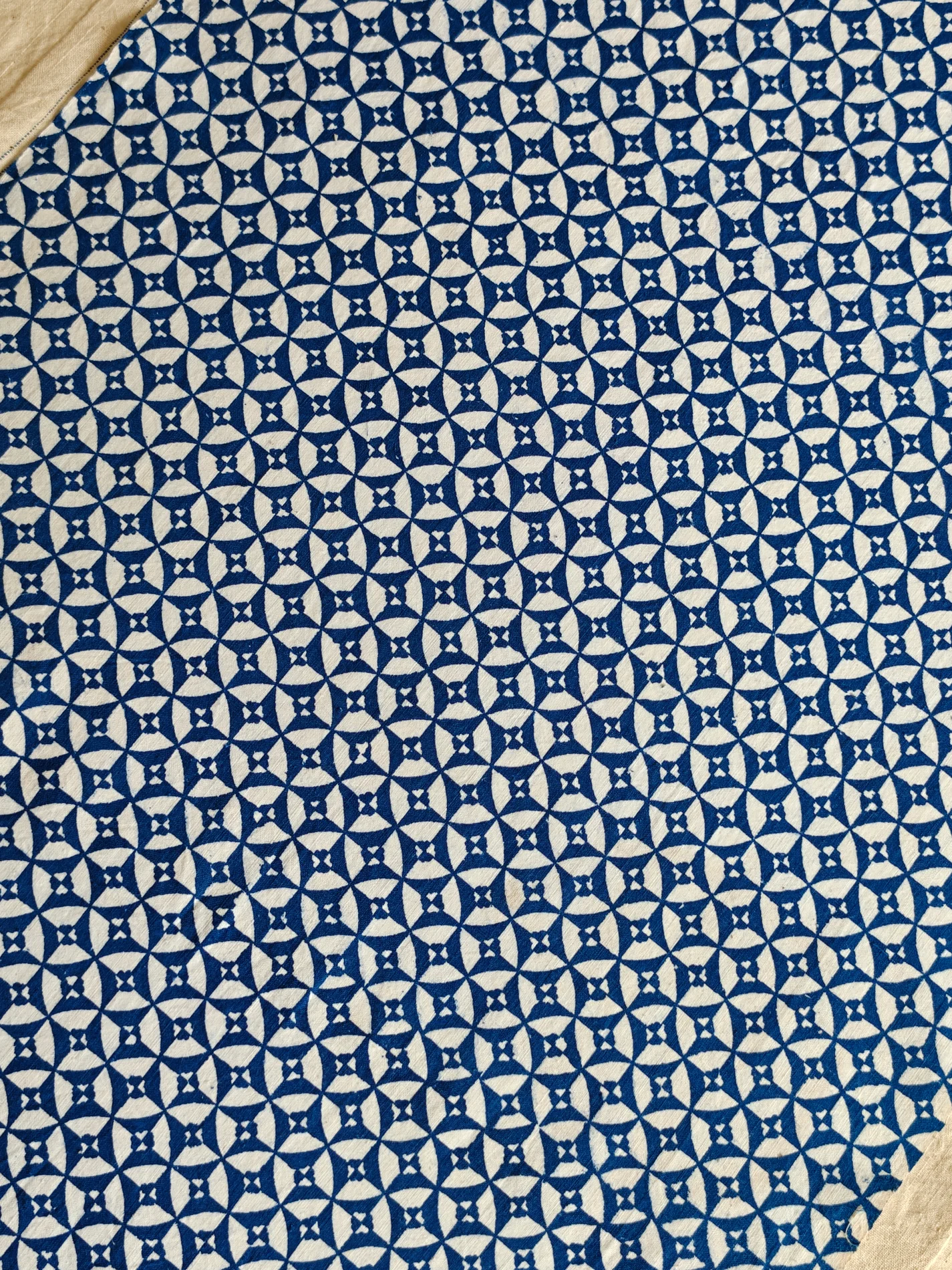
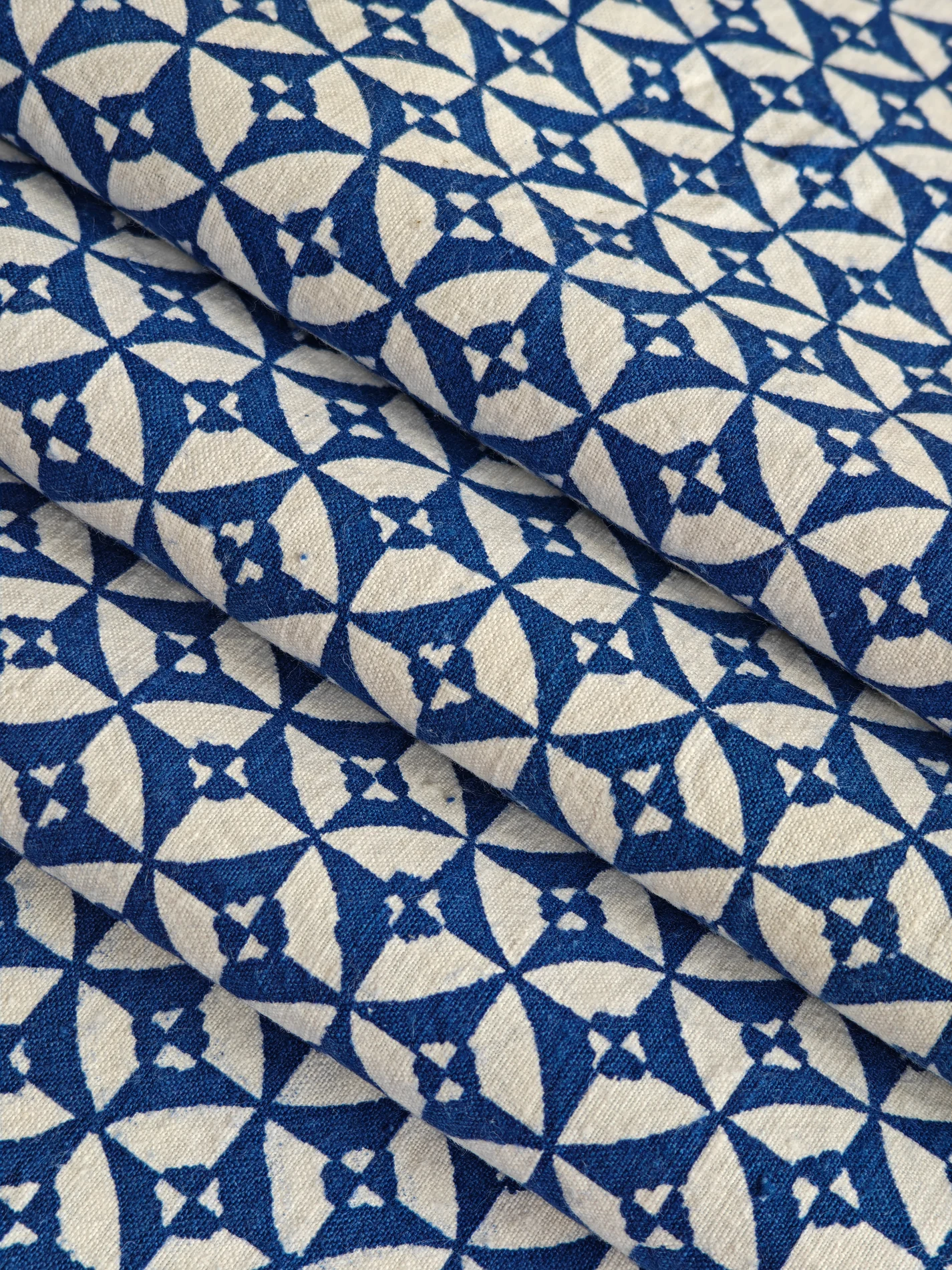
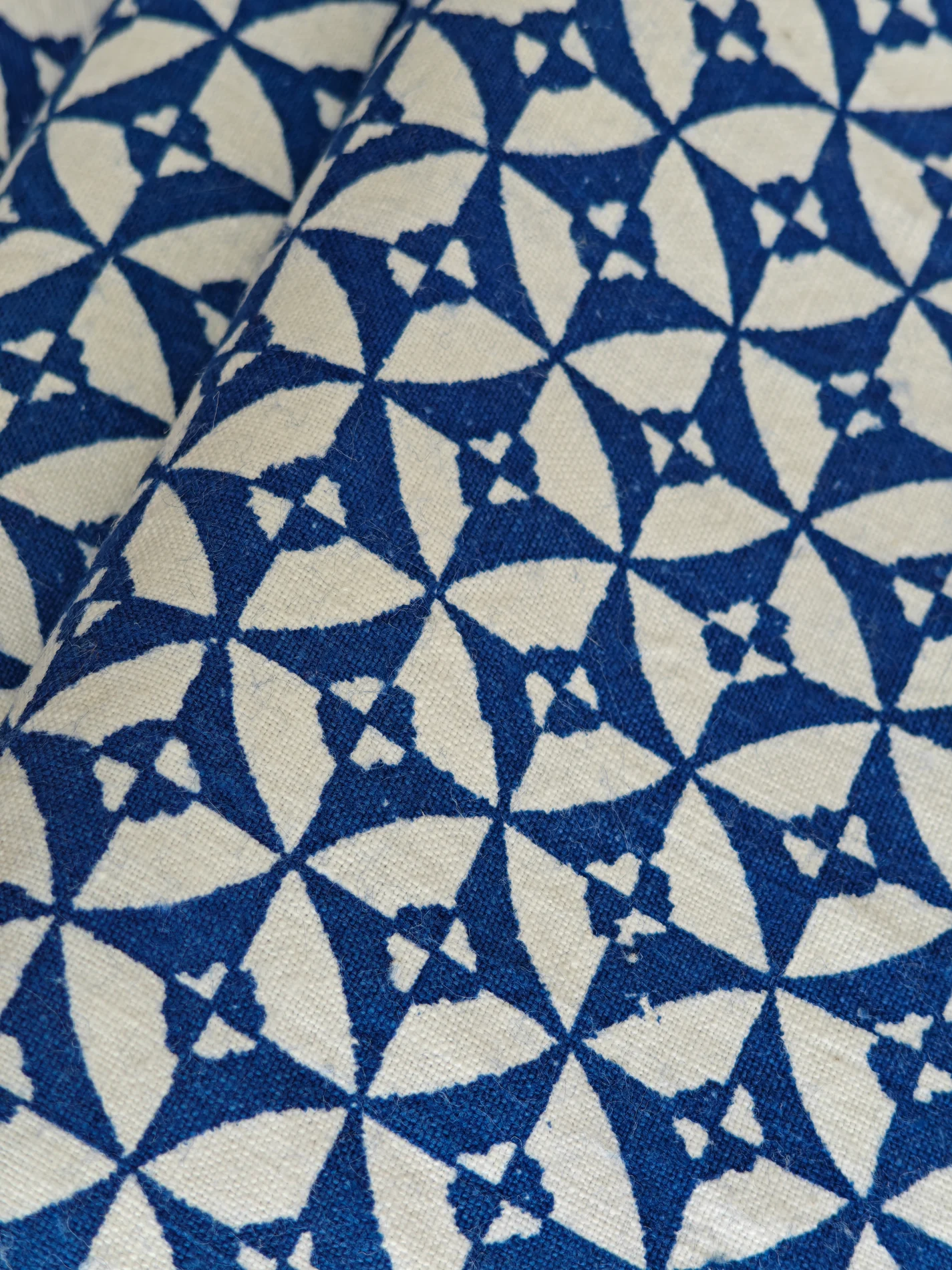
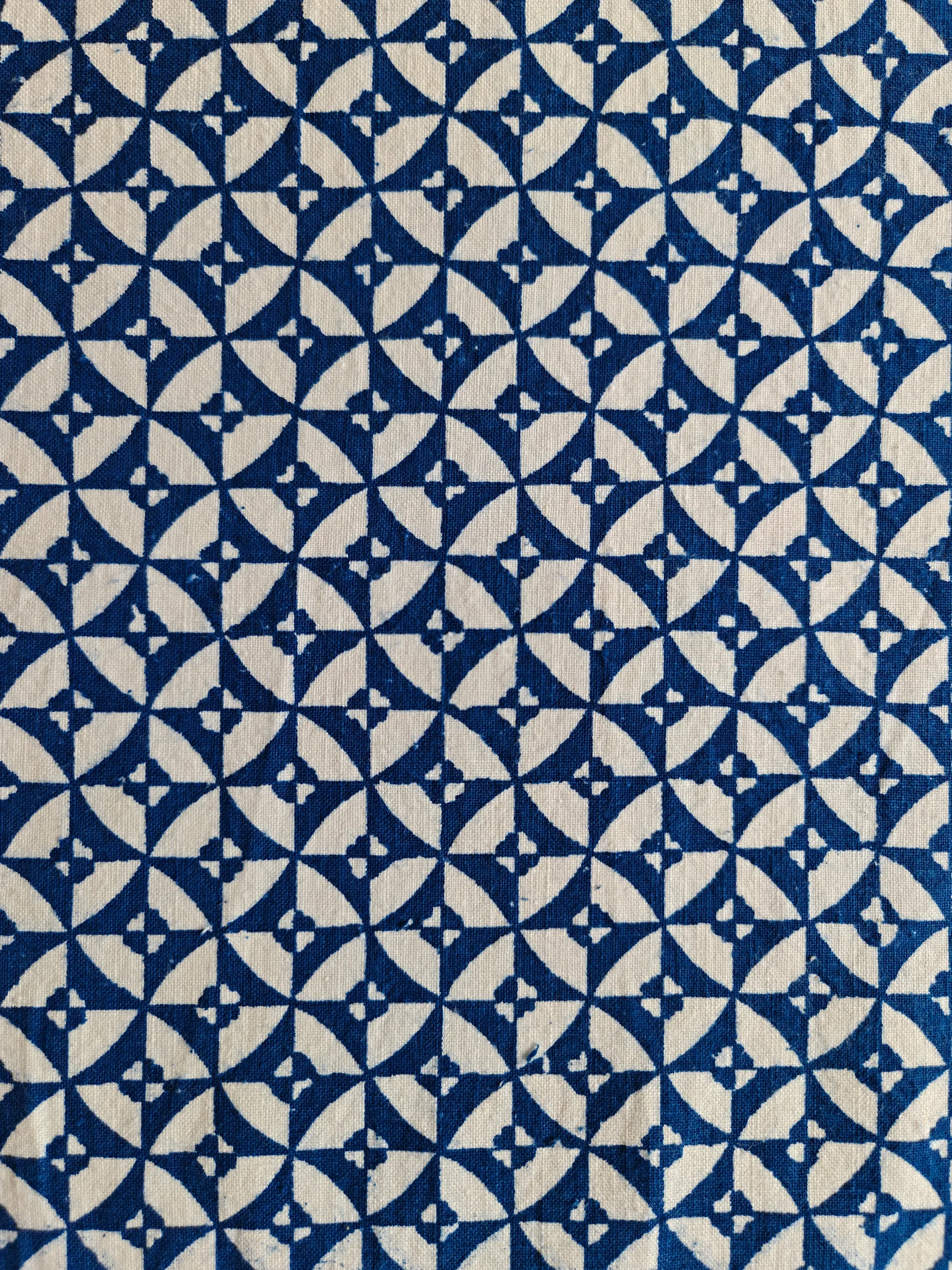
Indigo Coin Lattice — Vintage Nantong Blue Resist Cotton
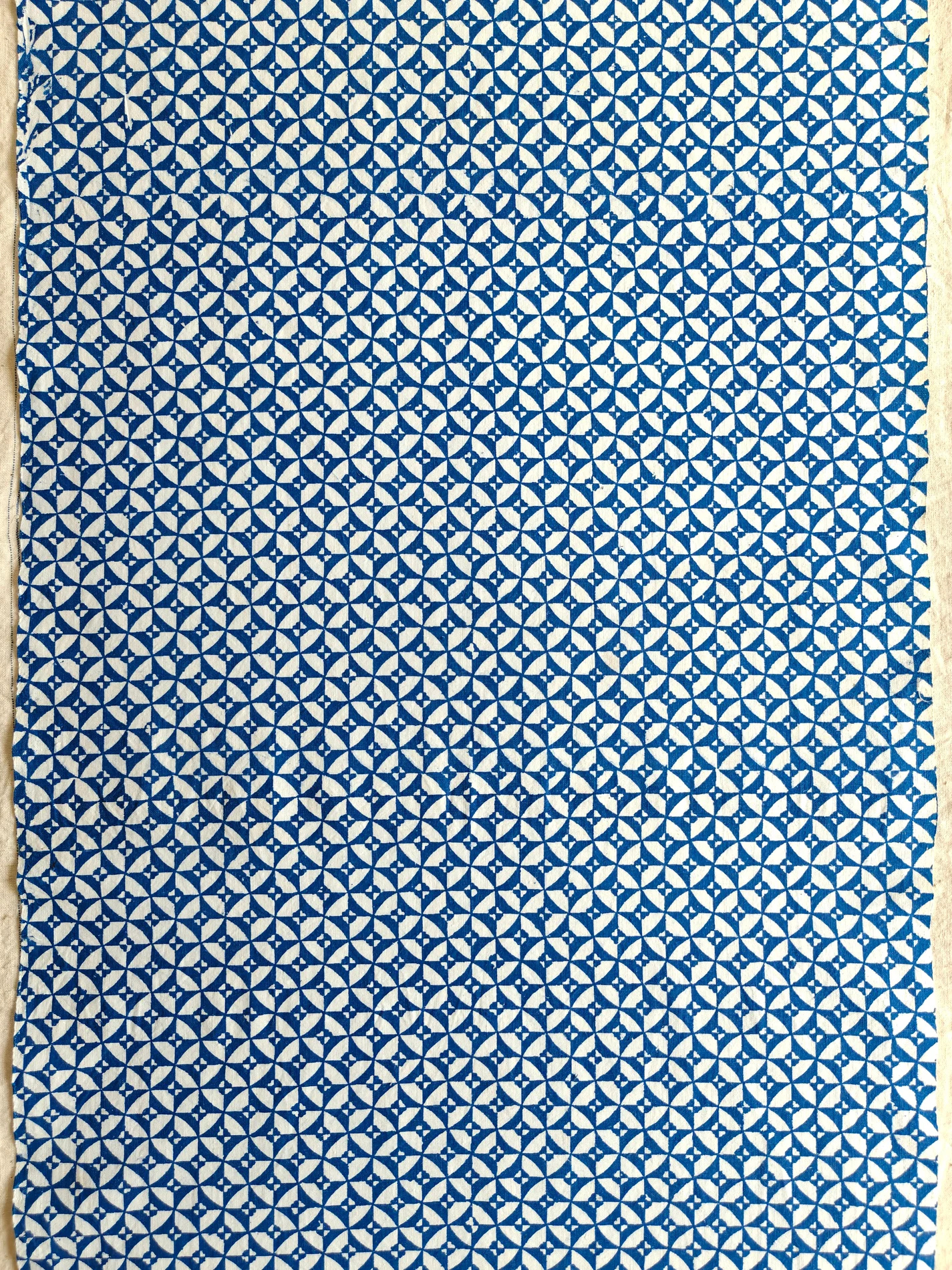
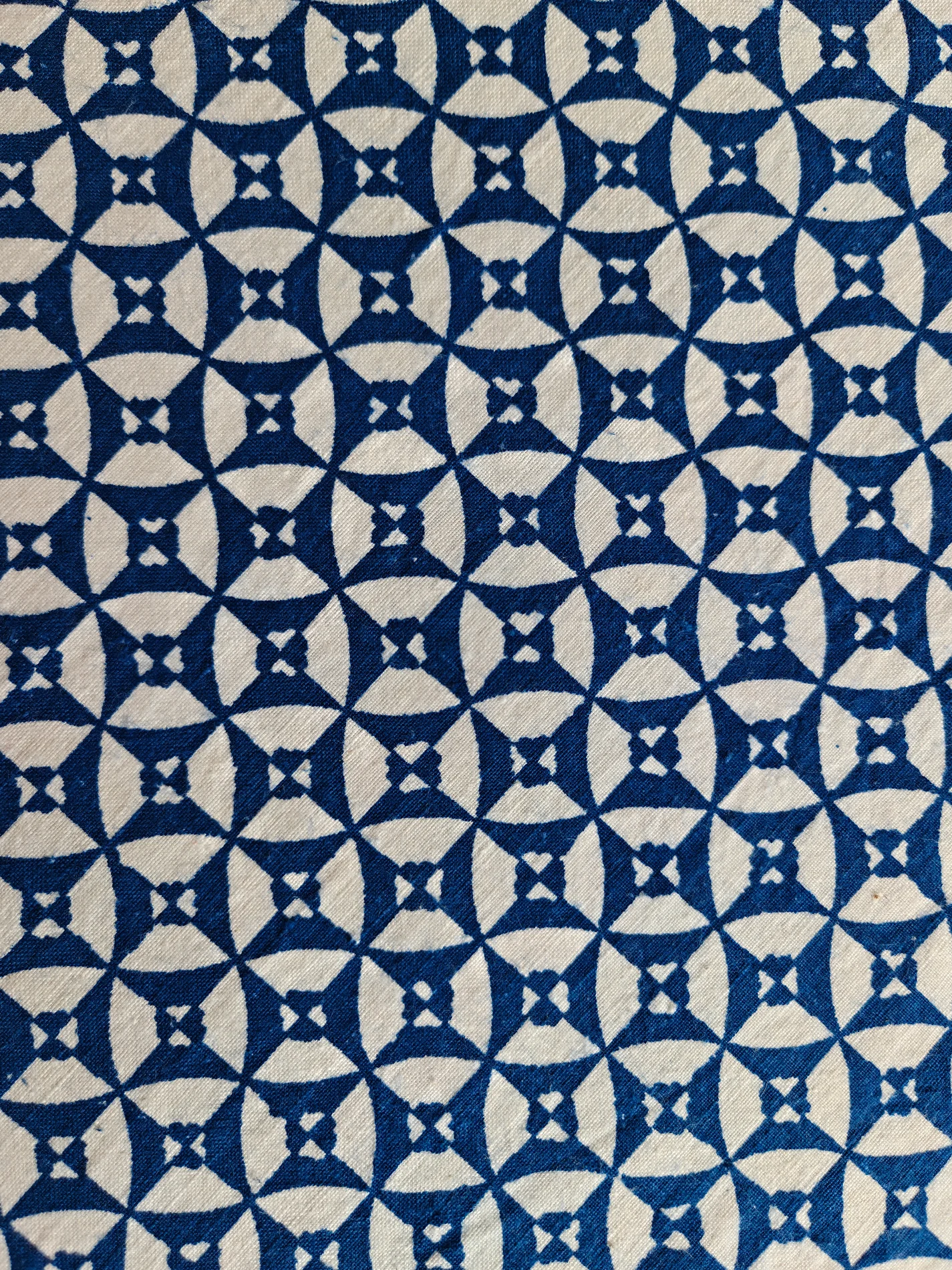
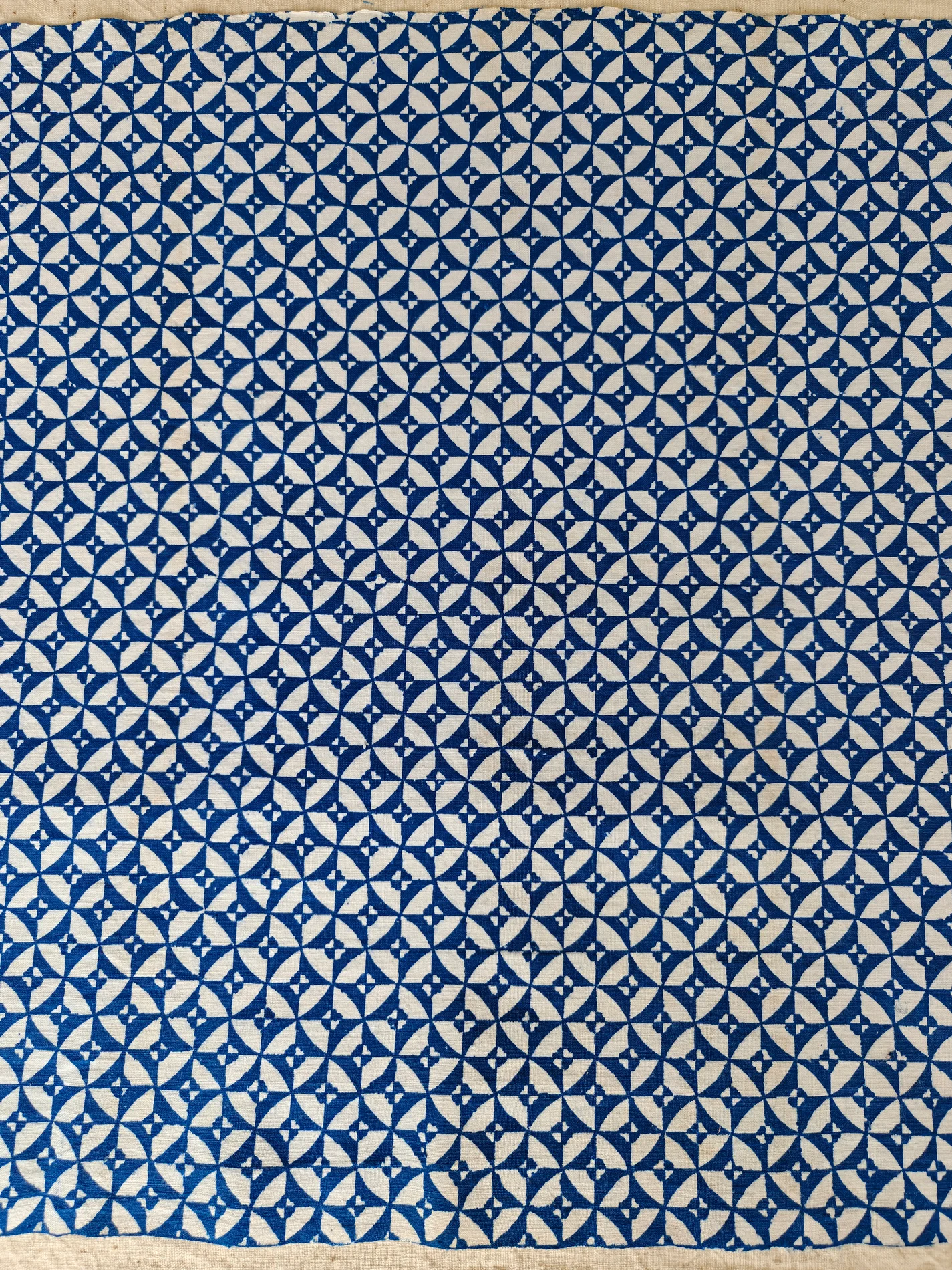
A continuous small-scale blue-and-white cash-coin-inspired lattice in traditional Nantong-style indigo resist-printed cotton; unused vintage stock, 46 cm wide, sold by the metre with only two metres remaining.
Sold by the metre — width approx. 46 cm
Width: approx. 46 cm · Recorded total: approx. 200 cm
- Quantity 1
- Approx. 100 × 46 cm / 39.4 × 18.1 inches
- Quantity 2
- Approx. 200 × 46 cm / 78.7 × 18.1 inches — one continuous piece if both units are purchased together
Total documented length: 200 cm (2 metres). Quantities 1 and 2 describe the owner’s current Etsy listing; purchases of quantity 2 are provided as one continuous two-metre piece, not two separate cuts. Check Etsy for current inventory, availability and price.
- Object ID
- TA-NT-0031
- Origin
- Nantong · Attributed to Nantong, Jiangsu Province, China
- Period
- Estimated c. 1940s–1960s
- Dating confidence
- estimated
- Material
- Traditional cotton; handspun / handwoven homespun attribution
- Dimensions
- Approx. 46 cm wide; one continuous 200 cm length, offered in 100 cm units (total 2 m)
- Technique
- Stencil paste-resist indigo printing (Lan Yin Hua Bu) · Traditional handwoven homespun cotton (attributed)
- Pattern
- Coin-inspired geometric lattice · All-over geometric repeat
- Colours
- Deep indigo blue · Natural creamy white
- Washed
- Yes
Object condition
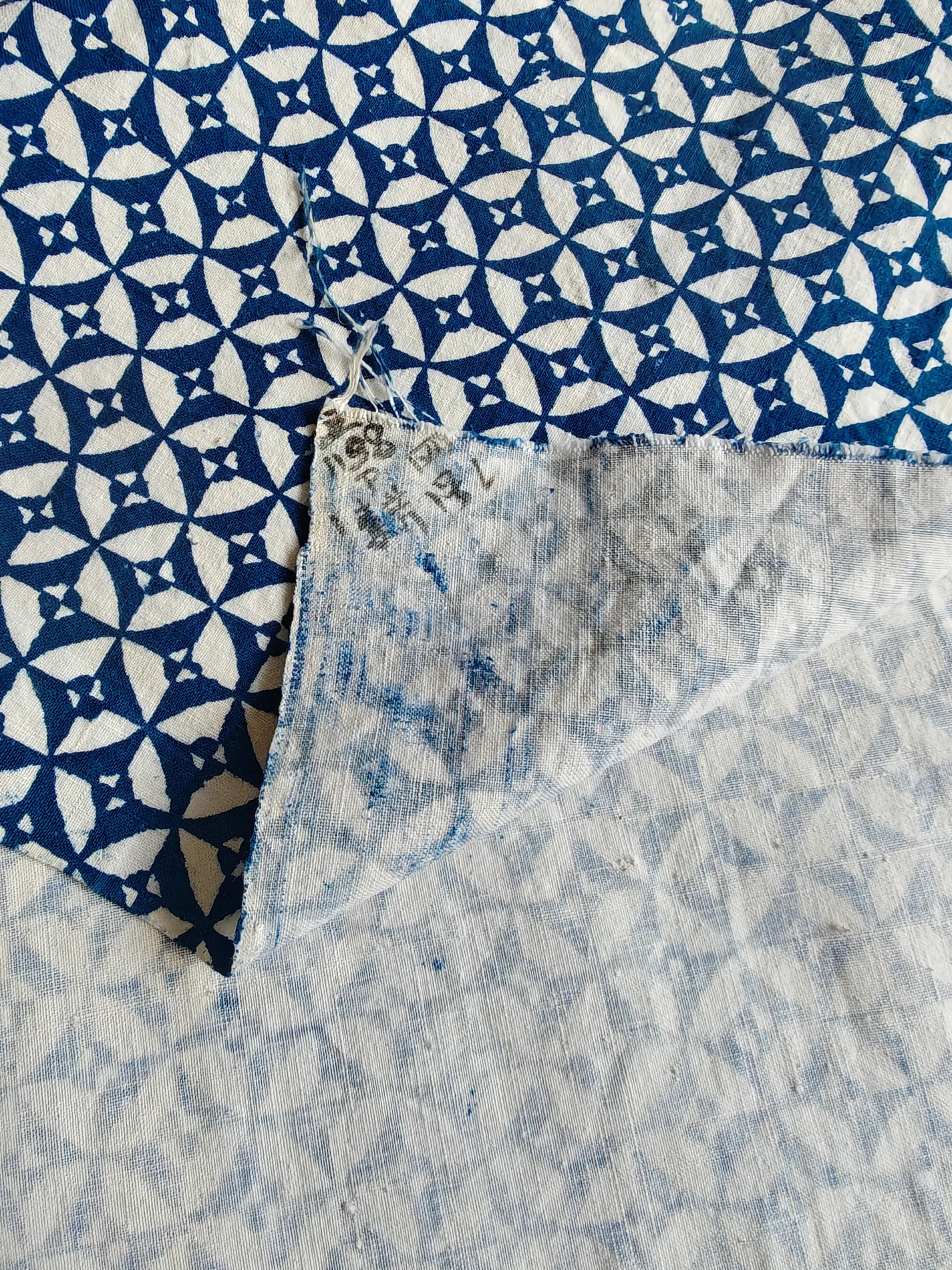
Unused old cotton fabric according to the owner, now washed and ironed. The print retains a strong indigo-and-cream contrast, with slightly irregular yarns and hand-printing characteristics. The reverse retains an old handwritten ink mark near the edge; its purpose and author are unverified. Minor storage marks, irregular fabric edges, variations of dye and print registration may be present. Please review all original photographs. The exact dye source, workshop and age have not been independently established.
Identification notes
This record is paired with the owner-supplied Etsy listing 4591840348 and photographs held in the local inventory folder numbered 128. The owner confirmed a 200 cm by 46 cm uncut narrow cotton textile, sold in 100 cm units, with exactly two metres available at the time of listing.
The textile is described by its owner as vintage unused stock made from traditional old homespun cotton, subsequently washed and ironed. Yarn-thickness irregularities are visible. These support a handspun or handwoven attribution but do not independently prove a loom type.
The geometric surface consists of repeating interlocking arcs and small square-like voids. The owner interprets the visual repeat as a copper cash-coin inspired pattern; the original printer’s historic pattern name is not documented.
Printing is catalogued as Nantong-style stencil paste-resist (hui xie / Lan Yin Hua Bu), with a cream unprinted ground and indigo-blue resist-dyed field. Naturally derived indigo is an owner attribution, not laboratory-verified.
A handwritten dark mark remains on the reverse, possibly once used to identify cloth during printing or dyeing. No exact worker, workshop, shipment or batch identity has been established. The record preserves the photographic evidence without turning that possibility into a verified signature.
Suitable uses, depending on the recipient’s material testing and care: sewing, patchwork, clothing accents, small cushion covers, textile wall panels, bags, table runners and folk textile study.
An endless lattice of prosperity
The continuous geometric repeat is interpreted by the owner as cash-coin ornament, qian wen (钱纹). Traditional Chinese round copper coins with central square holes evoke wishes for prosperity. A densely repeated field can suggest wealth and good fortune extending throughout daily life. This is a contextual cultural reading rather than a proven name given by this cloth’s original printer.
A strong blue and natural-white contrast runs across the full two metres, with no pictorial borders or figures. The pattern therefore reads consistently across small sections and makes the old cloth well suited to decorative sewing.
Unlike previously worn and repaired old household textiles, this piece is reported to be unused older fabric. Its remaining handwritten mark, cotton texture and slight printing variations have been retained as part of its surviving history.