Ivory & Indigo — Vintage Shanghai Handwoven Cotton
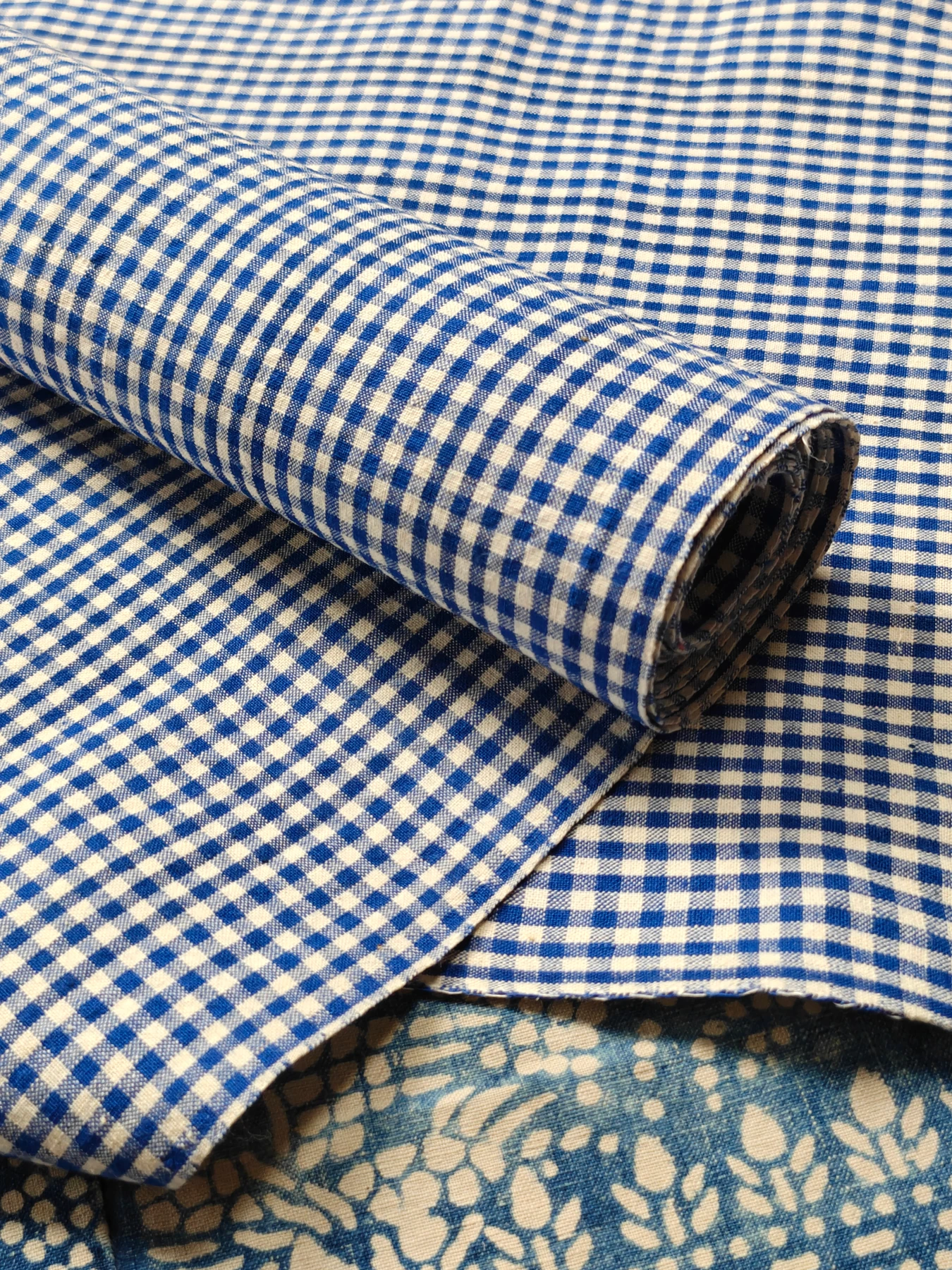
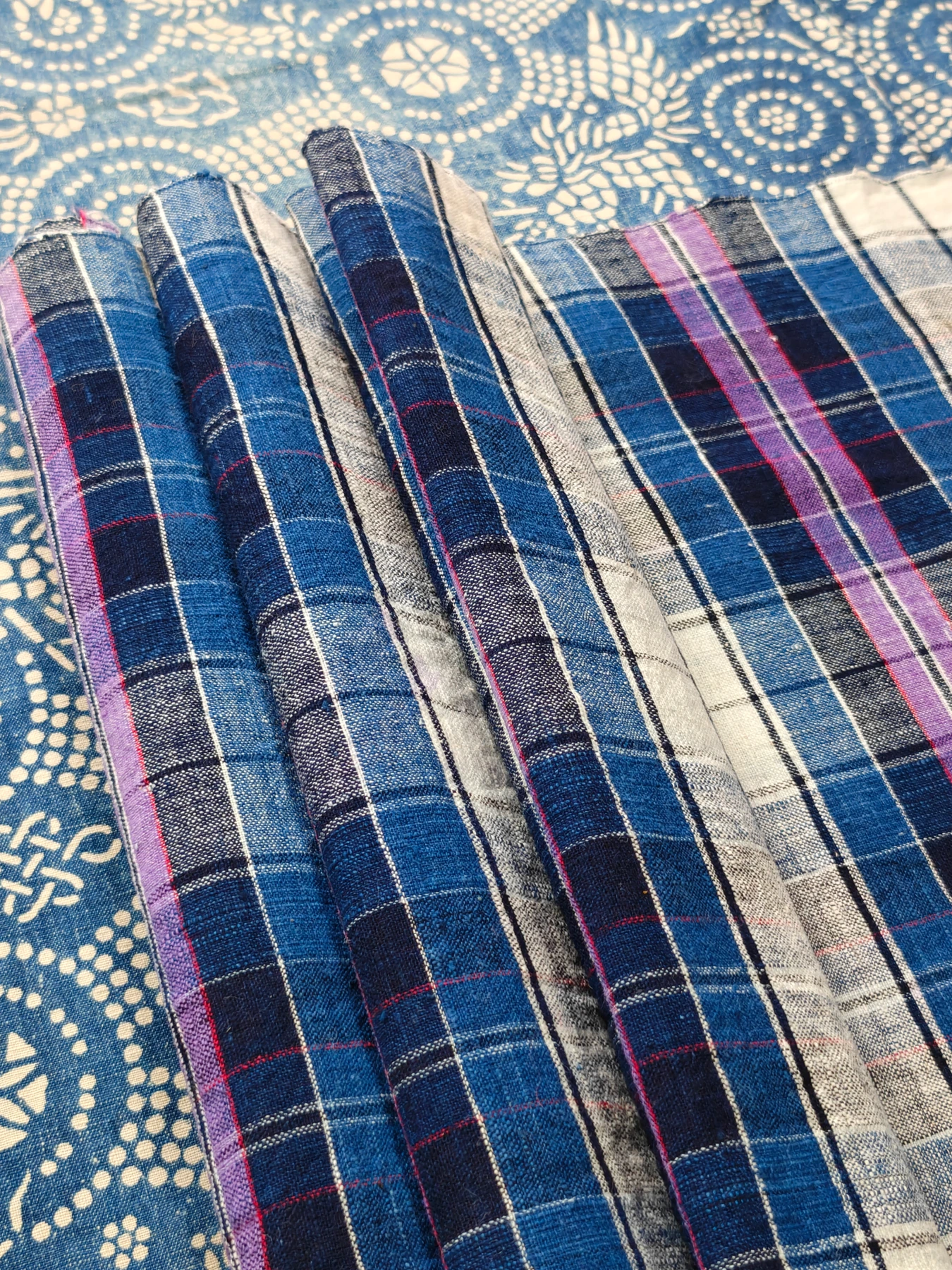
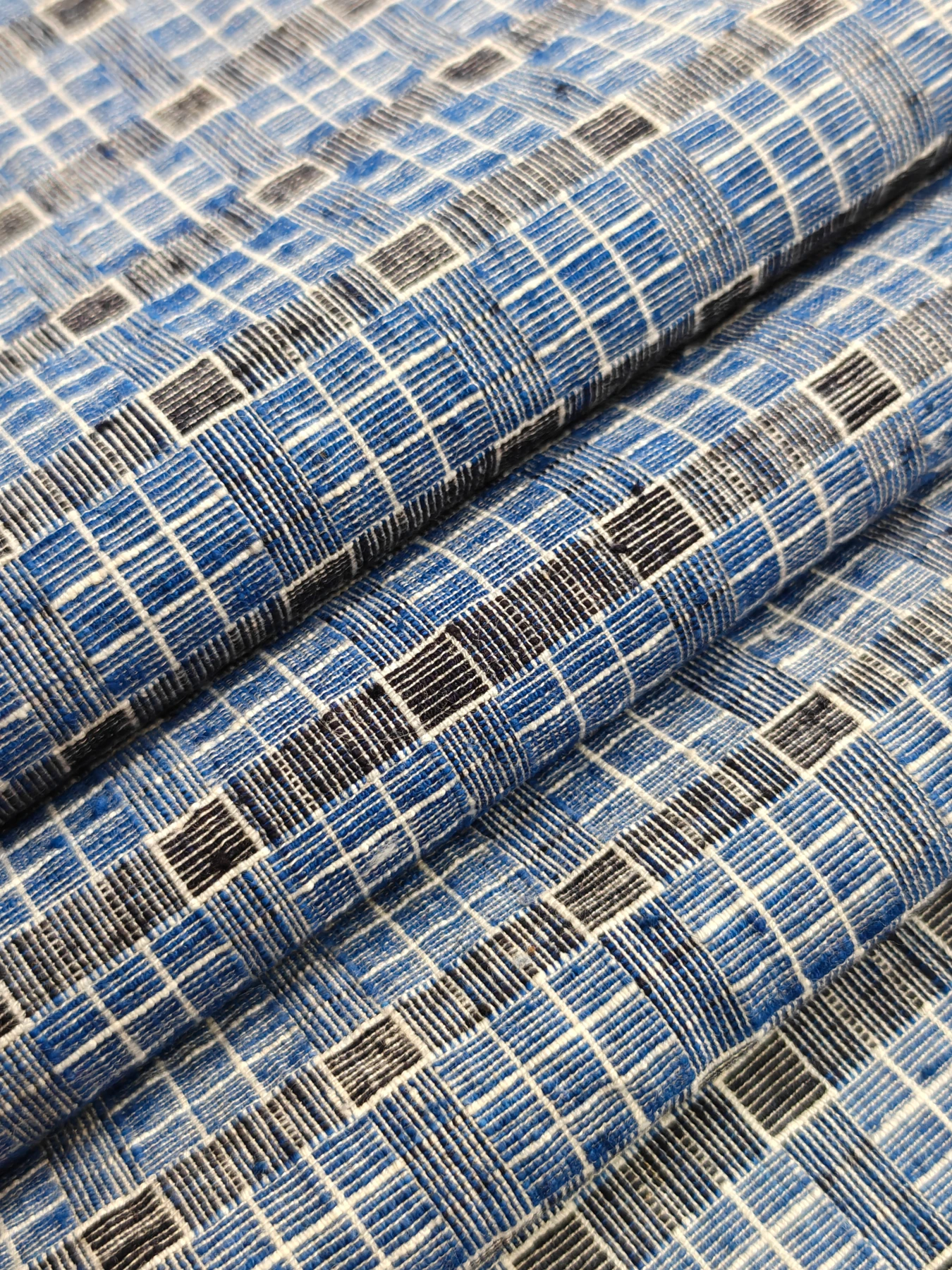
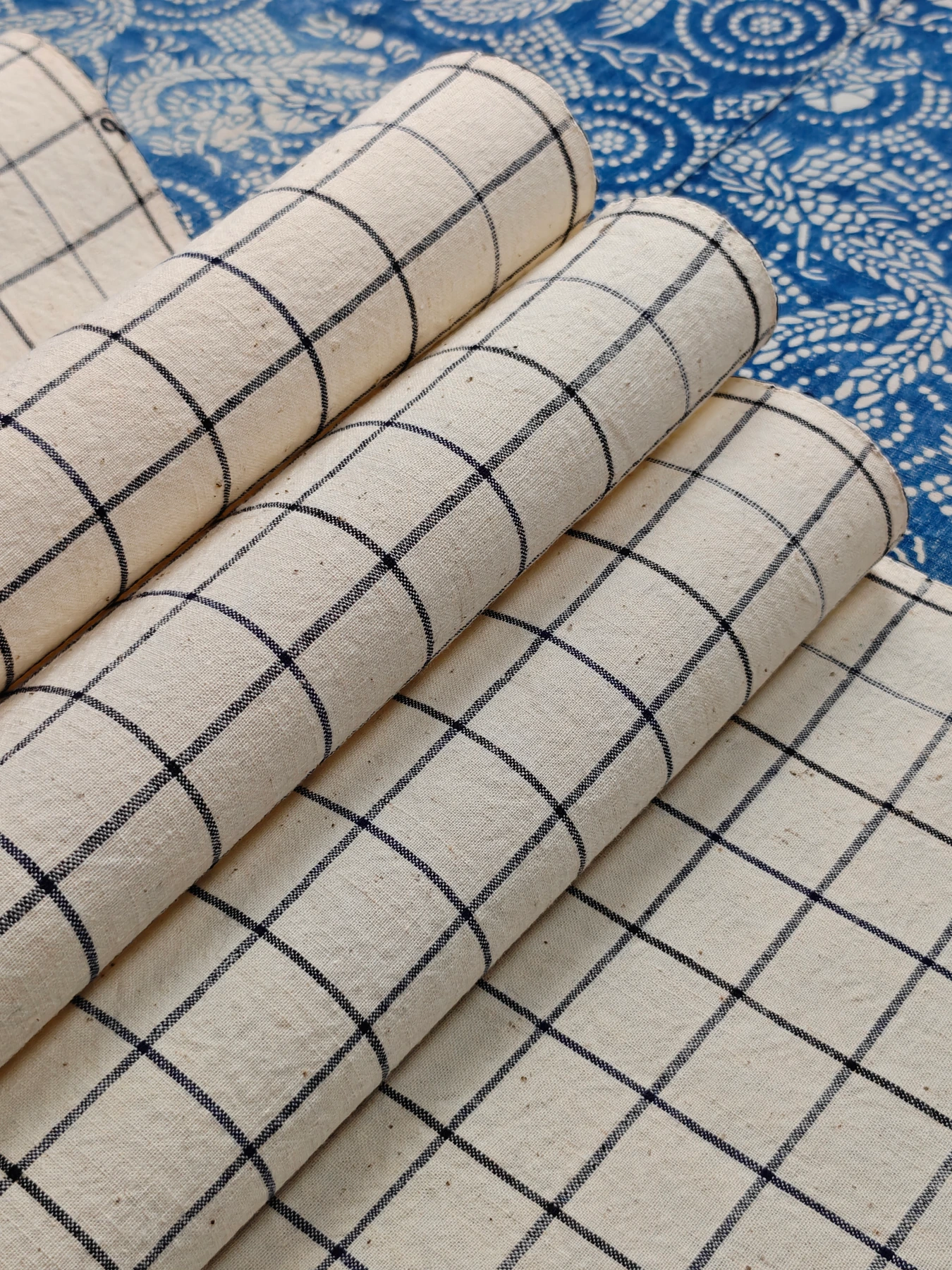
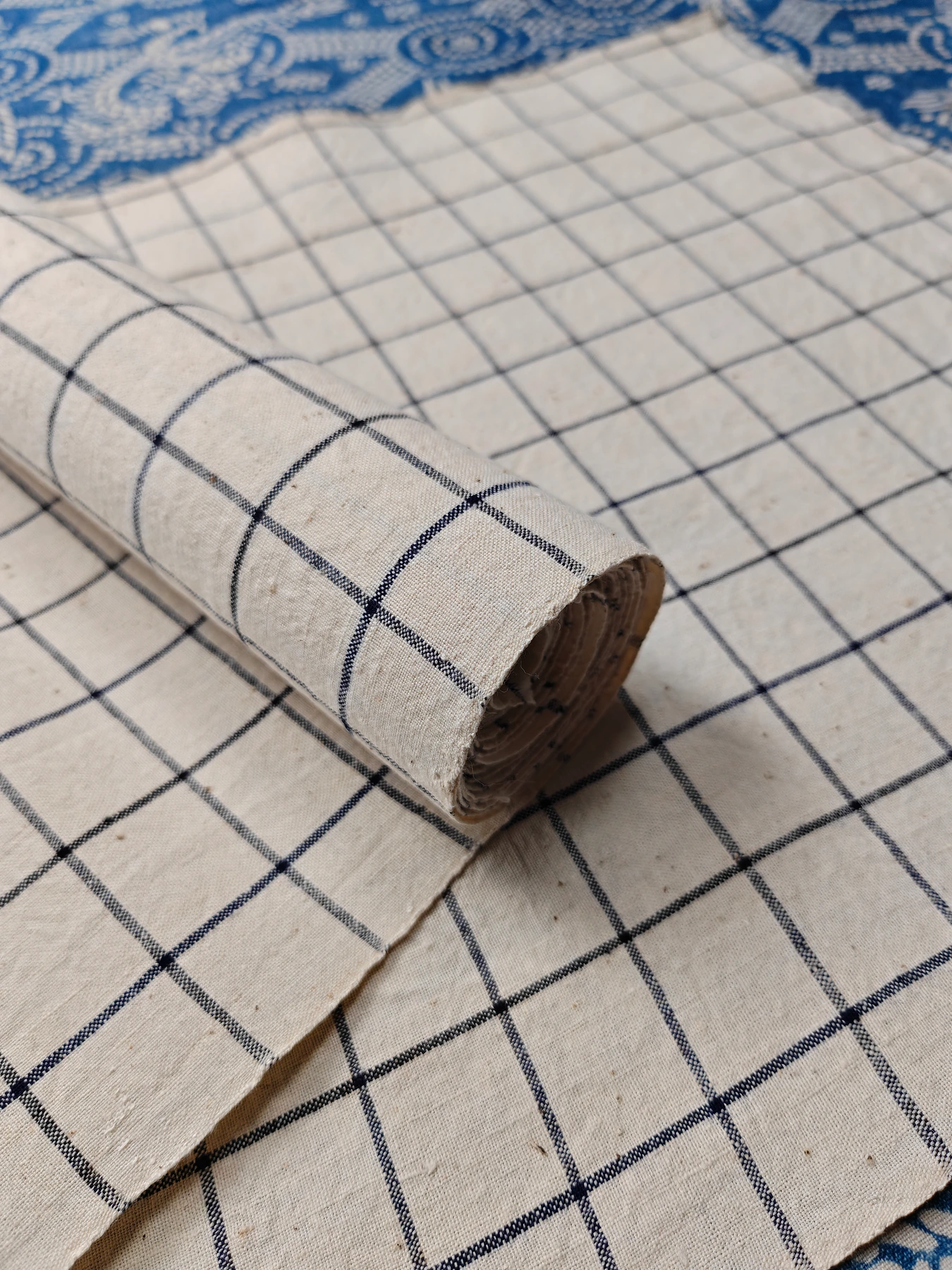
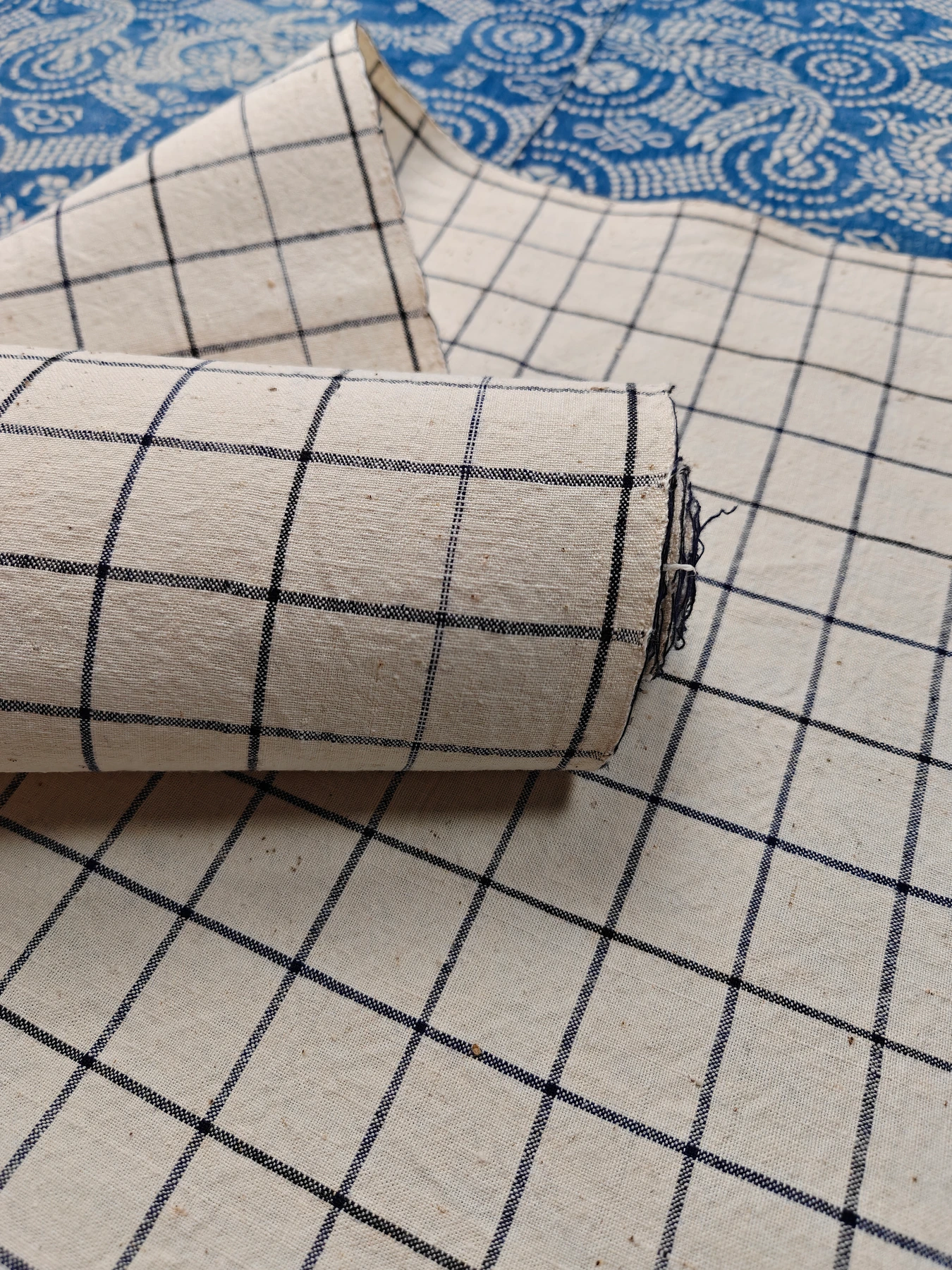
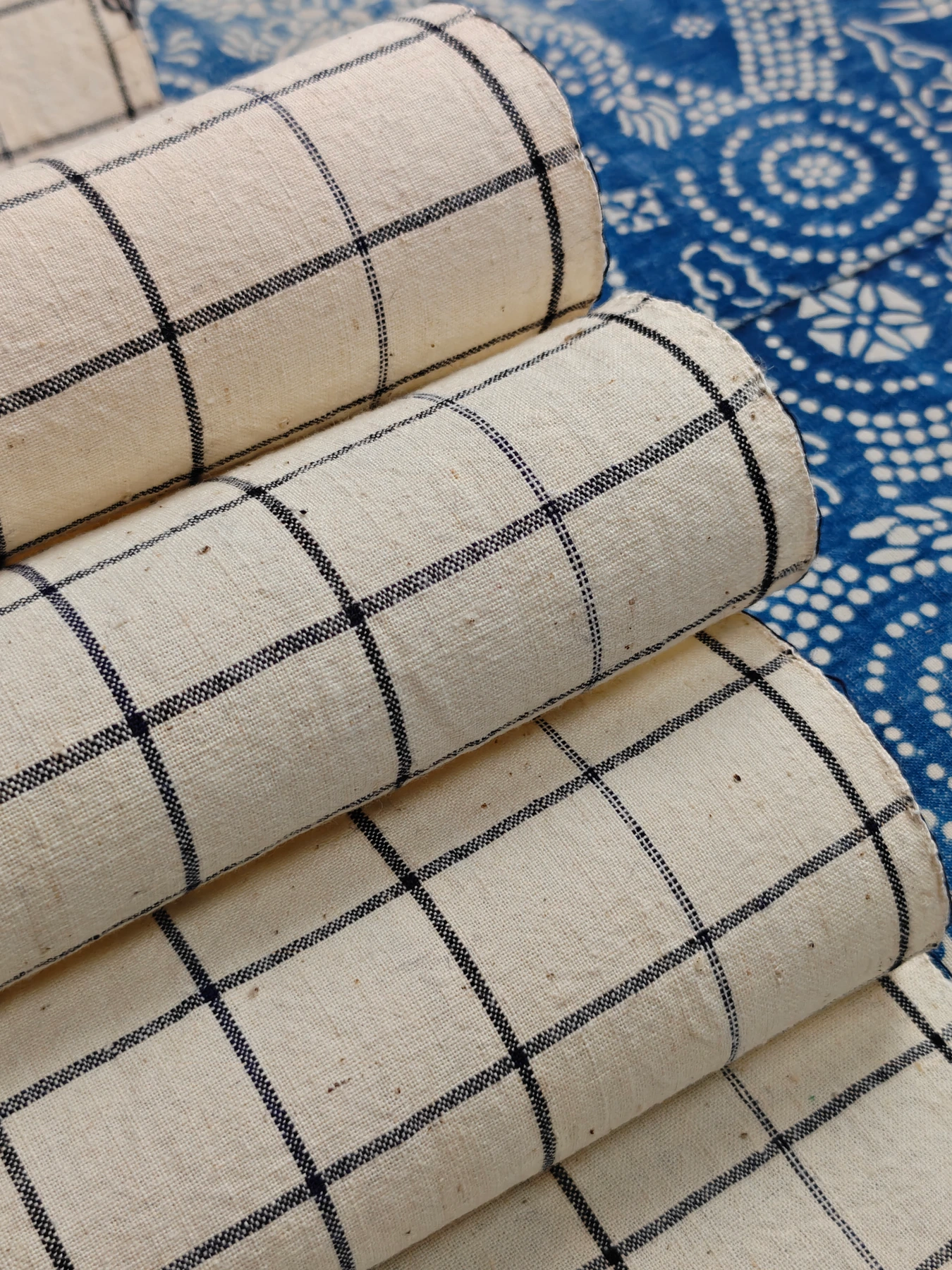
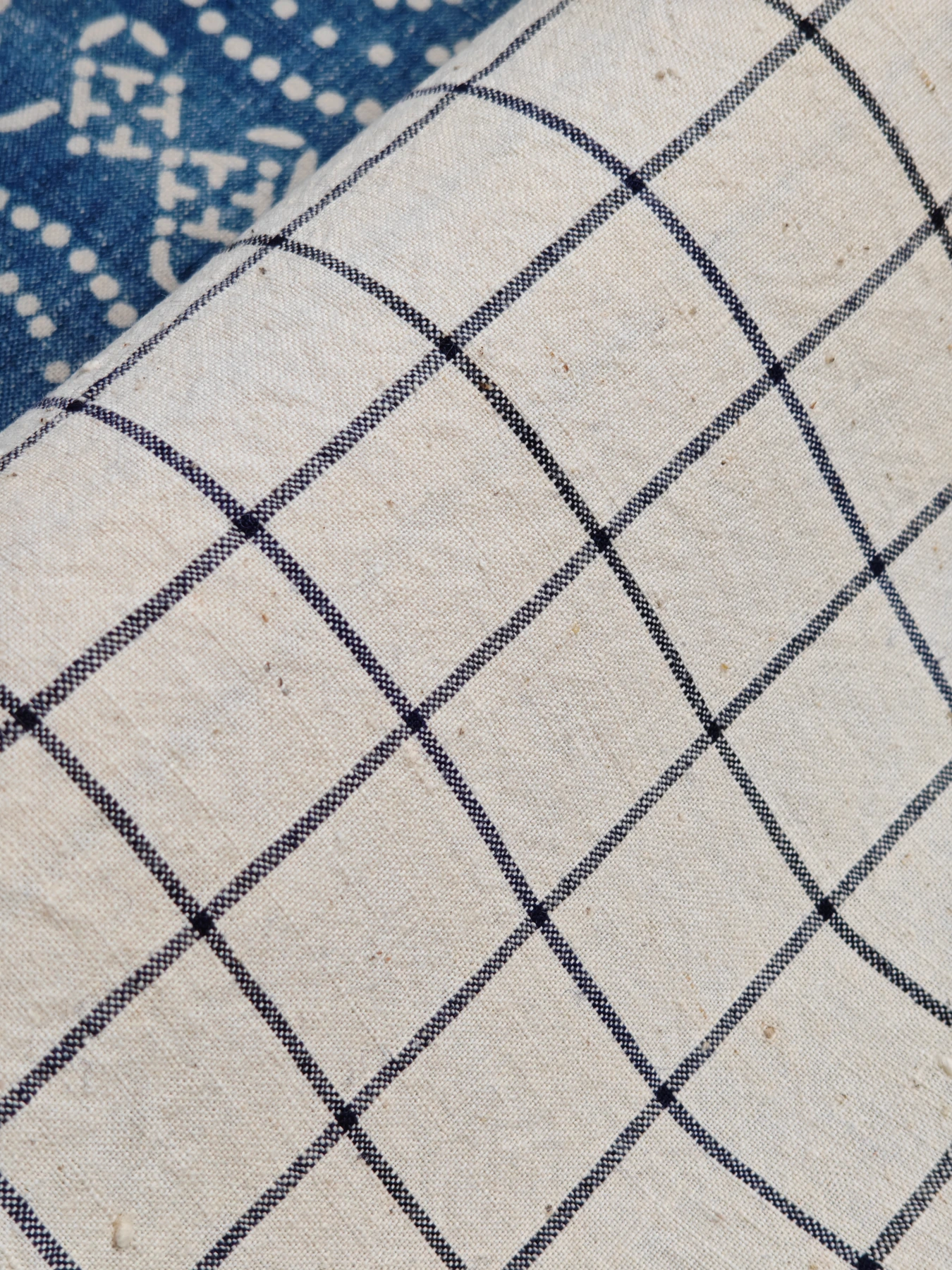
Fine indigo windowpane checks cross warm ivory handwoven cotton. Substantial yet soft, with tiny cotton flecks; buy all seven units for the full 374 cm continuous length.
Sold in 50 cm increments — full-roll bonus at seven units
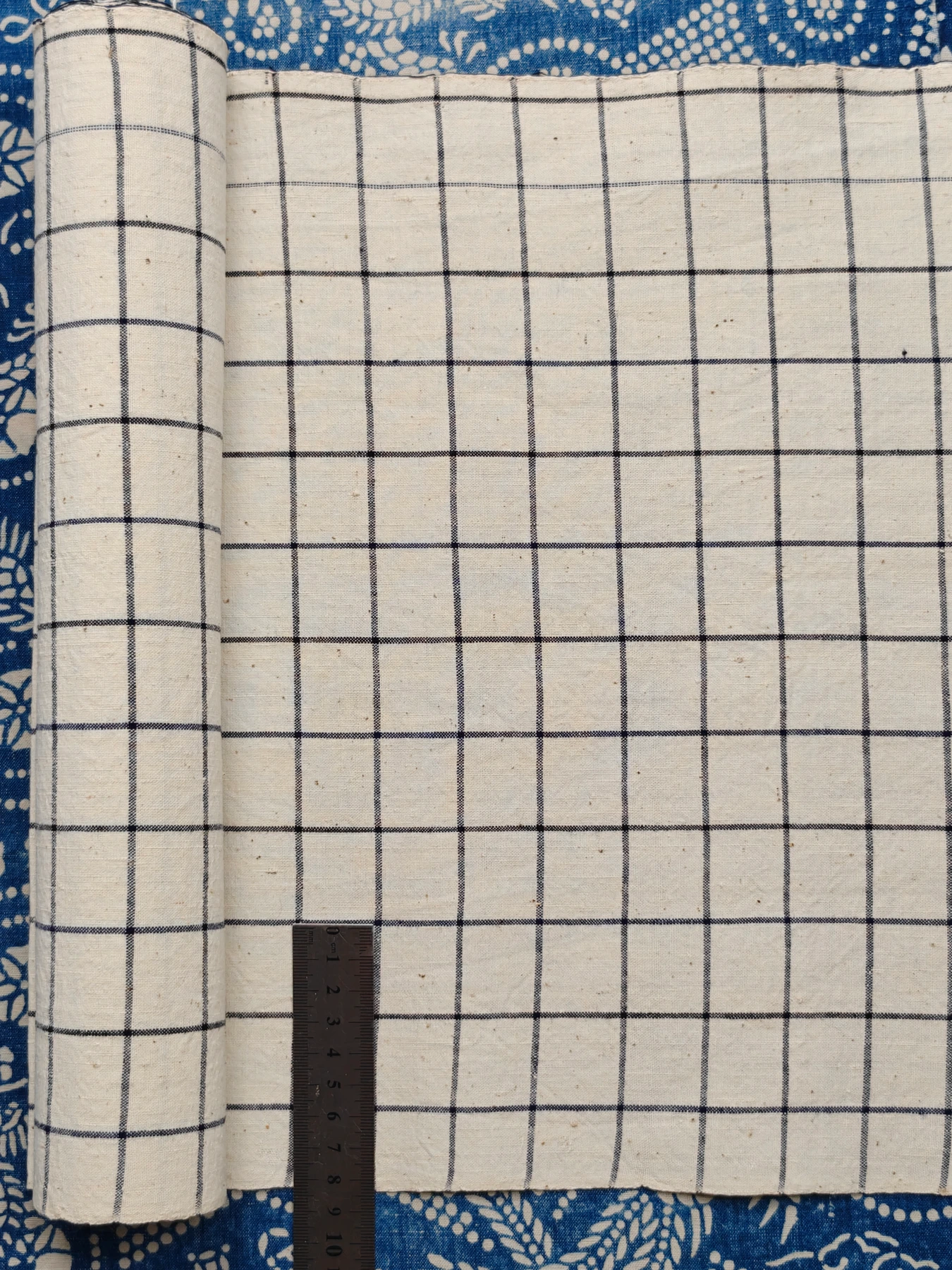
Width: approx. 35 cm · Recorded total: approx. 374 cm
- Quantity 1
- 50 × 35 cm / 19.7 × 13.8 inches
- Quantity 2
- 100 × 35 cm / 39.4 × 13.8 inches
- Quantity 3
- 150 × 35 cm
- Quantity 4
- 200 × 35 cm
- Quantity 5
- 250 × 35 cm
- Quantity 6
- 300 × 35 cm
- Quantity 7
- Full continuous roll: 374 × 35 cm / 147.2 × 13.8 inches — includes an extra 24 cm at no charge
Multiple quantities will be supplied as one continuous piece. Purchase all seven available units to receive the full 374 cm, including the extra 24 cm at no additional charge. Check Etsy for current availability and pricing.
- Object ID
- TA-SH-0009
- Origin
- Shanghai · Shanghai, China (owner attribution)
- Period
- Estimated Republican era–early People’s Republic period
- Dating confidence
- estimated
- Material
- Substantial, thick and soft traditional hand-spun cotton (owner attribution)
- Dimensions
- Approx. 35 cm wide; sold in 50 cm increments, with a recorded total length of 374 cm
- Technique
- Hand-spun, handloom-woven cotton (owner attribution) · Yarn-dyed woven pattern
- Pattern
- Fine indigo windowpane checks
- Colours
- Warm natural ivory · Deep indigo blue
- Washed
- Yes
Object condition
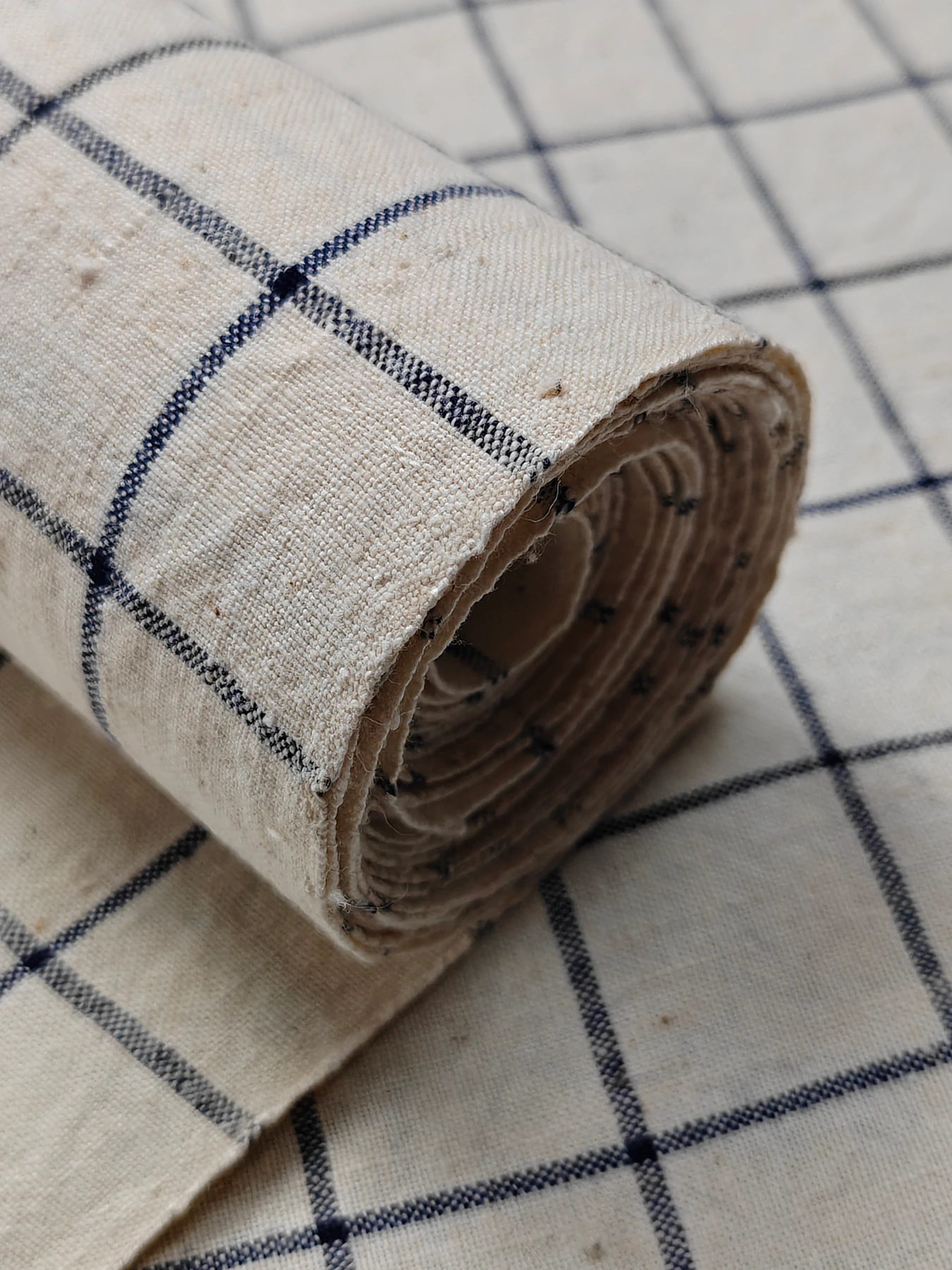
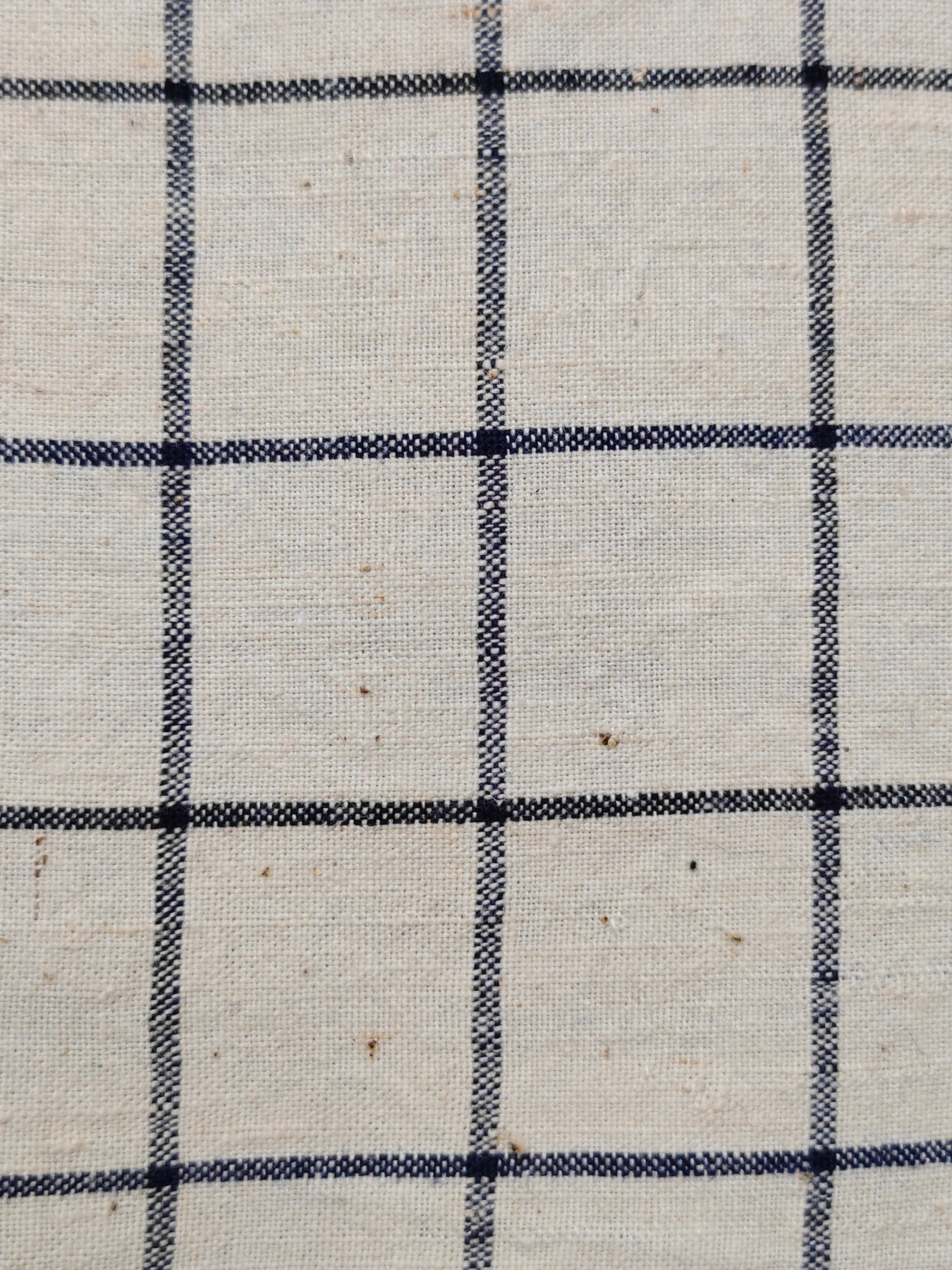
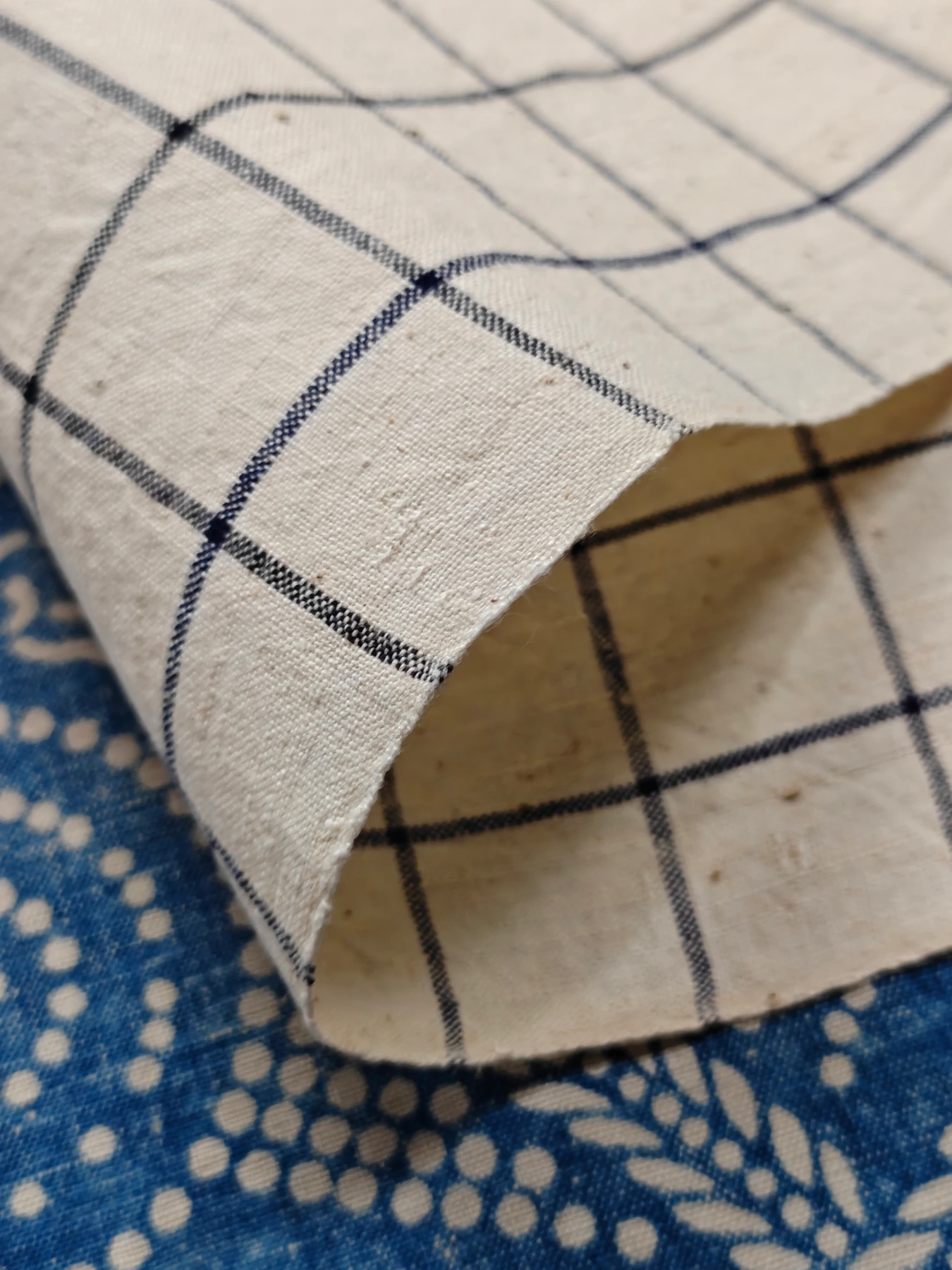
Vintage handwoven cotton, carefully washed and ironed. Thick, substantial and soft, with warm natural ivory rather than bleached white. Tiny brown cottonseed-husk flecks, natural yarn variations and possible minor age-related irregularities remain visible. The owner identifies the brown flecks as natural cotton-processing remnants, not dirt. Examine the photographs. Background textiles are not included.
Identification notes
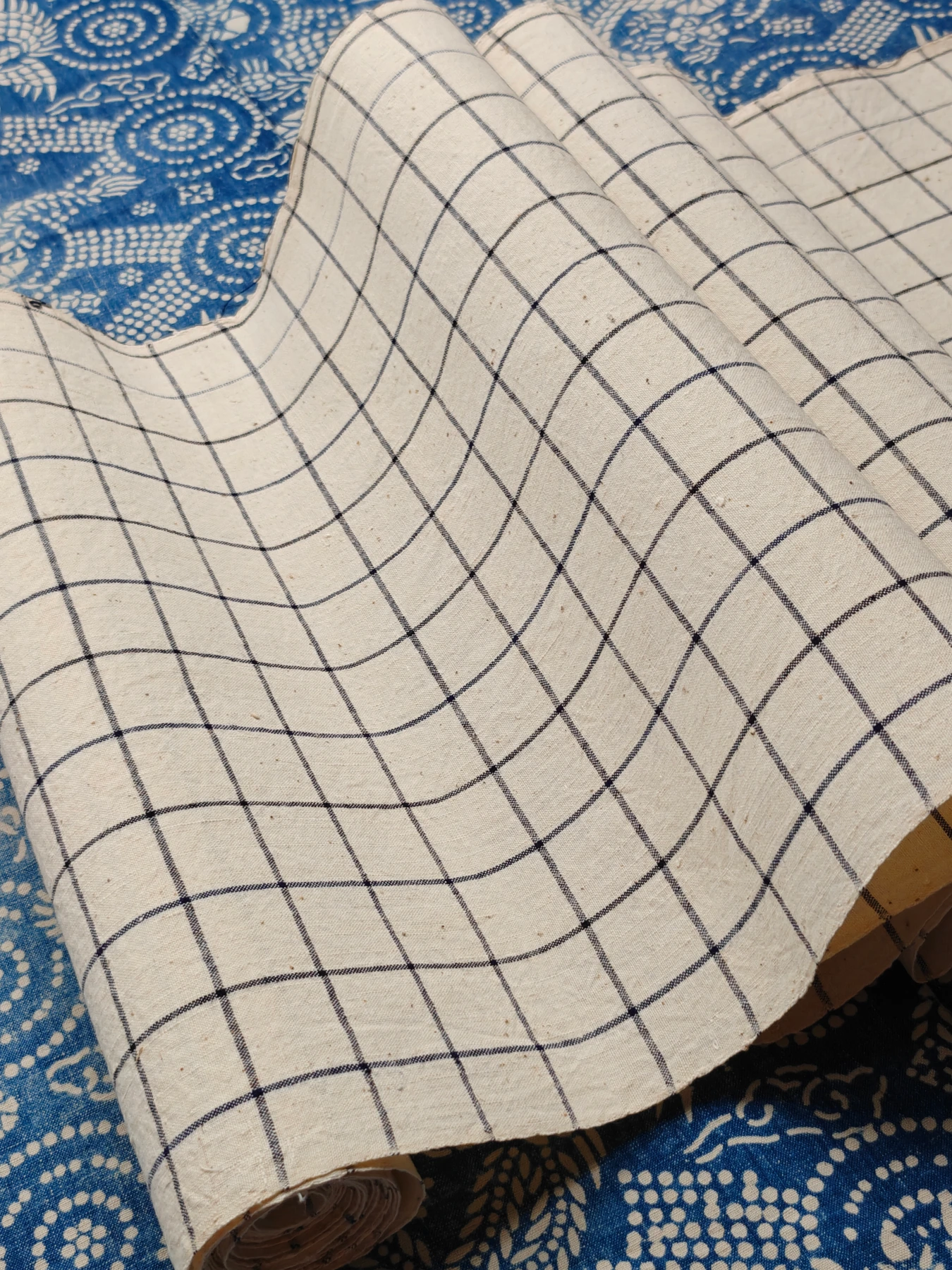
Fine indigo-blue windowpane checks are woven into a warm, natural ivory ground. The cotton is creamy rather than bright bleached white, with hand-spun yarn variations, tiny natural cotton flecks and the texture of old handwoven cloth.
Attributed to Shanghai, China, and estimated to date from the Republican era to the early People’s Republic period. Exact place, production year and maker are undocumented.
The source describes traditional hand-spun cotton, handloom-woven into a yarn-dyed windowpane check. Contrasting coloured yarns create the pattern directly within the cloth; it is woven, not printed. The precise dye composition and original weaving equipment have not been independently verified.
Substantial yet soft cotton retains gentle variations in yarn thickness and a tactile handmade surface. In the supplied folk interpretation, the orderly squares evoke balance, stability and a peaceful household.
Sold in 50 cm increments, approximately 35 cm / 13.8 inches wide. Quantity 1 = 50 × 35 cm / 19.7 × 13.8 inches; quantity 2 = 100 × 35 cm / 39.4 × 13.8 inches. Multiple quantities are supplied continuously. Buy all seven units and receive the entire 374 cm / 147.2 inches, including an extra 24 cm at no charge.
Carefully washed and ironed. Tiny brown specks are identified in the owner’s account as natural cottonseed-husk remnants from cotton processing, not dirt. Natural yarn variations and possible minor age-related irregularities remain visible; examine all original photographs.
Suitable for tea mats, table runners, handmade bags and pouches, slow stitching, patchwork, cushion covers, rustic home décor, traditional sewing and textile art.
Soft ivory, lines of blue, / Old cotton threads, both strong and true. / Within each square, a quiet grace, / The warmth of hands, the trace of place.
From Tubu Atlas, with love: we treasure old Chinese textiles for their fibres, craftsmanship and stories. Sometimes the simplest fabrics have the most to tell—a little piece of quiet beauty, woven to last.
Simple squares, peaceful living
The supplied folk interpretation reads the orderly windowpane squares as balance, stability and a peaceful household. This is a cultural reading rather than documented original maker intent.