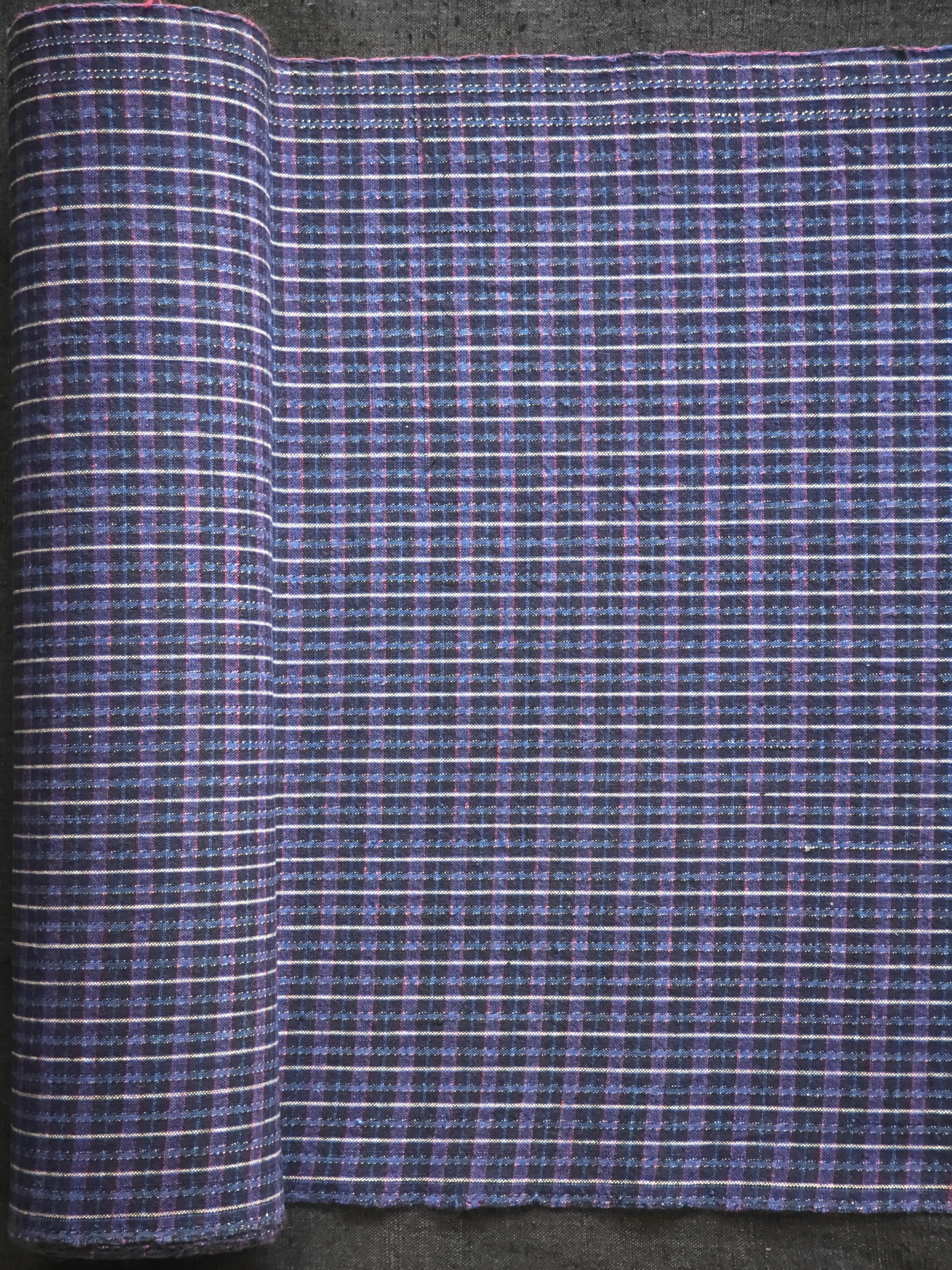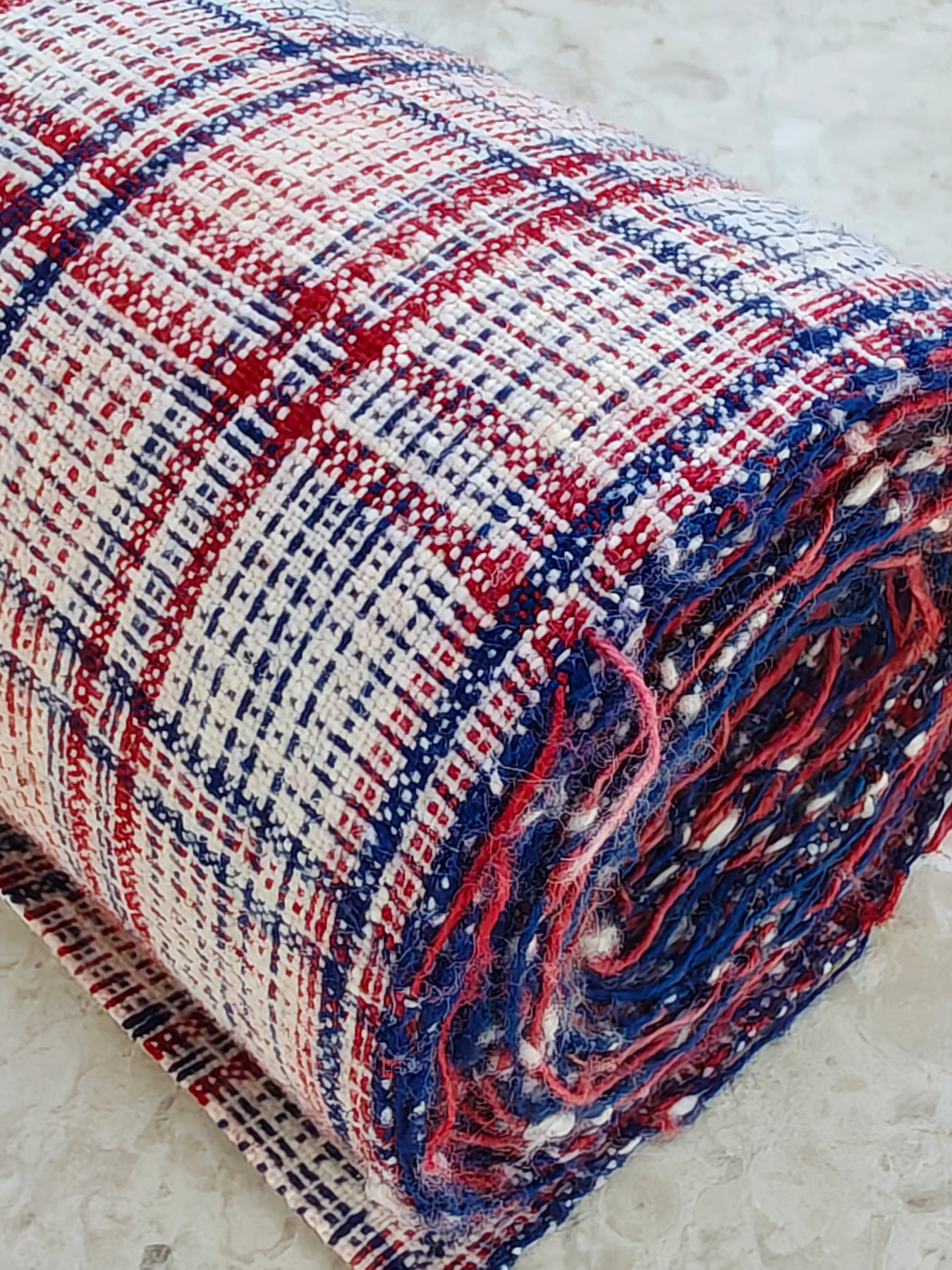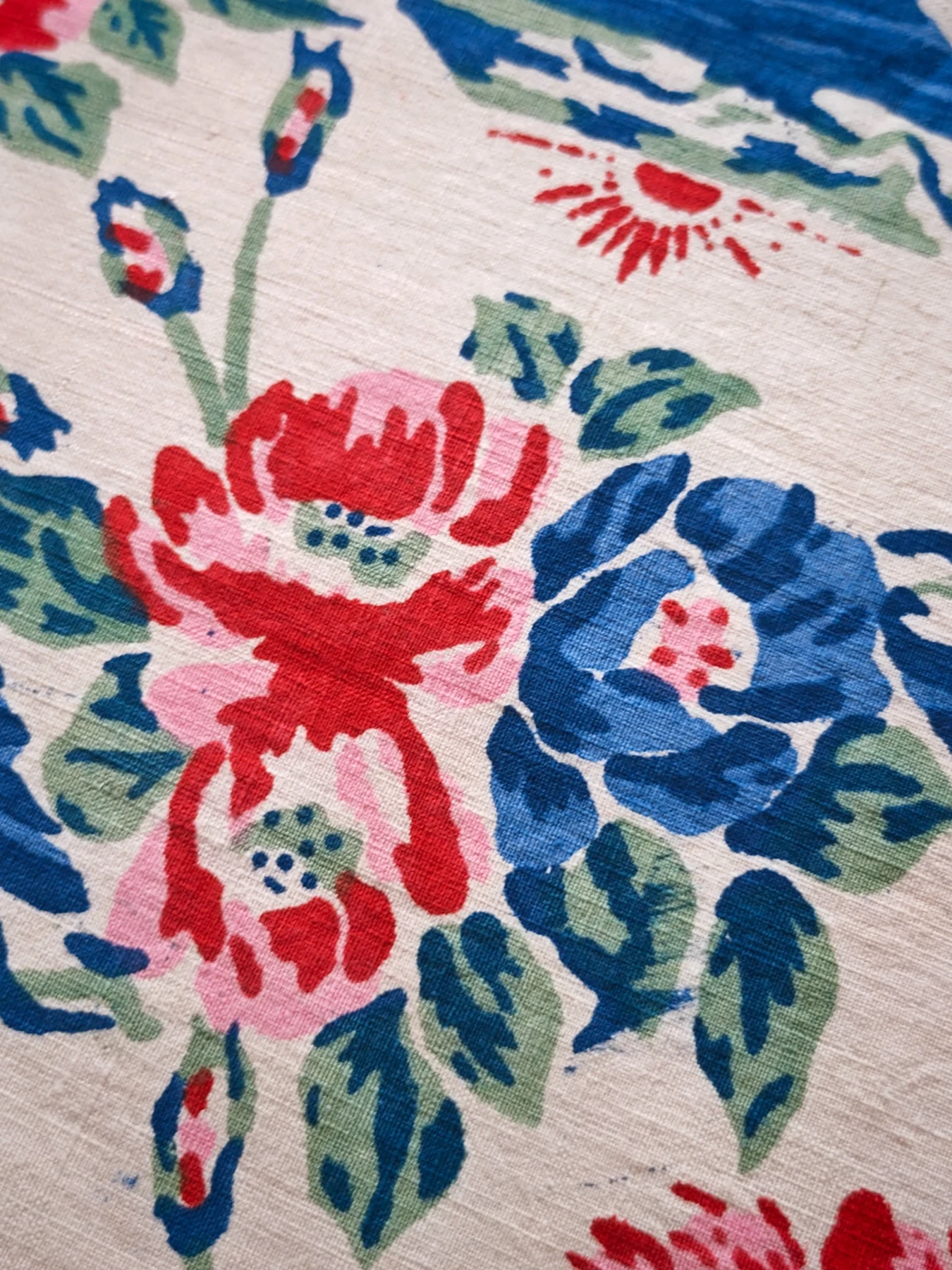
Snowflake Yarn Plaid — Jiangnan Handwoven Homespun
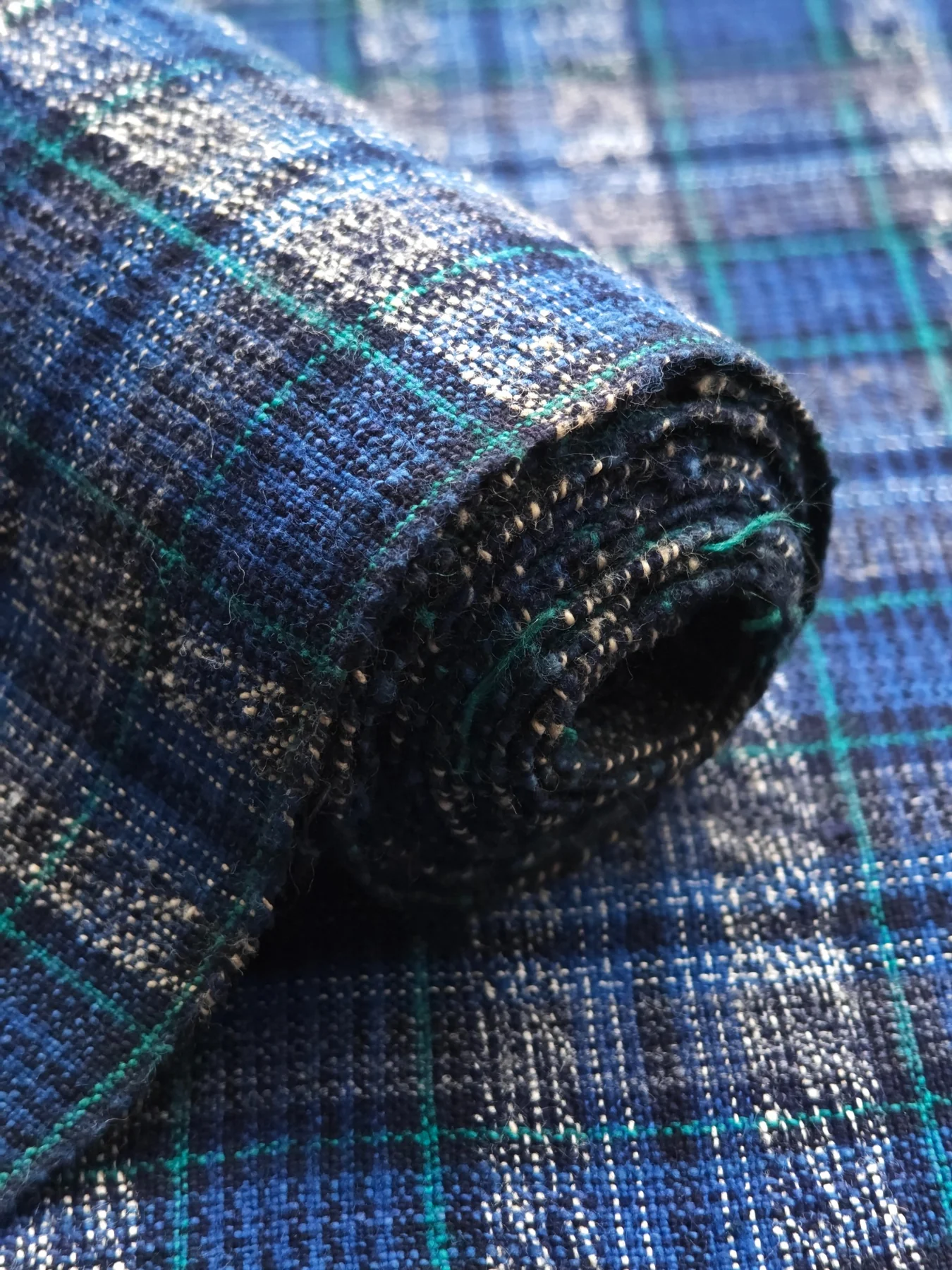
A narrow Jiangnan plaid whose mottled grey “snowflake” yarn turns a quiet blue-green grid into a close study of handspun fibre, domestic weaving and traditional yarn preparation.
- Object ID
- TA-JN-0001
- Origin
- Jiangnan · Likely Shanghai Pudong / Chongming / Nantong area
- Period
- c. 1940s–1950s
- Dating confidence
- estimated
- Material
- Handspun cotton
- Dimensions
- Approx. 145 × 34 cm
- Technique
- Traditional narrow-loom hand weaving · Plant-ash-associated yarn preparation
- Pattern
- Woven plaid · Snowflake / feather yarn effect
- Colours
- Deep blue · Charcoal grey · Soft grey · Green
- Washed
- No
Object condition
Well preserved for its estimated age, with a substantial yet soft hand, strong woven structure and visible variation in handspun yarn thickness. Mottled pale flecks belong to the grey yarn rather than representing surface staining.
Identification notes
The plaid is woven, not printed. Deep blue and green yarns cross charcoal-grey sections to build the design structurally.
Working catalog notes associate the mottled grey yarn with traditional plant-ash water (草木灰水) preparation, producing an irregular grey tone rather than an industrially uniform colour.
Tiny pale flecks in the grey yarn create an effect described as 雪花纱 (“snowflake yarn”) or 羽毛纱 (“feather yarn”). They are part of the yarn itself, not mildew or dirt.
The approximately 34 cm width is consistent with older narrow household loom weaving. Precise village, maker and production year are unknown.
A plaid that records the yarn itself
The visual interest of this cloth lies as much in fibre preparation and yarn irregularity as in the plaid pattern. From a distance the check is restrained; close up, slubs and mottled flecks become the main evidence of making.
The record therefore treats colour variation not as a defect to normalize but as material information about older household textile production.