Moonlit Reed — Jiangnan Reed-Mat Weave
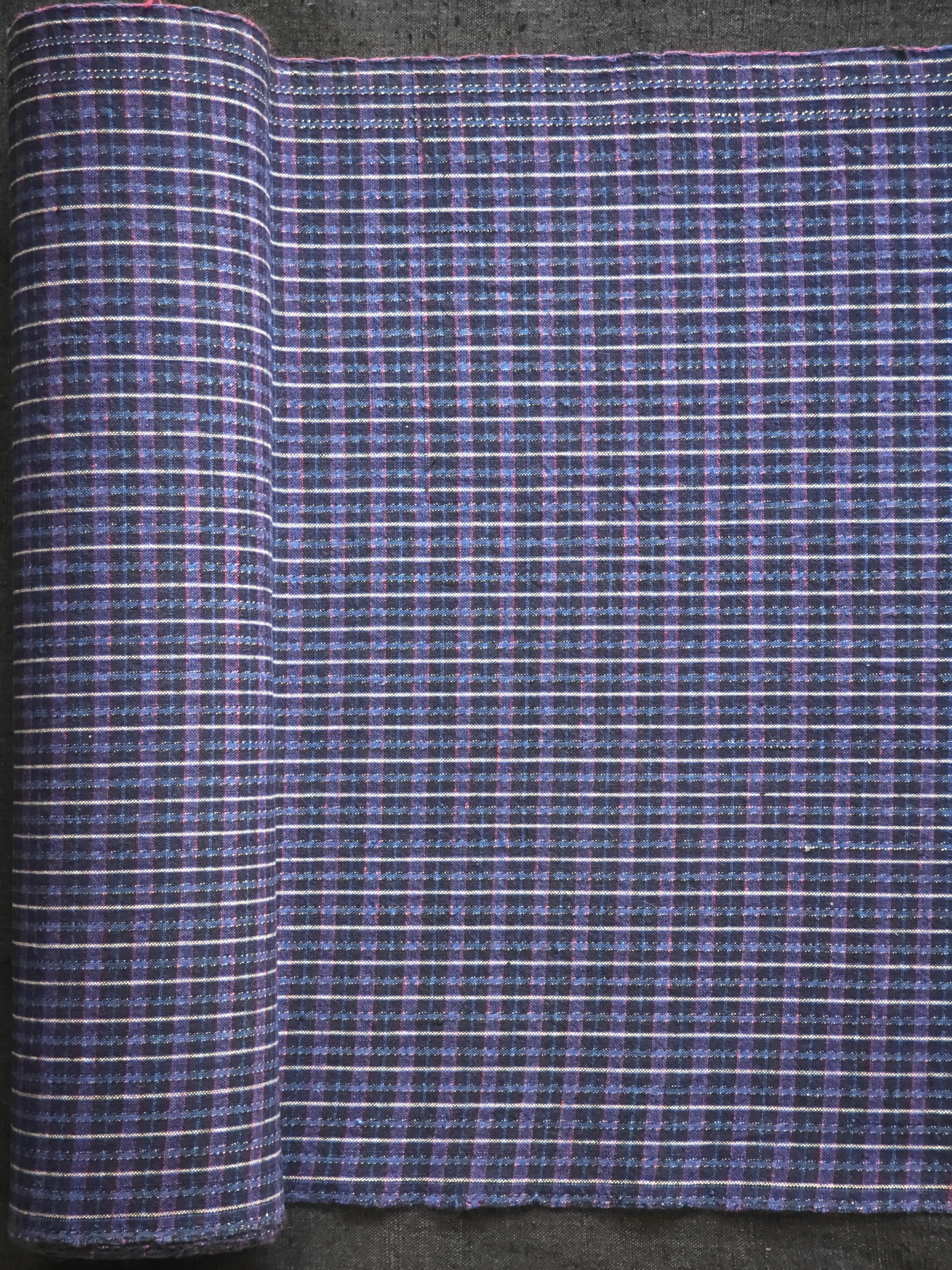
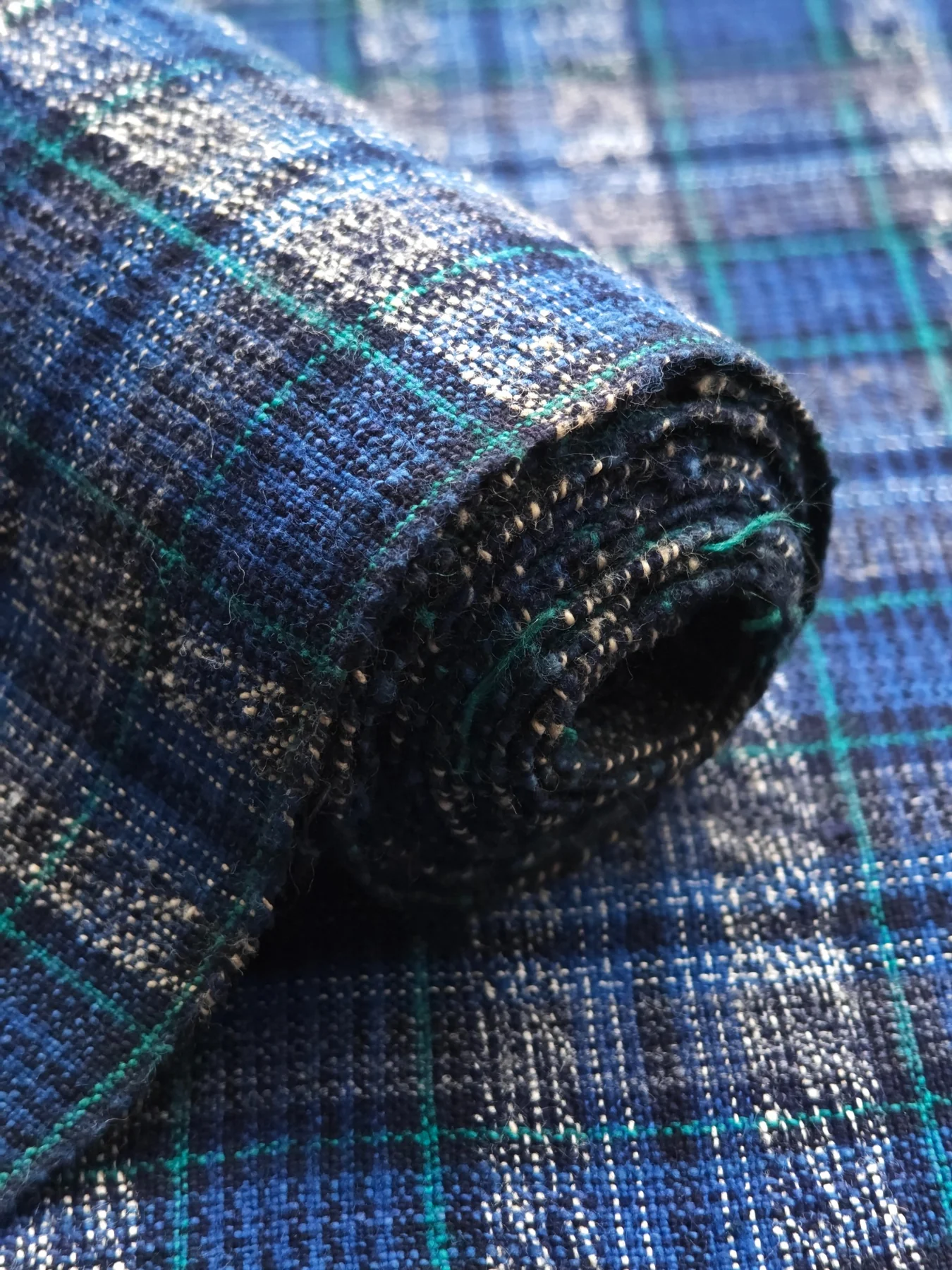
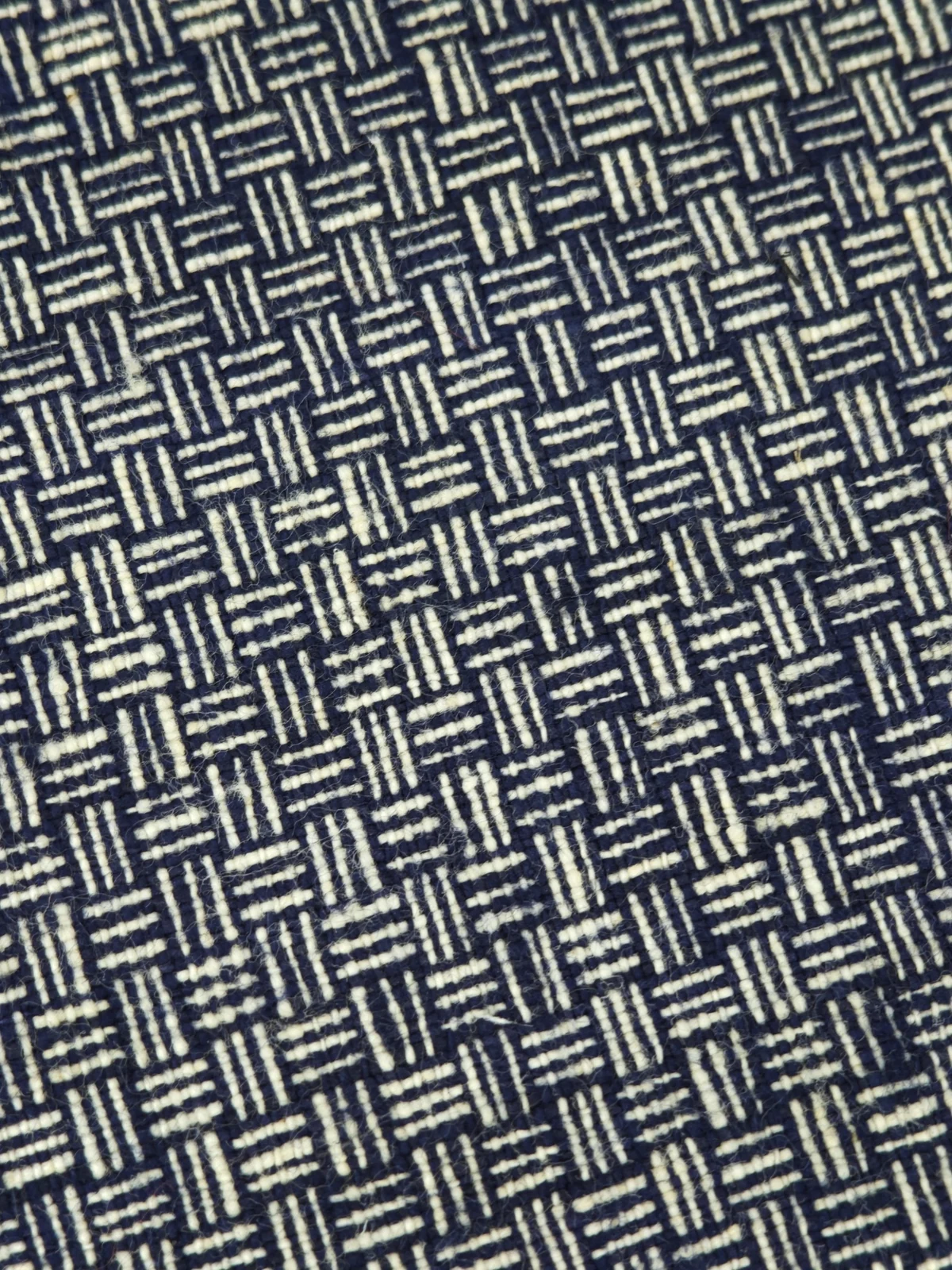
A substantial Jiangnan handwoven cotton with a fine indigo-and-cream reed-mat pattern: tiny interlocking blocks create a dense basket-like surface with real depth.
Sold in 50 cm lengths
Width: approx. 48 cm · Recorded total: approx. 370 cm
- Quantity 1
- Approx. 50 × 48 cm
- Quantity 2
- Approx. 100 × 48 cm, as one continuous piece whenever possible
Recorded total length: approximately 370 cm. The supplied listing states that additional quantities are cut continuously whenever possible; no full-piece bonus was stated.
- Object ID
- TA-JN-0007
- Origin
- Jiangnan · Chongming / Haimen style
- Period
- c. 1950s–1960s
- Dating confidence
- estimated
- Material
- Handspun cotton
- Dimensions
- Approx. 370 × 48 cm recorded total; sold in 50 cm units
- Technique
- Handwoven homespun · Figured weave
- Pattern
- Reed mat / Lu Xi Wen (芦席纹) · Interlocking woven blocks
- Colours
- Deep indigo blue · Natural cream white
Object condition
Good vintage condition overall, with a thick, soft and substantial handle. Natural features may include slubs, tiny cotton flecks, loose fibres, uneven threads, old fold marks, slight fading, edge wear and other handwoven irregularities.
Identification notes
The supplied listing identifies the pattern as Lu Xi Wen 芦席纹, or reed-mat weave. The indigo and cream details are created structurally by crossing yarns rather than by surface printing.
The source describes the cloth as a vintage Jiangnan / Chongming-Haimen style homespun, likely around the 1950s–1960s. The 48 cm width, old indigo tone, handspun cotton yarn and dense woven surface are cited as the basis of that attribution.
The fabric is described as thick, soft and substantial, with body but without stiffness. Time and use have gently softened the cloth while leaving a warm rustic surface.
The supplied listing connects reed-mat imagery with everyday household life — sleeping, resting, storing and settling a home — and reads the interlocking blocks as a visual suggestion of shelter, stability and continuity. These meanings are retained as interpretive context rather than universal historic proof.
Suggested uses include slow stitching, boro-inspired patchwork, small bags, book covers, textile collage, cushion panels, tea mats, table accents, visible mending, framed or wall display, collecting and textile study.
Care from the supplied listing: no washing is required for collecting or display. For washable sewing projects, test a small corner first; use gentle cold-water washing only as needed, separately, and air dry in shade.
A domestic pattern built from repetition
From a distance the cloth reads as a deep indigo field; close viewing reveals tiny alternating blocks that resemble reed mats or basketry.
Its tactile density and long surviving length make it particularly useful for comparing pattern repetition across more than a small fragment.