Four Seasons Weave — One Continuous Jiangnan Textile
c. 1960s–1970s · Cotton
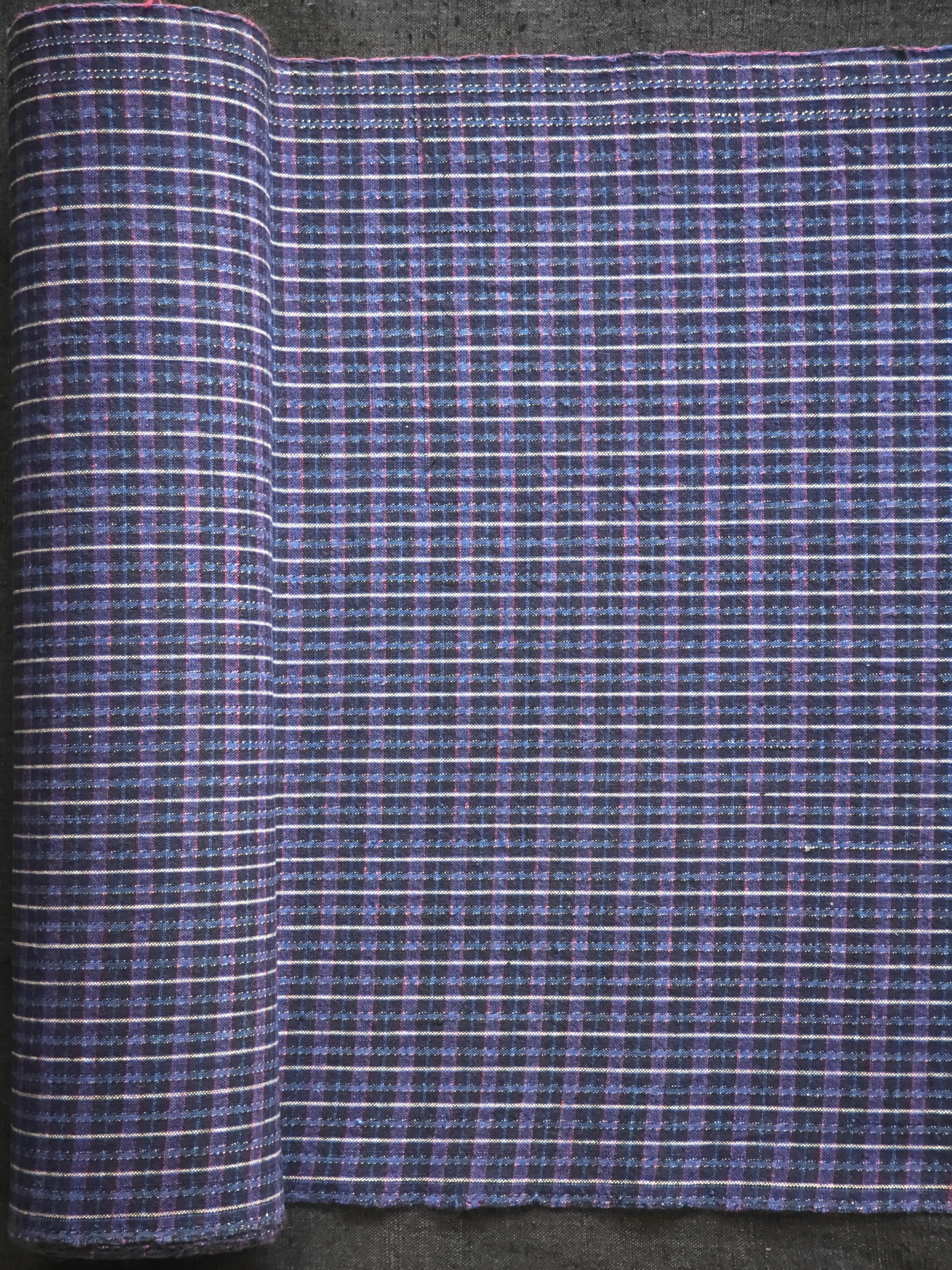
One uncut, 6.5-metre Jiangnan cotton textile changes from indigo stripes to red-blue checks and denser plaid, with no joining seams between its woven sections.
Striped and banded colour arrangements created directly through the woven structure.
c. 1960s–1970s · Cotton
One uncut, 6.5-metre Jiangnan cotton textile changes from indigo stripes to red-blue checks and denser plaid, with no joining seams between its woven sections.
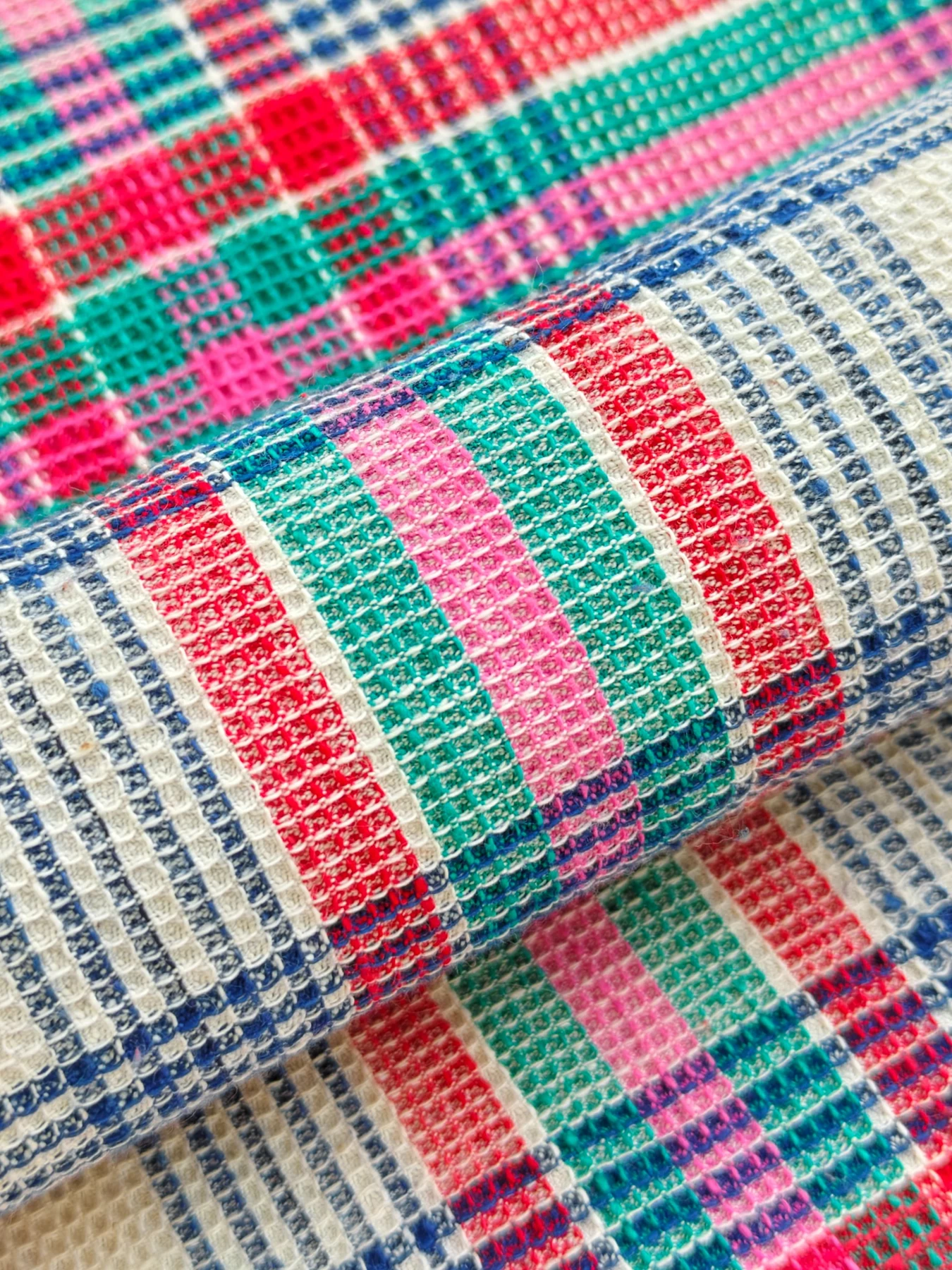
c. 1960s–1970s · Homespun cotton
A thick, soft homespun cloth whose colour and raised square texture are woven directly into the fabric, creating a nubby waffle-like surface rather than a printed design.
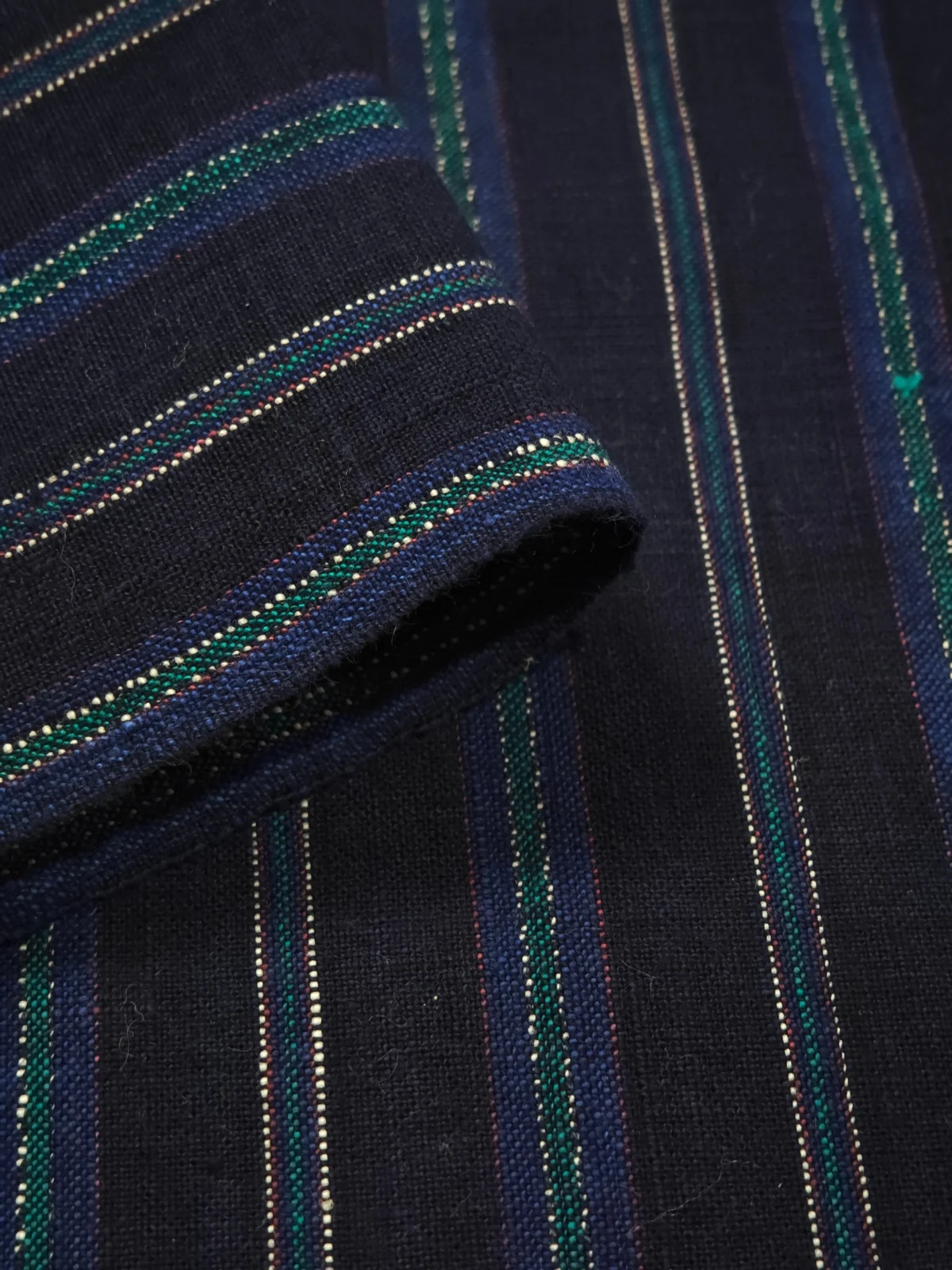
c. 1950s–1970s · 100% cotton
A one-metre Nantong homespun with an almost-black ground and slender navy, emerald, muted-red and cream dotted stripes that reveal themselves gradually at close range.
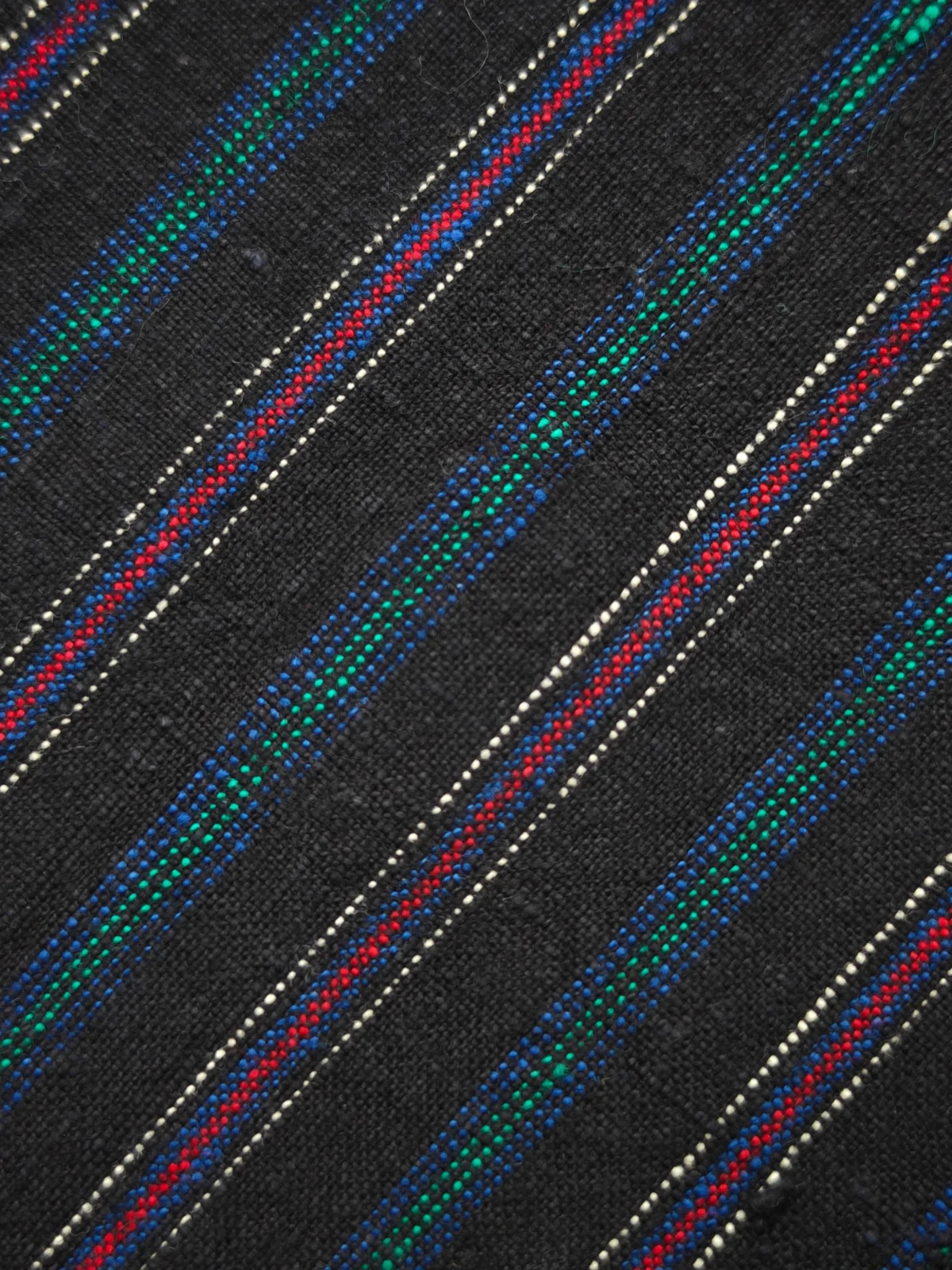
c. 1940s–1960s · Handspun cotton
A long Chongming handwoven cotton that reads almost black from a distance, then reveals quiet blue, green, red and ivory stripes like small lights in the night.
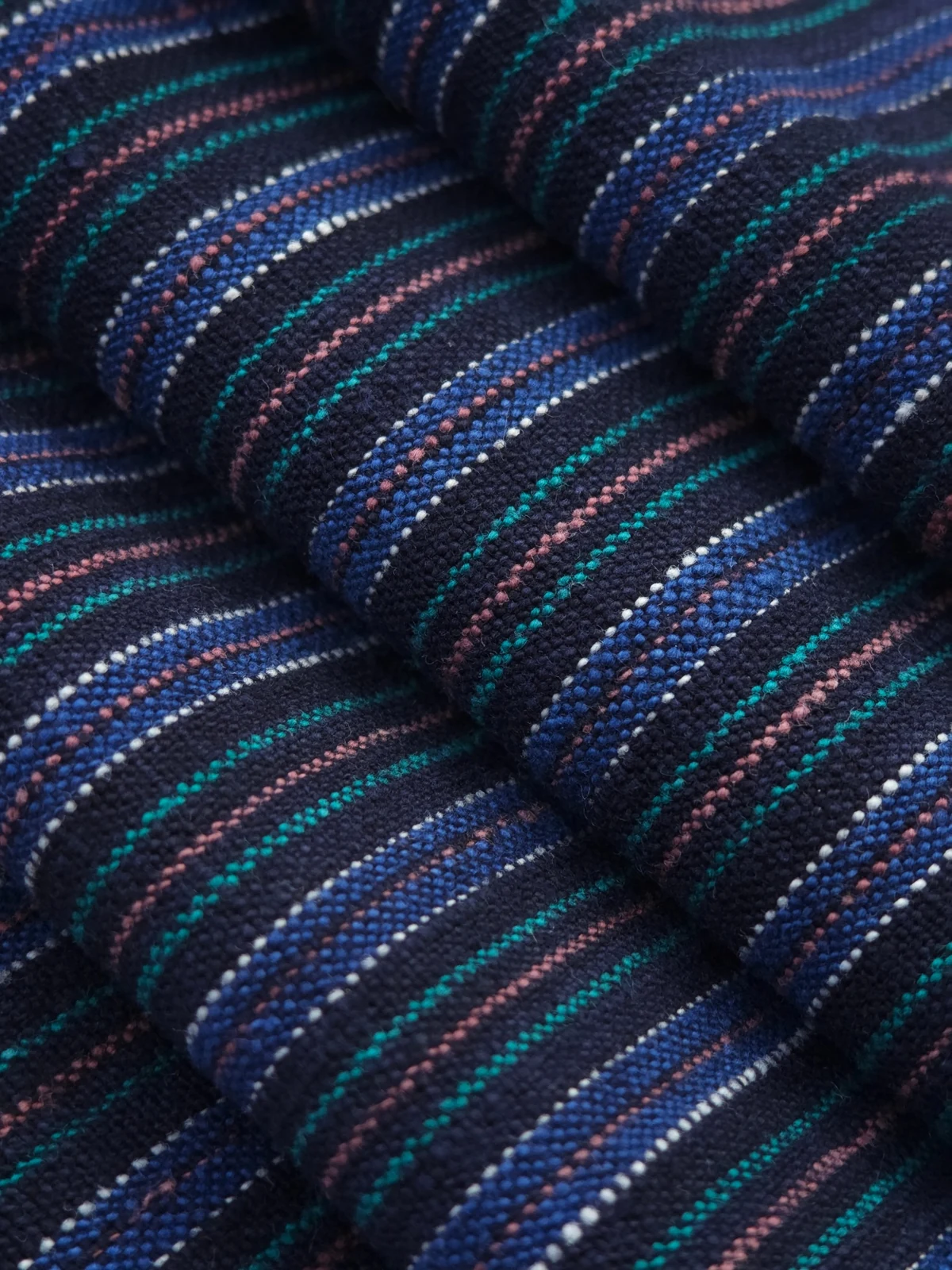
c. 1950s–1960s · Handspun cotton
A soft Nantong / Haimen dark-blue homespun whose fine teal, rose, ivory and red yarns appear as restrained lines of colour within the cloth.
These groups bring together descriptions from the textile records. Regional attributions and technical identifications may be provisional; open an individual record for its evidence and attribution notes.