
A vase, a musical instrument and three halberds. Put them together and an ordinary still life becomes a message of hope.
In traditional Chinese decorative art, some patterns are designed to be read aloud. Their objects sound like words for prosperity, harmony or success. One of the most ingenious examples is 平升三级 — Ping Sheng San Ji, a wish to rise three ranks.
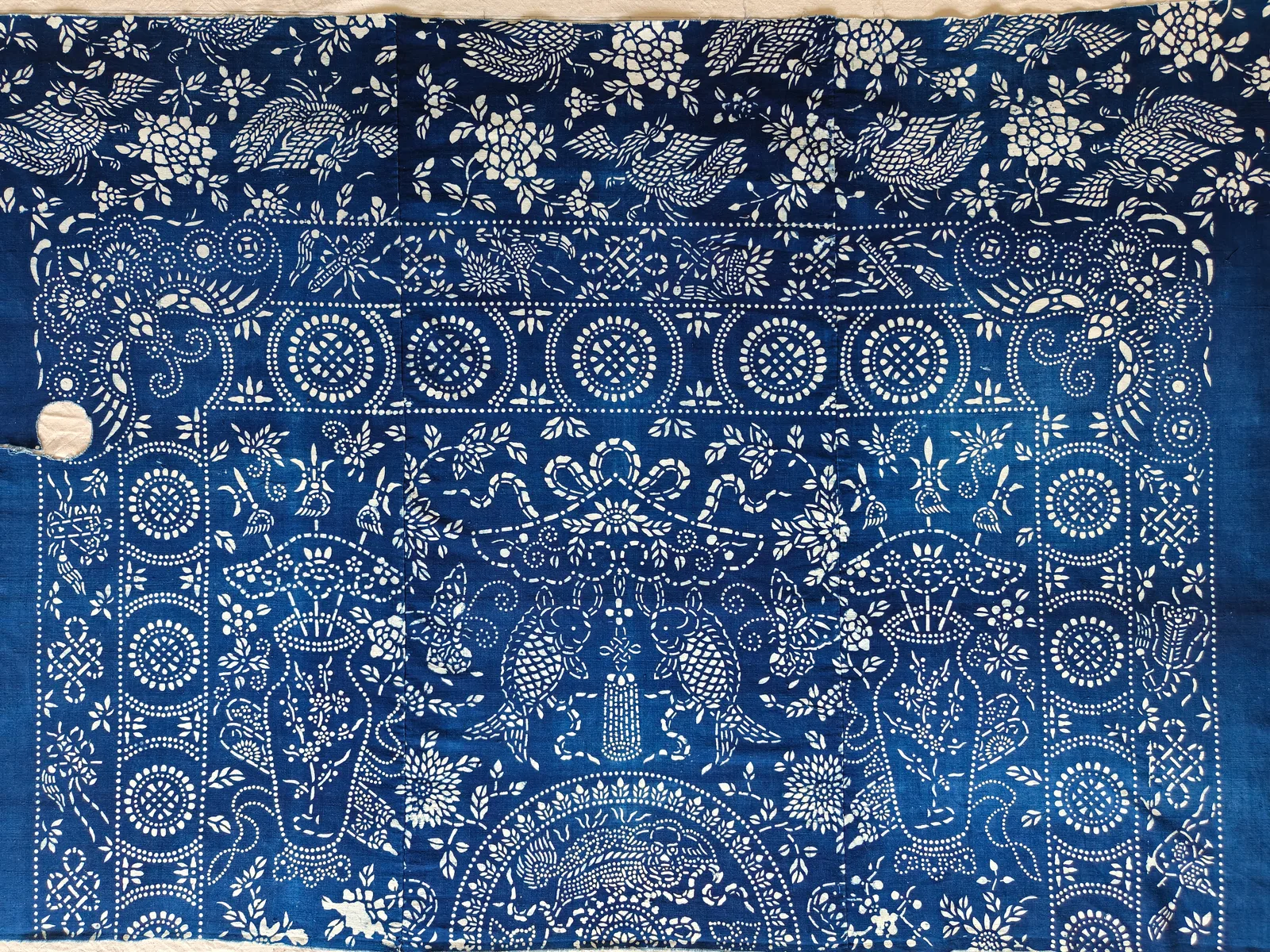
What Does “Ping Sheng San Ji” Mean?
In pre-modern China, official rank mattered. The phrase ping sheng san ji suggests advancement through several levels of position or standing — a particularly welcome wish for someone studying, taking examinations or hoping to prosper in their career.
Yet the picture does not need to spell out the characters. It uses the sounds of ordinary objects to build the message.
Vase — píng
Sounds like 平 (píng), meaning peace or stability.
Sheng — shēng
A traditional Chinese mouth organ; its name sounds like 升 (shēng), to rise or be promoted.
Three Halberds — sān jǐ
Suggest 三级 (sān jí), three ranks. The sounds resemble one another although the tones differ.
瓶 + 笙 + 三戟 → 平升三级. In English, the spirit of the phrase is “May you rise through the ranks with peace and good fortune.”
One Wish, Several Different Designs
It is easy to imagine a single fixed design, but historical objects tell a more interesting story. The Shenzhen Museum describes a common version showing a vase holding three short halberds; some variations place a sheng instrument alongside the vase. The Hebei Museum likewise documents this visual pun in its study of auspicious motifs.
This matters when identifying old household textiles. A decorative vessel and several thin objects may suggest the rebus, but each feature must be examined carefully before identifying a particular instrument or weapon.
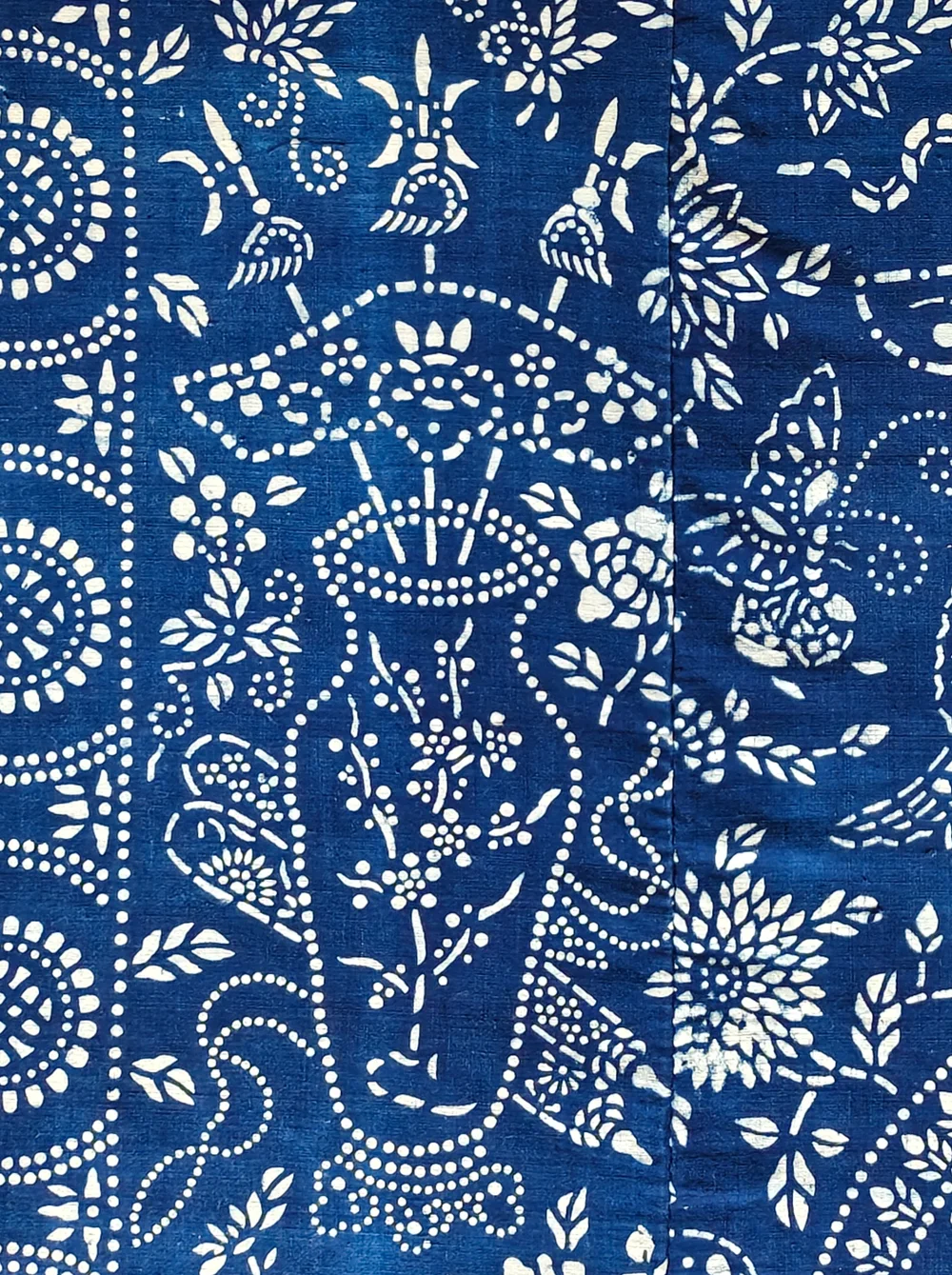
Vase-like ornament, left-hand side of the textile.
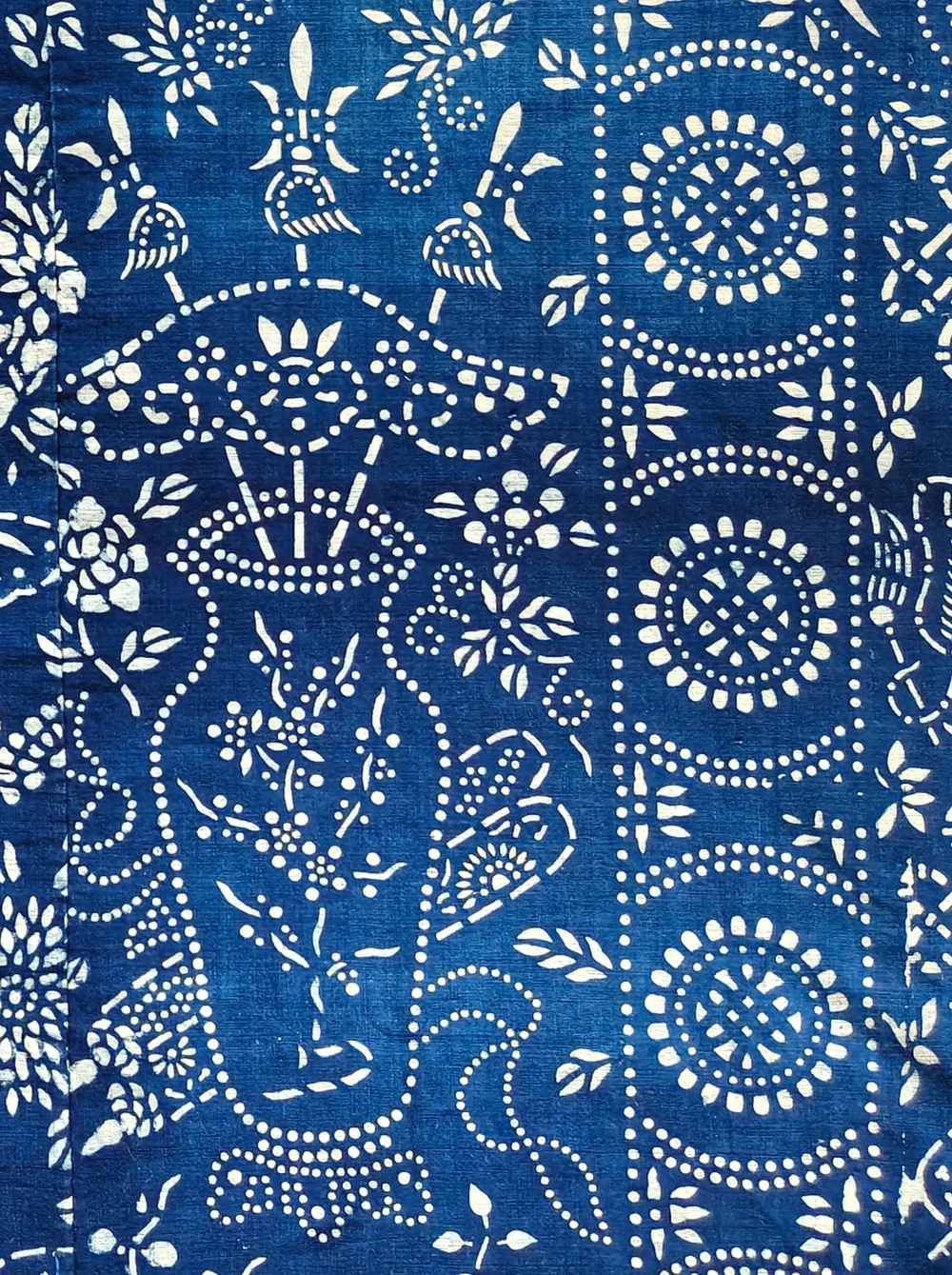
A second vase-like arrangement from the same surviving cloth.
These are close photographs of the owner's actual textile, not reconstructed motifs. Its suggested correspondence to Ping Sheng San Ji is a contextual reading. It does not prove that every small line is an identifiable sheng or halberd, nor establish the original printer's intended meaning.
Auspicious Wishes for a Household
The phrase grew from a world of official ranks and examinations, but its appeal is easy to understand more broadly. A family might wish for a child's studies to progress, for a career to go well, or for the next generation to enjoy better prospects.
Nearby flowers and vessels can carry other wishes. A vase with peonies, for example, may be read through ping'an fugui — peace and prosperity. These are related by their playful use of Chinese homophones, but they should not be confused with the specific three-ranks arrangement.
In an old household textile, multiple blessings can coexist: fish for surplus, flowers for prosperity, and a carefully arranged vase suggesting progress. The viewer discovers a vocabulary of everyday hope within the decorative surface.
Not the Same as the Hidden Eight Immortals
Ping Sheng San Ji and the Hidden Eight Immortals are two different visual systems. The first constructs a phrase through homophones. The second uses a conventional set of eight emblems to represent legendary immortals without drawing the people.
Because both traditions include small objects such as vessels, fans and musical instruments, they can be difficult to distinguish on densely decorated cloth. Composition, grouping and context are therefore essential.
Old Indigo Prints as a Language of Wishes
Traditional Nantong-style blue printed cotton often combines a central design with framed borders and smaller motifs. Stencil paste-resist printing turns those motifs into white shapes on an indigo ground, using separated dots and broken lines to preserve delicate detail through the dyeing process.
When we look closely at the textile, we are not simply admiring a pattern. We are learning to read an older language in which images carry words — and words carry blessings.
Three ordinary objects. One extraordinary wish: a future that keeps rising.
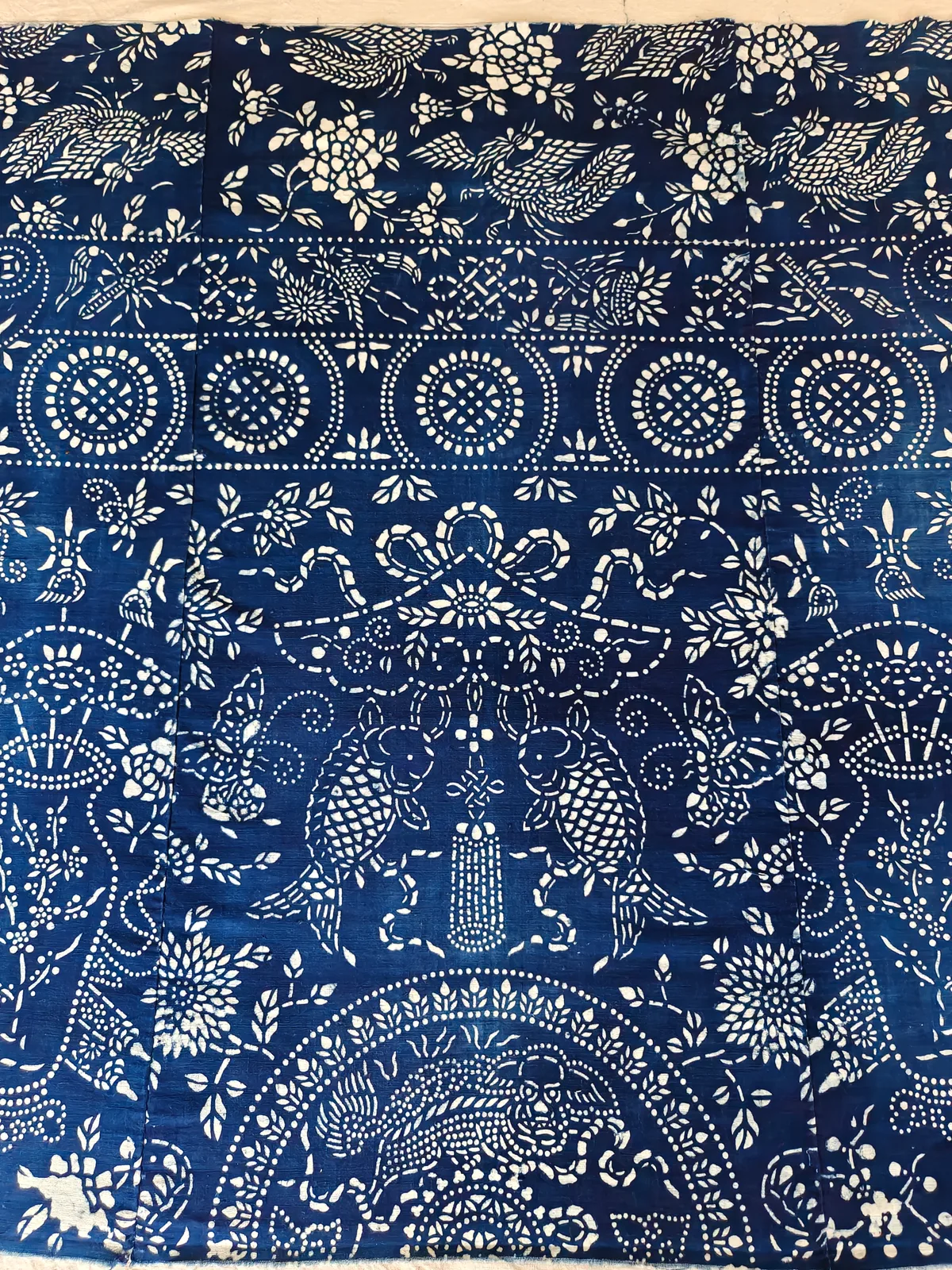
Indigo Garden of Blessings
An old indigo textile attributed to Nantong, approximately 140 × 100 cm, later assembled from three older printed cotton sections. See the full object record and condition notes.
Explore this documented textile →Sources & Object Notes
- Shenzhen Museum — “Ping Sheng San Ji” blue-and-white censer, Ming dynasty. Museum explanation of vase, sheng and three-halberd iconography.
- Hebei Museum — Auspicious Motifs: Ping Sheng San Ji. Museum article describing variations of the rebus in historical objects.
- Chinese Intangible Cultural Heritage Digital Museum — Nantong Blue Printed Cloth. Printing craft and the wider use of auspicious folk motifs.
- Tubu Atlas record TA-NT-0030. Owner-supplied photos, condition documentation and attributed interpretation of small motifs.