
Eight immortals. Eight symbolic objects. And sometimes — no human figures at all.
In Chinese art, a sword, a gourd, a lotus and a handful of other objects can stand in for the legendary Eight Immortals. Together they are called 暗八仙 (Hidden Eight Immortals, or An Baxian). Recognising them changes how we read a vase, a flower basket or a tiny instrument printed on cloth: an apparently decorative object may be part of a much larger story.
The Story of the Eight Immortals Crossing the Sea
Read the illustrated Eight Immortals sea-crossing story with eight individual emblems →
One of the best-known Chinese folk sayings is 八仙过海,各显神通 — “The Eight Immortals cross the sea, each displaying their own special powers.”
In the tale, eight legendary figures arrive at the coast and decide to cross the water without relying on an ordinary boat. Each finds a way to travel using their own skills and remarkable objects. The story became a lasting image of ingenuity: there is more than one way to overcome a challenge.
The legend exists in several versions. Importantly, the objects used in some written versions of the sea-crossing tale are not identical to the later standardised eight emblems of decorative art. The Palace Museum records both traditions separately. We should not assume that every printed sword or flower basket illustrates one exact scene in the voyage.
The Eight Objects: A Visual Dictionary
When the eight figures themselves are absent and their objects stand in their place, the design is known as the Hidden Eight Immortals. The Palace Museum records this conventional grouping on historical decorative objects. The set is useful as a way of looking, although actual handmade prints may simplify, rearrange or omit individual forms.
A sword is Lü Dongbin’s identifying emblem in the standard Hidden Eight Immortals set. In decorative art it carries associations of spiritual protection and the power to confront adversity.
Tieguai Li is represented by a gourd, frequently understood in legend as a container of medicine or wondrous substances. Gourds also appear independently as auspicious household symbols.
The fan identifies Han Zhongli. Its silhouette is often simplified into a small fan-shaped device that can be repeated as an ornamental motif.
He Xiangu is associated with the lotus. The flower carries its own long history of symbolic meaning in Chinese art, so context helps distinguish an immortal’s emblem from an ordinary floral motif.
The fish drum, also called yugu, is a traditional percussion instrument. It marks Zhang Guolao in the conventional eight-object set; it should not be confused with a depiction of a fish.
Lan Caihe’s flower basket brings the natural world into the group. A flower basket may also appear in other Chinese decorative subjects, so it is not proof of a complete Hidden Eight Immortals set by itself.
Cao Guojiu is represented by jade tablets or clapper-like boards. English labels vary because traditional portrayals and translations differ in their emphasis.
A bamboo flute, commonly described as a xiao, identifies Han Xiangzi. Its long narrow form is especially suited to being incorporated into an ornamental border.
Why “Hidden”? Reading Objects Instead of Portraits
An image of eight people asks the viewer to recognise the figures by their faces, dress and actions. An image of eight objects does something subtler: it lets a gourd, fan or flute carry the identity. This makes the group especially adaptable to borders, ceramics, furniture, embroidery and patterned cloth.
Nor should these emblems be confused with the Buddhist Eight Auspicious Symbols, a different set that includes a wheel, conch, parasol and endless knot. Both sets appear in Chinese decorative arts, but they come from different traditions. The Palace Museum and major museum collections document examples of each.
Finding the Emblems in Old Indigo Cloth
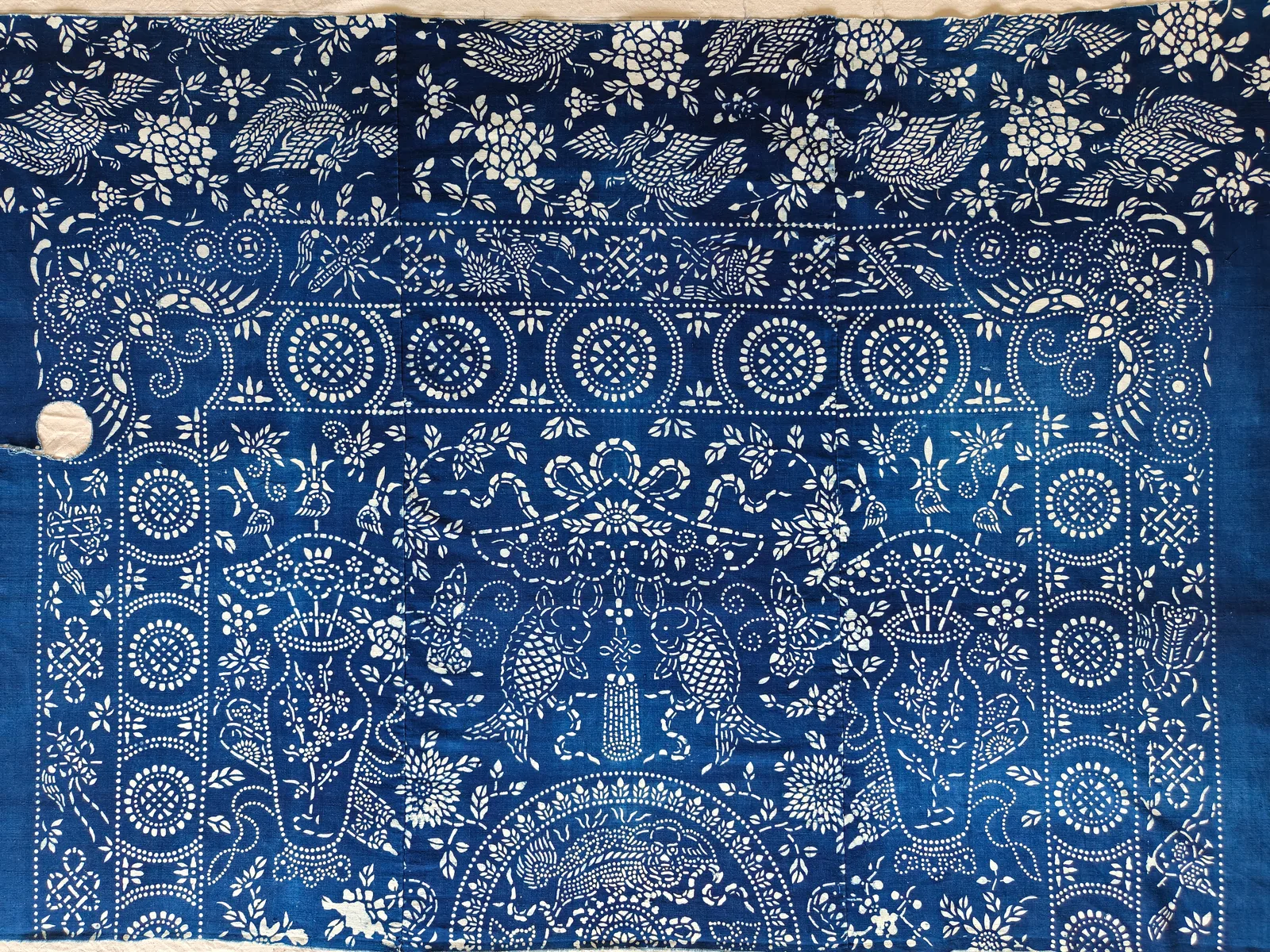
On the Tubu Atlas textile Indigo Garden of Blessings, the small ornament bands contain shapes that the owner reads as objects from the Hidden Eight Immortals tradition. Their minute scale and broken white stencil marks make them easy to overlook when viewing the entire cloth.
The Eight Emblems — A Closer Look at the Cloth
These eight close-ups were newly documented from the actual old blue-and-white textile in the Tubu Atlas collection. They are not modern line drawings or reconstructed patterns. Each small ornament is built from reserved white lines, dots and simplified shapes on a dark indigo ground.
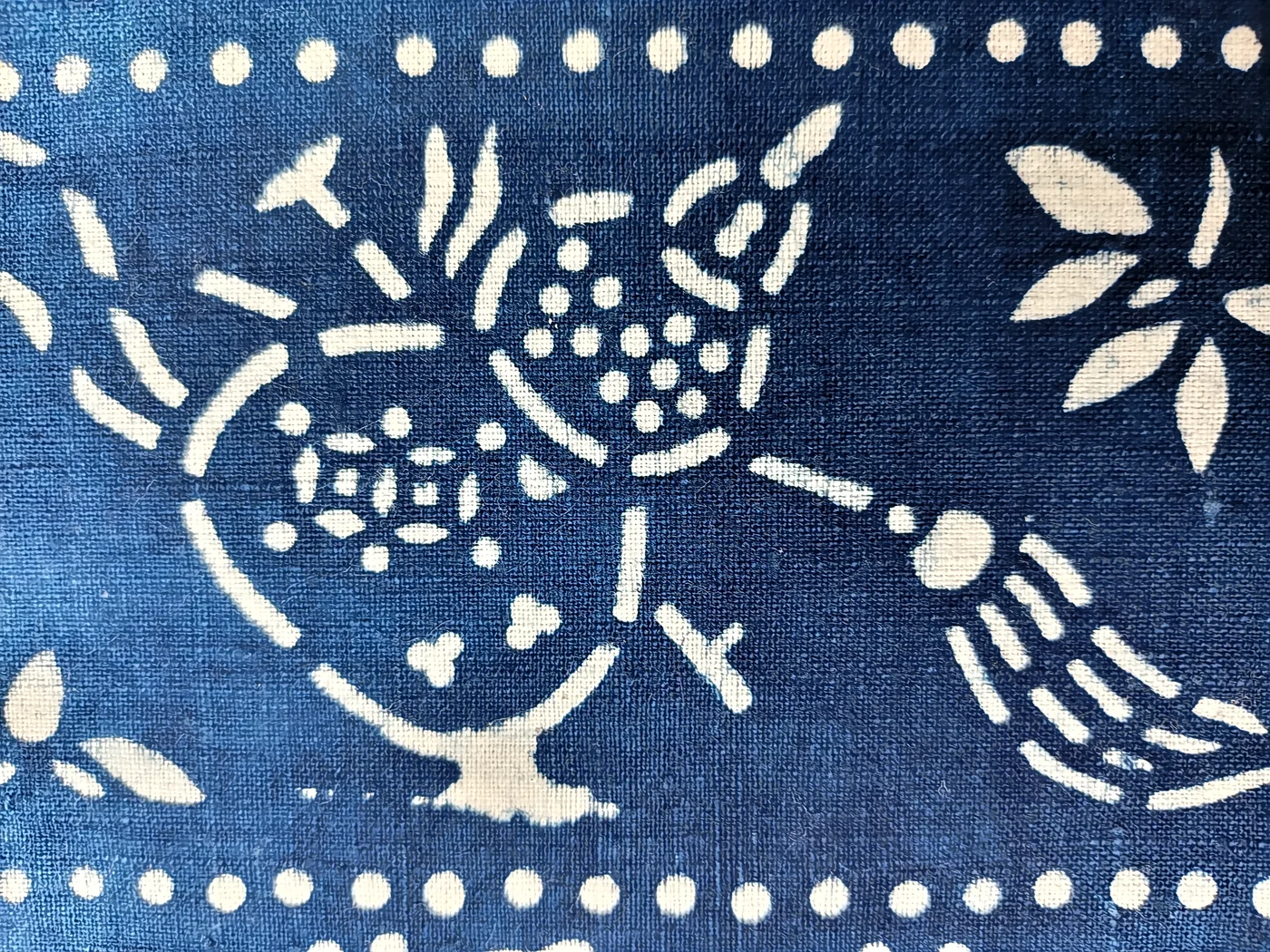
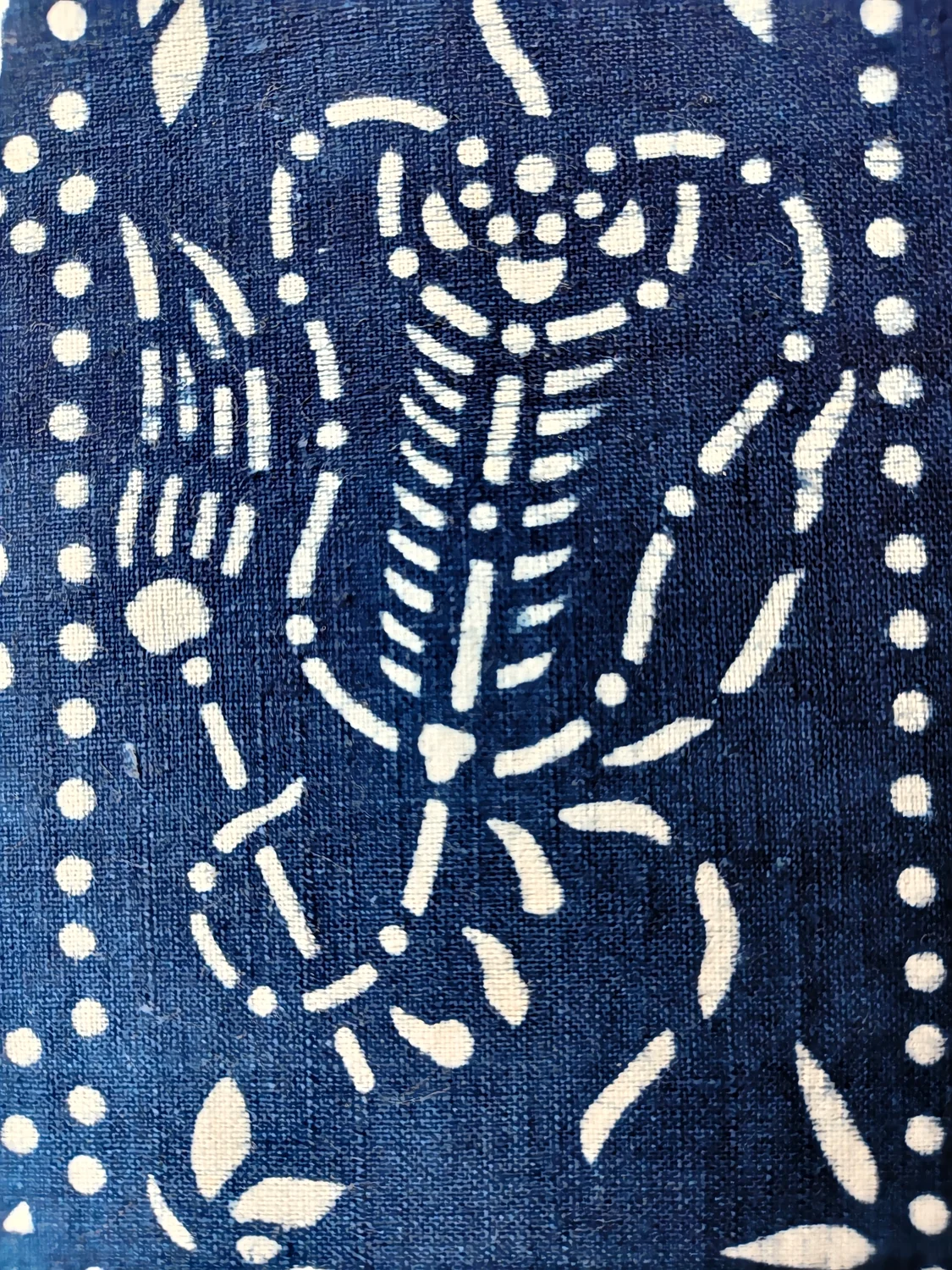
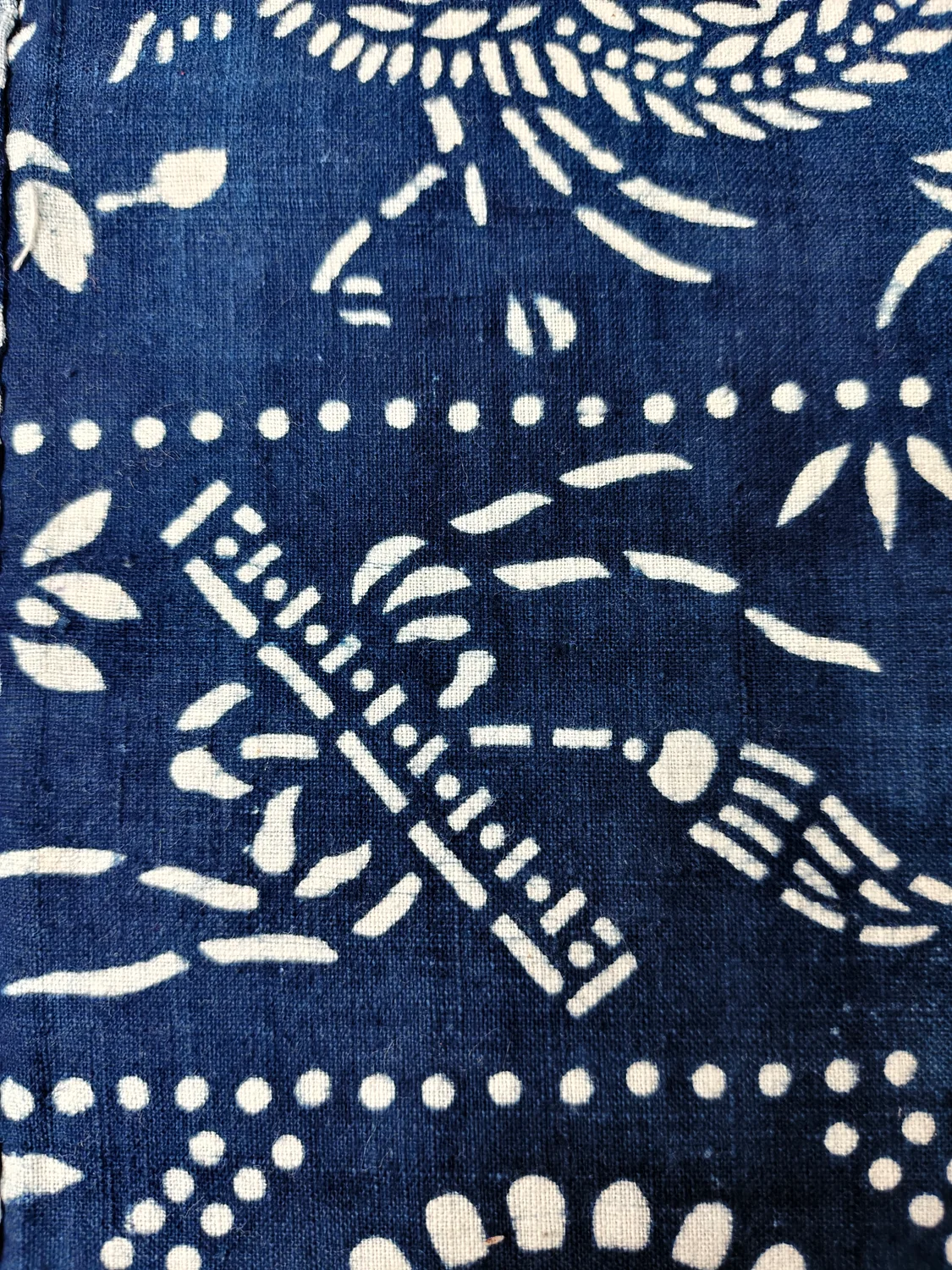
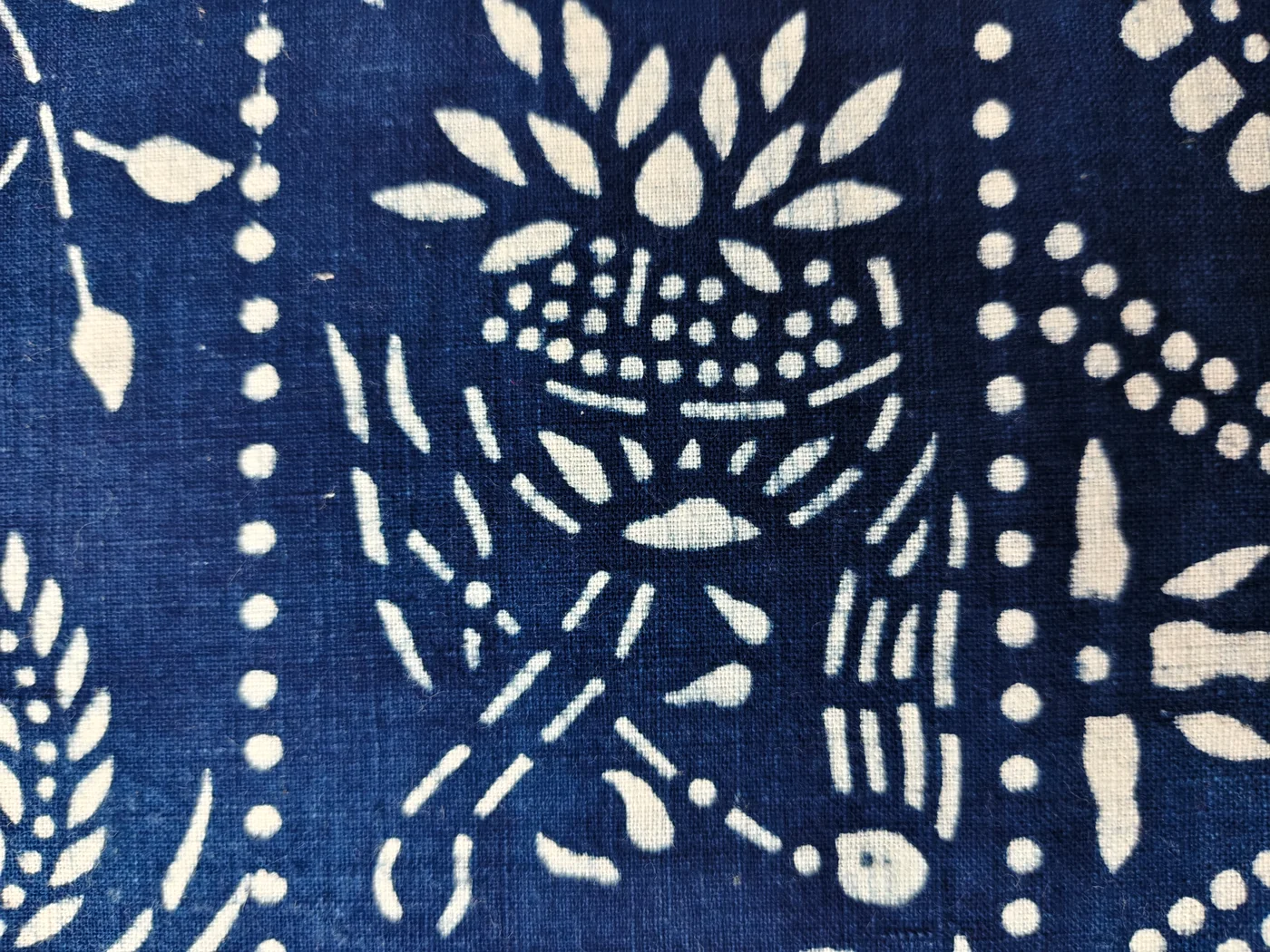
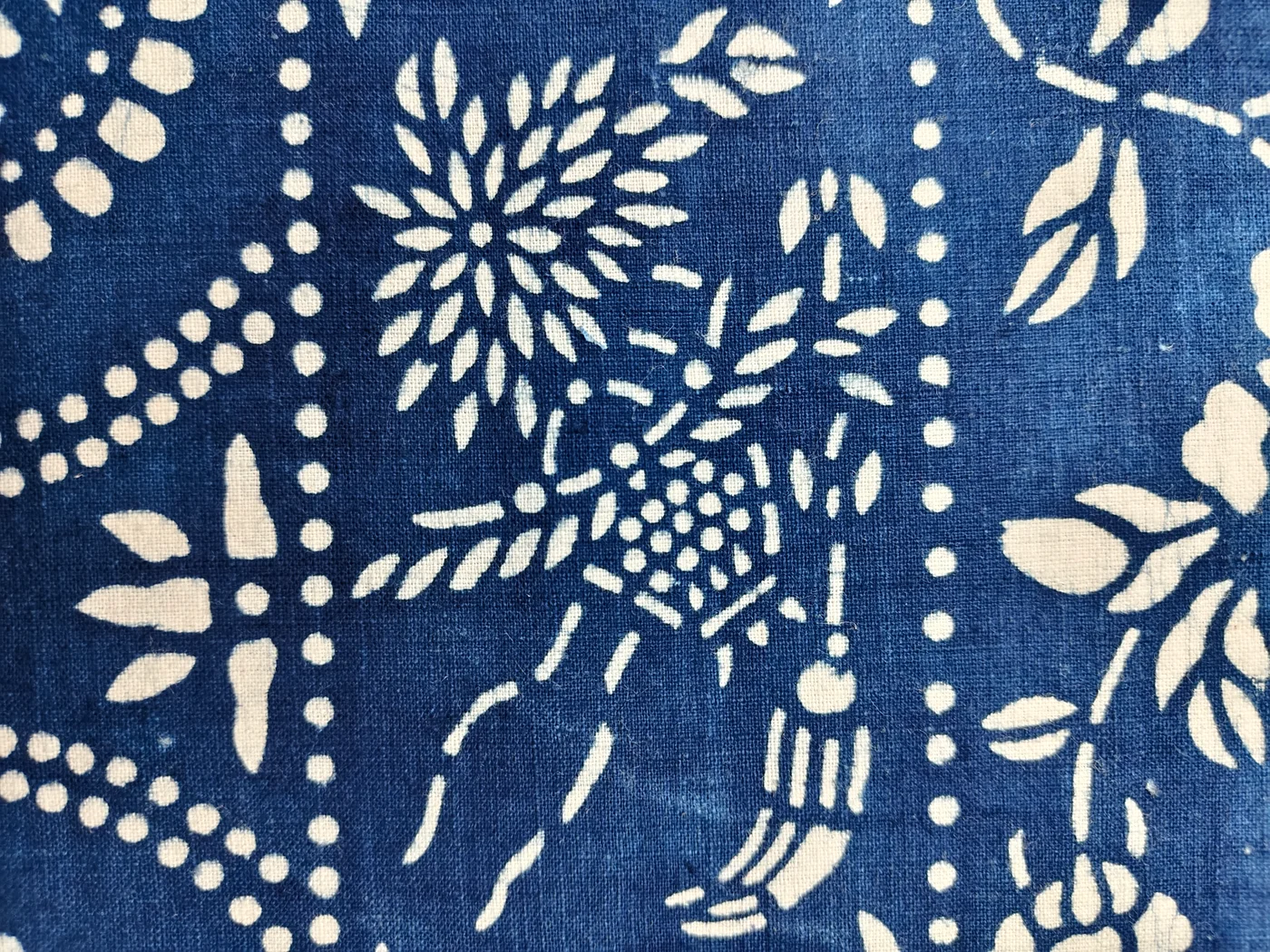
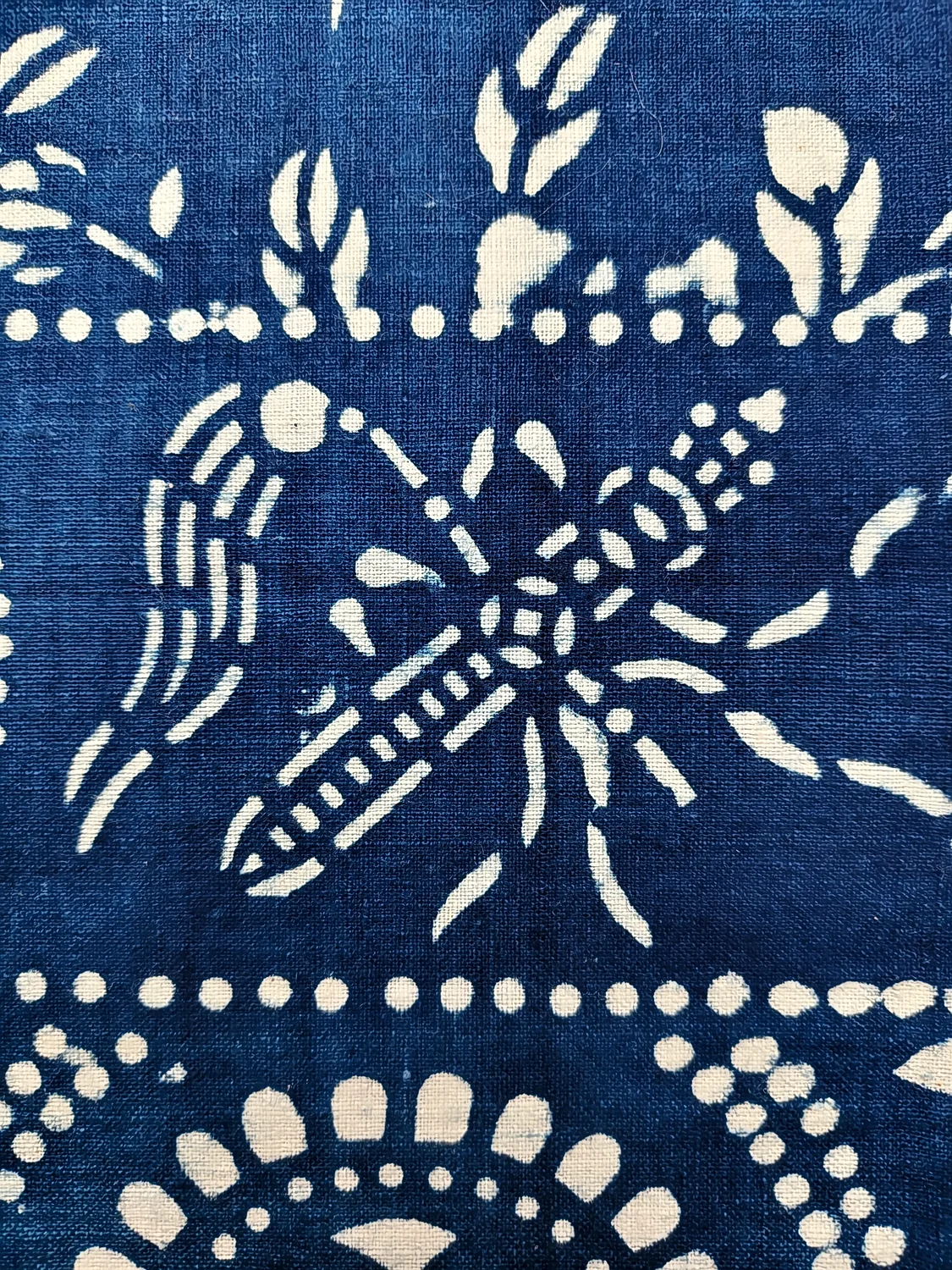
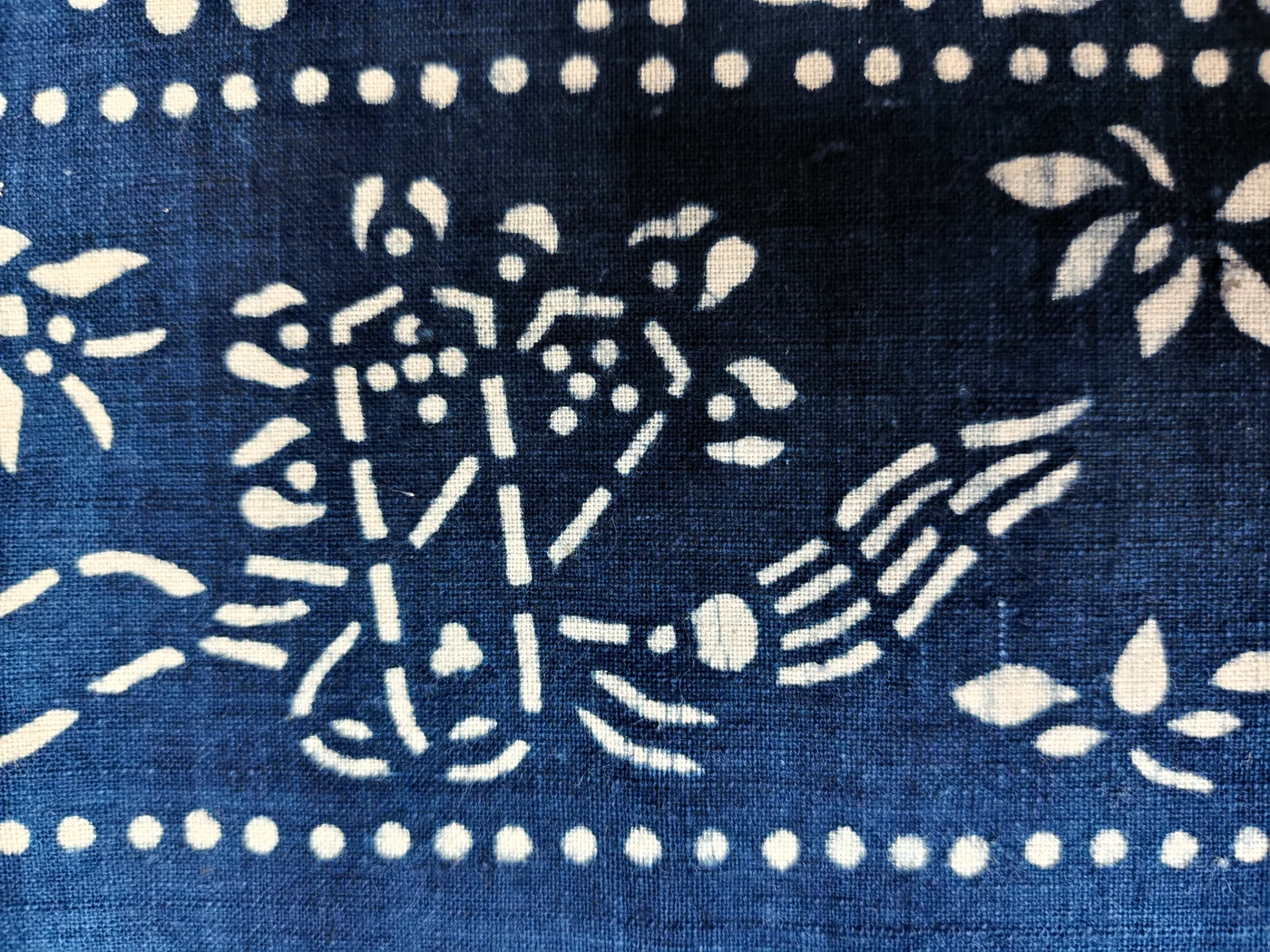
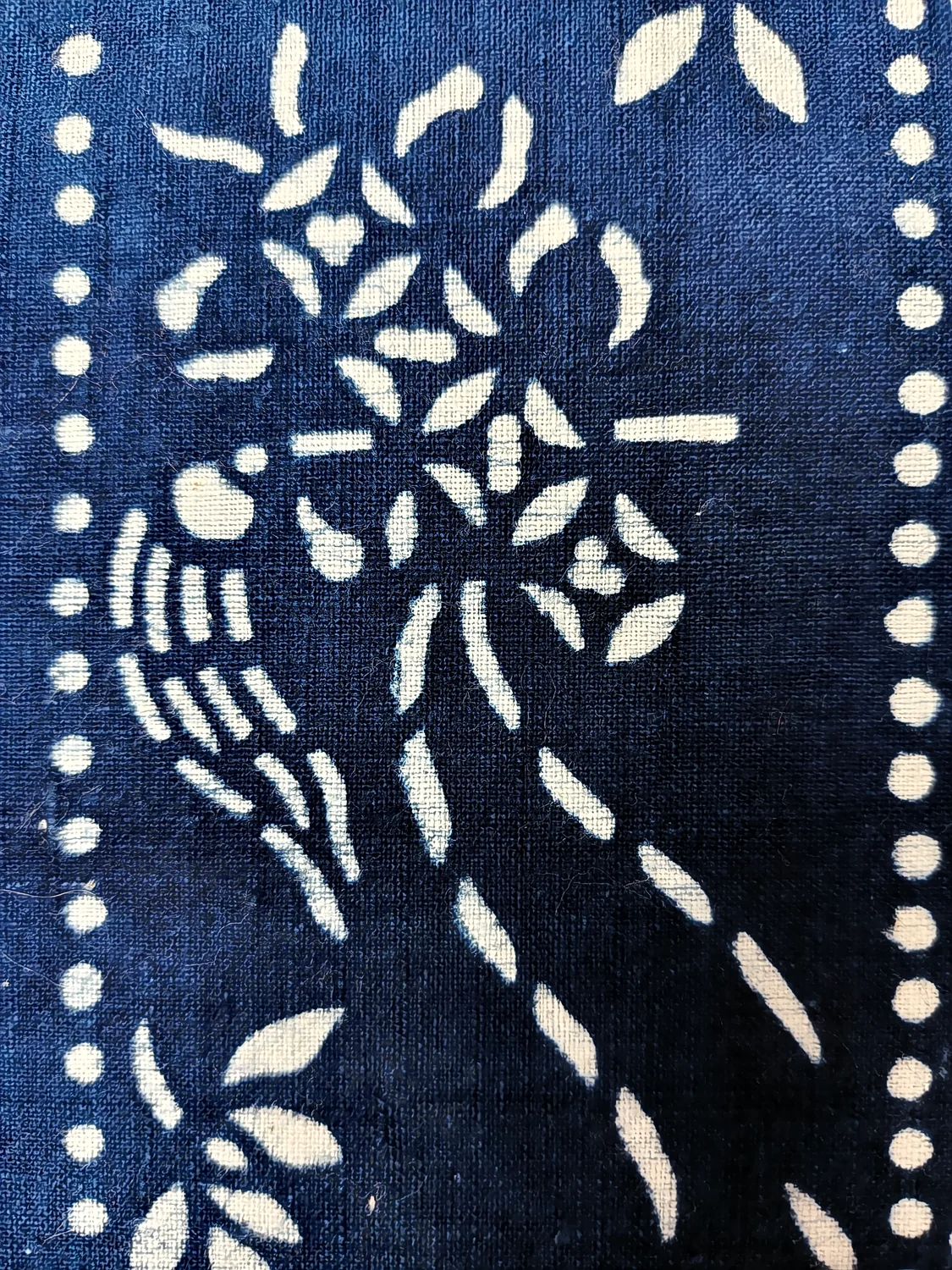
Identification note: The English object names and associated immortals follow the textile owner's close-up identifications, in the original photograph order. These stylised motifs are interpreted as the Hidden Eight Immortals' attributes; the exact printer and intended design labels remain undocumented.
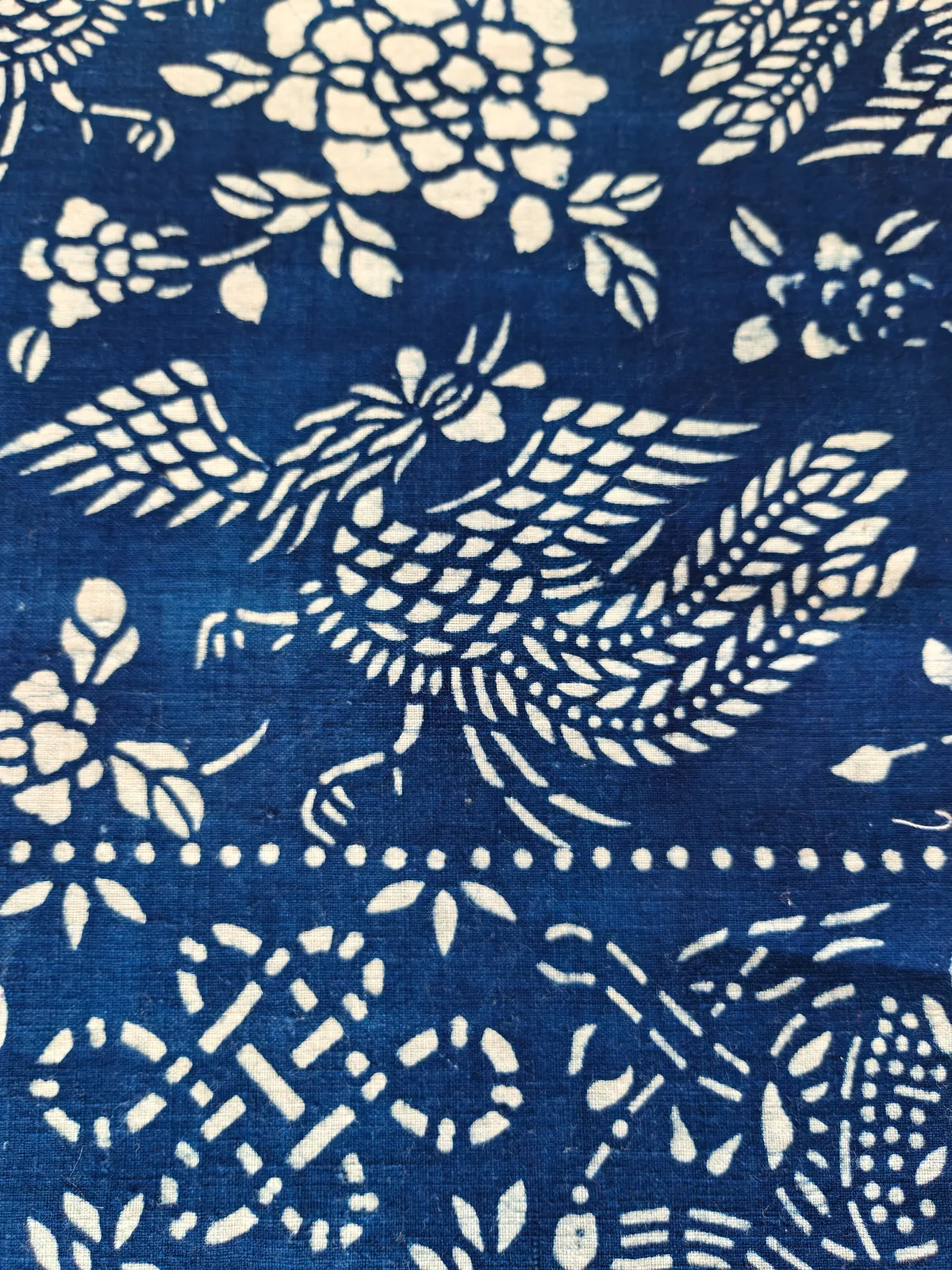
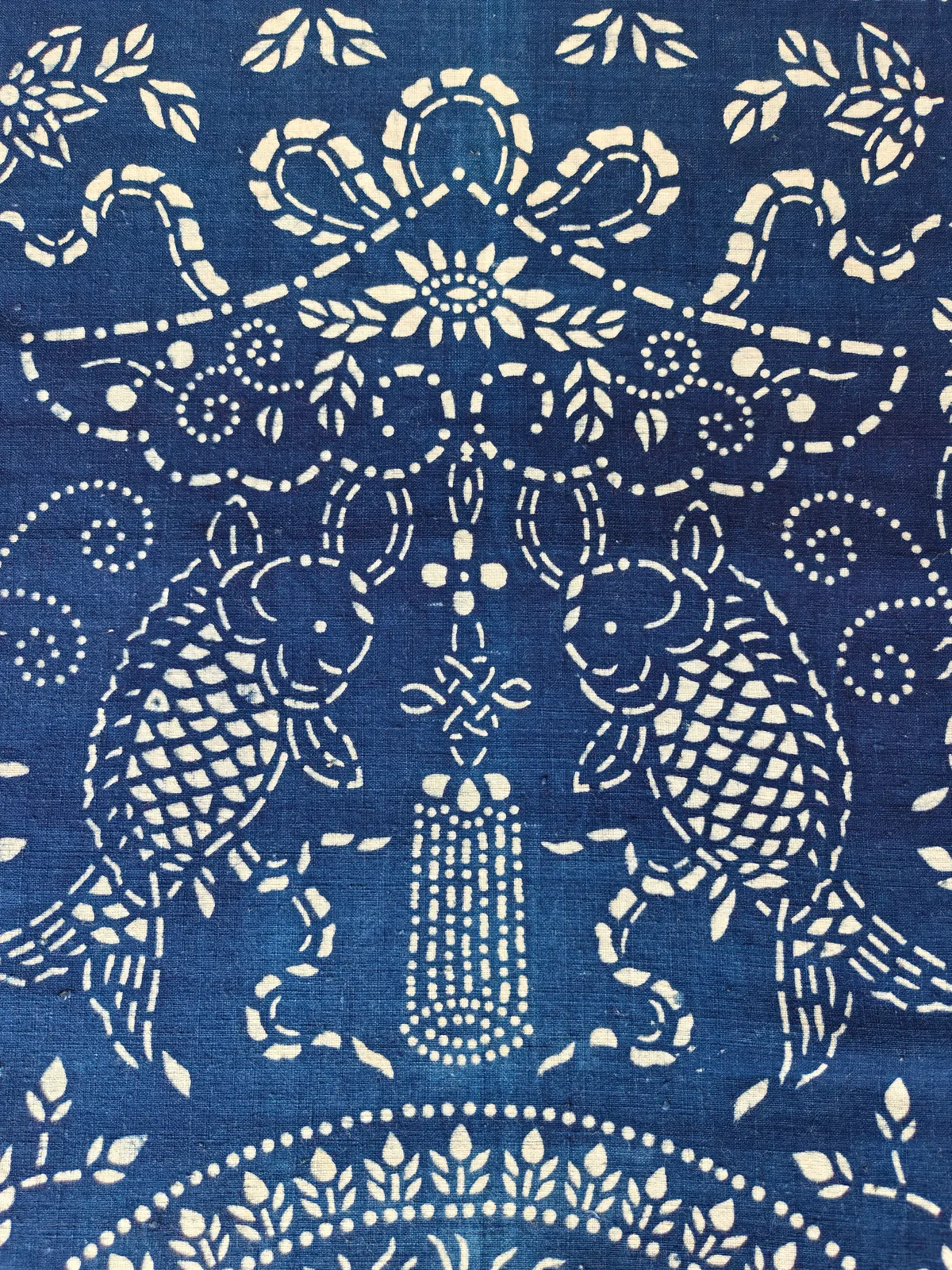
The cloth also contains phoenix-like birds, peonies and elaborate vases. It is not one pure “Eight Immortals picture”, but a composite auspicious textile: several blessings share the same visual field. Nor does the surviving piece preserve the entire original composition; its three old panels were joined together later, and a circular cut-out is visible along one edge.
These are important distinctions. The tradition of the Hidden Eight Immortals is well documented; the reading of each very small motif on this particular fragment is an informed interpretation, not a confirmed identification by its original printer.
Another Kind of Visual Wordplay: “Rise Three Ranks”
Some vase-related details on the same cloth suggest a different auspicious formula: 平升三级 (Ping Sheng San Ji), a wish for advancement or promotion.
In this traditional rebus, a vase (ping, 瓶) echoes peace (ping, 平); a sheng musical instrument (笙) echoes “rise” (升); and three halberds (三戟) sound like “three ranks” (三级). Shenzhen Museum documents this motif on historical ceramics. The arrangement suggested by the cloth’s little objects is a possible local reading, not an independently confirmed reconstruction of the stencil.
Explore Ping Sheng San Ji: a vase, sheng and three halberds →
These are two different motif traditions: the Hidden Eight Immortals use identifying attributes to stand in for legendary figures, while Ping Sheng San Ji uses homophones to express advancement. Their coexistence illustrates how densely layered Chinese household decoration can be.
What a Printed Textile Can Preserve
Paste-resist printing works through contrast: the white parts were protected from dye, while the rest of the cotton took on the blue. Small dots, linked breaks and curved strips build a remarkably rich picture from a limited vocabulary of marks.
That technique also reminds us to be careful readers. A shape that looks like a sword, drum or fan in an enlarged photograph may be a fragment of something more complex. Its position among other objects matters. Historical sources can explain the symbolic system, but they cannot by themselves assign a workshop or a date to this particular cloth.
In Chinese folk textiles, a tiny object can be a whole sentence — if we learn how to read it.
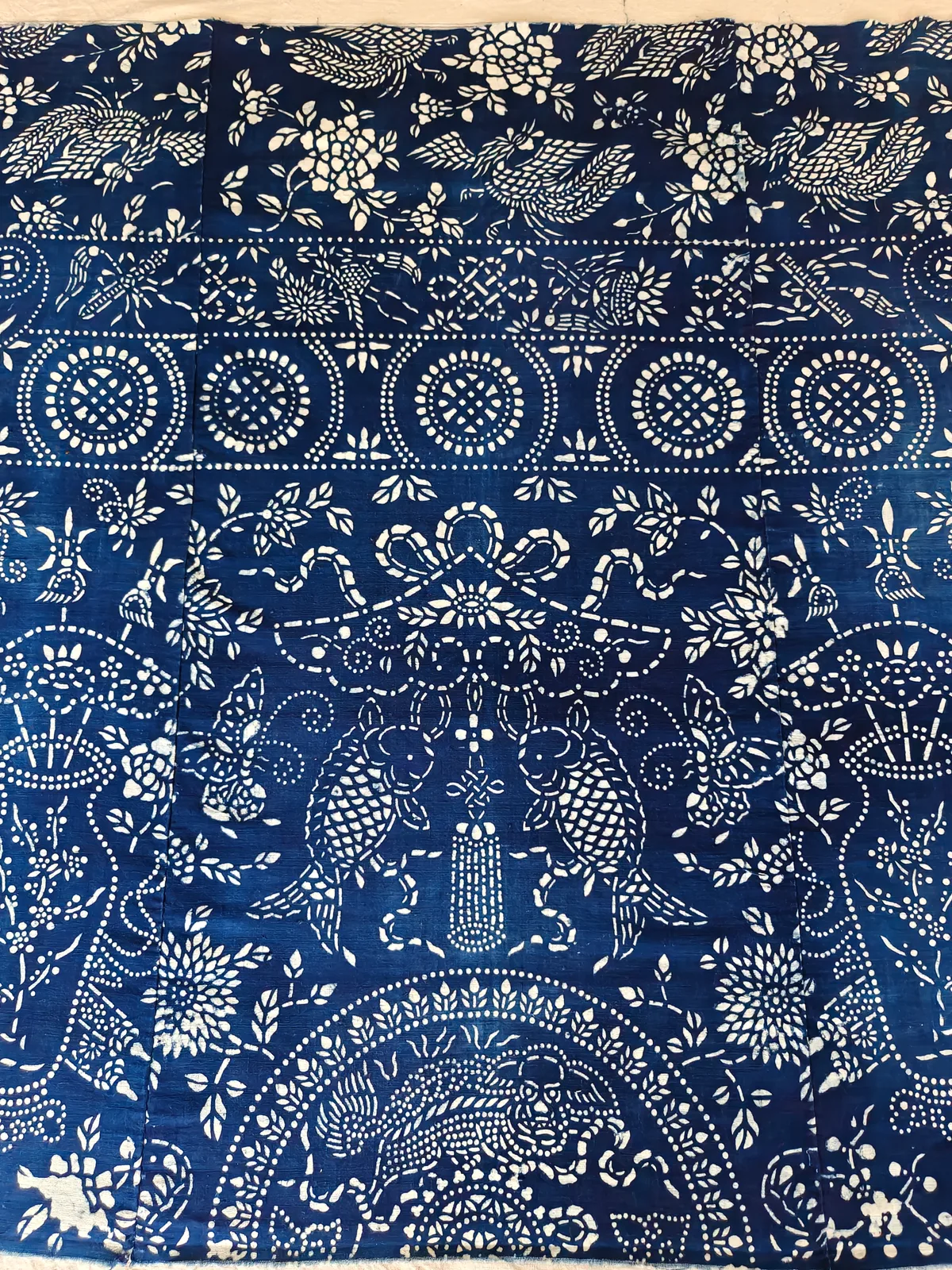
Indigo Garden of Blessings
Approx. 140 × 100 cm. Three later-joined old cotton sections, attributed to Nantong. Explore the full condition notes and photographs, including the visible small cut-out and joining seams.
Open the documented object →Sources & Further Reading
The cultural explanation above draws on museum records. Identifications of motifs on the featured fabric are presented as object-specific interpretations.
- Palace Museum — 暗八仙 (Hidden Eight Immortals), definition and conventional eight-object set.
- Palace Museum — 八仙过海 (Eight Immortals Crossing the Sea), traditional narrative and its different set of crossing objects.
- Palace Museum — cabinet decorated with Eight Immortals and Eight Treasures, evidence that the two symbolic traditions can coexist but are distinct.
- Shenzhen Museum — 平升三级 (Ping Sheng San Ji), museum interpretation of the vase, sheng and three halberds rebus.
- Tokyo National Museum — Chinese Textiles: Treasure Design, museum discussion of decorative treasure patterns on Chinese textiles.