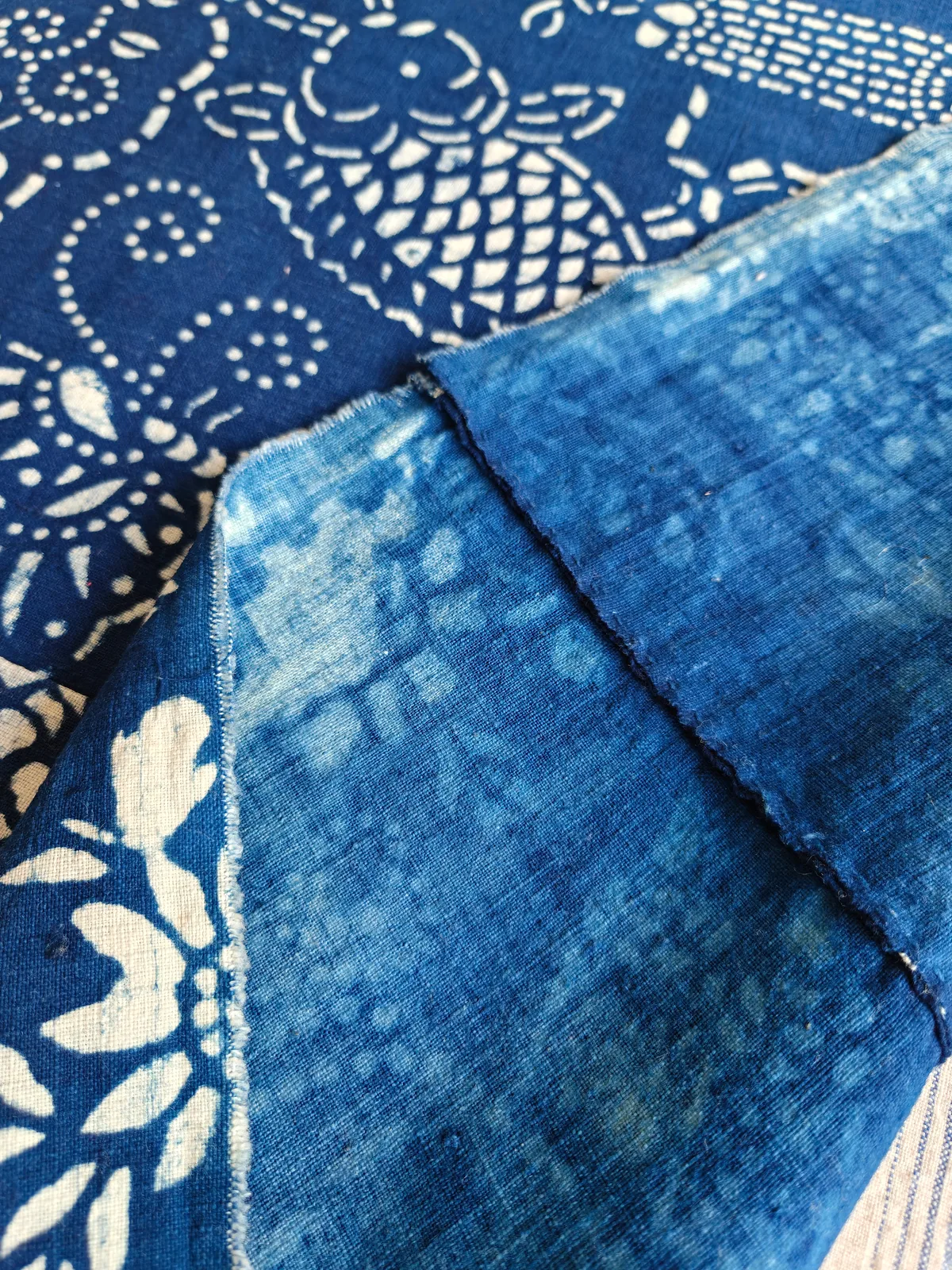
Indigo Garden of Blessings — Hidden Eight Immortals Folk Textile
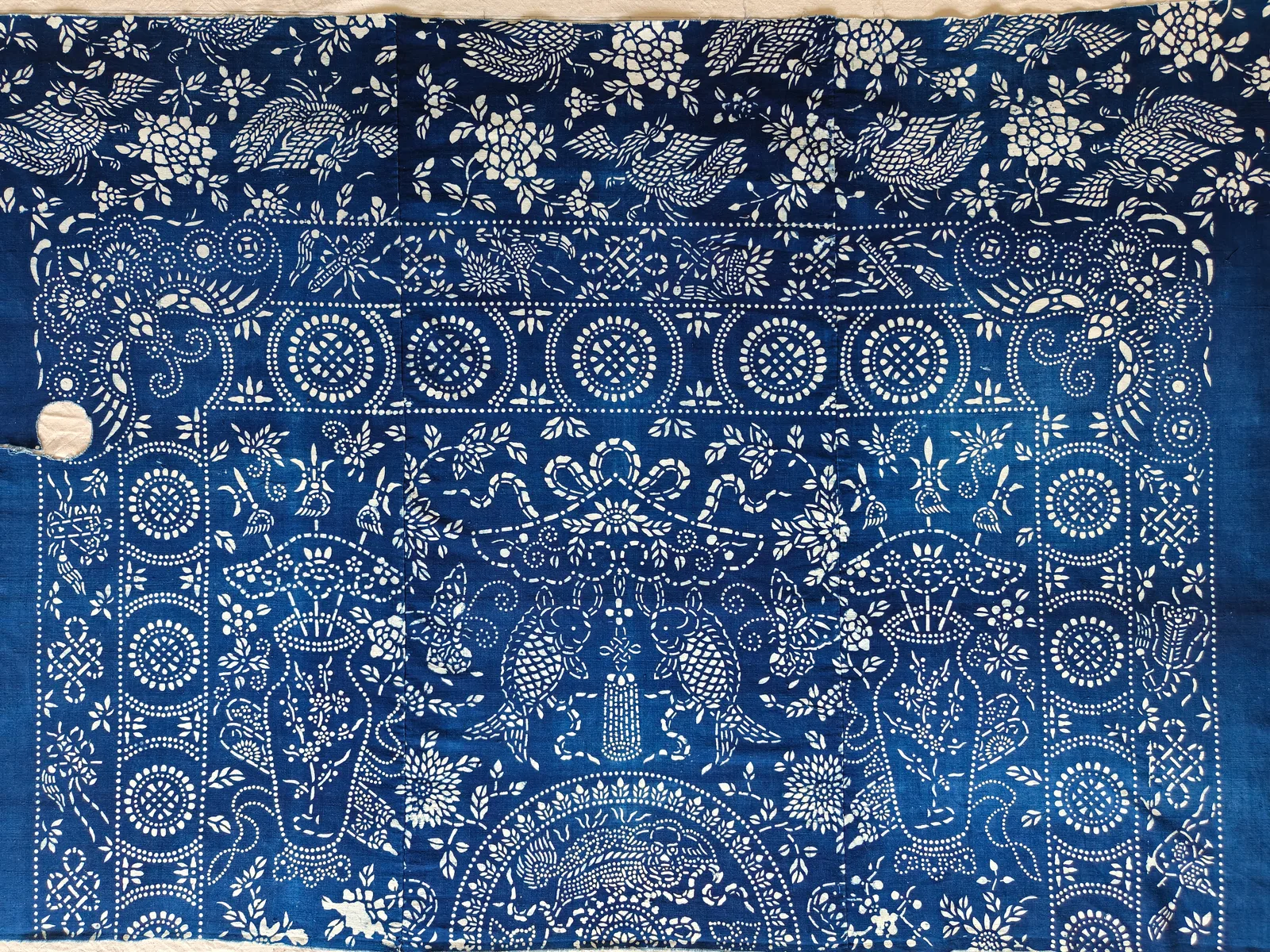
A deeply patterned old Nantong-style indigo textile bringing together paired fish, phoenix-like birds, auspicious vases, the Hidden Eight Immortals emblems and wishes for advancement; later joined from three old panels.
- Object ID
- TA-NT-0030
- Origin
- Nantong · Attributed to Nantong, Jiangsu Province, China
- Period
- Estimated c. 1960s–1970s
- Dating confidence
- estimated
- Material
- Vintage cotton; homespun handwoven and handspun-yarn attribution
- Dimensions
- Approx. 140 × 100 cm / 55.1 × 39.4 in; one assembled piece, three older cotton panels
- Technique
- Stencil paste-resist indigo printing (Lan Yin Hua Bu) · Handwoven cotton ground (attributed) · Later hand-joined three-panel construction
- Pattern
- Hidden Eight Immortals emblems (attributed) · Paired fish · Phoenix-like birds · Lion-like auspicious animal · Auspicious vases and peonies · Peony flowers · Ping Sheng San Ji rebus (attributed) · Gourd · Butterflies · Ornamental dotted borders
- Colours
- Deep indigo blue · Natural ivory
- Washed
- Yes
Object condition
Washed and ironed; rich indigo-blue printing preserved and little apparent wear to the original panels. This item consists of three vintage cotton sections joined later, so their seams are not original full-width factory construction. One clearly visible, approximately circular cut-out occurs near the upper-left edge in the photographed layout, with minor uneven edges and loose threads. This is a surviving portion of a larger traditional composition, not a complete original bedcover. Please examine the original photographs, including the joined seams, cut-out and reverse.
Identification notes
Owner-supplied inventory: fabric/products/done/130. The owner supplied the Etsy listing 4591890412 on 10 October 2026. The website links to that Etsy product; live price and availability must be checked there.
The current assembled textile measures approximately 140 × 100 cm and includes three old printed panels of approximately 47 cm width. The assembly was carried out after the original fabric was made. It preserves only part of an originally larger auspicious composition.
The owner describes the original pieces as hardly used, washed and ironed, substantial yet supple, with visible uneven cotton yarn thickness. Handwoven homespun and handspun yarn are working identifications; no laboratory test or loom documentation is available.
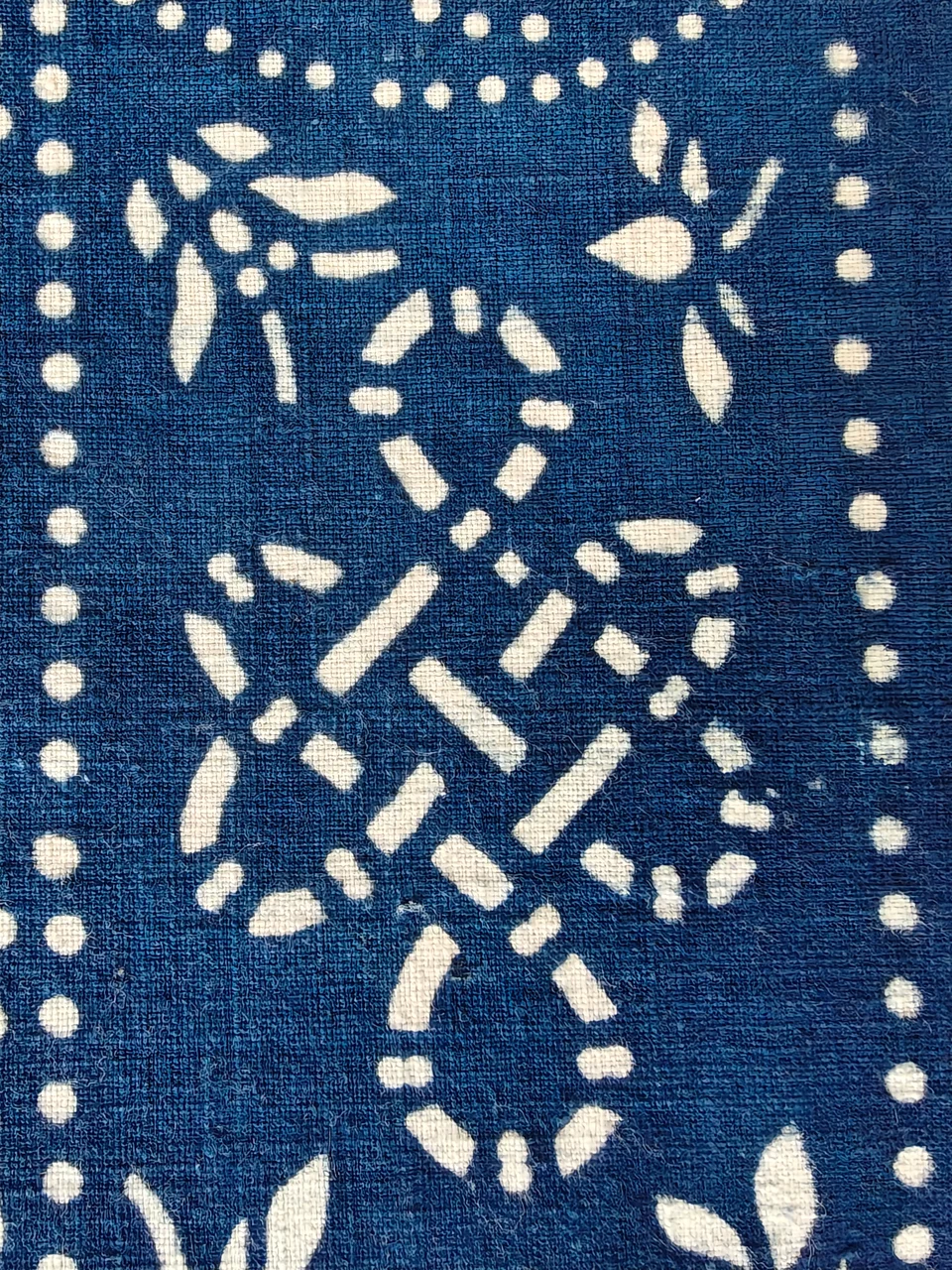
The supplied attribution is to the Nantong indigo stencil paste-resist (hui xie, 灰缬) printing tradition. Hand-cut stencil and resist-paste marks are visible; exact original workshop, dye chemistry and production date are not independently documented.
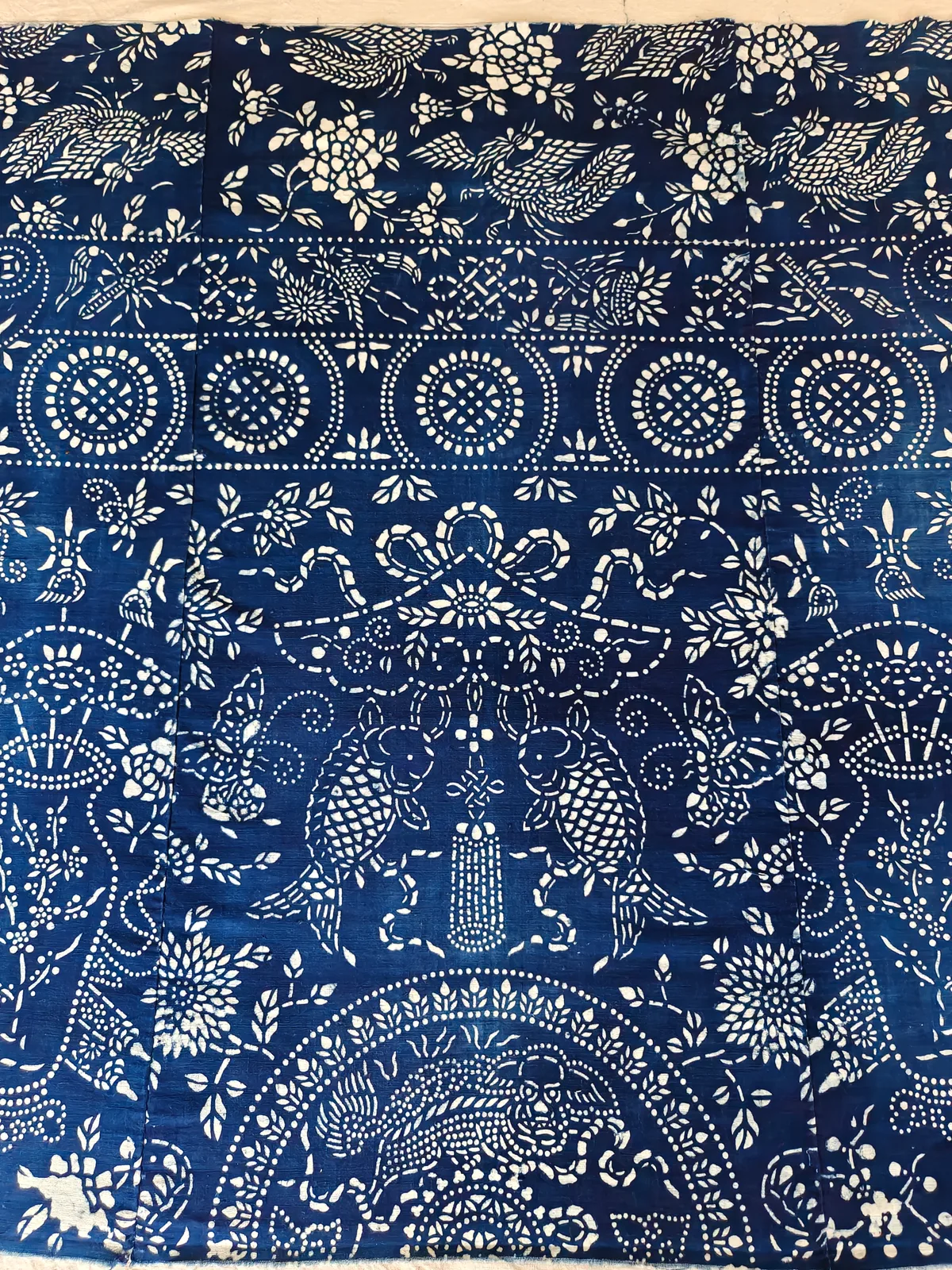
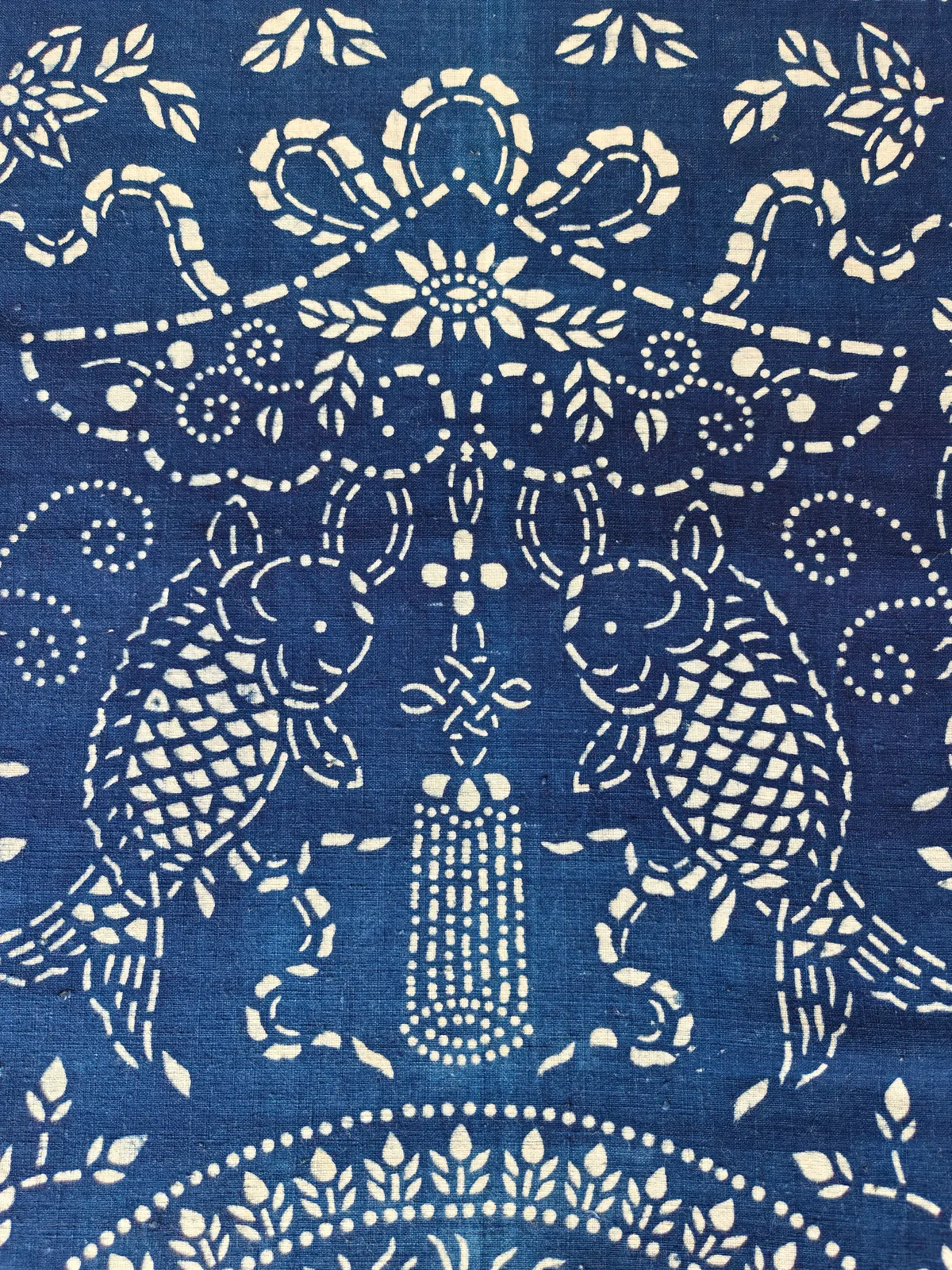
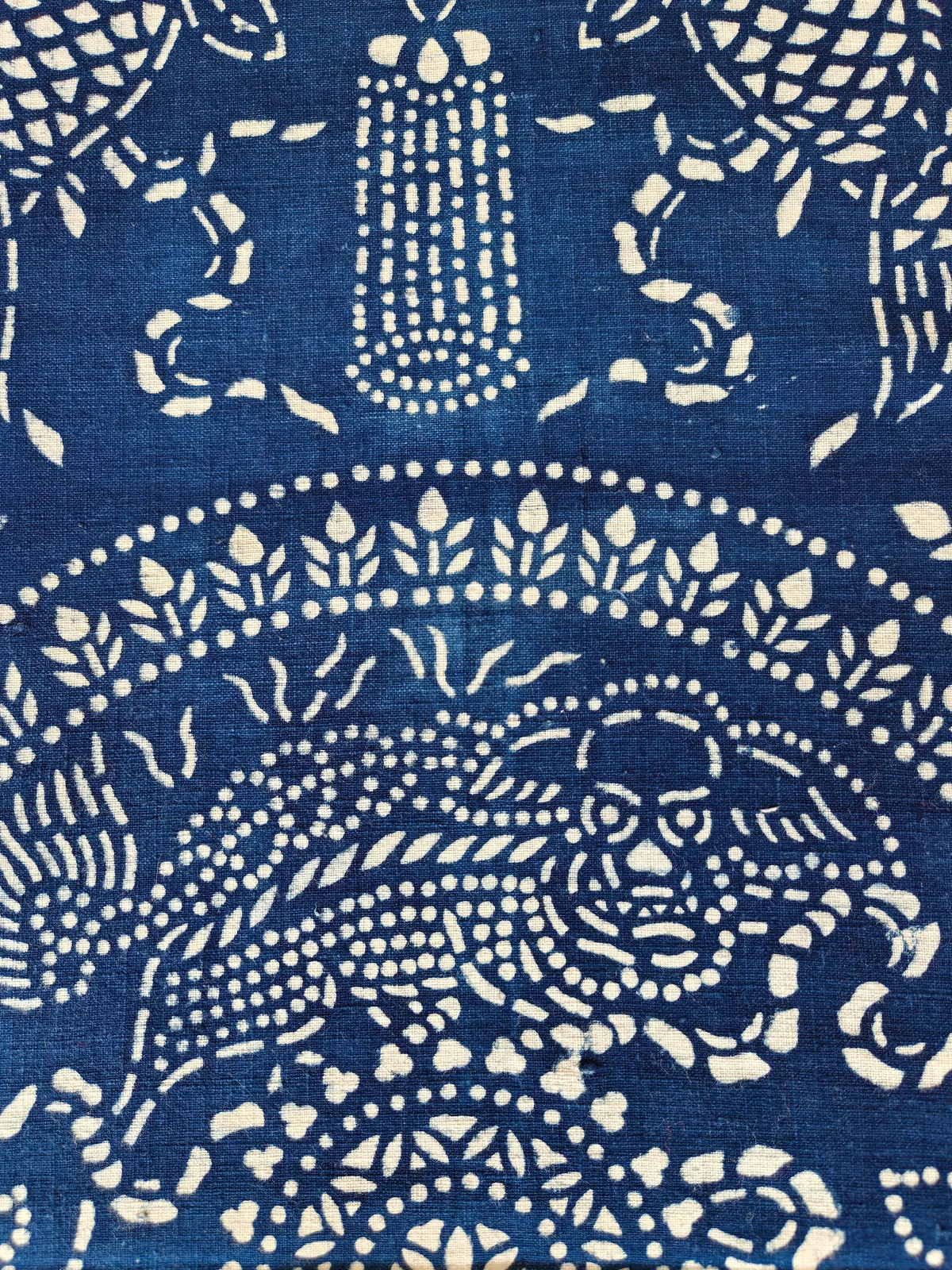
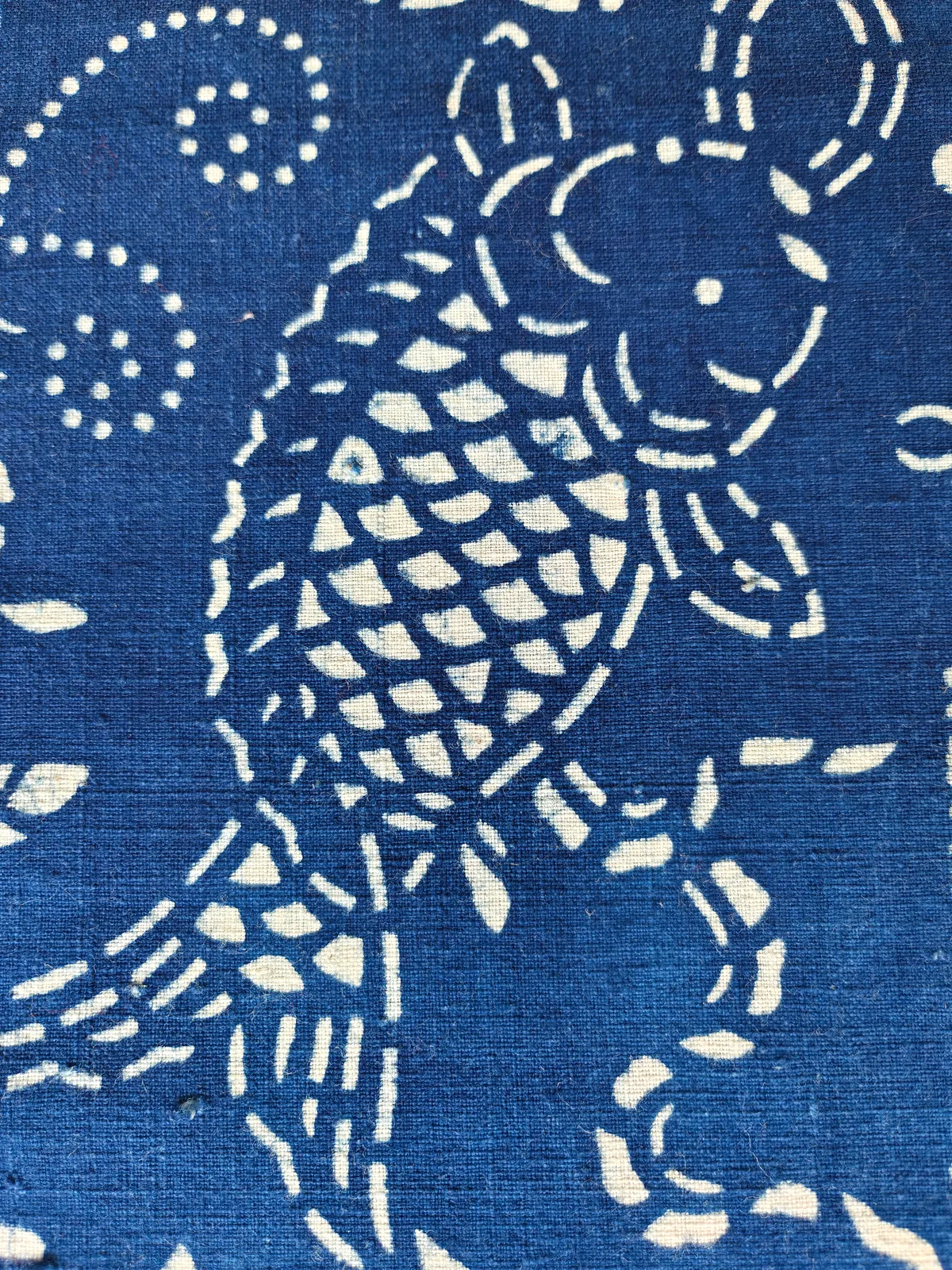
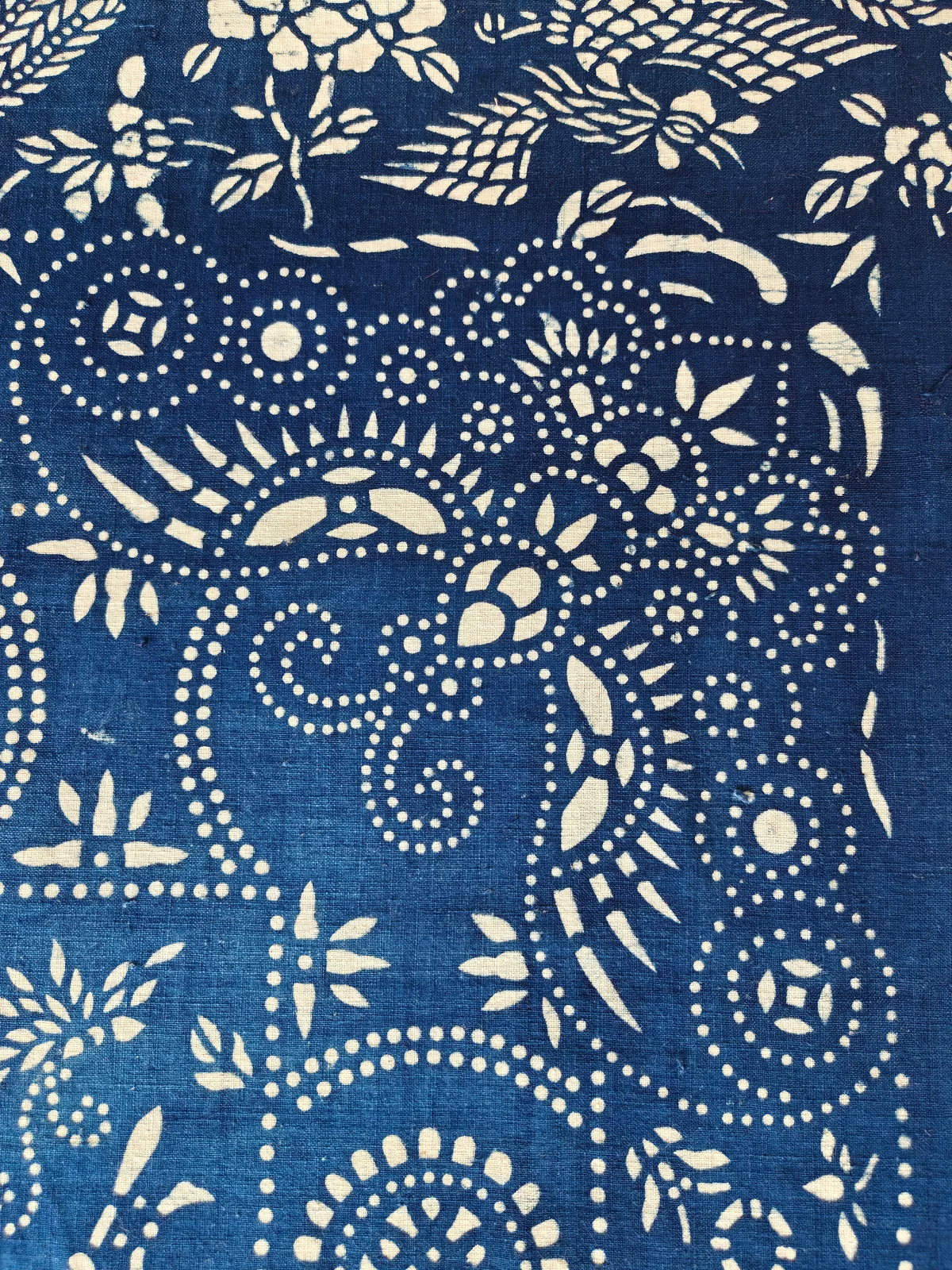
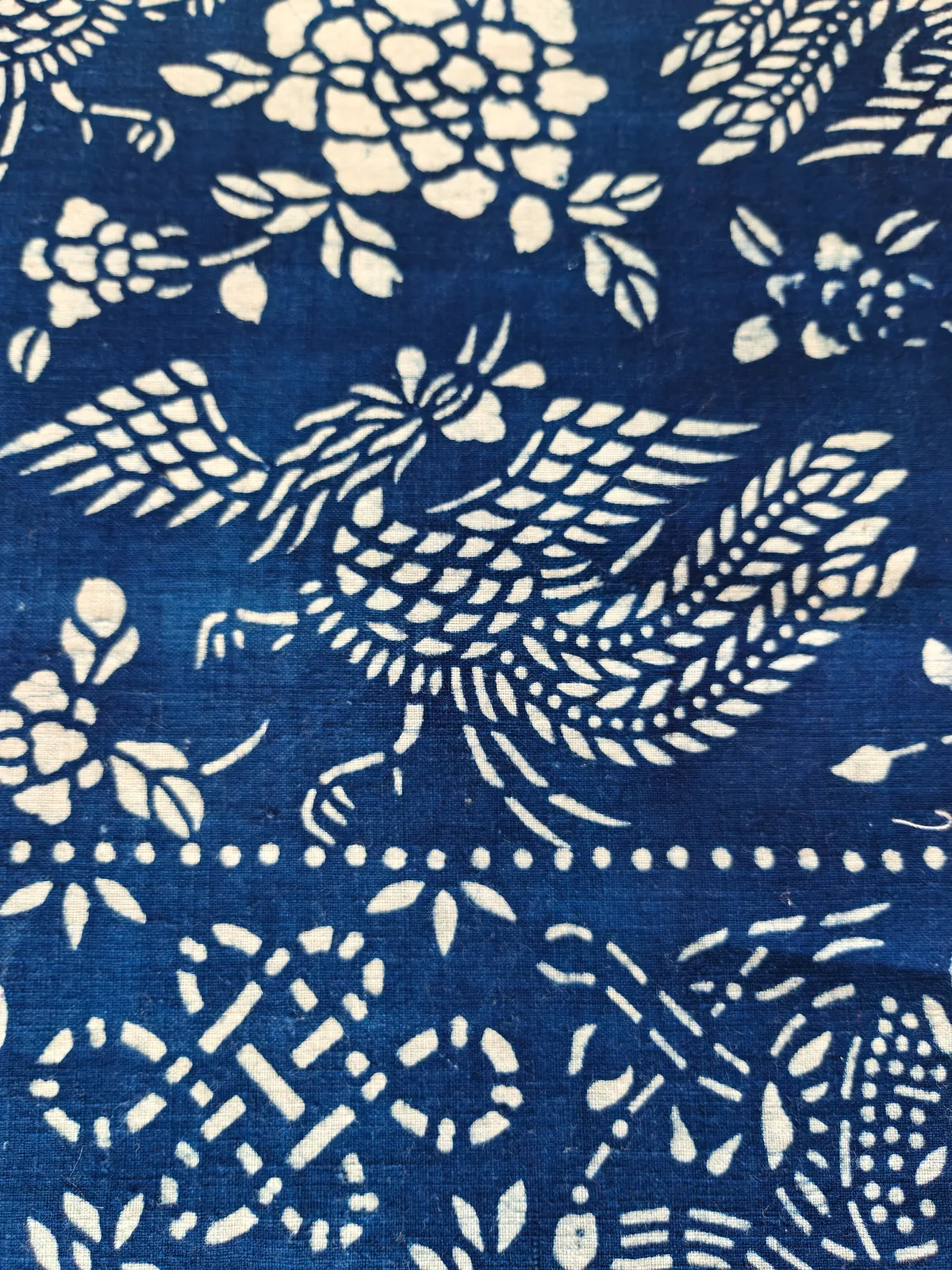
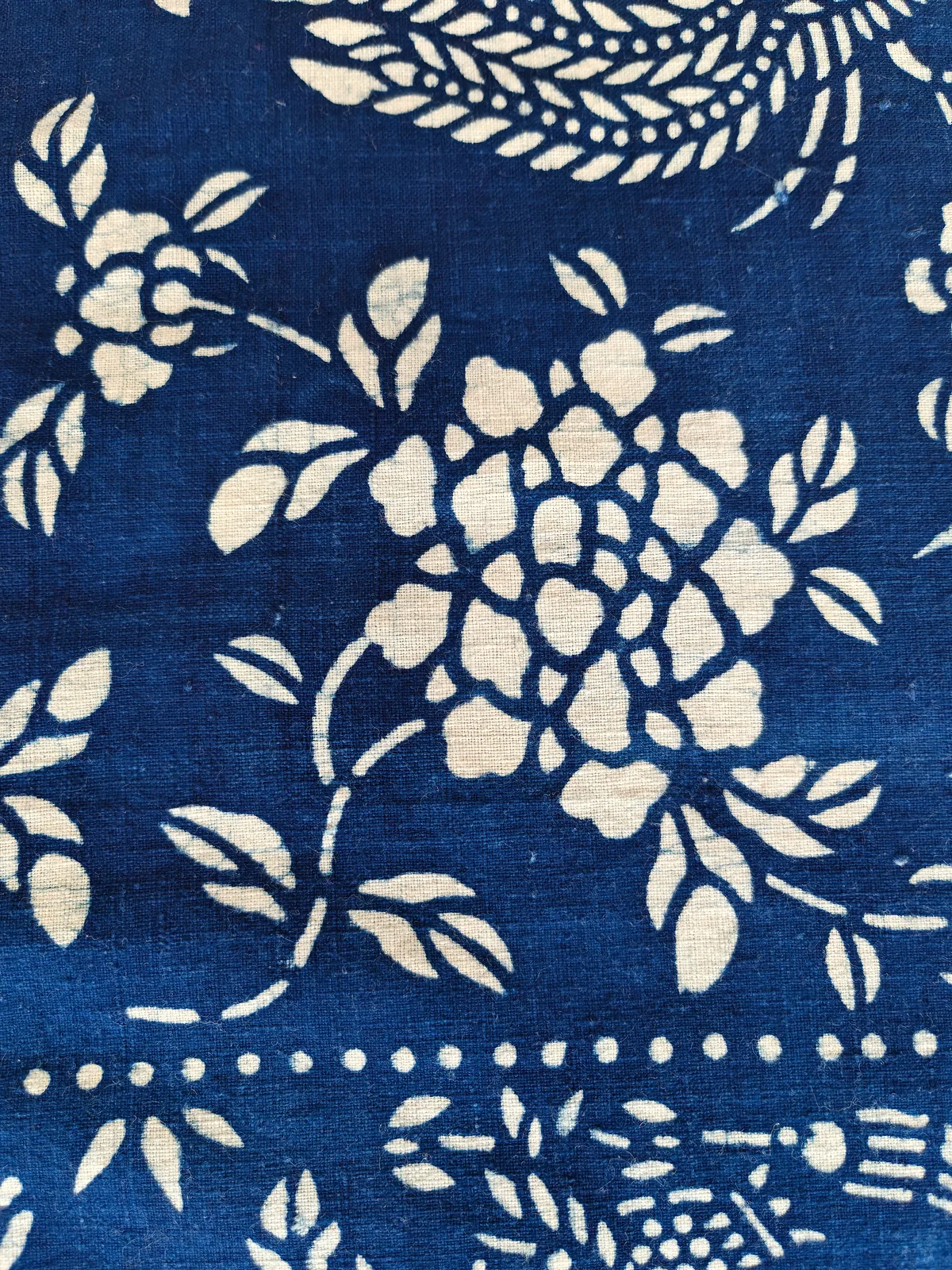
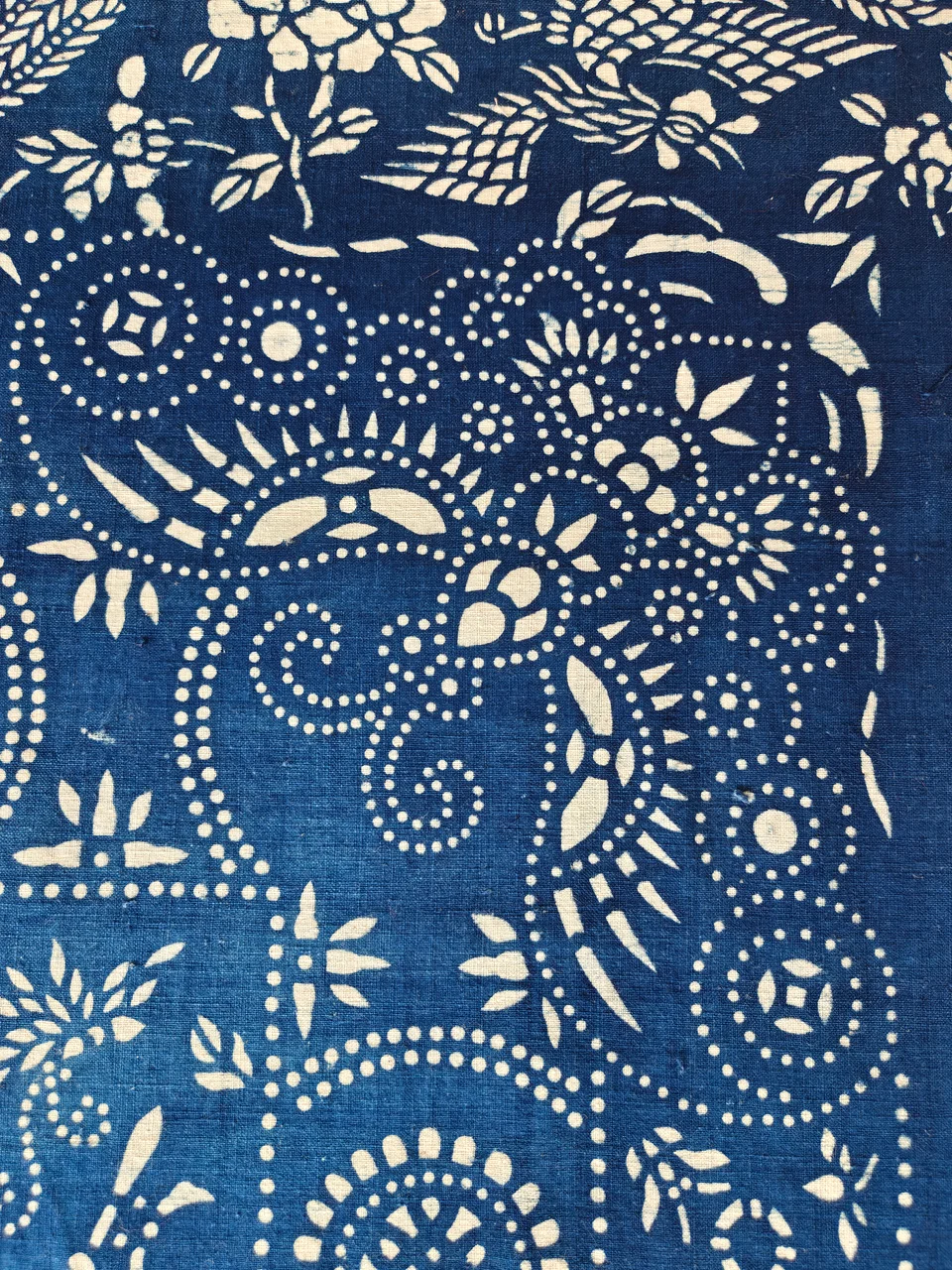
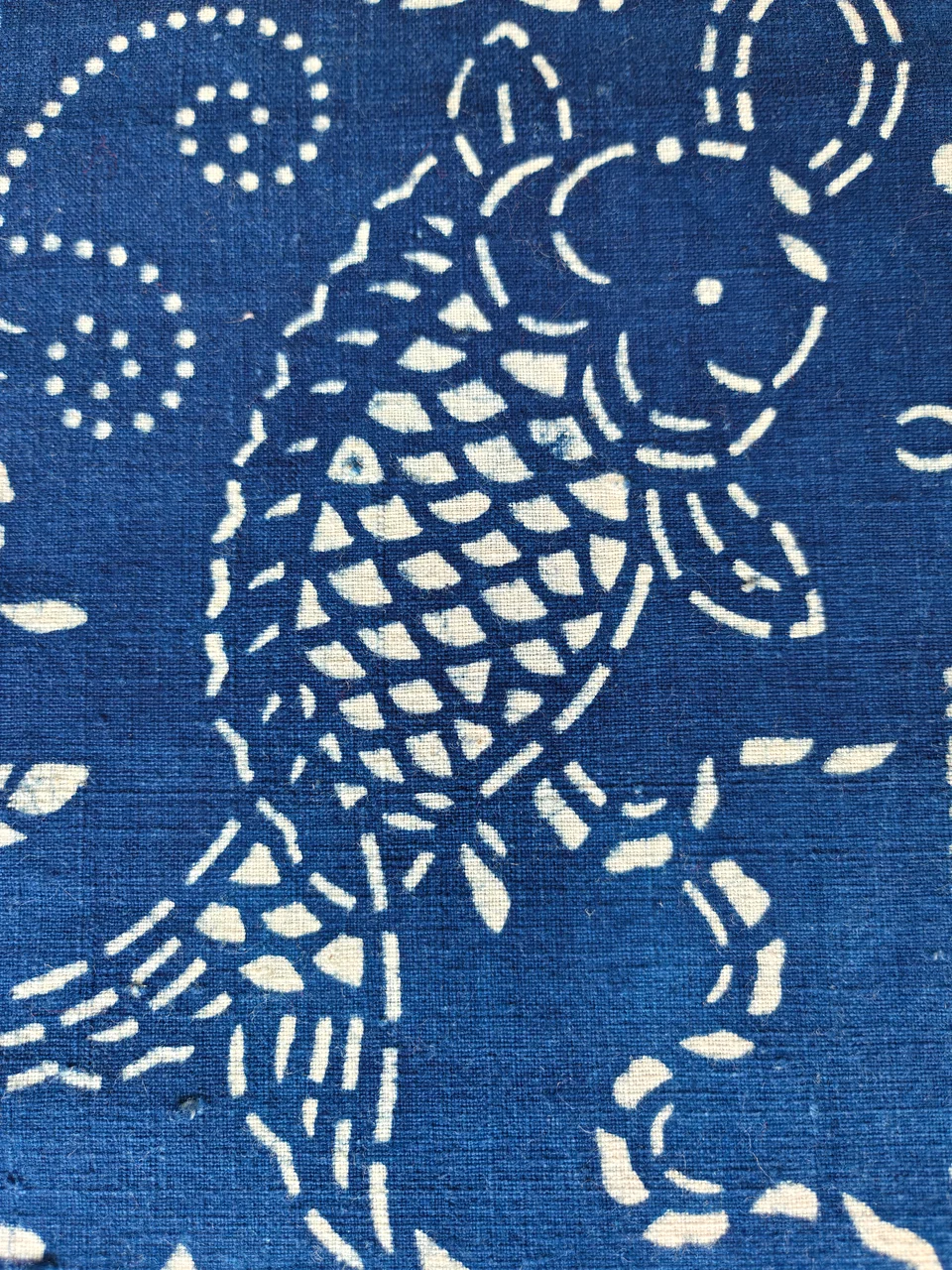
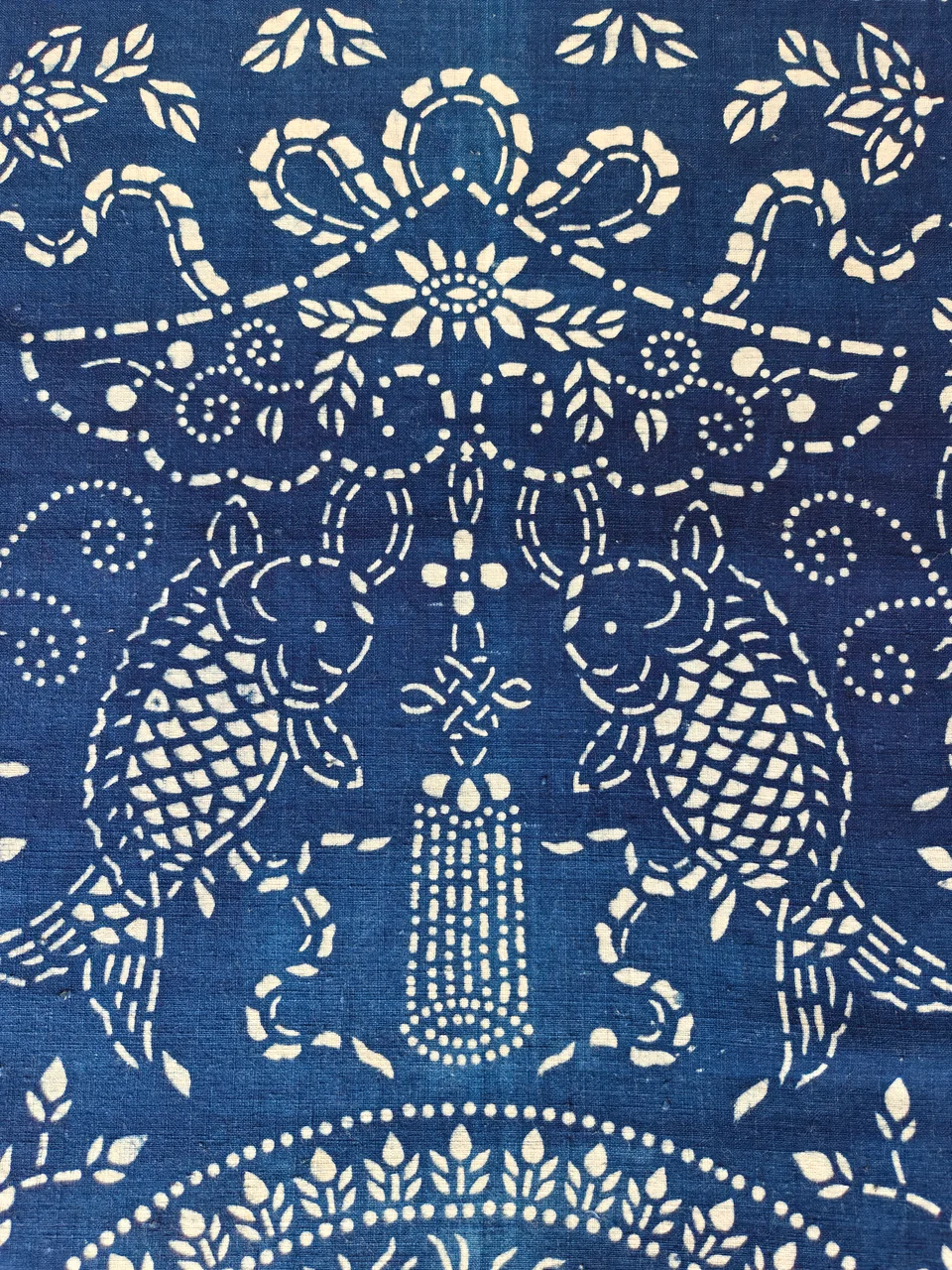
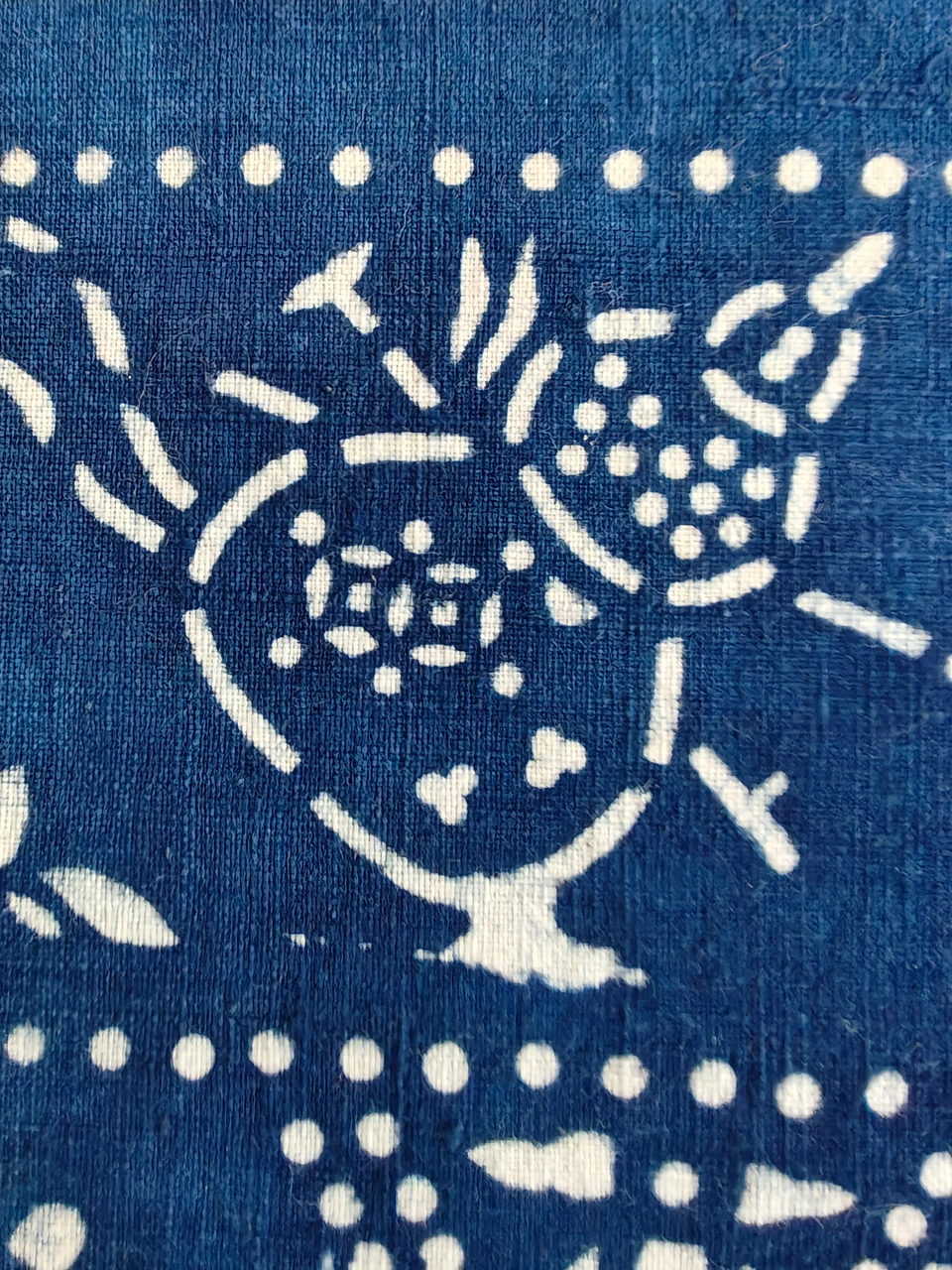
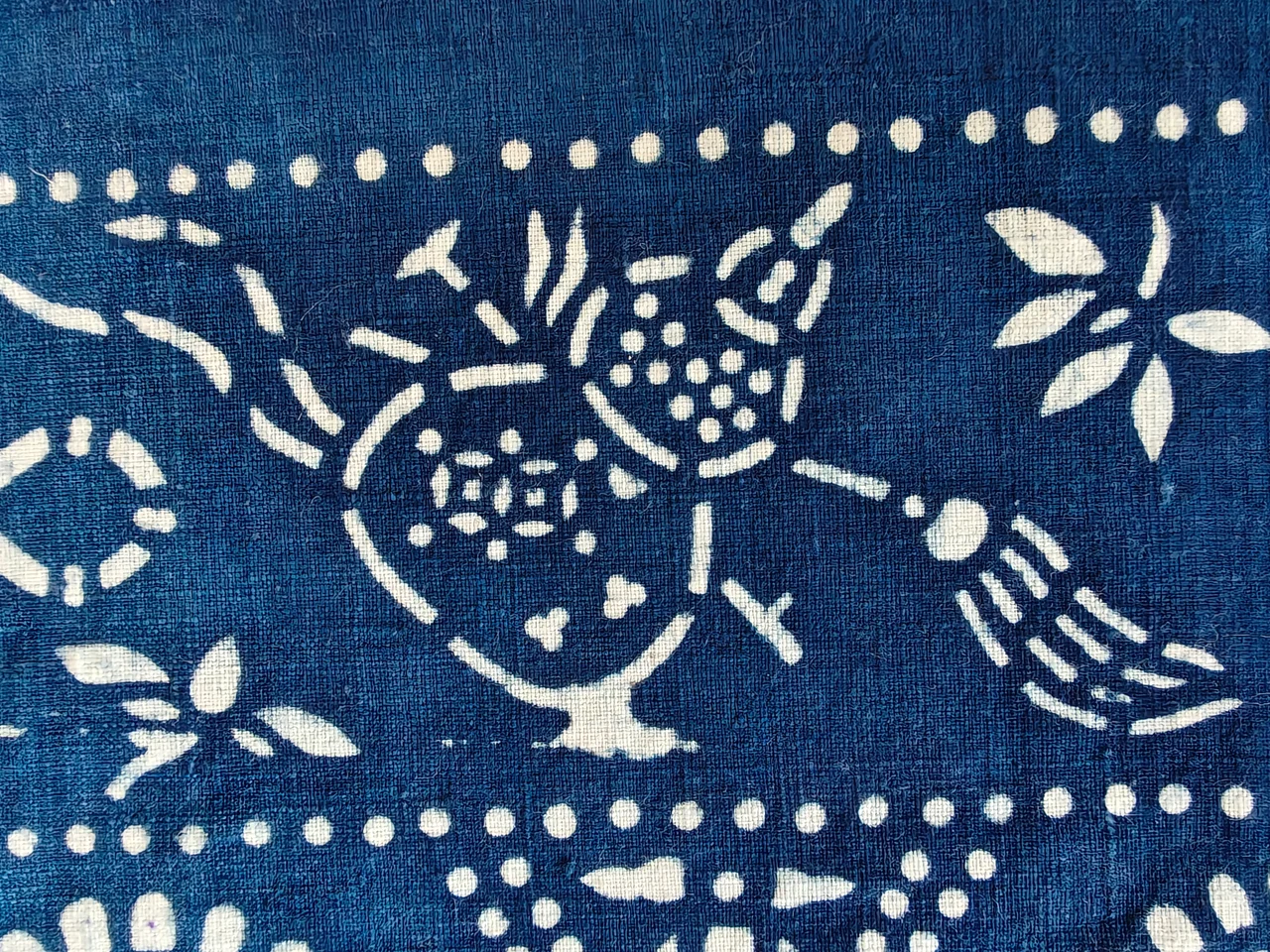
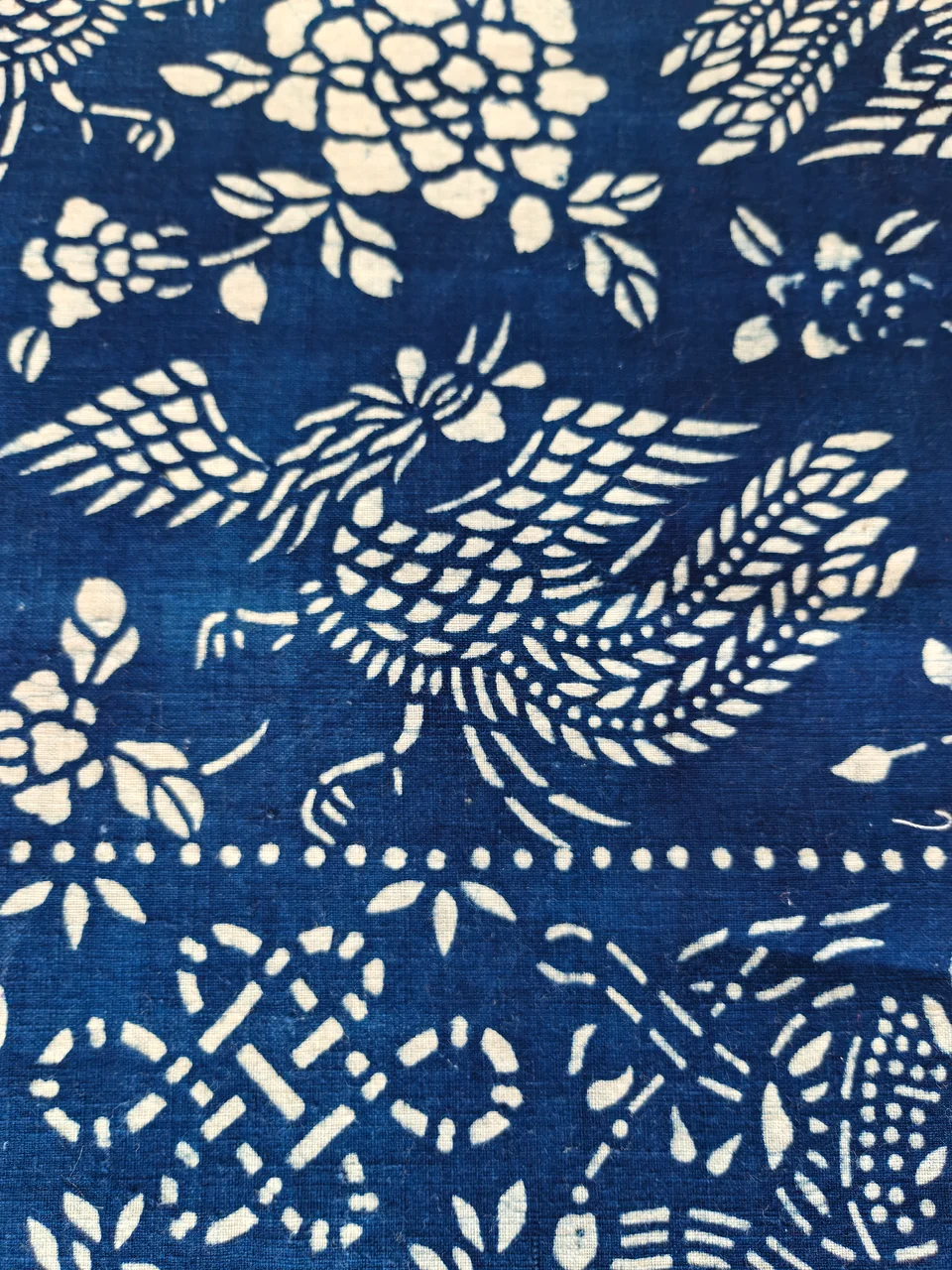
Distinctive imagery includes a pair of fish, phoenix-like birds, floral vessels, a lion-like figure, peonies and small objects that the owner identifies with the Hidden Eight Immortals iconography.
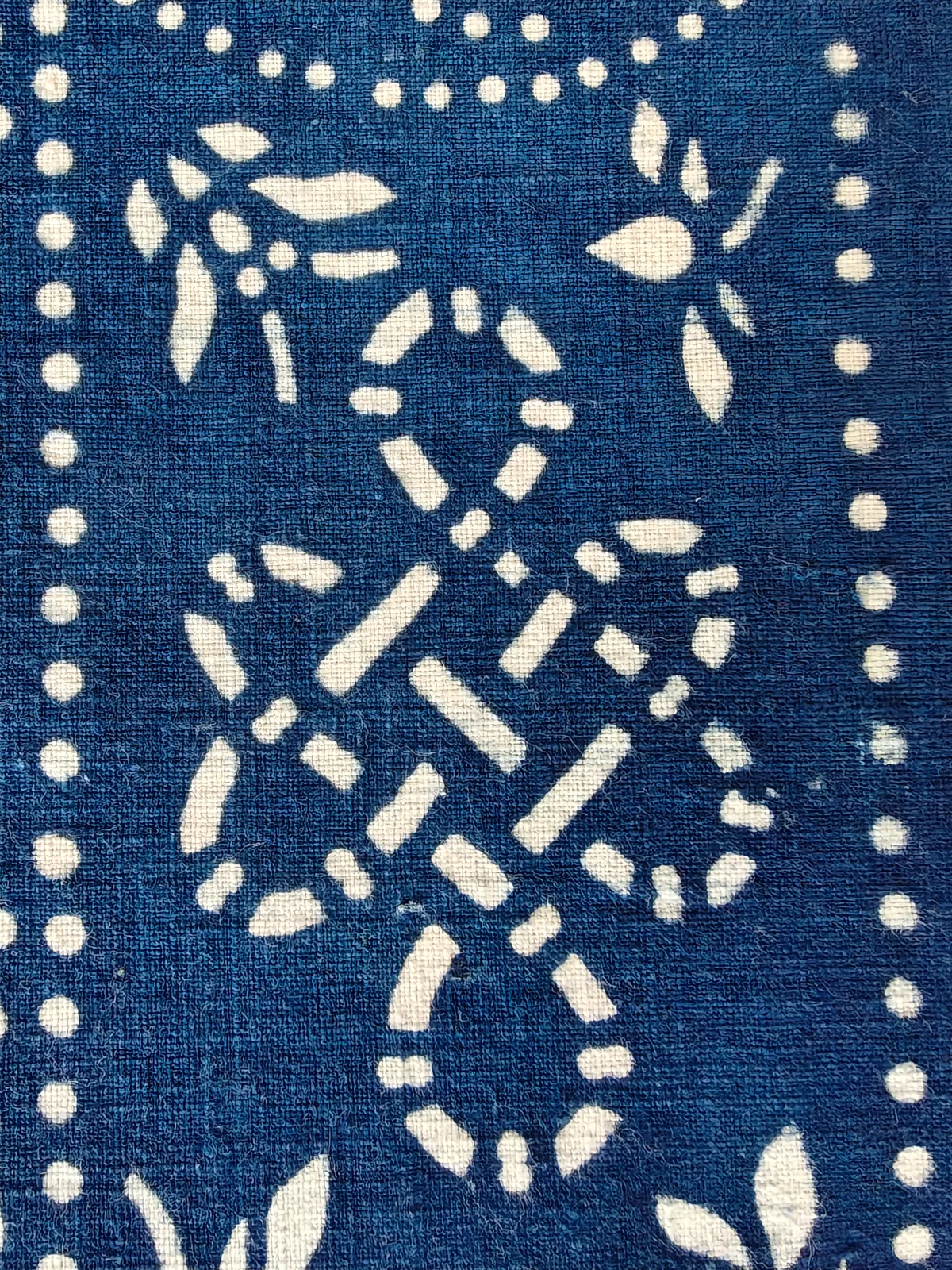
The owner has additionally proposed a Ping Sheng San Ji (平升三级) reading for the vase arrangements, identifying an upright bottle, three halberd-shaped items and paired sheng-like musical instruments. This reading is consistent with a known Chinese auspicious rebus, but the small objects on this specific piece have not been independently authenticated.
The photographic record also shows a round cut-out at one edge and later hand-joining seams. These are disclosed, not concealed or described as original construction.
Look at each motif
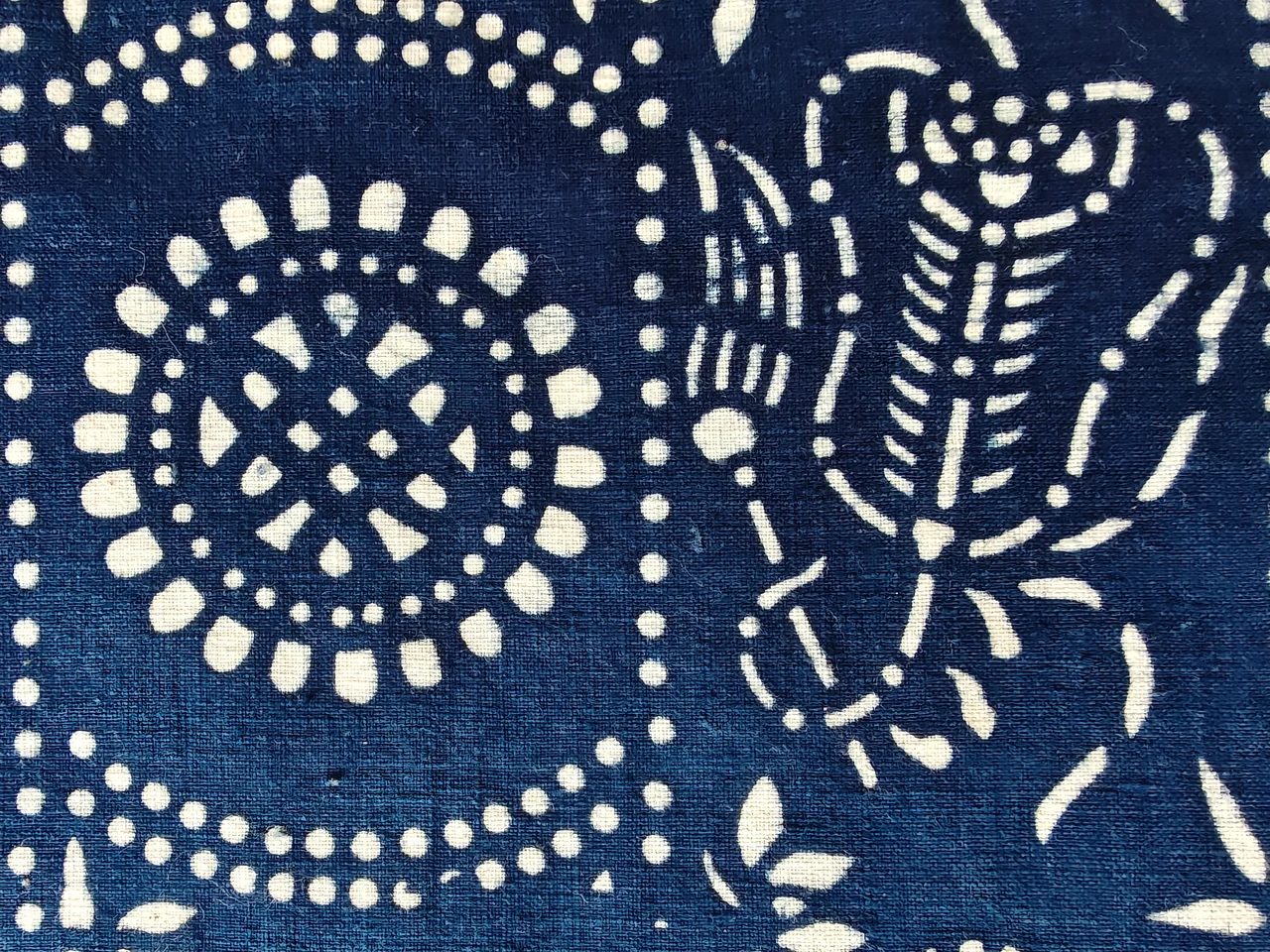
These photographs are details from the actual cloth, matched with the owner’s pattern labels. Some small symbolic forms remain provisional identifications.
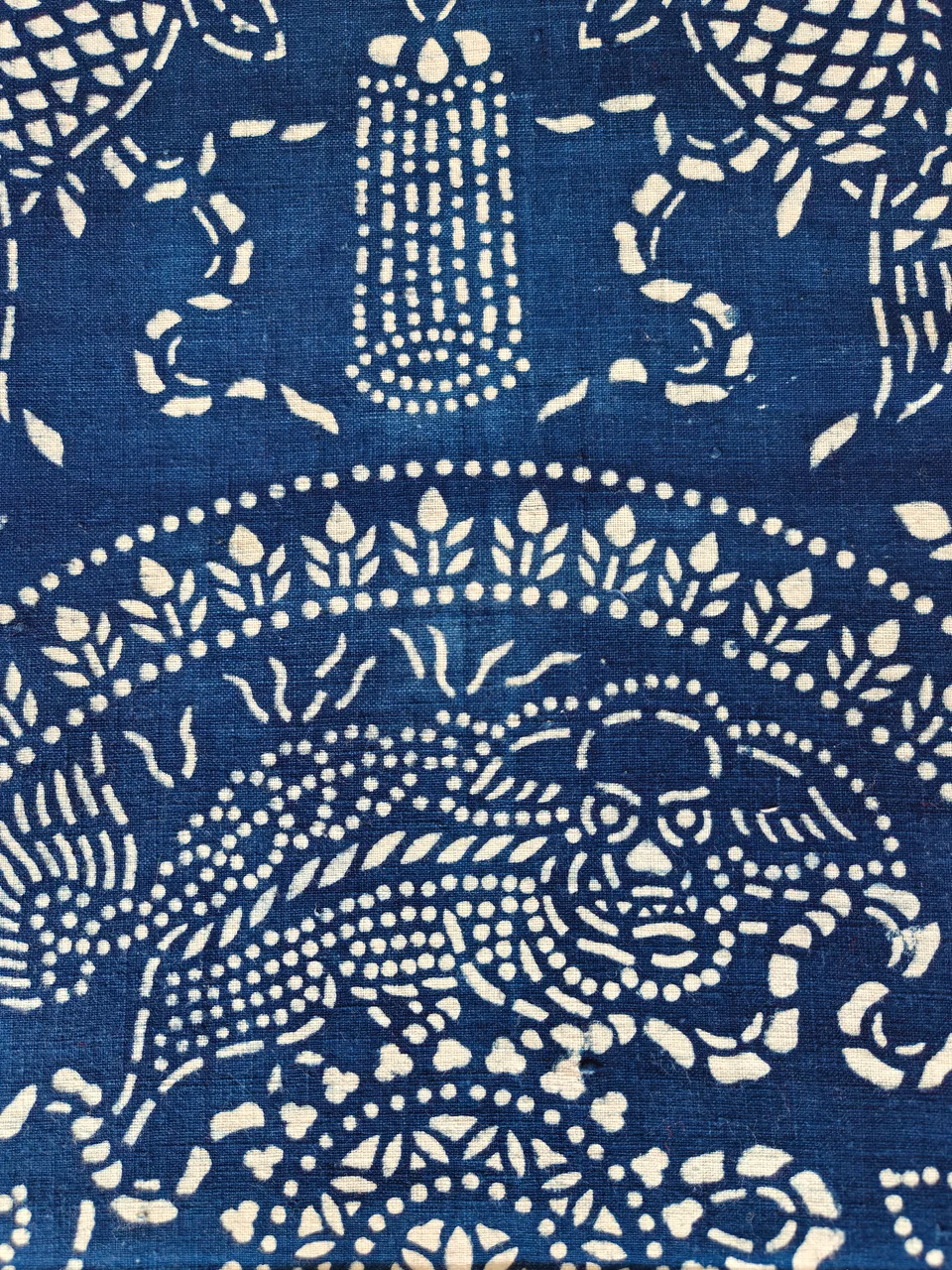
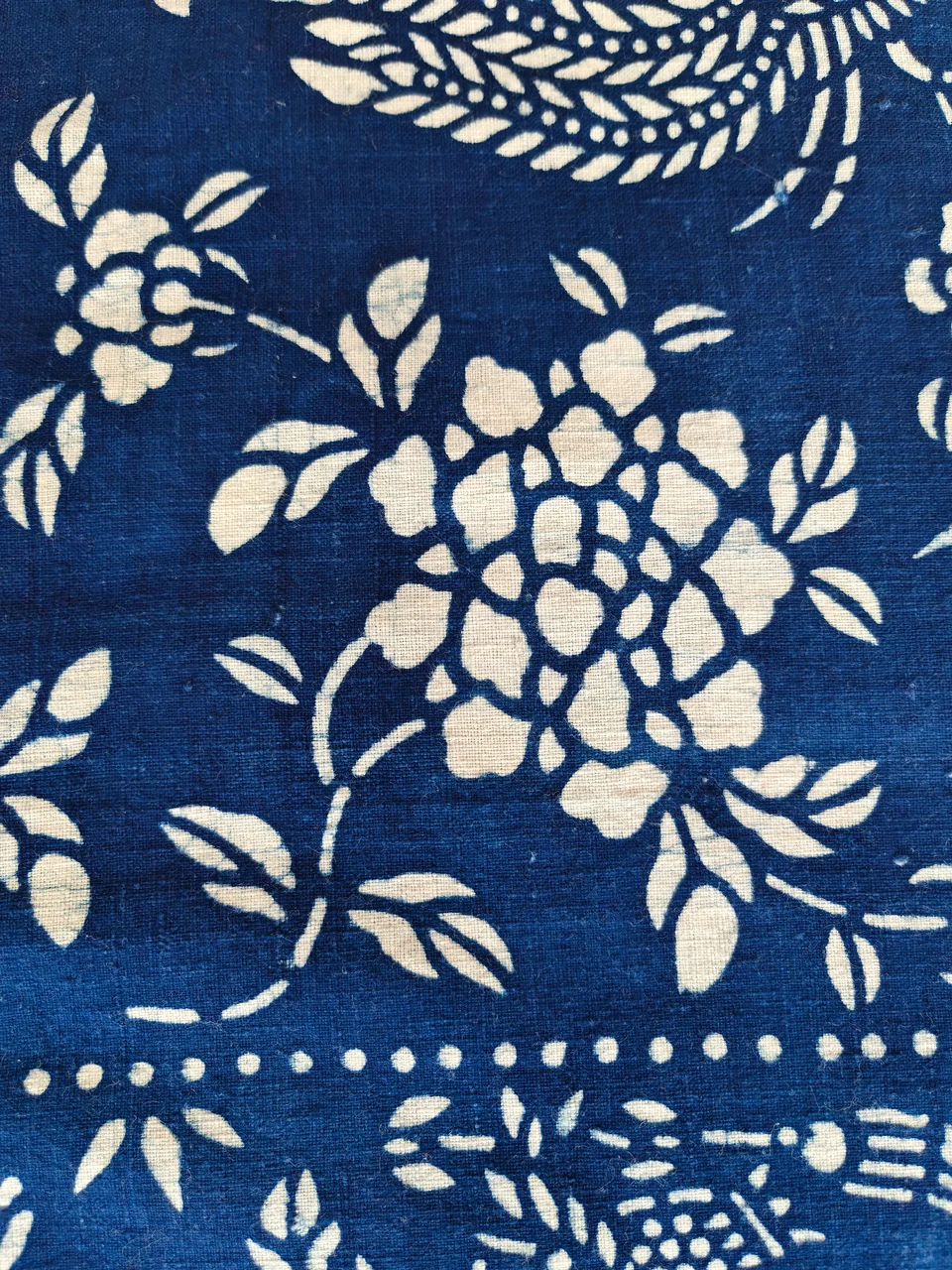
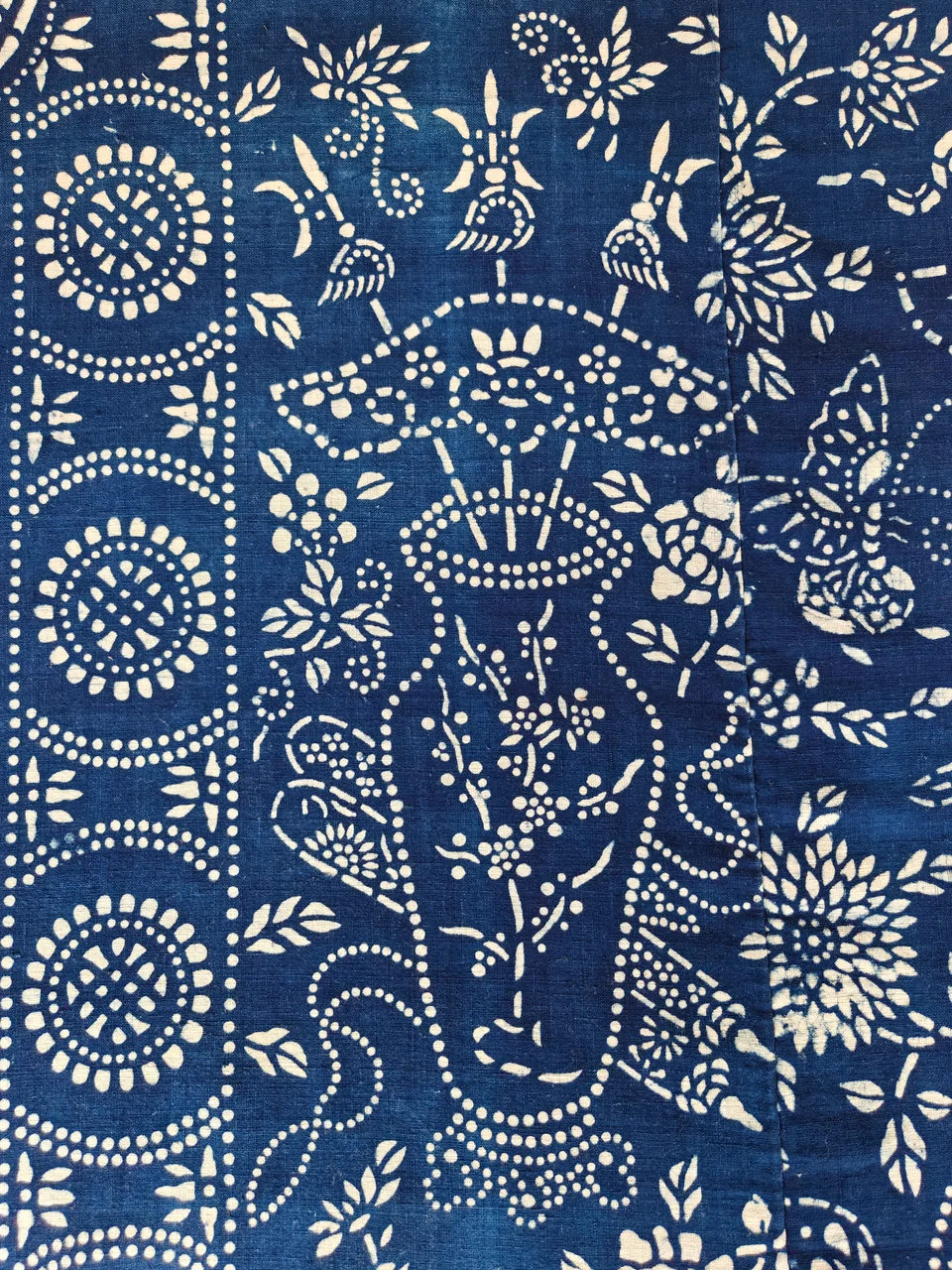
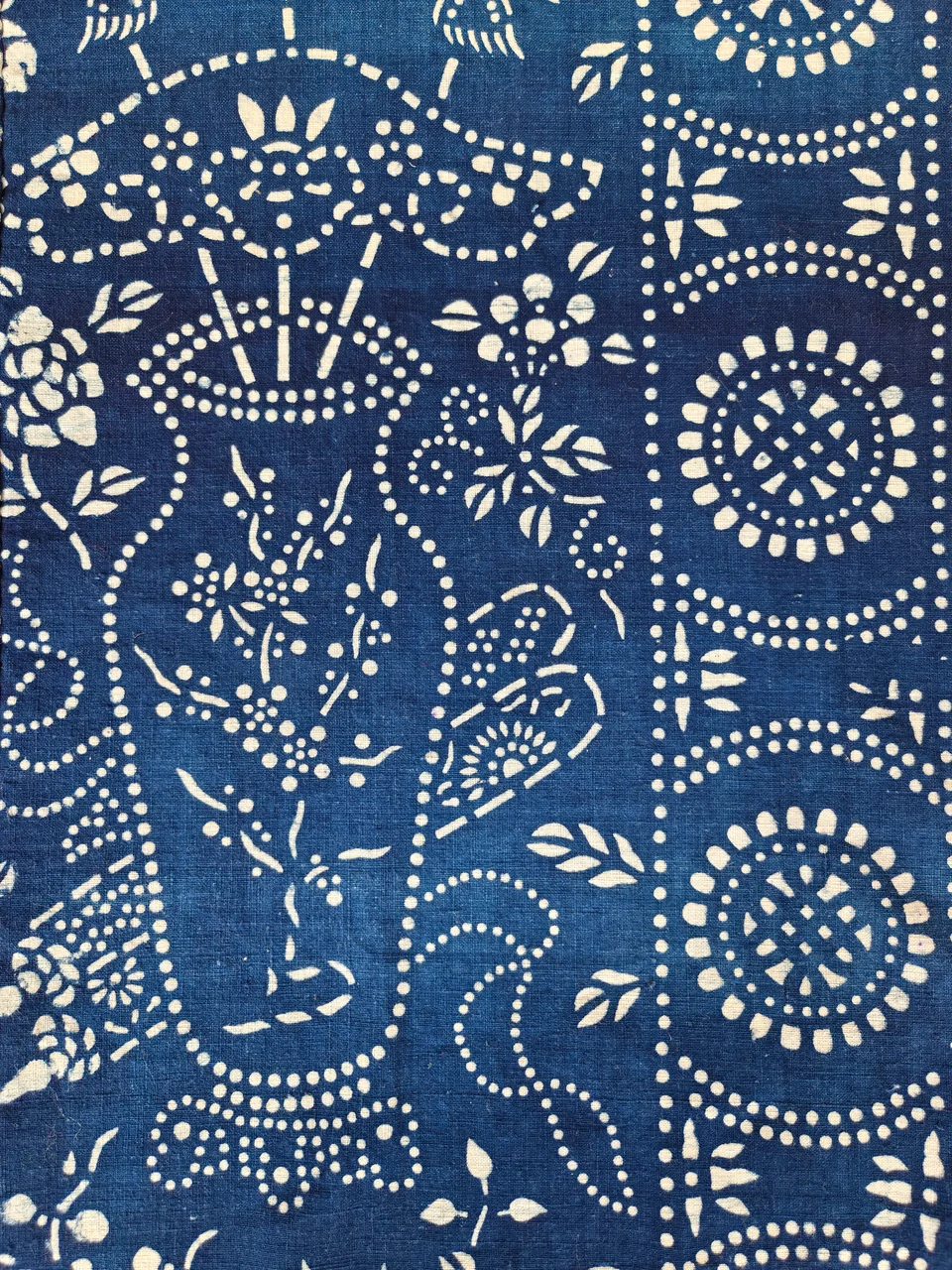
A gathering of good wishes in indigo
Hidden Eight Immortals (暗八仙): In Chinese decorative tradition, the eight legendary figures are represented by emblematic objects: sword (Lü Dongbin), gourd (Tieguai Li), fan (Han Zhongli), lotus (He Xiangu), fish drum (Zhang Guolao), flower basket (Lan Caihe), jade clappers (Cao Guojiu), and bamboo flute (Han Xiangzi). The owner identifies a selection of small motifs here with these emblems; not every object is conclusively identifiable from the surviving print.
Ping Sheng San Ji (平升三级), “rise three ranks”: A vase (瓶, ping, echoing 平), a sheng musical instrument (笙, sheng, echoing 升), and three halberds (三戟, san ji, echoing 三级) together create a visual pun wishing success and progress. This historic iconography is documented in Chinese museum collections. On this cloth it is an owner-supplied reading of the vase and adjacent forms, retained as an interpretation rather than a confirmed inventory of all forms.
Paired fish invoke 年年有余 (nian nian you yu), abundance year after year. Phoenix-like birds suggest harmony and good fortune. Vases with peonies invite a separate wish for peace and prosperity, 平安富贵. The protective lion-like figure and blossoms add festive overtones.
Together these motifs collect blessings for household security, advancement, prosperity and continuity. The interpretation reflects traditional Chinese visual wordplay and the owner’s contextual reading, rather than a known maker’s statement.
The dotted lines and pale cut-out shapes against deep blue are printed by a resist process rather than woven motifs. Slightly uneven pattern edges are part of the individual surviving textile.
The Hidden Eight Immortals
Discover the eight legendary figures, their identifying treasures, and how traditional Chinese auspicious motifs may be read in this textile.
Read the illustrated story →