Cranes of Longevity — Vintage Indigo Wrapping Cloth with Original Ties
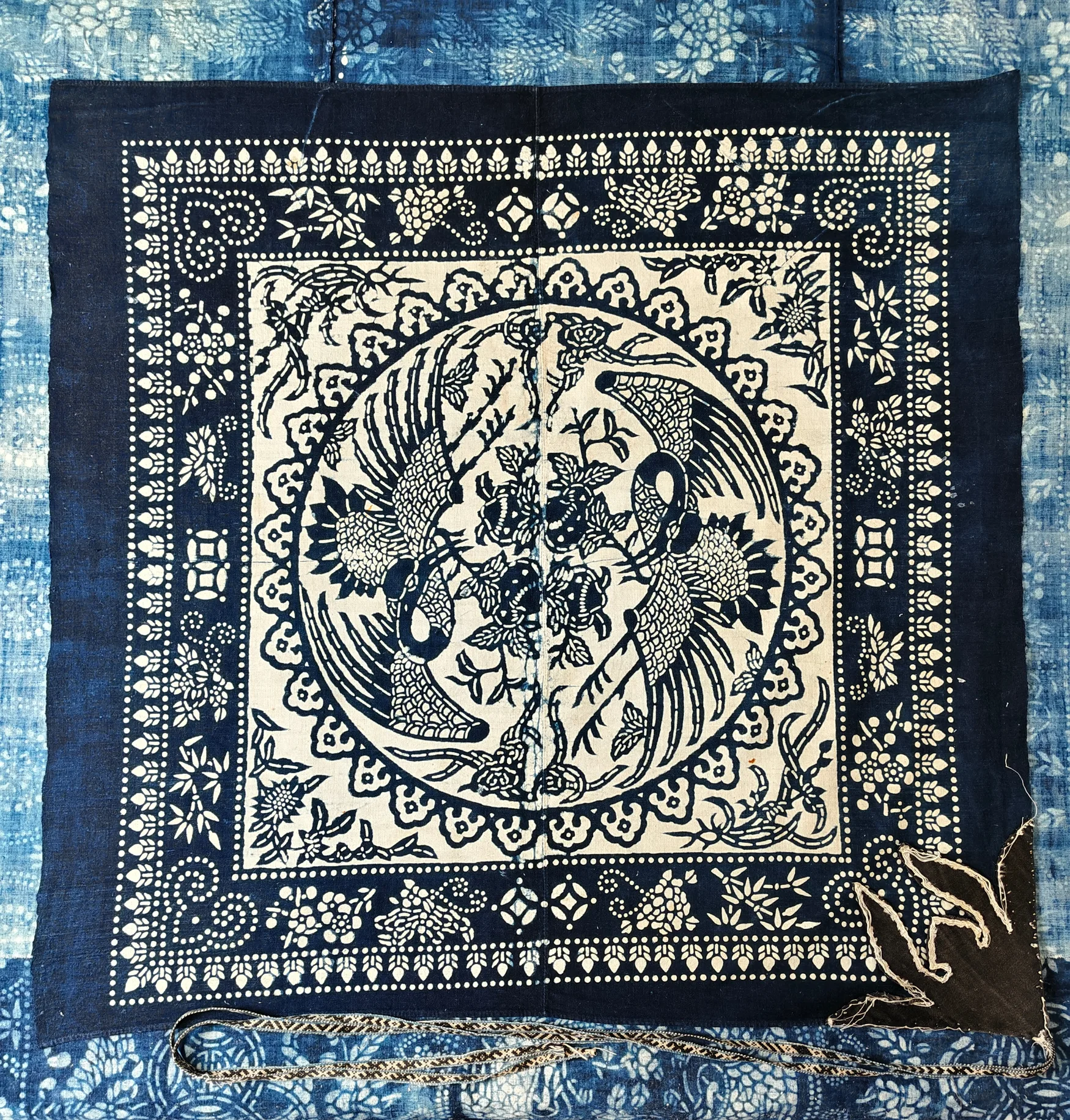
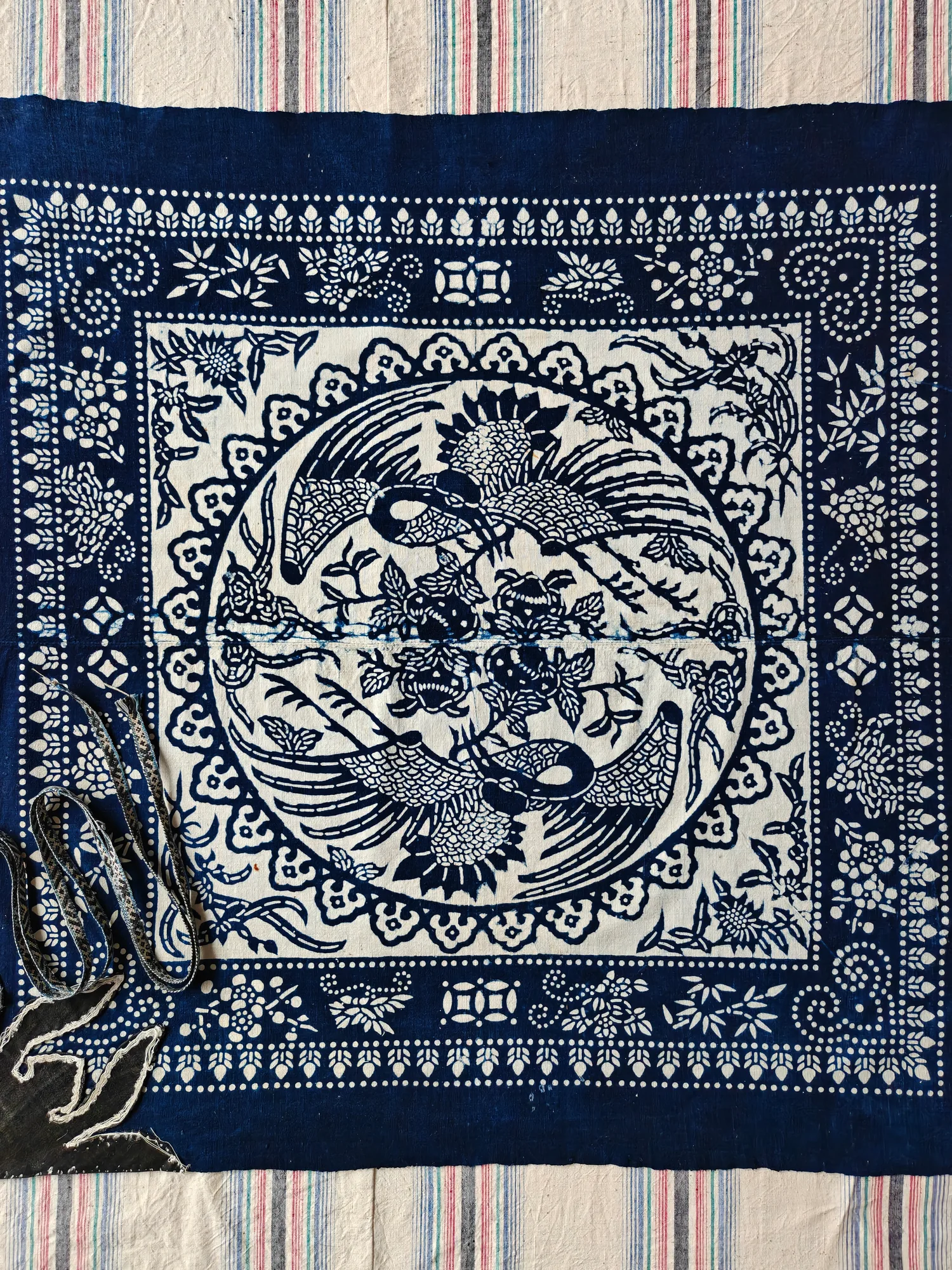
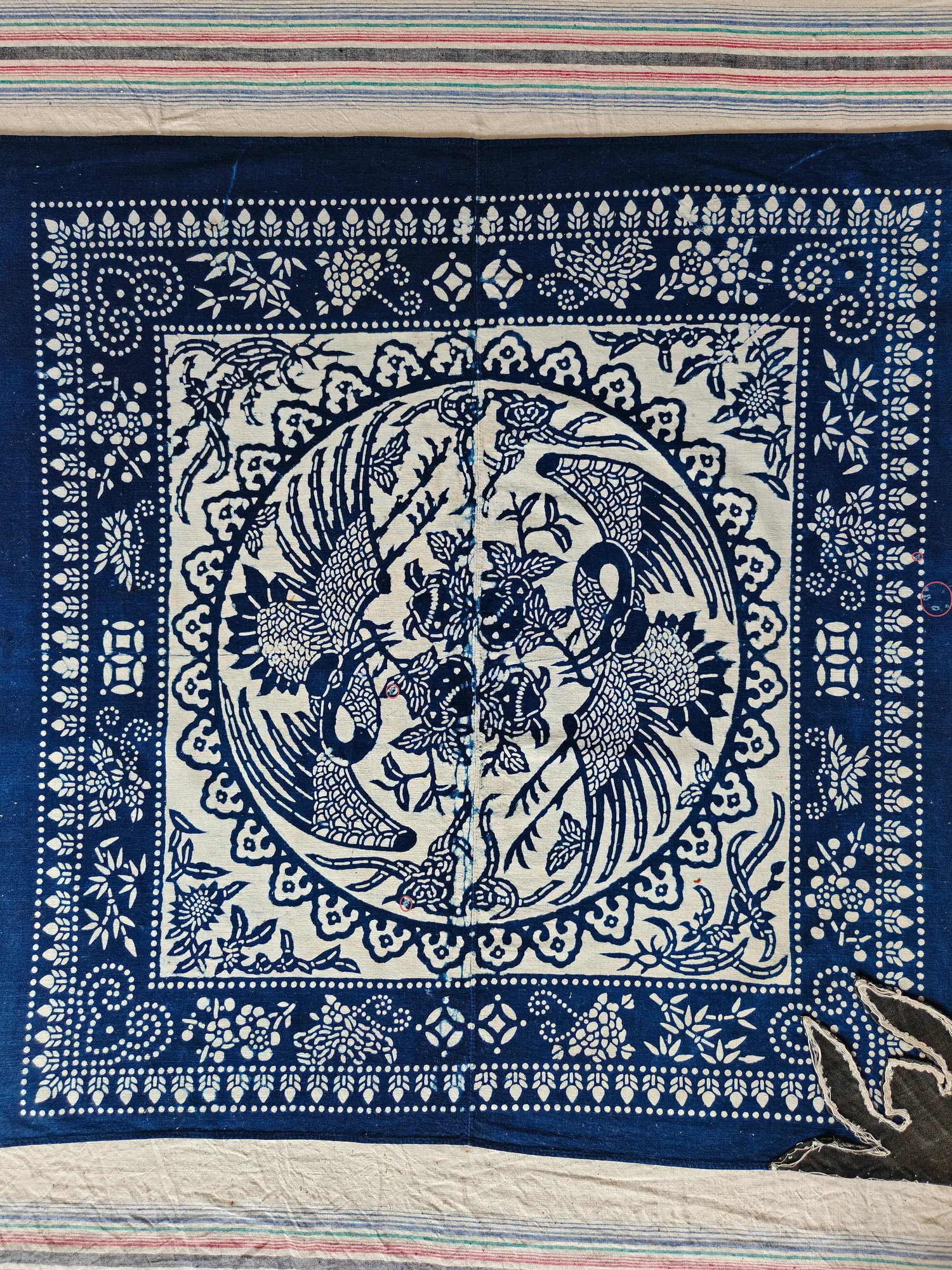
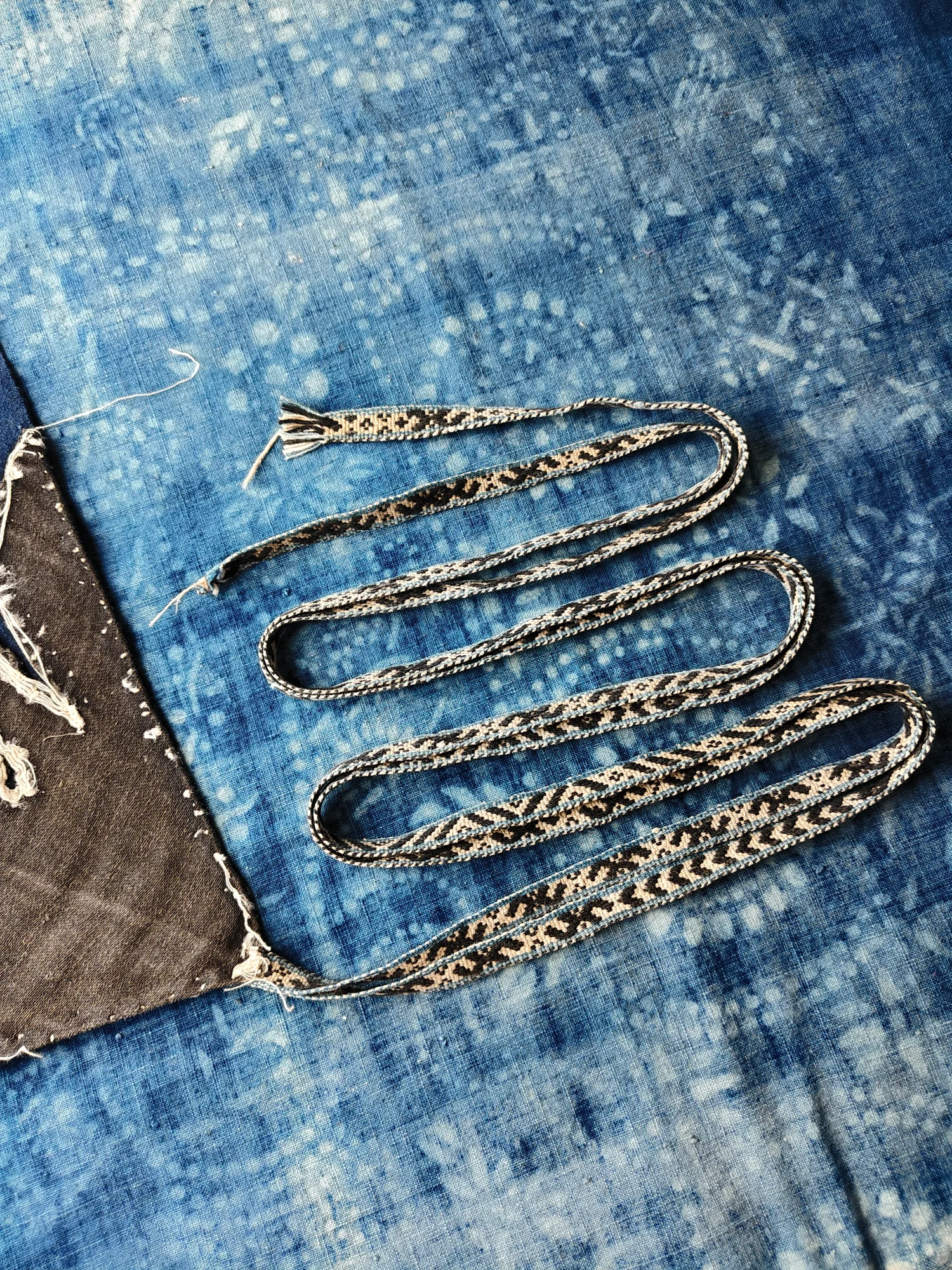
A complete vintage indigo-and-ivory wrapping cloth with two facing cranes, auspicious fruit, rich decorative borders and two surviving original 110 cm woven fastening ties.
- Object ID
- TA-NT-0035
- Origin
- Nantong · Attributed to Nantong, Jiangsu Province, China
- Period
- Estimated mid-20th century, possibly 1950s–1960s
- Dating confidence
- estimated
- Material
- Old cotton; two narrow panels of handwoven homespun cotton (owner attribution)
- Dimensions
- One complete vintage wrapper approx. 84 × 86 cm / 33.1 × 33.9 in; two attached cotton ties approx. 110 cm / 43.3 in long each
- Technique
- Blue-and-white indigo-style resist printing; hand-cut stencil process attributed · Two narrow cotton panels hand-joined into a wrapping cloth · Original patterned cotton ties described as handwoven
- Pattern
- Paired cranes in circular medallion · Peach-like longevity fruit · Ruyi-cloud scalloped border · Decorative flowers and bamboo-like motifs · Patterned geometric borders
- Colours
- Deep indigo blue · Warm ivory
- Washed
- Yes
Object condition
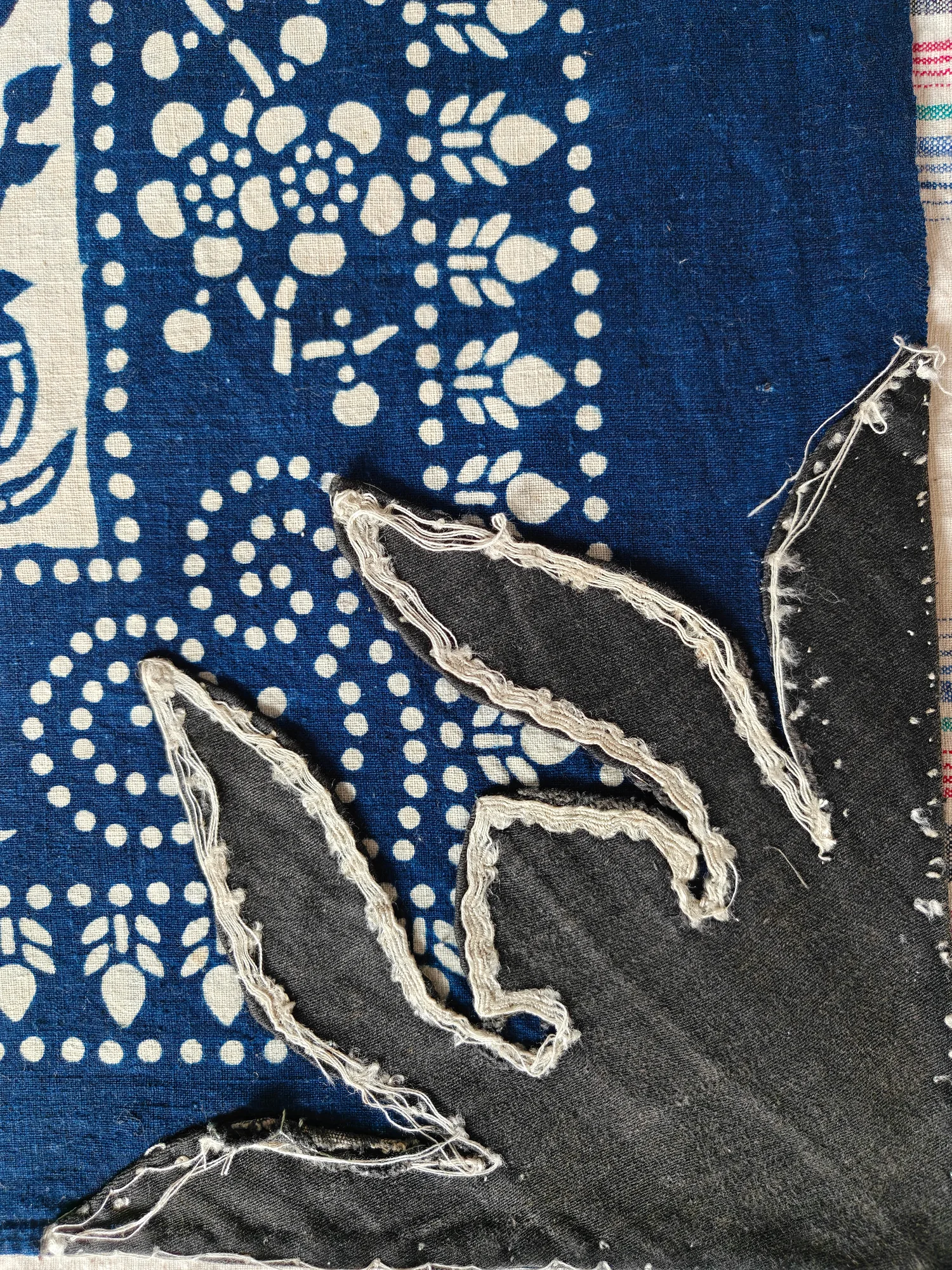
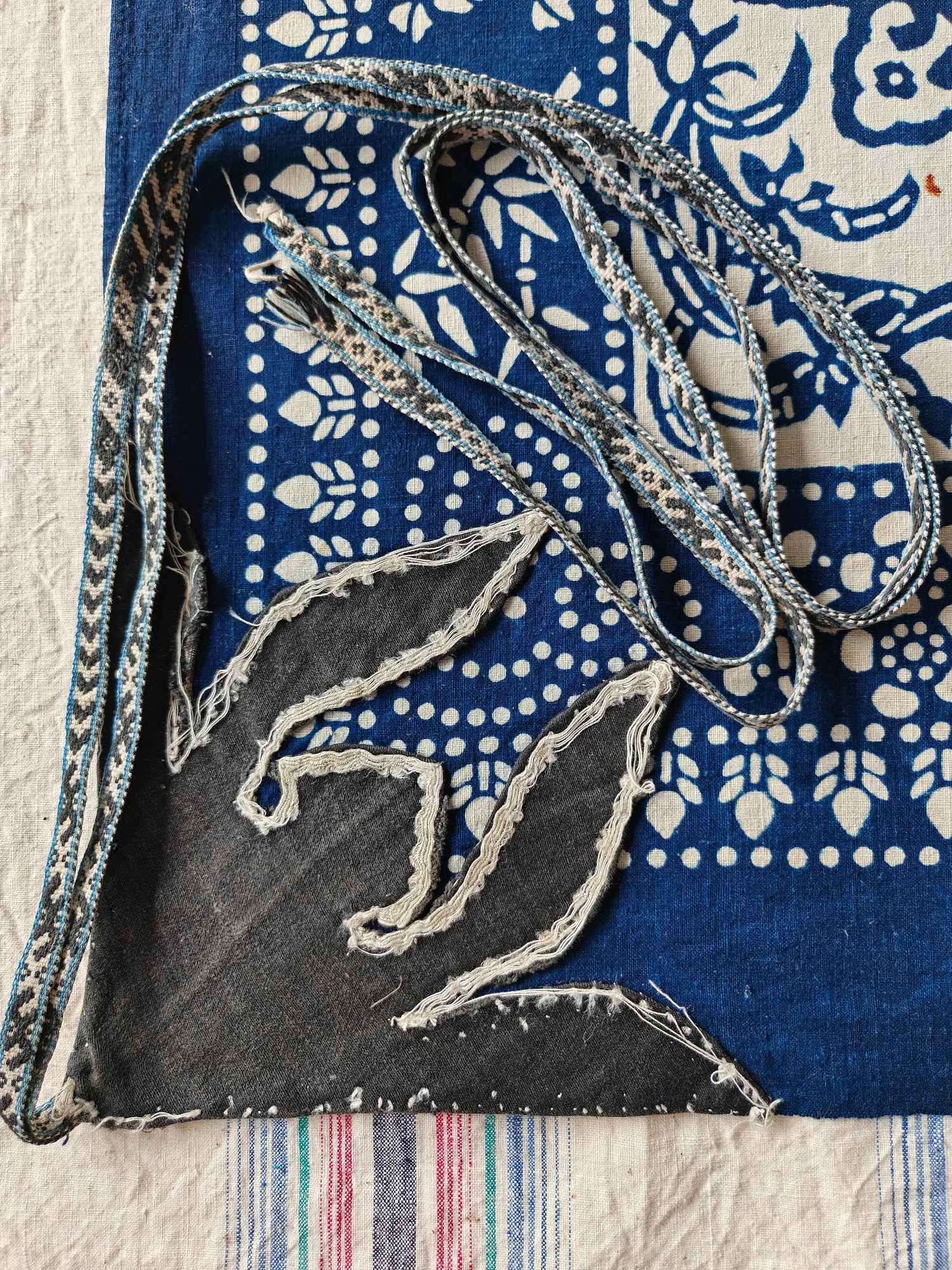
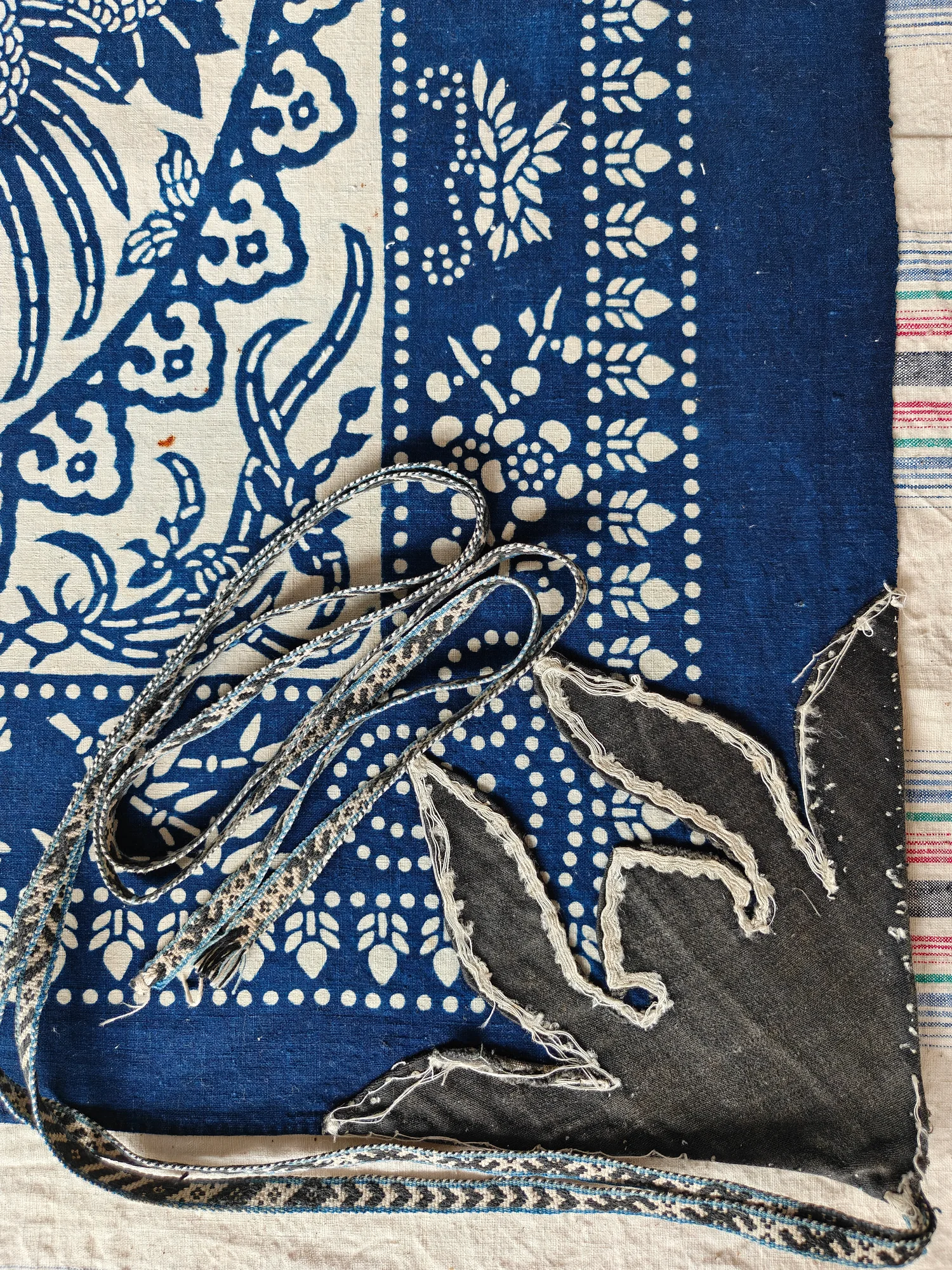
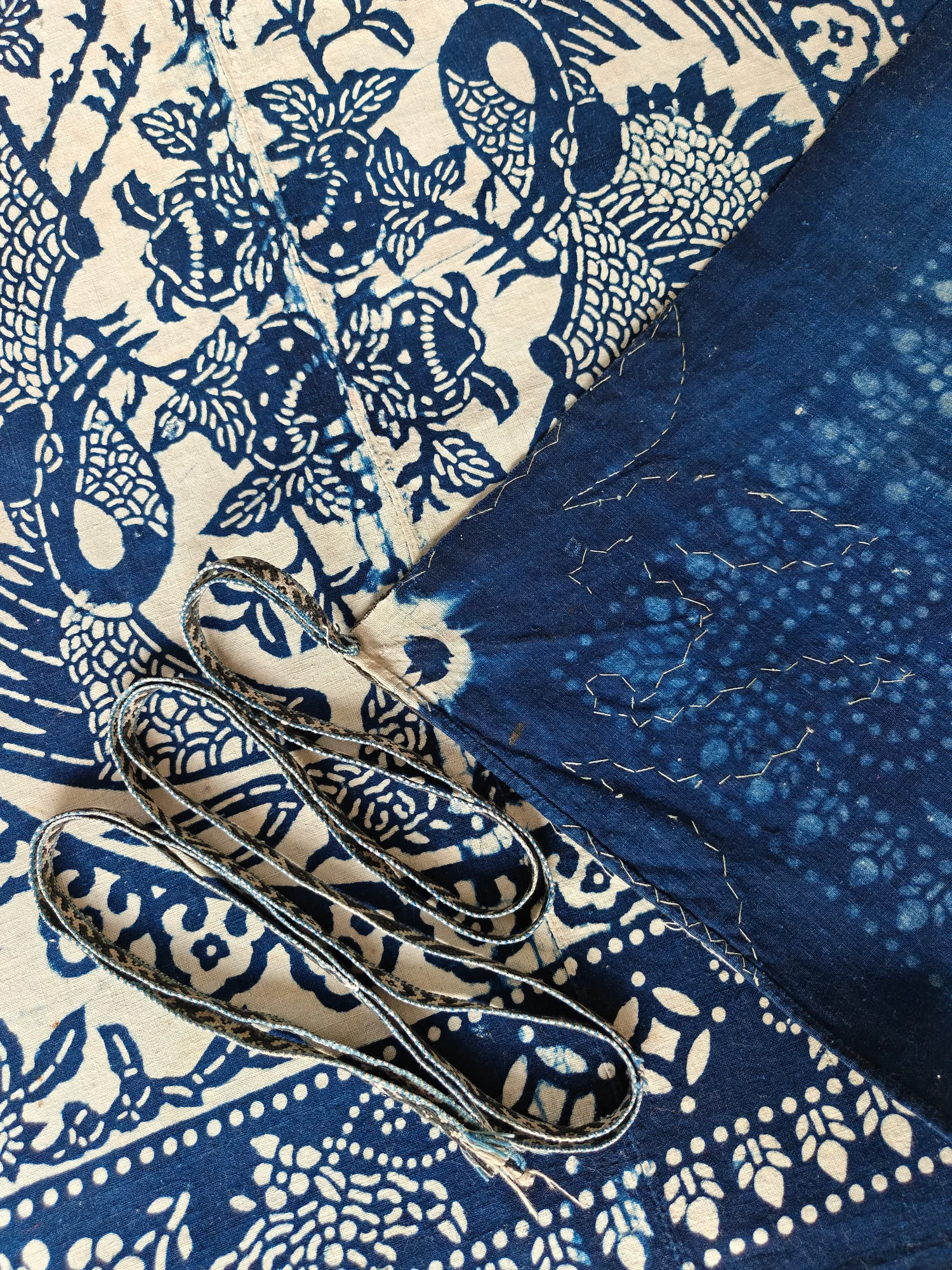
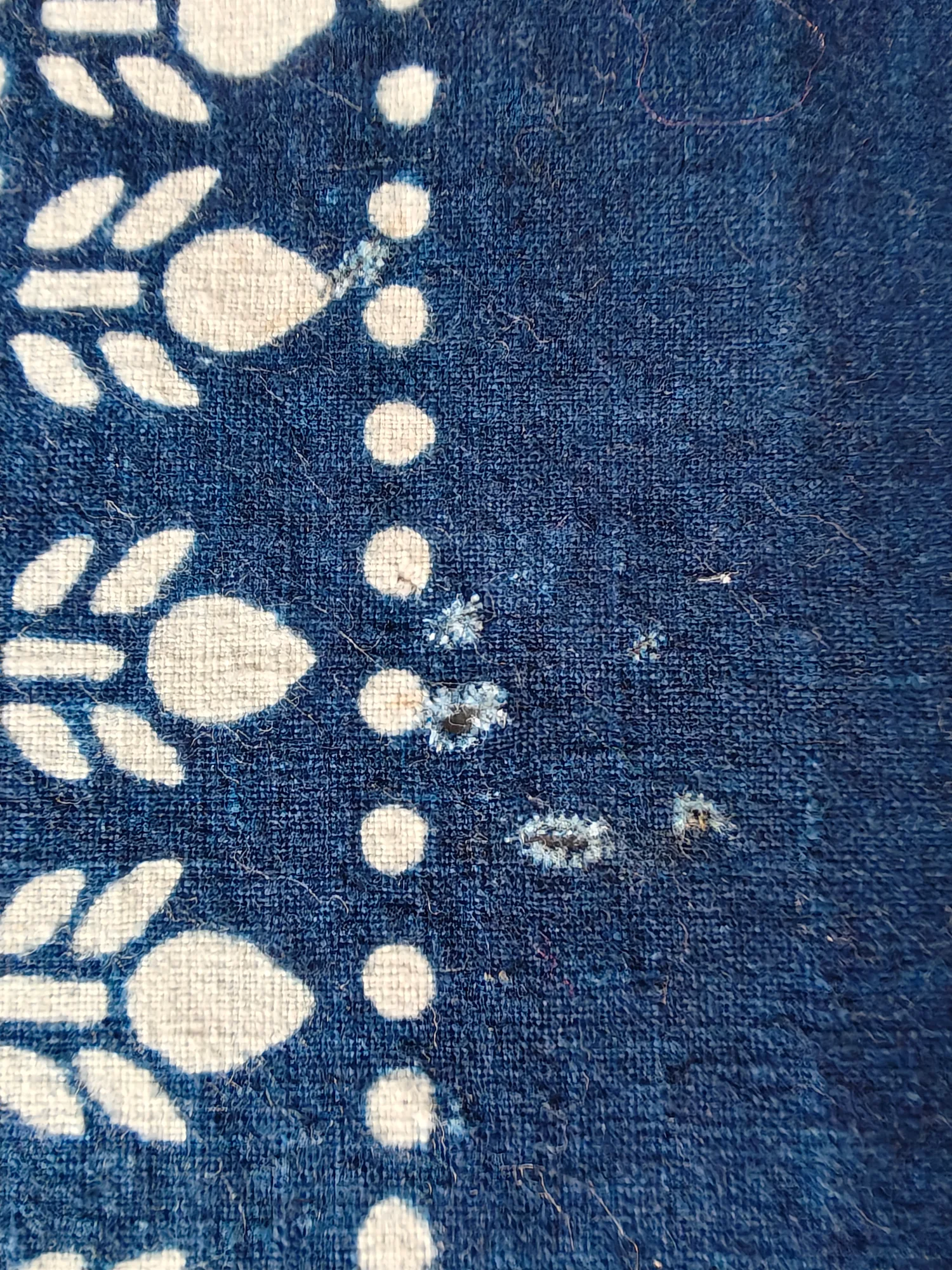
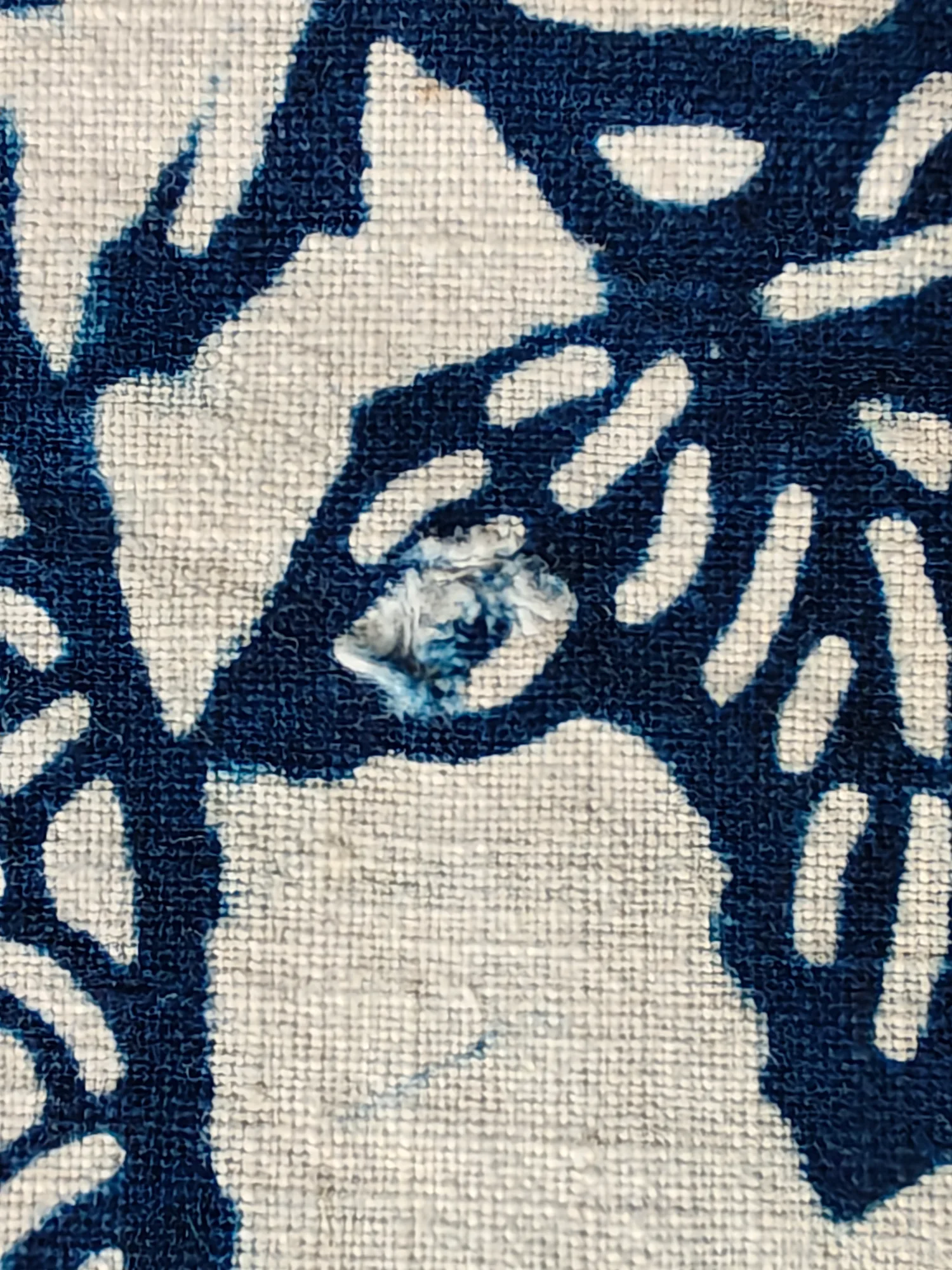
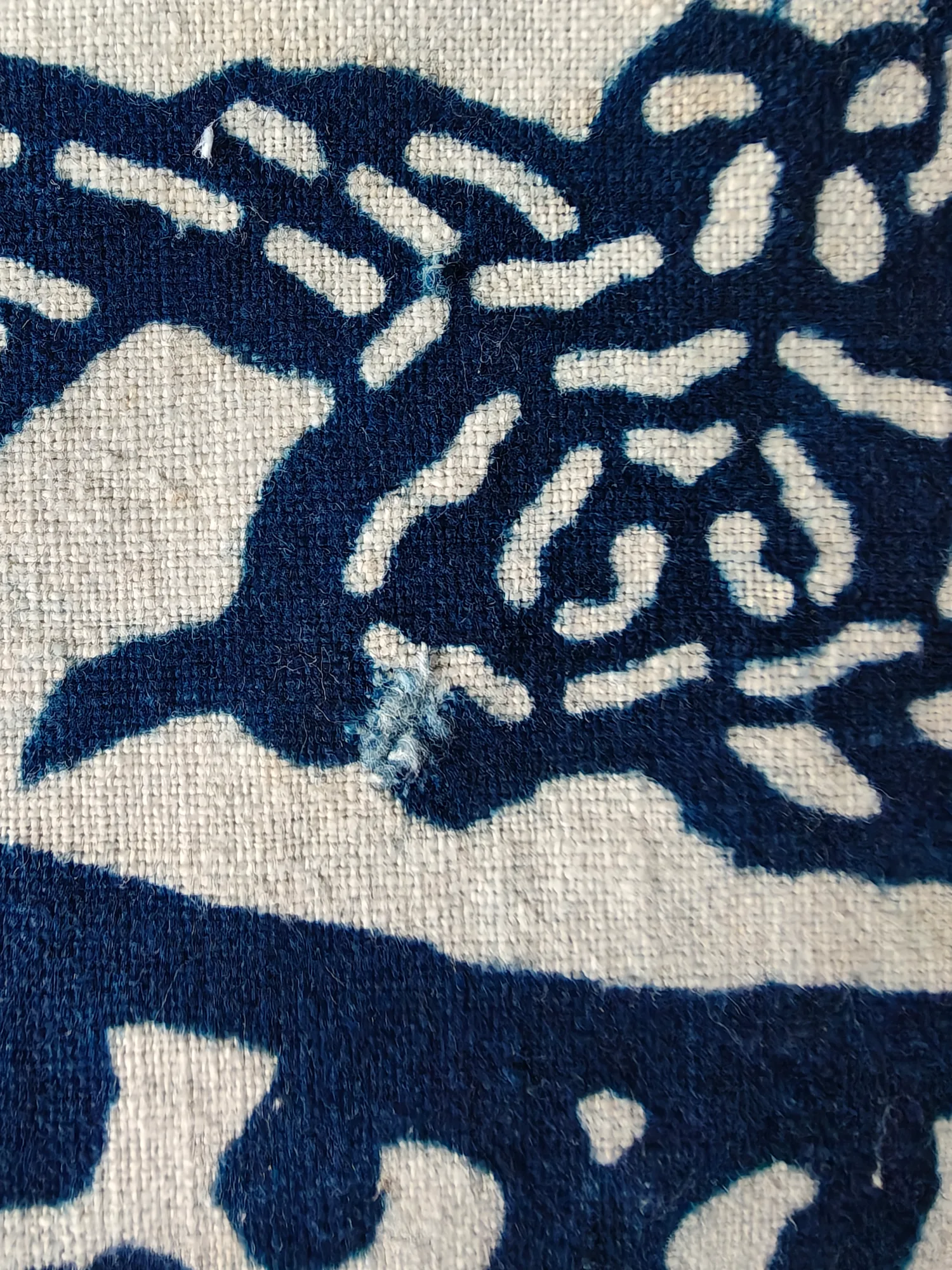
Good overall vintage condition for age. A complete two-panel cotton wrapping cloth with original centre joining seam and two original woven fastening straps, each about 110 cm long. Washed and ironed. Deep blue printed pattern with natural dye variations, old fold lines and age-related wear. A few small holes and localised worn areas are present. One later dark rabbit-shaped hand-sewn fabric patch near a corner is an alteration or repair, not a printed part of the original motif. The main two-crane medallion remains substantially intact. See close-up photographs of the ties, corner patch, wear and stitching.
Identification notes
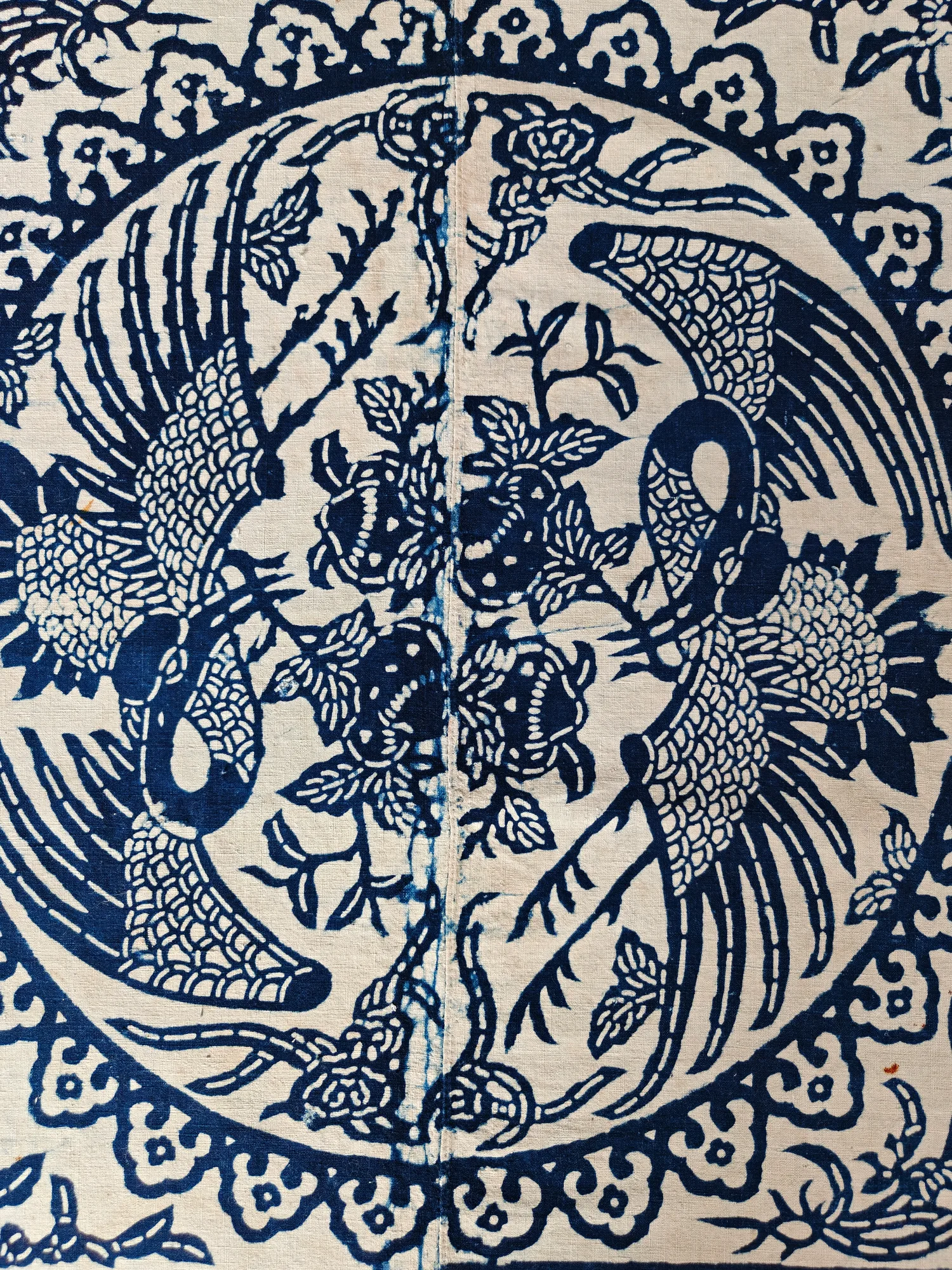
Original photographs and owner-provided Etsy listing 4594209906 identify a complete wrapping cloth about 84 × 86 cm, made from two narrow panels joined along the middle.
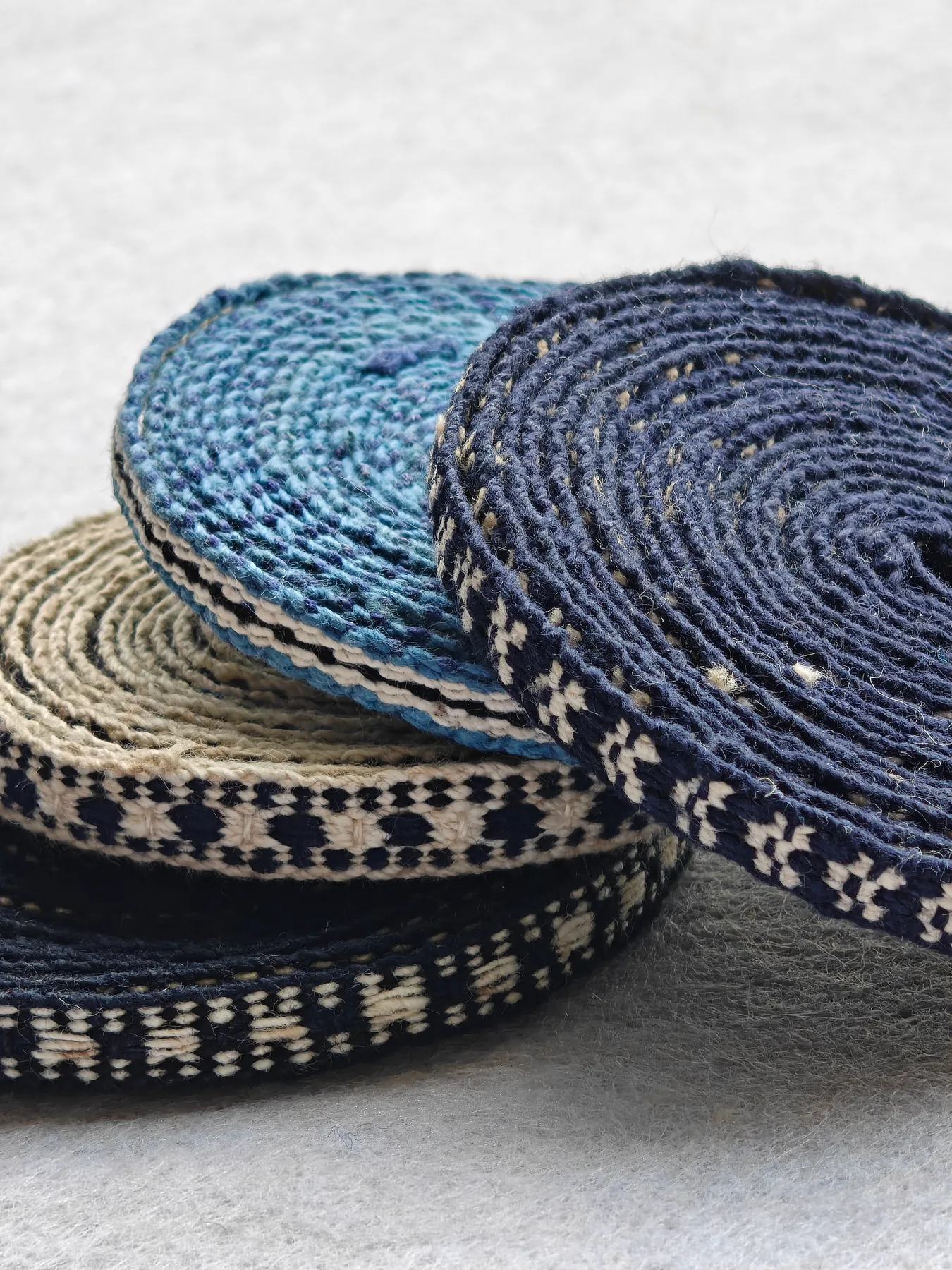
Two original patterned cotton fastening ties are included, each approximately 110 cm long. These are functional components used to secure a traditional cloth wrapper around its contents.
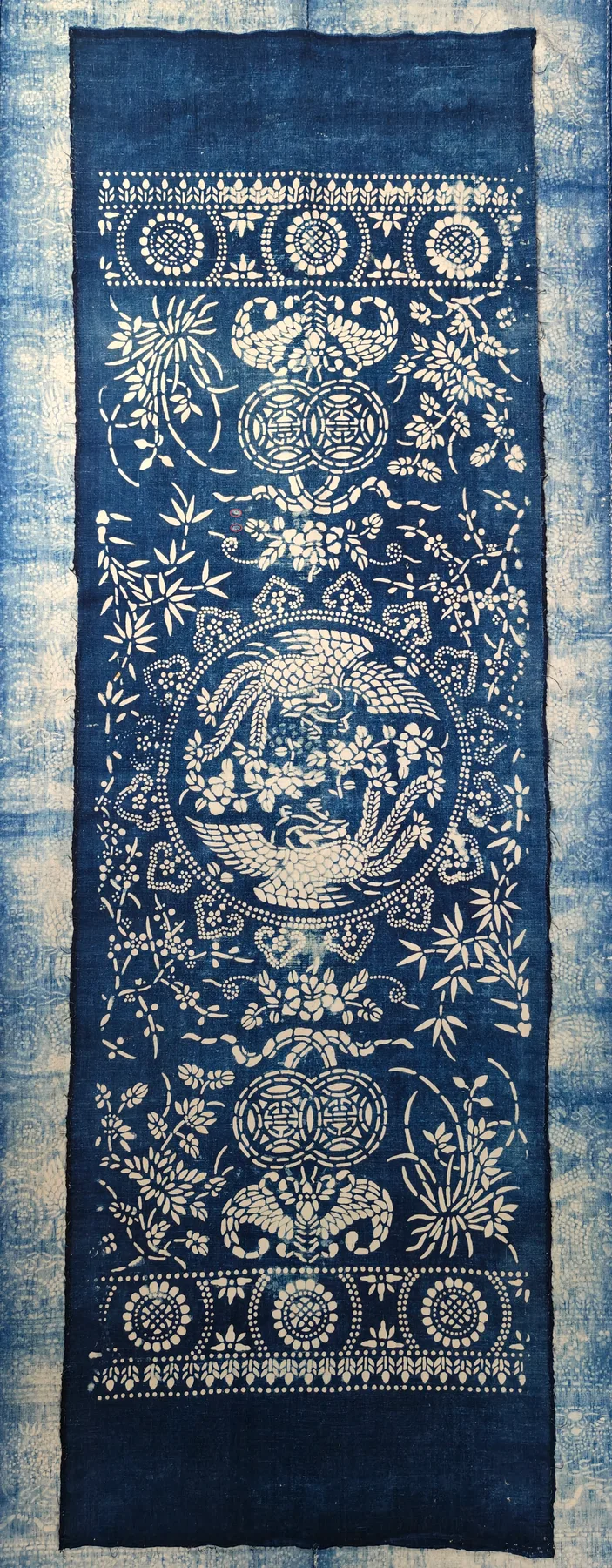
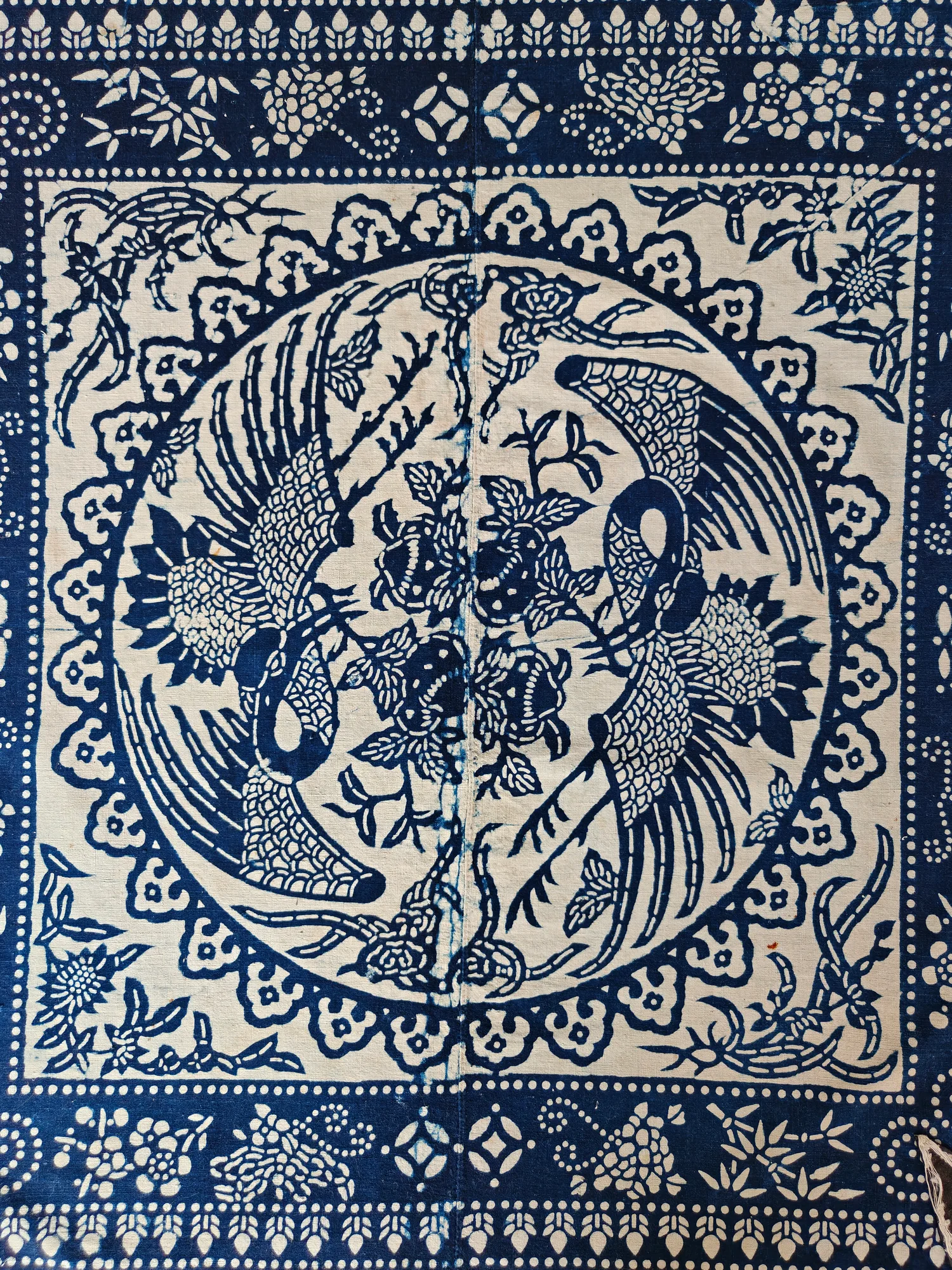
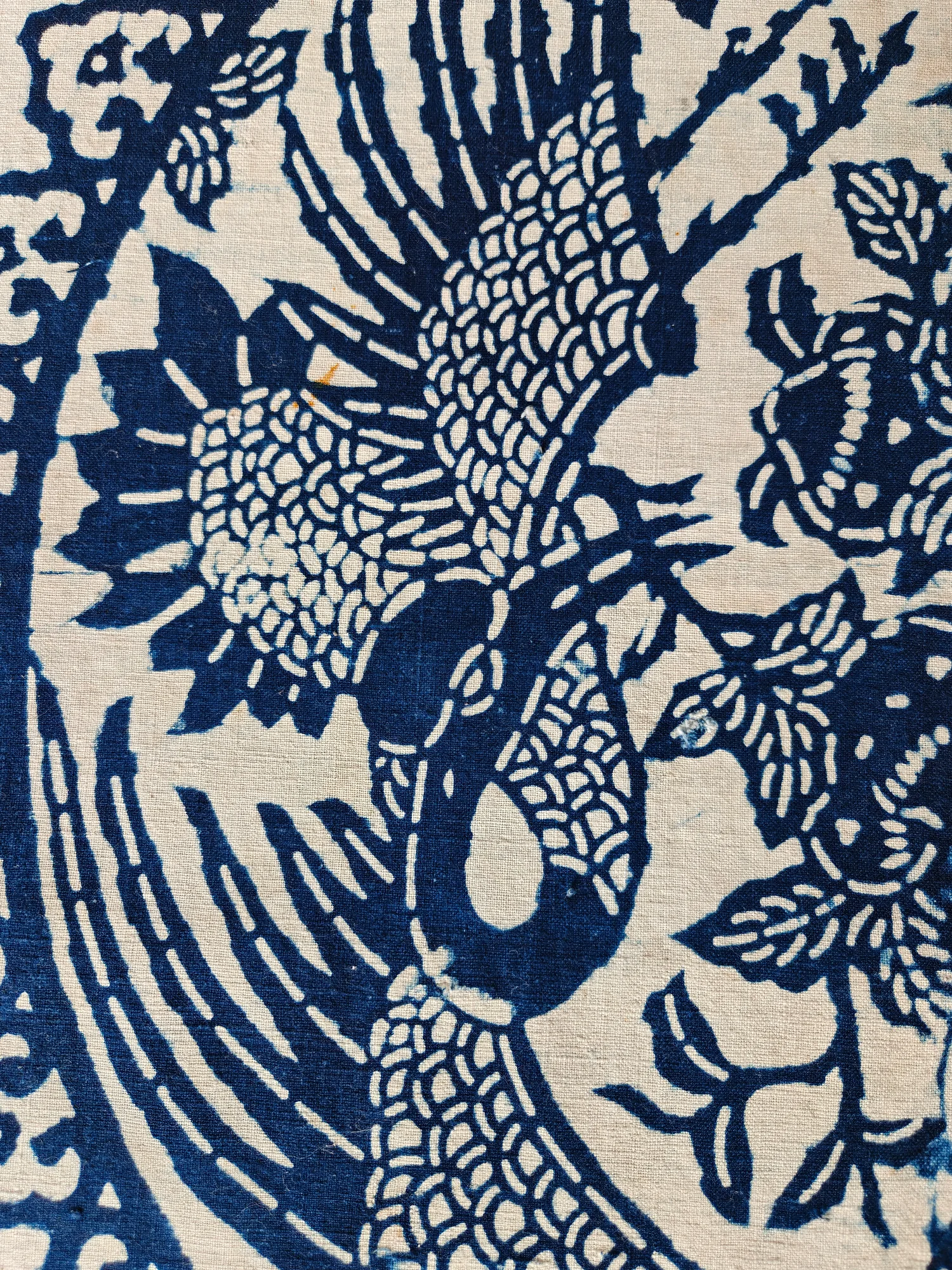
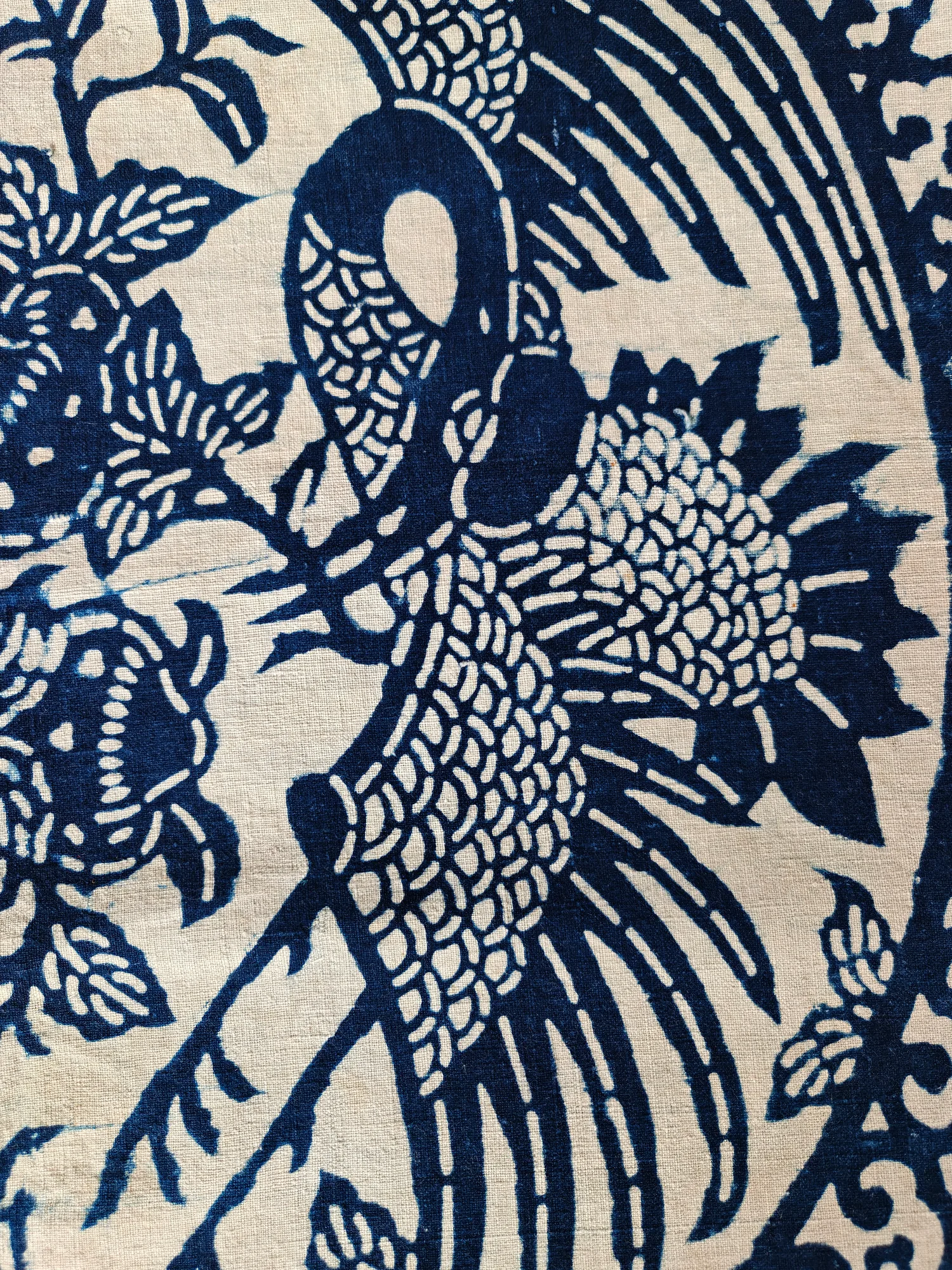
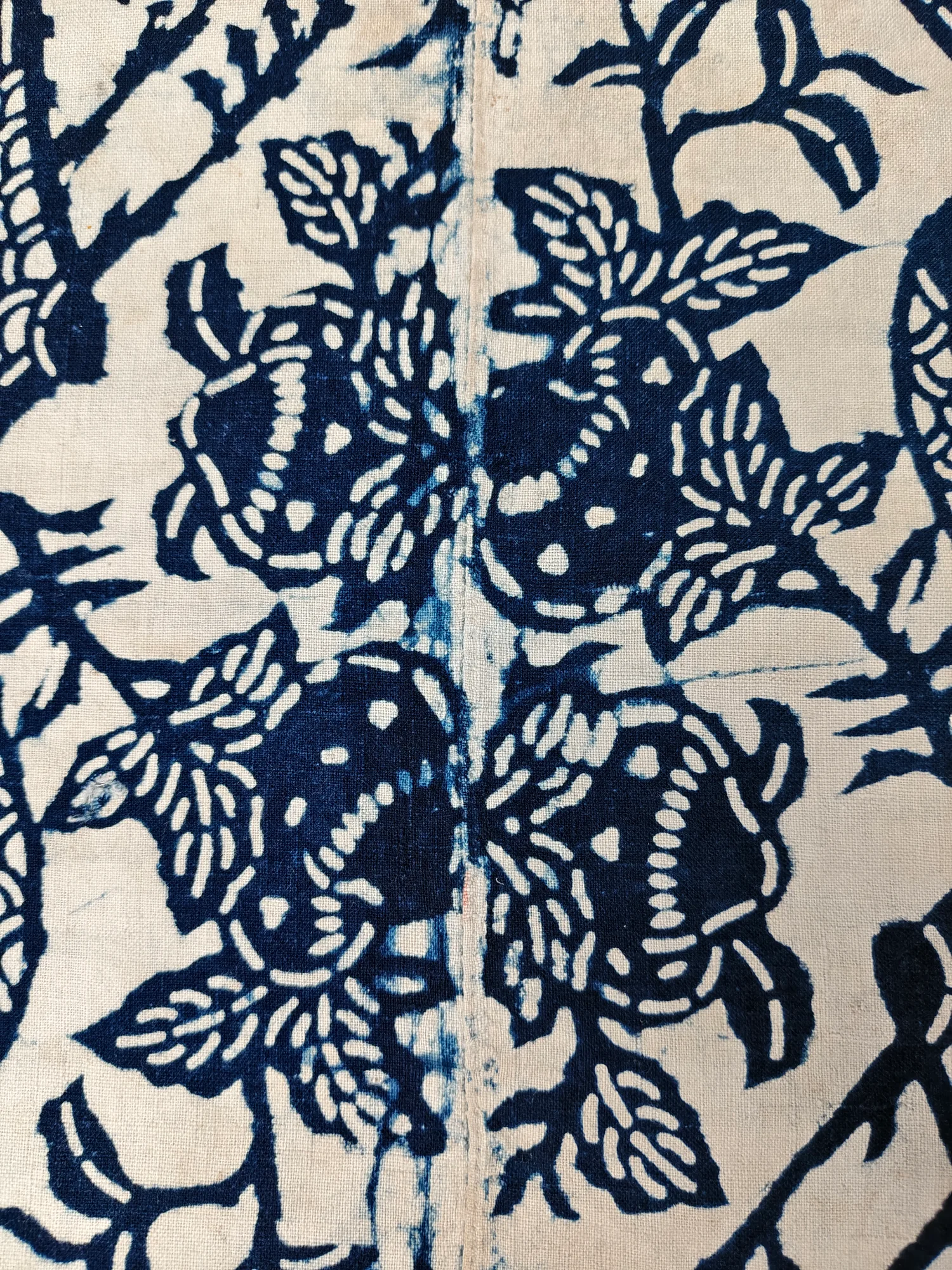
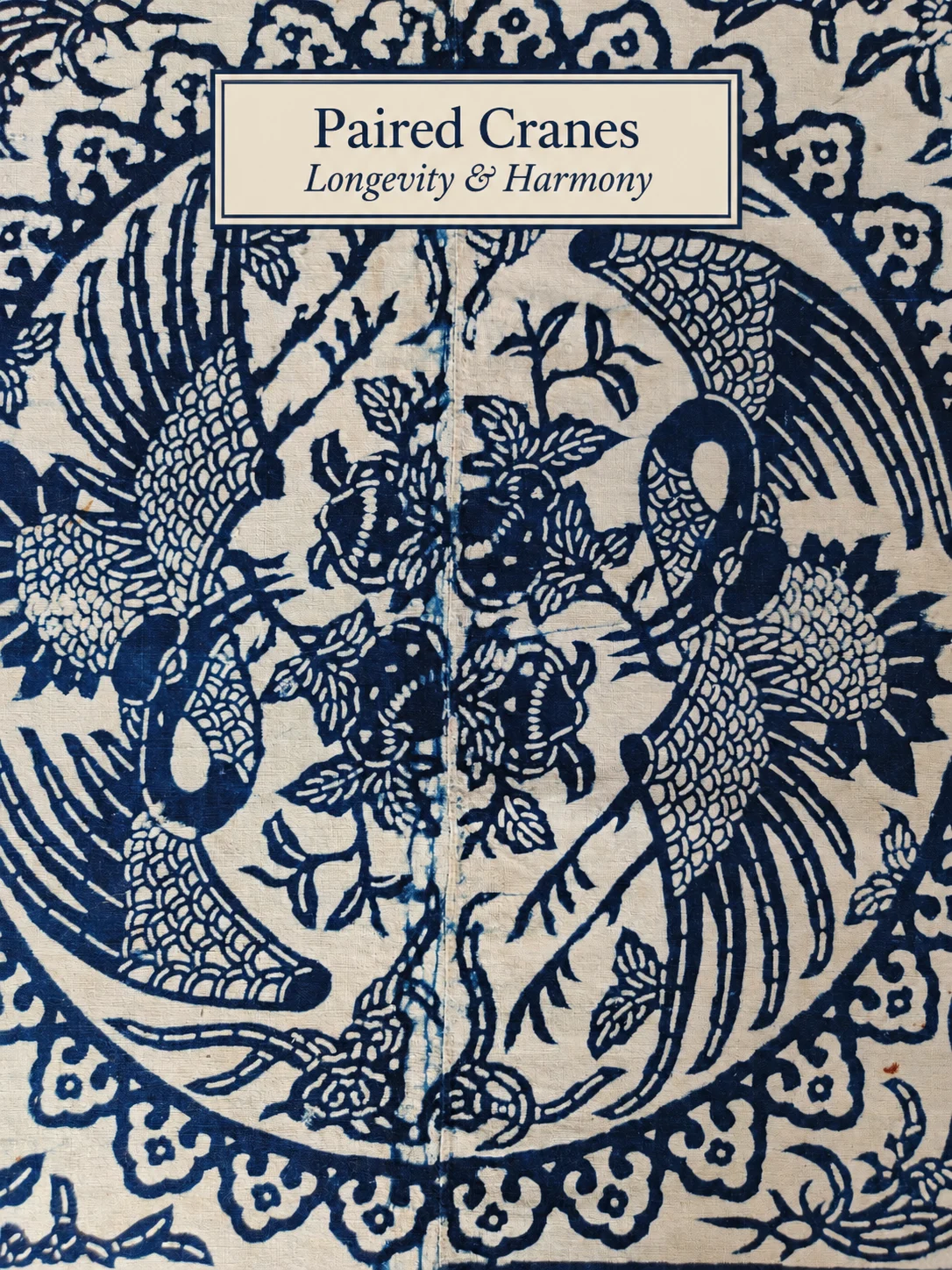
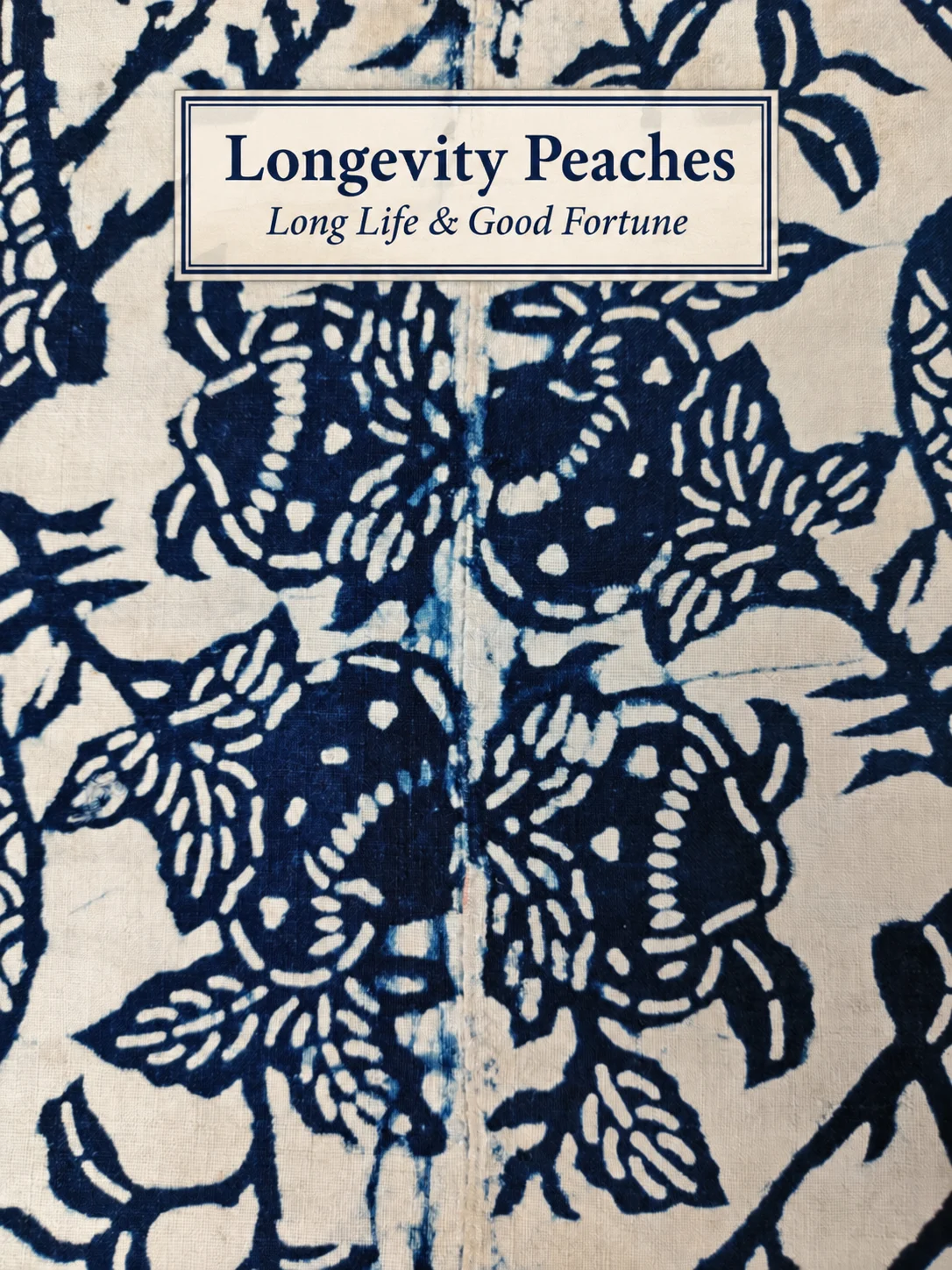
The large central circular medallion shows two facing cranes alongside rounded fruit interpreted as longevity peaches, floral foliage and a scalloped border recalling ruyi forms. The cranes carry a familiar association with long life; their pairing can also suggest harmony.
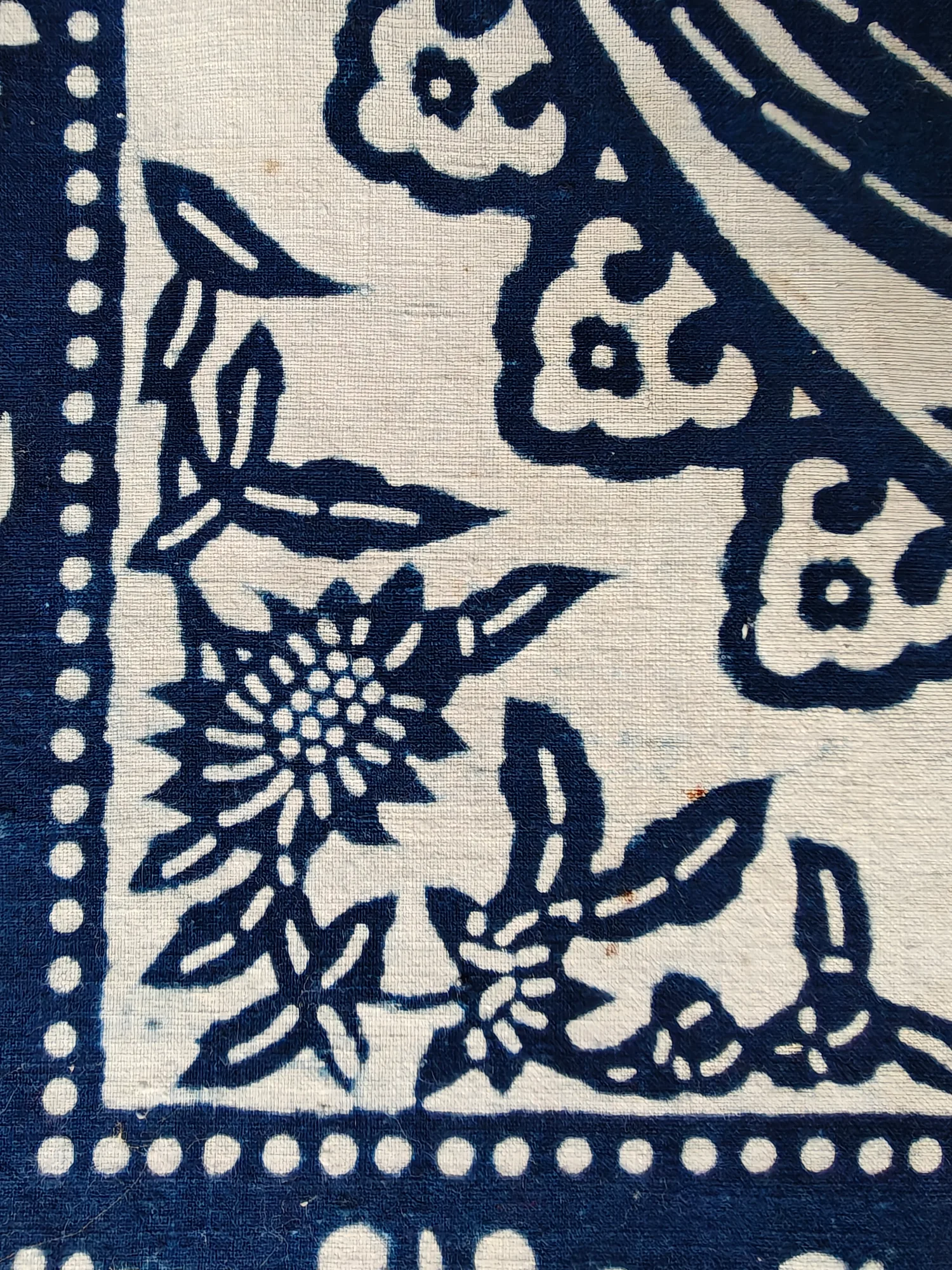
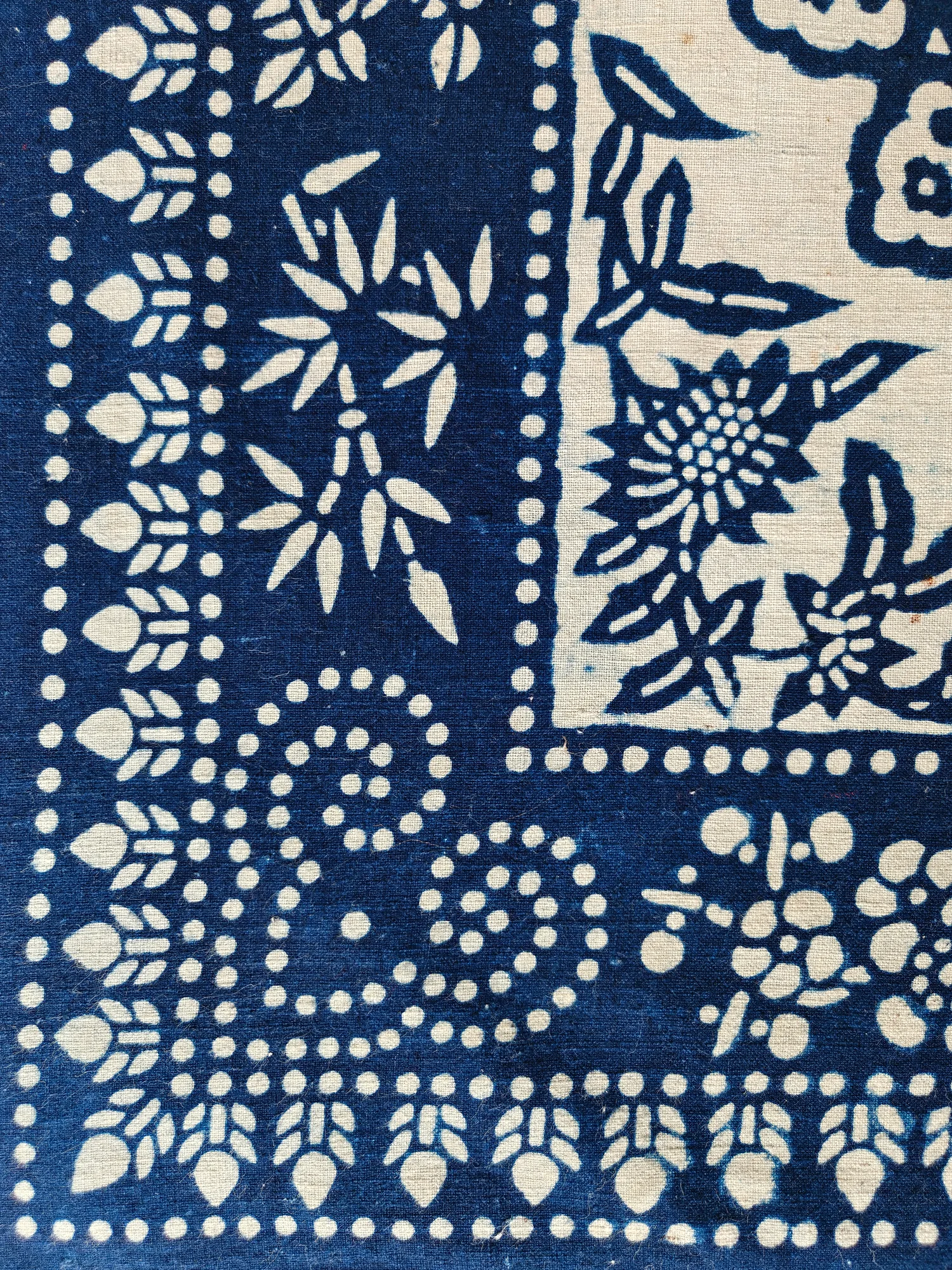
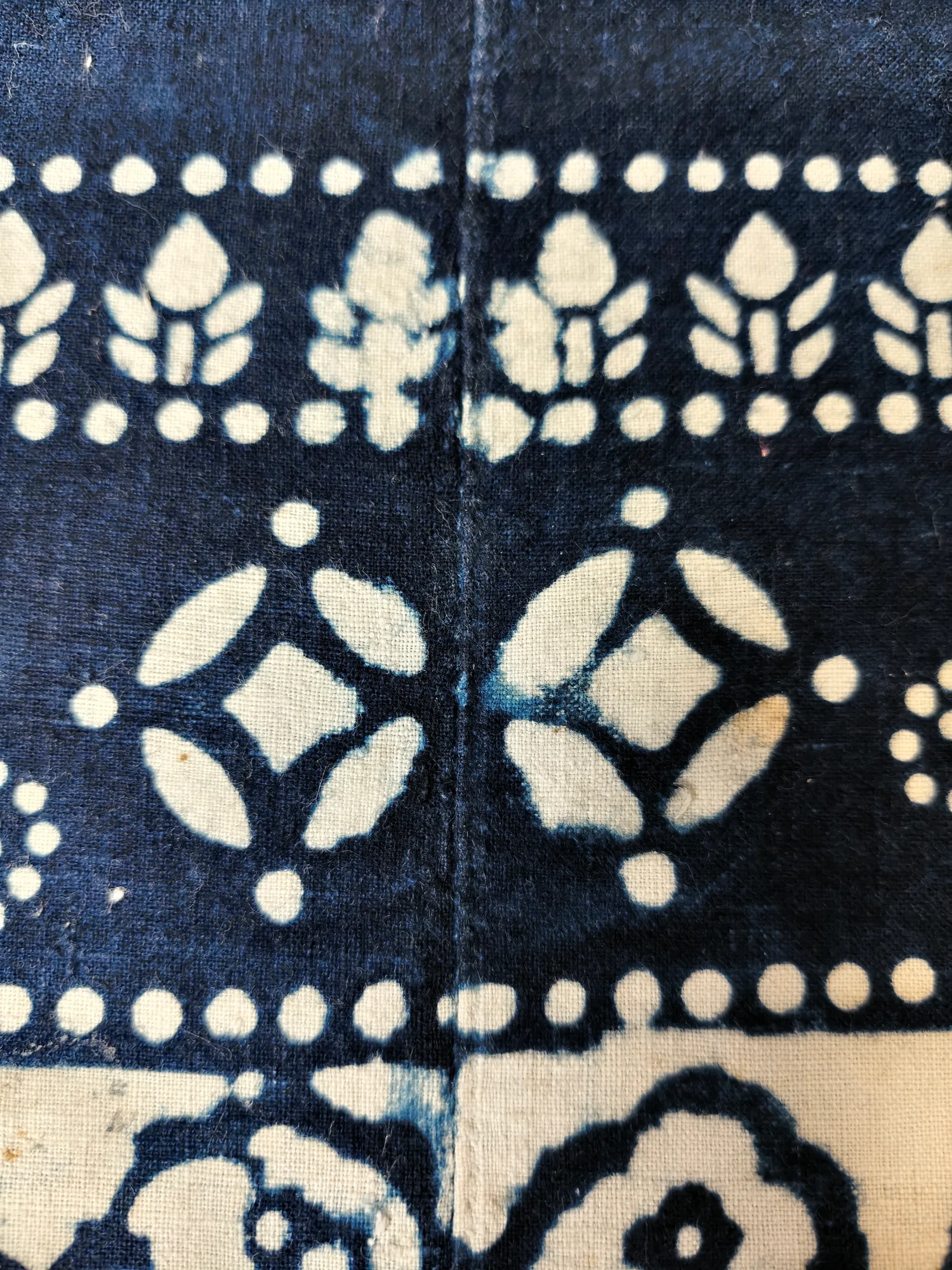
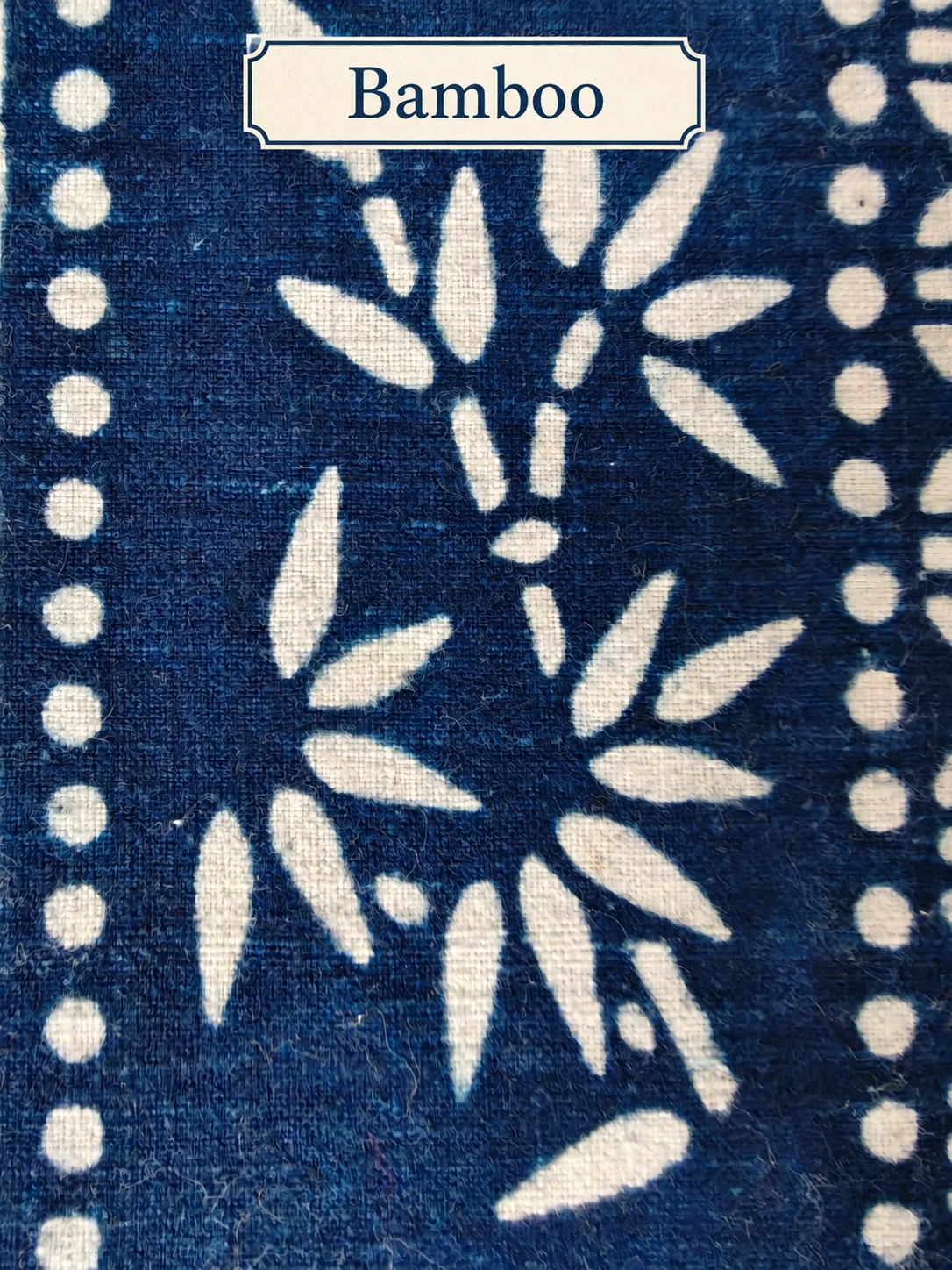
The outer decorative borders contain flowers, bamboo-like shoots or leaves, dotted lines and geometric motifs. Some details evoke classical plant ornament, but their exact individual identities cannot always be established from the print.
The cloth juxtaposes a predominantly pale-background blue central scene and areas of pale motifs on a stronger blue ground. This positive/negative contrast distinguishes it from simpler single-direction textile compositions.
The owner associates this blue printed cotton with Nantong Lan Yin Hua Bu. Specific indigo dye chemistry, stencil production process, workshop and exact date have not been independently verified.
A later dark rabbit-shaped hand-sewn patch appears near one corner. It is physically distinct from the original printed design and should not be interpreted as an original auspicious motif. The original cotton ties, later patch, centre joining seam and wear together preserve evidence of household use.
For preservation, the complete wrapper is recommended for framed textile display, hanging or collection study. Cutting the intact cloth or detaching its old ties would sacrifice part of its historical construction.
A complete wrapper — with its ties and history
Paired cranes and peach-like fruit bring together recognizable longevity associations within a balanced circular design surrounded by extraordinarily fine blue-and-white ornament.
The two patterned cotton ties distinguish this survival from a loose fabric remnant: they provide direct evidence of the way this wrapping cloth could be secured and carried.
The original joining seam and the later sewn rabbit-shaped patch represent two different stages in its life: first construction, then adaptation or repair. Preserving these differences helps the object tell a more accurate story.