Four Lions & Phoenixes — Vintage Nantong Indigo Wrapping Cloth
A beautifully detailed vintage Chinese indigo wrapping cloth featuring four auspicious lions, phoenixes among peonies, butterflies, ancient copper coin…
Size & ordering
Sold as one complete vintage wrapping cloth, uncut.
Size: approx. 100 × 100 cm / 39.4 × 39.4 inches.
Quantity 1 = the entire cloth shown. Only one is available; it is not sold by the metre.
Texture & vintage condition
Washed and ironed. Substantial yet soft and supple hand-spun, handwoven cotton, traditionally described as Xiao Hua Sha (小花纱).
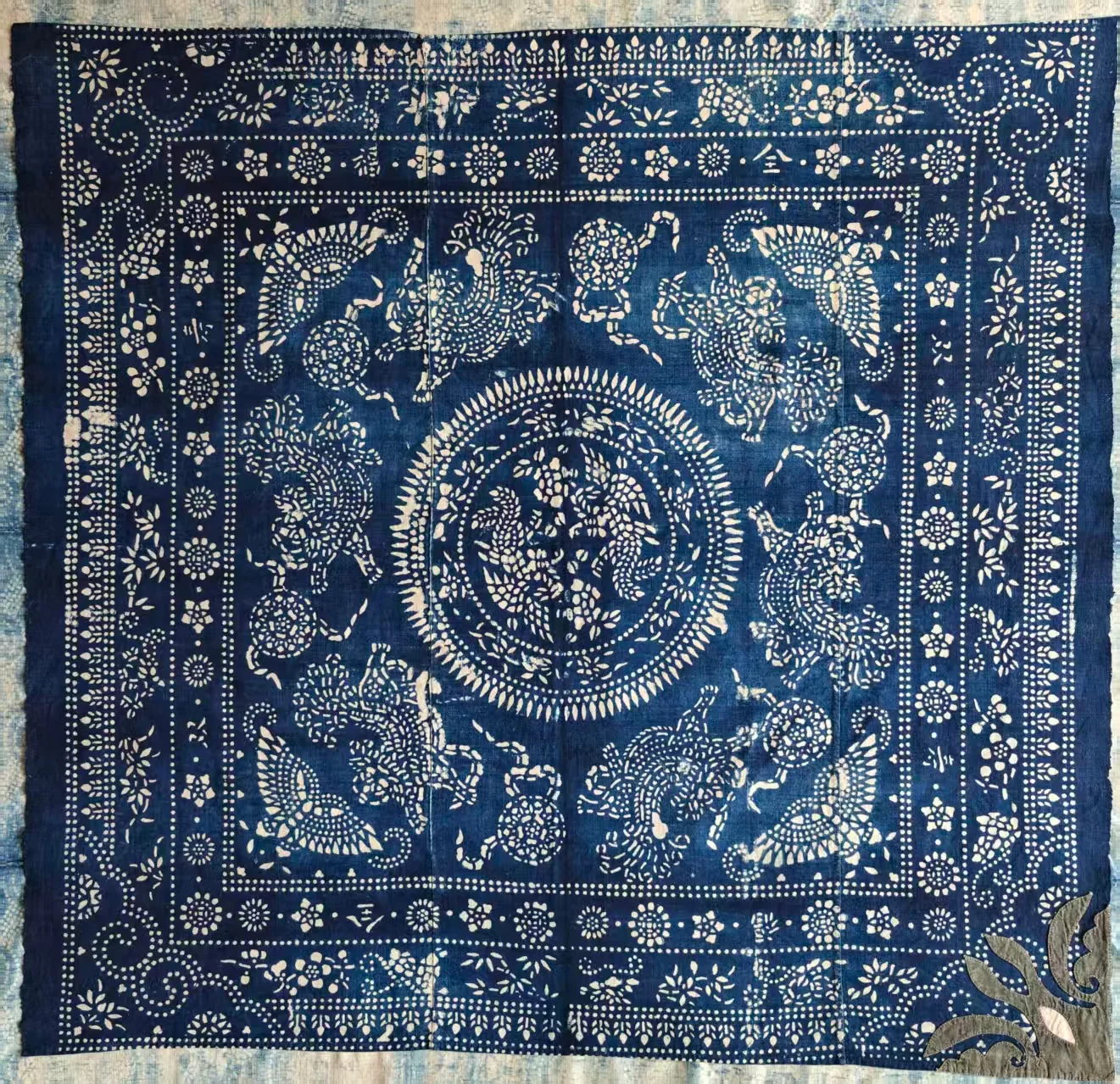
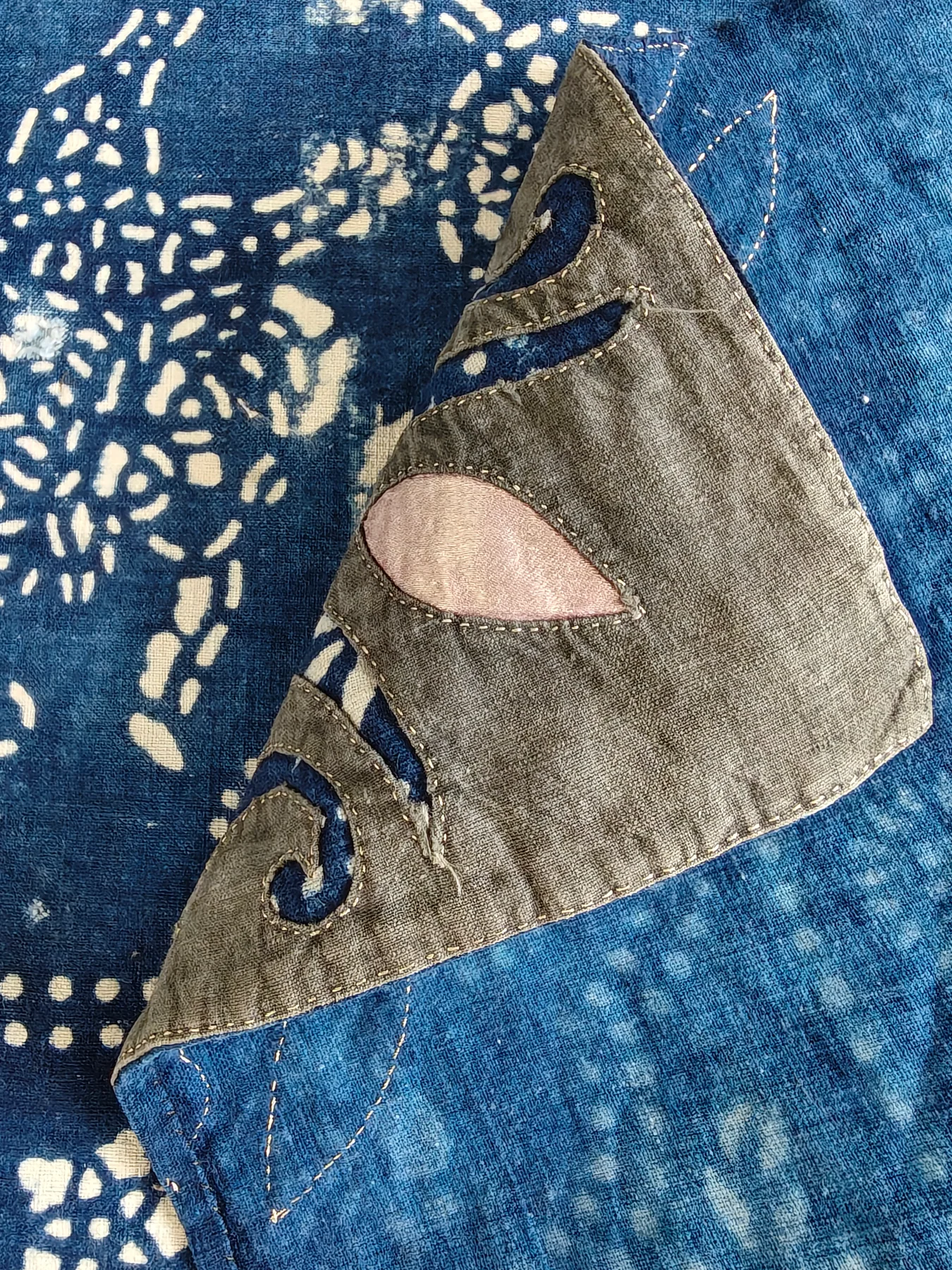
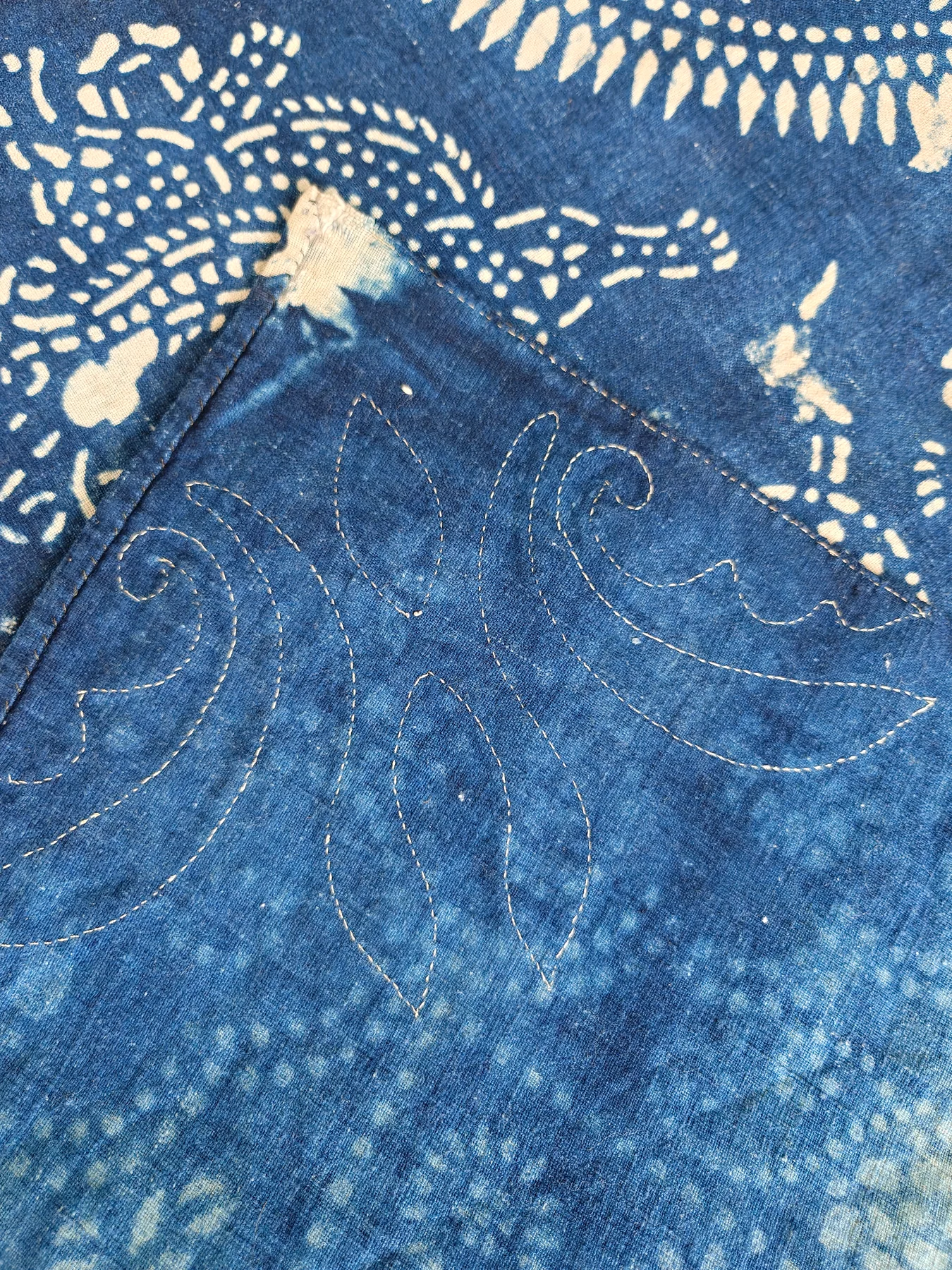
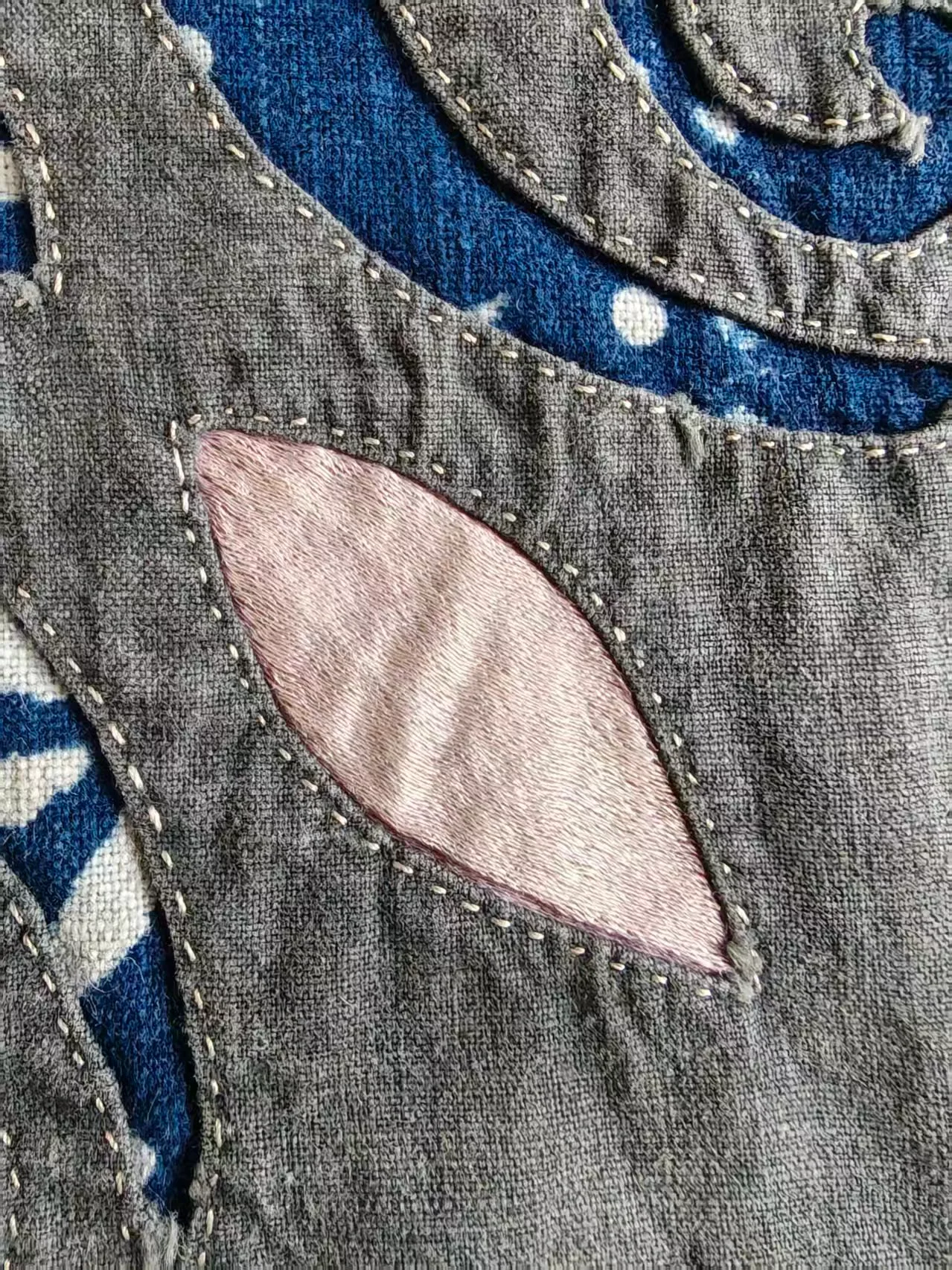
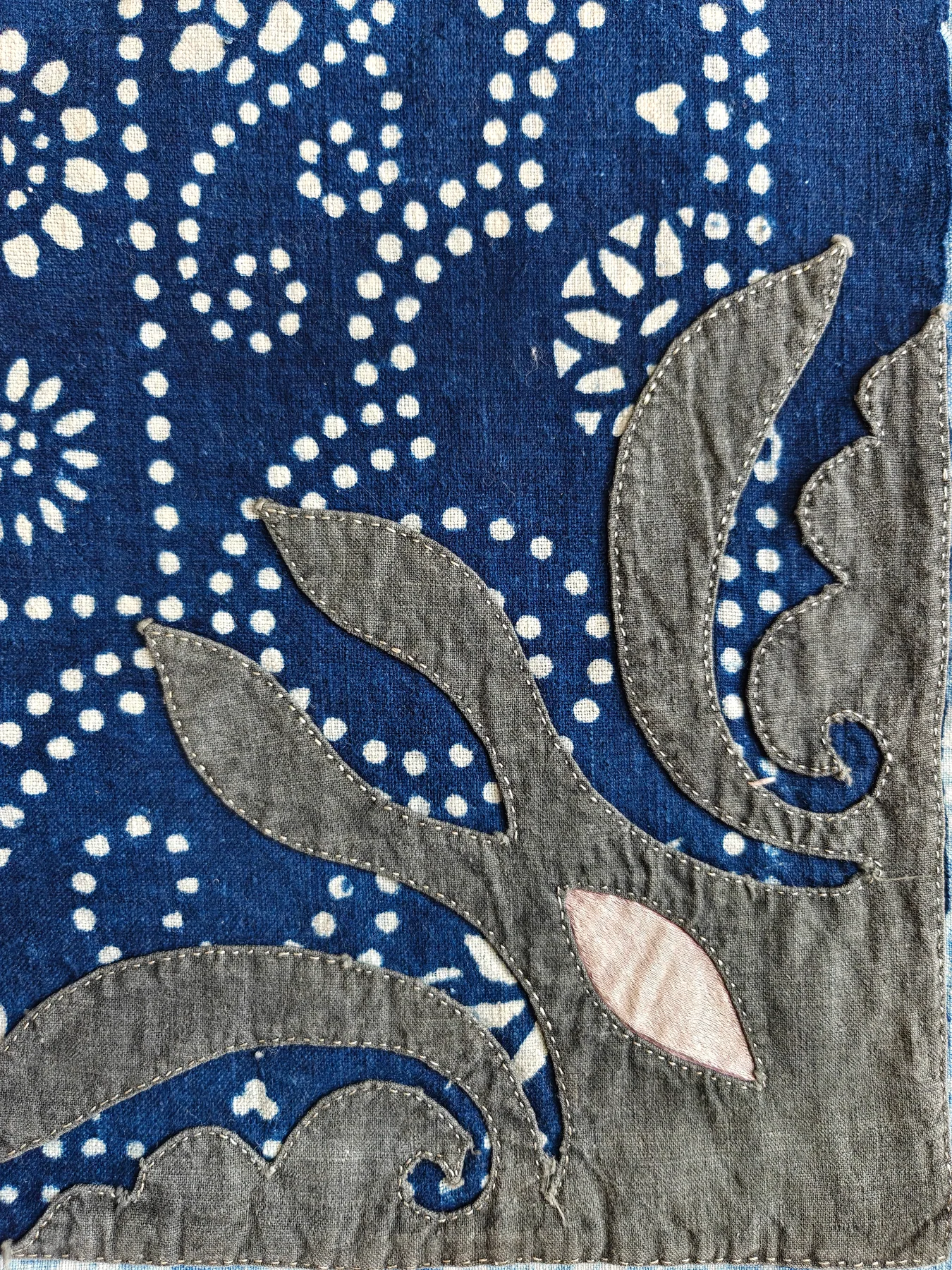
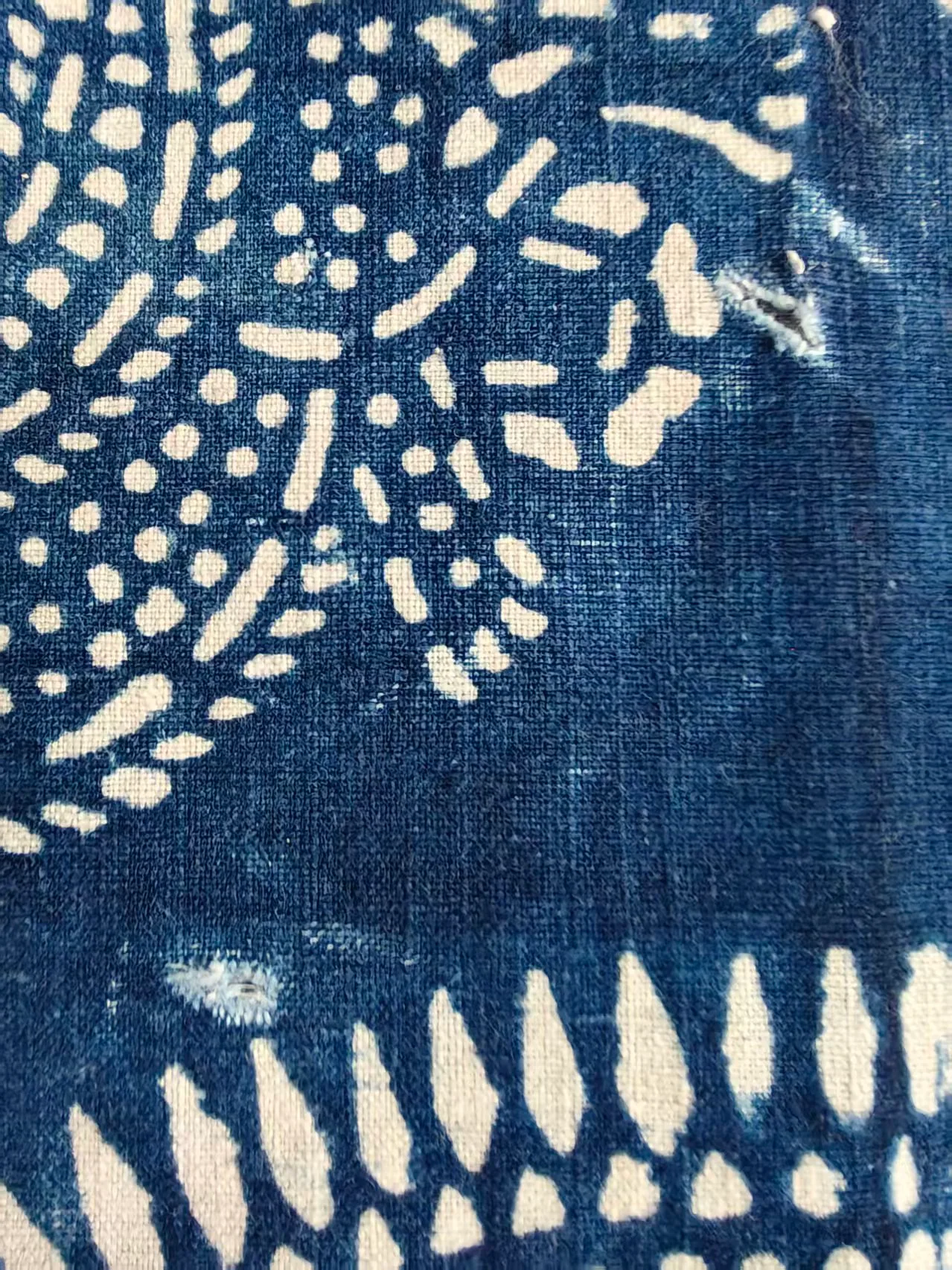
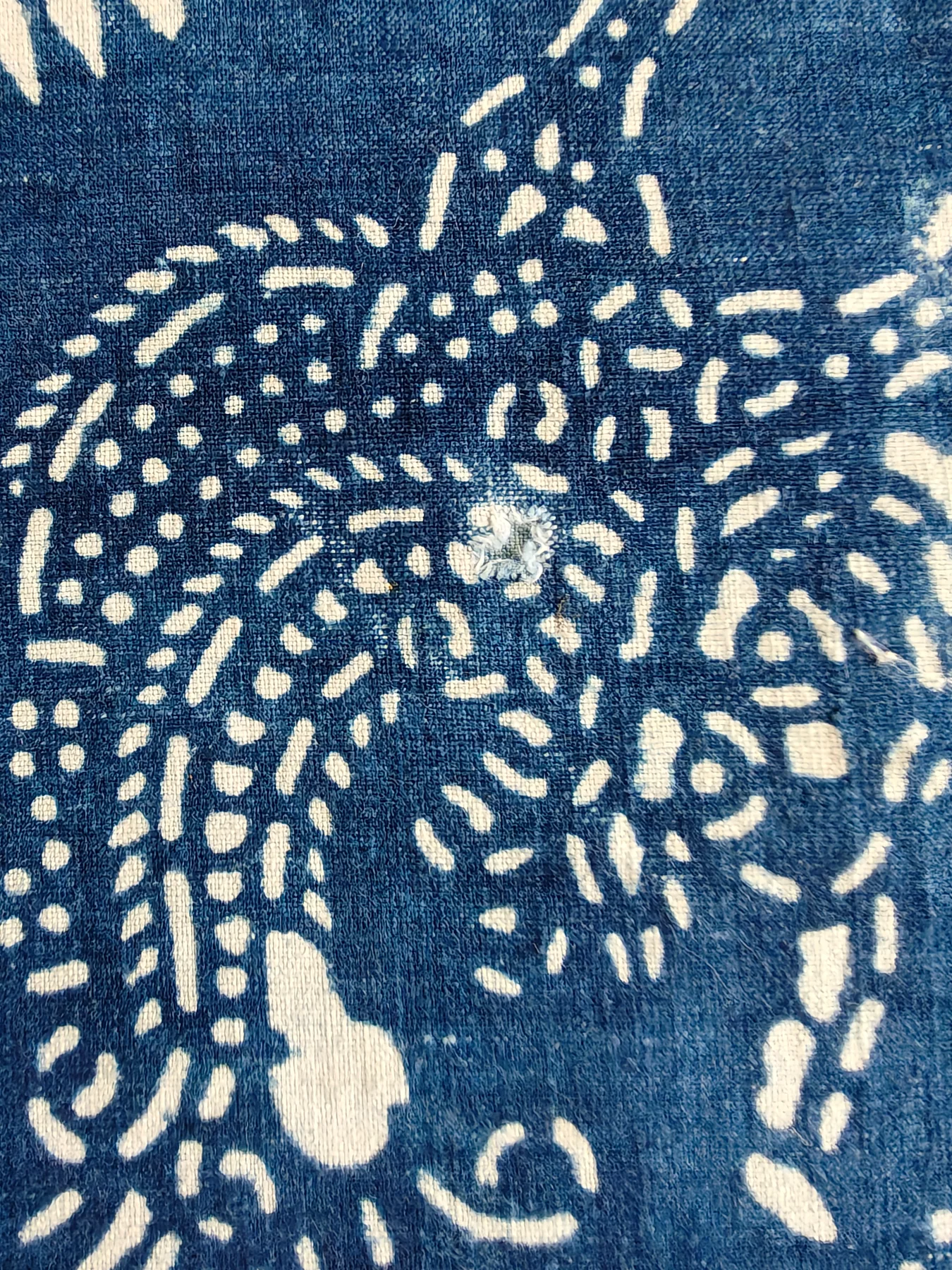
There are four small holes, gentle fading and natural age-related wear. An old grey fabric patch repairs the lower-right corner; it is a historic repair, not part of the printed pattern. Please examine the close-up photographs before purchasing. This is a previously used vintage cloth with its wear preserved.
Read the current textile description
SIZE & ORDERING Sold as one complete vintage wrapping cloth, uncut. Size: approx. 100 × 100 cm / 39.4 × 39.4 inches. Quantity 1 = the entire cloth shown. Only one is available; it is not sold by the metre.
TEXTURE & VINTAGE CONDITION Washed and ironed. Substantial yet soft and supple hand-spun, handwoven cotton, traditionally described as Xiao Hua Sha (小花纱).
There are four small holes, gentle fading and natural age-related wear. An old grey fabric patch repairs the lower-right corner; it is a historic repair, not part of the printed pattern. Please examine the close-up photographs before purchasing. This is a previously used vintage cloth with its wear preserved.
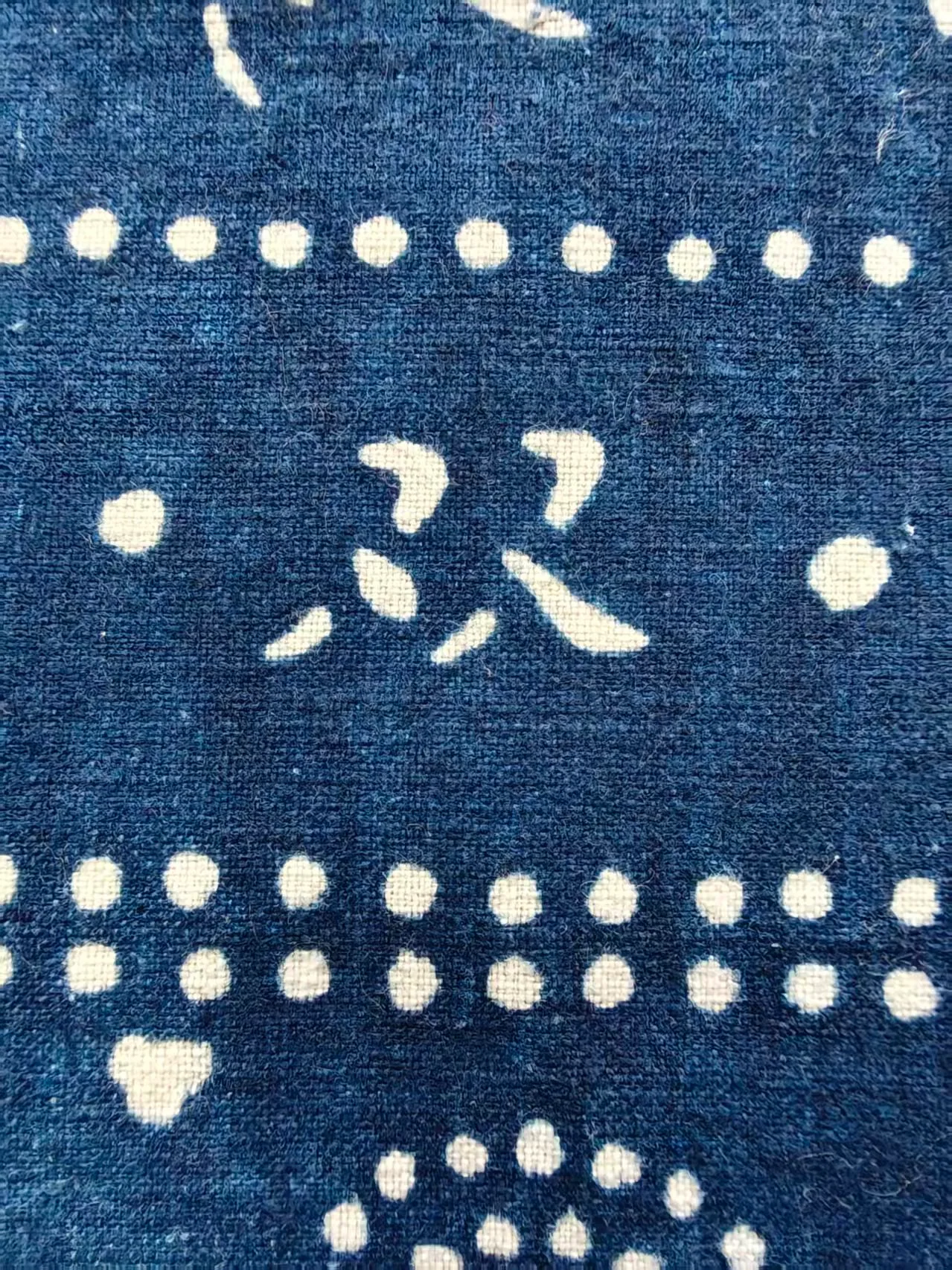
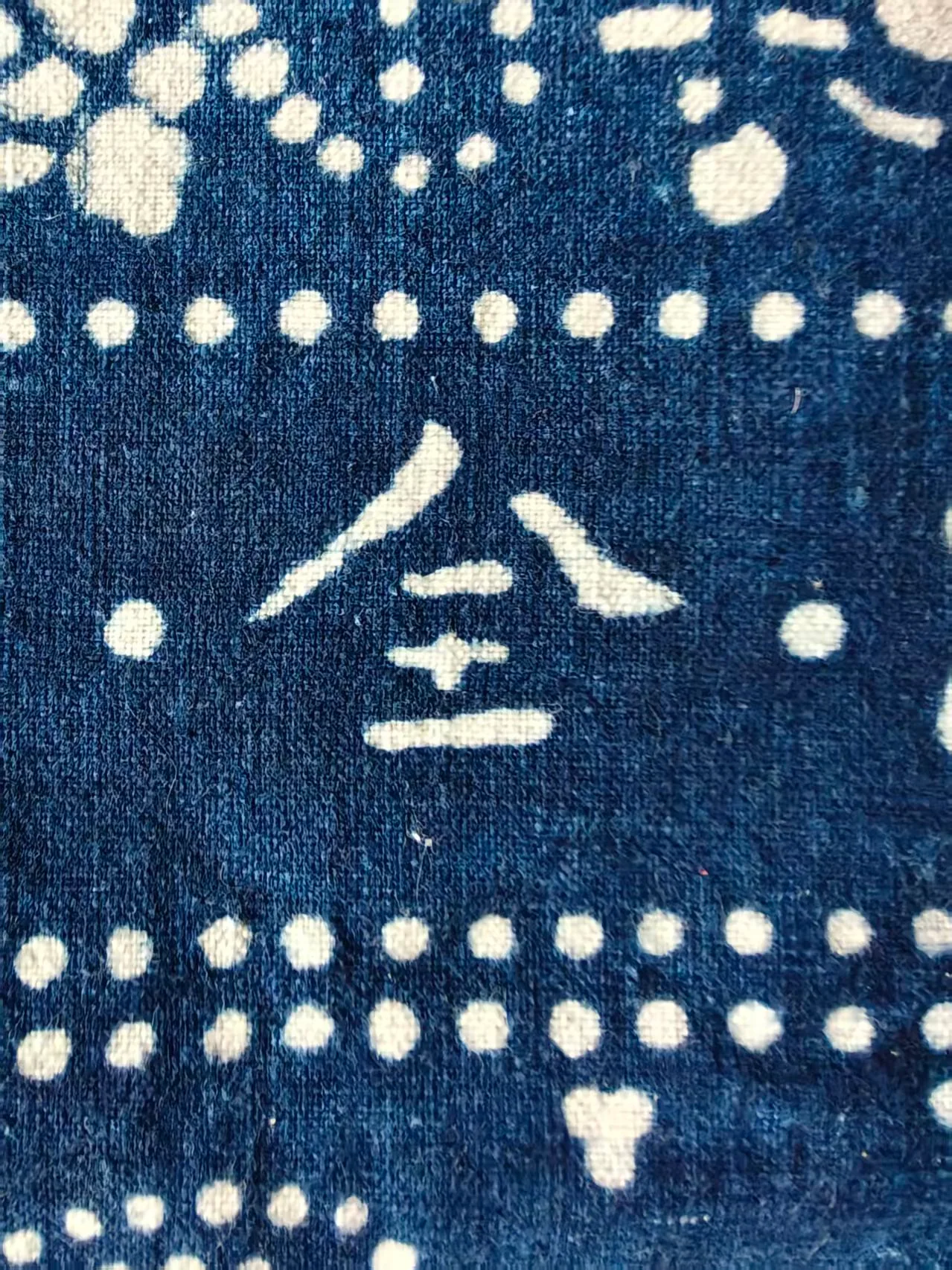
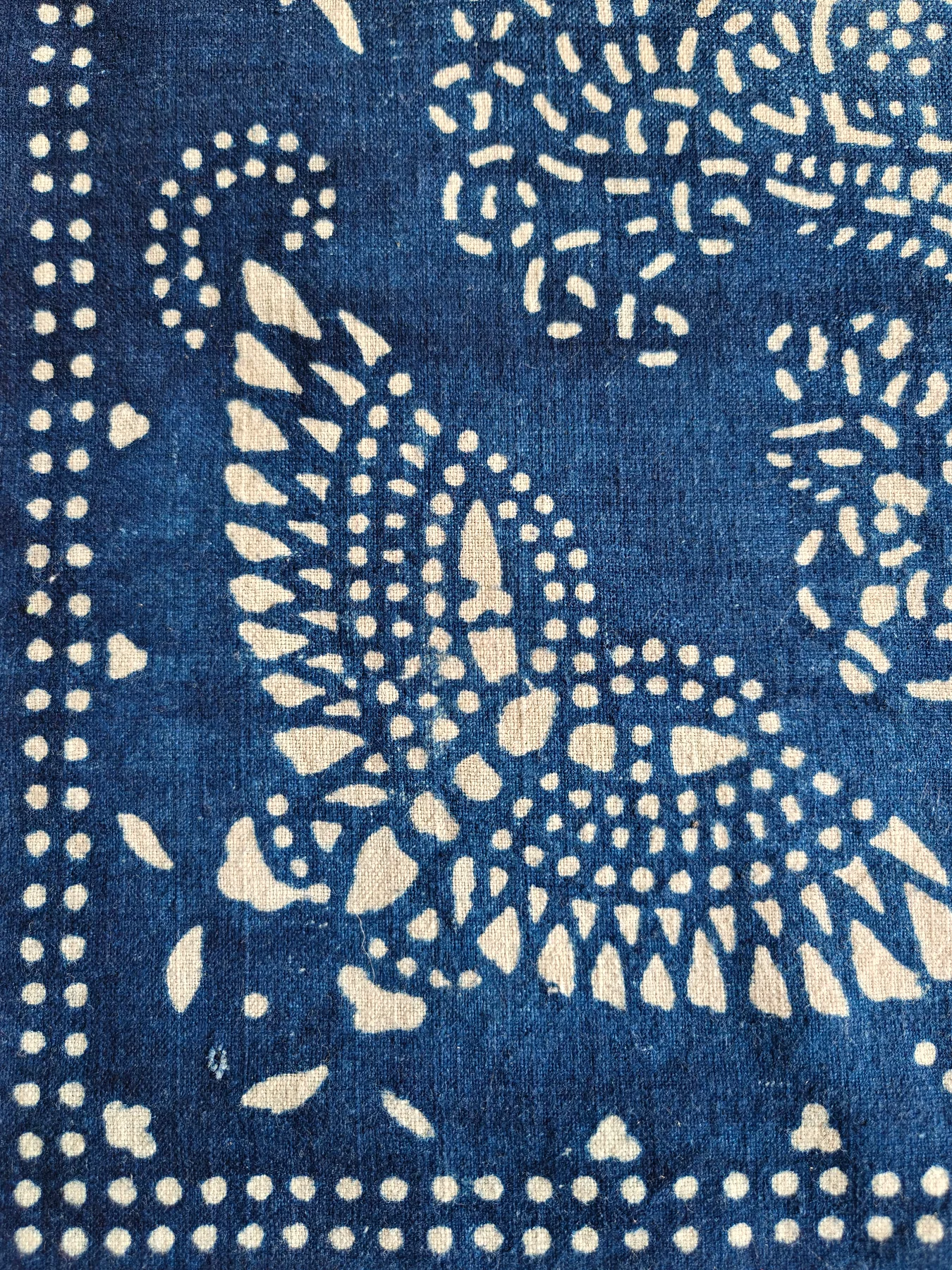
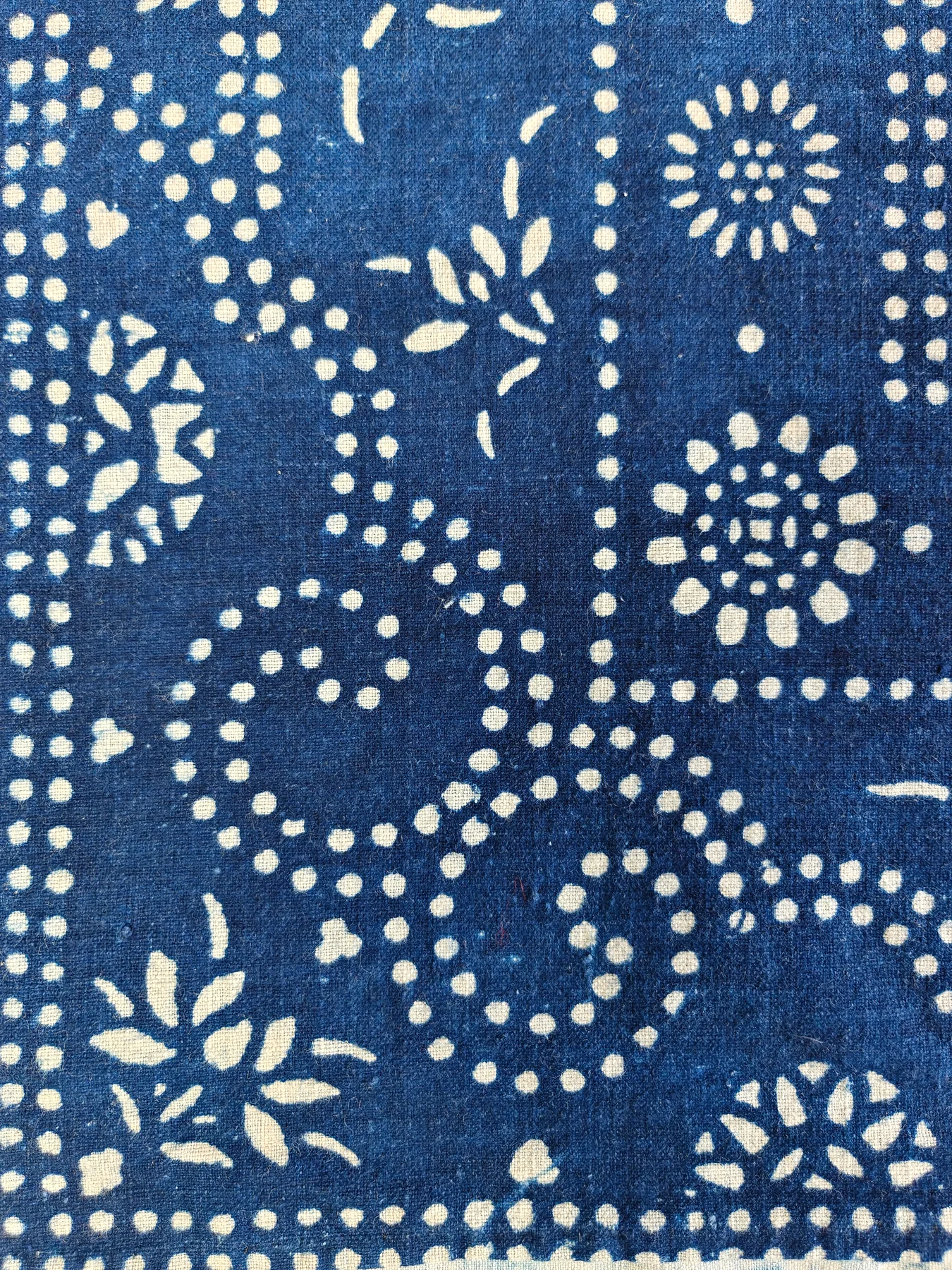
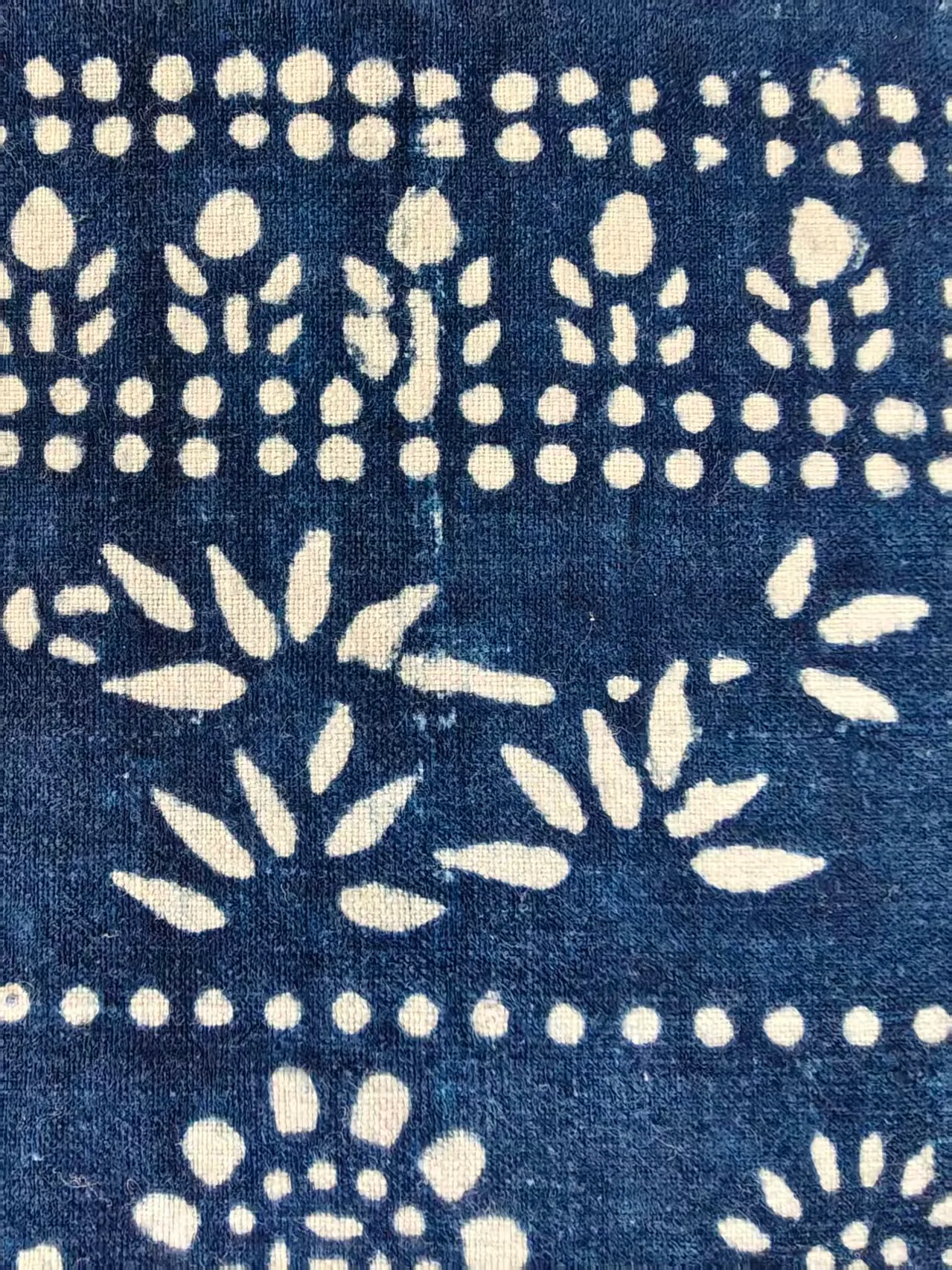
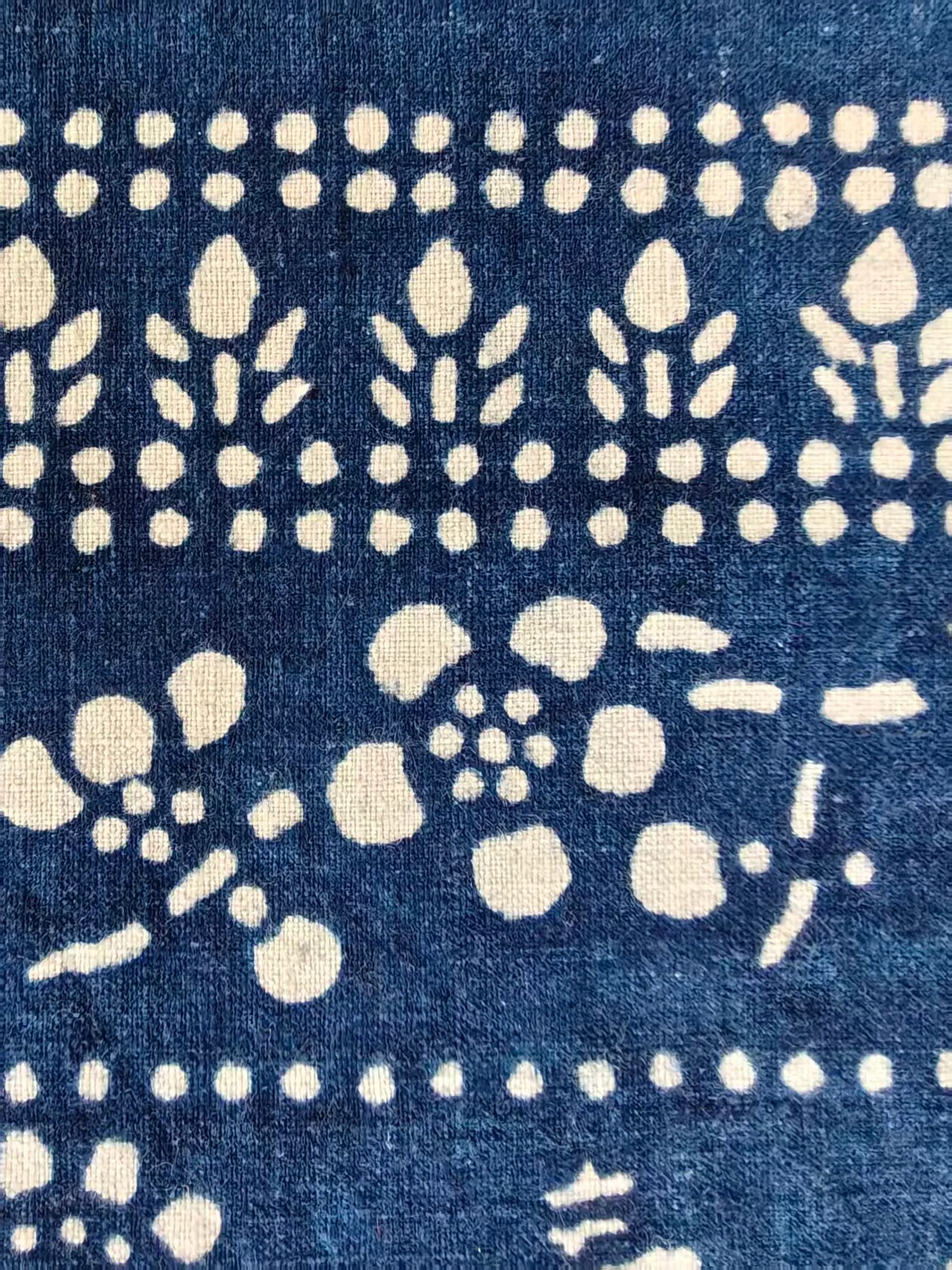
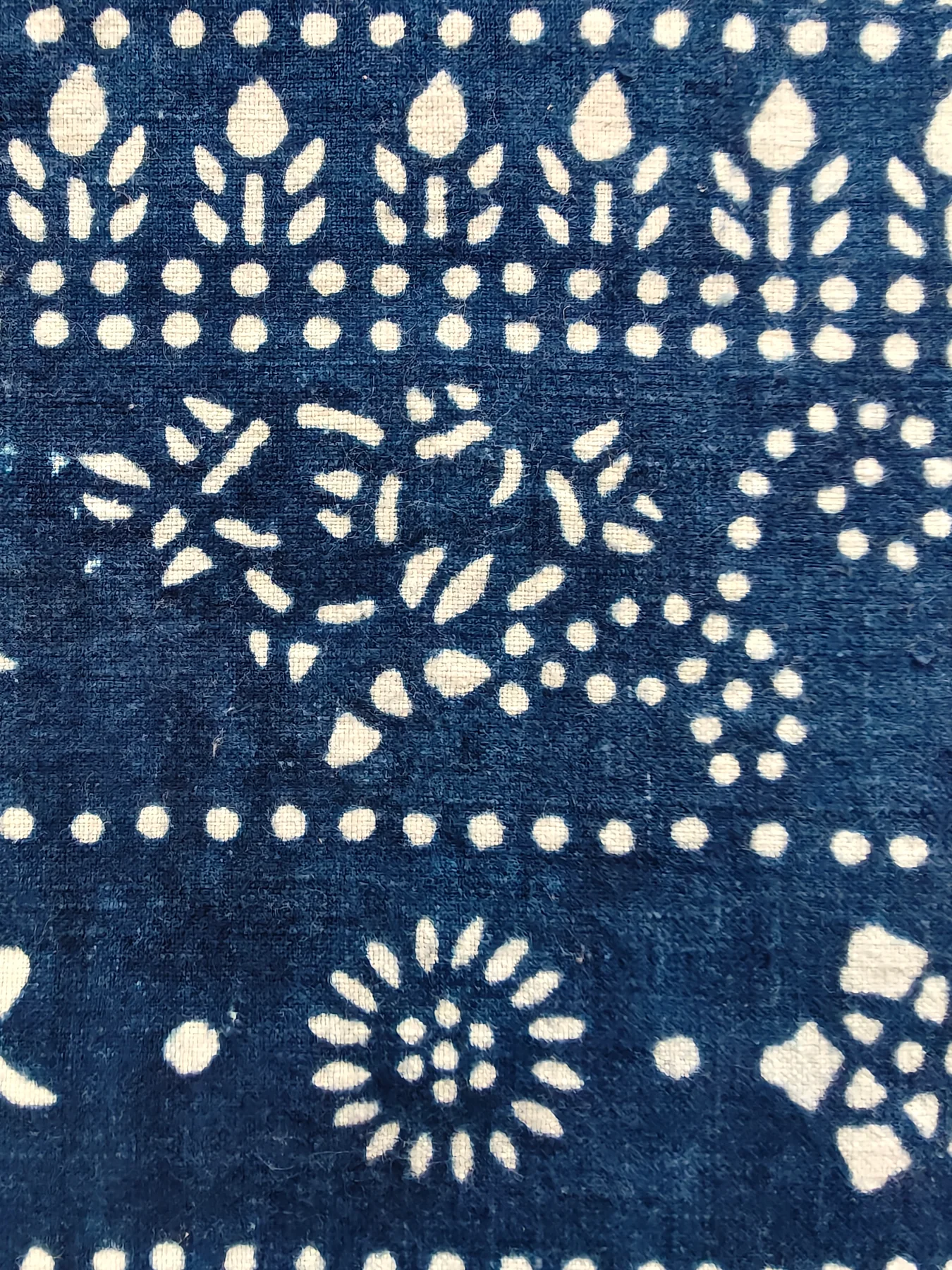
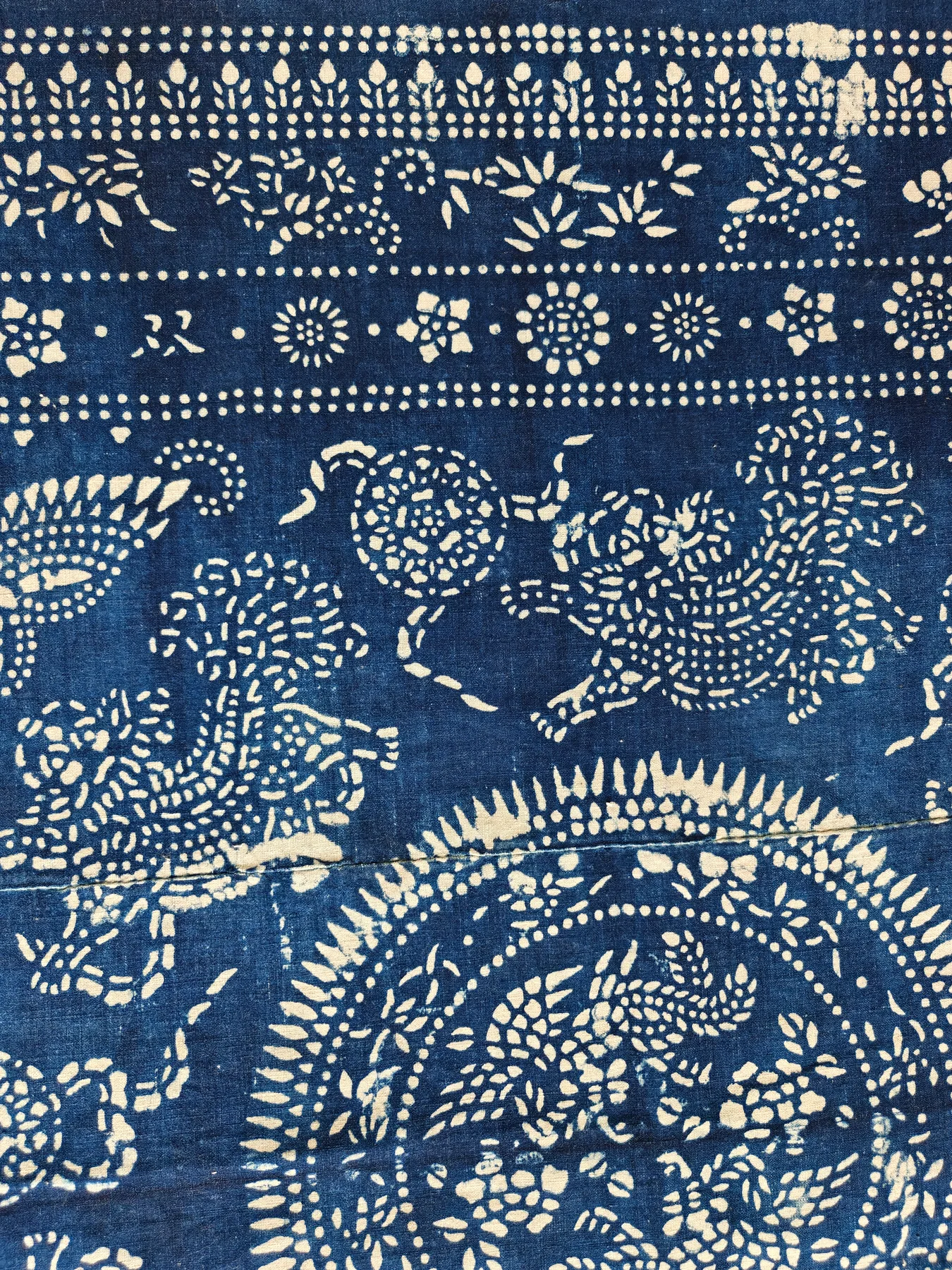
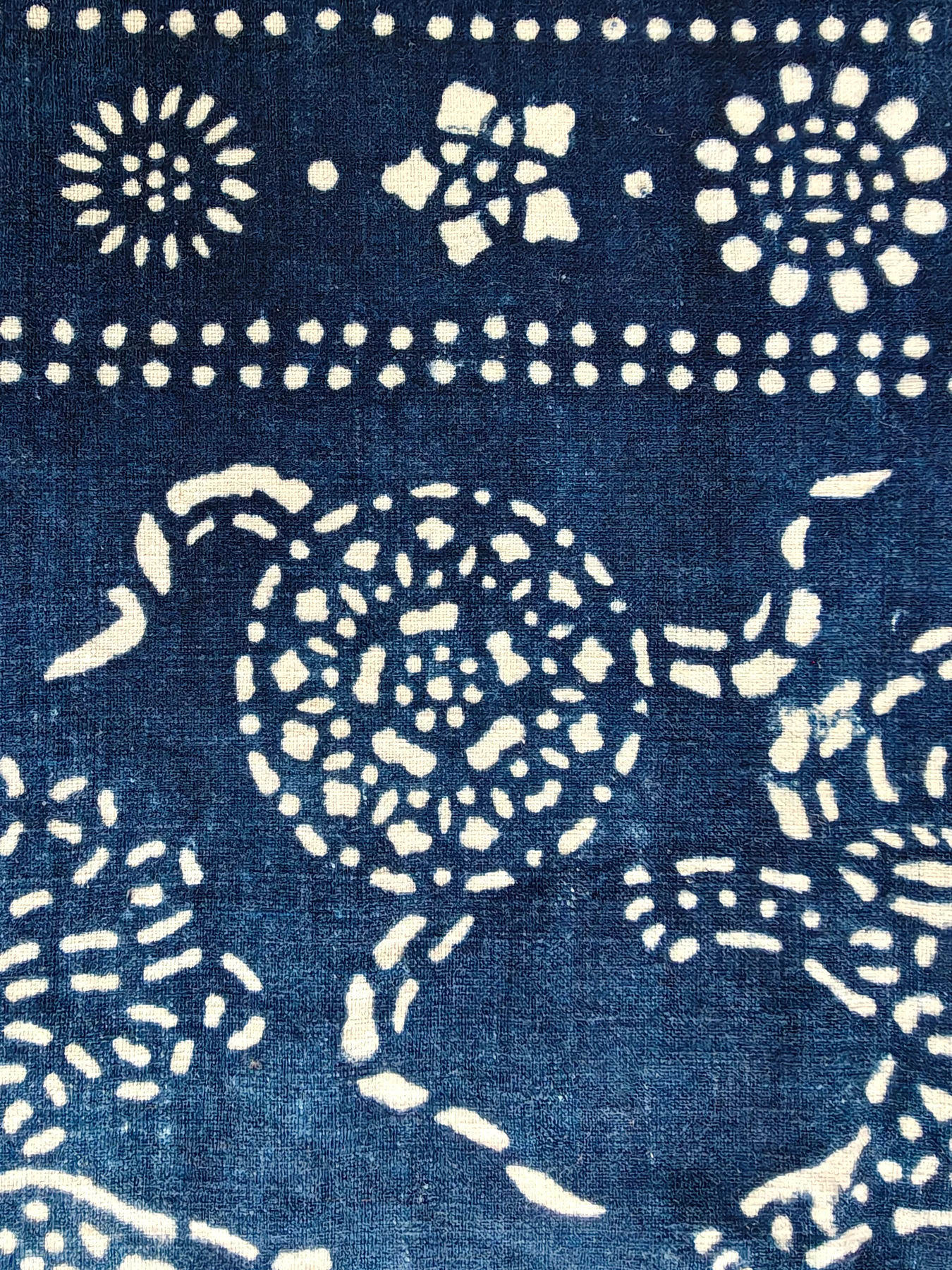
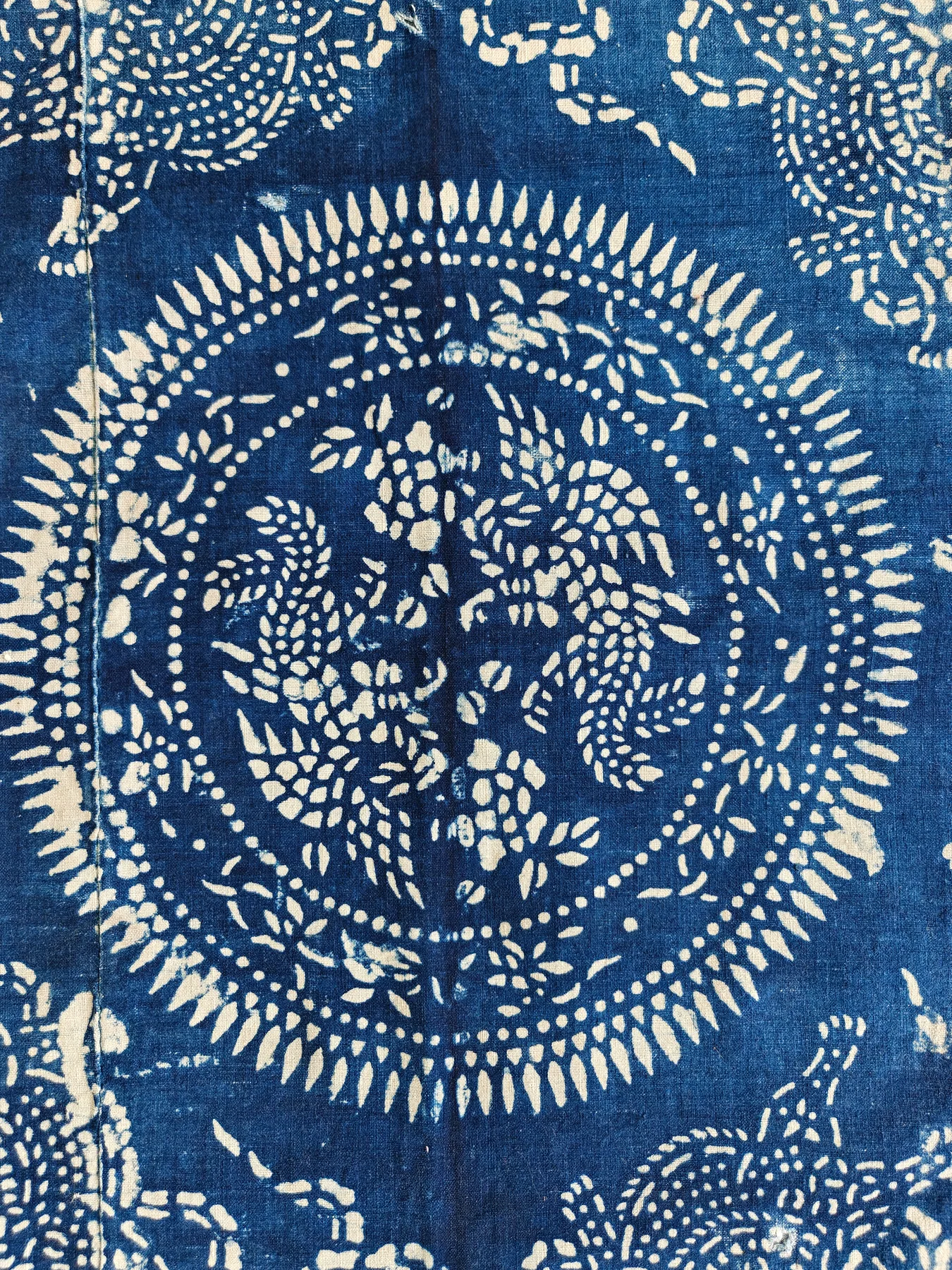
PATTERN & STORY A beautifully detailed vintage Chinese indigo wrapping cloth featuring four auspicious lions, phoenixes among peonies, butterflies, ancient copper coin motifs, the Four Gentlemen and the blessing Fu Shou Shuang Quan 福寿双全 — Good Fortune and Longevity Together.
Handwoven from traditional Xiao Hua Sha (小花纱) cotton, the fabric is substantial yet remarkably soft and supple, with the beautiful irregular texture of hand-spun yarn.
Attributed to Nantong, Jiangsu Province, China, approximately 1940s–1960s.
💗The Pattern & Its Symbolism
Every motif carries a traditional Chinese blessing:
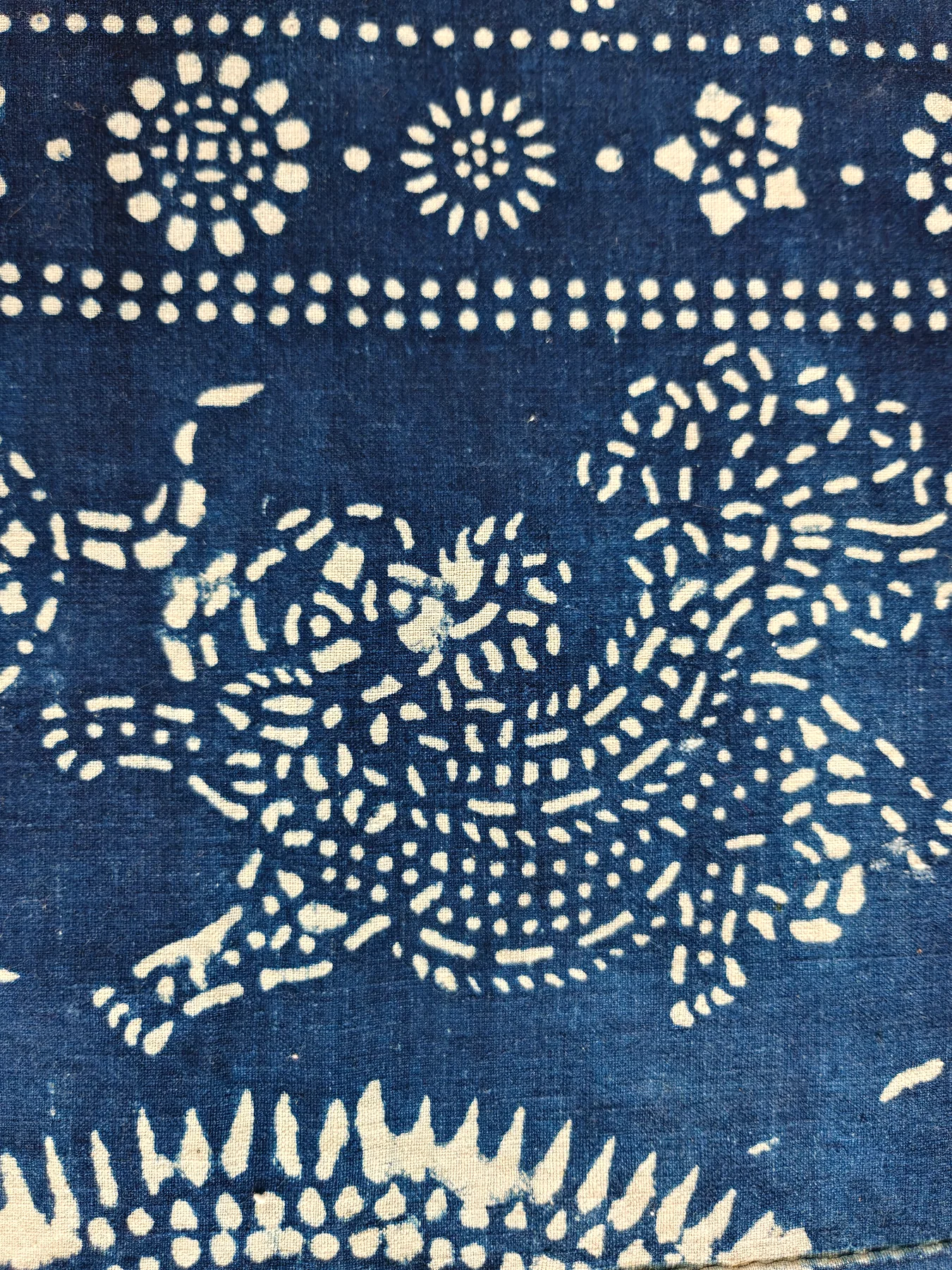
💗Four Lions Playing with Embroidered Balls – 狮子滚绣球
Lions represent protection, strength and good fortune. The word shi (狮, lion) echoes shi (事, affairs), expressing Shi Shi Ru Yi (事事如意) — may everything go as you wish. The embroidered balls add wishes for celebration and family happiness.
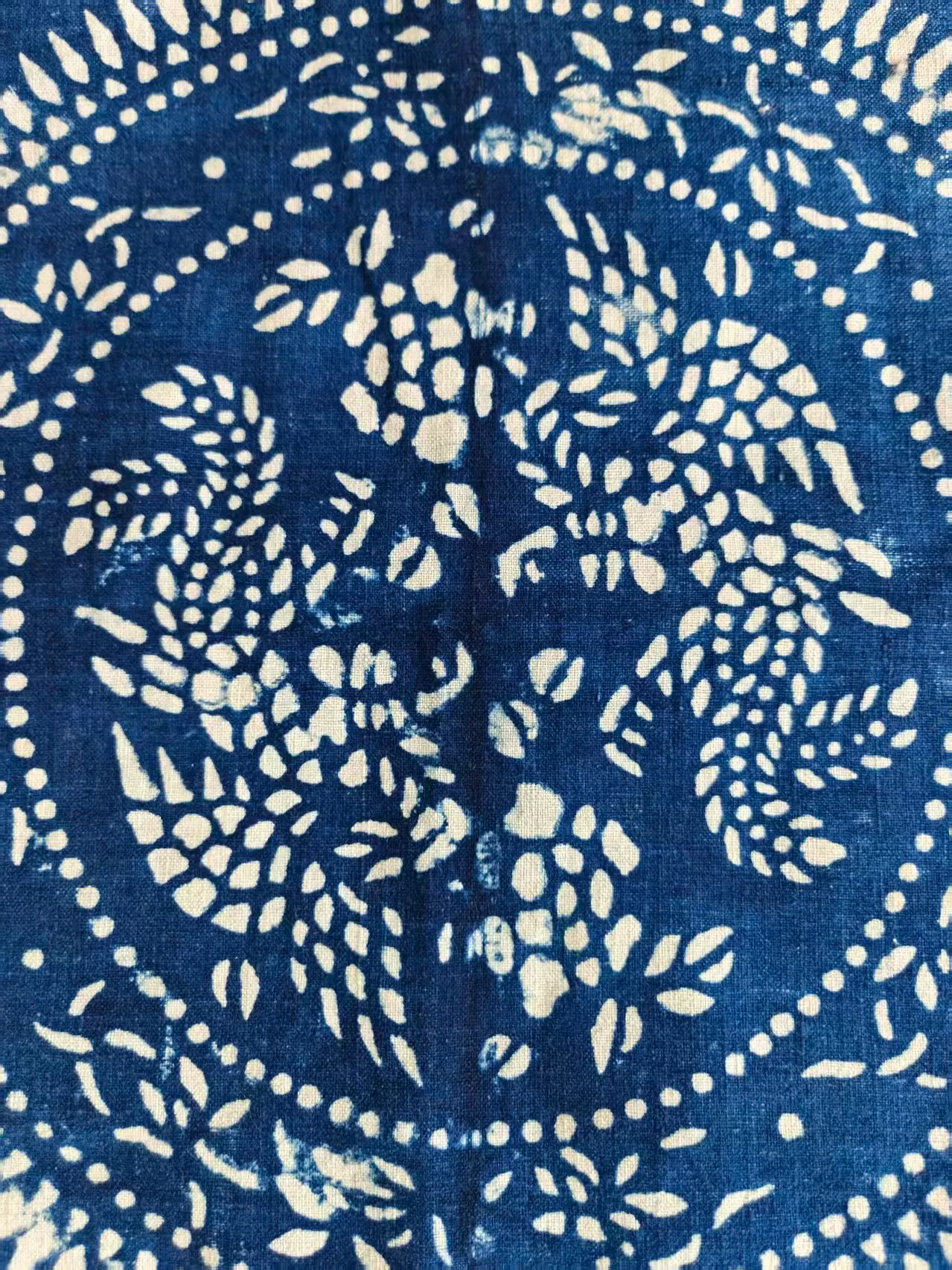
💗Phoenix Among Peonies – 凤穿牡丹
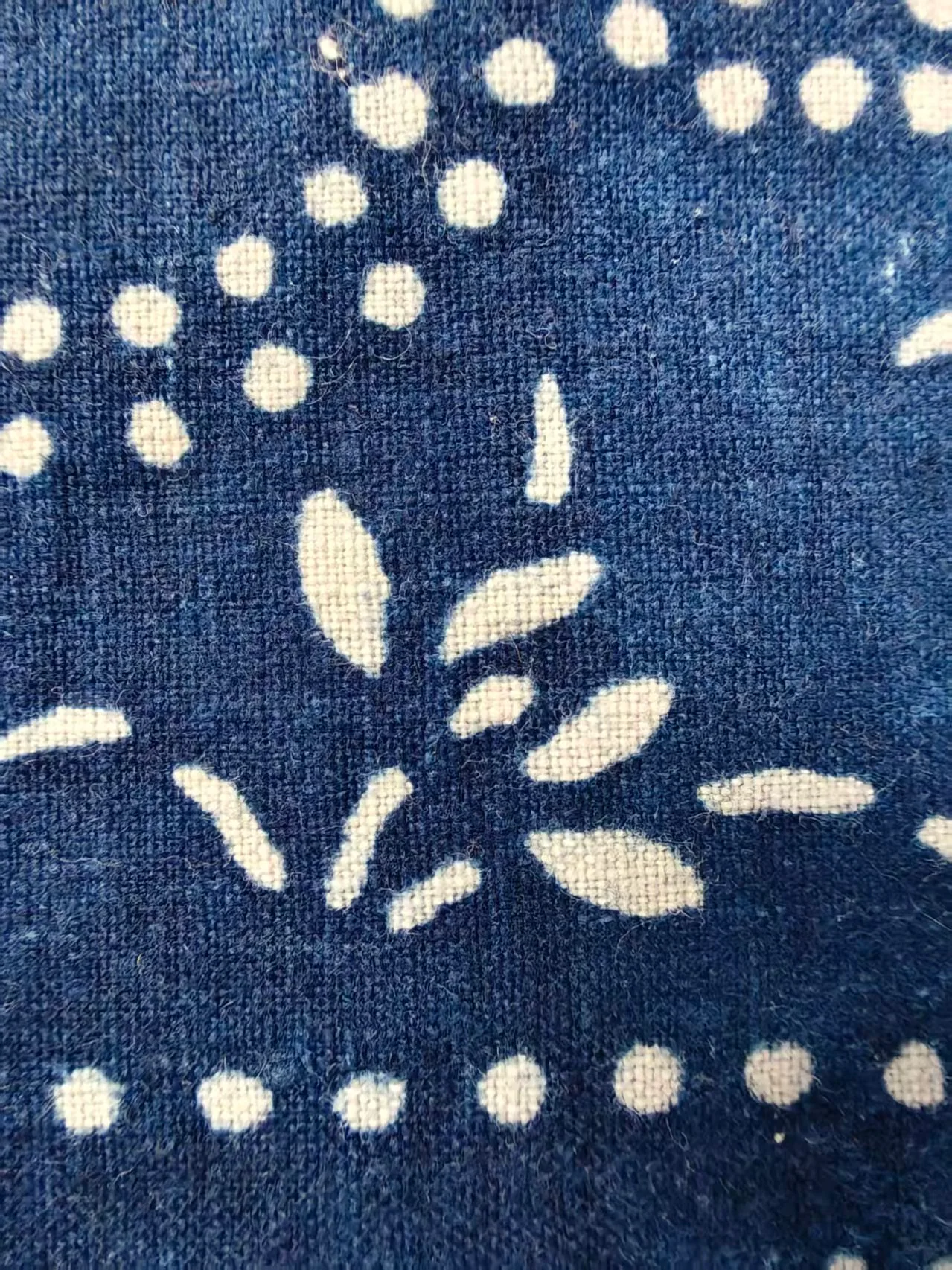
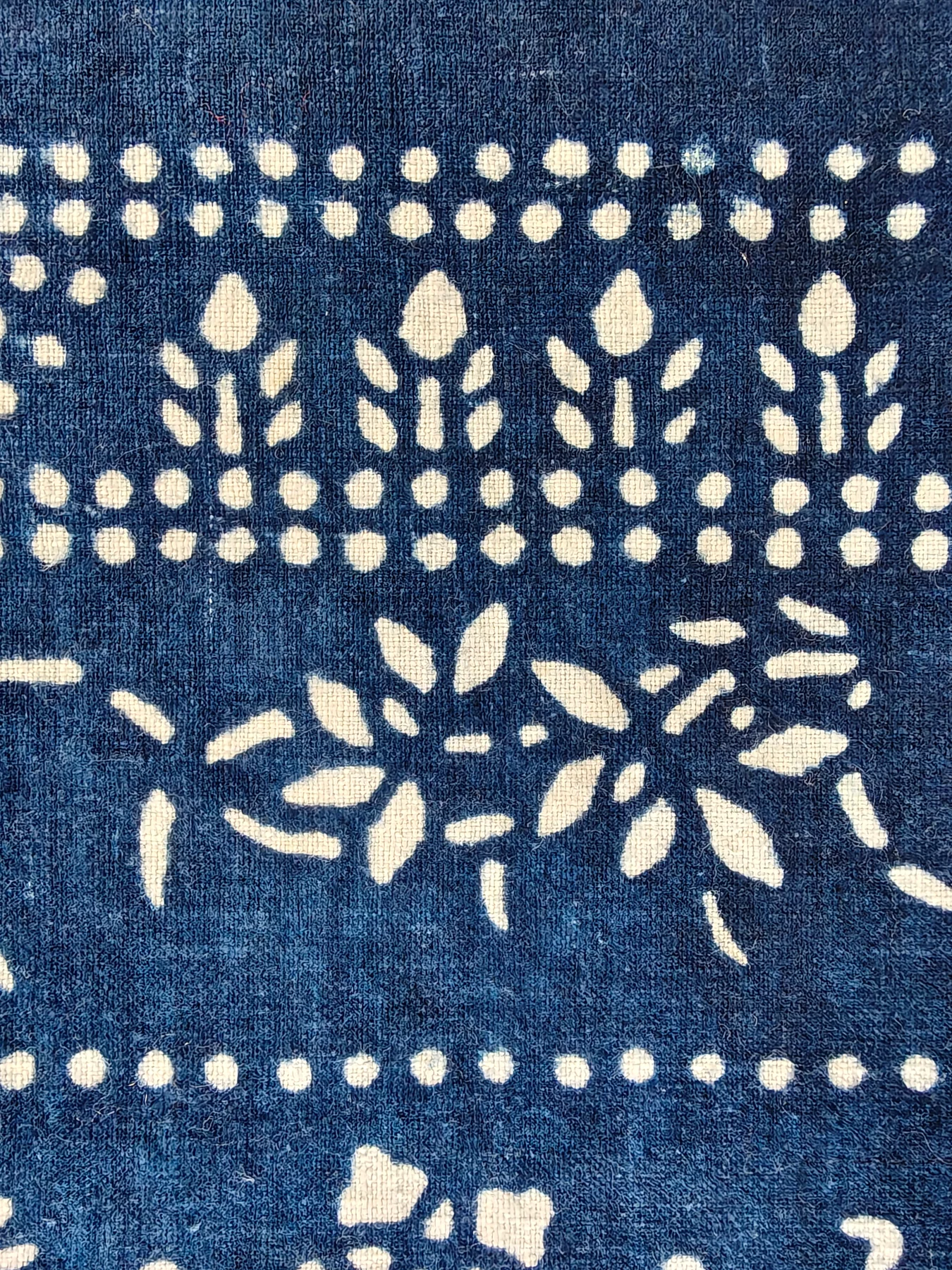
The phoenix symbolises harmony, peace and auspiciousness, while the peony, China's King of Flowers, represents wealth, honour and prosperity. Together they express marital harmony and a flourishing household.
💗Four Butterflies – 四蝶
Butterfly (die 蝶) sounds like die (耋), associated with venerable old age and longevity. Butterflies also represent love and happiness, while their pronunciation recalls die (迭), suggesting blessings arriving again and again.
💗Ancient Copper Coins – 铜钱纹
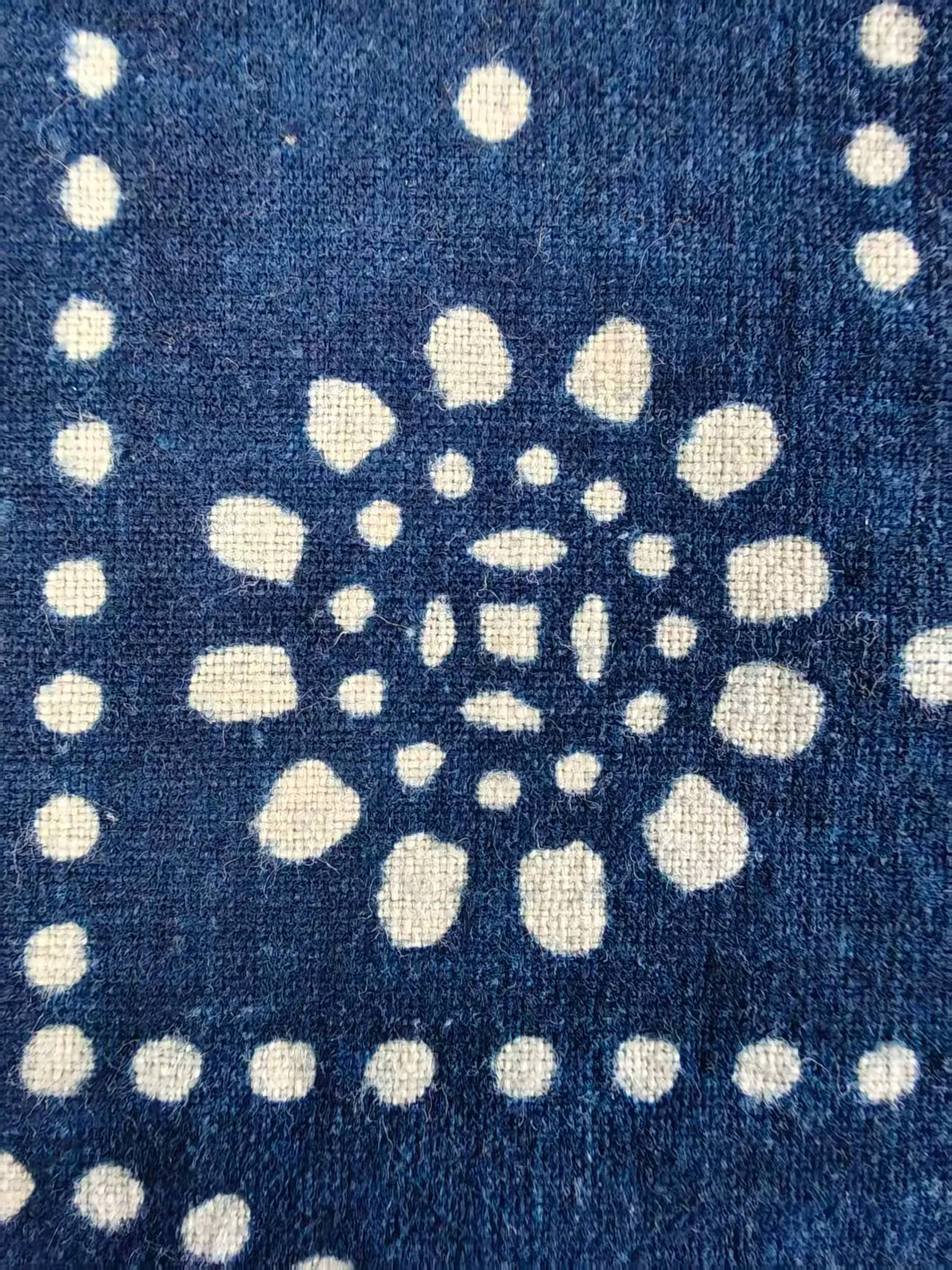
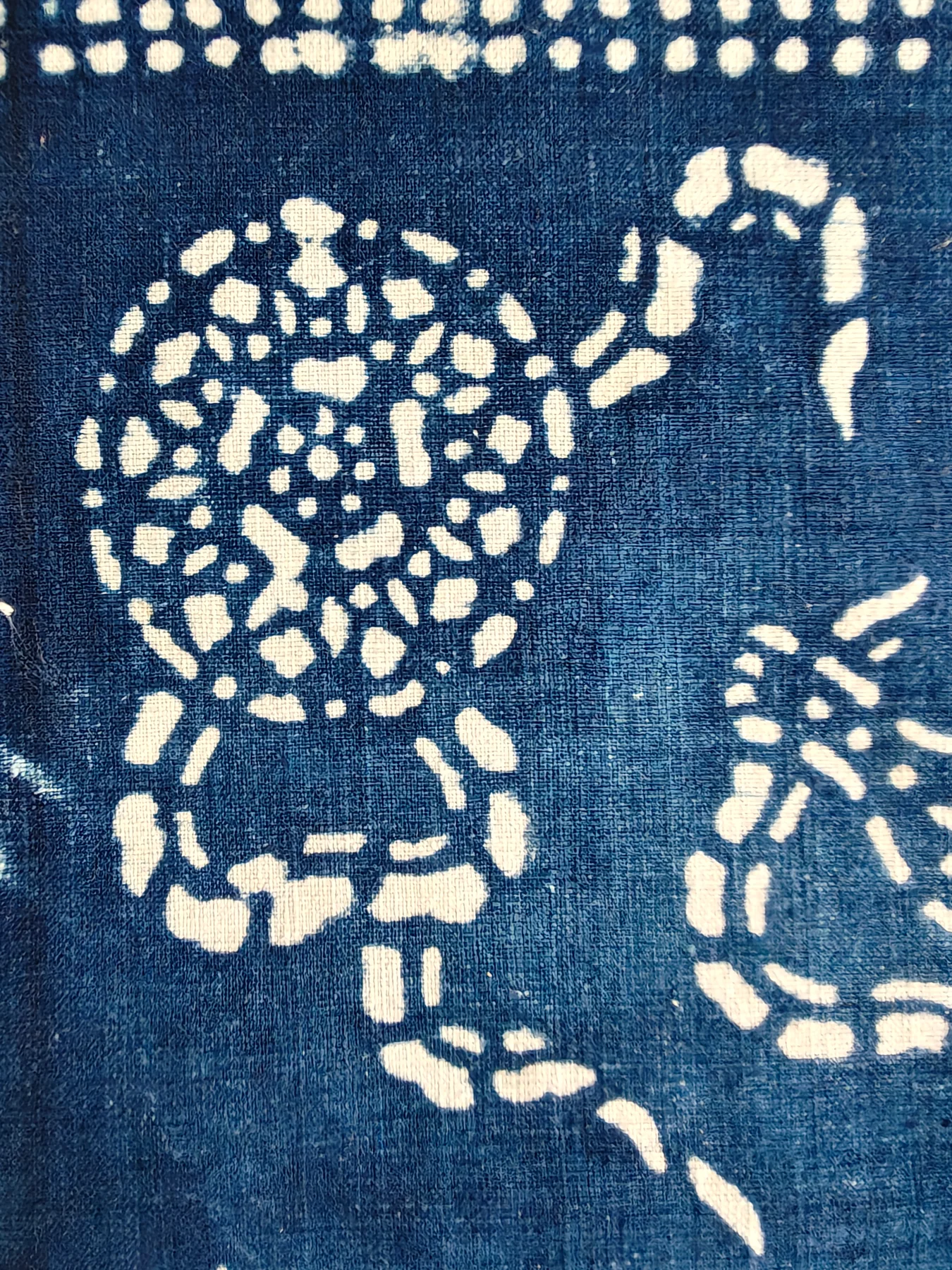
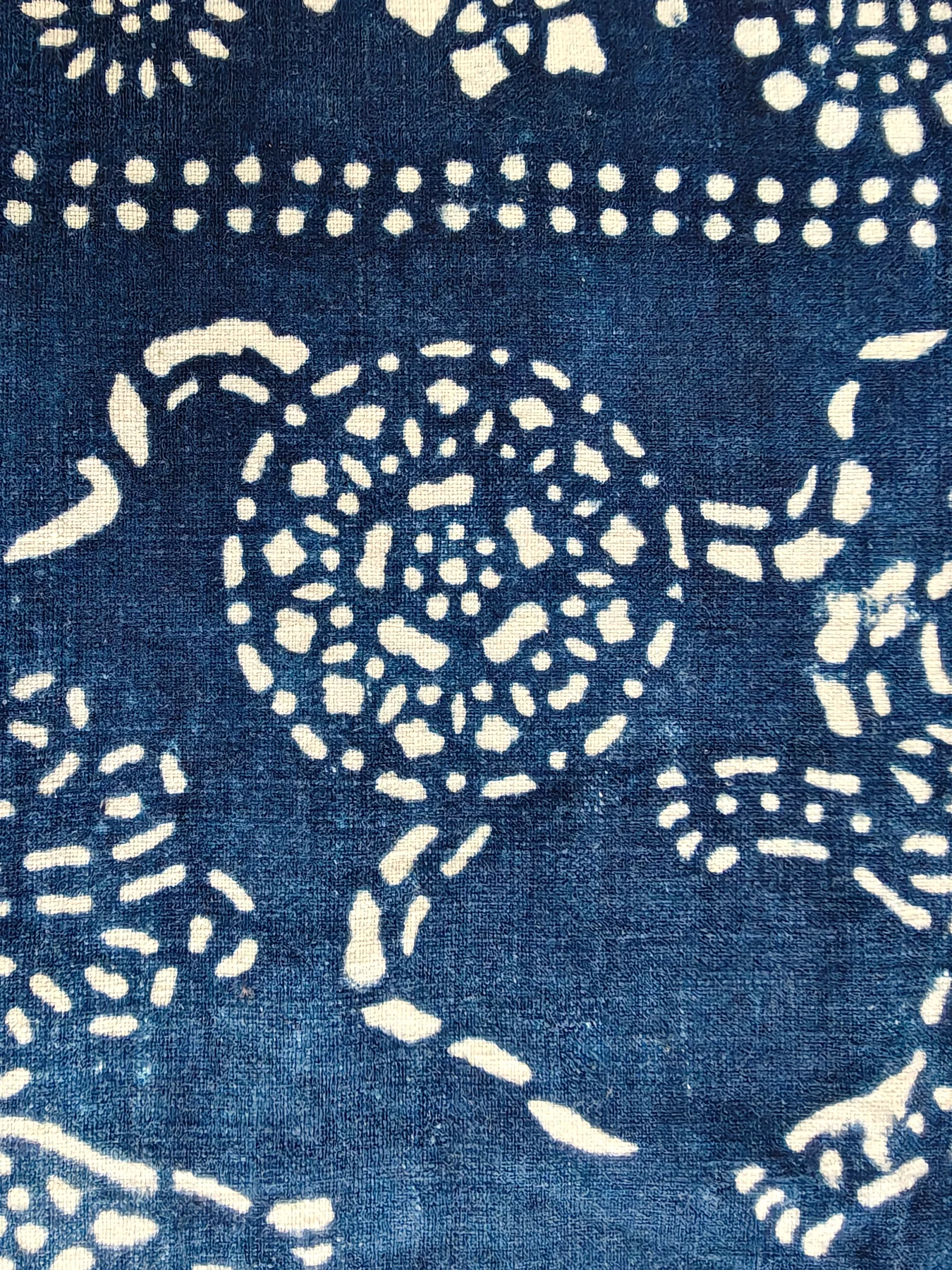
Traditional round coins with square openings symbolise prosperity, wealth and abundance, expressing wishes for lasting financial wellbeing.
💗The Four Gentlemen – 梅兰竹菊
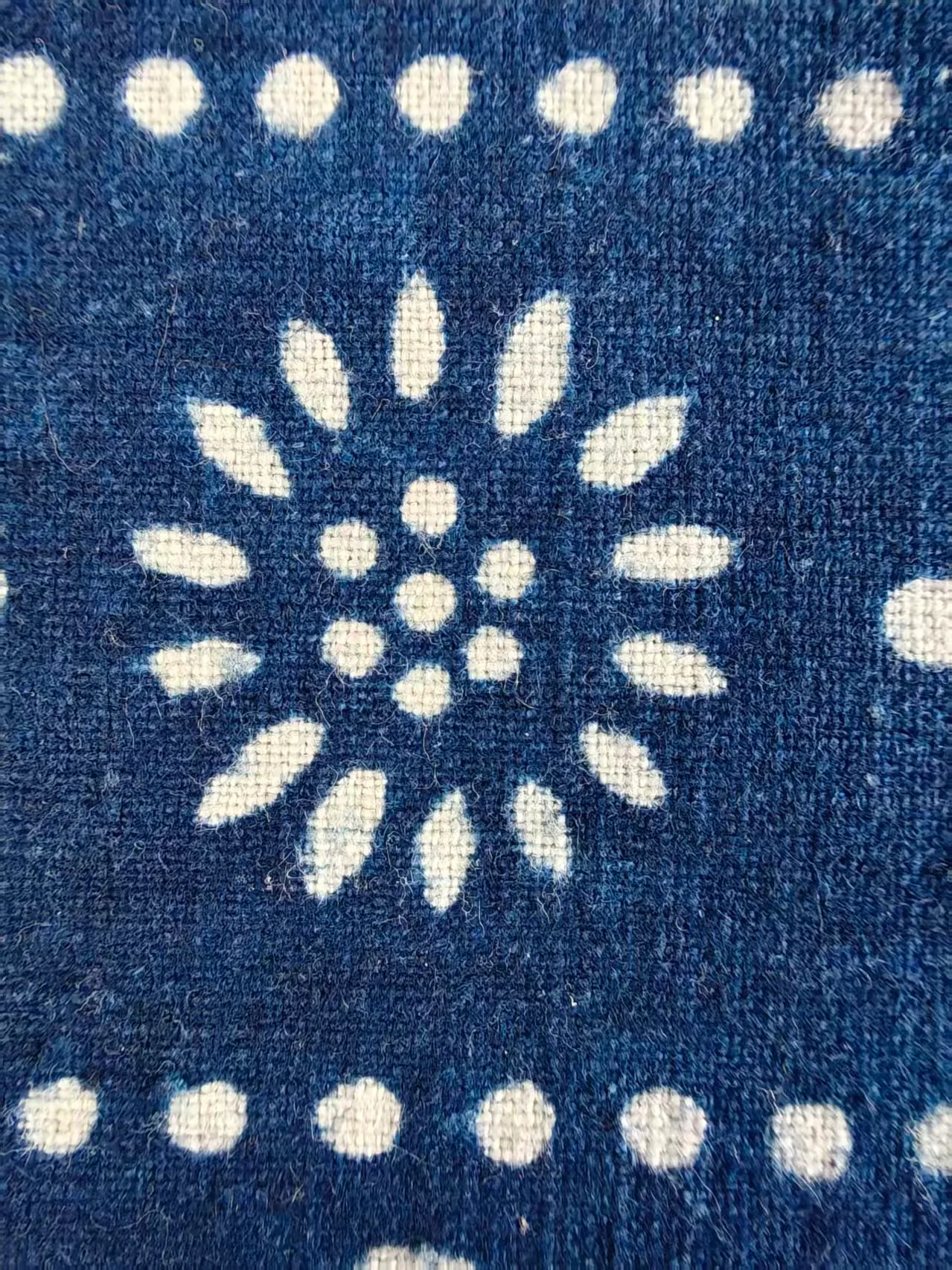
Plum Blossom (梅): Resilience, hope, renewal and the Five Blessings.
Orchid (兰): Elegance, humility, refinement and inner virtue.
Bamboo (竹): Integrity, resilience, peace and steady advancement.
Chrysanthemum (菊): Longevity, dignity, perseverance and peaceful living.
💗Fu Shou Shuang Quan – 福寿双全
This traditional blessing means enjoying both good fortune (Fu) and longevity (Shou). It brings together the central wishes expressed throughout the textile: happiness, prosperity, harmony and a long life.
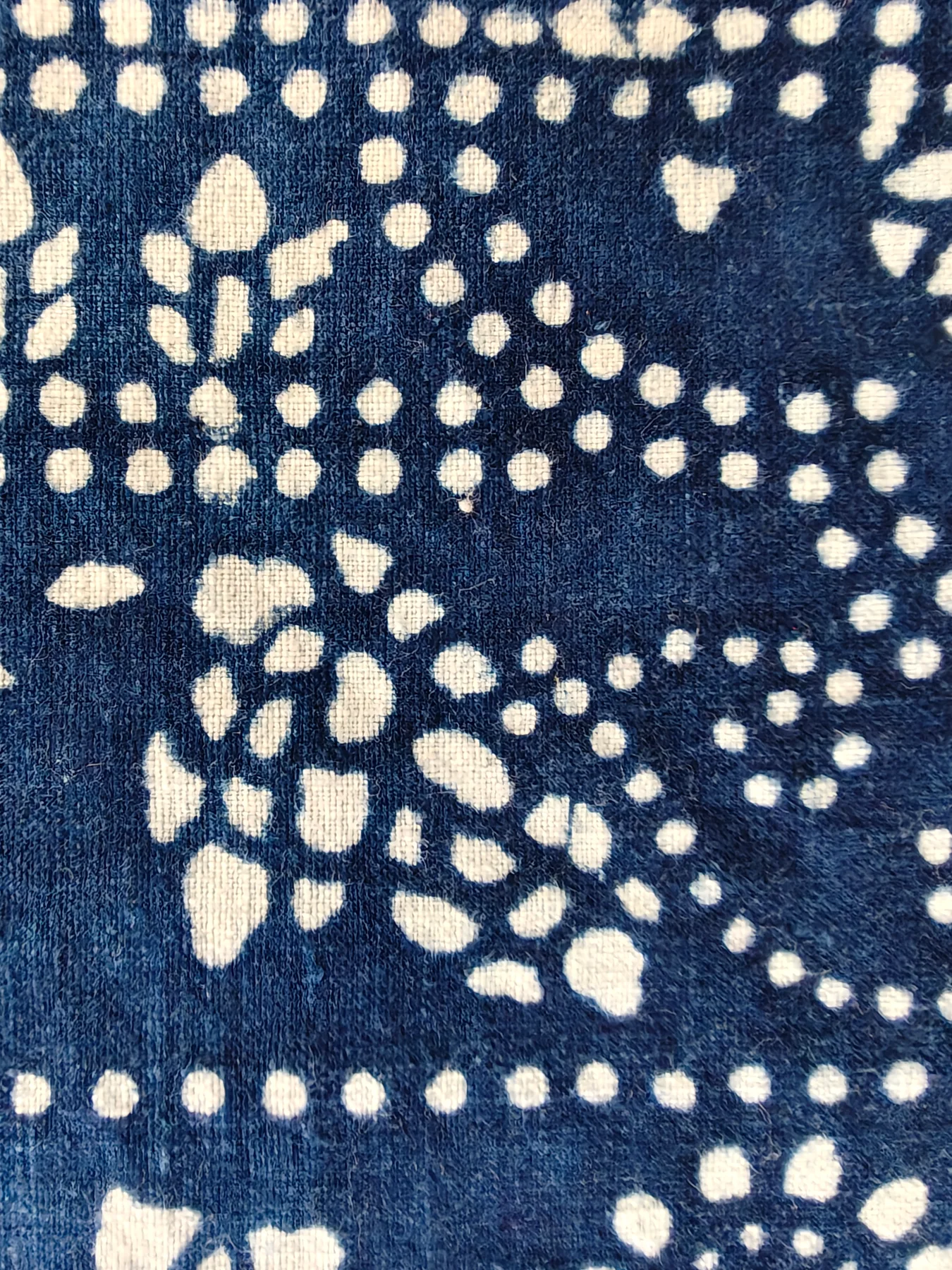
The intricate pearl-dot borders, scrolling flowers and delicate geometric ornaments complete this richly symbolic folk composition.
💗Traditional Craftsmanship
This textile belongs to the Nantong Lan Yin Hua Bu (蓝印花布) tradition.
Its intricate white motifs were created using hand-cut stencils and traditional resist paste, commonly made from soybean flour and lime. The cloth was then indigo-dyed, and the paste removed to reveal the pale designs.
The countless tiny dots and broken lines forming the lions, birds and flowers are characteristic of this delicate stencil craft.
The traditional hand-spun Xiao Hua Sha cotton gives the fabric its wonderfully soft, substantial and naturally textured feel.
A Traditional Chinese Wrapping Cloth
Known as Baofu Bu (包袱布), such textiles were traditionally used to wrap clothing, dowries, gifts and valued household belongings.
Their auspicious patterns expressed heartfelt wishes for marriage, family prosperity, happiness and longevity.
Today, this piece is beautiful for framed textile art, decorative wall display, folk textile collecting, tea-room decoration or inspiration for slow stitching and traditional crafts.
The exact vintage textile shown in the photographs is the piece you will receive.
From Tubu Atlas, preserving the craftsmanship and stories carried by old Chinese textiles.
ABOUT TRADITIONAL HOMESPUN COTTON Traditionally woven on household wooden looms, Chinese homespun cotton has hand-spun yarns that vary naturally in thickness, giving the cloth a textured, individual surface. This is a reclaimed household textile; its existing wear and condition are described in this listing. Warp yarns were sometimes sized before weaving, so unused vintage cloth can feel firm at first and gradually soften with use and gentle washing. Each household’s yarns, loom width and weaving choices differ, making an identical replacement difficult to find.
SHIPPING & CARE Ships from China. Tubu Atlas pays import duties and tariffs for US deliveries; Etsy may collect applicable sales tax at checkout. Additional fabrics in the same order do not incur a separate shipping charge. Check Etsy checkout for the shipping total and delivery estimate for your address.
If cleaning is needed, wash gently and separately in cool water, testing a small corner first. Avoid bleach, prolonged soaking and tumble drying; air dry in shade.
- Object ID
- TA-NT-0045
- Origin
- Nantong · Nantong, Jiangsu Province, China (owner attribution; exact workshop unverified)
- Dating confidence
- estimated
- Material
- Substantial yet soft and supple cotton, described as hand-spun, handwoven Xiao Hua Sha (小花纱), with naturally irregular yarn texture
- Dimensions
- Size: approx. 100 × 100 cm / 39.4 × 39.4 inches.
- Technique
- Handwoven homespun cotton ground (owner attribution) · Nantong Lan Yin Hua Bu: hand-cut stencil and paste-resist indigo dyeing (owner attribution)
- Pattern
- Four auspicious lions playing with embroidered balls · Phoenixes among peonies · Peony blossoms · Four butterflies · Ancient round copper-coin motifs with square openings · The Four Gentlemen: plum, orchid, bamboo and chrysanthemum · Pearl-dot borders and broken-line resist details · Scrolling floral ornaments
- Colours
- Indigo blue · Natural ivory · Grey and pale pink in the later corner repair
- Washed
- Yes
Identification notes
Owner-supplied description for Etsy listing 4605316942 records one complete uncut wrapping cloth, approximately 100 × 100 cm. Quantity 1 means the exact entire cloth shown in the original photographs.
Attributed to Nantong, Jiangsu, approximately the 1940s–1960s, with the exact date unverified. The owner describes substantial, soft Xiao Hua Sha (小花纱) hand-spun and handwoven cotton.
The owner identifies four lions playing with embroidered balls (狮子滚绣球). The description connects lions with protection, strength and good fortune, and the shi (狮 / 事) wordplay with Shi Shi Ru Yi (事事如意), wishes that affairs go smoothly. Embroidered balls add associations of celebration and family happiness.
Phoenixes among peonies (凤穿牡丹) are read in the supplied description as harmony, peace, wealth, honour and a flourishing household. Four butterflies are associated there with love, happiness, venerable age and repeated blessings through die (蝶 / 耋 / 迭) wordplay.
Round coin motifs with square openings are interpreted as prosperity and abundance. The Four Gentlemen border is identified as plum, orchid, bamboo and chrysanthemum: the supplied readings include resilience and renewal; refinement and humility; integrity and advancement; and longevity and peaceful living.
Fu Shou Shuang Quan (福寿双全) brings together good fortune and longevity. The pearl-dot borders, scrolling flowers and small geometric ornaments repeat the wider blessing theme. These motif names and cultural readings follow the owner’s description; they do not independently establish the original maker’s intention.
The owner places the cloth in the Nantong Lan Yin Hua Bu (蓝印花布) tradition, describing hand-cut stencils, traditional resist paste commonly made with soybean flour and lime, indigo dyeing and removal of the paste to reveal the pale motifs. The original dye and paste composition have not been tested.
The four small holes, gentle fading and old lower-right grey repair are disclosed condition features. The patch is a later intervention with visible stitching and pale pink inset details, not an original printed motif; photographs show the face and reverse of the repaired corner.
Baofu Bu (包袱布) wrapping cloths were used for clothing, dowries, gifts and household belongings. Those are contextual uses rather than a proven original function of this particular surviving object. Today it can be collected, framed, displayed on a wall or in a tea room, or studied as inspiration for textile art and slow stitching.
Look at each motif
These photographs are details from the actual cloth, matched with the owner’s pattern labels. Some small symbolic forms remain provisional identifications.
Good fortune and longevity, with a visible history of use
The owner’s reading brings together lions, phoenixes, peonies, butterflies, coin forms and the Four Gentlemen within one richly detailed indigo composition.
The surviving corner repair and small holes preserve evidence of the cloth’s working life alongside the auspicious imagery.