
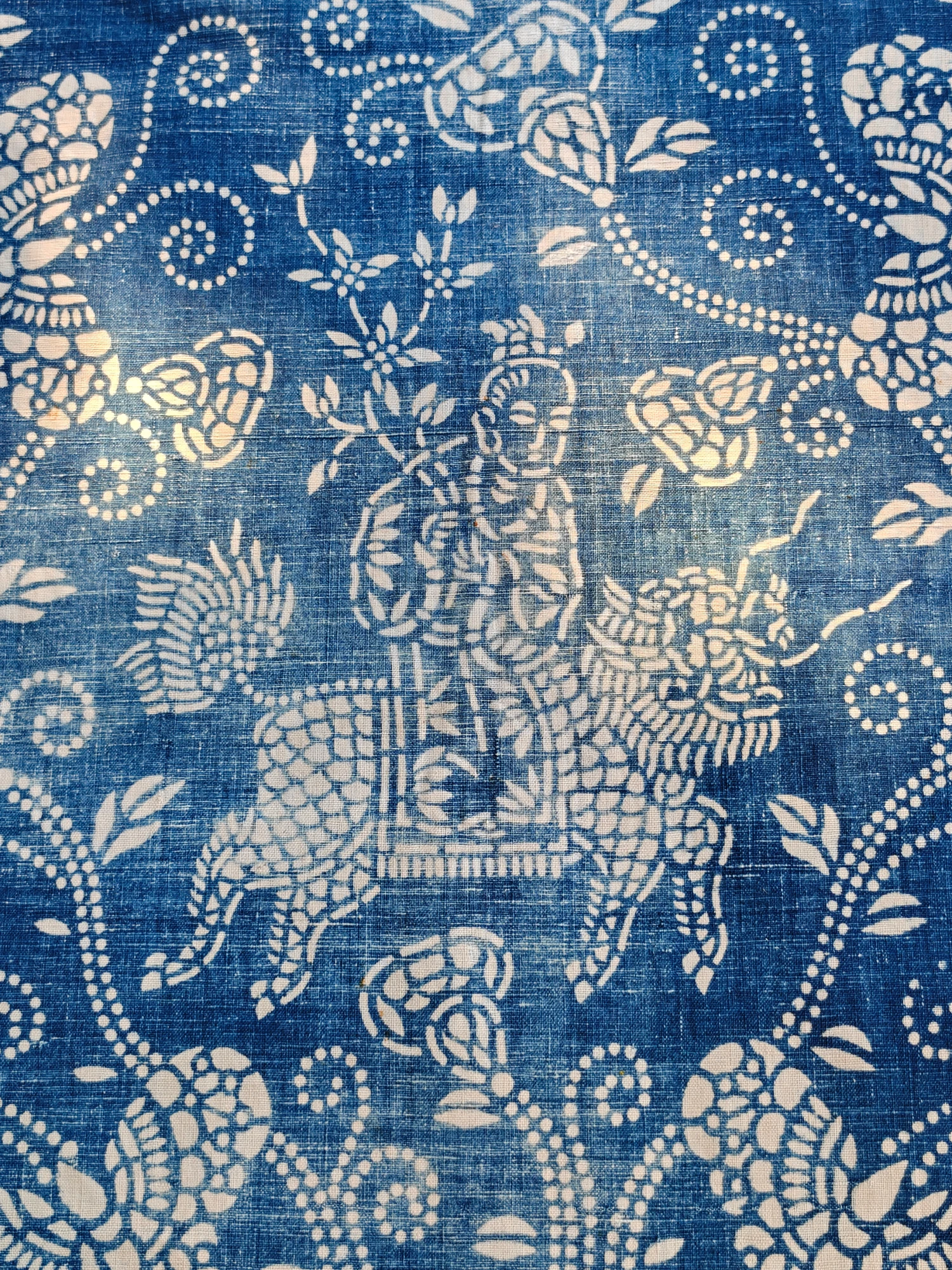
Qilin Bringing a Child — Nantong Indigo Textile
c. 1950s · Homespun cotton
A child rides a qilin above a phoenix medallion, among gourds, butterflies and scrolling flowers. This worn blue-and-white household textile remains documented after sale.
Documented textiles attributed to the Nantong area, grouped so weave, print, motif and dating can be compared across objects.
c. 1950s · Homespun cotton
A child rides a qilin above a phoenix medallion, among gourds, butterflies and scrolling flowers. This worn blue-and-white household textile remains documented after sale.
1970s · Homespun cotton
A long peacock-and-peony cloth documented as part of the Nantong textile group.
20th century — under review · Cotton
A long indigo lattice cloth.
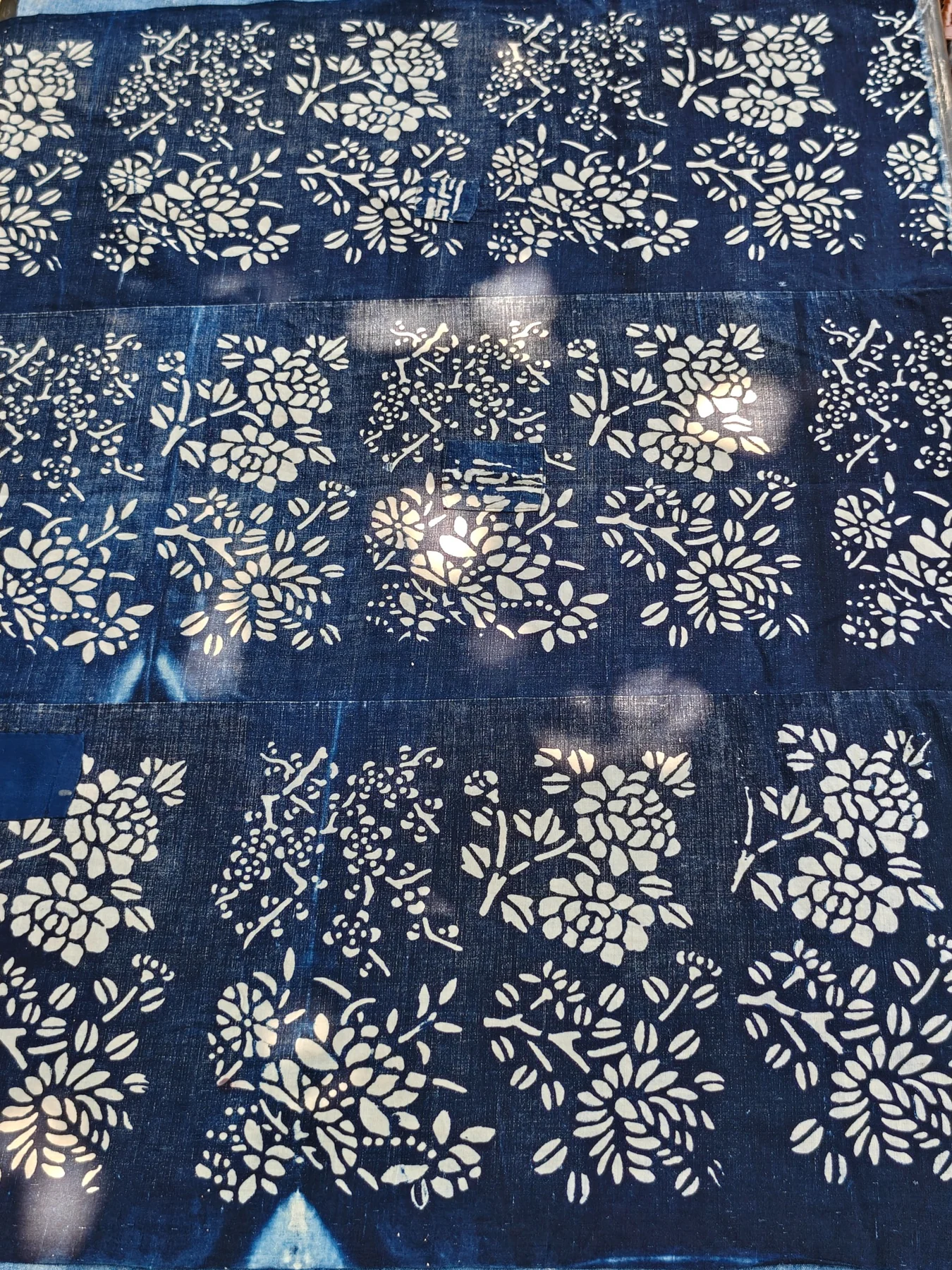
c. 1950s–1960s · Homespun cotton
A large three-panel household quilt cover whose resist-printed Four Seasons flowers and historic patch repair preserve both auspicious symbolism and the evidence of long domestic use.
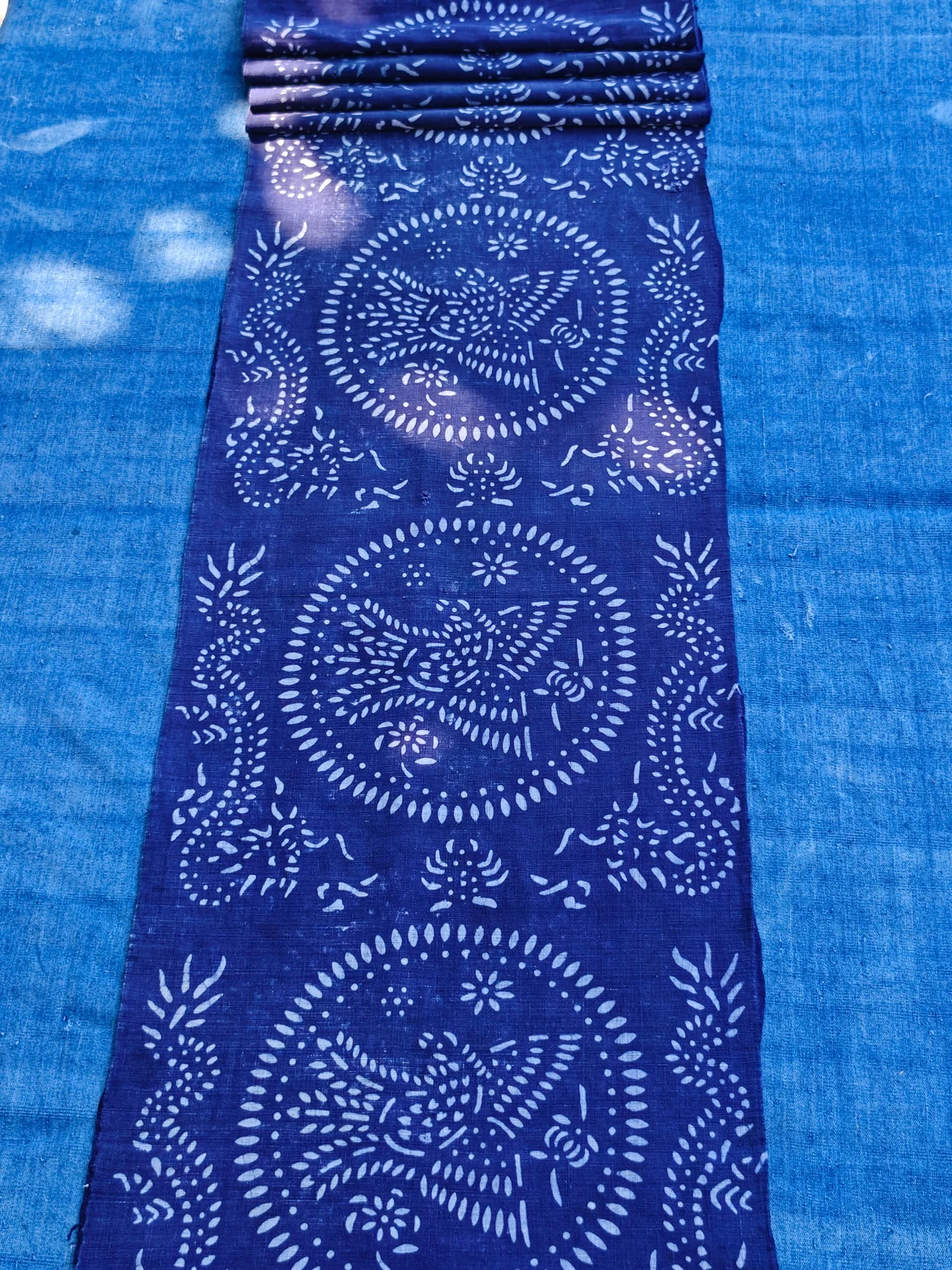
c. 1950s–1960s · Homespun / handspun-style cotton
A long narrow blue-and-white panel carrying dragons, phoenixes, floral vines and pearl imagery — motifs historically suited to wedding and household textiles.
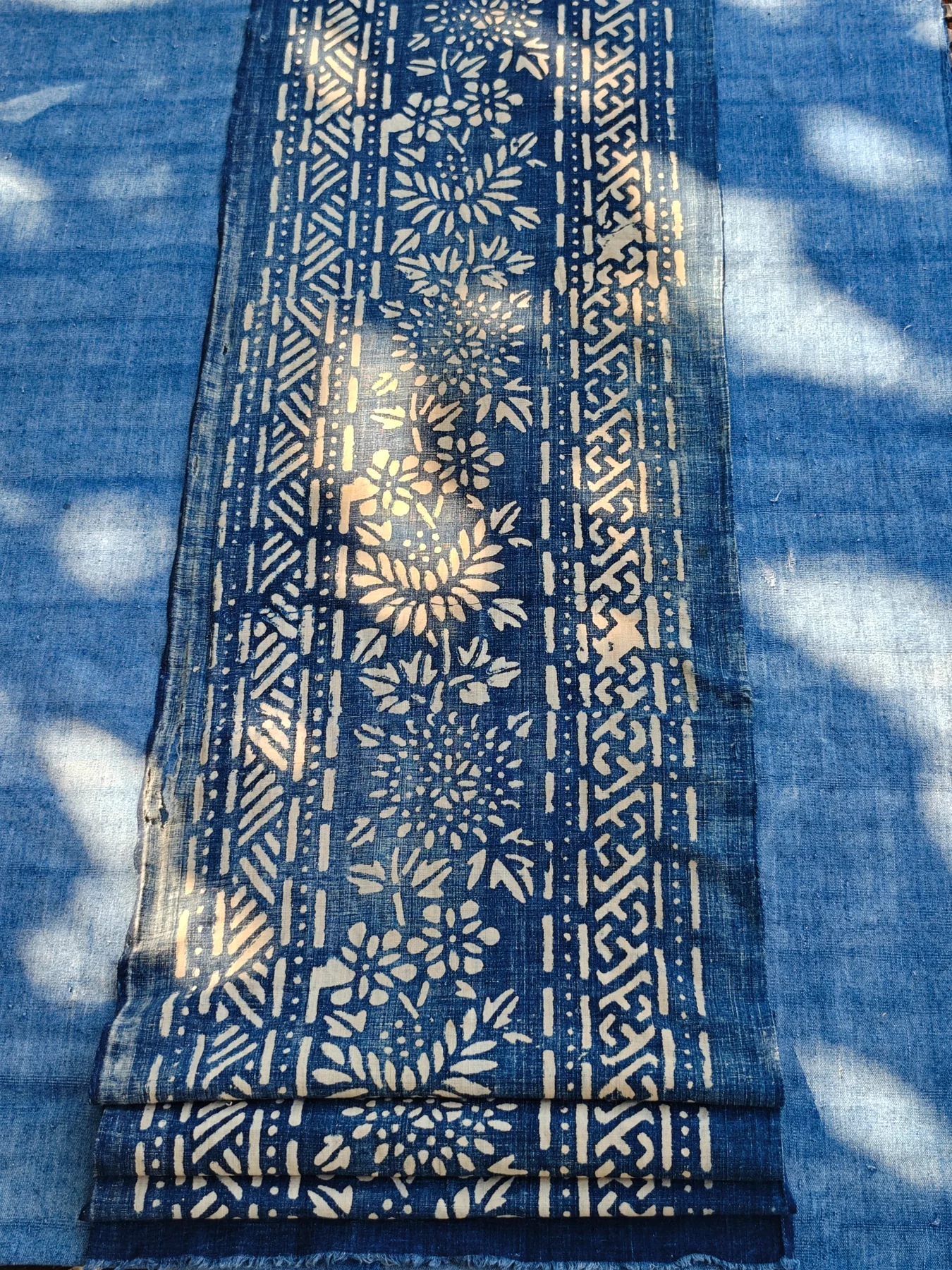
c. 1950s · Homespun / handspun-style cotton
A narrow chrysanthemum panel framed by geometric borders, combining the quiet cultural language of the flower with the practical format of an old household textile.
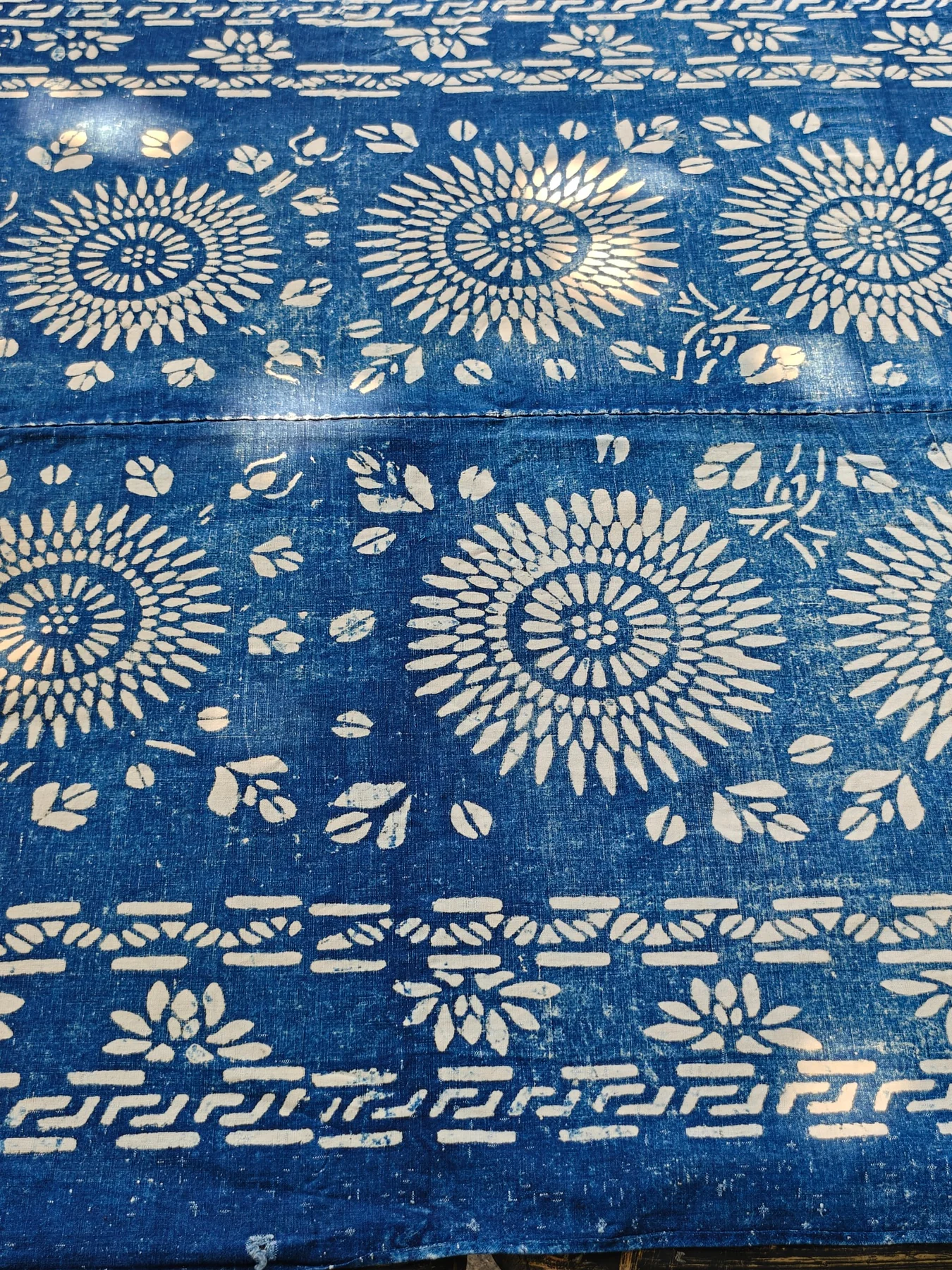
c. 1950s–1960s · Homespun cotton
A square-format household textile built from two narrow panels, with radiating chrysanthemum medallions that combine longevity, inward independence and the round symbolism of reunion.
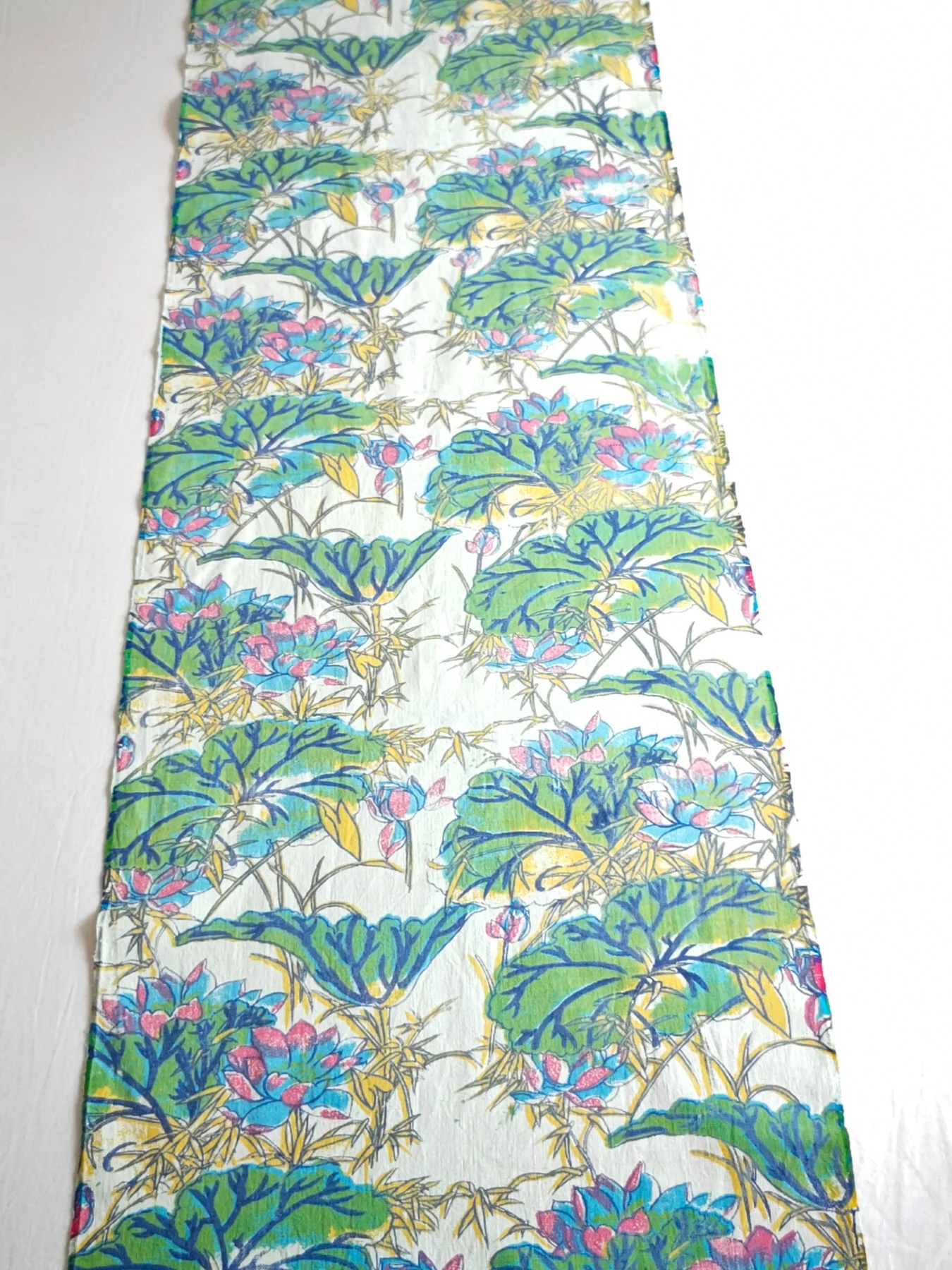
c. late 1960s–1970s · Handspun cotton
A bright lotus-pond print on substantial handwoven cotton, combining the texture of older Jiangnan homespun with a multicolour domestic print associated with harmony, rootedness and continued blooming.
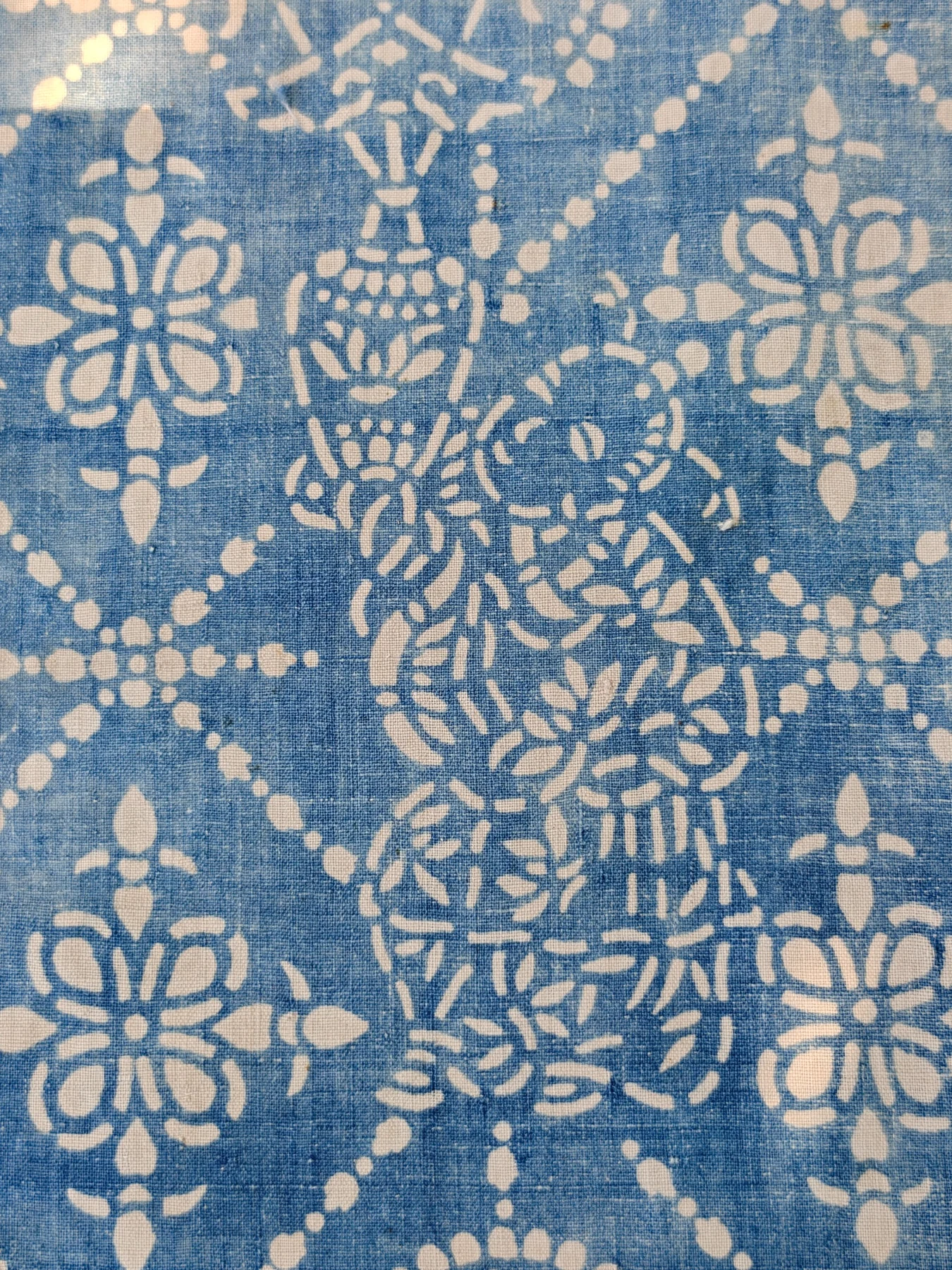
c. late 1940s–early 1950s · Handwoven cotton
A softly timeworn blue-and-white folk textile with a rare child-and-vase composition, surrounded by floral medallions and dotted geometric forms.
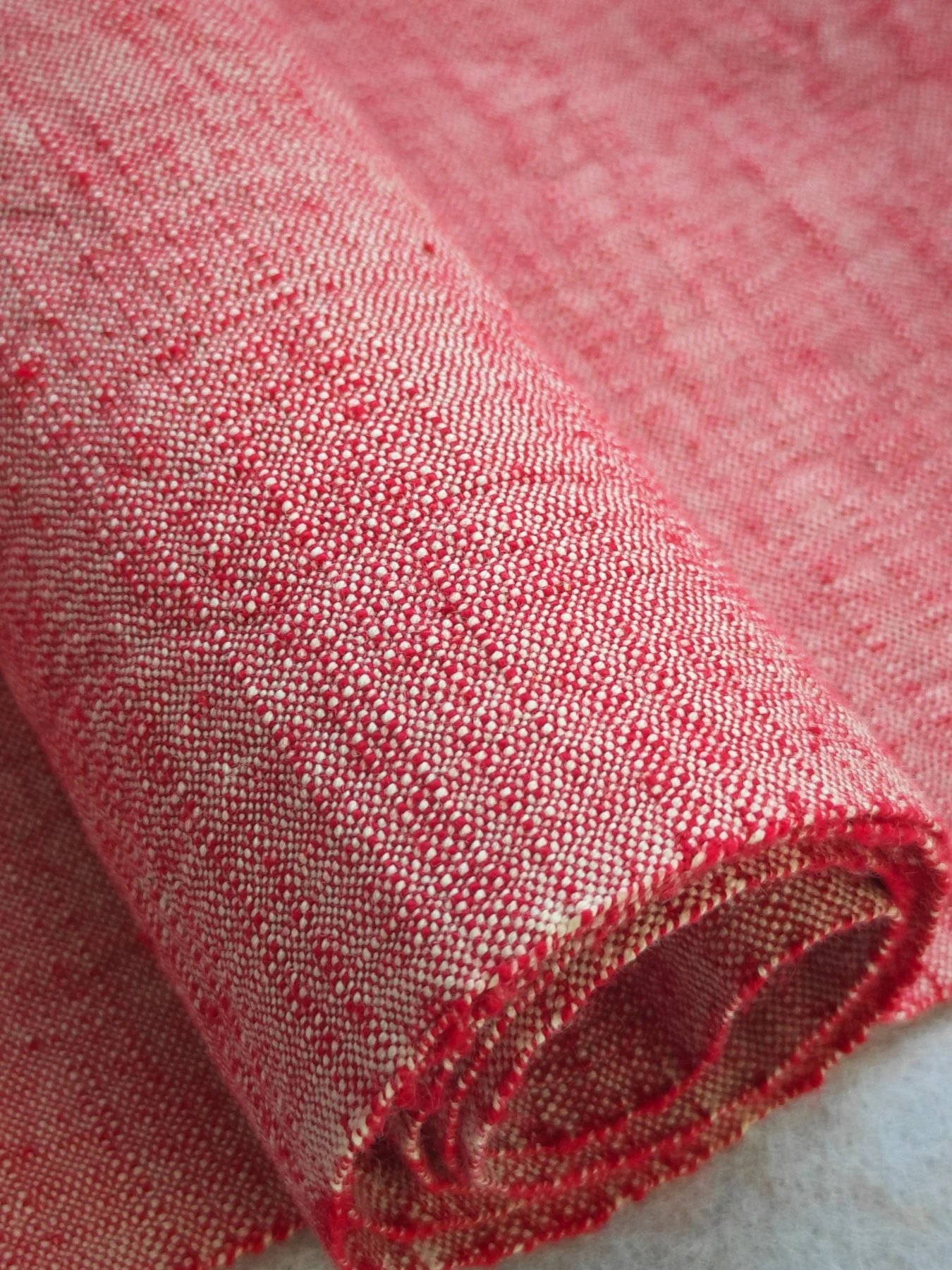
c. 1960s–1970s · Homespun cotton
A warm red homespun cloth whose tiny natural-white dots, red flecks and uneven handspun yarn create a soft star-like field across the woven surface.
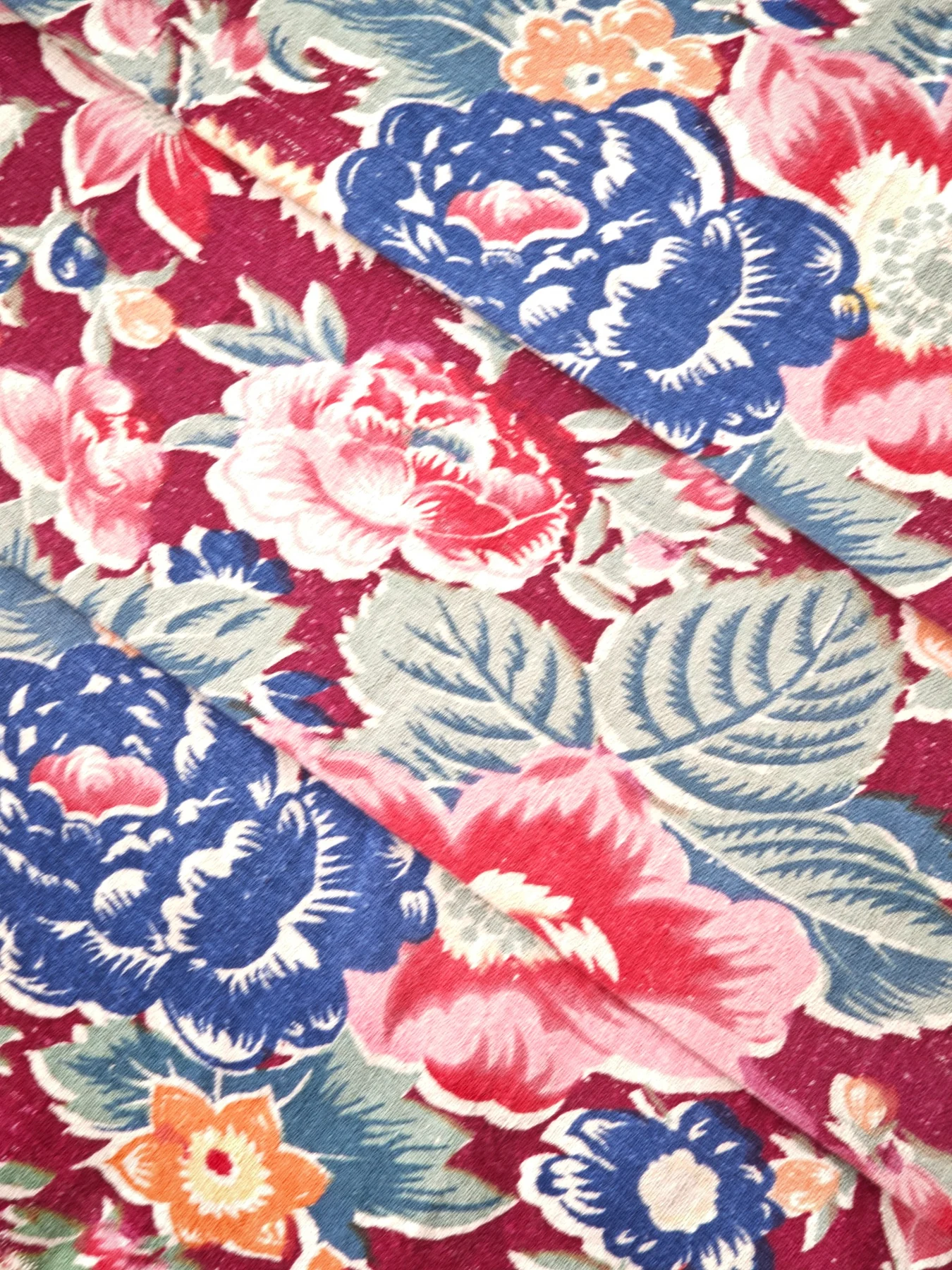
Mid-20th century · Handspun cotton
Two matching cuts of handwoven cotton carrying large blue and pink peonies across a wine-dark burgundy ground, with hand-print variation still visible across the surface.
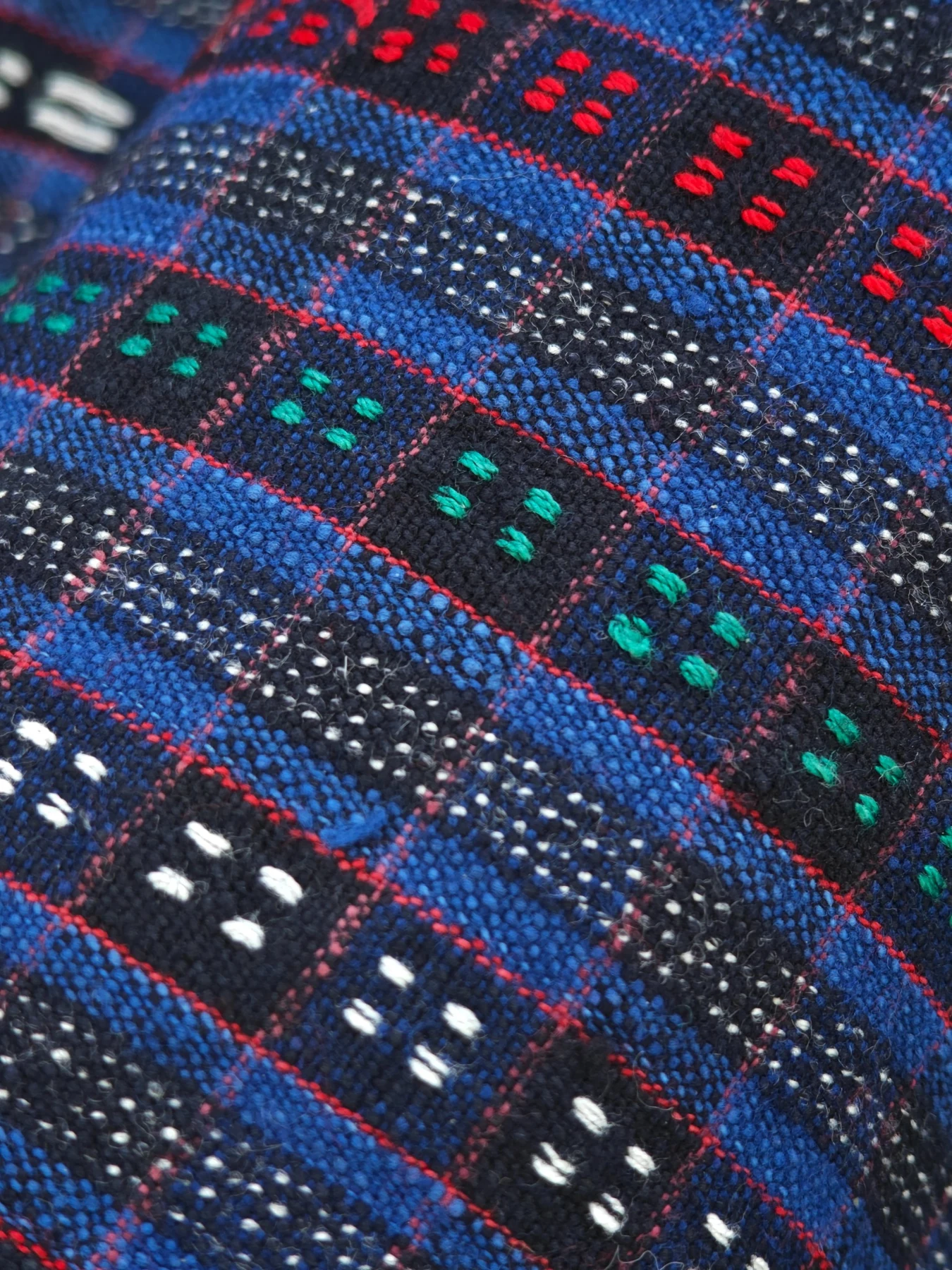
c. 1960s–1970s · Handspun cotton
A dark indigo checked homespun animated by tiny red, green and white picked details, creating a dense field of small handmade marks across a firm old woven ground.
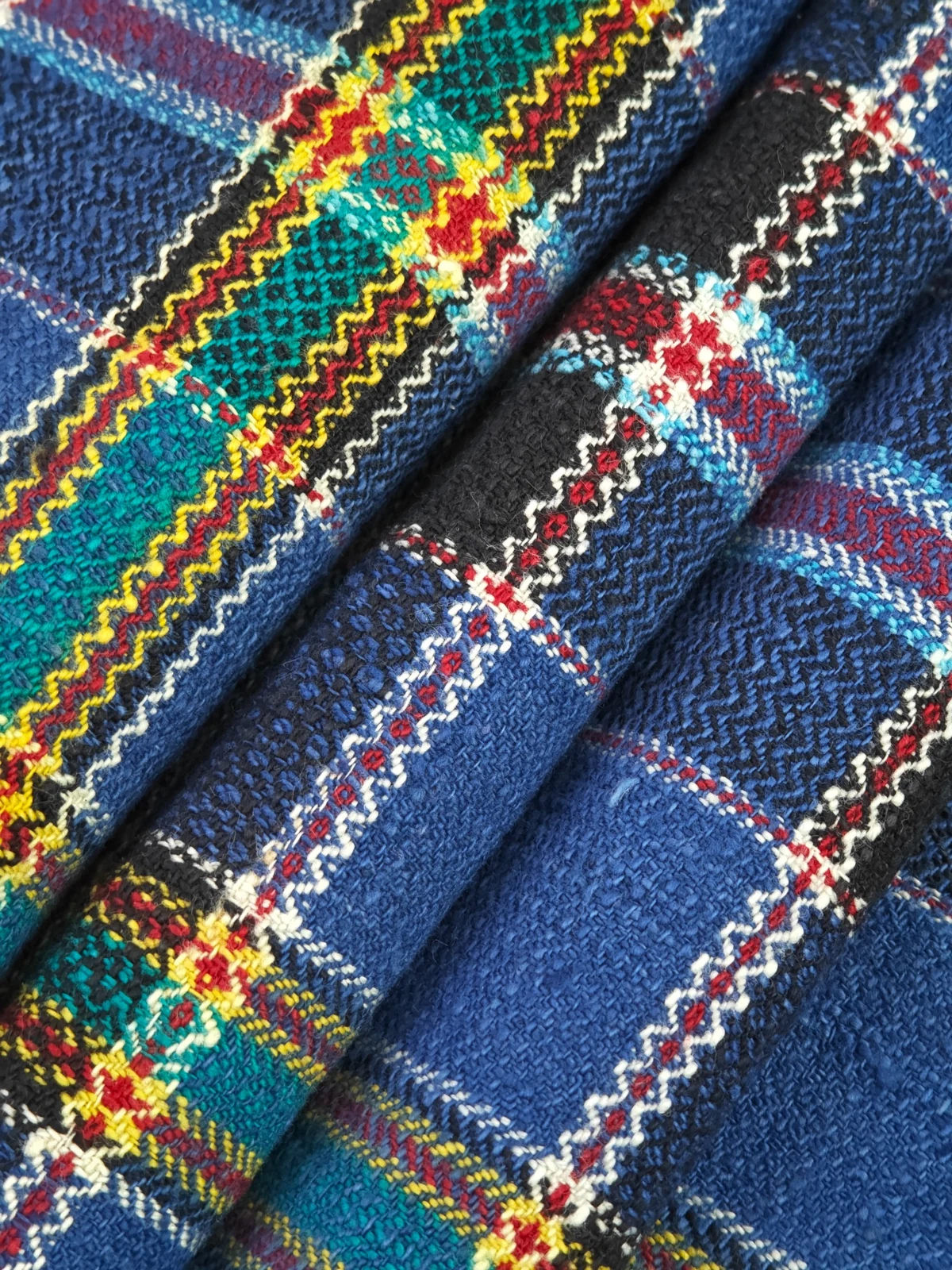
c. 1950s–1970s · Handspun cotton
A dense Nantong / Tonghai treadle-woven cloth in which dark lattice blocks, bright borders, curving-dragon lines and pepper-seed details create a highly layered surface.
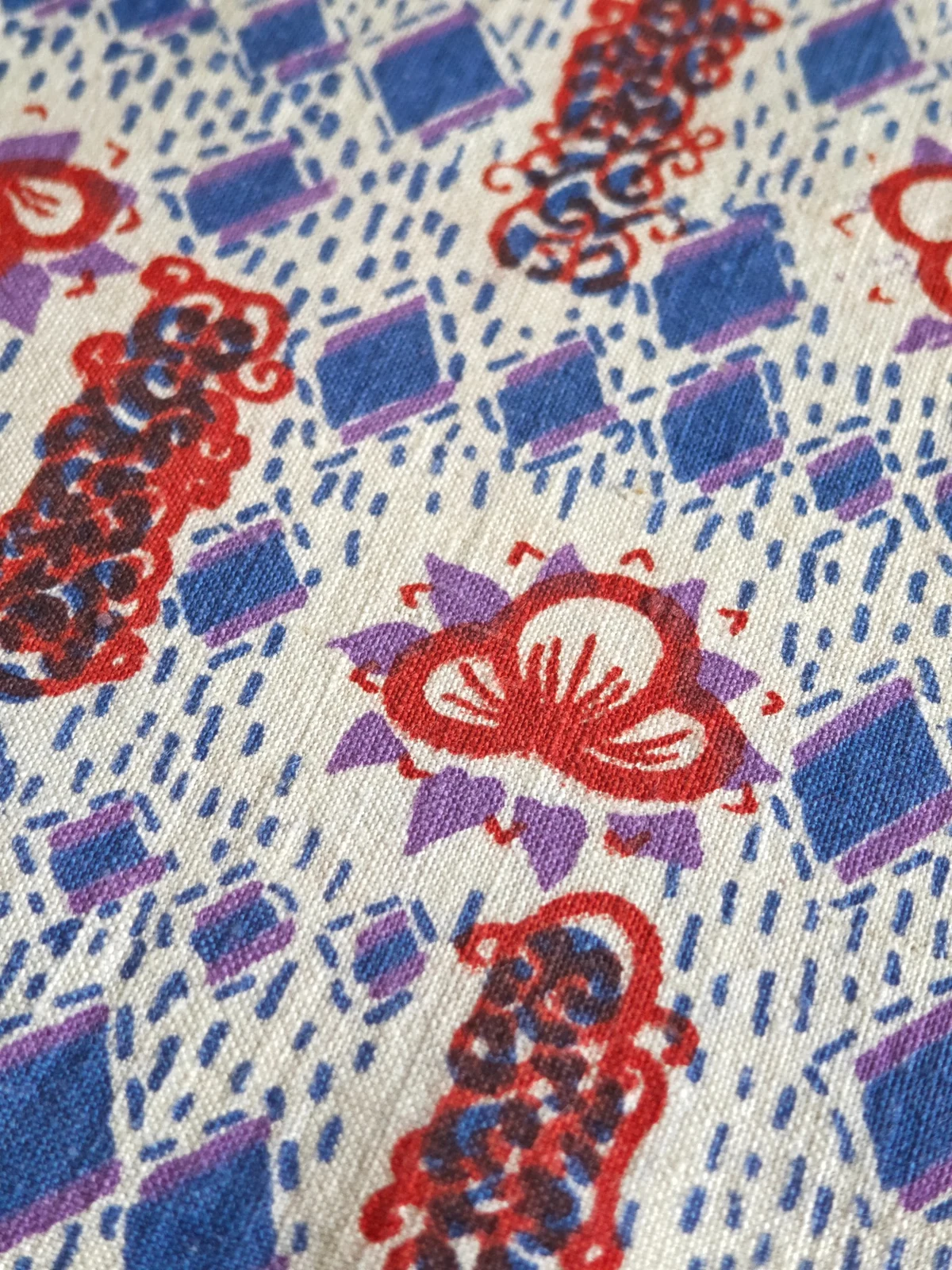
c. 1950s–1960s · Handwoven cotton
Unused narrow-width Nantong homespun with layered red, blue and purple printing over warm ivory cotton, retaining the small shifts and overlaps of older multicolour production.
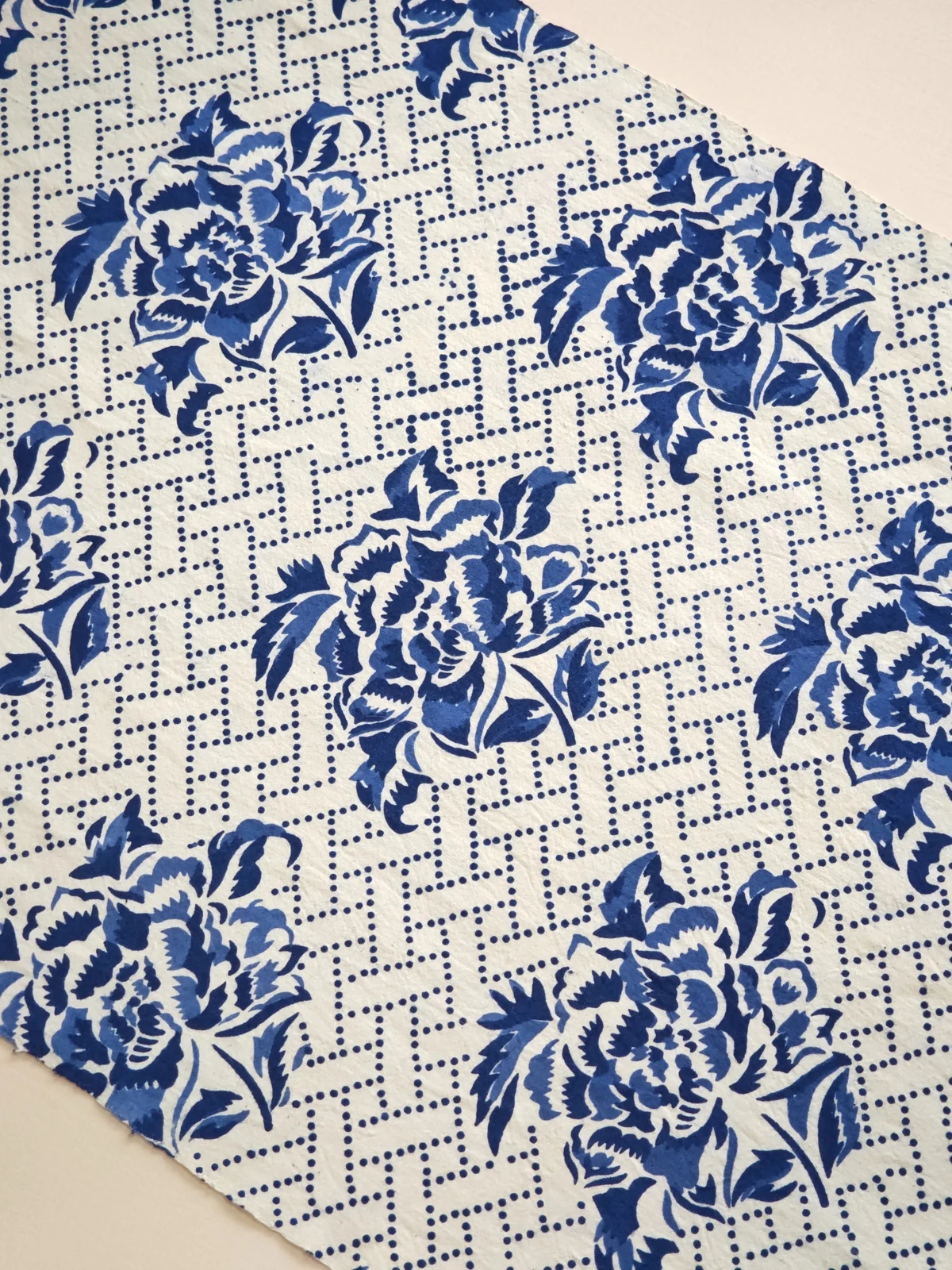
c. 1960s–1970s · Handwoven cotton
A long unused Nantong-style handwoven cotton roll with large blue peony bouquets over a dotted geometric lattice on warm ivory ground.
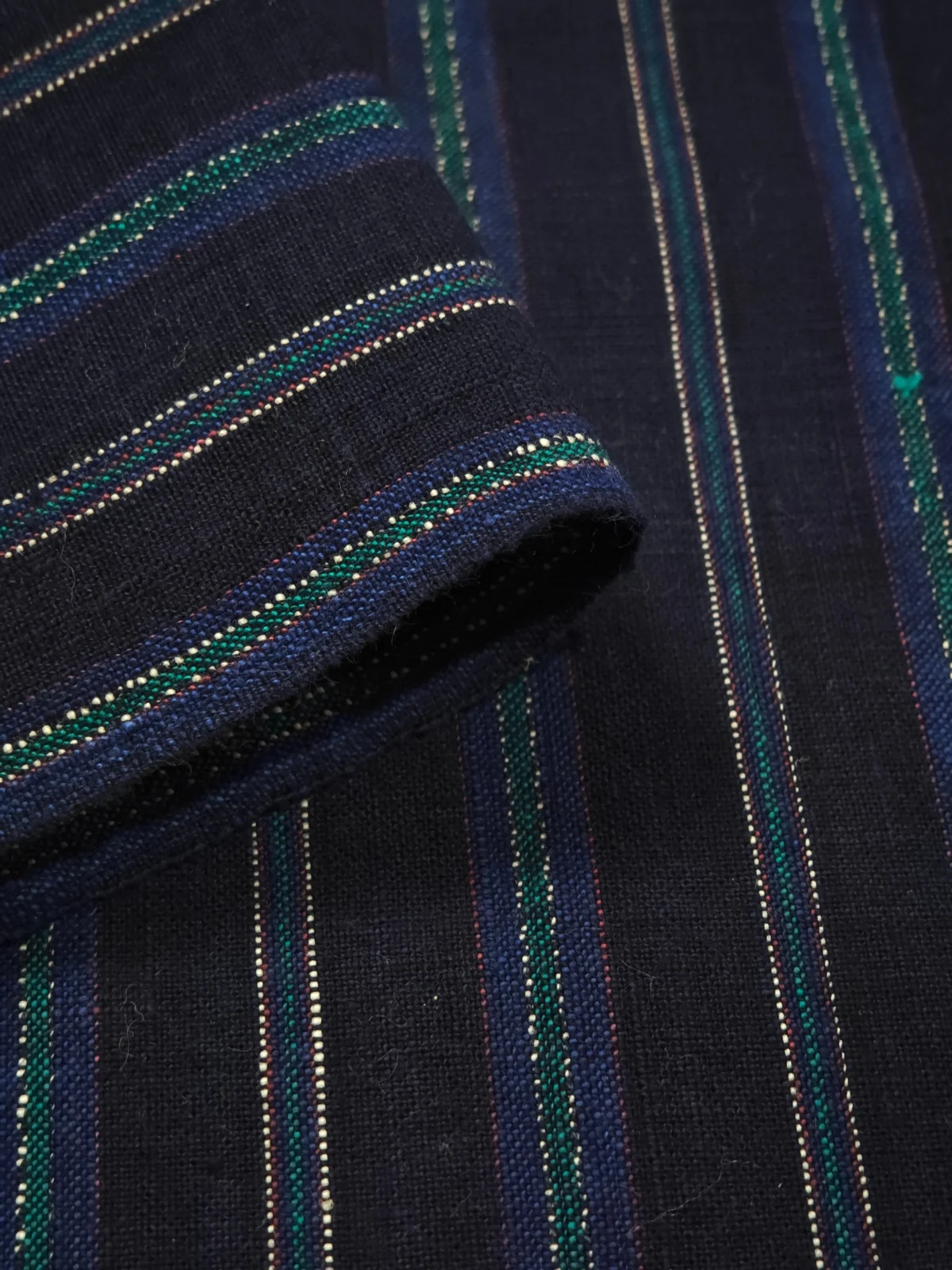
c. 1950s–1970s · 100% cotton
A one-metre Nantong homespun with an almost-black ground and slender navy, emerald, muted-red and cream dotted stripes that reveal themselves gradually at close range.
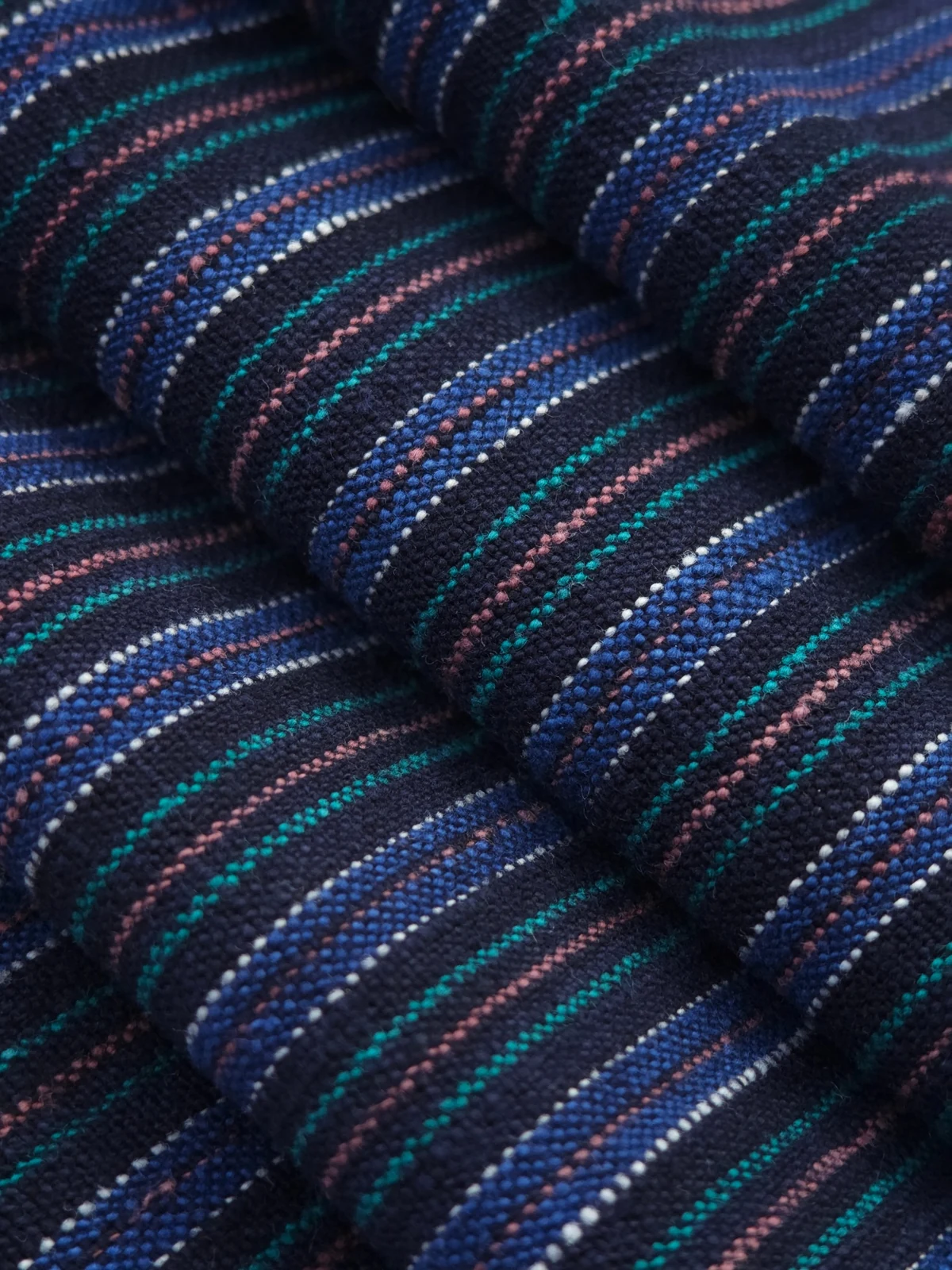
c. 1950s–1960s · Handspun cotton
A soft Nantong / Haimen dark-blue homespun whose fine teal, rose, ivory and red yarns appear as restrained lines of colour within the cloth.
These groups bring together descriptions from the textile records. Regional attributions and technical identifications may be provisional; open an individual record for its evidence and attribution notes.