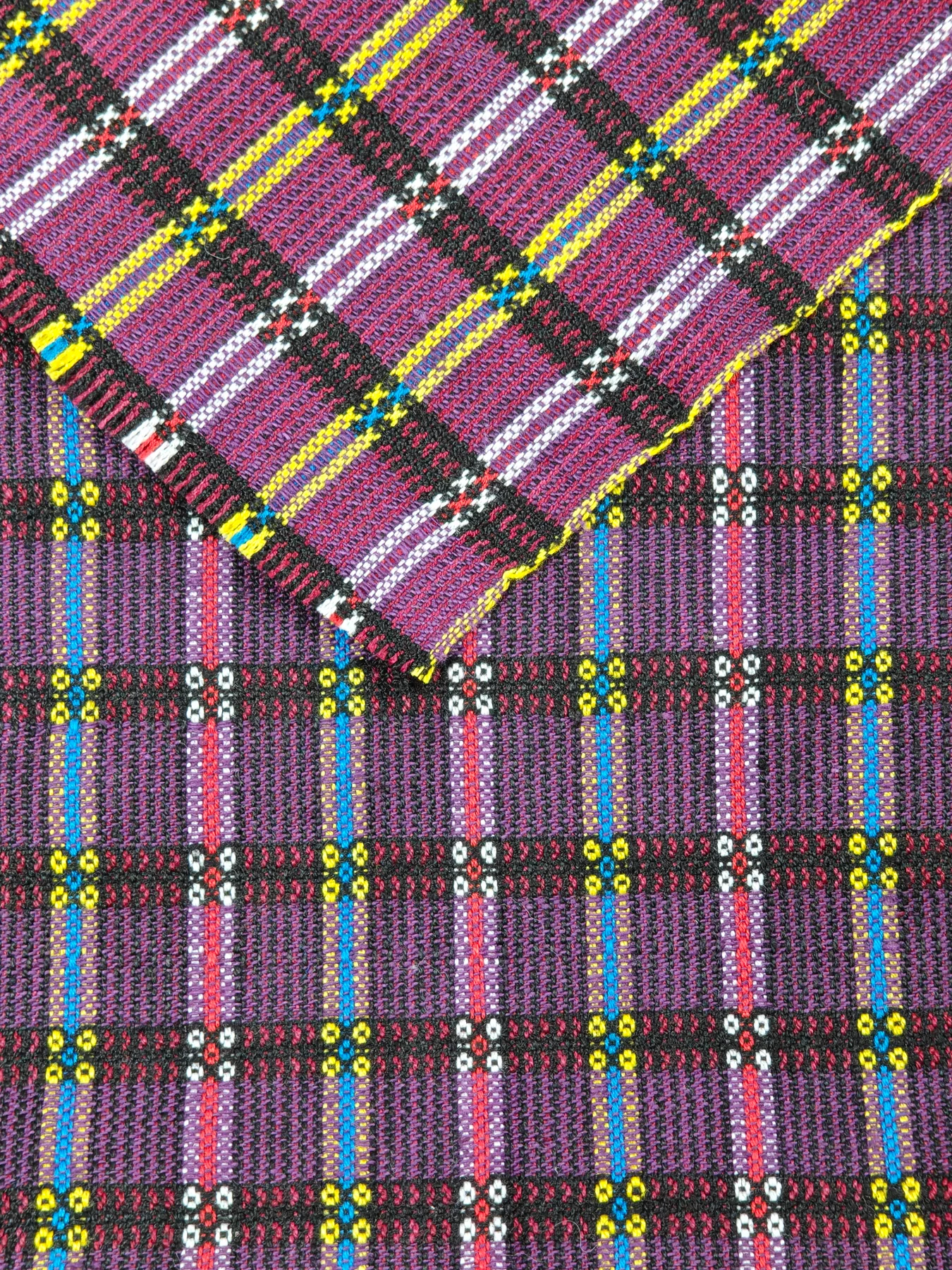
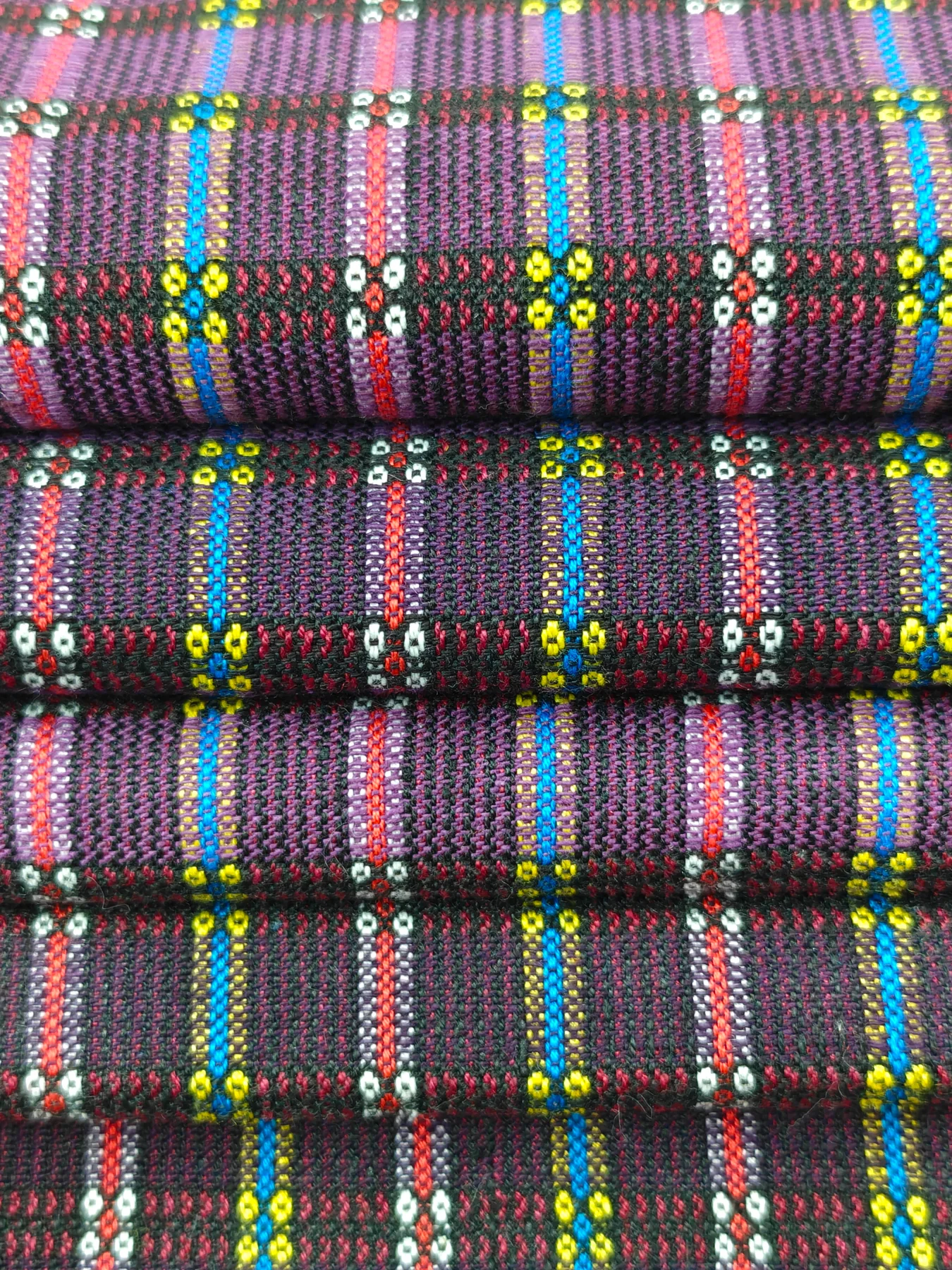
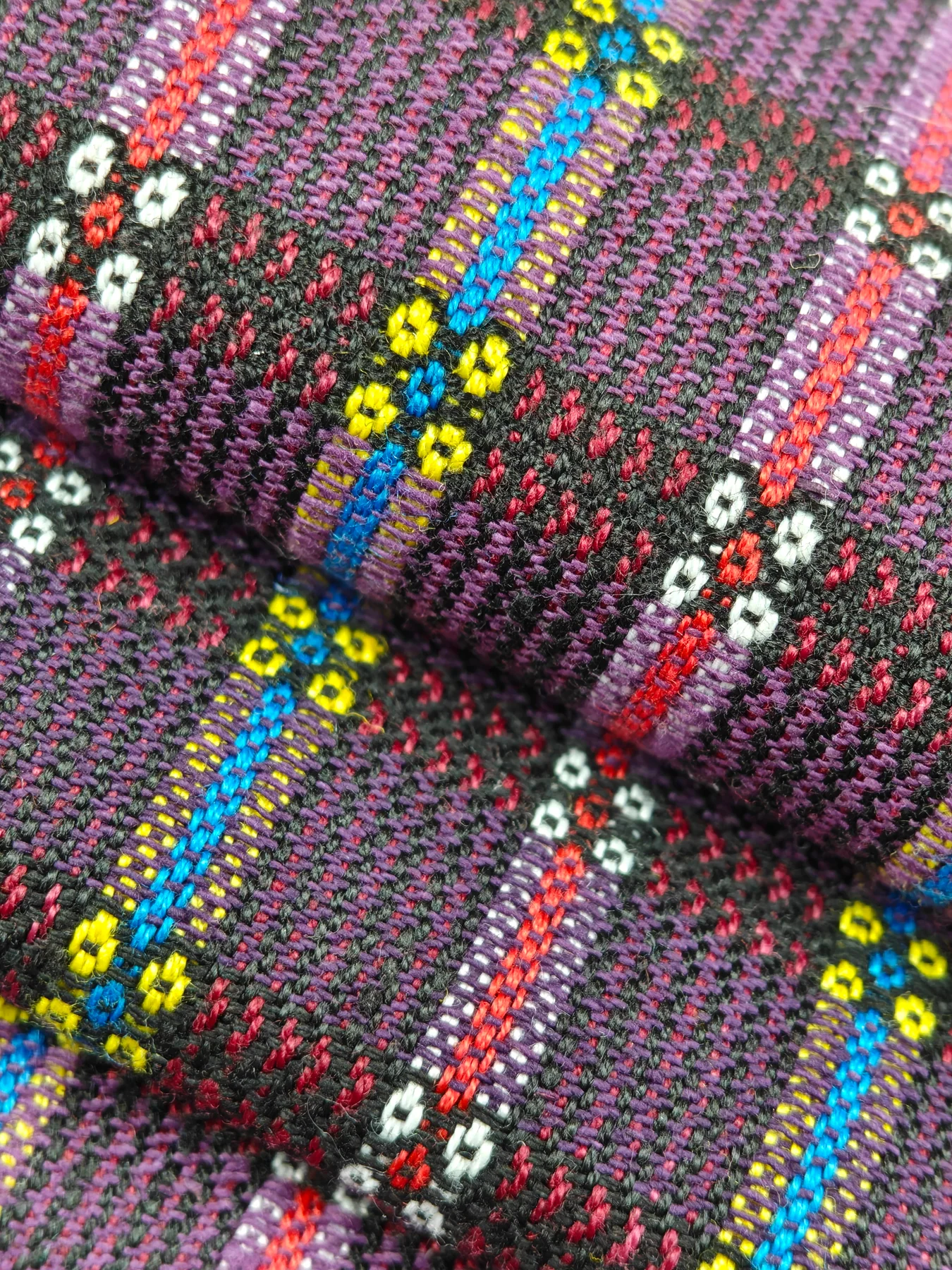
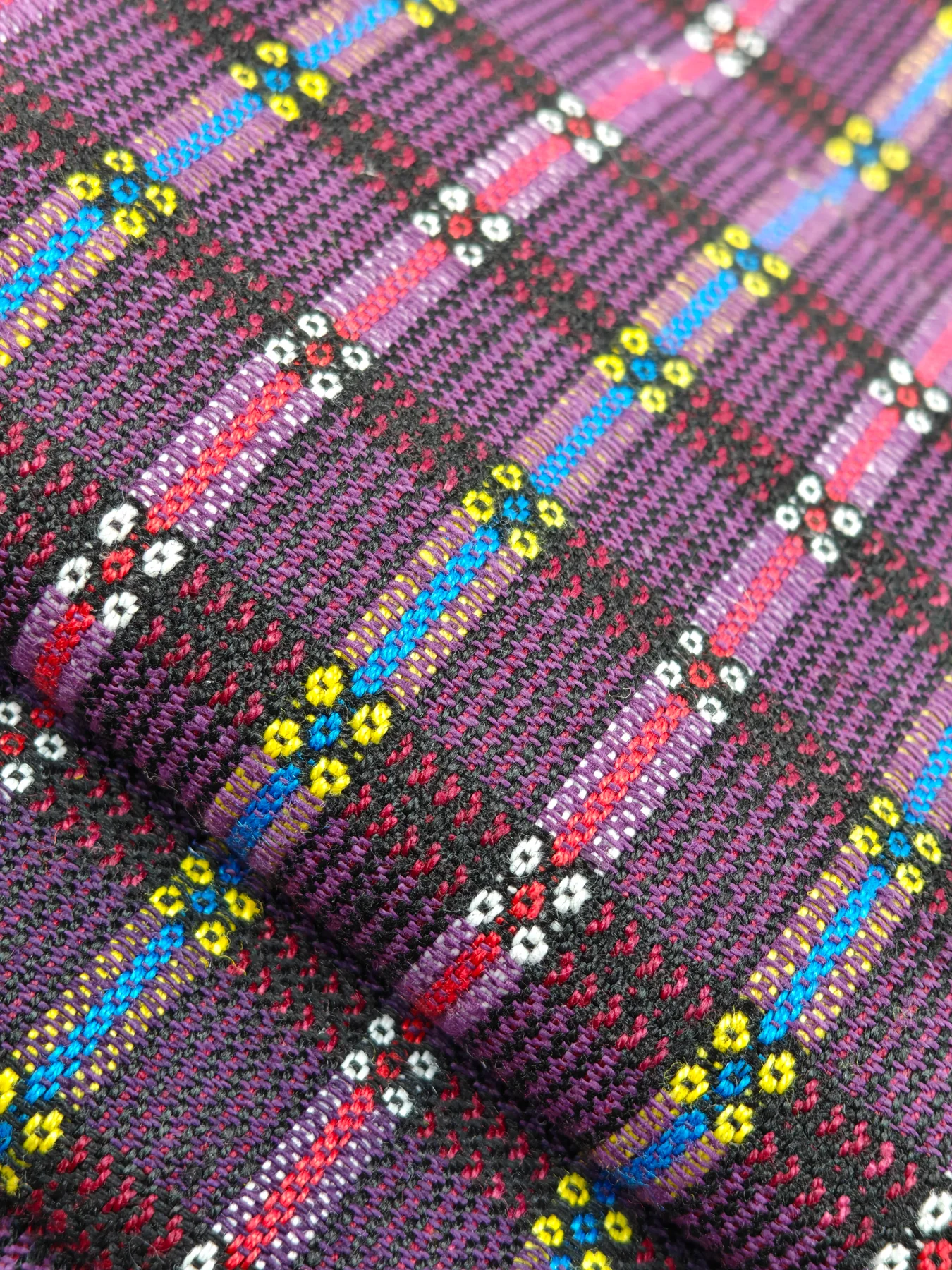
Violet Pepper-Eye Brocade — Vintage Shandong Lu Jin Cotton
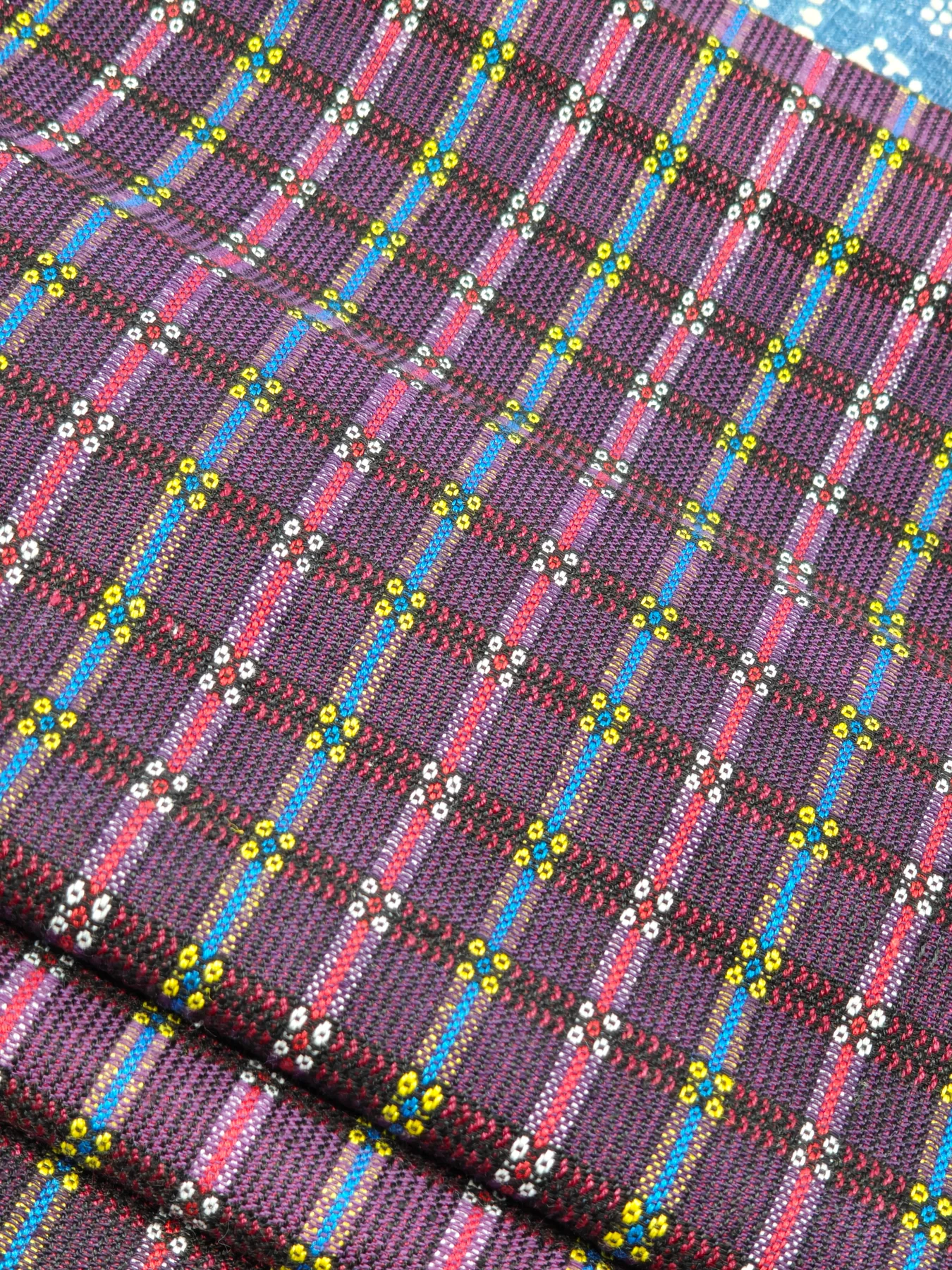
A beautifully intricate vintage Chinese handwoven cotton textile, featuring a rich violet-purple and black ground decorated with tiny woven dots in yellow…
Size & ordering
SOLD AS ONE COMPLETE VINTAGE PIECE — NOT CUT BY THE METRE.
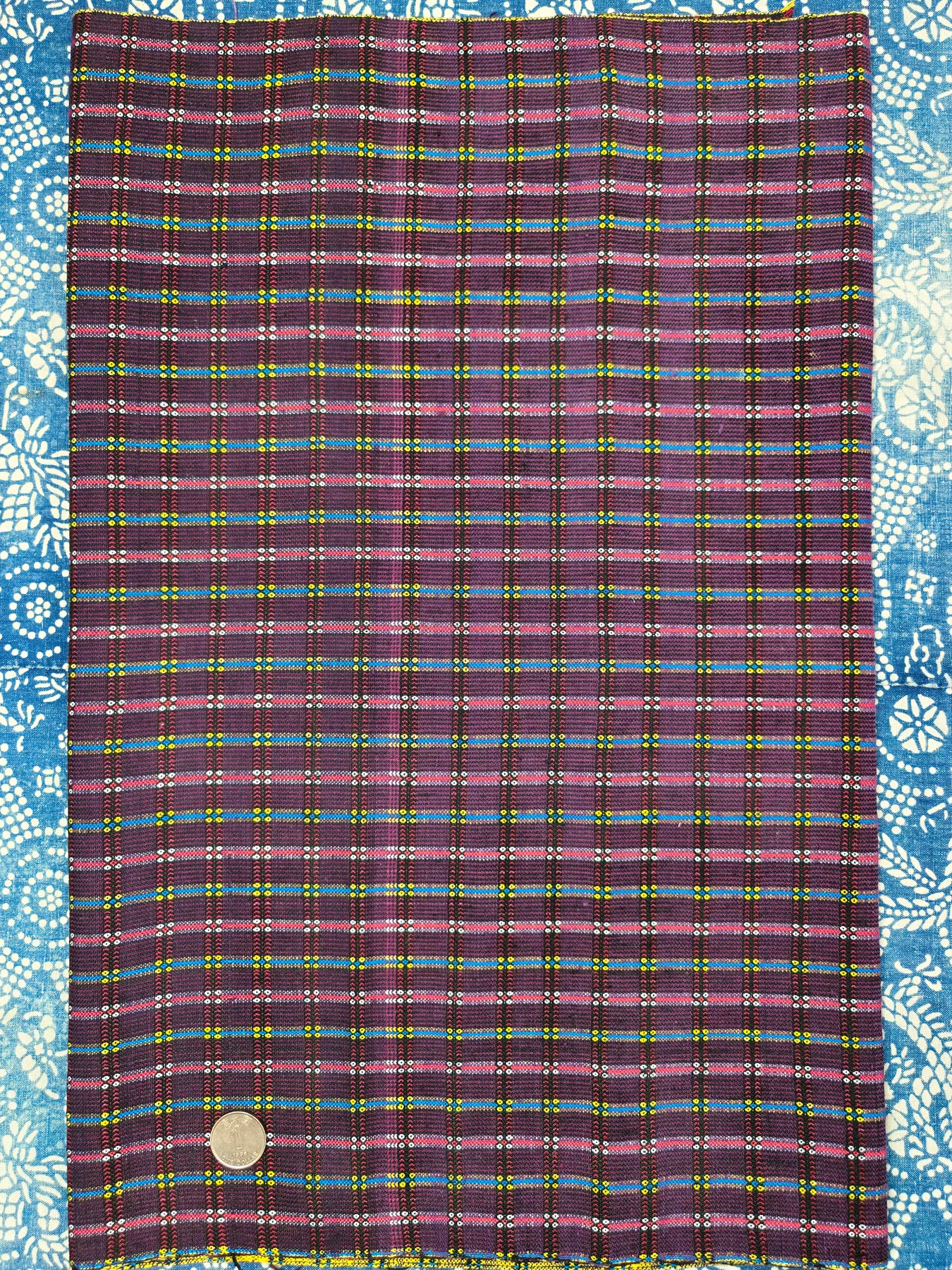
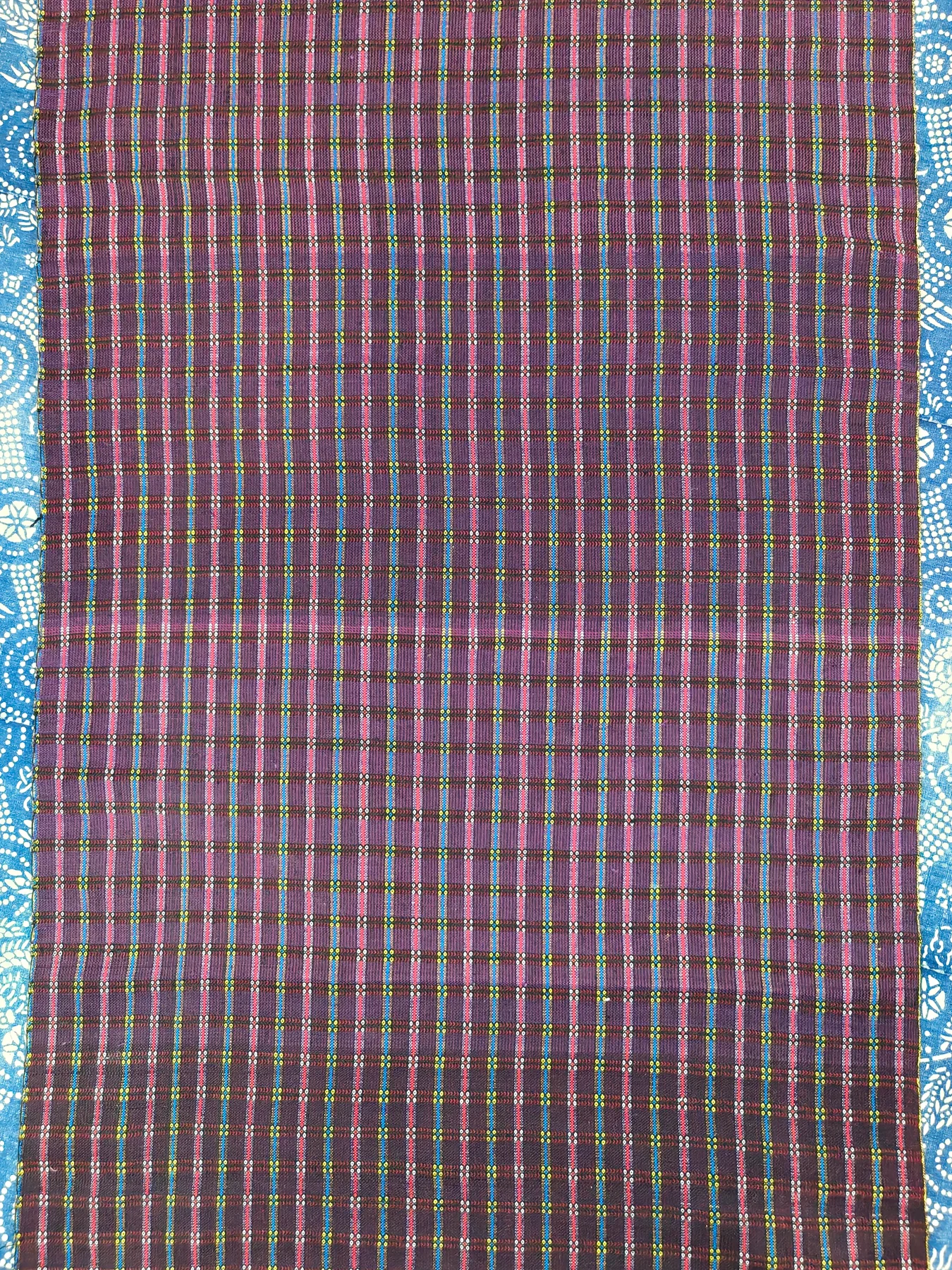
Size: Approx. 56 × 140 cm / 22 × 55.1 inches.
Quantity 1 = the entire piece shown in the photographs.
Texture & vintage condition
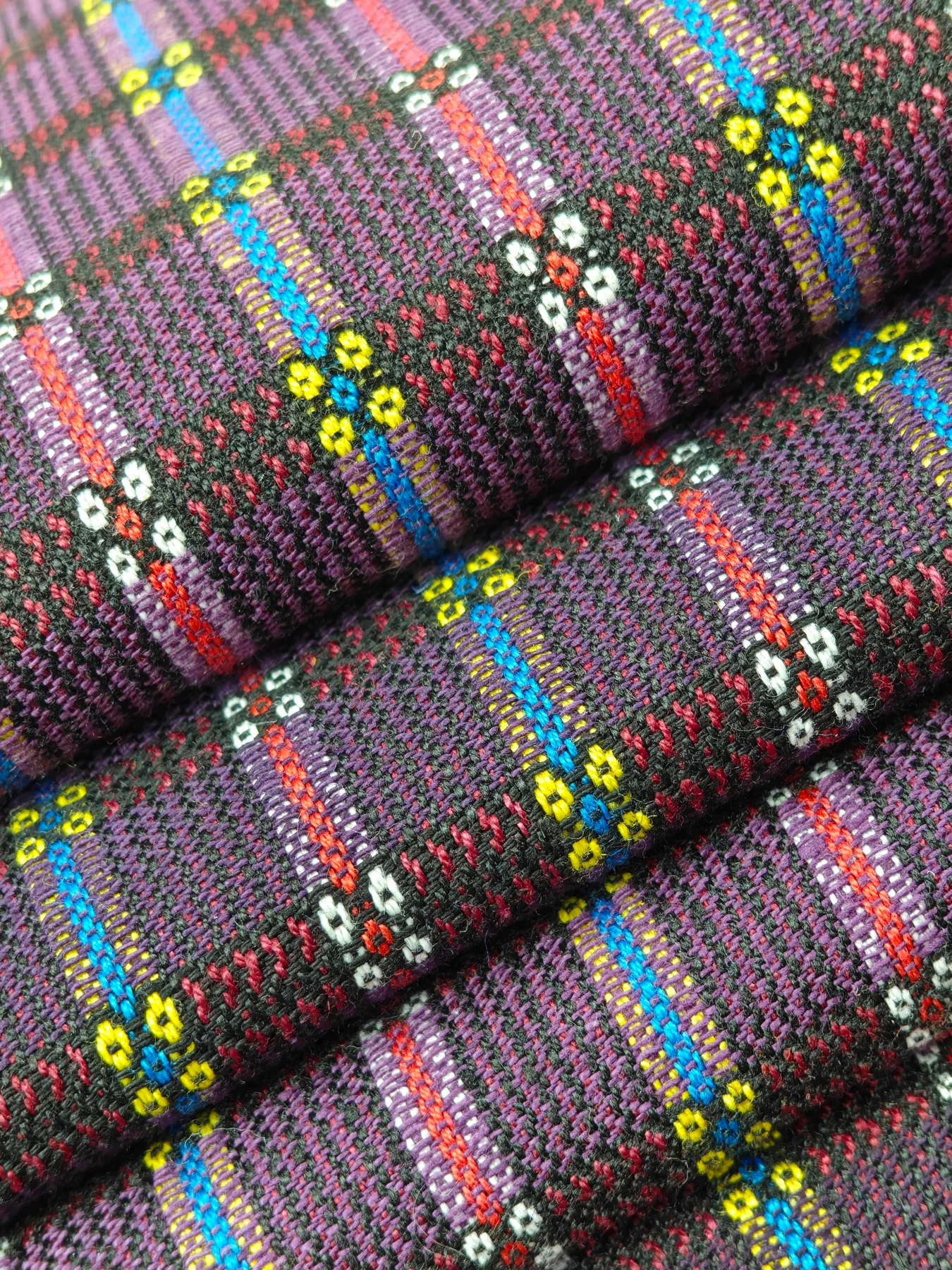
Washed and carefully ironed. Thick, soft and supple cotton with naturally textured hand-spun-style yarns, intricate multicolour woven details and distinct patterns on both sides. Gentle irregularities are consistent with vintage handweaving. Please examine all original photographs for the exact appearance and condition.
Read the current textile description
SOLD AS ONE COMPLETE VINTAGE PIECE — NOT CUT BY THE METRE.
Size: Approx. 56 × 140 cm / 22 × 55.1 inches.
Quantity 1 = the entire piece shown in the photographs. Only one piece is available.
ABOUT TRADITIONAL HOMESPUN COTTON Traditionally woven on household wooden looms, Chinese homespun cotton has hand-spun yarns that vary naturally in thickness, giving the cloth a textured, individual surface. This piece has already been washed; its current hand and any remaining marks are described in the condition notes. Warp yarns were sometimes sized before weaving, so unused vintage cloth can feel firm at first and gradually soften with use and gentle washing. Each household’s yarns, loom width and weaving choices differ, making an identical replacement difficult to find.
Shipping from China — US import duties covered Tubu Atlas pays the import duties and tariffs for orders delivered to the United States, so you do not pay these duties separately on delivery. Etsy may collect applicable sales tax at checkout.
Combined shipping: the shipping charge is not added again for each additional item in the same order. Please check Etsy checkout for the shipping total and delivery estimate for your address.
💜Meet Violet Pepper-Eye Brocade
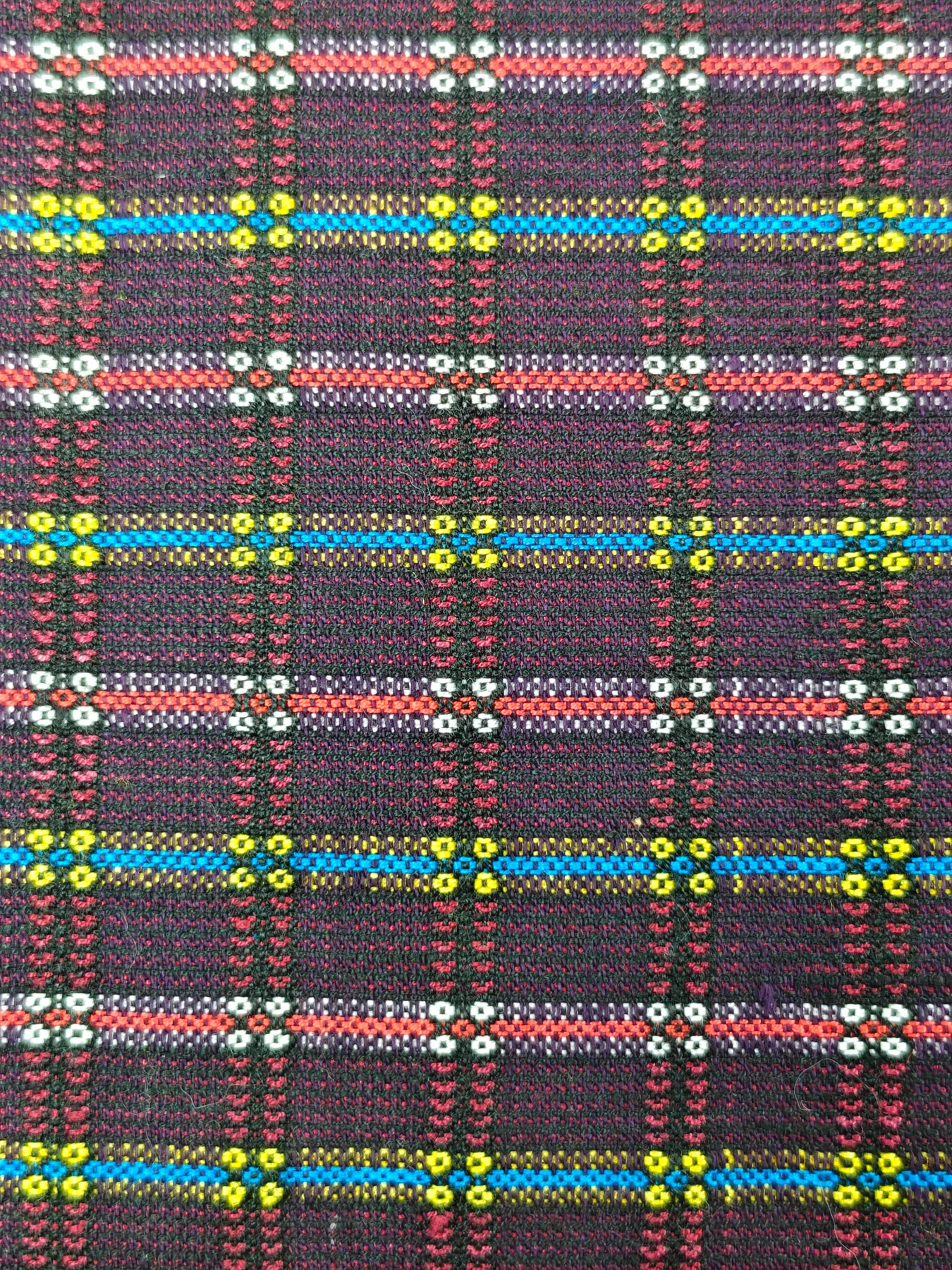
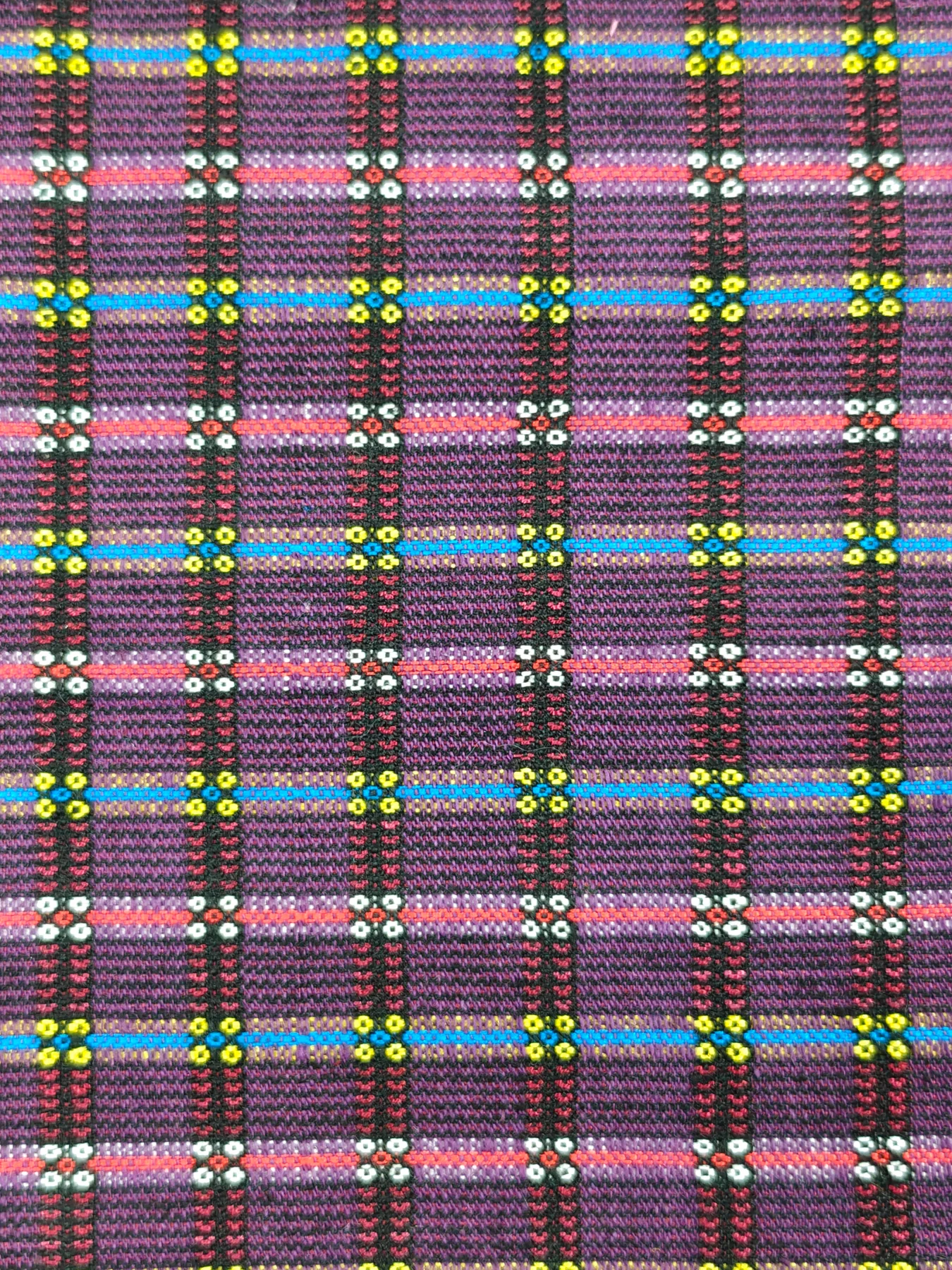
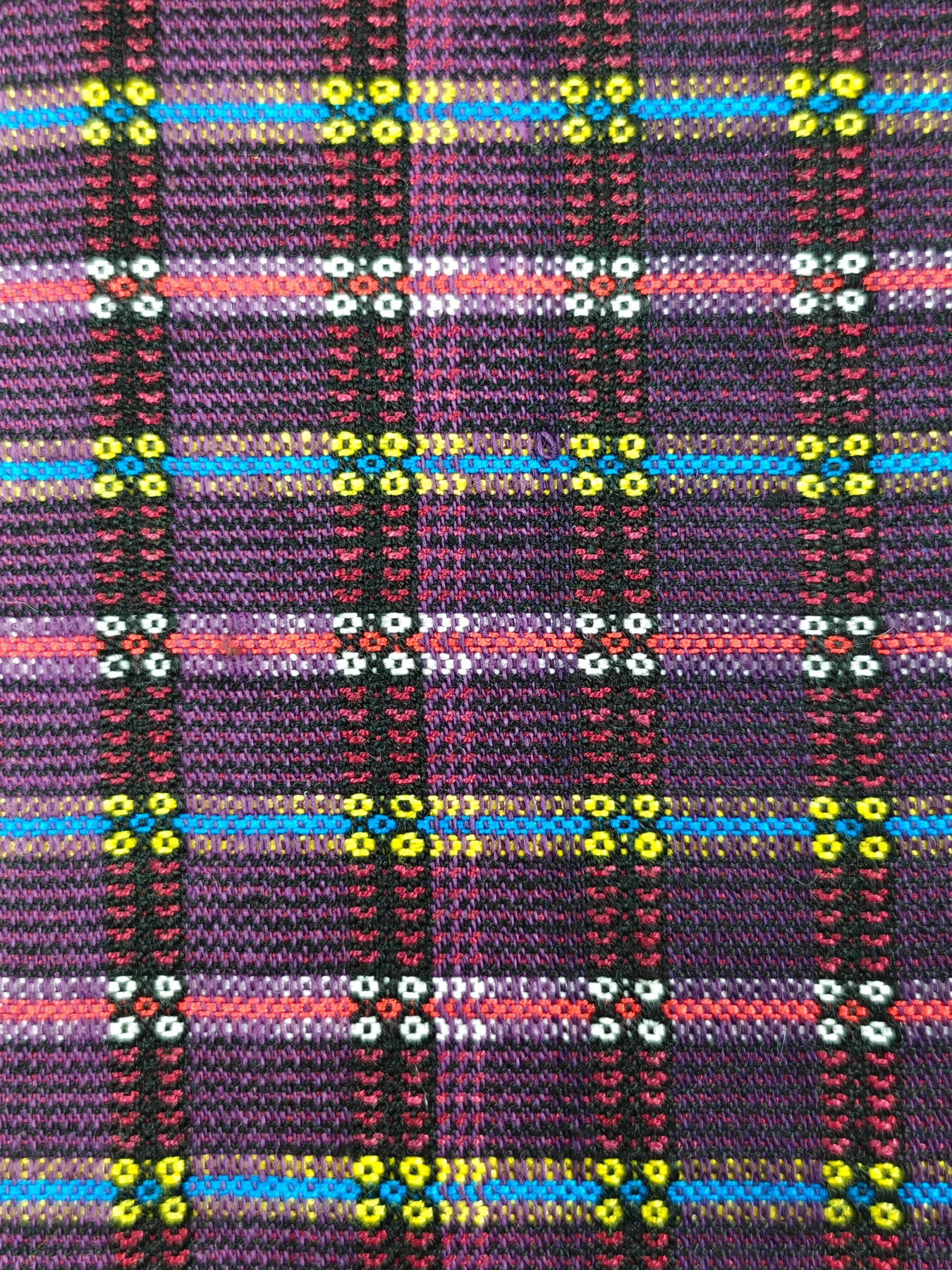
A beautifully intricate vintage Chinese handwoven cotton textile, featuring a rich violet-purple and black ground decorated with tiny woven dots in yellow, turquoise blue, red and ivory.
Attributed to the traditional Lu Jin (鲁锦) weaving region of southwestern Shandong, China, this remarkable fabric is believed to date from approximately the 1950s–1970s.
The cotton is substantial yet wonderfully soft, with the distinctive character of traditionally hand-spun yarn.
💜The Pattern – Pepper-Eye Weave 胡椒眼纹
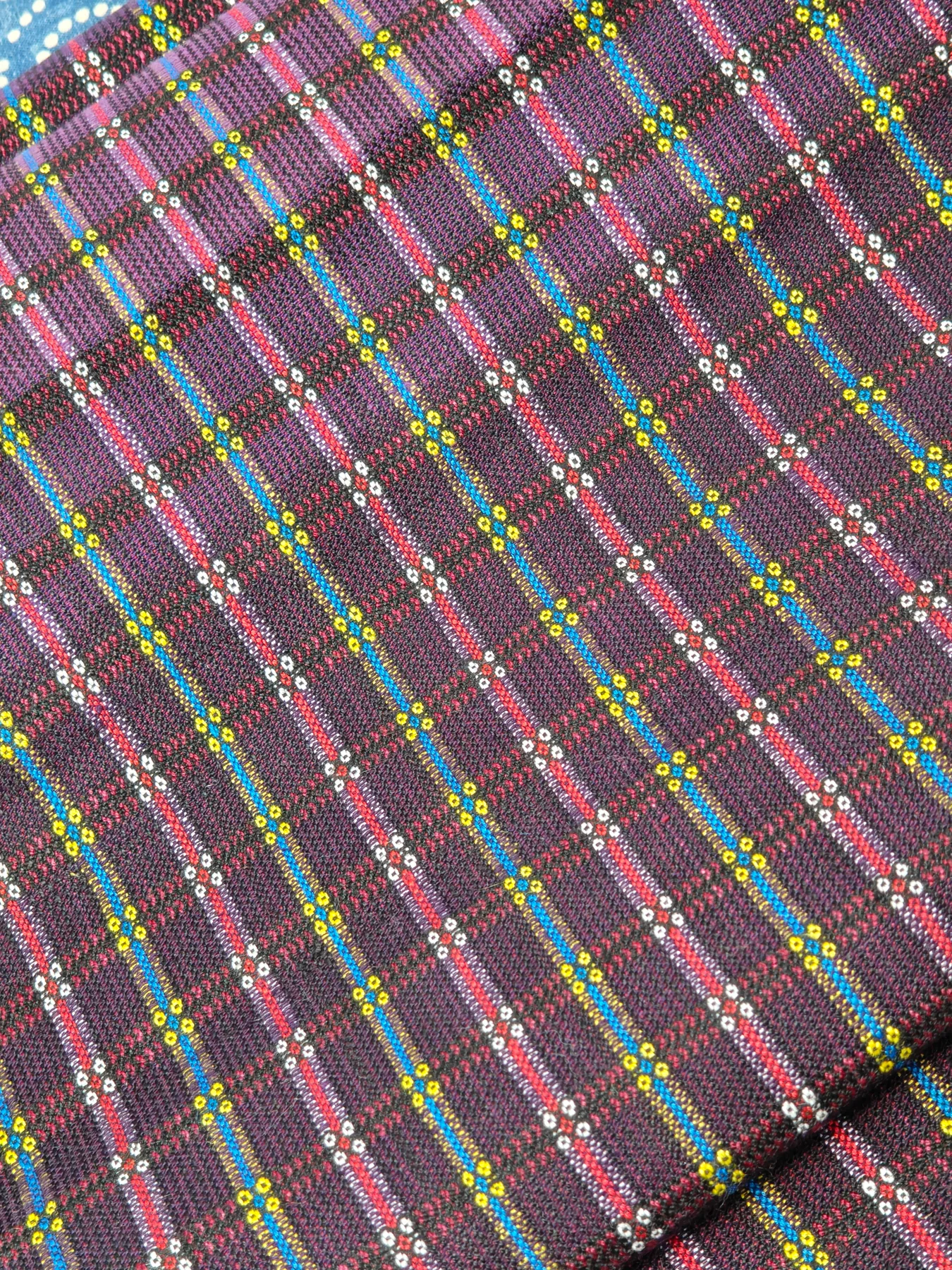
The delicate dotted motifs are traditionally known as Hu Jiao Yan (胡椒眼纹), or Pepper-Eye Pattern, resembling tiny scattered pepper seeds.
Colourful dots appear within a finely structured geometric grid, creating a lively rhythm across the entire cloth.
The pattern is woven, not printed.
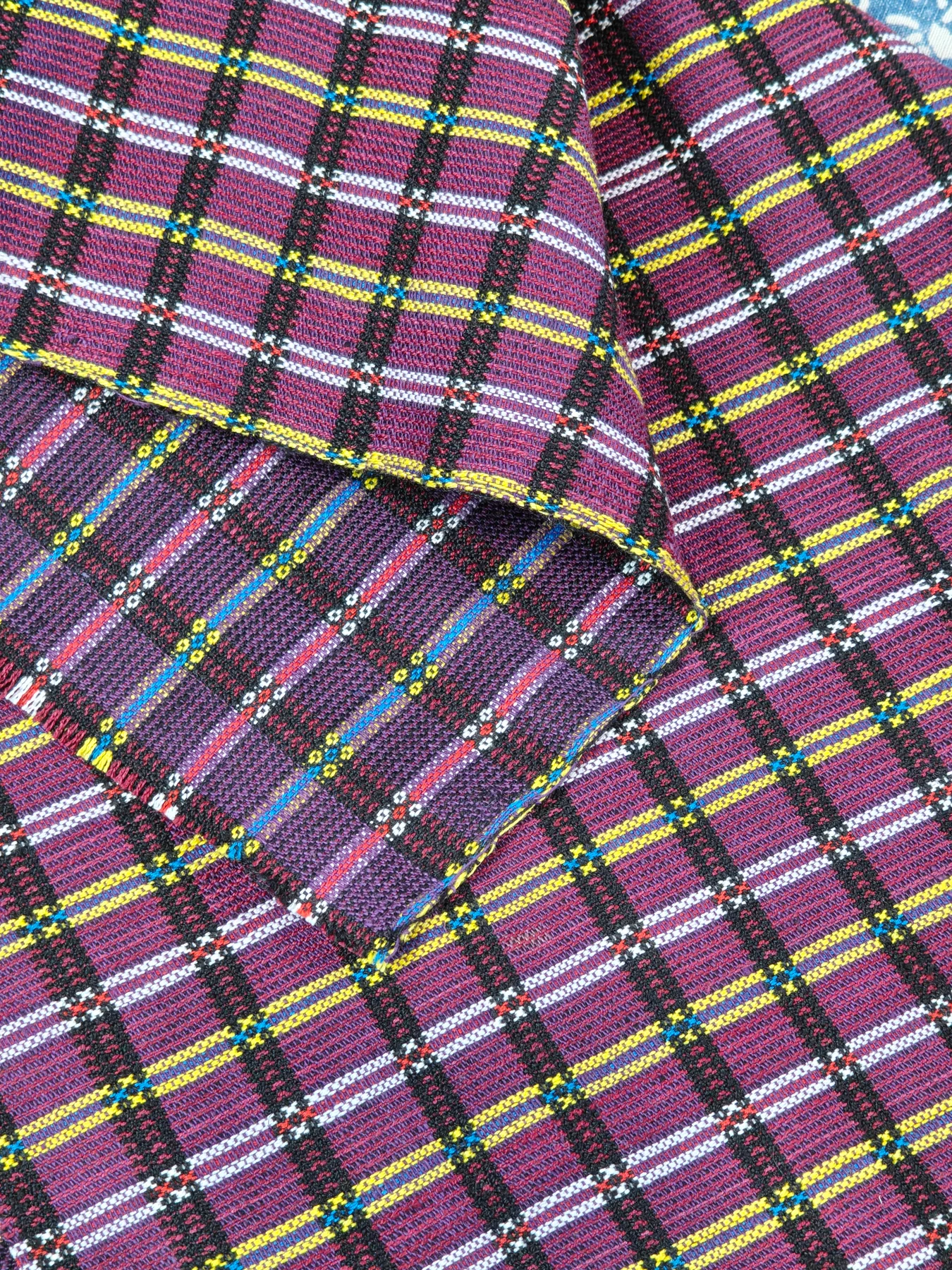
One of its most fascinating features is its double-sided woven design. The front and reverse display different arrangements of colours and patterns — two distinct visual expressions within a single textile.
Look closely at the original photographs to appreciate the intricacy of the woven structure.
💜A Piece of Shandong Weaving Heritage
Lu Jin is part of China's rich rural handweaving tradition.
Traditional figured textiles were sometimes prepared for weddings, household celebrations and family dowries.
In folk interpretation, the abundance of tiny pepper-like dots can evoke wishes for flourishing family life, prosperity and good fortune.
These are traditional cultural associations rather than a documented meaning specific to this piece.
Vintage Condition Washed and carefully ironed Thick, soft and supple cotton Naturally textured hand-spun-style yarns Intricate multicolour woven details Distinctive patterns on both sides Gentle irregularities consistent with vintage handweaving
Please examine all photographs carefully for the exact condition and appearance.
💜Perfect For
A beautiful choice for textile collecting, slow stitching, patchwork, handmade bags, decorative cushions, tea mats, framed textile art and traditional weaving studies.
Its double-sided design also makes it especially lovely to preserve and display as one complete historic textile.
Violet threads hold a thousand dots, Two woven faces, one old story.
Tubu Atlas — Preserving Stories, One Thread at a Time.
- Object ID
- TA-SD-0009
- Origin
- Shandong · Southwestern Shandong, China (owner attribution; exact location unverified)
- Dating confidence
- estimated
- Material
- Substantial, soft and supple vintage cotton with traditionally hand-spun-style yarns (owner description)
- Dimensions
- Size: Approx. 56 × 140 cm / 22 × 55.1 inches.
- Technique
- Traditional Lu Jin handloom weaving (owner attribution) · Coloured yarns form the pattern within the cloth, not surface printing · Double-sided woven design with different arrangements on the two faces
- Colours
- Violet purple · Black · Yellow · Turquoise blue · Red · Ivory
- Washed
- Yes
Identification notes
Sold as one complete vintage piece, approximately 56 × 140 cm / 22 × 55.1 inches. Quantity 1 means the entire photographed cloth; it is not cut by the metre.
The owner identifies the small seed-like woven dots as Hu Jiao Yan (胡椒眼纹), or Pepper-Eye Pattern. Yellow, turquoise blue, red and ivory dots enliven a finely structured violet-purple and black grid.
The design is woven, not printed. Front and reverse have different colour and pattern arrangements, preserving two visual expressions within the same textile; the photographs include both faces.
Attributed to southwestern Shandong and the Lu Jin (鲁锦) rural handweaving tradition, with an estimated date of approximately the 1950s–1970s. The exact maker, production site and year are not documented.
Traditional figured cloth was sometimes made for weddings, household celebrations and family dowries. Pepper-like dots may evoke flourishing family life, prosperity and good fortune in folk interpretation; those associations are context, not a documented meaning or original use specific to this piece.
Suitable for collecting, slow stitching, patchwork, handmade bags, cushions, tea mats, framed textile art and weaving studies. Keeping the panel whole also preserves its double-sided design.