
At first glance, 芦扉花 Lu Fei Hua can look like a simple grid.
Look longer and the grid begins to multiply. Small horizontal and vertical bundles rotate into reed-mat blocks; blocks expand into windows and frames; tiny marks become osmanthus-like units; comb-like stripes enter the lattice; colour turns one structural idea into dozens of visibly different cloths.
For Tubu Atlas, Lu Fei Hua is therefore best understood not as one fixed motif but as a pattern system: a way of organising interlacement, colour, spacing and repeated blocks across handwoven cloth.
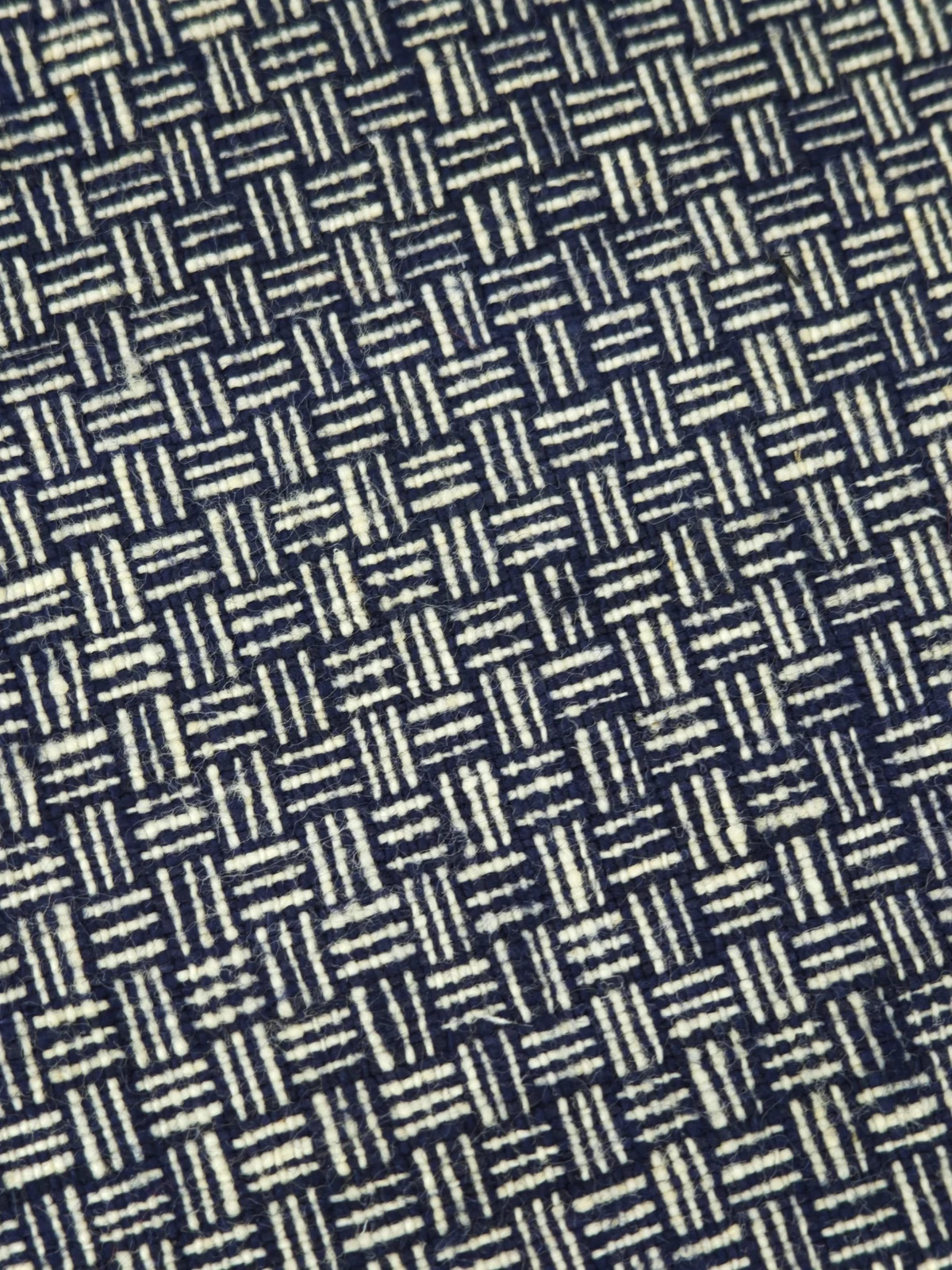
What Is Lu Fei Hua?
The name is associated with the visual logic of a reed mat: narrow elements crossing, turning and repeating into a compact woven surface. Regional writing uses both 芦扉花 and 芦菲花; in English this article uses Lu Fei Hua and the descriptive term reed-mat pattern side by side.
One important distinction is historical. A modern named textile pattern does not have to be as old as the interlacing structure it resembles. The book Handcraft and Recovery of Chinese Traditional Homespun places Lu Fei Hua within a much older history of matting and interlaced craft, comparing textile structure with earlier woven traces and basketry-like forms. That is useful structural context, but it is not evidence that the named modern motif survived unchanged from antiquity.1
The Three-by-Three Archetype
A Chongming government account describes the familiar basic form as a small unit built from three horizontal and three vertical elements. The pattern works because adjacent blocks turn orientation: a horizontal bundle sits beside a vertical bundle, so the surface reads like interlaced matting rather than an ordinary check.3
The structure book is especially valuable here because it does not stop at photographs. Its Lu Fei Hua plates place surviving cloth beside weave diagrams and pattern-structure drawings, including a page explicitly titled 三根头芦纹. That makes it possible to compare visible pattern with the logic that produces it.1
One Structure, Many Directions
The easiest way to understand Lu Fei Hua is to treat the basic woven block as a design unit. Once a maker changes its scale, spacing, colour or relationship to neighbouring blocks, the same visual grammar can produce dramatically different cloth.
Reading the Blocks: Seven-by-Seven and Nine-by-Six
Two more recent collection records make the difference in scale especially clear. The counts below follow the owner’s descriptions of visible horizontal and vertical lines within the patterned blocks. They are motif descriptions, not the fabric’s thread count or a reconstructed loom draft.
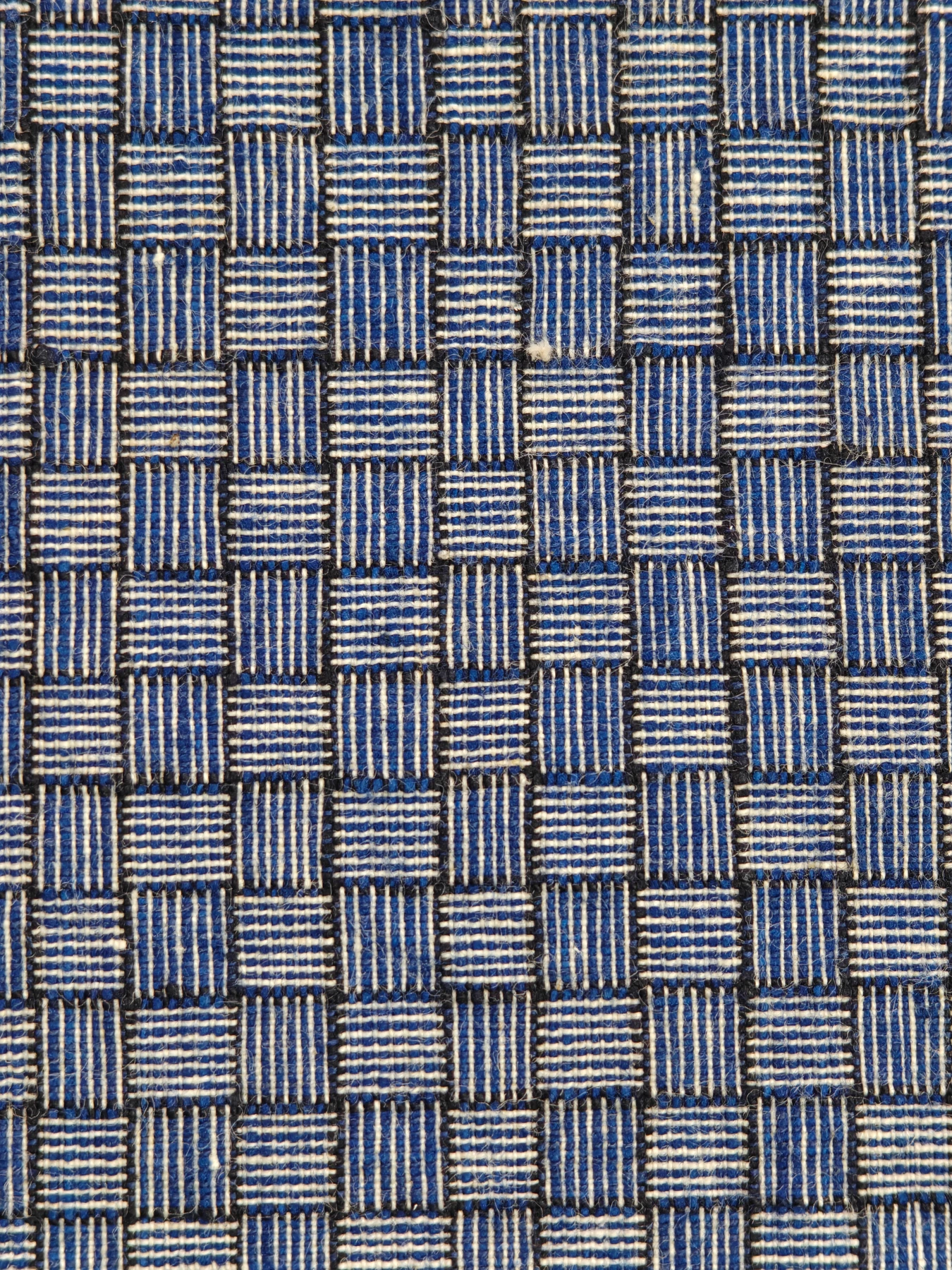
Seven-by-Seven Reed-Mat — Vintage Jiangnan Cotton
The listing describes seven horizontal lines alternating with seven vertical lines, repeated without other motifs interrupting the field. Blue and cream let the reed-mat blocks remain the main feature. The larger motif still belongs to a narrow-width cloth.
Explore the seven-by-seven textile →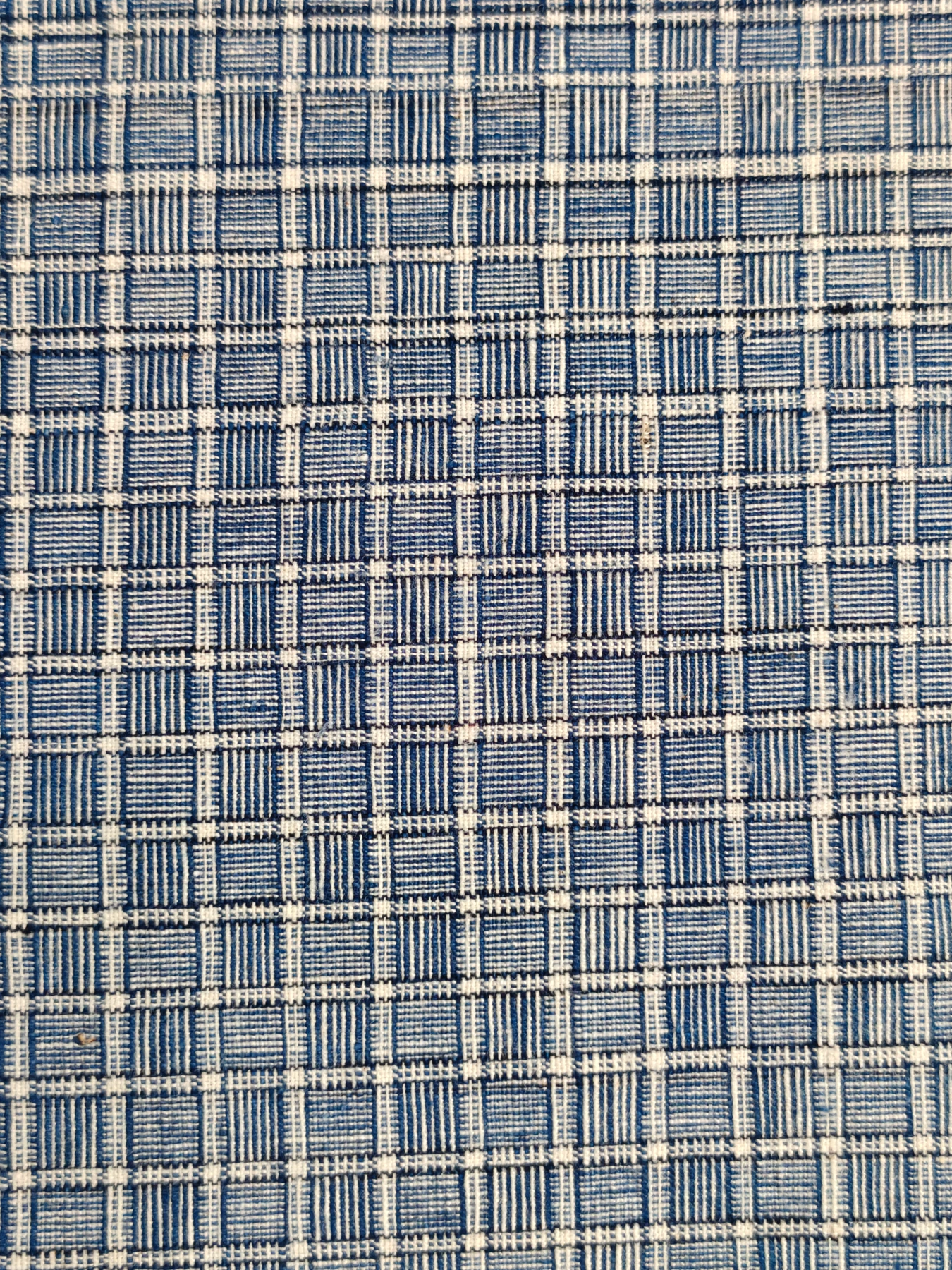
Reed-Mat & Comb Weave — Vintage Jiangnan Cotton
This record describes nine horizontal and six vertical lines within the larger blocks. Tiny osmanthus checks and alternating comb-back motifs add another scale of detail. It is a useful comparison with the uninterrupted seven-by-seven repeat: count and combination are separate ways to vary a pattern.
Explore the nine-by-six textile →A seven-by-seven block and a nine-by-six block cannot be ranked by one number alone. Line thickness, spacing, secondary motifs and the full repeat all affect what the eye sees.
Scale: From Micro-Check to Window Grid
Some Lu Fei Hua forms tighten until the pattern becomes almost a texture. Others enlarge until the eye reads windows, framed squares or architectural grids. Scale changes the experience of the cloth even when the underlying logic remains related.
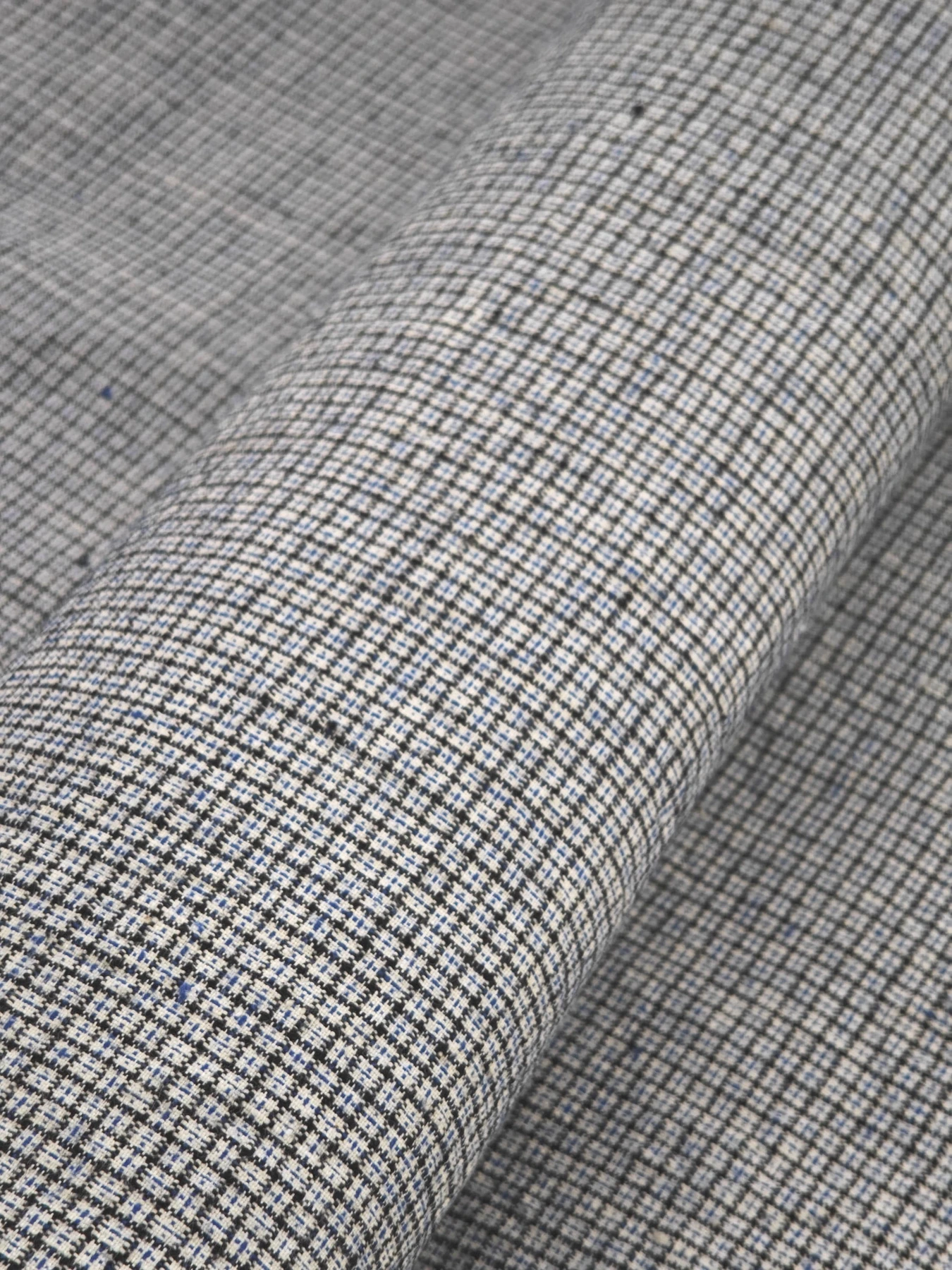
Quiet Grid
A fine blue-black-and-cream micro-check contains tiny woven flecks and irregular cotton yarn.
View record →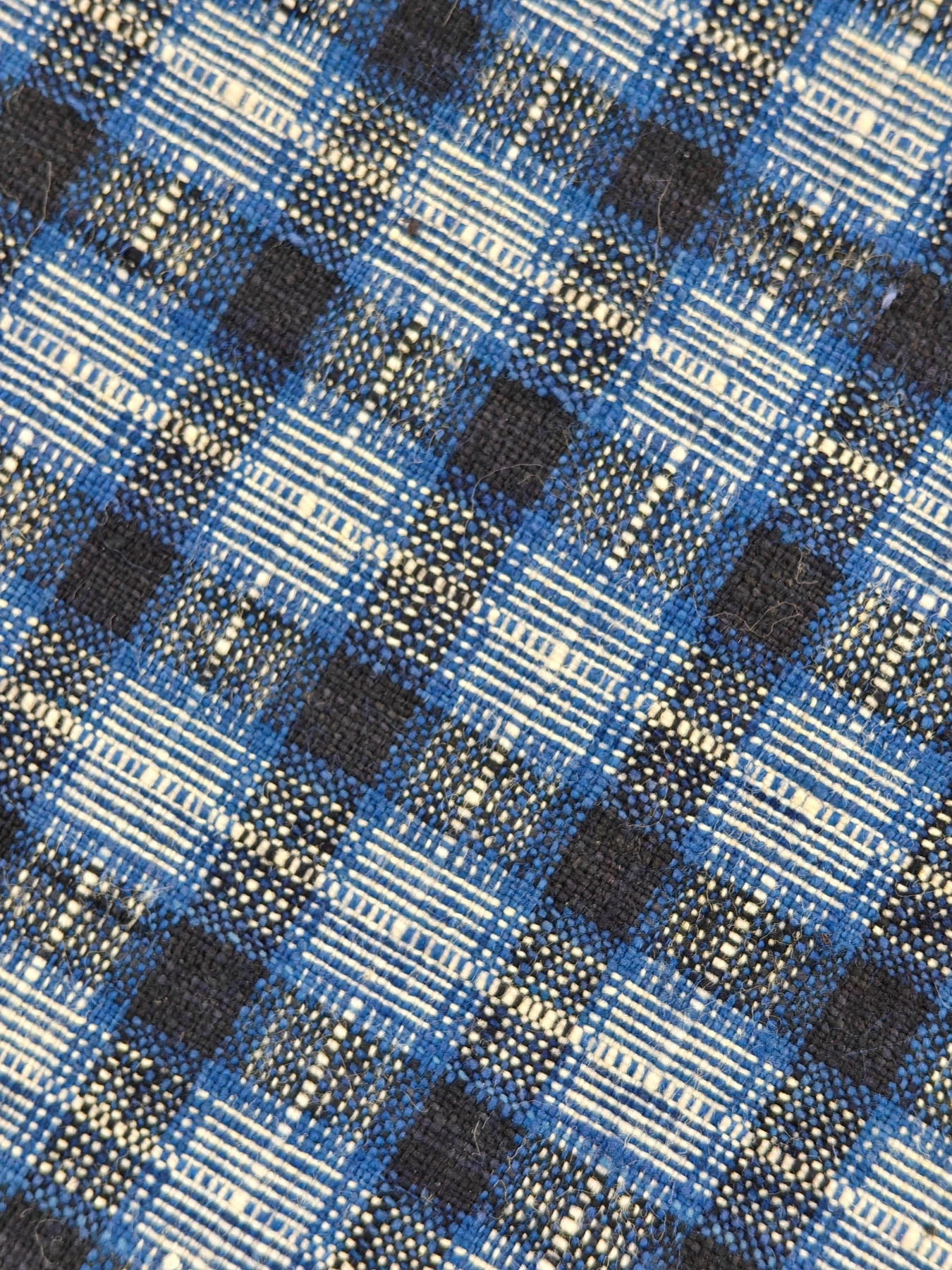
Indigo Hearth
Cream crossing lines, dark blocks and fine dotted marks form a small, densely textured indigo check.
View record →When the Grid Starts to Carry Names
Regional pattern vocabularies do not classify cloth only by abstract geometry. They also name variants after characters, household objects, auspicious phrases and familiar visual analogies. Nantong cultural documentation records a broad Lu Fei family including forms such as 田字, 井字, 窗格子, 木梳背 and other named variants.2
These names are invaluable, but they should be used carefully. A modern textile that visually resembles a named historic variant is not automatically authenticated as that exact named form. Tubu Atlas therefore separates documented traditional names from collection-level visual comparisons.
One Cloth, Two Faces: Kou Zi and Jing Zi
Two Sides of Harmony — Vintage Double-Sided Handwoven Cotton adds a comparison the earlier selection did not show: the two faces of the same cloth. The owner identifies one as Kou Zi Lu Xi 口字芦席, with interlocking square forms, and the other as Jing Zi Lu Xi 井字芦席, a finer well-grid arrangement.
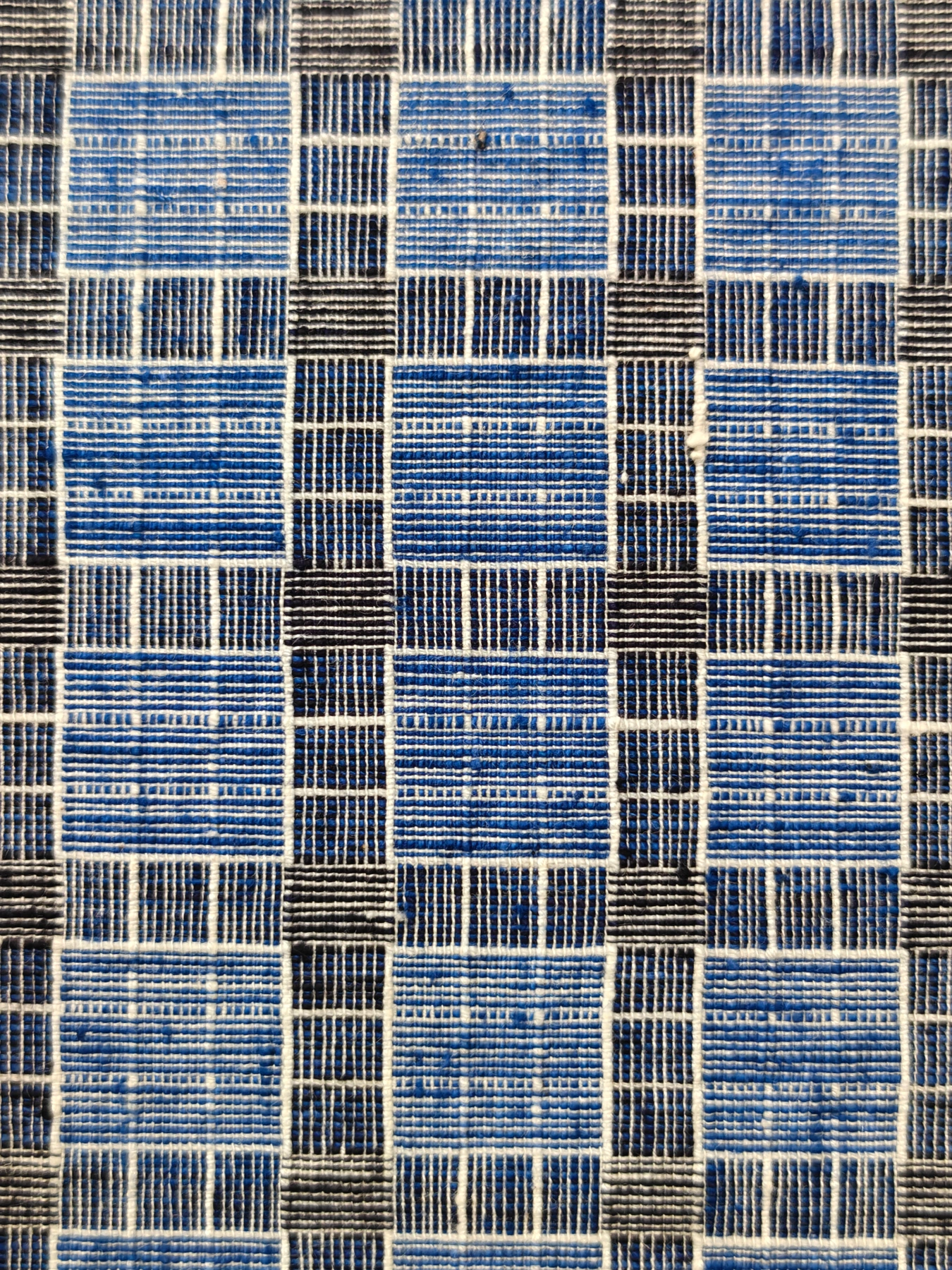 Kou Zi Lu Xi · 口字芦席
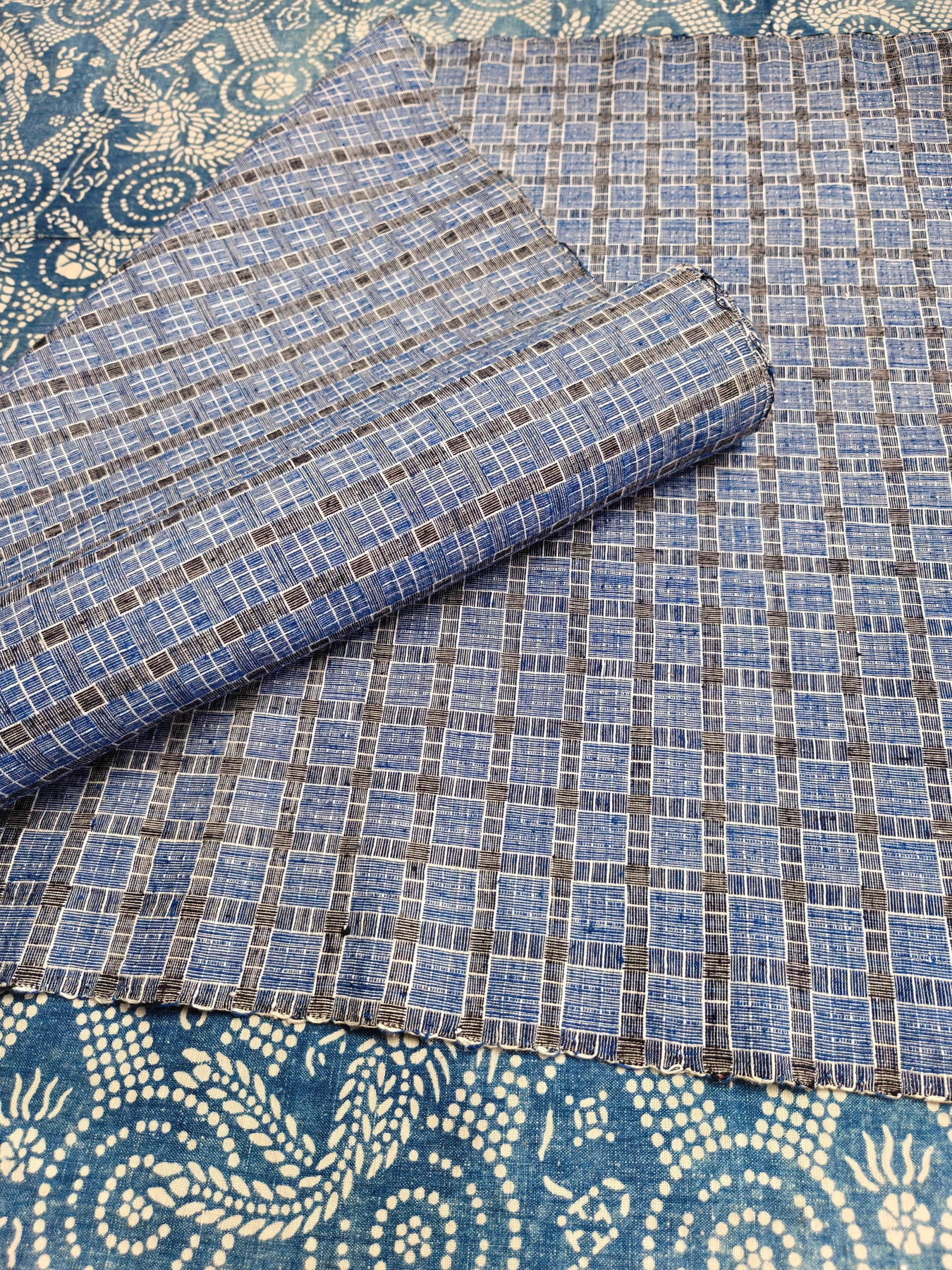 Jing Zi Lu Xi · 井字芦席
Looking at both sides helps separate the cloth’s woven construction from the name given to a particular face. This record does not specify a horizontal-by-vertical line count, so none is assigned here.
Guihua 桂花 Is Not the Same Thing as Lu Fei Hua
This distinction matters for the taxonomy. In the structure book, 桂花纹 appears as an independent pattern. Later, the same book separately documents 芦扉桂花格纹, demonstrating how a Guihua unit can be combined with a Lu Fei framework rather than treating every Guihua textile as a reed-mat textile.1
Hybrid Lu Fei: Wooden-Comb Back and Other Insertions
Once Lu Fei is treated as a structural framework, hybrid forms become easier to read. Fine comb-like lines, key forms and other small motifs can occupy the borders, crossings or internal fields of a larger reed-mat grid.
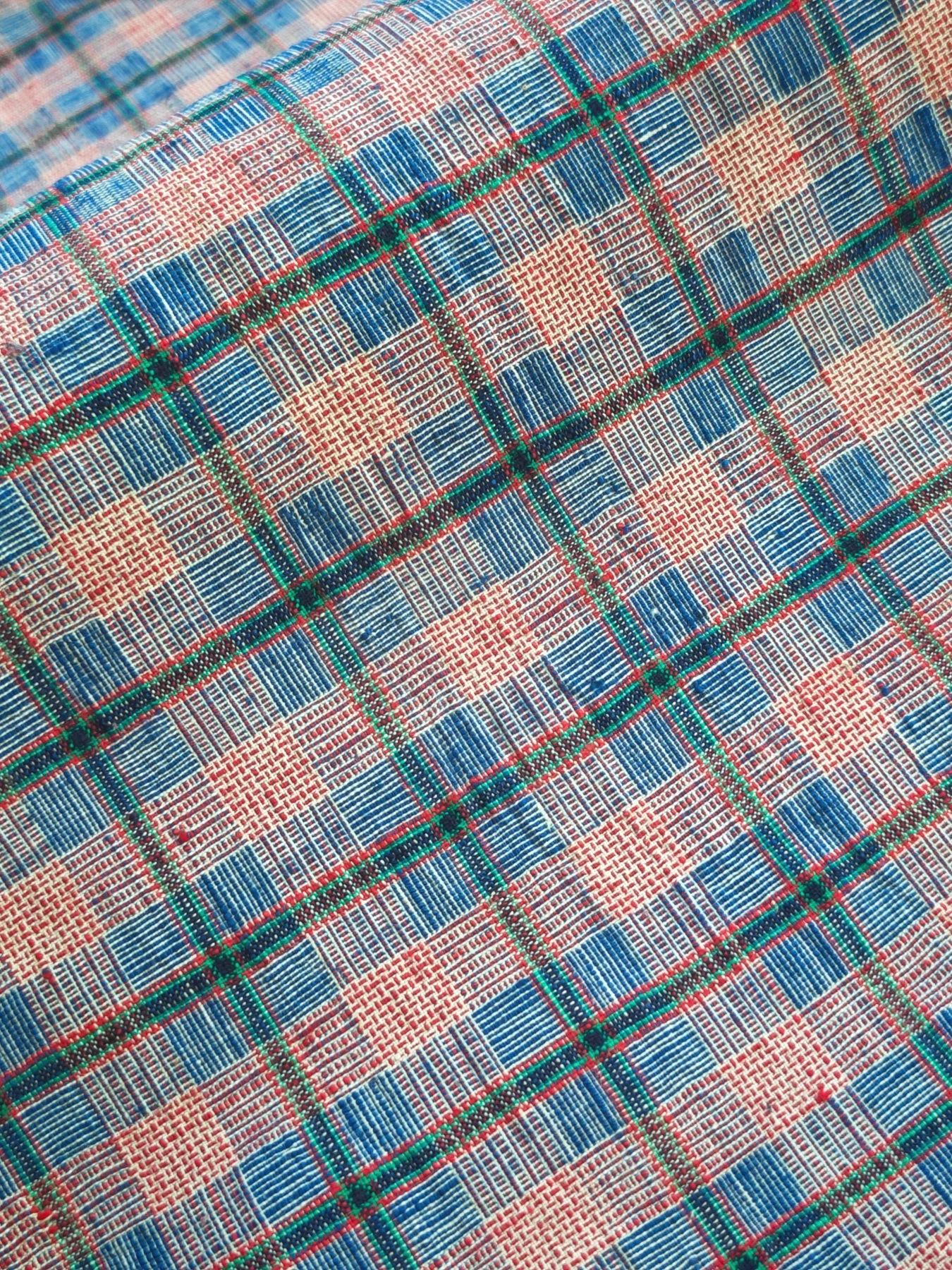
Garden Key
A cream-based grid combines reed-mat-like inner lines, comb-back details and small key-like motifs.
View record →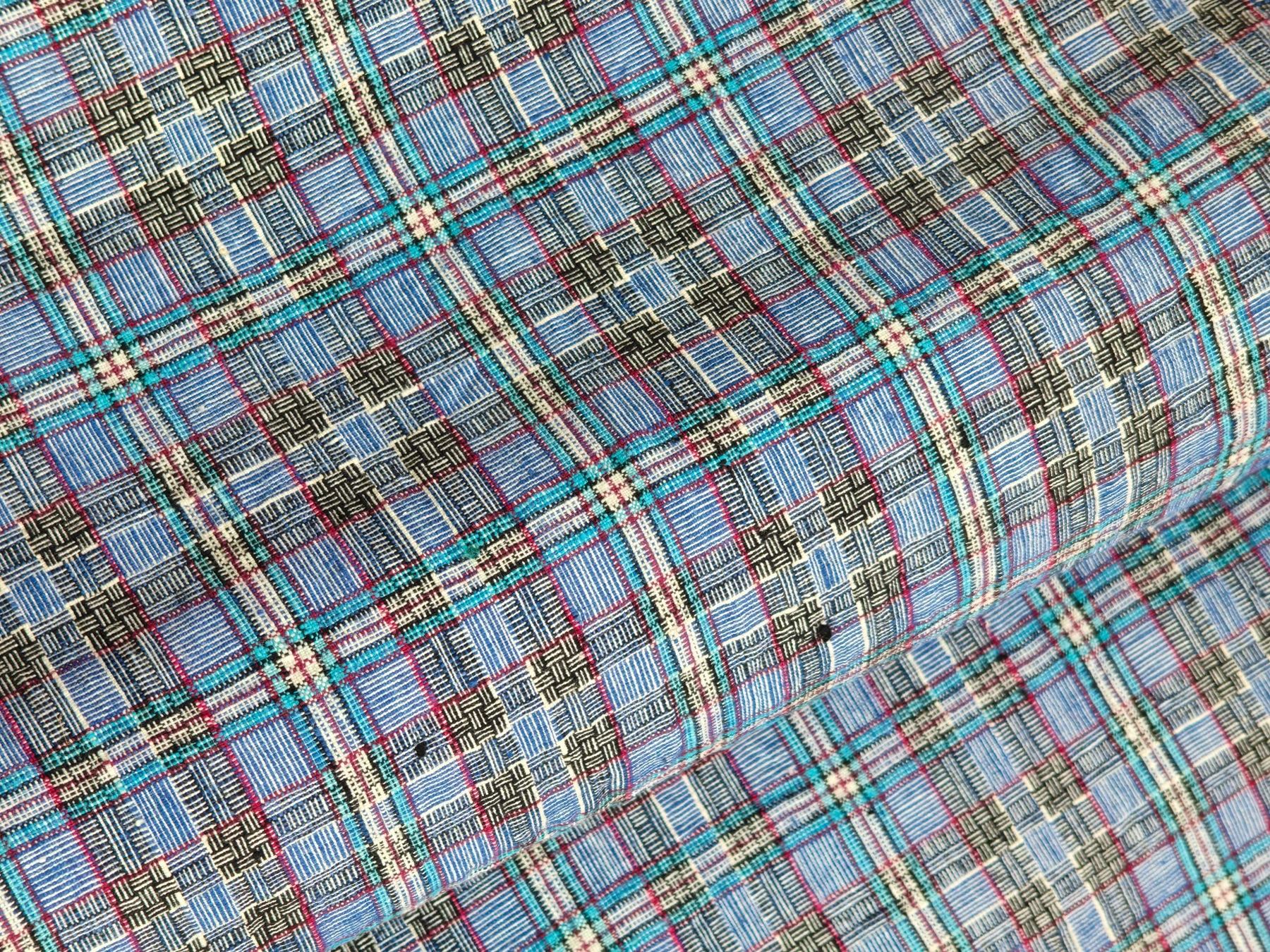
Reed Breeze
A sky-blue grid contains small square, comb-like and ladder-like details woven into firm, substantial cotton.
View record →Colour Changes the Hierarchy
The classic blue-and-white reed-mat effect is only one solution. Adding black can deepen the blocks; green or red lines can turn crossings into borders; several colours can divide the field into large plaid compartments while the smaller Lu Fei rhythm continues inside them.
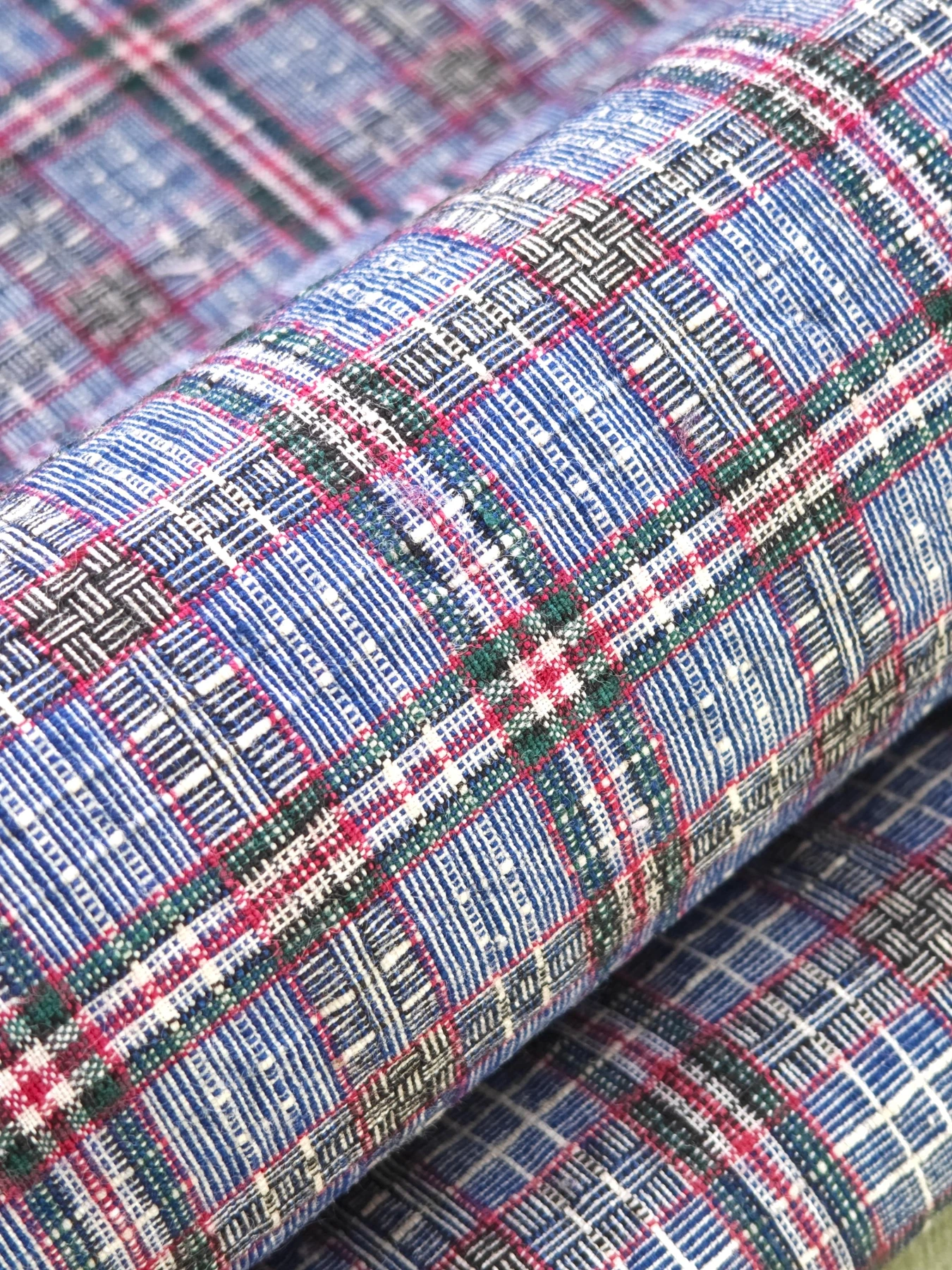
When Reed-Mat Detail Sits Inside a Larger Plaid
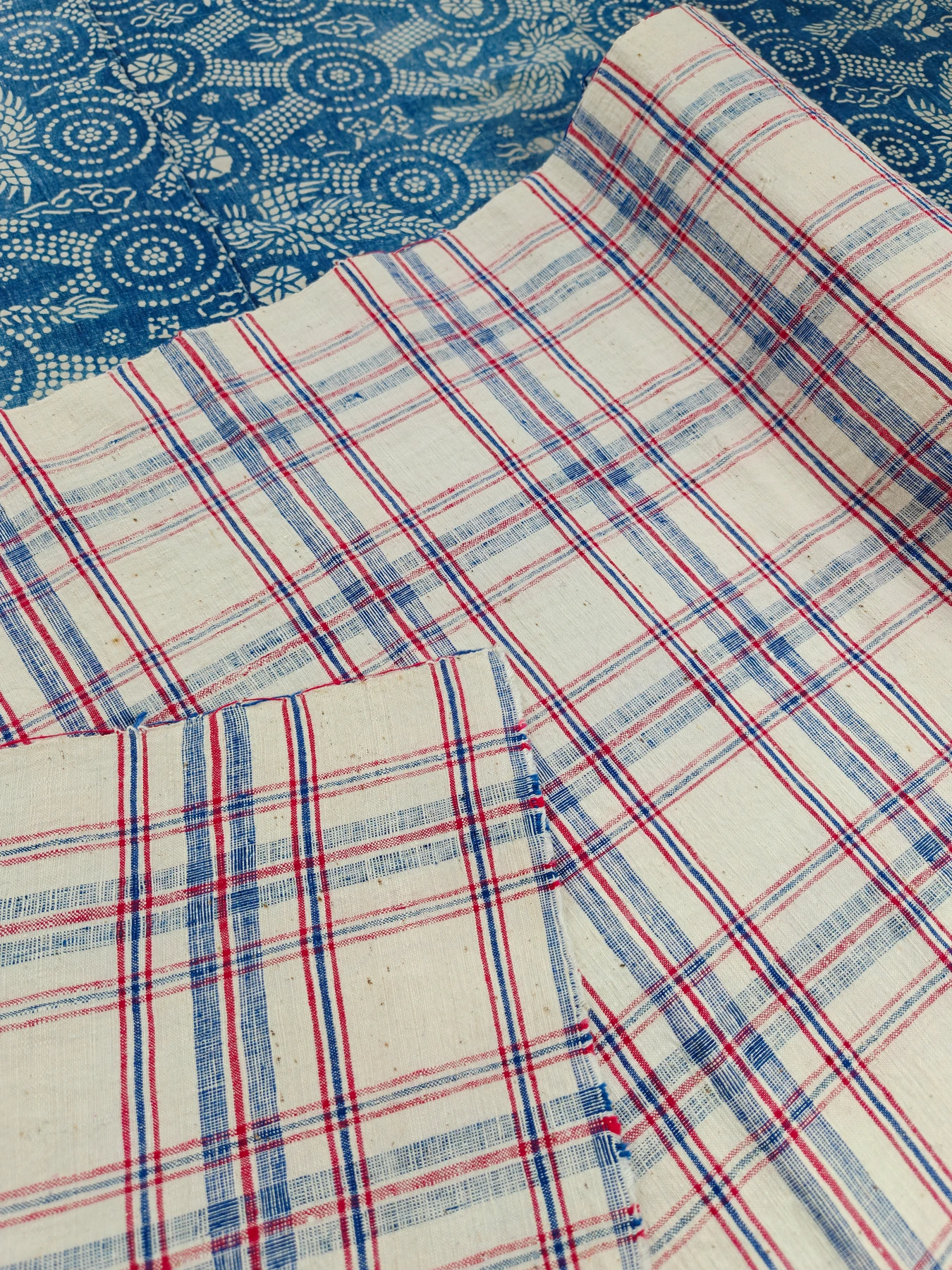
Here the broad windowpane is the first thing we notice. Fine red lines cross pale and deeper blue bands, while smaller woven checks sit within them. It is useful to compare this layered plaid with the all-over seven-by-seven blocks: a large coloured square is not itself a count of reed-mat lines. The listing gives no exact horizontal-by-vertical motif count.
Beyond Jiangnan: A Reed-Mat Grammar Inside Shandong Lu Jin
The same basic visual idea is not confined to Jiangnan. Shandong teaching material on Lu Jin lists 席子纹 (“mat pattern”) among traditional Lu Jin motifs, alongside better-known regional forms such as 斗纹 and 水波纹.4
That does not mean Shandong weavers historically used the Jiangnan name Lu Fei Hua for every similar structure. It does show that a closely related mat-derived geometric grammar also exists within the Lu Jin tradition. In Tubu Atlas, this makes Shandong Lu Jin an important cross-regional comparison rather than an outlier.
Lu Jin Is a Tradition, Not a Single Pattern
A Working Taxonomy for Tubu Atlas
The taxonomy below is deliberately layered. Some names are documented regional terms; others are curatorial categories used to organise visual comparison. They should not be treated as interchangeable levels of evidence.
13 Objects, One Expanding Vocabulary
The selection now brings together 13 collection records, including counted seven-by-seven and nine-by-six blocks, a double-sided example, a larger windowpane plaid and a Shandong Lu Jin comparison. Each links to its permanent textile record for the full photographs and documentation.
Moonlit Reed — Jiangnan Reed-Mat Weave
c. 1950s–1960s · Jiangnan
View record →Quiet Grid
c. 1940s–1960s · China
View record →Indigo Hearth
c. late 1940s–1960s · China
View record →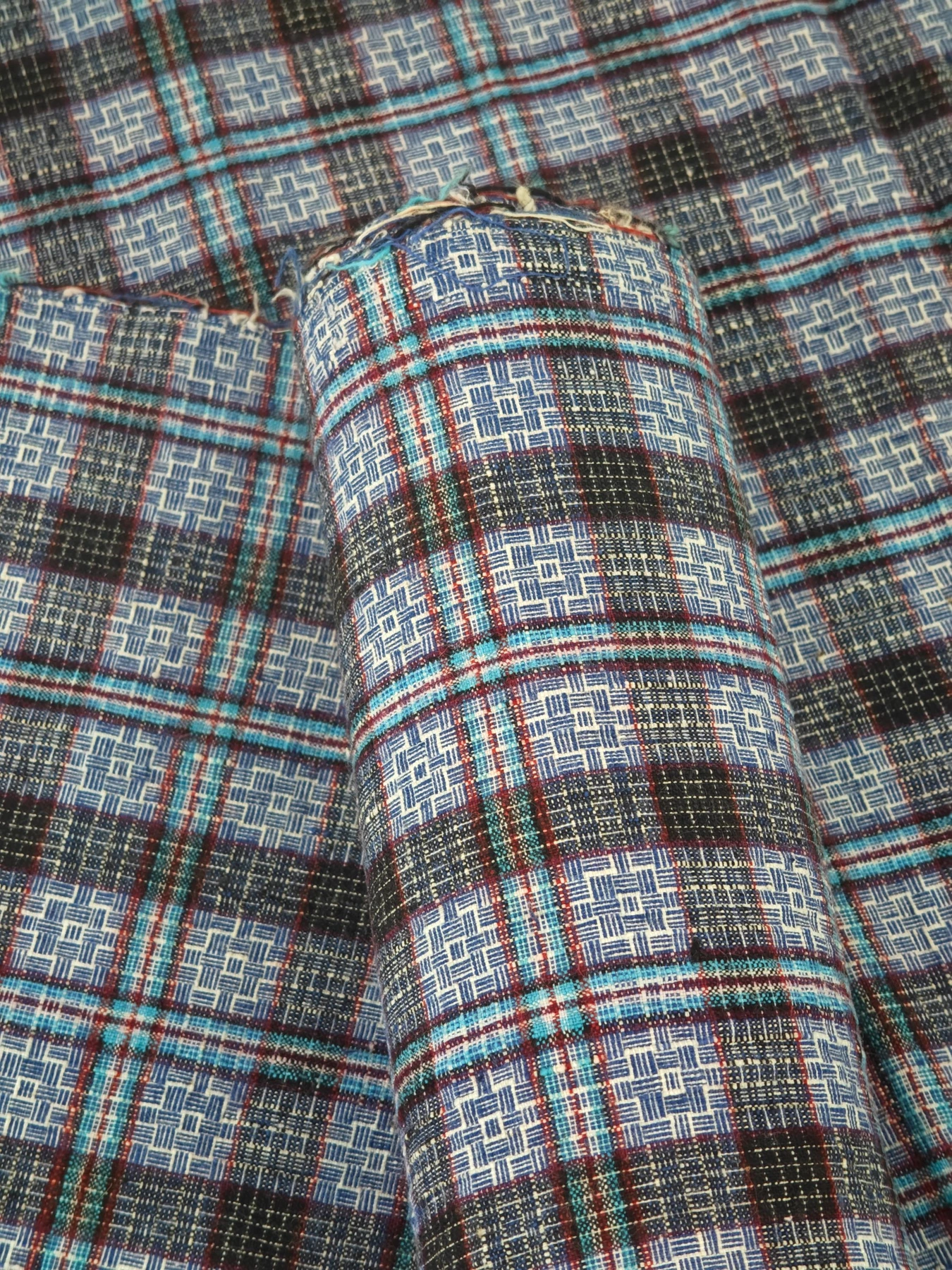
Copper Coin Chain
c. 1950s–1970s · Jiangnan
View record →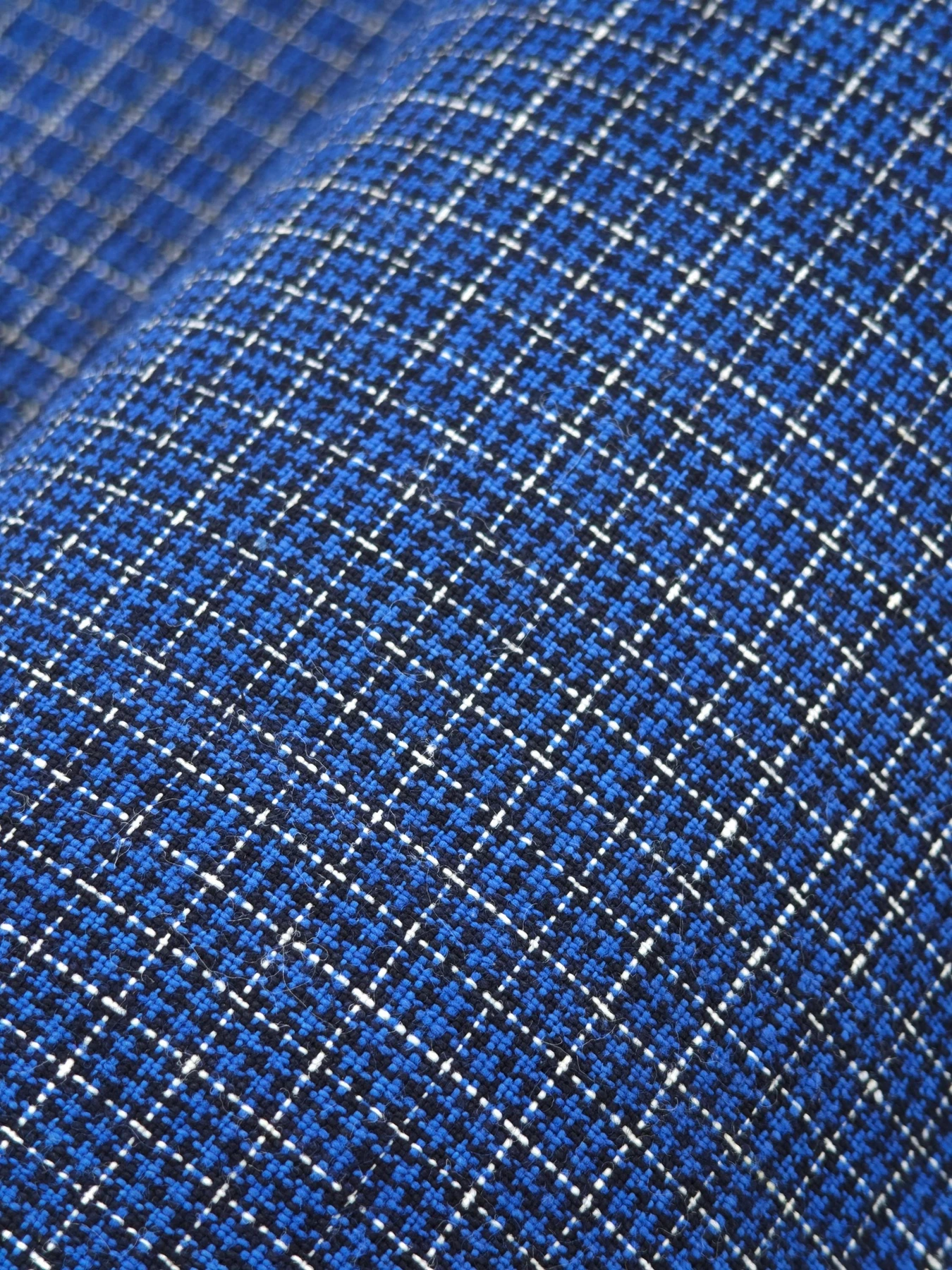
Indigo Osmanthus Grid
c. 1950s–1960s · Jiangnan
View record →Garden Key
c. 1930s–1950s · China
View record →Reed Garden
c. 1940s–1950s · China
View record →Reed Breeze
c. early 1980s · China
View record →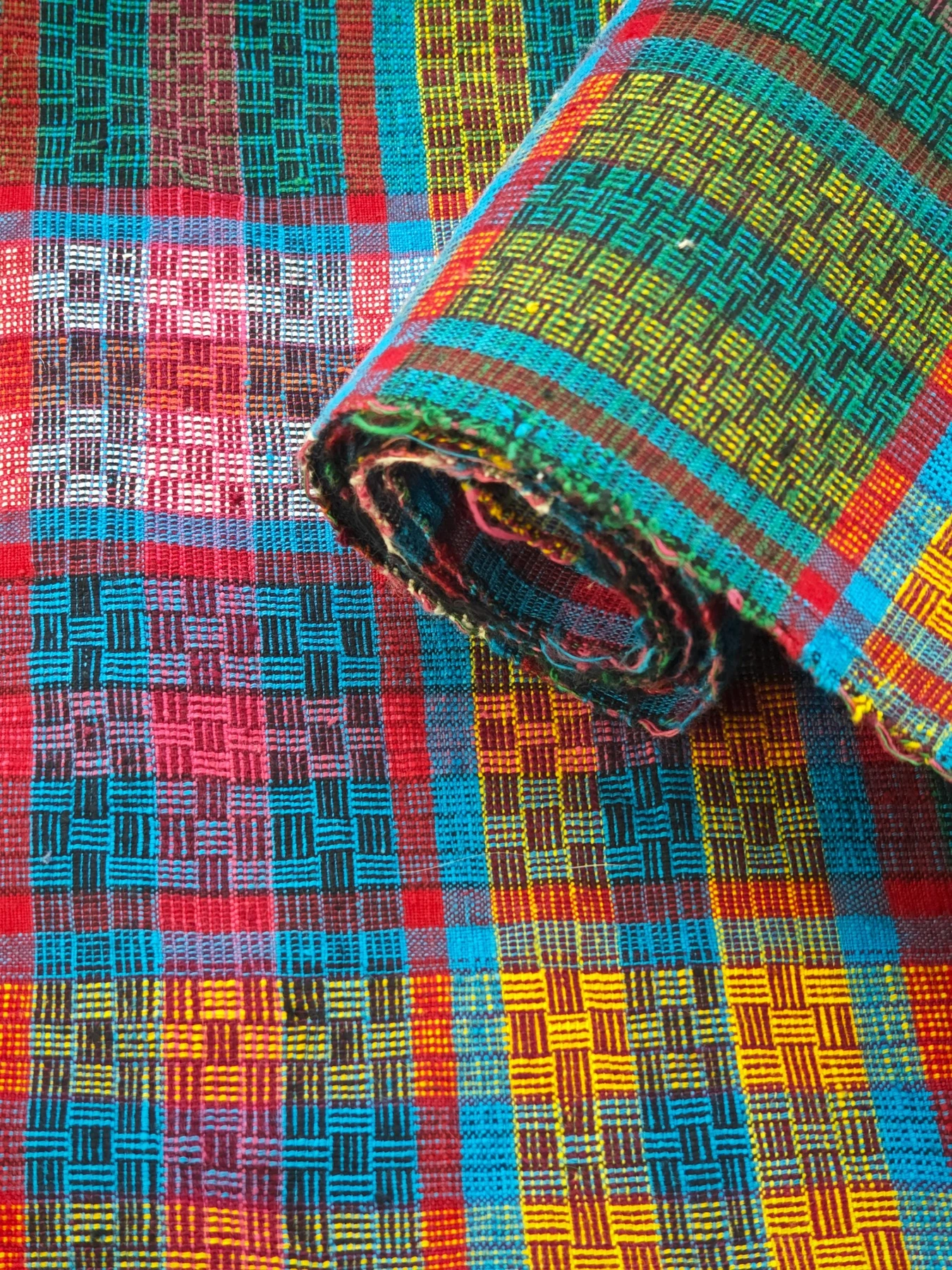
Splendid Days
Early PRC to later 20th century (seller estimate) · Shandong
View record →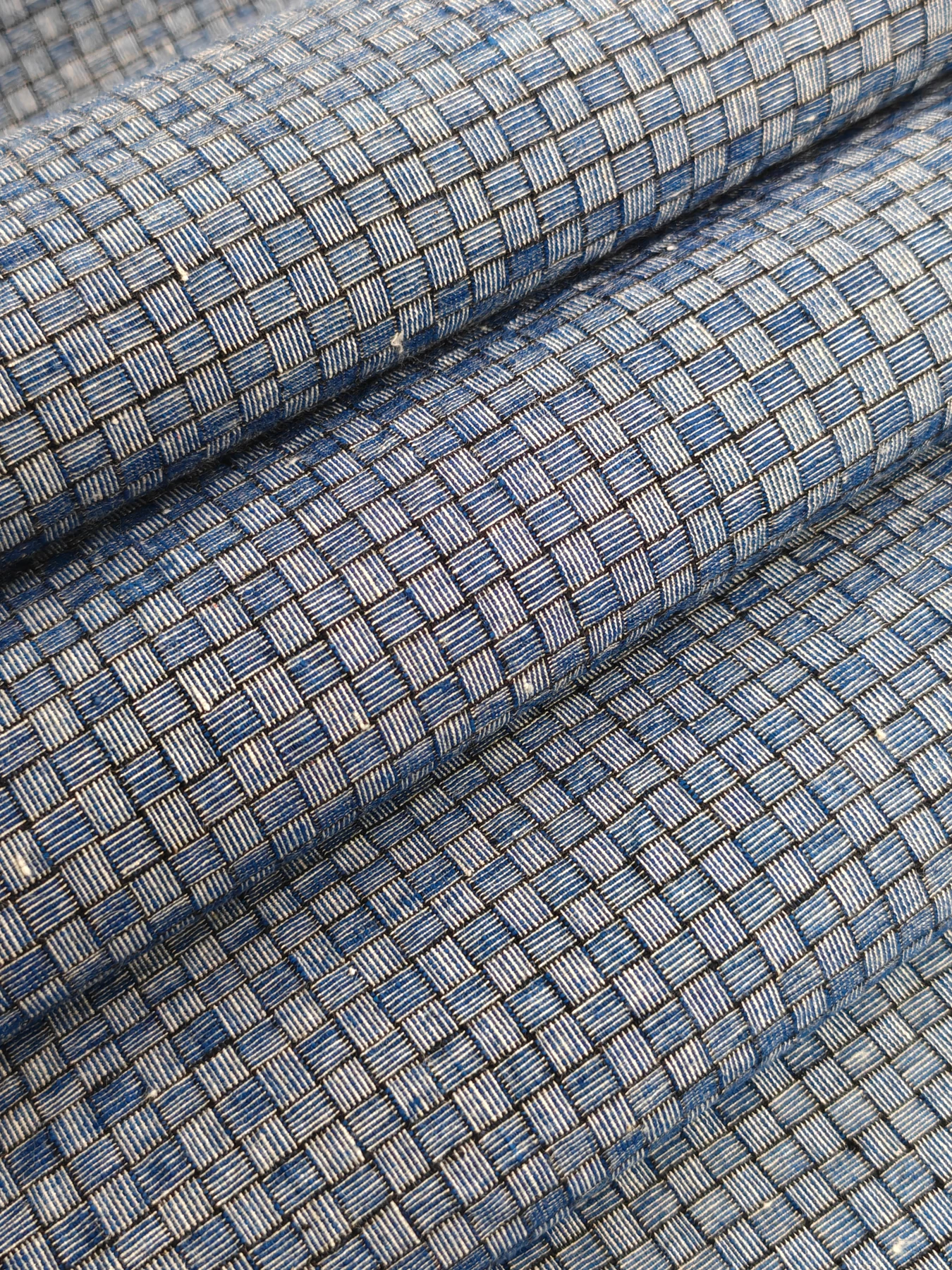
Seven-by-Seven Reed-Mat — Vintage Jiangnan Cotton
Attributed to c. 1950s–1960s; described as late Republican–early PRC tradition · Jiangnan
View record →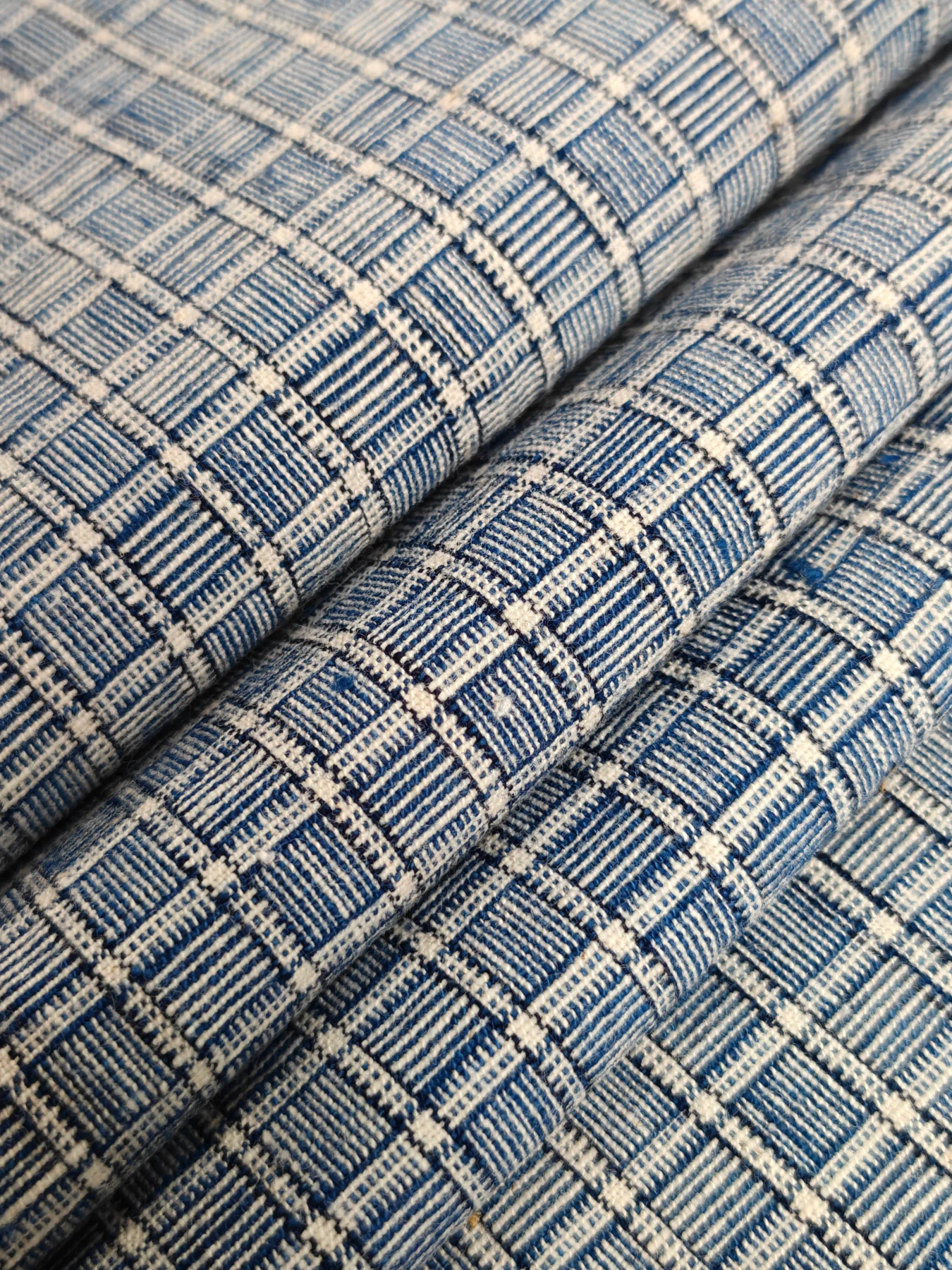
Reed-Mat & Comb Weave — Vintage Jiangnan Cotton
Estimated late Republican–early People’s Republic period · Jiangnan
View record →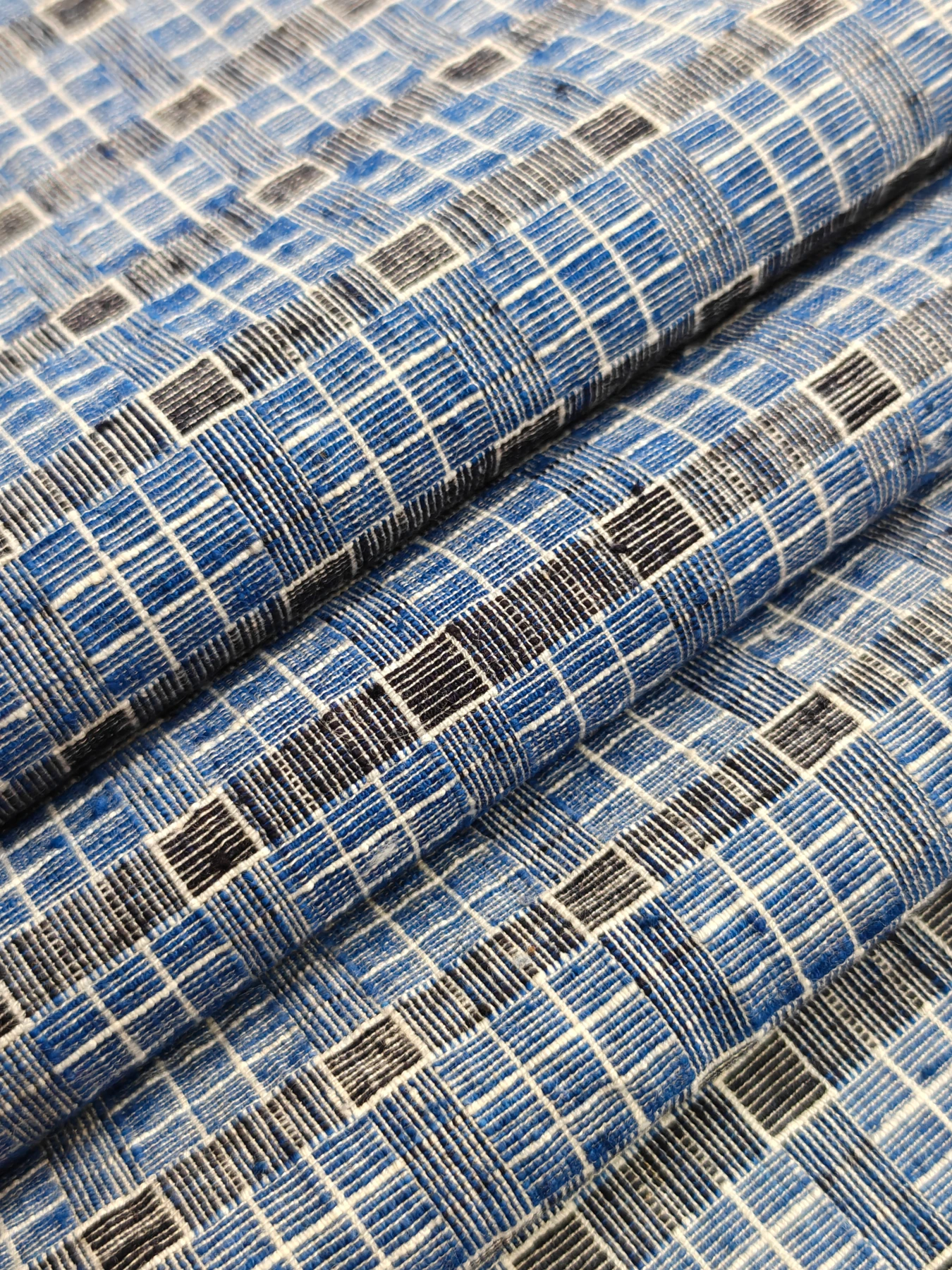
Two Sides of Harmony — Vintage Double-Sided Handwoven Cotton
Estimated Republican era–early People’s Republic period · Jiangnan
View record →Shanghai Windowpane — Vintage Chinese Handwoven Cotton
Estimated late Republican–early People’s Republic period · Shanghai
View record →What Makes a Reed-Mat Textile Important to Collect?
Rarity should not be reduced to a single rule such as “more strands equals more value”. A basic blue-and-white three-by-three example can be exceptionally important as a reference specimen because it preserves the core grammar clearly.
For comparative study, the most useful additions to the archive are currently: clearly documented large-count or expanded variants; named forms that can be tied to published regional terminology; complete hybrid patterns such as Lu Fei plus Guihua or wooden-comb back; unusual multicolour examples; and long surviving pieces that preserve enough repeat to reconstruct the pattern system.
Research rule: Tubu Atlas distinguishes a textile’s observed structure from its traditional name, date and regional attribution. Similar appearance is a reason to compare two objects, not proof that they share the same historic name or origin.
Tradition Was Never Static
The structure book ends this sequence with explicitly labelled 创新型芦扉花纹 examples. That is a useful reminder: Lu Fei Hua was not a frozen folk diagram. Its strength lies precisely in how easily a basic interlaced grammar could be enlarged, subdivided, coloured, combined and reinvented.1
One woven grammar, many local solutions.
Sources & Further Reading
Updated 16 November 2026 with four additional reed-mat-related collection examples and a separate Mosaic Fields Lu Jin comparison. Counts and names for these individual textiles follow the owner’s descriptions, checked against the Etsy listings on that date; general historical sources below do not independently authenticate each object.
- 王宏付、柯莹、白艳惠:《中国传统土织布手工技艺与复原》. 东华大学出版社, 2022. Especially the illustrated sequence on 桂花纹, 传统芦扉花纹, 井字芦扉花纹, 芦扉桂花格纹, 三根头芦纹 and 创新型芦扉花纹. Consulted for structural comparison; book images are not reproduced on this page.
- 南通市文化馆:国家级名录项目相关介绍. Regional discussion of Nantong coloured homespun and named Lu Fei / Lu Fei Hua variants.
- 上海市崇明区人民政府. Regional account describing the familiar three-horizontal / three-vertical reed-mat pattern and related variation.
- 山东服装职业学院服装工程与管理系. 2025 teaching report naming 席子纹 (“mat pattern”) among traditional Lu Jin pattern types.