
A peony can be recoloured, flattened into a stencil, boxed inside a lattice, paired with birds, or reduced almost to a few heavy petals — and it still remains remarkably recognisable.
That visual persistence helps explain why the flower travels so easily across Chinese decorative arts and, much later, across printed household cloth.
The peony does not need to look botanically exact. It only needs to feel abundant.
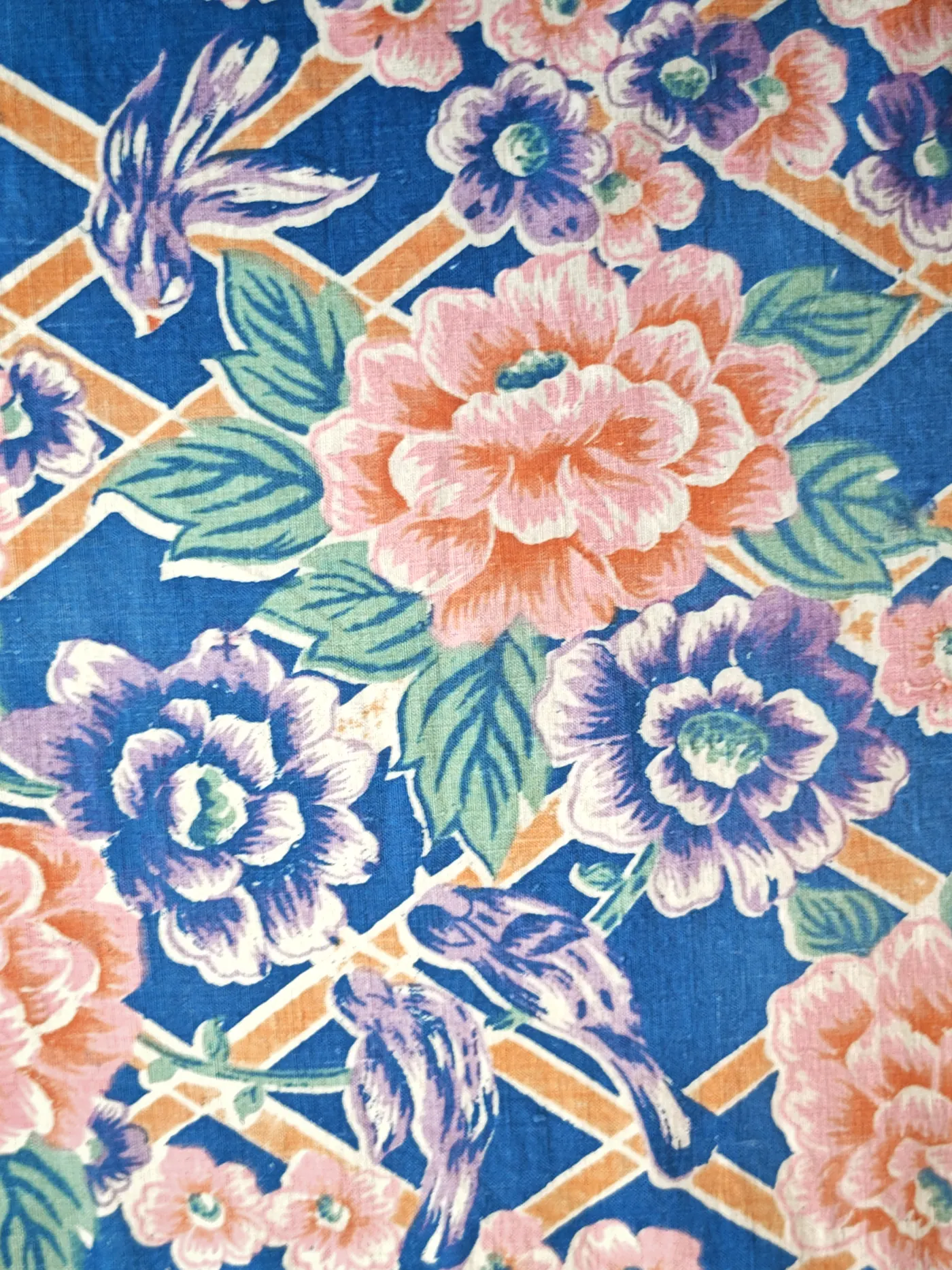
From Plant to Cultural Flower
Peony was not born as a decorative symbol. It is a living plant with a much longer history in China, including medicinal use and cultivation.
By the Tang, however, admiration for the flower had become highly visible in elite and urban culture. Zhou Dunyi later looked back on that popularity with the line “自李唐来,世人盛爱牡丹” — “since the Tang, people have greatly loved the peony.”1
Liu Yuxi’s famous poem goes further:
“唯有牡丹真国色,花开时节动京城。”2
Only the peony has the true beauty of the realm; when it blooms, the whole capital stirs.
“国色” here should not be confused with a modern legal designation of “national flower.” China has not formally established a national flower through a legal process; official replies from the National Forestry and Grassland Administration describe the designation as still unresolved.3 The phrase belongs to a much older poetic language of exceptional beauty.
The Flower of Wealth
One of the most durable cultural readings comes from the Northern Song. In Ai Lian Shuo, Zhou Dunyi sets three flowers against three social ideals: chrysanthemum as the recluse, lotus as the gentleman, and 牡丹,花之富贵者也 — “the peony, the flower of wealth and rank.”1
That sentence did not single-handedly create the association, but it records how firmly peony and worldly prosperity were already linked in Song literary culture.
Later auspicious-design systems make the association explicit. The Palace Museum lists 牡丹 = 富贵, while a peony combined with a vase forms 富贵平安: prosperity and peace.2
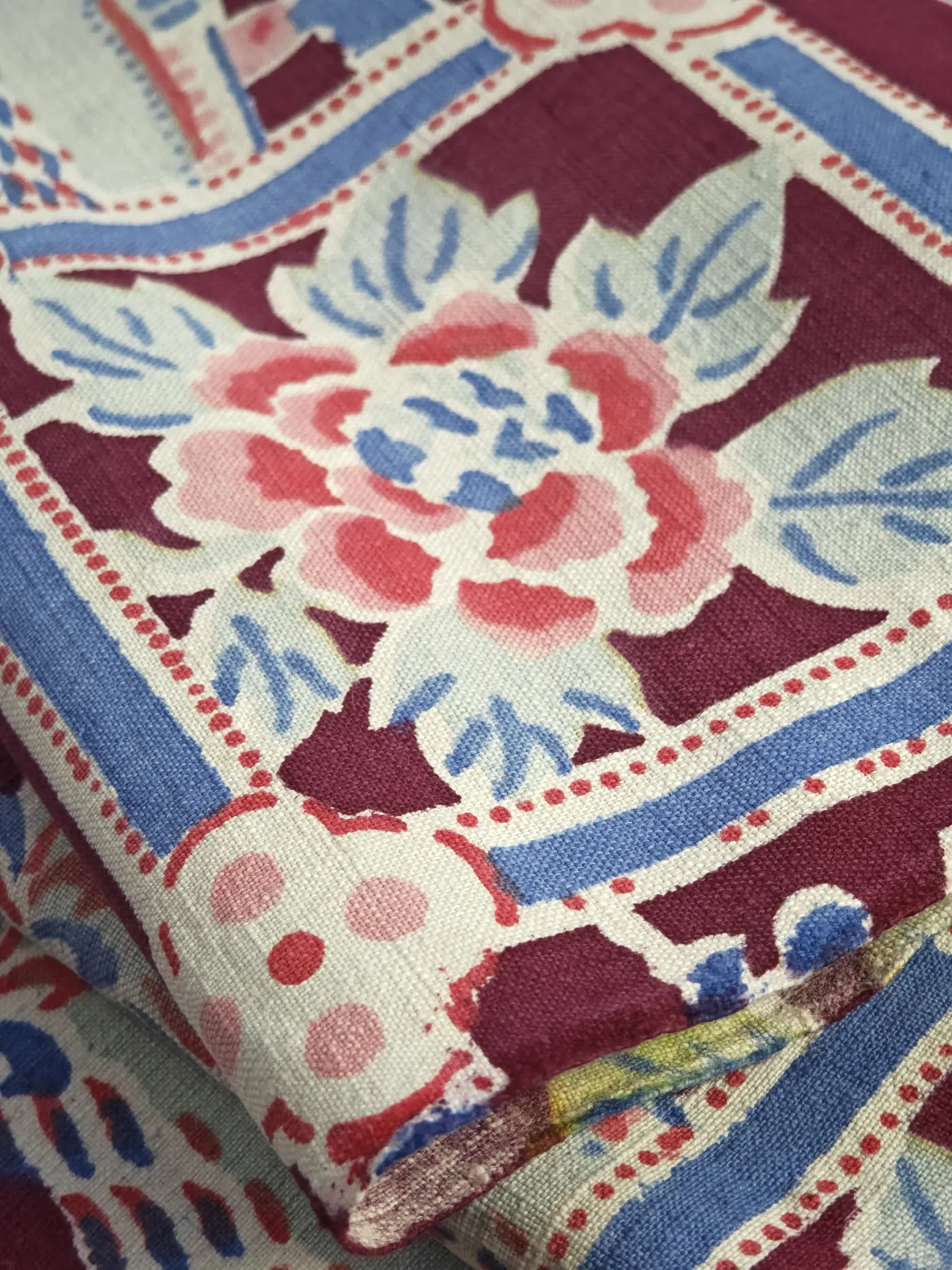
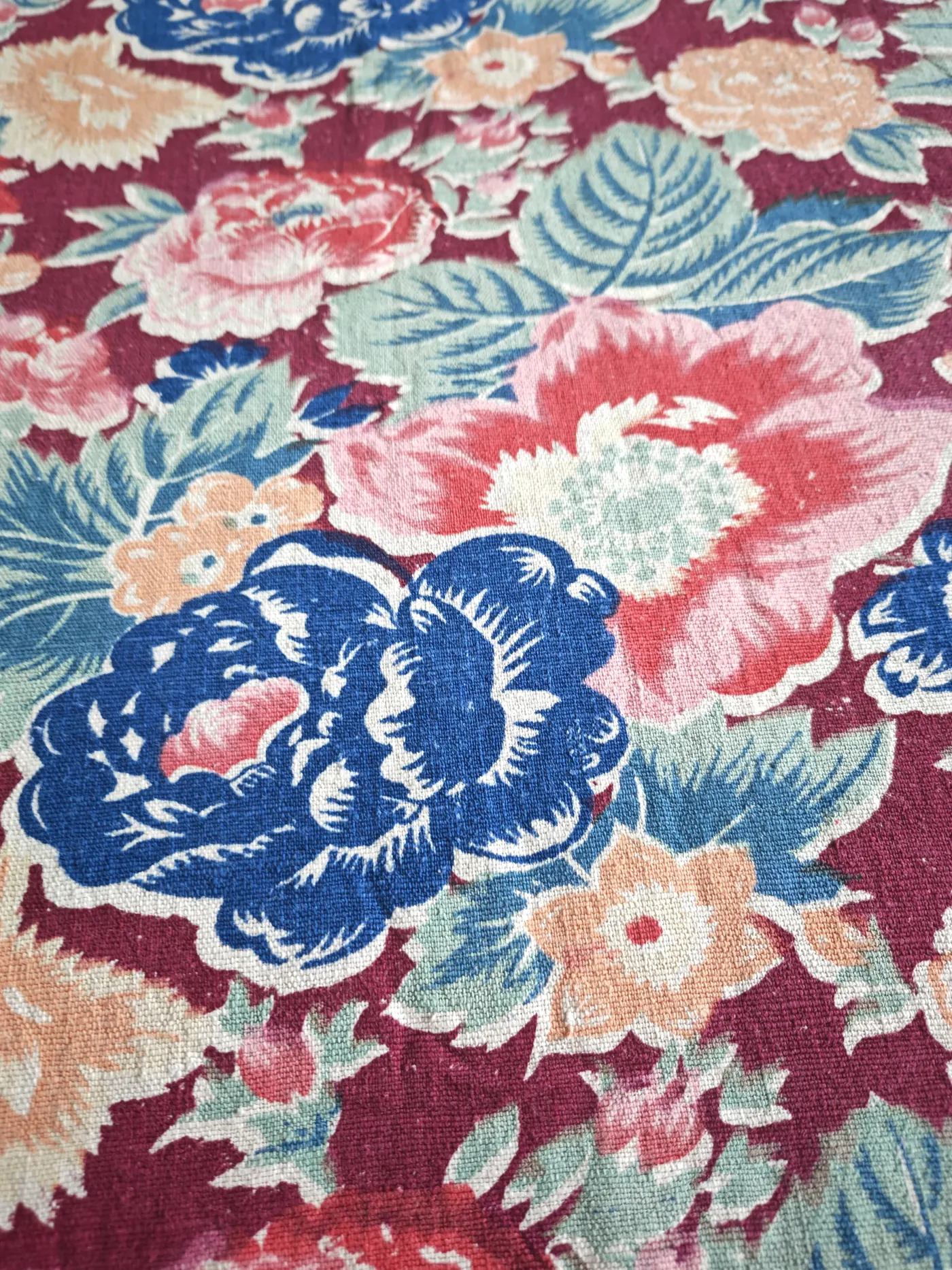
Luoyang: When “Flower” Meant Peony
The peony’s cultural prestige is especially tied to Luoyang. In the eleventh century, Ouyang Xiu wrote an entire Record of Luoyang Peonies. His description of local speech is extraordinary: other blossoms were named one by one, but “至牡丹,则不名,直曰花” — when it came to peony, people simply called it “the flower.”3
That is not the language of a minor garden plant. It shows how strongly a single flower could dominate local taste, collecting and seasonal attention.
Why the Peony Works So Well in Print
Looking at surviving folk prints suggests a practical reason for the motif’s durability: peony adapts beautifully to printing.
Large flower head
A broad bloom can hold the centre of a repeat and remain visible from a distance.
Layered petals
Petal tiers can be simplified into large blocks, broken marks, or several colour layers without losing the basic identity of the flower.
Broad leaves
Large leaves balance the flower and help connect one repeat unit to the next.
Flexible scale
The flower can work as a single framed unit, an all-over garden, a border element or one member of a larger auspicious composition.
This is a visual and process observation rather than a claim that every printer chose peony for the same reason. But the surviving cloth makes the design advantage easy to see.
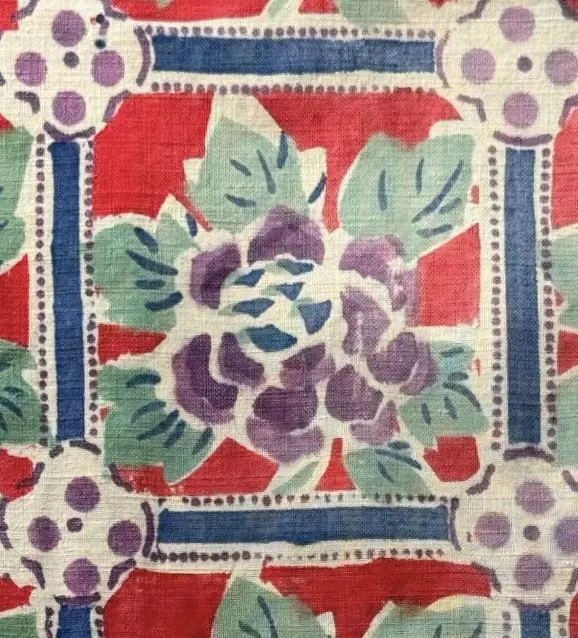
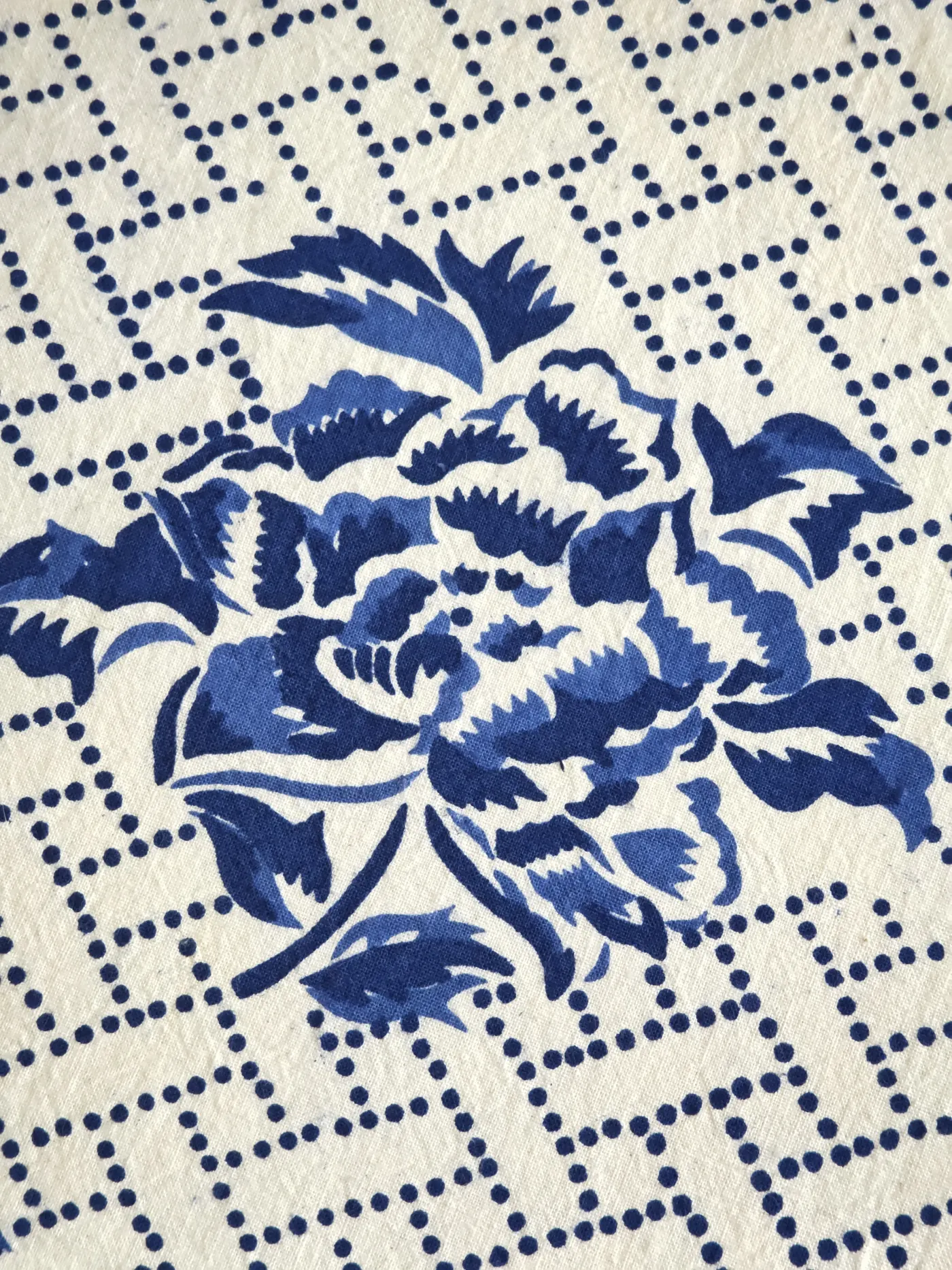
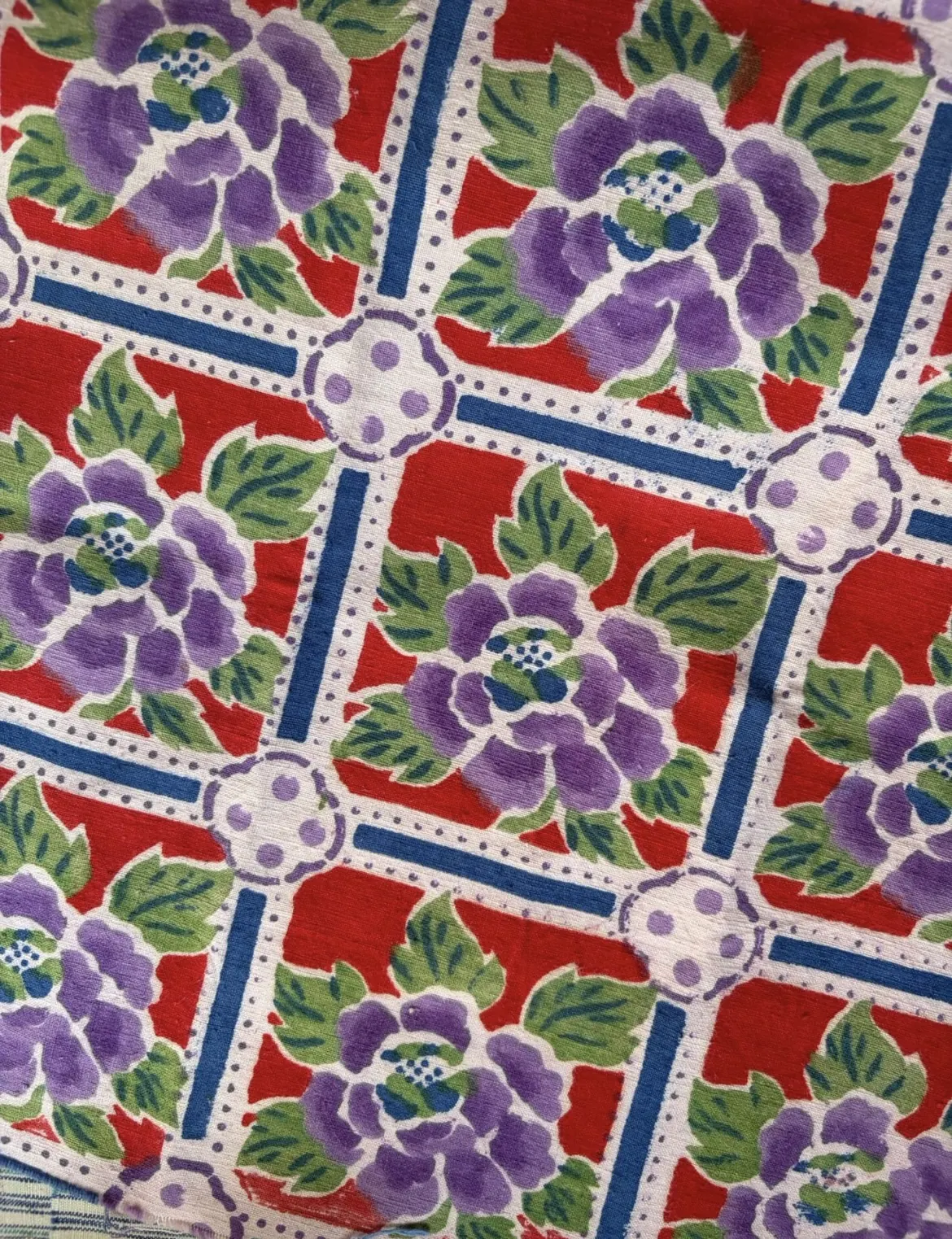
From Pictorial Flower to Graphic Flower
Across the Tubu Atlas collection, peony shifts from relatively pictorial flowers to increasingly graphic forms.
Colour printing can preserve pink shading, blue accents and soft internal petals. Indigo and single-colour printing forces the flower into stronger silhouette, negative space and broken line.
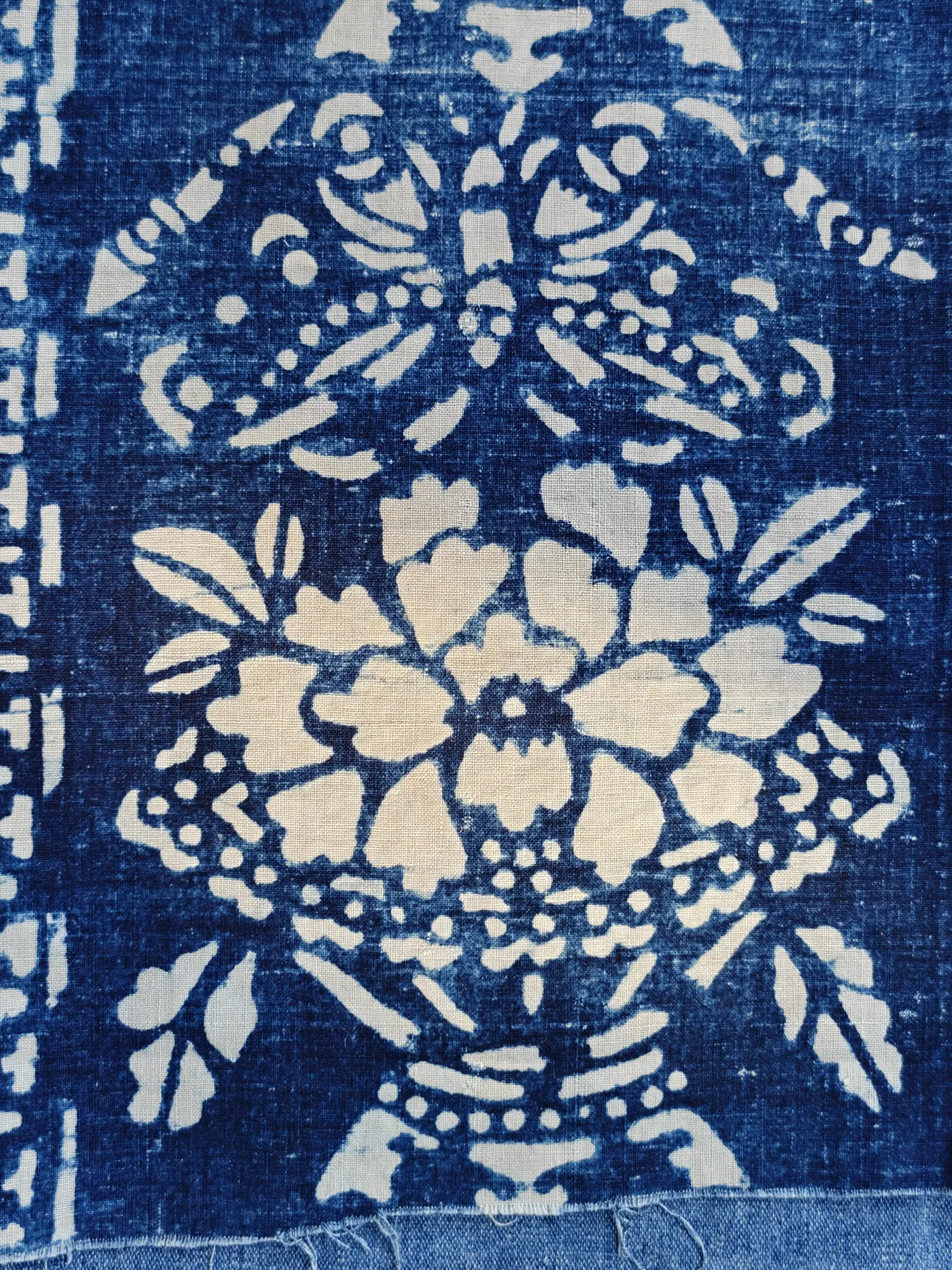
Peony in the Current Tubu Atlas
The archive currently connects six formal textile records to the peony motif. They do not all come from the same place, date or printing process.
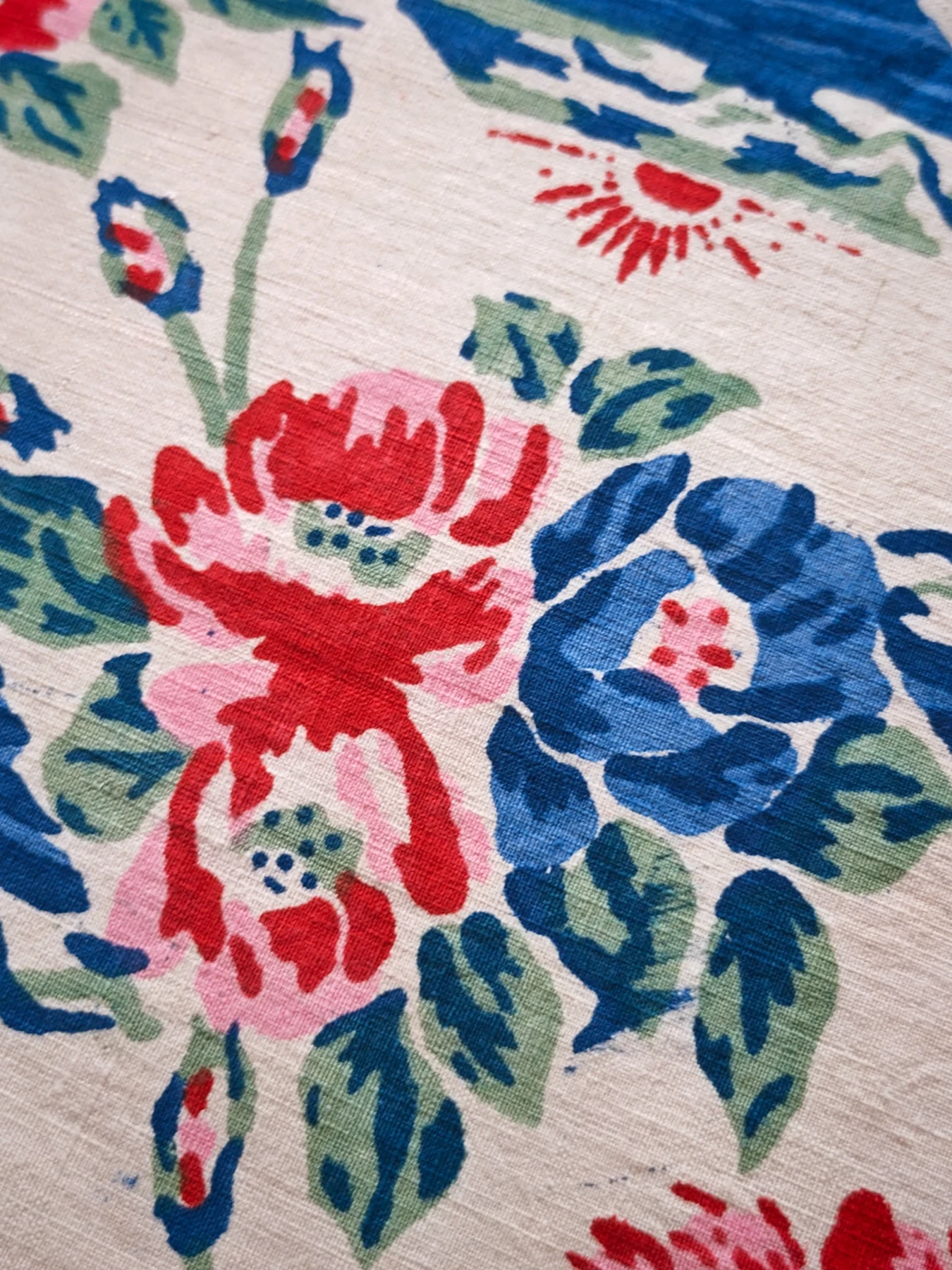
Sunrise Peony — Jiangnan Multicolour Printed Homespun
Jiangnan · c. 1960s–1970s
View record →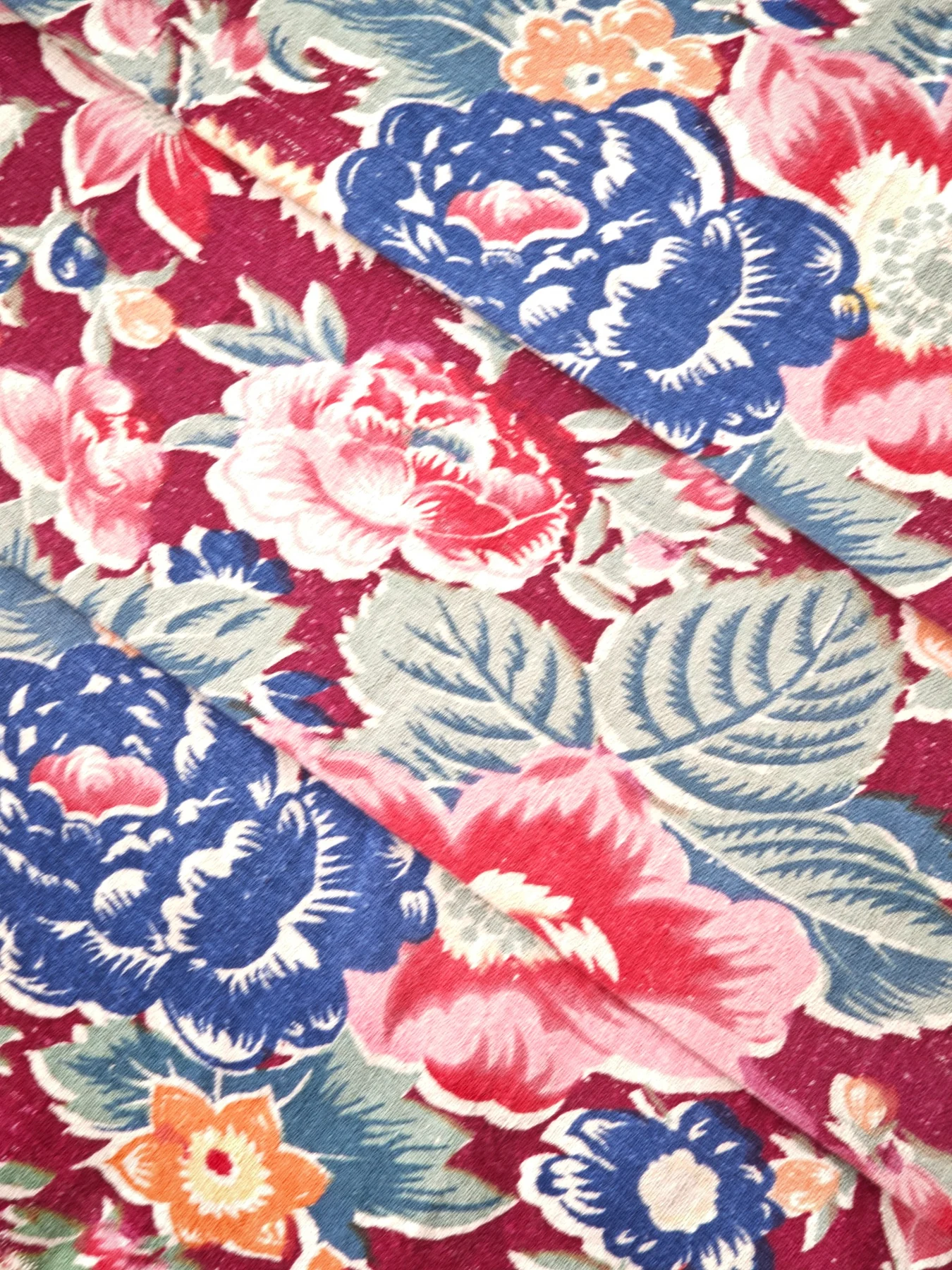
Crimson Peony Garden — Nantong Hand-Printed Homespun
Nantong · Mid-20th century
View record →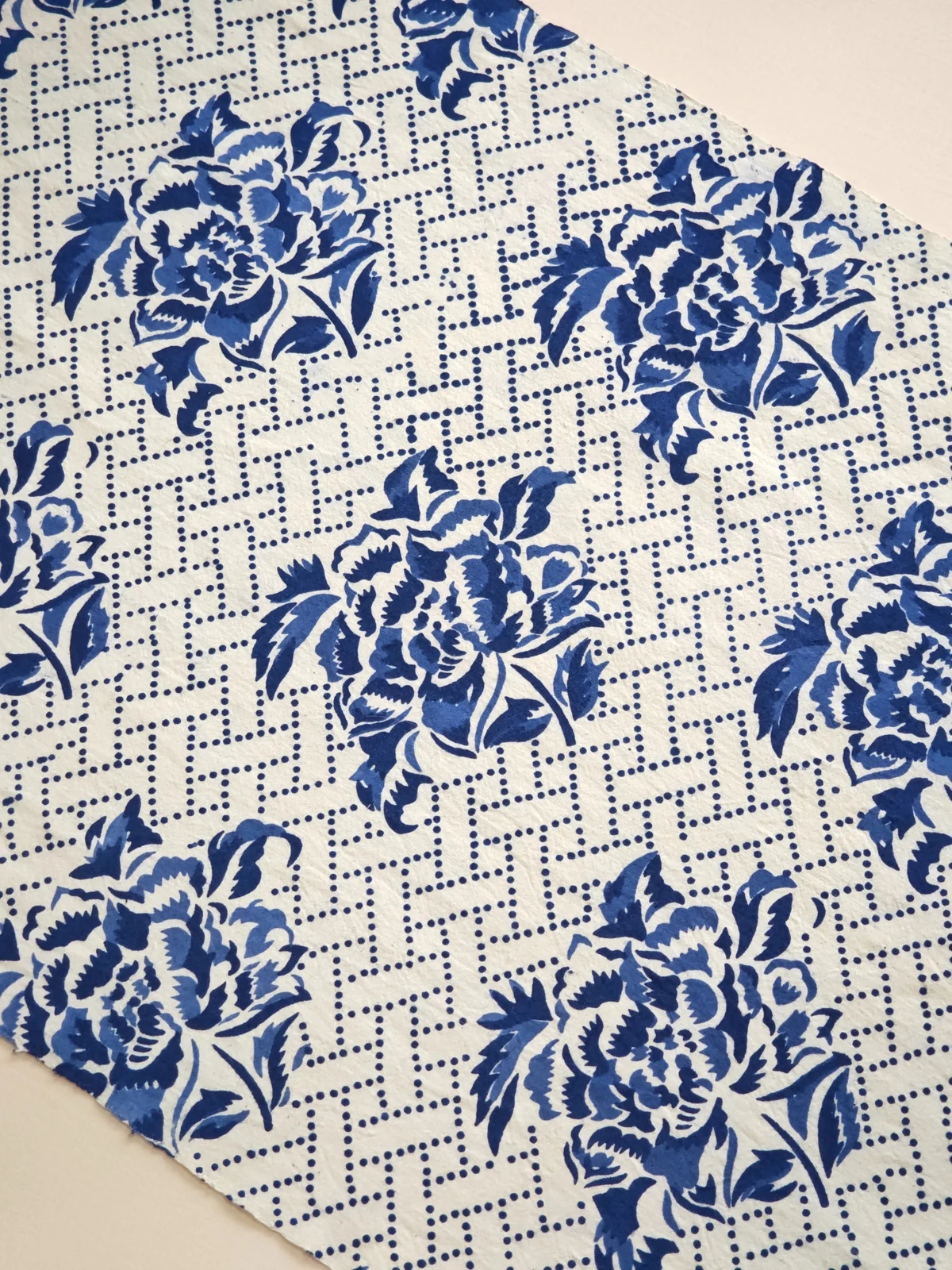
Peony Lattice — Nantong Blue Peony Print
Nantong · c. 1960s–1970s
View record →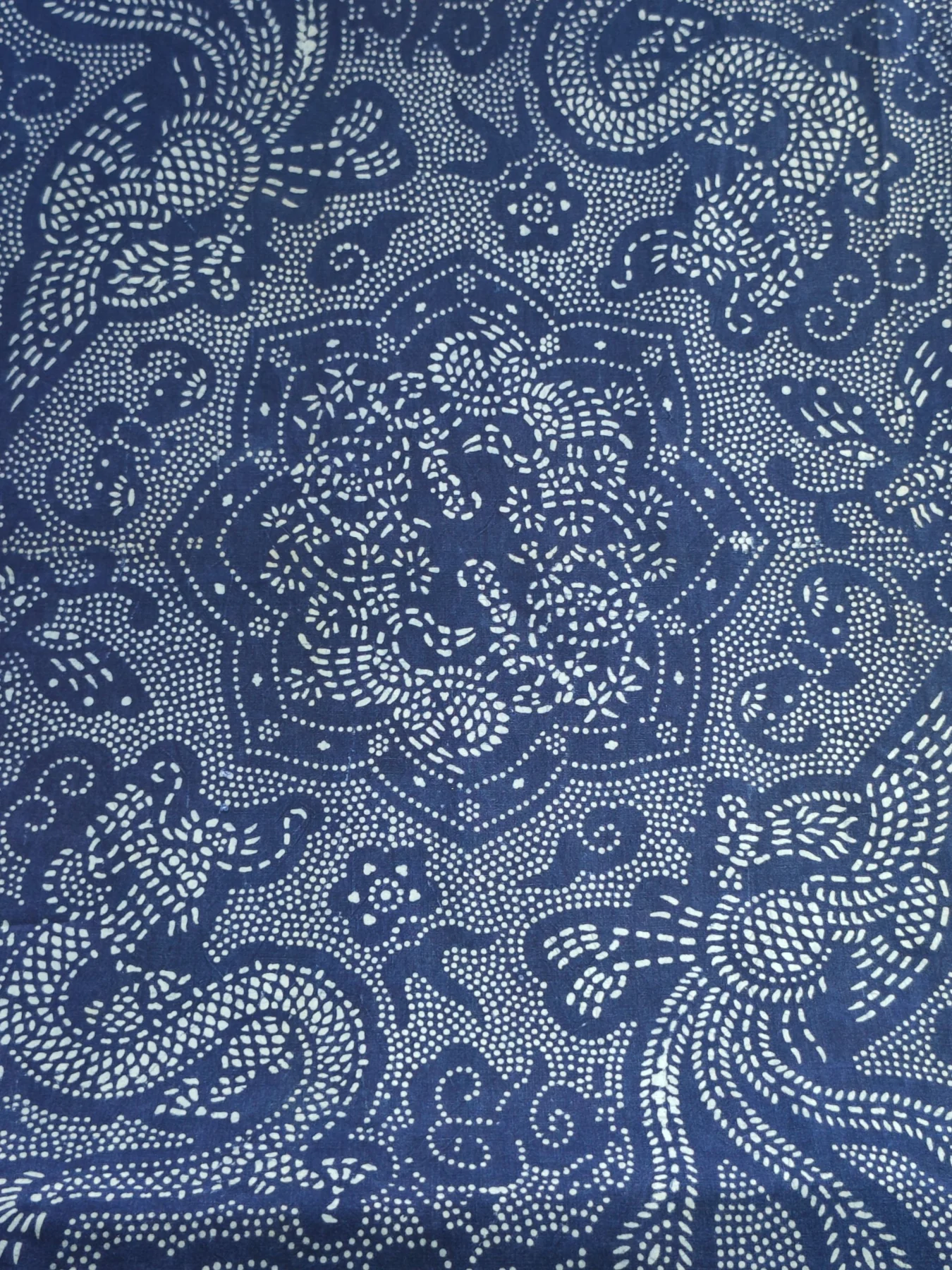
Indigo Phoenix Garden — Blue Resist-Printed Cotton
China · c. 1960s–1970s
View record →The Four Seasons Flowers — Nantong Indigo Quilt Cover places peony inside a Four Seasons floral programme, while the sold Nantong Peacock & Peony Textile preserves a peacock-and-peony pairing in the archive.
Peony and Its Companions
Peony rarely has only one fixed meaning. Its reading changes with the object beside it.
Peony alone
Prosperity, flourishing life and worldly abundance are among its most established later associations.
Peony + vase
The Palace Museum records this as 富贵平安: peony for prosperity, vase (ping) participating in a rebus for peace.2
Phoenix + peony
凤穿牡丹 is a documented traditional decorative theme. The Palace Museum explains the pairing as phoenix, king of birds, with peony, king of flowers, symbolising glory and prosperity.5
Peony + yulan + crabapple
Together these form 玉堂富贵, a wordplay documented by the Palace Museum: 玉兰 supplies “玉”, 海棠 supplies “棠”, and peony contributes “富贵”.6
Peony + pomegranate
Peony carries prosperity while pomegranate is a long-established symbol of many descendants. When they are combined, both auspicious vocabularies can operate together, but the exact phrase should be identified object by object.7
Peony + butterfly
This pairing belongs to the broader Die Lian Hua visual world. Tubu Atlas does not assign one universal translation such as “love” or “wealth” to every example without context.
What We Can Say — and What We Should Not Overstate
Popular motif summaries often make stronger claims than the surviving evidence supports. This article keeps several distinctions clear.
- We can document Tang and Song literary enthusiasm for peony.
- We can document later auspicious readings such as peony = prosperity, peony + vase = prosperity and peace, and phoenix + peony = glory and prosperity.
- We can document many peony-bearing household textiles in the Tubu Atlas collection, including indigo resist, multicolour print and decorative print.
- We do not currently claim that peony was literally the single most common flower on all Jiangnan homespun, that every wedding textile required it, or that every butterfly-and-peony combination had one fixed named meaning.
Those stronger regional-frequency claims need a dedicated survey of dated pattern books, workshop archives and museum collections before they become Atlas statements.
Study Pieces Before Sale Listings
Several peony textiles photographed here are not yet formal shop listings. They are still valuable as research objects.
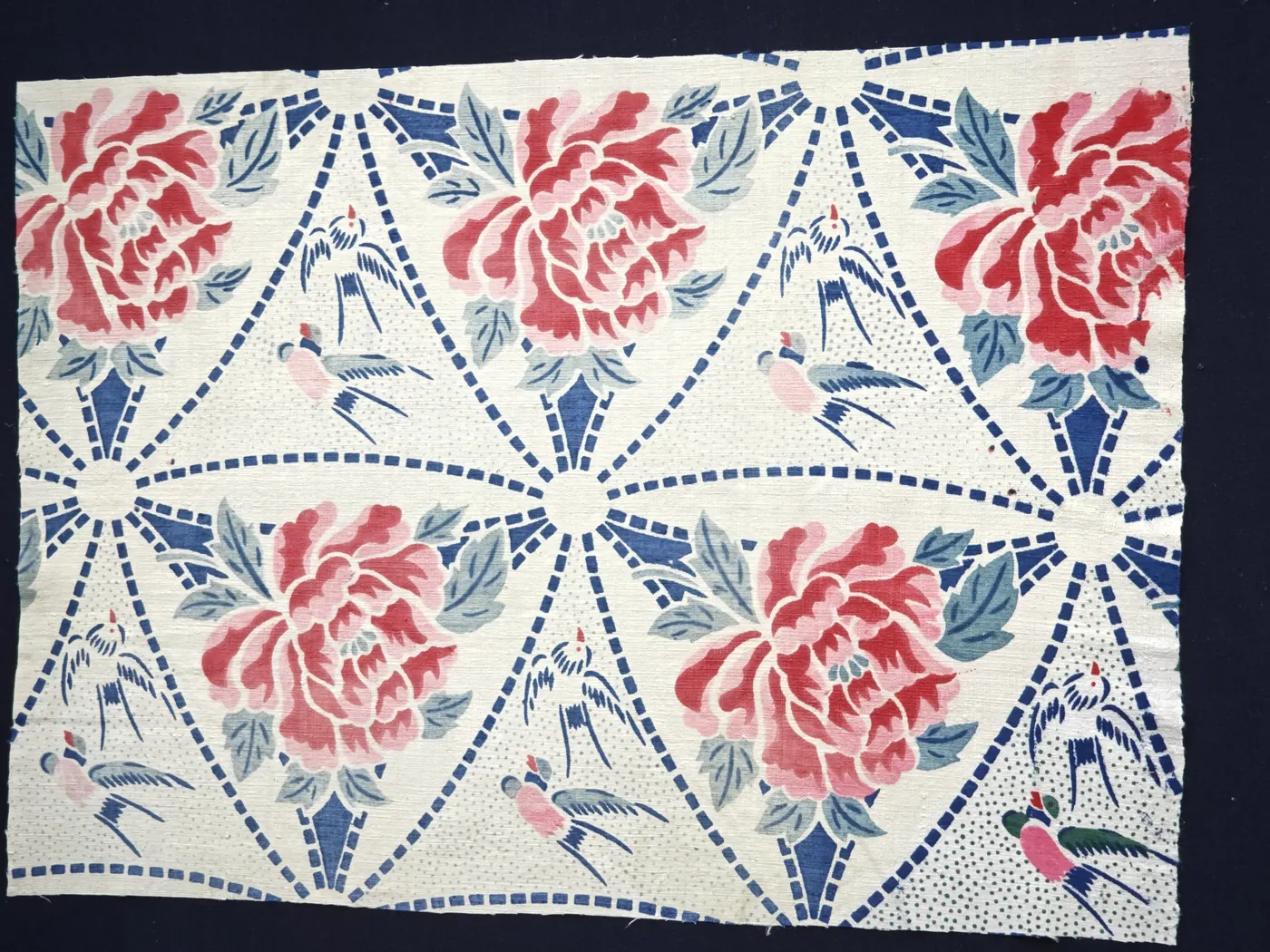
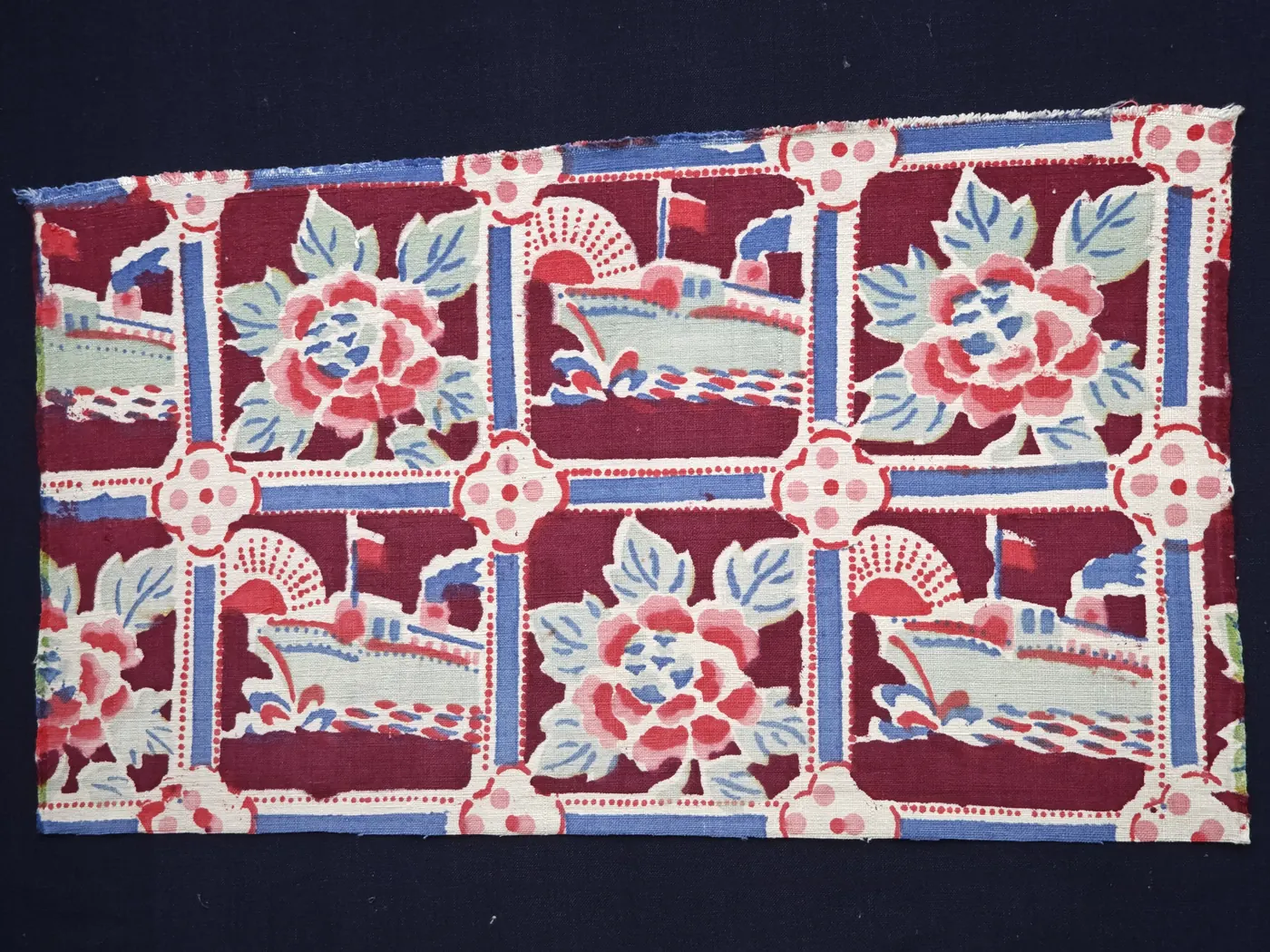
Editorial rule: a study image can document visual evidence before a full object record exists. Date, place and workshop are only added when supported by the object’s documentation.
From “National Beauty” to Household Cloth
Before peony became a printed flower on household cotton, it had already been medicine, cultivated garden plant, urban obsession, poetic “national beauty”, luxury decorative motif and shorthand for worldly flourishing.
On folk cloth, much of that history is compressed into a few layers of colour and one heavy bloom.
The peony does not need botanical precision to carry its presence. It only needs to open fully.
Sources & Further Reading
- 周敦颐《爱莲说》. Wikisource text. Used for “自李唐来,世人盛爱牡丹” and “牡丹,花之富贵者也”.
- 刘禹锡《赏牡丹》. Wikisource text. Used for “唯有牡丹真国色,花开时节动京城”.
- 国家林业和草原局. 2021 reply on the proposal to designate peony as the national flower. Used to distinguish historical “国色” from an official modern national-flower designation.
- 故宫博物院:吉祥图案. Palace Museum reference. Used for peony = prosperity and peony + vase = 富贵平安.
- 欧阳修《洛阳牡丹记》. Wikisource text.
- 中华人民共和国文化和旅游部:中国洛阳牡丹文化节资料. Used specifically as a source for the Wu Zetian legend, identified as legend.
- 故宫博物院:《青花凤穿牡丹纹罐》. Defines 凤穿牡丹 and its auspicious reading.
- 故宫博物院:玉堂富贵. Documents the yulan + crabapple + peony rebus.
- 故宫博物院:《剔红石榴花纹圆盘》. Used for pomegranate as a symbol of many descendants.