
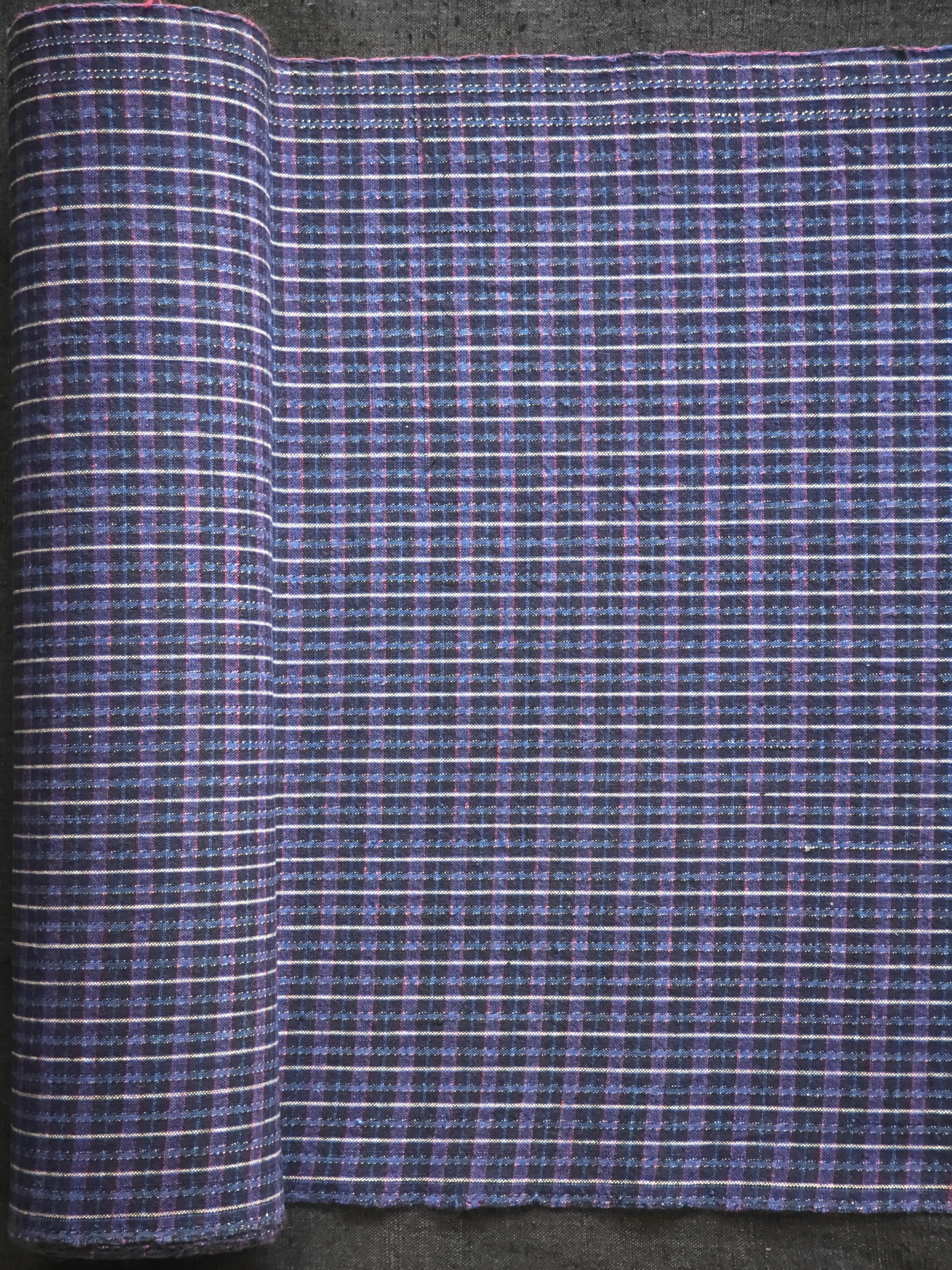
Four Seasons Weave — One Continuous Jiangnan Textile
c. 1960s–1970s · Cotton
One uncut, 6.5-metre Jiangnan cotton textile changes from indigo stripes to red-blue checks and denser plaid, with no joining seams between its woven sections.
A cross-regional working group for textiles attributed broadly to the Jiangnan area when Shanghai, Chongming and Nantong remain plausible but a single local origin cannot yet be assigned.
c. 1960s–1970s · Cotton
One uncut, 6.5-metre Jiangnan cotton textile changes from indigo stripes to red-blue checks and denser plaid, with no joining seams between its woven sections.
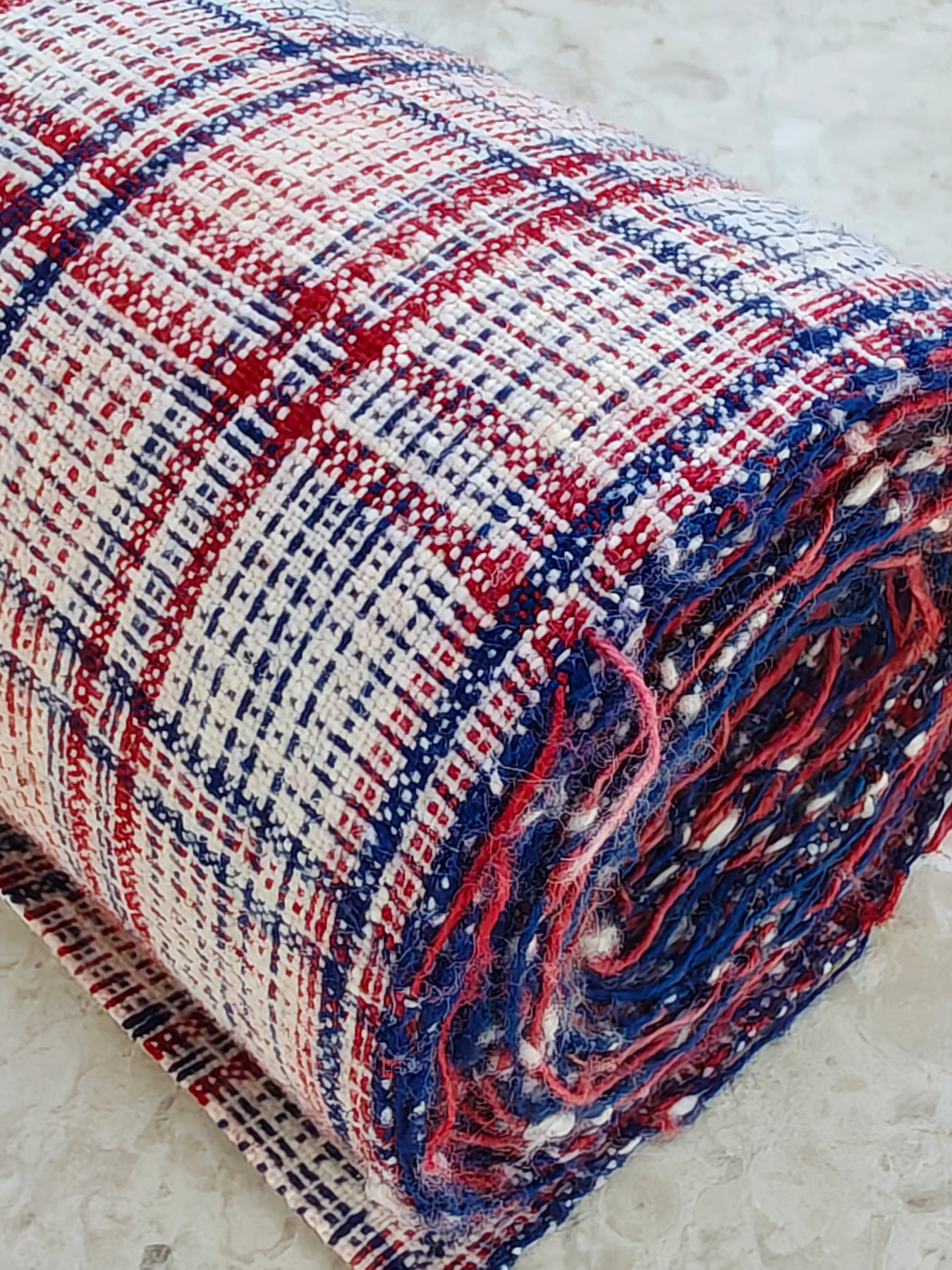
c. 1940s–1960s · Cotton
Soft red and indigo lines form a large square grid around fine comb-like inner stripes in this substantial, softly structured Jiangnan homespun cotton.
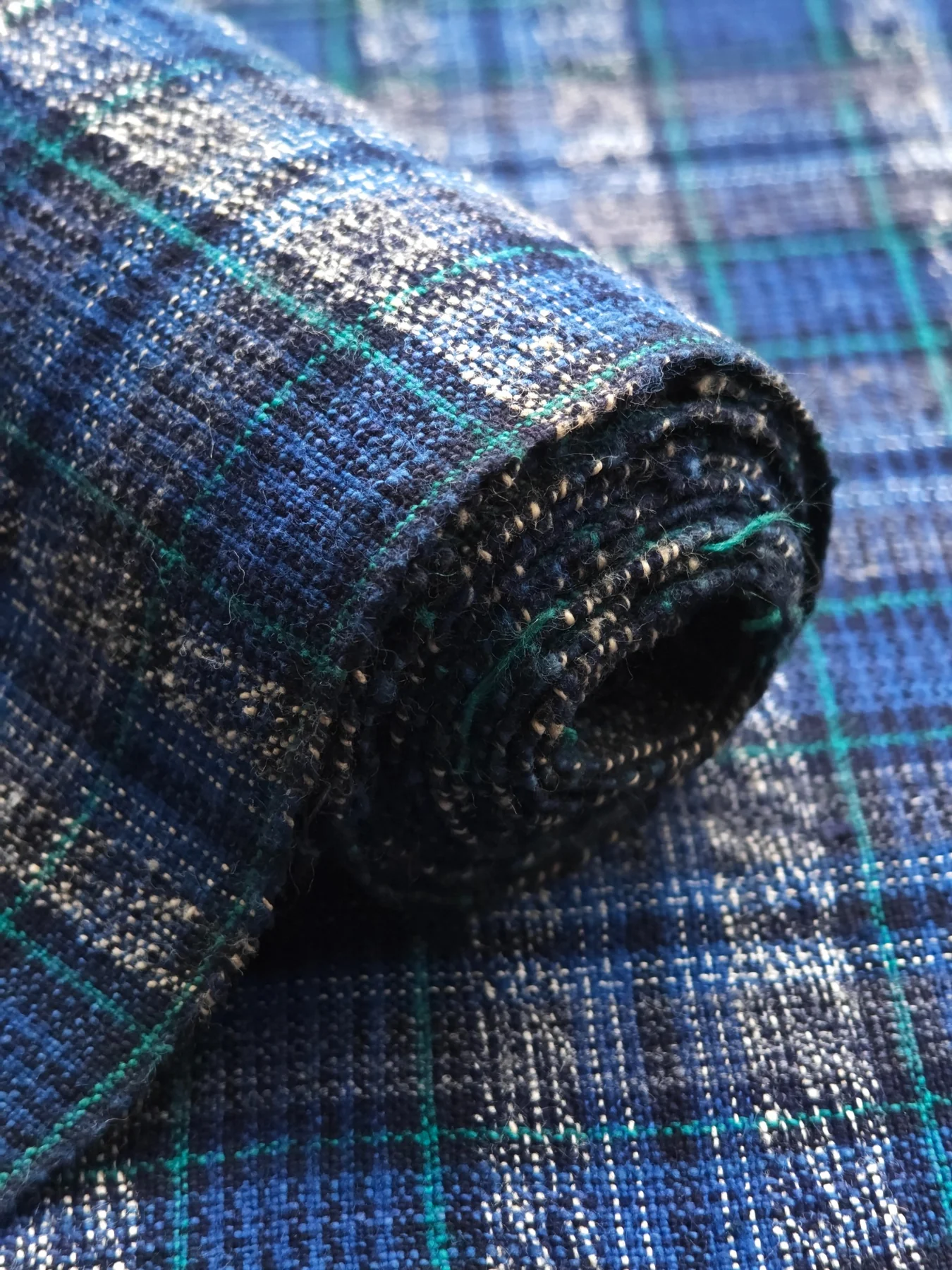
c. 1940s–1950s · Handspun cotton
A narrow Jiangnan plaid whose mottled grey “snowflake” yarn turns a quiet blue-green grid into a close study of handspun fibre, domestic weaving and traditional yarn preparation.
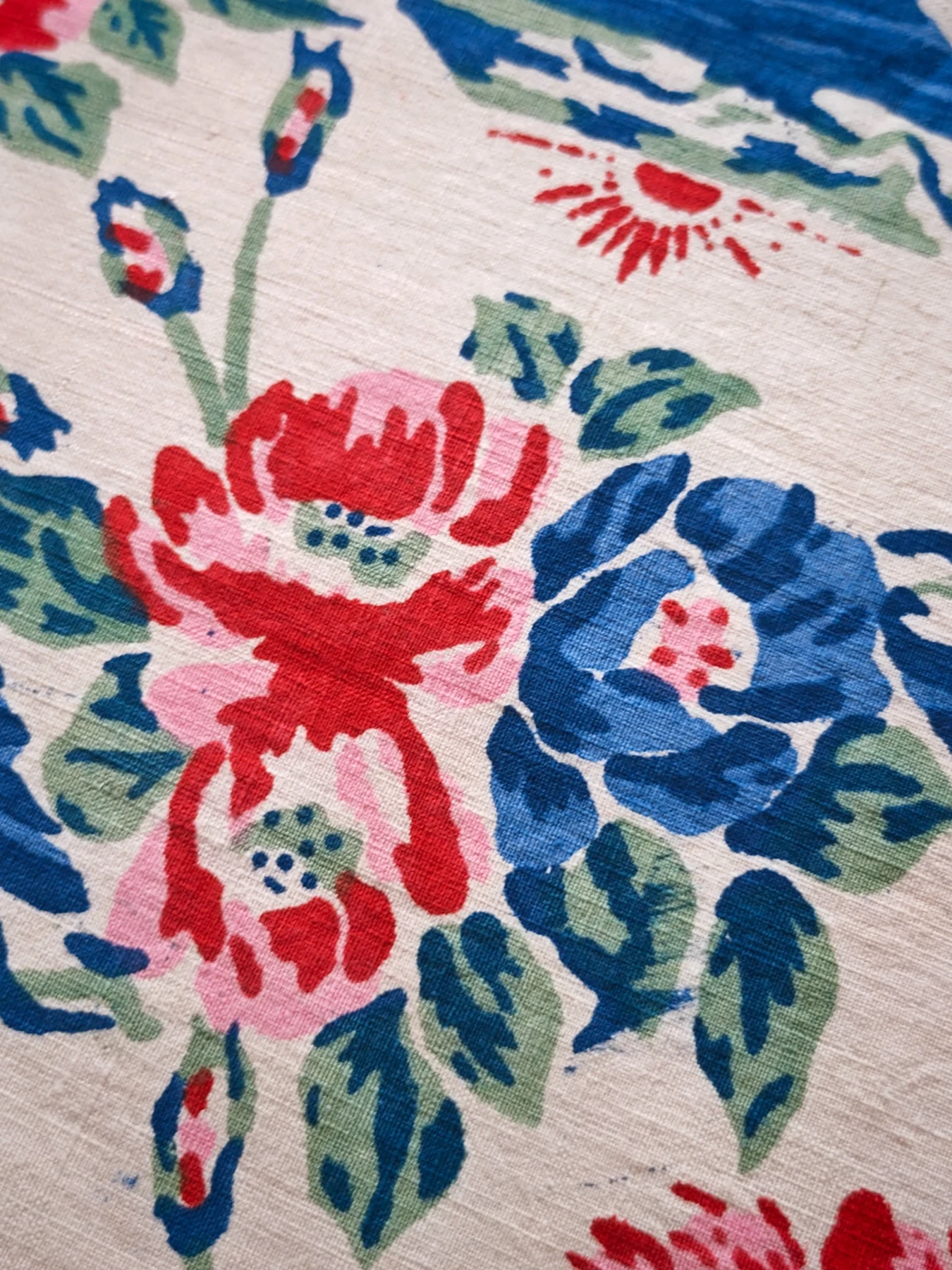
c. 1960s–1970s · Handspun cotton
A cheerful mid-century folk print combining red and blue flowers, green leaves, blue mountain-like forms and small rising-sun motifs over a substantial handwoven cotton ground.
Mid-20th century · Handspun cotton
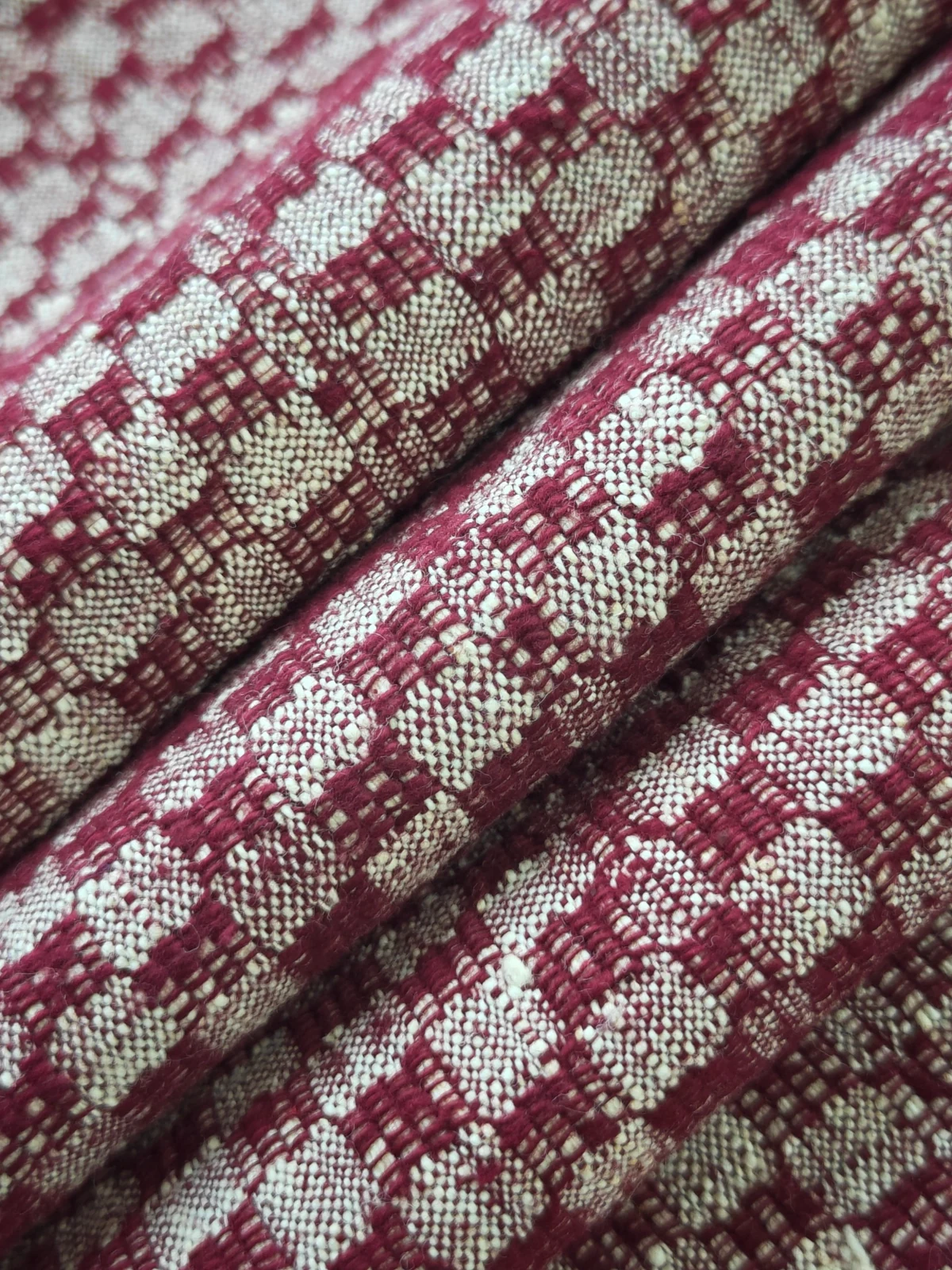
A wine-red and natural-white figured cloth whose raised linked cells are catalogued as a dragon-scale grid, giving the surface a dense, tactile relief.
c. 1940s–1950s · Handspun cotton
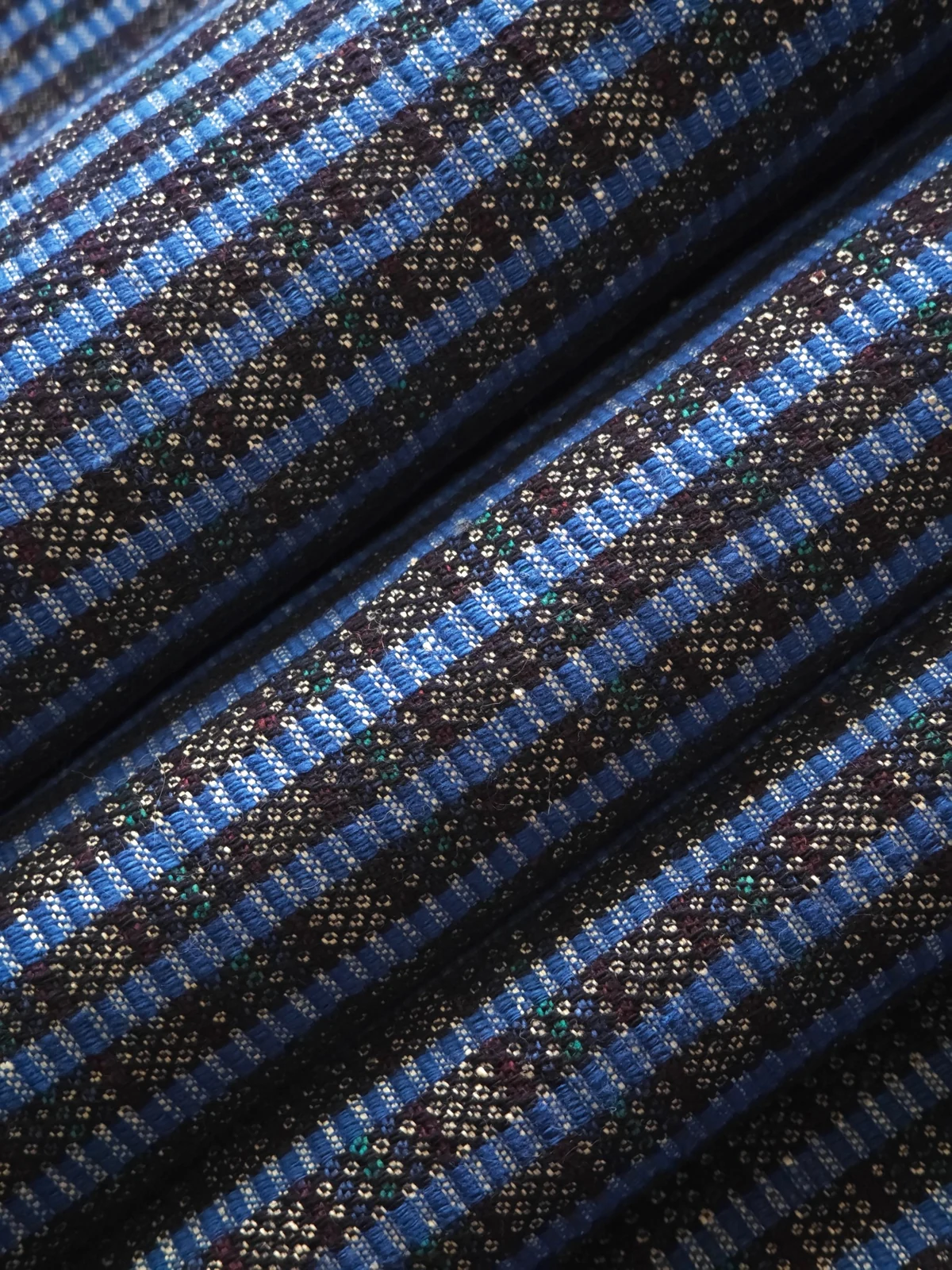
A narrow, substantial Jiangnan homespun whose tiny off-white woven points create the regional “pepper-eye” effect across a dark yarn-dyed check.
c. 1940s–1960s · 100% handspun cotton
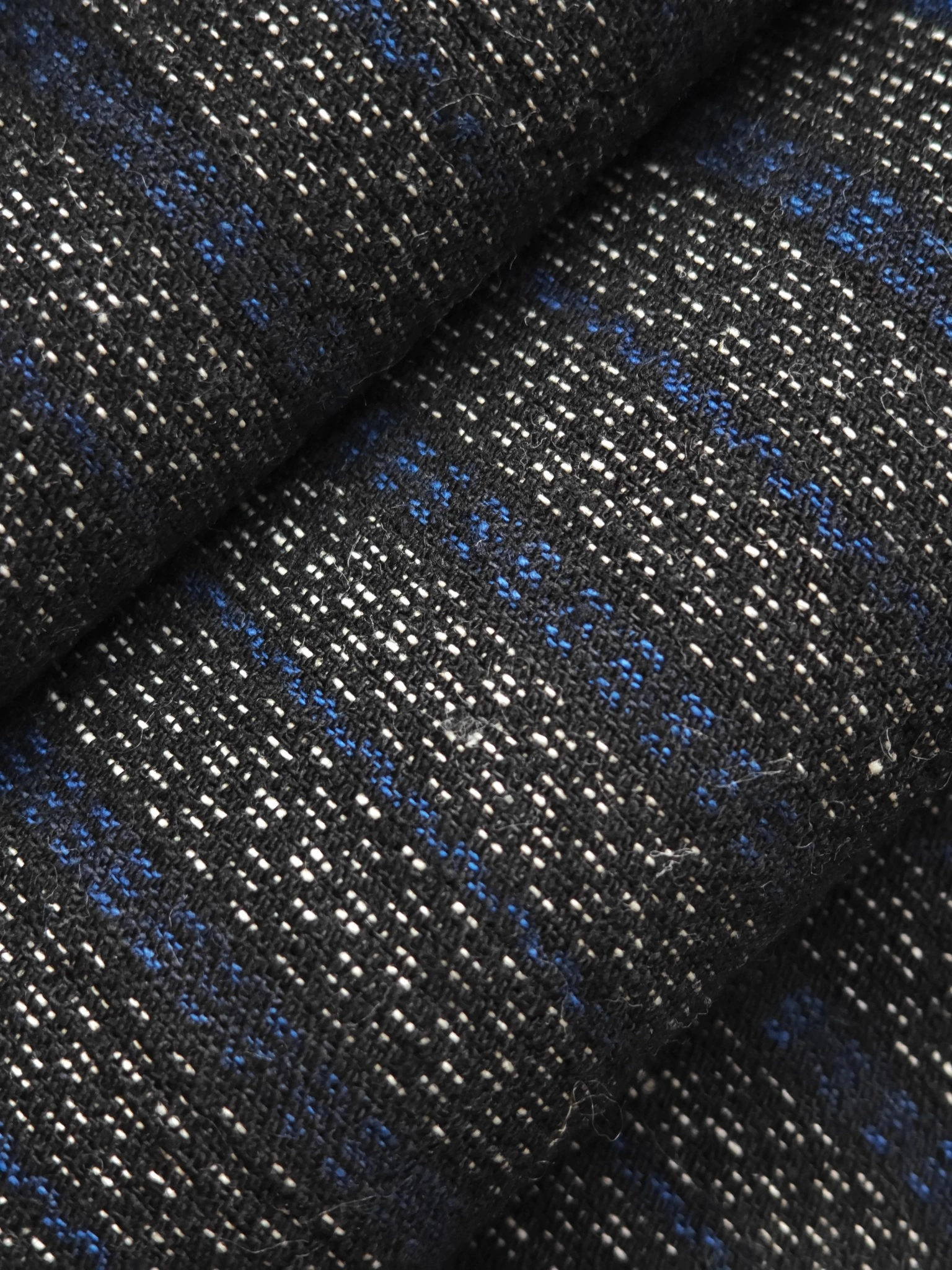
A narrow black-ground Jiangnan homespun with blue-and-white supplementary-weft details: substantial, soft and quietly patterned, with original sizing still present.
c. 1940s–1950s · Handspun cotton
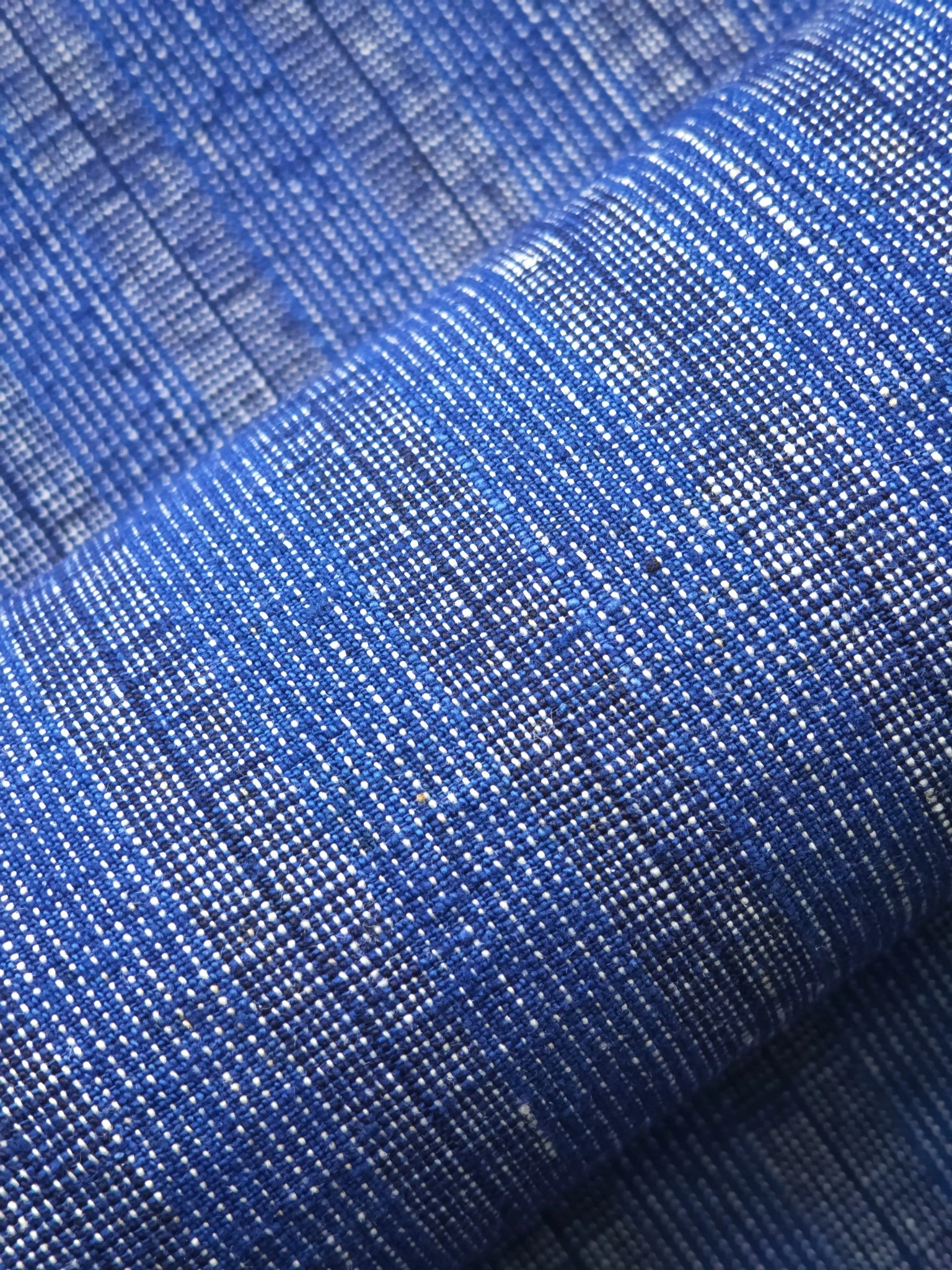
A lightweight Jiangnan cotton in indigo blue and natural white, with fine rice-grain-like marks woven through a soft, breathable ground.
c. 1950s–1960s · Handspun cotton
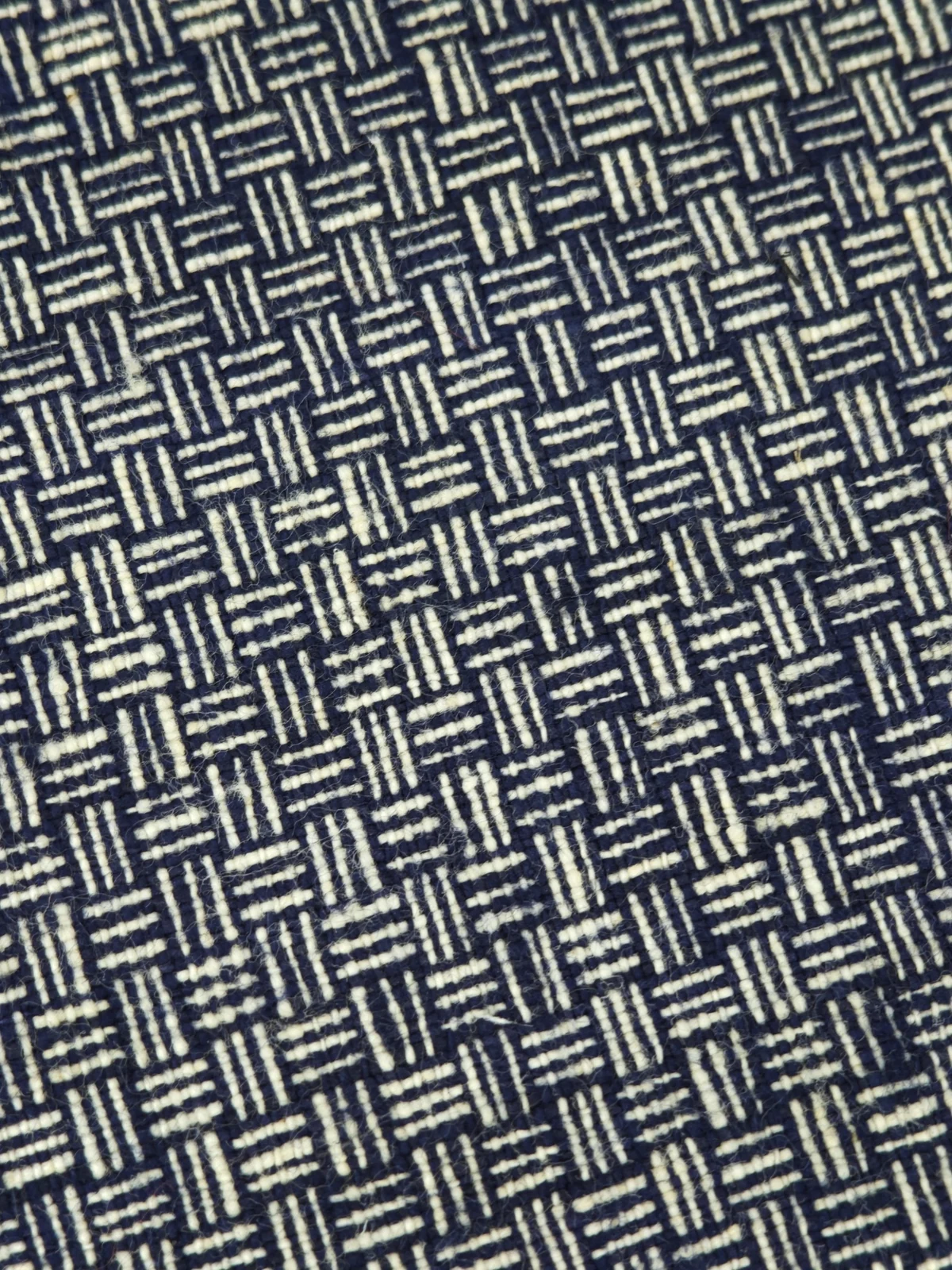
A substantial Jiangnan handwoven cotton with a fine indigo-and-cream reed-mat pattern: tiny interlocking blocks create a dense basket-like surface with real depth.
These groups bring together descriptions from the textile records. Regional attributions and technical identifications may be provisional; open an individual record for its evidence and attribution notes.